The Profession of Arms: A Guide for Young Army Officers
It takes courage, especially for a young officer, to check a man met on the road for not saluting properly or for slovenly appearance, but, every time he does, it adds to his stock of moral courage, and whatever the soldier may say, he has respect for the officer who does pull him up.
Read Document →The Dragon's Teeth: Assessing China's Military Modernization
PLA has focused on modernising its capabilities across all warfare domains to achieve these goals. This includes land, air, and maritime operations, nuclear, space, counter-space, electronic warfare and cyberspace operations, aiming to become a fully integrated joint force.
Read Document →Transforming the PLA: A Decade of reorganisation from SSF to ISF
PRC has engaged in a sustained and broad effort to transform the PLA from an infantry-heavy, low-technology, ground forces-centric military into a high-technology, networked force with an increasing emphasis on joint operations and naval and air power projection.
Read Document →Eyes without Borders: Exploring the World of Open Source Intelligence (OSINT) in the Digital Age
Open Source Intelligence (OSINT) is gaining prominence with the rise of social media, the digital society and the vast growth of publicly and commercially available information (PAI and CAI).
Read Document →
The PLA’s Developing Cyber Warfare Capabilities and India's Options
Informationised warfare blurs the lines between peacetime and wartime. A nation in the information age cannot wait for the hostilities to break out to collect intelligence, carryout influence operations, develop antisatellite systems or design computer software weapons.
Read Document →
Galwan and After
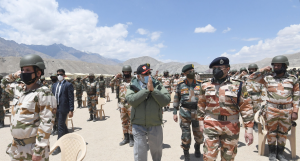
Why did China did this when he is under tremendous pressure in all fronts, is this China's salami slice tactics being progressed rigorously, what will be new Rules of Engagement, what will be escalatory control mechanism, who has taken this decision, will there be some pressure put by China in India's North-East through insurgency.
Read Document →
India’s Joint Doctrine for Cyberspace Operations: A Critical Review
Chief of Defence Staff (CDS) General Anil Chauhan and Secretary, Department of Military Affairs, formally released declassified versions of the Joint Doctrines for Cyberspace Operations during the Chiefs of Staff Committee meeting in New Delhi.
Read Document →
Know your Enemy General(now Field Marshal) Syed Aseem Munir
Gen SA Munir's position in the hierarchy of Pakistan was not very comfortable. The state of economy, insurgency in Pakhtoonistan and Balochistan, attack on the Jaffar Express, constant protests by supporters of Imran Khan's supporters inside and outside of parliament.
Read Document →
Decoding Operation SINDOOR: Key Aspects and Implications
Precision strikes were carried out on nine sites—four in Pakistan and five in PoK—linked to anti-India terrorist groups such as the LeT, JeM and the Hizbul Mujahideen. The targeted sites included Muridke (LeT headquarters) and Bahawalpur (JeM headquarters).
Read Document →
Chinese Cyber Exploitation in India's Power Grid - Is There a linkage to Mumbai Power Outage?
The New York Times (NYT), based on analysis by a U.S. based private intelligence firm Recorded Future, reported that a Chinese entity penetrated India’s power grid at multiple load dispatch points. Chinese malware intruded into the control systems that manage electric supply across India, along with a high-voltage transmission substation and a coal-fired power plant
Read Document →4 August 2020
Lessons for India After the Galwan Valley Clash
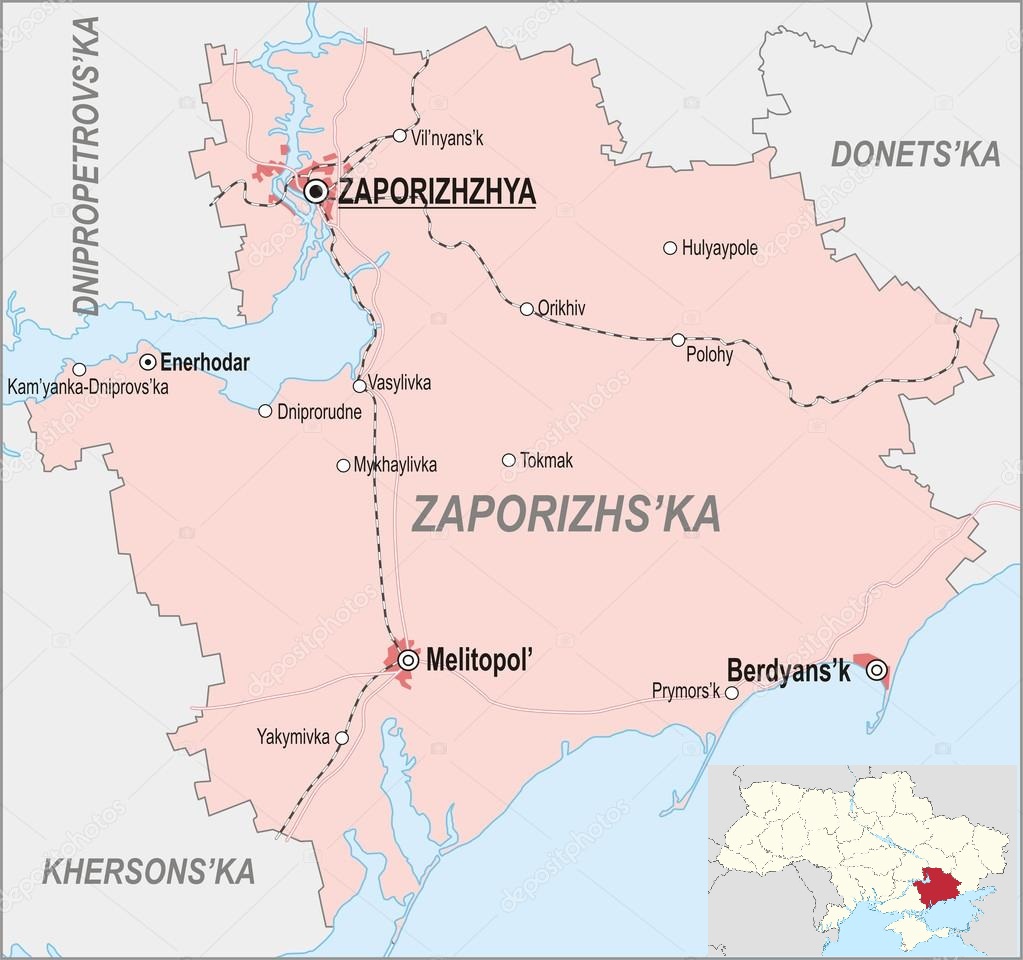
Zaporizhia Oblast: The Next Flash Point in Russia’s ‘Hybrid’ Aggression Against Southeastern Ukraine?
(Source: depositphotos, Wikimedia Commons)Can China’s Military Win the Tech War?
As the Chinese government has set out to harness the growing strength of the Chinese technology sector to bolster its military, policymakers in the United States have reacted with mounting alarm. U.S. officials have described Beijing’s civil-military fusion effort as a “malign agenda” that represents a “global security threat.” And as China’s defense capabilities have grown, some Western policymakers have started to wonder whether the United States needs to adopt its own version of civil-military fusion, embracing a top-down approach to developing cutting-edge technologies with military applications.China’s Infrastructure-Heavy Model for African Growth Is Failing
Locomotives for the new Ethiopia to Djibouti electric railway system queue outside a train station in the outskirts of Addis Ababa, Sept.24, 2016.Credit: AP Photo/Elias MeseretHow Will the EU Answer China’s Turn Toward ‘Xi Jinping Thought on Diplomacy’?
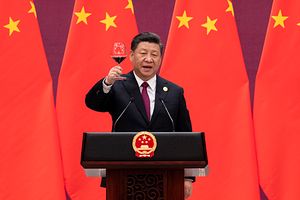
Chinese President Xi Jinping raises his glass and proposes a toast during the welcome banquet for visiting leaders attending the Belt and Road Forum at the Great Hall of the People in Beijing, April 26, 2019.Credit: Nicolas Asfouri/Pool Photo via APAfter 99 Days of Success, Virus Returns to Haunt Vietnam
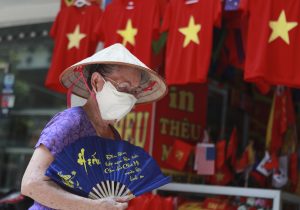
For 99 days, Vietnam seemed to have defeated the coronavirus. There wasn’t a single reported case of community transmission. Not a single death. A handful of cases were caught and isolated at the border, but otherwise people were returning to their normal lives. The country of 96 million people was hailed globally as a standout success.What Mike Pompeo doesn’t understand about China, Richard Nixon and U.S. foreign policy
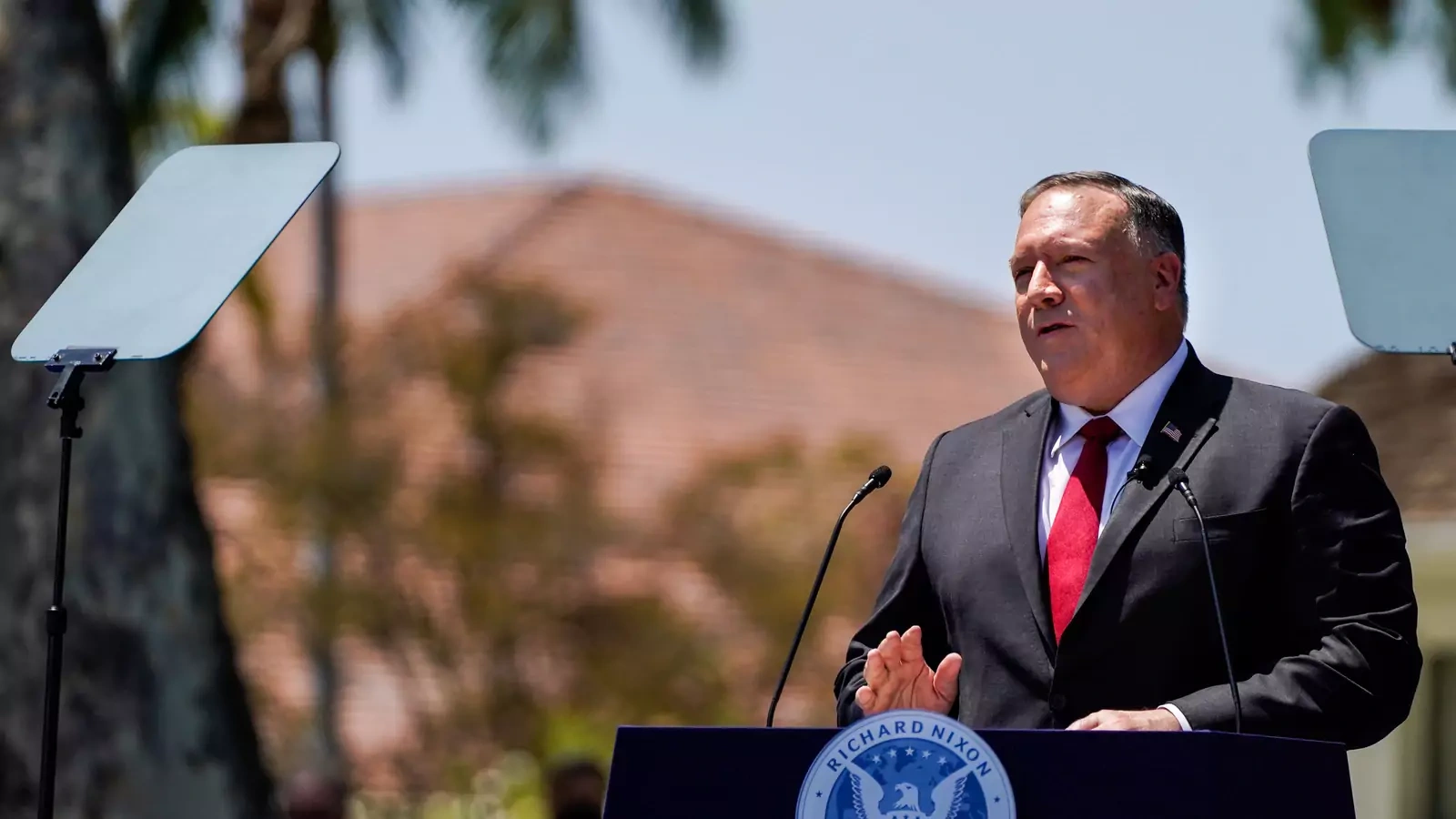
Secretary of State Mike Pompeo delivered a blistering speech about China on Thursday. The problem was not simply that the nation’s chief diplomat was decidedly undiplomatic. Worse was his misrepresentation of history and his failure to suggest a coherent or viable path forward for managing a relationship that more than any other will define this era.Russia Halted S-400 Air Defense Sales to China. Why?
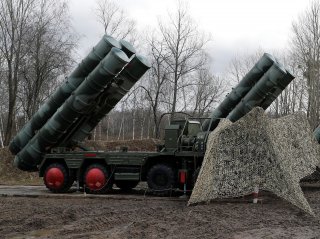
The Kremlin has abruptly suspended further S-400 deliveries to The People’s Republic of China (PRC), portending an early sign of strain in the burgeoning ‘strategic partnership’ between Russia and China.Donald Trump’s Troop Shift to Asia Could Spark an Unexpected War With China
The Great Paradox of Donald Trump’s Plan to Combat China
Sterilizations, IUDs, and Mandatory Birth Control: The CCP’s Campaign to Suppress Uyghur Birthrates in Xinjiang
European States Reappraise Their Diplomatic and Investment Relationships with China
Beijing Imposes Its New “National Security” Law on Hong Kong (Updated)
The PLA Is Mobilized for Flood Relief in Eastern China
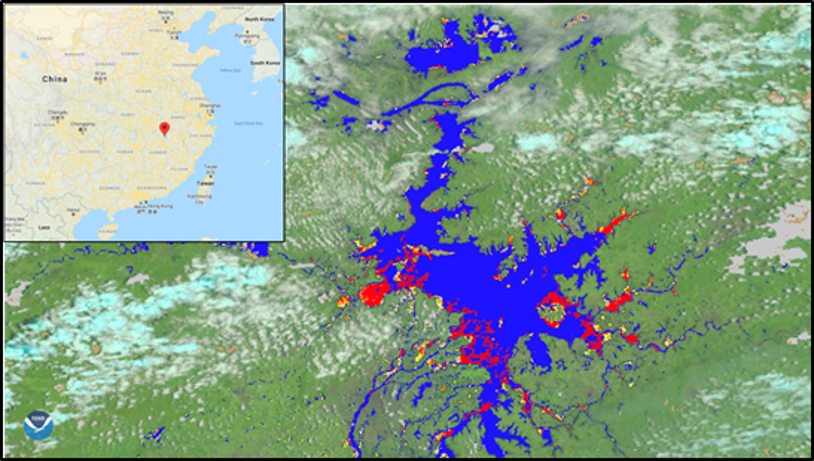
Image: A satellite image from the U.S. National Oceanic and Atmospheric Administration (dated July 14), which shows flooding at Poyang Lake in Jiangxi Province: flood-affected areas are shaded in yellow, and “severely flooded” areas are shaded in red. (Image sources: Google Maps and NOAA)Competition Without Catastrophe
The United States is in the midst of the most consequential rethinking of its foreign policy since the end of the Cold War. Although Washington remains bitterly divided on most issues, there is a growing consensus that the era of engagement with China has come to an unceremonious close. The debate now is over what comes next.Opinion – The Politics of Inclusion in Myanmar’s Nationwide Ceasefire Agreement
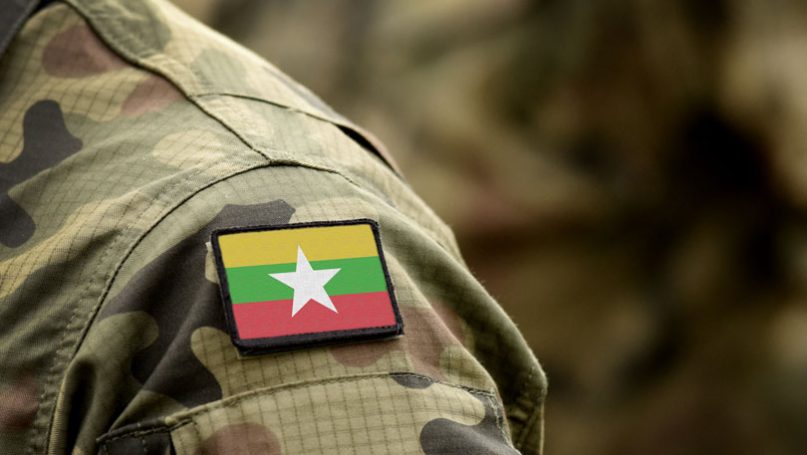
Armed conflict in Myanmar (also known as Burma) has been protracted since the country’s independence from the British in 1948. Despite becoming an independent state, sub-national contests for political autonomy and legitimacy have sustained violent tensions. Also, the availability of natural resources in the country’s borderland regions has further contributed to the emergence of ethnonationalism and cycles of violence. Ethnonationalism enables competition for political power between so-called Ethnic Armed Organisations (EAO), such as the United Wa State Army (UWSA) and the Kachin Independence Army (KIA), and the central government, thereby contributing significantly to broader security challenges in Myanmar. The grievances that fuel these issues stem from access to political power by ethnic minorities and claims that the Bamar ethnic group allegedly dominates Myanmar’s polity.Yemen in Crisis
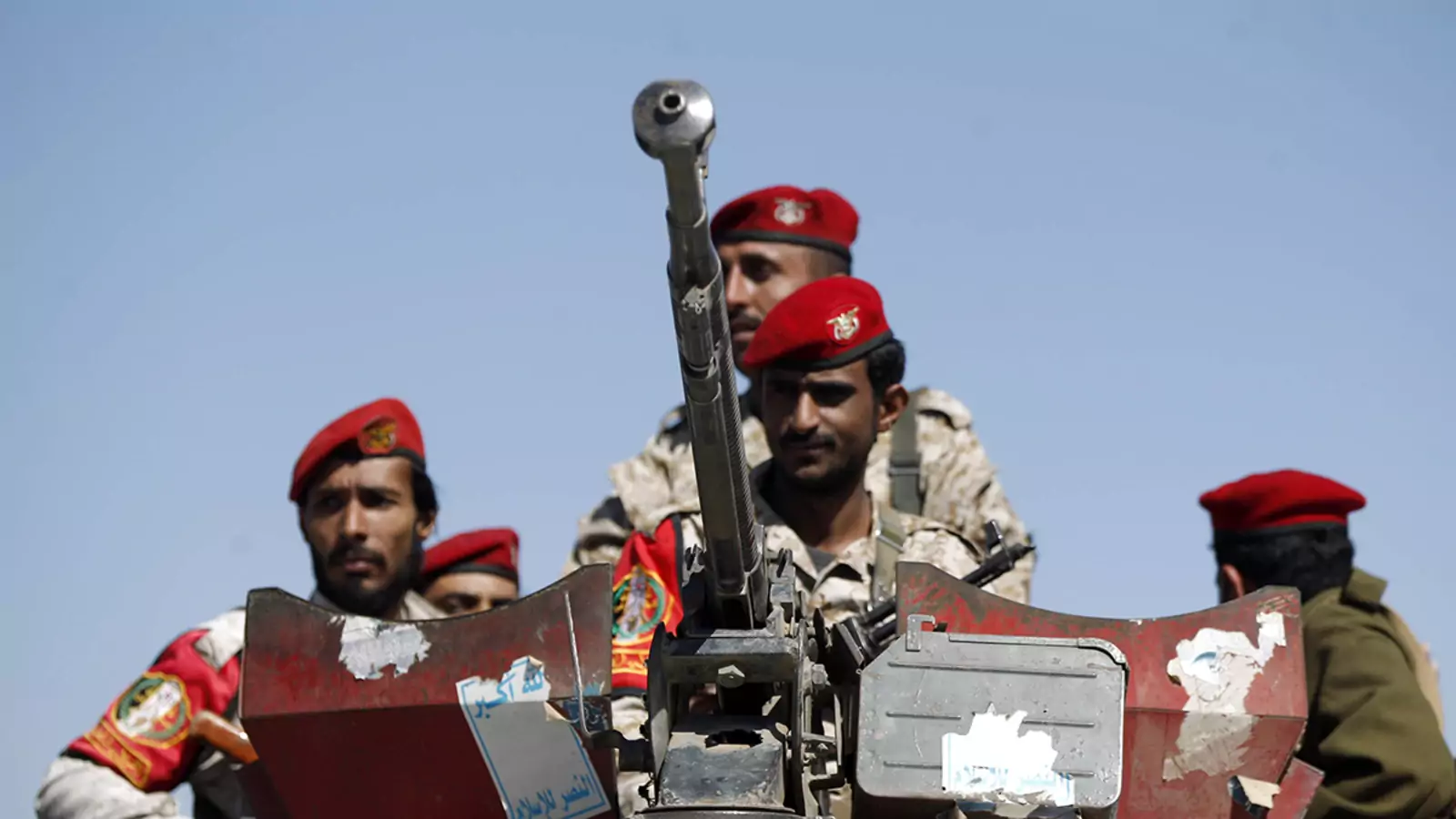
Yemen faces its biggest crisis in decades with the overthrow of its government by the Houthis, a Zaydi Shiite movement, and the resulting offensive led by Saudi Arabia. The fighting, and a Saudi-imposed blockade ostensibly meant to enforce an arms embargo, has had devastating humanitarian consequences, causing more than one million people to become internally displaced and leading to cholera outbreaks, medicine shortages, and threats of famine. The United Nations calls the humanitarian crisis in Yemen “the worst in the world.”The Iranian Islamic Revolutionary Guard Corps (IRGC) from an Iraqi View – a Lost Role or a Bright Future?
Coronavirus: A Vaccine Will Likely Require Regular Boosters
The Great Coronavirus Economic Crisis Is Far From Over
A Foreign Policy for the Post-Pandemic World
Post-Pandemic Japan Will Attract the World
The Tragedy of Vaccine Nationalism
Trump administration officials have compared the global allocation of vaccines against the coronavirus that causes COVID-19 to oxygen masks dropping inside a depressurizing airplane. “You put on your own first, and then we want to help others as quickly as possible,” Peter Marks, a senior official at the U.S. Food and Drug Administration who oversaw the initial phases of vaccine development for the U.S. government, said during a panel discussion in June. The major difference, of course, is that airplane oxygen masks do not drop only in first class—which is the equivalent of what will happen when vaccines eventually become available if governments delay providing access to them to people in other countries.Covid-19 Reshapes the Future
The future of encryption: Getting ready for the quantum computer attack
Lessons in historical amnesia
In 1772, a crowd gathered outside court to hear the decision on a case that had captured the public imagination. It was the case of James Somerset, an enslaved man who had escaped from his ‘master’, Charles Stewart, in England in 1771. Stewart had Somerset arrested and placed aboard a ship bound for Jamaica, then a British slave colony. Somerset was able to contact Granville Sharp, a humanitarian lawyer and abolitionist, who brought the case to court. The presiding judge, Lord Mansfield, reluctantly agreed that Stewart must be discharged.