The Profession of Arms: A Guide for Young Army Officers
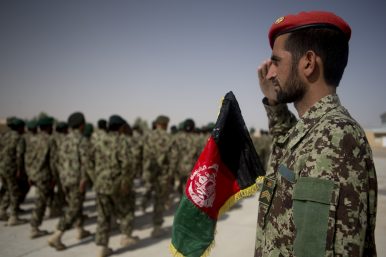
It takes courage, especially for a young officer, to check a man met on the road for not saluting properly or for slovenly appearance, but, every time he does, it adds to his stock of moral courage, and whatever the soldier may say, he has respect for the officer who does pull him up.
Read Document →The Dragon's Teeth: Assessing China's Military Modernization
PLA has focused on modernising its capabilities across all warfare domains to achieve these goals. This includes land, air, and maritime operations, nuclear, space, counter-space, electronic warfare and cyberspace operations, aiming to become a fully integrated joint force.
Read Document →Transforming the PLA: A Decade of reorganisation from SSF to ISF
PRC has engaged in a sustained and broad effort to transform the PLA from an infantry-heavy, low-technology, ground forces-centric military into a high-technology, networked force with an increasing emphasis on joint operations and naval and air power projection.
Read Document →Eyes without Borders: Exploring the World of Open Source Intelligence (OSINT) in the Digital Age
Open Source Intelligence (OSINT) is gaining prominence with the rise of social media, the digital society and the vast growth of publicly and commercially available information (PAI and CAI).
Read Document →
The PLA’s Developing Cyber Warfare Capabilities and India's Options
Informationised warfare blurs the lines between peacetime and wartime. A nation in the information age cannot wait for the hostilities to break out to collect intelligence, carryout influence operations, develop antisatellite systems or design computer software weapons.
Read Document →
Galwan and After
Why did China did this when he is under tremendous pressure in all fronts, is this China's salami slice tactics being progressed rigorously, what will be new Rules of Engagement, what will be escalatory control mechanism, who has taken this decision, will there be some pressure put by China in India's North-East through insurgency.
Read Document →
India’s Joint Doctrine for Cyberspace Operations: A Critical Review
Chief of Defence Staff (CDS) General Anil Chauhan and Secretary, Department of Military Affairs, formally released declassified versions of the Joint Doctrines for Cyberspace Operations during the Chiefs of Staff Committee meeting in New Delhi.
Read Document →
Know your Enemy General(now Field Marshal) Syed Aseem Munir
Gen SA Munir's position in the hierarchy of Pakistan was not very comfortable. The state of economy, insurgency in Pakhtoonistan and Balochistan, attack on the Jaffar Express, constant protests by supporters of Imran Khan's supporters inside and outside of parliament.
Read Document →
Decoding Operation SINDOOR: Key Aspects and Implications
Precision strikes were carried out on nine sites—four in Pakistan and five in PoK—linked to anti-India terrorist groups such as the LeT, JeM and the Hizbul Mujahideen. The targeted sites included Muridke (LeT headquarters) and Bahawalpur (JeM headquarters).
Read Document →
Chinese Cyber Exploitation in India's Power Grid - Is There a linkage to Mumbai Power Outage?
The New York Times (NYT), based on analysis by a U.S. based private intelligence firm Recorded Future, reported that a Chinese entity penetrated India’s power grid at multiple load dispatch points. Chinese malware intruded into the control systems that manage electric supply across India, along with a high-voltage transmission substation and a coal-fired power plant
Read Document →27 November 2018
The Triumph of Hindu Majoritarianism
67 Years Later, The Board Is Back In Control Of RBI
It will need another crisis to tell us if the government or more specifically the finance ministry and the Reserve Bank of India have decided to work together rather than at each other. The truce on Monday only tells us that the current set of differences have been discussed and possibly papered over. It does not throw up any evidence that the two have worked out a proforma to handle future differences.To Stop The Next Kasabs: 10 Years After 26/11, Is India Any Safer?
War today has mutated; it now comes in many forms. Once it used to have a beginning and an end—truce and peace would follow war. Terrorism, its most dreaded modern mutant, breaks that template. It has the feel of a permanent war, one without end or armistice. November 26 is a day to remember one of the biggest terror strikes India has seen—big on spectacle like 9/11, and almost equal in its disruptive nature, if not the number of people who lay dead at the end. One decade since that November day, it’s a time to mourn the dead—a staggering 166 civilians and security personnel—and to take what appears in the retrospective lens and apply it to the future. The best way to honour those dead would be to ensure the mistakes that brought it about, or aided it, are never repeated. Are we ready to face a new, morphed form of violent terror? Before we look at the gaps in our fences, we must crack the code of terror, put its Rubik’s cube squares in a pattern.Water Security in India Threat Mapping: Impact of Climate Change
Local Governance in Afghanistan: The Unwalked Path
Pakistan’s invisible forces tighten grip on power
Despite Headley’s Warning, U.S. Prioritised Capturing Bin Laden Over Saving Mumbai
There are so many reasons why 26/11 should never be forgotten. A megalopolis was taken hostage and in a democratising act of brutality neither the poor or the rich were spared, Indian, Jewish and international targets attacked, making this a universal act of terror that in many ways —its scale, visibility and duration —was far worse than anything else endured in the epoch of terror we are living through. The attackers sailed in, exploiting a long-warned-of vulnerability, about which hundreds of reports —demanding the better securing of the coast —lay gathering dust.Try as it might, Pakistan still needs IMF help
Instantly after returning from China this month, Pakistan’s Finance Minister Asad Umar declaredthat Pakistan’s balance of payments crisis to be over. He claimed that a financial bailout package provided by Saudi Arabia and China has helped Pakistan overcome its financial troubles.Sustaining Democracy in South Asia
U.S. Accuses China of Continuing IP Theft as WTO Launches Probe
The U.S. accused China of continuing a state-backed campaign of intellectual property and technology theft as the World Trade Organization said it would establish a dispute panel to rule on the complaint.China's race for dominance
Will China’s Economic Slowdown Lead to a Major Crisis?
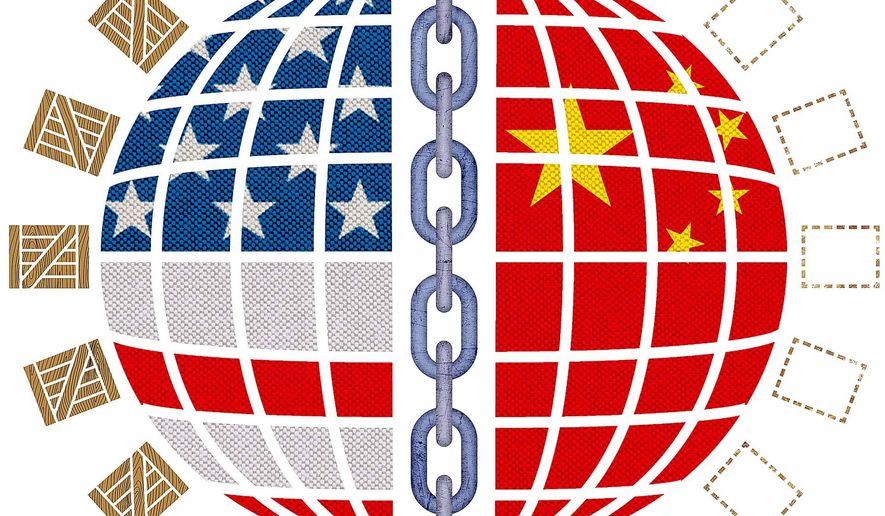
Forecasting US-China Trade Fallout
Trans-Pacific View author Mercy Kuo regularly engages subject-matter experts, policy practitioners, and strategic thinkers across the globe for their diverse insights into U.S. Asia policy. This conversation with DailyFX Markets Analysis Team is the 164th in “The Trans-Pacific View Insight Series.” What the APEC 2018 Summit Reveals About China's Regional Economic Insecurities
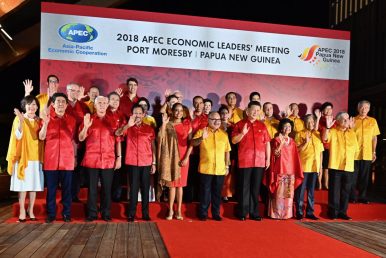
The Diplomat‘s Ankit Panda (@nktpnd) and Prashanth Parameswaran (@TheAsianist) discuss the recent Asia Pacific Economic Cooperation 2018 summit in Papua New Guinea and the failure to produce a joint communiquรฉ.Eye on China: Tantrums, Terror & Talks
The West begins to stir over China’s massive abuse of Muslims
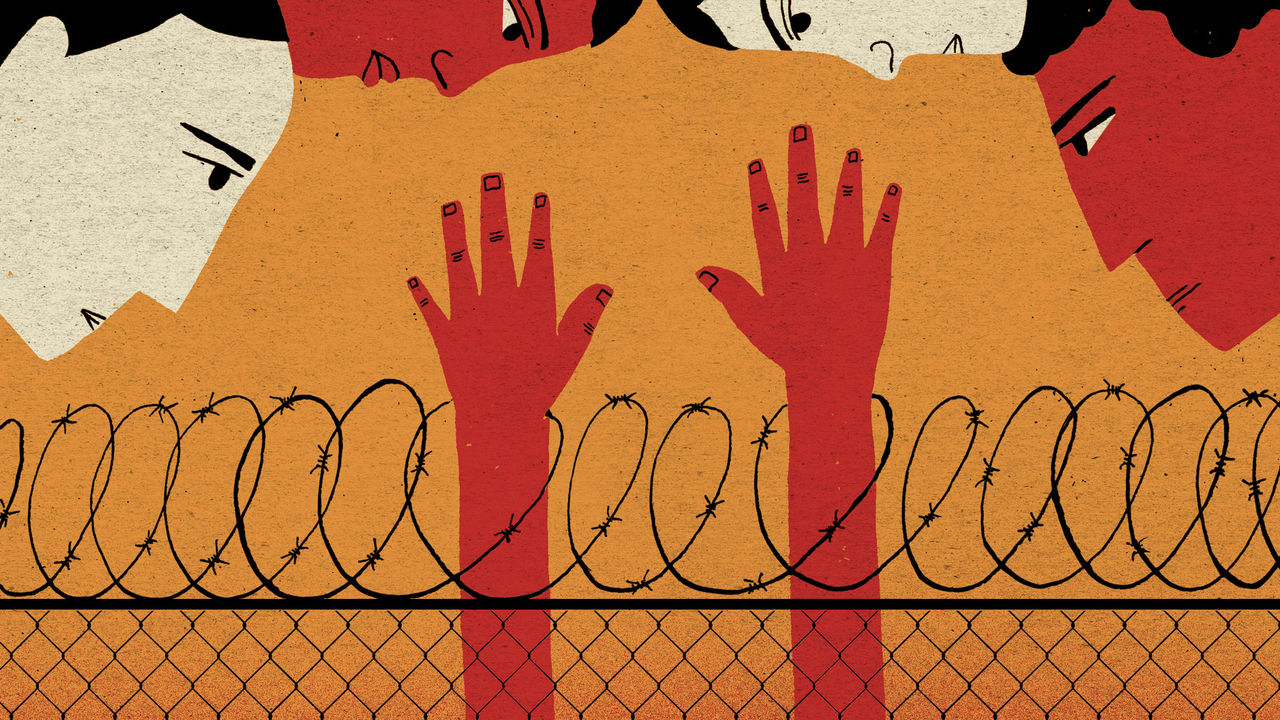
Few governments send ambassadors to China to be brave about human rights. Envoys to Beijing are scholars of realism, their fine minds applied to a delicate task: managing profitable relations with a deep-pocketed, unapologetic dictatorship.When Mike Pence met Vladimir Putin and Xi Jinping
Vice President Pence was not planning to meet with the leaders of Russia or China during his Asia trip last week, but they sought him out anyway. In several conversations with Vladimir Putin, Xi Jinping and Chinese Premier Li Keqiang, Pence delivered messages on election interference, North Korea and the trade dispute, and also set the stage for big showdowns next week when President Trump meets the same leaders in Argentina.Why ‘Made in China 2025’ triggered the wrath of President Trump
US drops the gauntlet on the South China Sea
China plans to be a world leader in Artificial Intelligence by 2030
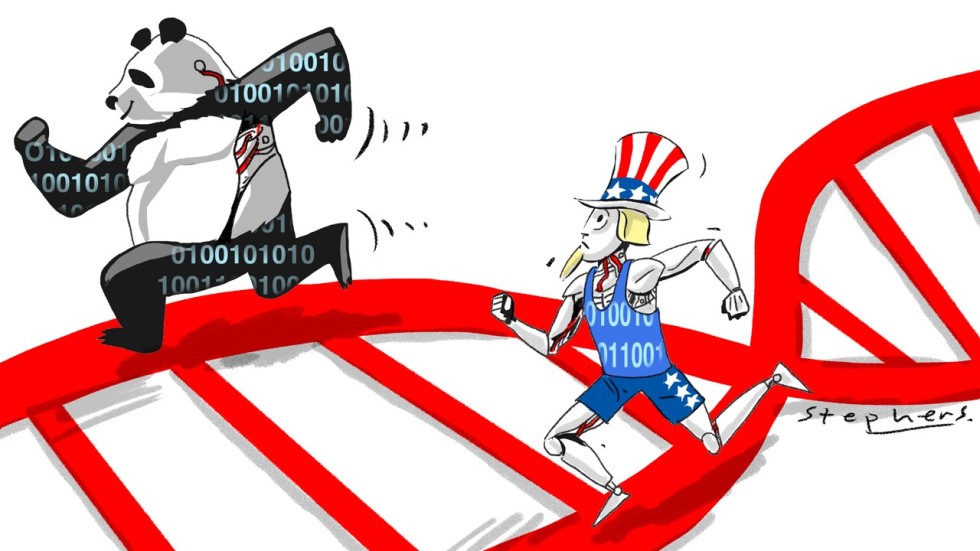
China is pushing hard to overtake Silicon Valley and win the biotech race, and gain control of the world’s biological data
Eleonore Pauwels says the world should pay attention, as China achieves dominance in AI and biotech. Bio-intelligence is more than mapping genomes: whoever controls the resources may influence the well-being of entire populationsBitcoin Cash Forks -- Mayhem On The Markets
Where Did North Korea’s Cyber Army Come From?
Is a “No Deal” Brexit Still Avoidable?
Who’s Driving the Wedge Into US-South Korea Relations?
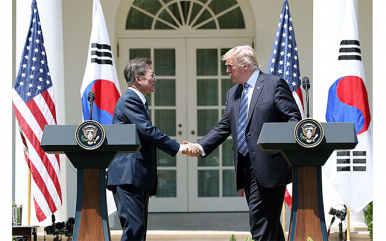
There has been concern for months about a rift the U.S.-Republic of Korea (ROK) alliance. As the diplomatic torrent of 2018 involving both Koreas and the United States took off ahead of the 2018 Winter Olympics in South Korea, U.S. commentators were warning that North Korea wanted to drive a wedge between Seoul and Washington. Following the Singapore Summit between U.S. President Donald J. Trump and North Korean leader Kim Jong Un in June 2018, more alarms were sounded about North Korean wedge-driving. With all the wedge talk, South Korean and U.S. officials have often stared into cameras to assure the world that all is well in their alliance. Cyberwar, Network Propaganda review: did Russia or the right do most to help Trump?
Since the Director of National Intelligence’s (DNI) interagency reportof January 2017, it has been a truth selectively acknowledged that the Russian government took to the US media surreptitiously in 2016 to help elect Donald Trump president. But did it work? Were sufficient numbers of voters persuaded, mobilized and, crucially, demobilized by the efforts of the Internet Research Agency to swing the election in Trump’s favor?IoT & Cybersecurity: Where we are and what needs to change
Threats are now emerging beyond home and medical devices towards IoT control systems connected to national infrastructures. It is no exaggeration to say that IoT vulnerabilities are a threat to our national and personal security – dangers brought into sharp relief by the growing weaponisation of cybersecurity on the world stageFlash Wars: Where could an autonomous weapons revolution lead us?
Six Days, Fifty Years: The June 1967 War and its Aftermath
Disruptive technologies show why government needs data security standards now
Telepathy. Data uploading to the brain. Even humanoid sex robots. These are among the ideas that exist on a periodic table of disruptive technologies, a new visual guide that predicts what will alter human existence in the coming years.