The Profession of Arms: A Guide for Young Army Officers
It takes courage, especially for a young officer, to check a man met on the road for not saluting properly or for slovenly appearance, but, every time he does, it adds to his stock of moral courage, and whatever the soldier may say, he has respect for the officer who does pull him up.
Read Document →The Dragon's Teeth: Assessing China's Military Modernization
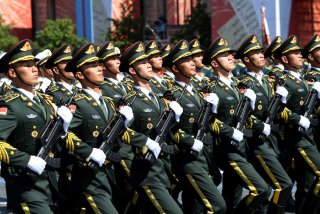
PLA has focused on modernising its capabilities across all warfare domains to achieve these goals. This includes land, air, and maritime operations, nuclear, space, counter-space, electronic warfare and cyberspace operations, aiming to become a fully integrated joint force.
Read Document →Transforming the PLA: A Decade of reorganisation from SSF to ISF
PRC has engaged in a sustained and broad effort to transform the PLA from an infantry-heavy, low-technology, ground forces-centric military into a high-technology, networked force with an increasing emphasis on joint operations and naval and air power projection.
Read Document →Eyes without Borders: Exploring the World of Open Source Intelligence (OSINT) in the Digital Age
Open Source Intelligence (OSINT) is gaining prominence with the rise of social media, the digital society and the vast growth of publicly and commercially available information (PAI and CAI).
Read Document →
The PLA’s Developing Cyber Warfare Capabilities and India's Options
Informationised warfare blurs the lines between peacetime and wartime. A nation in the information age cannot wait for the hostilities to break out to collect intelligence, carryout influence operations, develop antisatellite systems or design computer software weapons.
Read Document →
Galwan and After
Why did China did this when he is under tremendous pressure in all fronts, is this China's salami slice tactics being progressed rigorously, what will be new Rules of Engagement, what will be escalatory control mechanism, who has taken this decision, will there be some pressure put by China in India's North-East through insurgency.
Read Document →
India’s Joint Doctrine for Cyberspace Operations: A Critical Review
Chief of Defence Staff (CDS) General Anil Chauhan and Secretary, Department of Military Affairs, formally released declassified versions of the Joint Doctrines for Cyberspace Operations during the Chiefs of Staff Committee meeting in New Delhi.
Read Document →
Know your Enemy General(now Field Marshal) Syed Aseem Munir
Gen SA Munir's position in the hierarchy of Pakistan was not very comfortable. The state of economy, insurgency in Pakhtoonistan and Balochistan, attack on the Jaffar Express, constant protests by supporters of Imran Khan's supporters inside and outside of parliament.
Read Document →
Decoding Operation SINDOOR: Key Aspects and Implications
Precision strikes were carried out on nine sites—four in Pakistan and five in PoK—linked to anti-India terrorist groups such as the LeT, JeM and the Hizbul Mujahideen. The targeted sites included Muridke (LeT headquarters) and Bahawalpur (JeM headquarters).
Read Document →
Chinese Cyber Exploitation in India's Power Grid - Is There a linkage to Mumbai Power Outage?
The New York Times (NYT), based on analysis by a U.S. based private intelligence firm Recorded Future, reported that a Chinese entity penetrated India’s power grid at multiple load dispatch points. Chinese malware intruded into the control systems that manage electric supply across India, along with a high-voltage transmission substation and a coal-fired power plant
Read Document →13 July 2020
Interpreting the India-Nepal border dispute
Calls for India to Play the Taiwan Card Grow Louder
Amid the continuing border standoff, there is increasing public antagonism toward China in India. This matches growing anger among Indian elites toward China and India’s current China policy, which I wrote about last week. This is leading to more public discussion about possible asymmetric diplomatic strategies to challenge China, such as altering India’s “one China policy” to enhance India’s relations with Taiwan. In Pakistan, the Army Tightens Its Grip
Could China Beat America in a War? China Thinks So.
Here's What You Need to Remember: The overwhelming belief that the PLA would prevail in a conflict with the United States in the East or South China Seas could make it easier for Chinese leaders to gain support for aggressive policies.How the US could ramp up its economic war on China
The Political Logic of China’s Strategic Mistakes
Why China's Race For AI Dominance Depends On Math
Multilateralism With Chinese Characteristics: Bringing in the Hub-and-Spoke
Shortly after Indian Prime Minister Narendra Modi declared that “neither had China entered our territory, nor occupied our posts,” on June 19, in reference to the tragic incident in Eastern Ladakh’s Galwan Valley, China’s Ministry of Foreign Affairs released their version of events. China turned Modi’s statement around to accuse India of transgressing and trying to alter the status quo at the Line of Actual Control (LAC). Although clarifications came from the Prime Minister’s Office a day later, this swift round of China’s infamous “wolf-warrior diplomacy” allowed them to capture the narrative surrounding the clash at Galwan Valley.China Is NATO’s New Problem
Over the past decade, Chinese companies have invested billions of dollars throughout Europe—buying up critical infrastructure and increasing Beijing’s political clout across the continent. As Chinese firms, often with strong ties to the state and Chinese Communist Party (CCP), acquire parts of sensitive ports, pipelines, and telecommunication networks, China’s incursions into Europe’s security umbrella are drawing serious concern.The Political Logic of China’s Strategic Mistakes
Is Taiwan the Next Hong Kong?
Pro-democracy protests have rocked Hong Kong for more than a year. Now, China has imposed a draconian national security law that will undermine the territory’s autonomy and, by extension, its identity. The new law is a profound tragedy for the people of Hong Kong, but unfortunately, there is little the international community can do to halt its implementation. The administration of U.S. President Donald Trump has suggested that it will dial up pressure on Hong Kong’s government. But doing so risks hurting Hong Kong’s economy more than Beijing’s and accelerating the territory’s absorption into southern China.Russia Built Portable Nuclear Bombs or "Suitcase Nukes" (And Some Could Be Missing?)
Here's What You Need to Remember: In 1997, a former Soviet general, Alexander I. Lebed, gave an interview to 60 Minutes in which he contended that the Soviet Union had created around 250 suitcase-sized portable nuclear weapons, similar to the United States’ B-54. Trump Wants the Navy To Take Out Iranian Gunboats That Get Too Close. Here's How.
Japan Promotes ‘Clean’ Coal in the Battle Against Climate Change
Japan’s government has announced it will phase out 90 percent of the country’s old and inefficient coal-fired power generators, alongside the construction of “cleaner” high efficiency coal power by 2030. Minister for Economy, Trade, and Industry (METI) Hiroshi Kajiyama said coal-fired power will remain Japan’s baseline electricity source, but 114 high CO2 emitting coal power plants will be shut down to reduce overall carbon emissions. Japan currently has 140 coal power plants.Four ideas damaged by Covid-19
Covid-19 kills not just people, it also kills ideas. And when it doesn’t kill them, it discredits them. For example, received ideas about office work, hospitals, and universities will not be the same when the dust settles from the pandemic. Nor will some of the more universal ideas about economics and politics. Here are four cases in point:The army versus Putin?
South Korea’s Conscientious Objectors Are Getting an Alternative to Military Service
On June 30, South Korea officially began taking applications from conscientious objectors for alternative service to the country’s mandatory military service for all men. Instead of serving around two years in the military, men can now apply for the new alternative service — working for three years in prisons or detention centers.Winter Is Coming
Effective security strategies must balance four key variables: ends, ways, means, and the security environment. If one variable degrades significantly, the rest must adjust to restore equilibrium; otherwise strategic risk can quickly increase to an unacceptable level. National Security Implications of COVID-19: A Framework
Want Better Strategists? Start With a Better Definition of Strategy
Ethiopia’s Nile mega-dam is changing dynamics in Horn of Africa
They have brought billions of dollars in investment in ports, airports, rail, agriculture and education. But, as so often before, they have also projected their own rivalries on to a region with plenty of its own divisions. At the core of the Horn is Ethiopia, whose population of 110m dominates a region that includes, in its narrow definition, the far less populous countries of Djibouti, Eritrea and Somalia, plus the self-declared independent entity of Somaliland. Ethiopia, a Christian state since the fourth century, resisted European imperialism, making the Horn what Christopher Clapham of Cambridge university calls the only “non-colonial” region of Africa. Instead, Ethiopians from the highlands over centuries drew their own borders through imperial conquest, incorporating swaths of territory and sowing resentments that fester to this day.
Could Twitter Be Launching a Subscription Platform?
Twitter, for as long as it’s existed, has been free to use. In fact, it’s become a clichรฉ on the social network for users to post particularly crazy discussions and exchanges, along with the caption “this website is free.”I No Longer Believe in a Jewish State
I was 22 in 1993 when Yitzhak Rabin and Yasir Arafat shook hands on the White House lawn to officially begin the peace process that many hoped would create a Palestinian state alongside Israel. I’ve been arguing for a two-state solution — first in late-night bull sessions, then in articles and speeches — ever since.WARFIGHTERS IN IVORY TOWERS: DOES THE US ARMY NEED OFFICERS WITH DOCTORAL DEGREES?
By the time Gen. Raymond Odierno became the Army chief of staff in 2011, he fully realized the tension between thinking and doing in the US Army. Amid the high operational tempo of the wars in Afghanistan and Iraq, officers had become, as retired Maj. Gen. Robert Scales described it, “too busy to learn,” devoting increasing time and energy to operations at the expense of professional study. And the Army, Scales noted, largely acquiesced by de-prioritizing professional military education in favor of meeting the requirements of securing, stabilizing, and democratizing two countries. In observing this challenge, Scales reiterated a point made by Bernard Brodie, the strategist par excellence, nearly fifty years earlier. In 1973, he wrote that even the premier education received by colonels at the US military’s war colleges was “too brief, too casual, comes too late in life and keeps the military consorting with each other.”