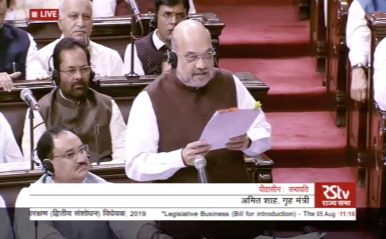
After weeks and days of intense speculation about the situation in the Indian state of Jammu and Kashmir, the Modi government finally revealed its cards and in one fell swoop fundamentally transformed India’s relationship with the state. Home Minister Amit Shah announced in the Parliament the scrapping of Article 370, which exempted Jammu and Kashmir from the Indian Constitution (except Article 1 and Article 370 itself) and permitted the state to draft its own Constitution. The state will now be bifurcated into two Union Territories — Ladakh without a legislature, and Jammu and Kashmir with a legislature. While the government received support in the Parliament from parties like the BSP, AAP, BJD, and YSRCP, its ally the JD(U) walked out of the House in opposition to the move. Predictably, political leaders from the state called the move “unconstitutional” and warned of dangerous consequences.The Profession of Arms: A Guide for Young Army Officers
It takes courage, especially for a young officer, to check a man met on the road for not saluting properly or for slovenly appearance, but, every time he does, it adds to his stock of moral courage, and whatever the soldier may say, he has respect for the officer who does pull him up.
Read Document →The Dragon's Teeth: Assessing China's Military Modernization
PLA has focused on modernising its capabilities across all warfare domains to achieve these goals. This includes land, air, and maritime operations, nuclear, space, counter-space, electronic warfare and cyberspace operations, aiming to become a fully integrated joint force.
Read Document →Transforming the PLA: A Decade of reorganisation from SSF to ISF
PRC has engaged in a sustained and broad effort to transform the PLA from an infantry-heavy, low-technology, ground forces-centric military into a high-technology, networked force with an increasing emphasis on joint operations and naval and air power projection.
Read Document →Eyes without Borders: Exploring the World of Open Source Intelligence (OSINT) in the Digital Age
Open Source Intelligence (OSINT) is gaining prominence with the rise of social media, the digital society and the vast growth of publicly and commercially available information (PAI and CAI).
Read Document →
The PLA’s Developing Cyber Warfare Capabilities and India's Options
Informationised warfare blurs the lines between peacetime and wartime. A nation in the information age cannot wait for the hostilities to break out to collect intelligence, carryout influence operations, develop antisatellite systems or design computer software weapons.
Read Document →
Galwan and After
Why did China did this when he is under tremendous pressure in all fronts, is this China's salami slice tactics being progressed rigorously, what will be new Rules of Engagement, what will be escalatory control mechanism, who has taken this decision, will there be some pressure put by China in India's North-East through insurgency.
Read Document →
India’s Joint Doctrine for Cyberspace Operations: A Critical Review
Chief of Defence Staff (CDS) General Anil Chauhan and Secretary, Department of Military Affairs, formally released declassified versions of the Joint Doctrines for Cyberspace Operations during the Chiefs of Staff Committee meeting in New Delhi.
Read Document →
Know your Enemy General(now Field Marshal) Syed Aseem Munir
Gen SA Munir's position in the hierarchy of Pakistan was not very comfortable. The state of economy, insurgency in Pakhtoonistan and Balochistan, attack on the Jaffar Express, constant protests by supporters of Imran Khan's supporters inside and outside of parliament.
Read Document →
Decoding Operation SINDOOR: Key Aspects and Implications
Precision strikes were carried out on nine sites—four in Pakistan and five in PoK—linked to anti-India terrorist groups such as the LeT, JeM and the Hizbul Mujahideen. The targeted sites included Muridke (LeT headquarters) and Bahawalpur (JeM headquarters).
Read Document →
Chinese Cyber Exploitation in India's Power Grid - Is There a linkage to Mumbai Power Outage?
The New York Times (NYT), based on analysis by a U.S. based private intelligence firm Recorded Future, reported that a Chinese entity penetrated India’s power grid at multiple load dispatch points. Chinese malware intruded into the control systems that manage electric supply across India, along with a high-voltage transmission substation and a coal-fired power plant
Read Document →7 August 2019
The Modi Government Scraps Kashmir's Special Status: What Now?
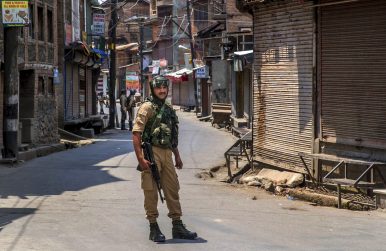
After weeks and days of intense speculation about the situation in the Indian state of Jammu and Kashmir, the Modi government finally revealed its cards and in one fell swoop fundamentally transformed India’s relationship with the state. Home Minister Amit Shah announced in the Parliament the scrapping of Article 370, which exempted Jammu and Kashmir from the Indian Constitution (except Article 1 and Article 370 itself) and permitted the state to draft its own Constitution. The state will now be bifurcated into two Union Territories — Ladakh without a legislature, and Jammu and Kashmir with a legislature. While the government received support in the Parliament from parties like the BSP, AAP, BJD, and YSRCP, its ally the JD(U) walked out of the House in opposition to the move. Predictably, political leaders from the state called the move “unconstitutional” and warned of dangerous consequences.Modi-fying Kashmir: Unpacking India’s Historic Decision to Revoke Kashmir’s Autonomy
U.S. Envoy Ready To Sign 'Good Agreement' With Taliban As Qatar Talks Resume
The U.S. peace envoy seeking to negotiate an end to the nearly 18-year war in Afghanistan said Washington was ready to sign a "good agreement" with the Taliban.Trump’s Afghanistan: Exit or Mirage?
Since entering office thirty months ago, Donald Trump has looked for ways to exit America’s longest conflict, but has been stymied, repeatedly, on execution. NASA's Curiosity rover lands on the surface of Mars.
The Army experiment with the network in Afghanistan
Army brigades in Afghanistan are testing a new set of rules on when to replace and refurbish equipment related to the service’s battlefield network.Chinese State Hackers Suspected Of Malicious Cyber Attack On U.S. Utilities
The Cyber Dimension of the South China Sea Clashes
Stratcom: China Rapidly Building Up Nuclear Forces
OMAHA—China is aggressively building up nuclear warfighting forces as part of a larger effort to expand power over Asia and globally, according to senior officials of the U.S. Strategic Command.What’s Trump’s Plan With the Latest Tariffs on China?
How influential is China in the World Trade Organization?
President Trump Threatens 10% Tariff On Chinese Products
The Truth About Tariffs
Tariffs have long been used to prop up homegrown industries by getting locals to buy goods produced domestically. For most of the past century, however, tariffs have fallen out of favor because they often lead to reduced trade, higher prices for consumers in tariff-wielding countries, and retaliation from abroad. With tariffs once again rising under U.S. President Donald J. Trump and global trade slowing, many experts fear companies could soon face higher costs and the world economy could suffer.U.S. Ends Cold War Missile Treaty, With Aim of Countering China
WASHINGTON — The United States on Friday terminated a major treaty of the Cold War, the Intermediate Nuclear Forces agreement, and it is already planning to start testing a new class of missiles later this summer.U.S., China: Trump's Tariff Tweets Escalate a Mammoth Trade War
Millions of barrels of Iranian crude are sitting in Chinese ports — and could disrupt oil markets
Estimates as to the volume of Iranian crude that’s made its way to China between last January and May vary from 12 million to 14 million barrels. China keeps the crude in “bonded storage,” which means the oil has not been cleared through Chinese customs and is not being used, therefore not yet violating U.S. sanctions Oil could fall by $5 to $7 a barrel if China were to draw down on these stored volumes, one expert told CNBC.Examining Alliances and Splits That Could Determine Israel's Future
Ensuring a Twenty-Second Century America
There is a growing consensus that we are now in a new age of “great power” competition. So what’s the best strategy for dealing with it?Russian 'super quiet' submarines feared to be in British waters
Kim Jong Un Turns Up the Pressure on the United States
Kim Jong-un’s campaign of “maximum pressure” against the United States has continued despite the pageantry of the June 30 summit between him and U.S. President Donald Trump at the inter-Korean Military Demarcation Line.Will Trump’s Trade Wars Reshape the Global Economy?
Not Your Father’s Bots
Surveillance images from a U.N. sanctions report purportedly showing a North Korean vessel engaged in illegal trading United Nations Security Council / REUTERSWhat Does the Demise of the INF Treaty Mean for Nuclear Arms Control?
In the Dispute Between Japan and South Korea, Echoes of Trump’s Trade Policy
Will Argentina’s Immigrants Pay the Price for Macri’s Electoral Alliance?
Ep. 50: Cyberwarfare yesterday
Today we turn from the possible future of cyberwarfare and to its fairly incredible past. We’ll start with the first major cyber attack on U.S. military networks, work our way up to the OPM hack of 2015, then all the way to East Germany in the 1980s. We’ll even make some brief stops in Hollywood, where a few films over the past 35 years got cyber risks you might say helpfully wrong, while others got various key elements uncomfortably right.A Port Rush: Competition for Control of Trade Routes
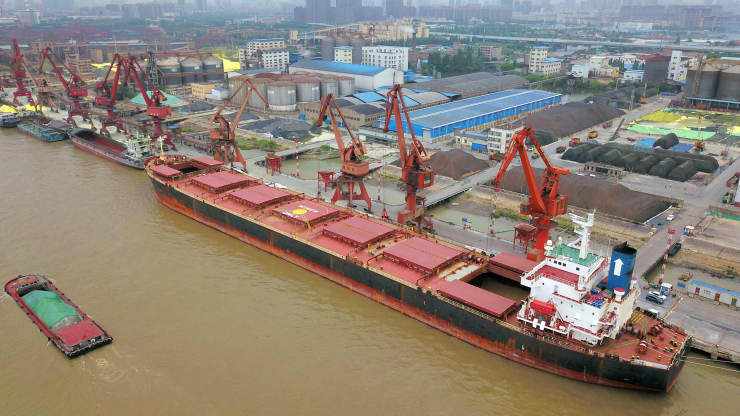
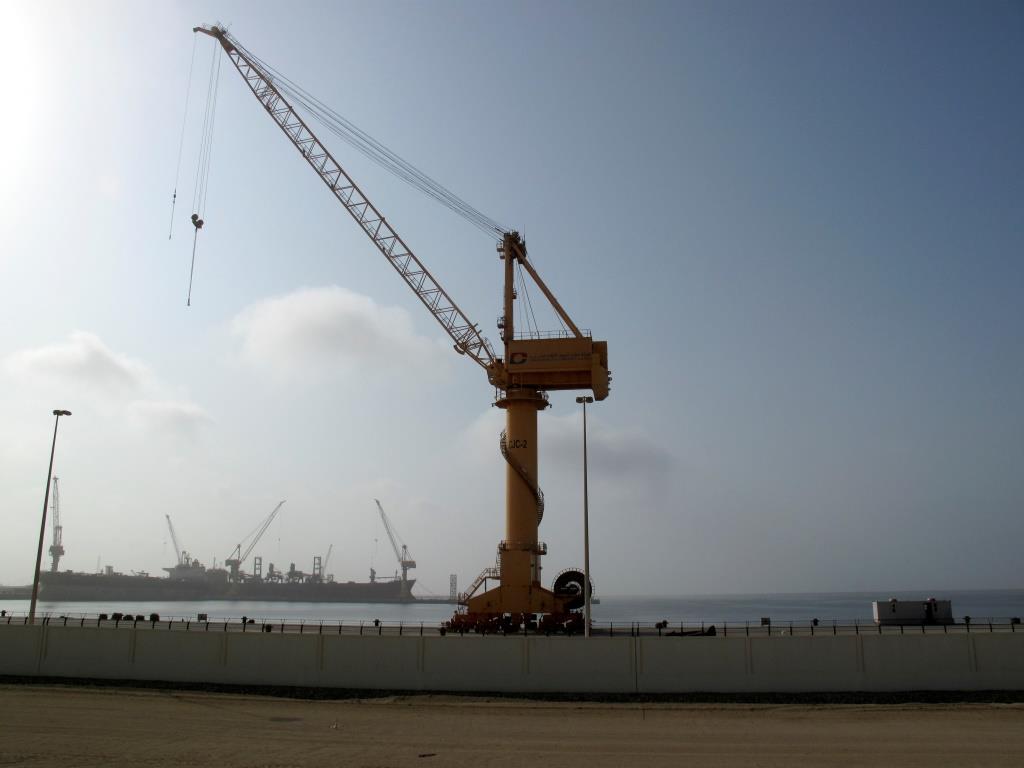
In the Arabian Sea, competition has been building for the past few years over control of the strategic ports adjacent to major trade routes. Power struggles have developed in the context of China's efforts to consolidate its hold on key ports in the Indian Ocean, Arabian Sea, and Red Sea, as part of the Belt and Road Initiative (BRI). Chinese penetration of this arena has both increased the Indians' sense of a direct threat and sharpened the United States understanding that it must increase its strategic focus on this region. In tandem, there are heightened efforts by Arab Gulf states to increase their strategic-military stability and secure their energy export and food import channels, while reducing their dependence on the Strait of Hormuz. From the international angle, therefore, port development in this region is an integral piece in the competing geo-economic plans of China (BRI) and India (Look West) to develop new trade routes to markets in West Asia and Africa. From the strategic angle, the US (in collaboration with India and the UK) is trying to obstruct China’s march forward. From the regional angle, the Gulf states are developing their ports with an emphasis on industrial zones, refineries and petrochemical facilities, storage facilities, export facilities, and free trade zones. From Israel's perspective, the competition over the Red Sea shipping lane allows the consolidation of the presence of different actors along the southern access routes to the Gulf of Eilat and to the Suez Canal, creating a new space of challenges, and maybe also opportunities for (low profile) Israeli involvement in some of the initiatives.
The El Paso Shooting and the Virality of Evil
Shortly after 10 a.m. on Saturday, an unsigned document was posted to 8chan, a site that calls itself “the darkest reaches of the Internet.” Its author appeared to be a twenty-one-year-old white man from near Dallas, Texas, who had just driven about nine hours to the border city of El Paso. According to the document, the young man was inspired by the mass shooting in Christchurch, New Zealand, in March. In Texas, his goal was to murder as many Hispanic civilians as possible. Carrying an AK-47-style assault rifle, he killed twenty people and wounded twenty-six others. Apparently, he intended to spark a race war—or, rather, to accelerate a race war that he already believed to be in progress. “Do your part and spread this brothers!” he wrote on 8chan. “Keep up the good fight.”From the iPhone to Huawei: The new geopolitics of technology
Extreme Weather Threatens Military Facilities
The Longest Wars Richard Holbrooke and the Decline of American Power
One of the most celebrated diplomats of his generation, Richard Holbrooke helped normalize U.S. relations with China; served as U.S. ambassador to a newly reunified Germany and then to the United Nations; and, most famously, negotiated the 1995 Dayton peace agreement that ended the war in Bosnia. But he began and ended his career struggling with how to resolve two American wars: first in Vietnam, then in Afghanistan.