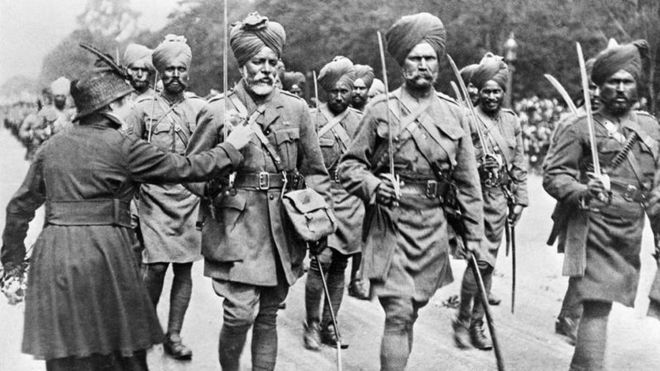
Approximately 1.3 million Indian soldiers served in World War One - and more than 74,000 of them lost their lives.The Profession of Arms: A Guide for Young Army Officers
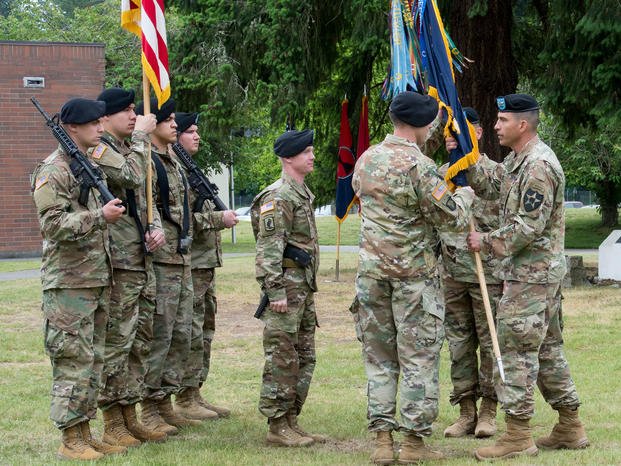
It takes courage, especially for a young officer, to check a man met on the road for not saluting properly or for slovenly appearance, but, every time he does, it adds to his stock of moral courage, and whatever the soldier may say, he has respect for the officer who does pull him up.
Read Document →The Dragon's Teeth: Assessing China's Military Modernization
PLA has focused on modernising its capabilities across all warfare domains to achieve these goals. This includes land, air, and maritime operations, nuclear, space, counter-space, electronic warfare and cyberspace operations, aiming to become a fully integrated joint force.
Read Document →Transforming the PLA: A Decade of reorganisation from SSF to ISF
PRC has engaged in a sustained and broad effort to transform the PLA from an infantry-heavy, low-technology, ground forces-centric military into a high-technology, networked force with an increasing emphasis on joint operations and naval and air power projection.
Read Document →Eyes without Borders: Exploring the World of Open Source Intelligence (OSINT) in the Digital Age
Open Source Intelligence (OSINT) is gaining prominence with the rise of social media, the digital society and the vast growth of publicly and commercially available information (PAI and CAI).
Read Document →
The PLA’s Developing Cyber Warfare Capabilities and India's Options
Informationised warfare blurs the lines between peacetime and wartime. A nation in the information age cannot wait for the hostilities to break out to collect intelligence, carryout influence operations, develop antisatellite systems or design computer software weapons.
Read Document →
Galwan and After
Why did China did this when he is under tremendous pressure in all fronts, is this China's salami slice tactics being progressed rigorously, what will be new Rules of Engagement, what will be escalatory control mechanism, who has taken this decision, will there be some pressure put by China in India's North-East through insurgency.
Read Document →
India’s Joint Doctrine for Cyberspace Operations: A Critical Review
Chief of Defence Staff (CDS) General Anil Chauhan and Secretary, Department of Military Affairs, formally released declassified versions of the Joint Doctrines for Cyberspace Operations during the Chiefs of Staff Committee meeting in New Delhi.
Read Document →
Know your Enemy General(now Field Marshal) Syed Aseem Munir
Gen SA Munir's position in the hierarchy of Pakistan was not very comfortable. The state of economy, insurgency in Pakhtoonistan and Balochistan, attack on the Jaffar Express, constant protests by supporters of Imran Khan's supporters inside and outside of parliament.
Read Document →
Decoding Operation SINDOOR: Key Aspects and Implications
Precision strikes were carried out on nine sites—four in Pakistan and five in PoK—linked to anti-India terrorist groups such as the LeT, JeM and the Hizbul Mujahideen. The targeted sites included Muridke (LeT headquarters) and Bahawalpur (JeM headquarters).
Read Document →
Chinese Cyber Exploitation in India's Power Grid - Is There a linkage to Mumbai Power Outage?
The New York Times (NYT), based on analysis by a U.S. based private intelligence firm Recorded Future, reported that a Chinese entity penetrated India’s power grid at multiple load dispatch points. Chinese malware intruded into the control systems that manage electric supply across India, along with a high-voltage transmission substation and a coal-fired power plant
Read Document →16 November 2019
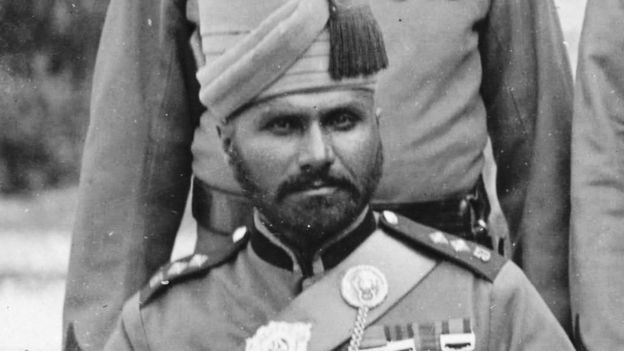
World War One: Six extraordinary Indian stories
Approximately 1.3 million Indian soldiers served in World War One - and more than 74,000 of them lost their lives.RCEP’s Economic Impact in Asia
RCEP, along with the CPTPP, will help drive deep integration in Asia. Holdouts like India will suffer the most.Hunger, starvation and Indian soldiers in World War II
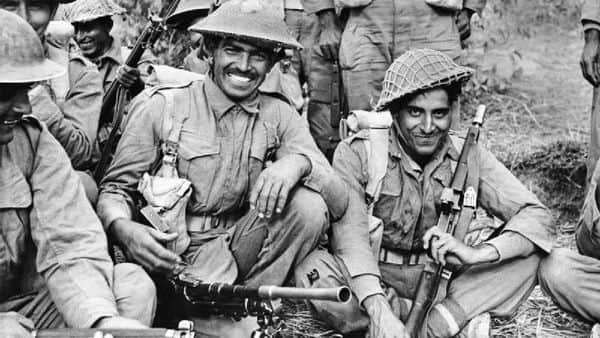
An Indian havildar, or junior officer, who was part of a Sappers and Miners unit stationed in Egypt during the height of World War II, wrote back home in June 1943: “From my personal experience I can tell you that the food we get here is much better than that we soldiers get in India. But whenever I sit for my meals, a dreadful picture of the appalling Indian food problem passes through my mind, leaving a cloudy sediment on the walls of my heart which makes me nauseous and often I leave my meals untouched."We Still Don’t Know Who Won Afghanistan’s Presidential Election
More than 40 days after the pivotal presidential election, we’re still unsure how many votes were cast — not to mention who the victor is.The Growing Threat of Water Wars
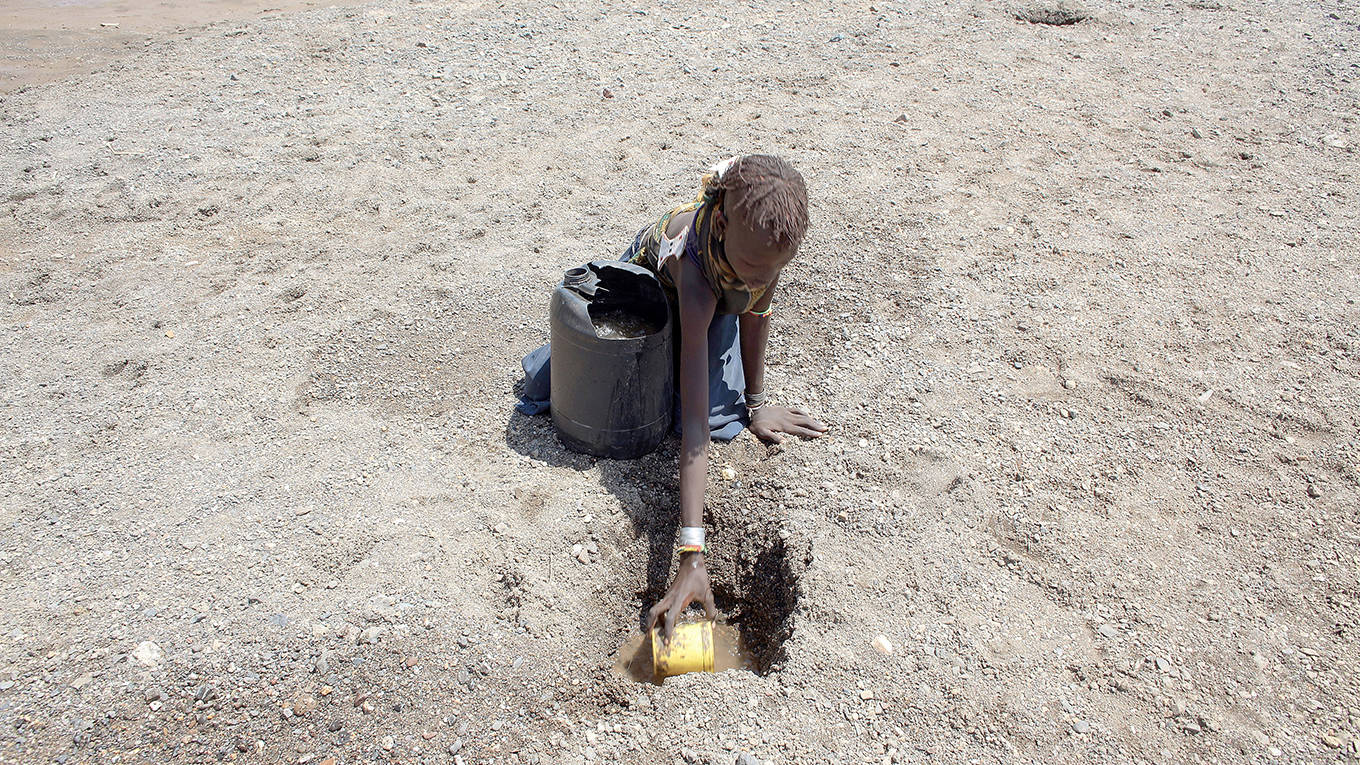
In 2015, United Nations member states adopted the Sustainable Development Goals, which include an imperative to “ensure availability and sustainable management of water and sanitation for all.” Yet, in the last four years, matters have deteriorated significantly.EXCLUSIVE Pentagon’s AI Problem Is ‘Dirty’ Data: Lt. Gen. Shanahan
The military has all the data it needs to train machine learning algorithms for war – somewhere. Now the Joint AI Center has to find it all and clean it up. The goal: AI Ready data.Two years in, how has a new strategy changed cyber operations?
By 2013 U.S. networks were already were under constant attack from sophisticated nation-state actors. Hackers stole millions of sensitive records from the Office of Personnel Management, gained access to White House networks and destroyed dozens of computers at Sony Pictures from thousands of miles away.The Transatlantic Alliance and the China Challenge: Current Trends and Future Developments
A closer look at the current state and future evolution of U.S. and European collaboration on China.We’re underestimating China’s impact on governance in Latin America: Three persistent myths
China’s Risky Endgame in Hong Kong
In 2017, Chinese President Xi Jinping declared that by the time the People’s Republic celebrates its centenary in 2049, it should be a “great modern socialist country” with an advanced economy. But following through with planned measures to tighten mainland China's grip on Hong Kong would make achieving that goal all but impossible.Hong Kong’s Violence Will Get Worse
Hong Kong’s protests have seen their first death, and there will be more to come. After months of demonstrations over Beijing’s growing influence tore the city apart, a protester who fell several stories under dubious circumstances died on Friday, while another is fighting for his life after being shot at close range by police on Monday while unarmed. Another man, meanwhile, was set on fire by protesters for shouting pro-Beijing slogans and is in critical condition. Mass tear gassings of Central, Hong Kong’s business district, caused many professionals to stay home, while clashes between police and protesters—previously mostly restricted to weekends—raged through the city on a Monday morning following an attempt to declare a general strike.How dominant are Chinese companies globally?
Iran’s Protests and the Threat to Domestic Stability
Erdogan Has No Idea What He’s Doing in Syria
In contrast to the profound confusion in Washington over the past two weeks, Turkish President Recep Tayyip Erdogan and his government have been relentlessly on message about their invasion of Syria. Operation Peace Spring, as Turkey calls it, is a counterterrorism operation, providing safety for Turks and Syrians alike—including Kurds. The People’s Protection Units (YPG) is the Kurdistan Workers’ Party (PKK), which is no different from the Islamic State. Full stop. No amount of international pressure and outrage has moved Ankara from these talking points.Dashing Kurdish Hopes Will Not Bring Erdogan Peace
Only a few months ago, Kurds in the Middle East were optimistic. They enjoyed a newfound international recognition, and a major political breakthrough glimmered on their horizon. Their confidence sprang in large part from the achievements of the Syrian Kurds.Let Russia Be Russia
Russia's F-35 Killer: Report Claims S-500 Air Defense System Was 'Tested' in Syria
A defense industry source told Russian news outlet Izvestia last month that the S-500 recently underwent field testing in Syria, where the Russian Aerospace Forces continue to maintain a significant presence. Moscow denied it--but won't dey what they think this air defense platform could do in battle. Britain didn’t fight the second world war — the British empire did
In 1929, when Edwin Lutyens handed over the newly completed building site of New Delhi to the Viceroy, Lord Irwin, many believed he had created a capital for a British empire in India that would last if not 1,000, then at least 100 years. It was, as Lord Stamfordham wrote, ‘a symbol of the might and permanence of the British empire’ that had been commissioned specifically so that ‘the Indian will see for the first time the power of western civilisation’.Trends in Russia's Armed Forces
Macron Is Right About NATO and the EU, but Will Europe Listen?
The United States’ Nuclear and Non-Nuclear Weapons Are Dangerously Entangled
In October 1973, an unreliable radiation detector could have caused the end of the world. The setting was the Yom Kippur War between Israel and a coalition of Arab states, and the superpowers found themselves being sucked into the conflict. In the war’s febrile final days, the United States detected what appeared to be radiation from a Soviet freighter headed for Egypt and concluded—almost certainly incorrectly—that Moscow was transferring nuclear warheads to Cairo. Partly in response, on Oct. 24, Washington placed its nuclear forces on a global alert for only the fourth time in history—a step it has taken only twice since. The U.S. alert prompted the Soviet Union to reportedly issue a preliminary order to begin the alerting of its own nuclear forces.Shifting Poles In The Middle East: Implications For US Regional Strategy – Analysis
(FPRI) — The Arab uprisings and subsequent civil wars sweeping the region beginning in late 2010 have fundamentally shifted the internal regional balance of power in ways that U.S. policy has yet to account for. Pro-Western autocrats in Egypt, Tunisia, and Yemen who played key roles in U.S. regional policies for decades were suddenly ousted by public protests and pressures that had been building for decades. More recently, widescale public protests in Lebanon and Iraq are threatening to unseat existing governments there promising even more uncertainty and tumult in a region already teetering on the edge. Meanwhile, civil wars raging in Syria, Libya, and Yemen have left these countries divided, weak, and desperately poor with little prospect of meaningful recovery for a generation or more. Additionally, various Arab states are backing a host of divided and competing factions and militias—increasing regional instability and draining the limited economic and manpower of all states engaged in this competition.US ballistic missile defenses, 2019
This is How America's National Debt Could Grow by $7 Trillion
Tacking as much as $6.7 trillion onto our national debt to cover broken pension promises would raise the average household’s debt burden by $52,000, to $230,000.In Chile, Protests Show No Signs of Dying Down
With Chile's protests poised to enter their fifth week, the prospects for a timely and tidy resolution are dim. Already, the sustained demonstrations in Santiago and other cities have led to at least 20 deaths, cost the economy an estimated $1.5 billion and forced the government to cancel the mid-November Asia-Pacific Economic Cooperation (APEC) summit at the last minute. Following the spread of demonstrations into Santiago's wealthier neighborhoods earlier this week, President Sebastian Pinera unveiled a carrot-and-stick approach on Nov. 7: While announcing plans to enhance the government's ability to monitor and punish violent protesters, he also heralded the beginning of "citizen dialogues" next week.Workplace Romance: Did McDonald’s Make the Right Call?
The recent firing of McDonald’s chief executive Steve Easterbrook over a consensual relationship with an employee highlights the thorny issue of workplace romance in the #MeToo era, which has heralded a number of CEO resignations over inappropriate behavior that previously was condoned or overlooked.Here’s how Cyber Command is using ‘defend forward’
The World Needs Twice as Many Cybersecurity Pros, Report Says
In the U.S., an industry nonprofit found that two of every five cybersecurity jobs is going unfilled.