The Profession of Arms: A Guide for Young Army Officers
It takes courage, especially for a young officer, to check a man met on the road for not saluting properly or for slovenly appearance, but, every time he does, it adds to his stock of moral courage, and whatever the soldier may say, he has respect for the officer who does pull him up.
Read Document →The Dragon's Teeth: Assessing China's Military Modernization
PLA has focused on modernising its capabilities across all warfare domains to achieve these goals. This includes land, air, and maritime operations, nuclear, space, counter-space, electronic warfare and cyberspace operations, aiming to become a fully integrated joint force.
Read Document →Transforming the PLA: A Decade of reorganisation from SSF to ISF
PRC has engaged in a sustained and broad effort to transform the PLA from an infantry-heavy, low-technology, ground forces-centric military into a high-technology, networked force with an increasing emphasis on joint operations and naval and air power projection.
Read Document →Eyes without Borders: Exploring the World of Open Source Intelligence (OSINT) in the Digital Age
Open Source Intelligence (OSINT) is gaining prominence with the rise of social media, the digital society and the vast growth of publicly and commercially available information (PAI and CAI).
Read Document →
The PLA’s Developing Cyber Warfare Capabilities and India's Options
Informationised warfare blurs the lines between peacetime and wartime. A nation in the information age cannot wait for the hostilities to break out to collect intelligence, carryout influence operations, develop antisatellite systems or design computer software weapons.
Read Document →
Galwan and After
Why did China did this when he is under tremendous pressure in all fronts, is this China's salami slice tactics being progressed rigorously, what will be new Rules of Engagement, what will be escalatory control mechanism, who has taken this decision, will there be some pressure put by China in India's North-East through insurgency.
Read Document →
India’s Joint Doctrine for Cyberspace Operations: A Critical Review
Chief of Defence Staff (CDS) General Anil Chauhan and Secretary, Department of Military Affairs, formally released declassified versions of the Joint Doctrines for Cyberspace Operations during the Chiefs of Staff Committee meeting in New Delhi.
Read Document →
Know your Enemy General(now Field Marshal) Syed Aseem Munir
Gen SA Munir's position in the hierarchy of Pakistan was not very comfortable. The state of economy, insurgency in Pakhtoonistan and Balochistan, attack on the Jaffar Express, constant protests by supporters of Imran Khan's supporters inside and outside of parliament.
Read Document →
Decoding Operation SINDOOR: Key Aspects and Implications
Precision strikes were carried out on nine sites—four in Pakistan and five in PoK—linked to anti-India terrorist groups such as the LeT, JeM and the Hizbul Mujahideen. The targeted sites included Muridke (LeT headquarters) and Bahawalpur (JeM headquarters).
Read Document →
Chinese Cyber Exploitation in India's Power Grid - Is There a linkage to Mumbai Power Outage?
The New York Times (NYT), based on analysis by a U.S. based private intelligence firm Recorded Future, reported that a Chinese entity penetrated India’s power grid at multiple load dispatch points. Chinese malware intruded into the control systems that manage electric supply across India, along with a high-voltage transmission substation and a coal-fired power plant
Read Document →10 May 2015
India and Asian Leadership
A historic first for Grenadiers
Coming Out of the Closet: India-Israel Ties Under Narendra Modi
Relations between India and Israel are experiencing a diplomatic renaissance. Indian Prime Minister Narendra Modi’s landslide victory in India’s elections last year has ushered in a new, conspicuously more visible phase of bilateral ties.Narendra Modi Is Bad for Big Business And that's a good thing -- particularly when India’s top CEOs are getting mad at him.
A year ago this month, corporate titans around the world celebrated the victory of Narendra Modi’s Bharatiya Janata Party (BJP) in India’s elections. In a country where radical leftists still exert a mighty influence in some states and on the intellectual center of gravity, Modi’s platform was unapologetically pro-business. But to make India more friendly to the free market, Modi has had to step on the toes of some of the same business leaders who backed him.Explained: A RAW deal
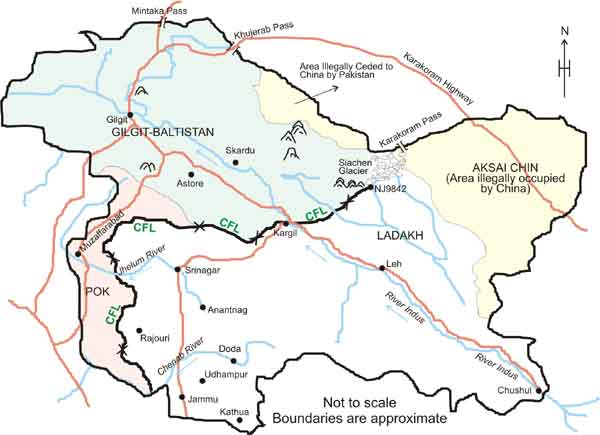
Government must change the Gilgit-Baltistan narrative
For The Record: Preserving Calcutta for the future
Deadly Pakistan Helicopter Crash Kills Diplomats
Are Afghanistan’s Police Safe?
Too Late To Tango? Ashraf Ghani’s Risky Outreach To Pakistan
The Afghan Taliban have announced their spring offensive and followed it up with spectacular attacks around the country. This puts Afghan President Ashraf Ghani in a bind, given that he had gone out on a limb to reenergize the peace process with the Taliban by engaging with Pakistan. Does the renewed spring fighting in Afghanistan mean that his strategy has failed?Why did the Pakistan army warn R&AW?
What’s our Hindustan problem?
How Pakistan Plays the Middle East
Pakistan-Defining-National-Security
The terrorist attack on Army Public School, Peshawar generated a serious debate as to how to confront terrorist attacks in future. The meeting of all parliamentary leaders held in Peshawar on next of the attack under the chair of the Prime Minister concluded with the decision to form a committee to recommend steps to be taken in this direction with the mandate to submit its recommendations within seven days from the date of its formation. The Government consequently constituted the committee comprising of leaders from different political parties, which includes one former Federal Minister for Interior who had rich knowledge and experience to confront these terrorists. The inclusion of professionals and expert on counter-terrorism in the committee would have been an extra advantage to the committee.Decoding Chabahar
Chabahar and Gwadar; Do these names rings bell in your mind? These two are small ports of Iran and Pakistan respectively. Both these cities are in the news since last two weeks and are becoming the new centers of economic warfare between two giants of Asia - India and China; the battlefield has shifted from building their infrastructure within the country to build outside.Indian Ocean 21st century security dilemma
Indian Ocean is the new theatre of ‘Great Power’ politics of the twenty-first century. With a tactical geopolitical landscape, the Indian Ocean- third largest waterway in the world surpassing the Atlantic and Pacific Oceans as the world’s largest and most strategically significant maritime trade for global economy and security. The Indian Ocean Region (IOR) is surrounded by Africa, Asia and Australia serves as a maritime highway linking transcontinental human and economic relationships. In this context, the strategic importance of Indian Ocean can be best assessed in the prophetic words of maritime strategist Rear Admiral Alfred Thayer Mahan, who famously stated: “Whoever attains maritime supremacy in the Indian Ocean would be a prominent player on the international scene. Whoever controls the Indian Ocean dominates Asia. This Ocean is the key to the seven seas in the twenty-first century, the destiny of the world will be decided in these waters.”Road Rage in China: A Cautionary Tale
China and Russia Are More Likely to Become Allies Than You Think
Revealed: China's New 'Carrier Killer' Sub Simulator
Reclamation, Arbitration, Competition: South China Sea Situation Report
China's Silk Road in the Spotlight as Xi Heads to Kazakhstan
China's Coming 'Lawfare' and the South China Sea
Premier Li Urges Innovation in China’s ‘Silicon Valley’
Why pessimistic views of China’s economy are unconvincing
The World’s Leaders Are Avoiding Chinese Social Media
On May 4, Indian Prime Minister Narendra Modi made his debut in the Chinese blogosphere, opening an account on microblogging platform Weibo that gained more than 44,000 followers within four days. Created ahead of Modi’s upcoming first visit to China on May 14, the social media account seems part of the prime minister’s effort to improve India’s image in the eyes of its giant neighbor, a bilateral relationship that has suffered due to territorial disputes and economic rivalry between the two Asian giants.