The Profession of Arms: A Guide for Young Army Officers
It takes courage, especially for a young officer, to check a man met on the road for not saluting properly or for slovenly appearance, but, every time he does, it adds to his stock of moral courage, and whatever the soldier may say, he has respect for the officer who does pull him up.
Read Document →The Dragon's Teeth: Assessing China's Military Modernization
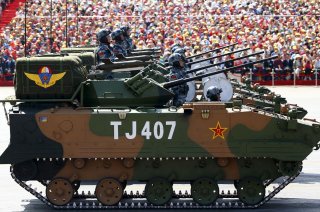
PLA has focused on modernising its capabilities across all warfare domains to achieve these goals. This includes land, air, and maritime operations, nuclear, space, counter-space, electronic warfare and cyberspace operations, aiming to become a fully integrated joint force.
Read Document →Transforming the PLA: A Decade of reorganisation from SSF to ISF
PRC has engaged in a sustained and broad effort to transform the PLA from an infantry-heavy, low-technology, ground forces-centric military into a high-technology, networked force with an increasing emphasis on joint operations and naval and air power projection.
Read Document →Eyes without Borders: Exploring the World of Open Source Intelligence (OSINT) in the Digital Age
Open Source Intelligence (OSINT) is gaining prominence with the rise of social media, the digital society and the vast growth of publicly and commercially available information (PAI and CAI).
Read Document →
The PLA’s Developing Cyber Warfare Capabilities and India's Options
Informationised warfare blurs the lines between peacetime and wartime. A nation in the information age cannot wait for the hostilities to break out to collect intelligence, carryout influence operations, develop antisatellite systems or design computer software weapons.
Read Document →
Galwan and After
Why did China did this when he is under tremendous pressure in all fronts, is this China's salami slice tactics being progressed rigorously, what will be new Rules of Engagement, what will be escalatory control mechanism, who has taken this decision, will there be some pressure put by China in India's North-East through insurgency.
Read Document →
India’s Joint Doctrine for Cyberspace Operations: A Critical Review
Chief of Defence Staff (CDS) General Anil Chauhan and Secretary, Department of Military Affairs, formally released declassified versions of the Joint Doctrines for Cyberspace Operations during the Chiefs of Staff Committee meeting in New Delhi.
Read Document →
Know your Enemy General(now Field Marshal) Syed Aseem Munir
Gen SA Munir's position in the hierarchy of Pakistan was not very comfortable. The state of economy, insurgency in Pakhtoonistan and Balochistan, attack on the Jaffar Express, constant protests by supporters of Imran Khan's supporters inside and outside of parliament.
Read Document →
Decoding Operation SINDOOR: Key Aspects and Implications
Precision strikes were carried out on nine sites—four in Pakistan and five in PoK—linked to anti-India terrorist groups such as the LeT, JeM and the Hizbul Mujahideen. The targeted sites included Muridke (LeT headquarters) and Bahawalpur (JeM headquarters).
Read Document →
Chinese Cyber Exploitation in India's Power Grid - Is There a linkage to Mumbai Power Outage?
The New York Times (NYT), based on analysis by a U.S. based private intelligence firm Recorded Future, reported that a Chinese entity penetrated India’s power grid at multiple load dispatch points. Chinese malware intruded into the control systems that manage electric supply across India, along with a high-voltage transmission substation and a coal-fired power plant
Read Document →29 March 2020
Opportunities in the Covid Crisis
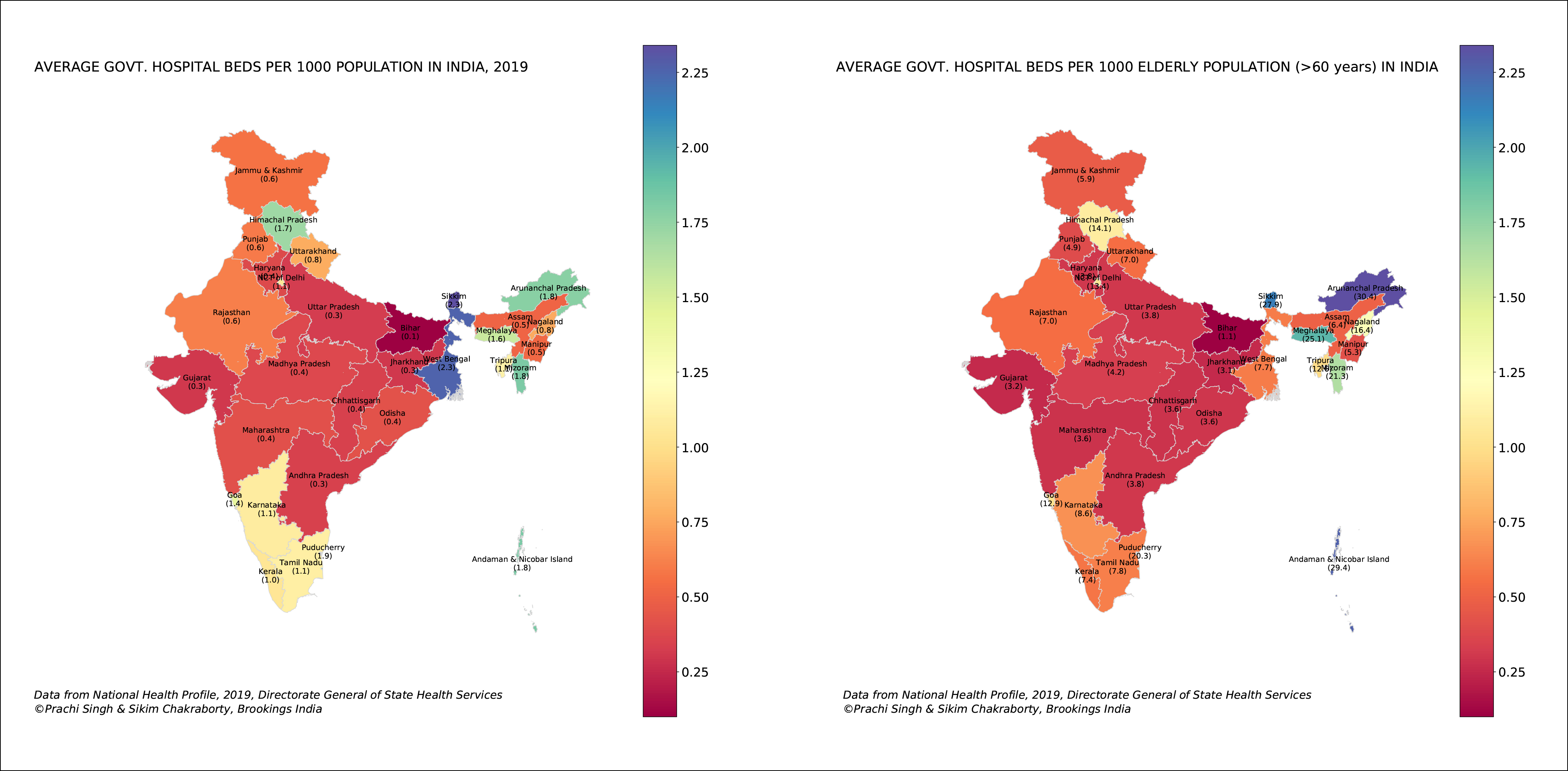
Is India’s health infrastructure equipped to handle an epidemic?
With growing number of coronavirus cases in India (and worldwide), policymakers have sprung into action – more information is being disseminated about preventive measures such as hand washing and not touching the face. Social distancing has been suggested as a tool to “flatten the curve”, or in other words, prevent the health system from being overburdened. Although the number of COVID-19 cases are still low in India, experts have warned against community spread of the disease which will lead to rapid and huge increase in demand for health facilities. Private healthcare is expensive and unavailable for many poor households in India which leaves public healthcare facilities as the only available option for them. For patients who are found to be COVID-19 positive, isolation wards are needed; additionally, for critical cases, intensive care is needed. Currently, almost all suspected cases of coronavirus are referred to government hospitals and it’s important to assess where we stand in terms of medical capacity to provide necessary healthcare to the affected individuals. On the Political Impasse in Afghanistan
Is Islamabad’s Pathetic COVID-19 Response In Balochistan Motivated? – OpEd
In times of coronavirus, when rumour mills are working overtime and social media is pregnant with stories of sinister plots and intrigue, one has learnt to be more discerning when it comes to believing conspiracy theories.The Afghanistan Exodus: Why America Must Leave Kabul Behind
Experts know the new coronavirus is not a bioweapon. They disagree on whether it could have leaked from a research lab
Much remains uncertain about the new coronavirus. What treatments will prove effective against COVID-19? When will a vaccine for the disease be ready? What level of social distancing will be required to tame the outbreak, and how long will it need to last? Will outbreaks come in waves? Amid all these vital forward-looking questions remains a more retrospective but still important one: Where did SARS-CoV-2, the virus that causes COVID-19, come from in the first place? Experts seem to agree it wasn’t the product of human engineering. Much research has been focused on the hypothesis that bats passed a virus to some intermediate host—perhaps pangolins, scaly ant-eating mammals—which subsequently passed it to humans. But the pangolin theory has not been conclusively proven. Some experts wonder whether a virus under study at a lab could have been accidentally released, something that’s happened in the past.China Manoeuvres To Protect Its Interests While Keeping Its Hands Clean – Analysis
Shocking Defeat: How China Lost to Vietnam in 1979
Five Principles for the Pandemic
The COVID-19 Weakest Links
Israel's Neighbors Never Had A Chance To Win The Six Day War
It’s Time for the US and Saudi Arabia to Break Up
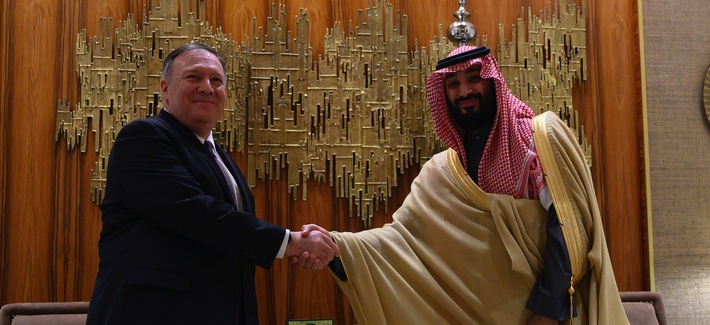
It was only a short time ago when Mohammed Bin Salman, Saudi Arabia’s young crown prince, was assembling world leaders at conferences in the Saudi desert and impressing global investors with grandiose plans of economic and social modernization. Next month will mark the third anniversary of MBS’s PR tour around Hollywood, Washington, D.C., and New York, pressing the flesh with titans of industry like Amazon’s Jeff Bezos and Disney’s Bob Iger—and convincing lawmakers on Capitol Hill that Saudi Arabia under his tutelage was a country brimming with opportunity.CTC Sentinel, March 2020, v. 13, no. 3
An Elite Spy Group Used 5 Zero-Days to Hack North Koreans
It’s Not “Realism”, It’s Reality
Russians Grapple With Oil Price War at a Time of Pandemic
Russia’s Defense Minister Shoigu, Coronavirus and Relentless Military Modernization
Coronavirus Stimulus Package: What's In This $2 Trillion Plan?
After days of haggling, Senate Republicans and Democrats announced early yesterday morning they had reached an agreement for a two trillion dollar stimulus package. By the conclusion of the day, last night, the bill passed 96 to zero.Great Power Competition After the Coronavirus Crisis: What Should America Do?
Sooner or later, the world will bend the curve on the coronavirus, and the great power competition will pick up where it left off. The time to start assessing what that means for U.S. foreign and security policy in a post-pandemic world starts now. Washington ought to turn its attention first to those parts of the world most vital to U.S. interests. On the Integration of Psychological Operations with Cyber Operations
The Intelligence Contest in Cyberspace
Measuring Strategic Success in Cyber Operations
Doctrinal Confusion and Cultural Dysfunction in the Pentagon Over Information and Cyber Operations
INSIDER THREAT: A PEOPLE PROBLEM IN THE AGE OF BITS AND BYTES
Marines to reduce force by 12,000, decrease artillery units and get rid of tanks in 10 years
WASHINGTON — The Marine Corps has decided it must eliminate its tank battalions and reduce its infantry and artillery units in 10 years as it converts its force to one more aligned with taking on potential adversaries such as China, the service announced Monday.