The Profession of Arms: A Guide for Young Army Officers
It takes courage, especially for a young officer, to check a man met on the road for not saluting properly or for slovenly appearance, but, every time he does, it adds to his stock of moral courage, and whatever the soldier may say, he has respect for the officer who does pull him up.
Read Document →The Dragon's Teeth: Assessing China's Military Modernization
PLA has focused on modernising its capabilities across all warfare domains to achieve these goals. This includes land, air, and maritime operations, nuclear, space, counter-space, electronic warfare and cyberspace operations, aiming to become a fully integrated joint force.
Read Document →Transforming the PLA: A Decade of reorganisation from SSF to ISF
PRC has engaged in a sustained and broad effort to transform the PLA from an infantry-heavy, low-technology, ground forces-centric military into a high-technology, networked force with an increasing emphasis on joint operations and naval and air power projection.
Read Document →Eyes without Borders: Exploring the World of Open Source Intelligence (OSINT) in the Digital Age
Open Source Intelligence (OSINT) is gaining prominence with the rise of social media, the digital society and the vast growth of publicly and commercially available information (PAI and CAI).
Read Document →
The PLA’s Developing Cyber Warfare Capabilities and India's Options
Informationised warfare blurs the lines between peacetime and wartime. A nation in the information age cannot wait for the hostilities to break out to collect intelligence, carryout influence operations, develop antisatellite systems or design computer software weapons.
Read Document →
Galwan and After
Why did China did this when he is under tremendous pressure in all fronts, is this China's salami slice tactics being progressed rigorously, what will be new Rules of Engagement, what will be escalatory control mechanism, who has taken this decision, will there be some pressure put by China in India's North-East through insurgency.
Read Document →
India’s Joint Doctrine for Cyberspace Operations: A Critical Review
Chief of Defence Staff (CDS) General Anil Chauhan and Secretary, Department of Military Affairs, formally released declassified versions of the Joint Doctrines for Cyberspace Operations during the Chiefs of Staff Committee meeting in New Delhi.
Read Document →
Know your Enemy General(now Field Marshal) Syed Aseem Munir
Gen SA Munir's position in the hierarchy of Pakistan was not very comfortable. The state of economy, insurgency in Pakhtoonistan and Balochistan, attack on the Jaffar Express, constant protests by supporters of Imran Khan's supporters inside and outside of parliament.
Read Document →
Decoding Operation SINDOOR: Key Aspects and Implications
Precision strikes were carried out on nine sites—four in Pakistan and five in PoK—linked to anti-India terrorist groups such as the LeT, JeM and the Hizbul Mujahideen. The targeted sites included Muridke (LeT headquarters) and Bahawalpur (JeM headquarters).
Read Document →
Chinese Cyber Exploitation in India's Power Grid - Is There a linkage to Mumbai Power Outage?
The New York Times (NYT), based on analysis by a U.S. based private intelligence firm Recorded Future, reported that a Chinese entity penetrated India’s power grid at multiple load dispatch points. Chinese malware intruded into the control systems that manage electric supply across India, along with a high-voltage transmission substation and a coal-fired power plant
Read Document →2 March 2020
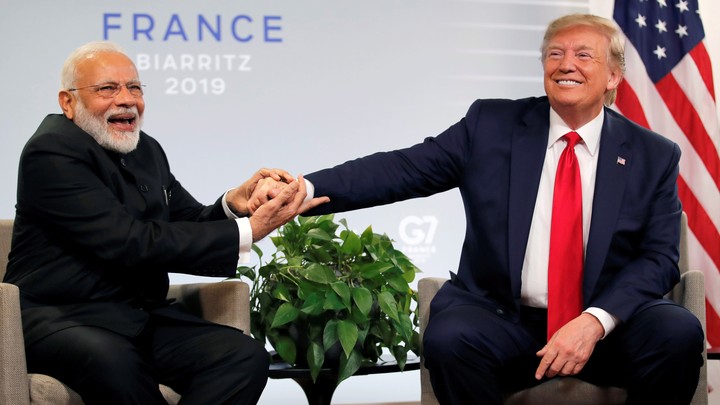
The U.S.-India Relationship Is Bigger Than Trump and Modi
India is building nuclear submarines and ICBMs. That’s a $14 billion mistake.
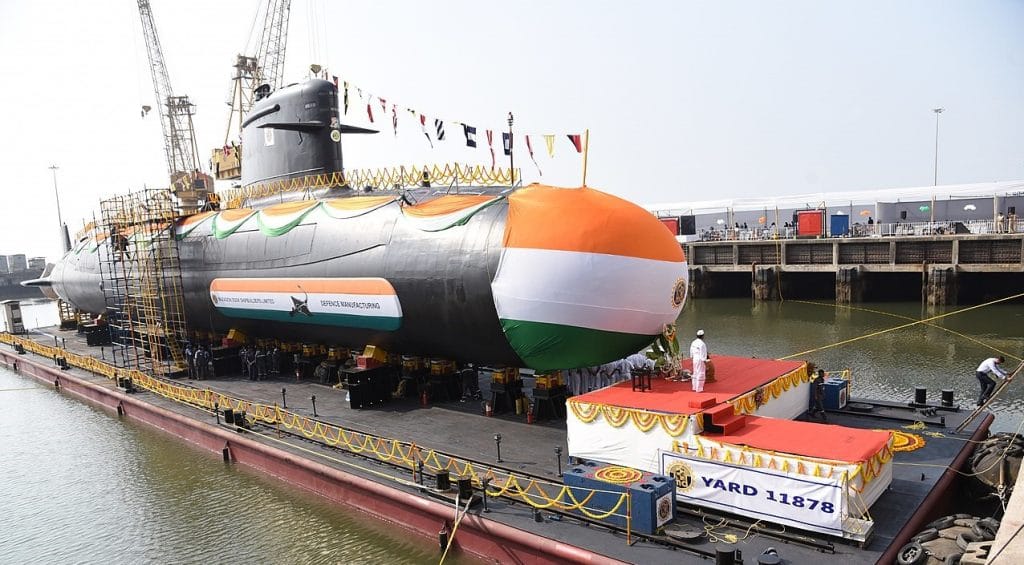
India’s INS Vela, a diesel-electric attack submarine, seen in 2019. Aside from these attack submarines, India is in the process of building nuclear-powered, nuclear-armed submarines and has built two so far, but neither has begun patrols. It plans to build several more. Photo credit: Indian Ministry of Defense.US-Taliban deal — a victory for Islamists?
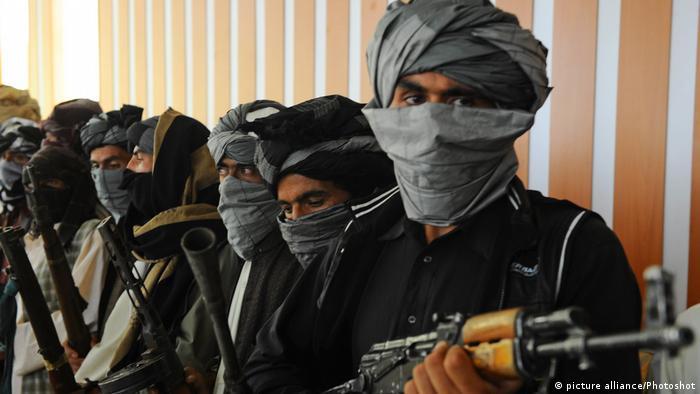
The US and the Taliban are set to sign an agreement on Saturday to end the 18-year-long war in Afghanistan. But analysts say it comes with many concessions for the insurgent group. Shamil Shams reports from Doha.What Do Young Afghans Think About the Peace Process?
The Rocky Road From Doha to Intra-Afghan talks
If all goes well, on February 29 the United States and the Taliban will sign a bilateral agreement in Doha that could potentially mark a turning point in the long-running Afghan conflict. In exchange for U.S. commitments on troop reductions, the Taliban will agree to cut ties and join the international community in opposing extremist groups such as al-Qaeda and, crucially, will agree to enter into negotiations with the Afghan government aimed at conclusively resolving the conflict. These “intra-Afghan” talks would likely begin within a month of the signing of the bilateral agreement. The talks will present a historic opportunity to bring peace to Afghanistan that should be seized upon by all sides.The Word from Wuhan
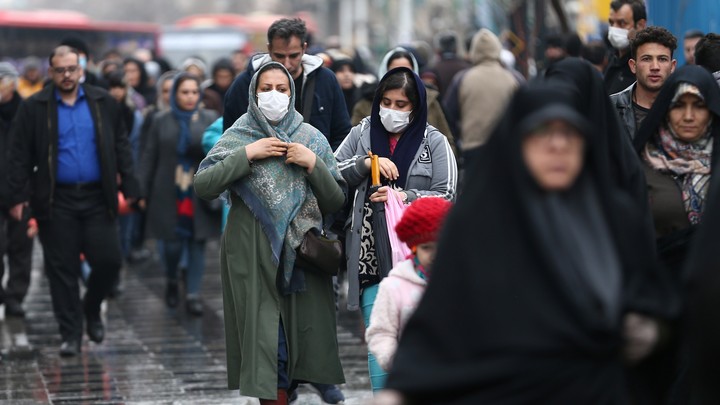
Coronavirus Could Break Iranian Society
Coronavirus Won't Take Down China
Don’t Forget China’s Other Viral Outbreak
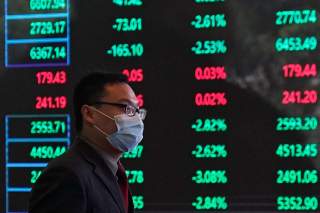
Wuhan residents rarely leave their apartments nowadays, and when they do, it is to stock up on necessary goods like food and masks. On January 23, officials banned transportation in and out of Wuhan, the center of the outbreak of a novel coronavirus that has so far infected more than 82,000 people and killed 2,810. People in Wuhan rushed to buy food and supplies. More than a month later, shelves remain bare. To increase supply and decrease the price of pork, the Chinese Ministry of Agriculture of Rural Affairs decided on February 7 to release 10,000 tons of frozen pork from a Hubei reserve.The Impact of China’s Belt and Road Initiative on Central Asia and the South Caucasus
In September 2013, Chinese President Xi Jinping first announced his strategic vision of “One Belt, One Road” (subsequently renamed the “Belt and Road Initiative” or BRI) during a speech at Nazarbayev University in the Kazakh capital. In essence, the BRI is a massive Chinese project, involving more than 130 countries, over $600 billion in existing commitments, and a total price tag estimated in the trillions of dollars, to redevelop the ancient Silk Road trade routes running between China and Europe. In his speech at Nazarbayev University, Xi suggested that China and Central Asia cooperate to build “the Belt,” the continental part of the Chinese vision, as opposed to “the Road,” the maritime segment. The choice to unveil this enormous project in a country with a relatively low international profile suggests the significance that China attaches to Kazakhstan specifically as well as the broader region in which it is situated. Indeed, Central Asia and the South Caucasus will be a key part of the BRI and home to a number of major associated projects.Pentagon: China threat increasing
“To Oppress the Free”: The Iranian Basij and the Dark Side of Unconventional Warfare Doctrine
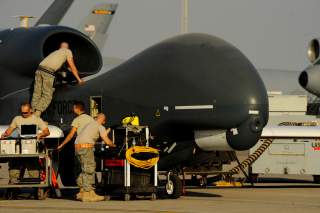
Iran's Drone Shootdown Shows We're Vulnerable For the Next War
The U.N. Won’t Save Idlib. The EU and NATO Can.
In its latest convulsion, the war in Syria has produced its biggest humanitarian calamity yet. But the world’s attention is focused elsewhere. Syrian President Bashar al-Assad’s military operation targeting Idlib, in the northwest of the country, has uprooted more than 900,000 civilians—the majority of them women and children—according to United Nations figures.Europe Is Thinking Harder About Divorcing America
America Alone: Why the Trump Administration Will Pay for Alienating Its Strategic Partners
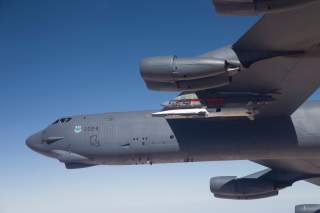
Get Ready for Unstoppable, Deadly Hypersonic Weapons
How the 1994 Battle of Grozny Changed Russia Forever
Key point: There was a limit to how far Russia would let its ethnic enclaves go in pushing for autonomy. However, Russia's forces were not ready yet to put down an independence movement.ACCELERATING INTO THE NEXT FIGHT: THE IMPERATIVE OF THE OFFENSE ON THE FUTURE BATTLEFIELD
Can cryptocurrency become the UN money of the future?
America Must Shape the World’s AI Norms — or Dictators Will
Four former U.S. defense secretaries issue a warning about China and a wake-up call to Americans on artificial intelligence.Intuition Is The Highest Form Of Intelligence
An Apolitical Military, Not a Non-political Military, is Key to Superior Strategy and National Values
Improving Company Performance in Offensive Operations
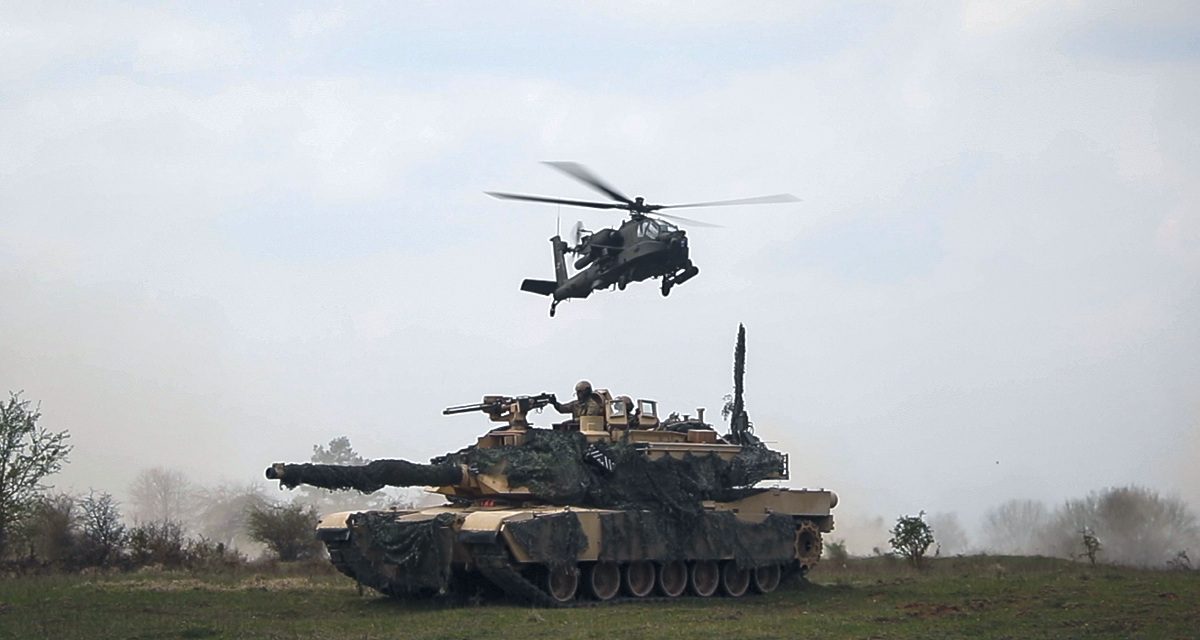
The U.S. Army’s Combined Arms Battalions (CABs) form the core of the Armored Brigade Combat Team’s (ABCT) striking power. They include main battle tanks, infantry fighting vehicles, 120mm mortars, and infantry squads. This impressive grouping of combat platforms and soldiers requires the company commander to skillfully employ and integrate platoons. Company commanders enable the CAB commander to rapidly combine arms. Based on observations of CABs executing offensive operations at the National Training Center (NTC), numerous shortfalls exist at the company level that impact the CAB’s ability to maintain momentum and extend operational reach. Units that can’t perform fundamental company and platoon-level tasks during the plan, prepare and execute phases of an operation will stall the CAB commander’s efforts to synchronize actions and achieve desired effects against enemy formations. To minimize this degradation in combat power, armor and mechanized infantry company commanders should consider the following best practices.CTC Sentinel 13 (2)
Source Link