The Profession of Arms: A Guide for Young Army Officers
It takes courage, especially for a young officer, to check a man met on the road for not saluting properly or for slovenly appearance, but, every time he does, it adds to his stock of moral courage, and whatever the soldier may say, he has respect for the officer who does pull him up.
Read Document →The Dragon's Teeth: Assessing China's Military Modernization
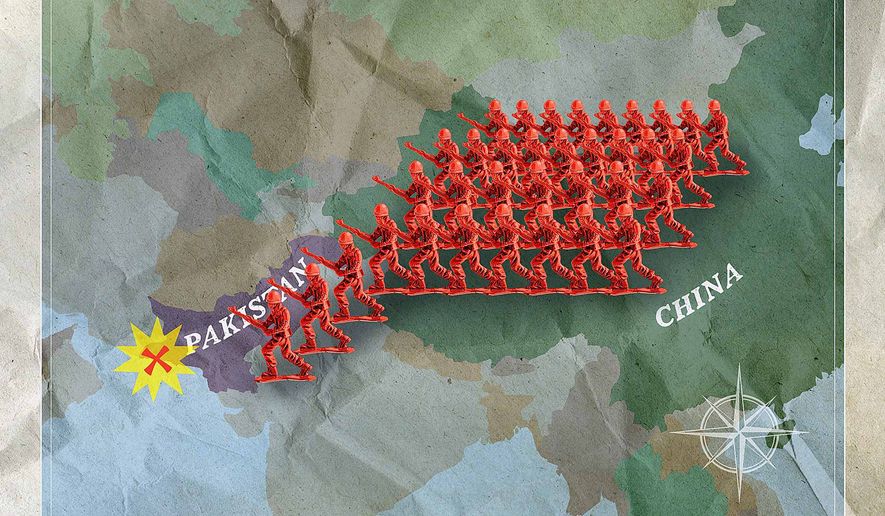
PLA has focused on modernising its capabilities across all warfare domains to achieve these goals. This includes land, air, and maritime operations, nuclear, space, counter-space, electronic warfare and cyberspace operations, aiming to become a fully integrated joint force.
Read Document →Transforming the PLA: A Decade of reorganisation from SSF to ISF
PRC has engaged in a sustained and broad effort to transform the PLA from an infantry-heavy, low-technology, ground forces-centric military into a high-technology, networked force with an increasing emphasis on joint operations and naval and air power projection.
Read Document →Eyes without Borders: Exploring the World of Open Source Intelligence (OSINT) in the Digital Age
Open Source Intelligence (OSINT) is gaining prominence with the rise of social media, the digital society and the vast growth of publicly and commercially available information (PAI and CAI).
Read Document →
The PLA’s Developing Cyber Warfare Capabilities and India's Options
Informationised warfare blurs the lines between peacetime and wartime. A nation in the information age cannot wait for the hostilities to break out to collect intelligence, carryout influence operations, develop antisatellite systems or design computer software weapons.
Read Document →
Galwan and After
Why did China did this when he is under tremendous pressure in all fronts, is this China's salami slice tactics being progressed rigorously, what will be new Rules of Engagement, what will be escalatory control mechanism, who has taken this decision, will there be some pressure put by China in India's North-East through insurgency.
Read Document →
India’s Joint Doctrine for Cyberspace Operations: A Critical Review
Chief of Defence Staff (CDS) General Anil Chauhan and Secretary, Department of Military Affairs, formally released declassified versions of the Joint Doctrines for Cyberspace Operations during the Chiefs of Staff Committee meeting in New Delhi.
Read Document →
Know your Enemy General(now Field Marshal) Syed Aseem Munir
Gen SA Munir's position in the hierarchy of Pakistan was not very comfortable. The state of economy, insurgency in Pakhtoonistan and Balochistan, attack on the Jaffar Express, constant protests by supporters of Imran Khan's supporters inside and outside of parliament.
Read Document →
Decoding Operation SINDOOR: Key Aspects and Implications
Precision strikes were carried out on nine sites—four in Pakistan and five in PoK—linked to anti-India terrorist groups such as the LeT, JeM and the Hizbul Mujahideen. The targeted sites included Muridke (LeT headquarters) and Bahawalpur (JeM headquarters).
Read Document →
Chinese Cyber Exploitation in India's Power Grid - Is There a linkage to Mumbai Power Outage?
The New York Times (NYT), based on analysis by a U.S. based private intelligence firm Recorded Future, reported that a Chinese entity penetrated India’s power grid at multiple load dispatch points. Chinese malware intruded into the control systems that manage electric supply across India, along with a high-voltage transmission substation and a coal-fired power plant
Read Document →4 August 2018
Faced by rank disparity, Indian Army plans to remove brigadiers
Is India the Weakest Link in the Quad?
Imran Khan’s Shine Won’t Last as Pakistan’s Prime Minister
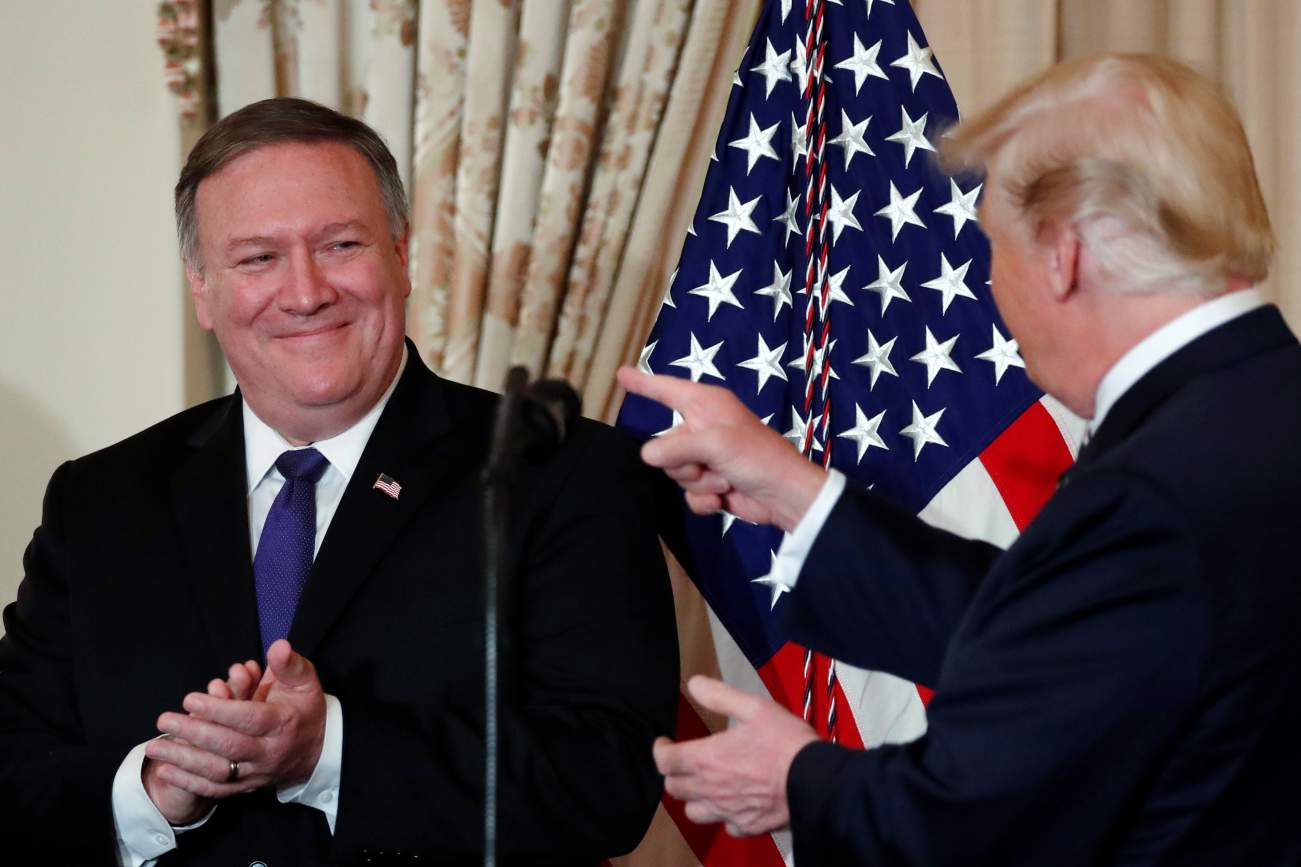
Playing before a crowd of nearly 90,000 people on a pitch in Australia, Pakistan’s national cricket team defeated England to win the sport’s world cup. For the first time in its 45-year existence, cricket-mad Pakistan was the champion of the world. Back home, euphoric Pakistanis poured out of their homes to celebrate. It was, in the words of cricket writer Mohammad Ramis, “the jubilation of their lives.” Pakistan’s squad was led by 40-year-old team captain Imran Khan, a star batter and bowler then in the twilight of an illustrious career. Fast-forward to today. Khan, now a star politician, is poised to become Pakistan’s next prime minister after his Pakistan Tehreek-e-Insaf (PTI) party triumphed in elections last week.CNBC Exclusive: CNBC Transcript: U.S. Secretary of State Mike Pompeo Speaks with CNBC’s Michelle Caruso-Cabrera Today
Bailing out Pakistan
Afghanistan: Recovering from the Brink of Economic Collapse?
As recently as four years ago, Afghanistan’s war economy was on the brink of collapse when unemployment soared following the departure of thousands of American and foreign forces that had, in effect, created a parallel economy. At the time, the Afghan government had no functioning fiscal policy, formal corruption and mismanagement beset its taxation and revenue collection efforts, and the national budget was unbalanced and disorganized, spent mostly on white elephant projects. Budgetary shortfalls and economic volatility were especially tough on the most vulnerable—the poor and the unemployed, who make up the bulk of the Afghan population.All the Prime Minister’s Women
It was a hot day in mid-July when Salman Sufi found out that he had been fired. Until then, Sufi had been a senior member of the Punjab chief minister’s Special Monitoring Unit, where he had, among other things, developed and implemented the Punjab Protection of Women Against Violence Act in 2016. The law was controversial, not least because it allowed for speedy hearings on cases, made special provisions for the development of women’s shelters, expedited procedures that allowed for the removal of abusive men from homes, and sought to implement GPS tracking of abusers. The country’s ruling party, the Pakistan Muslim League-Nawaz (PML-N), was committed to getting the reforms through in the province of Punjab, and Sufi was there to help it do so.PLA's 91st anniversary: Xi Jinping's call for a strong army
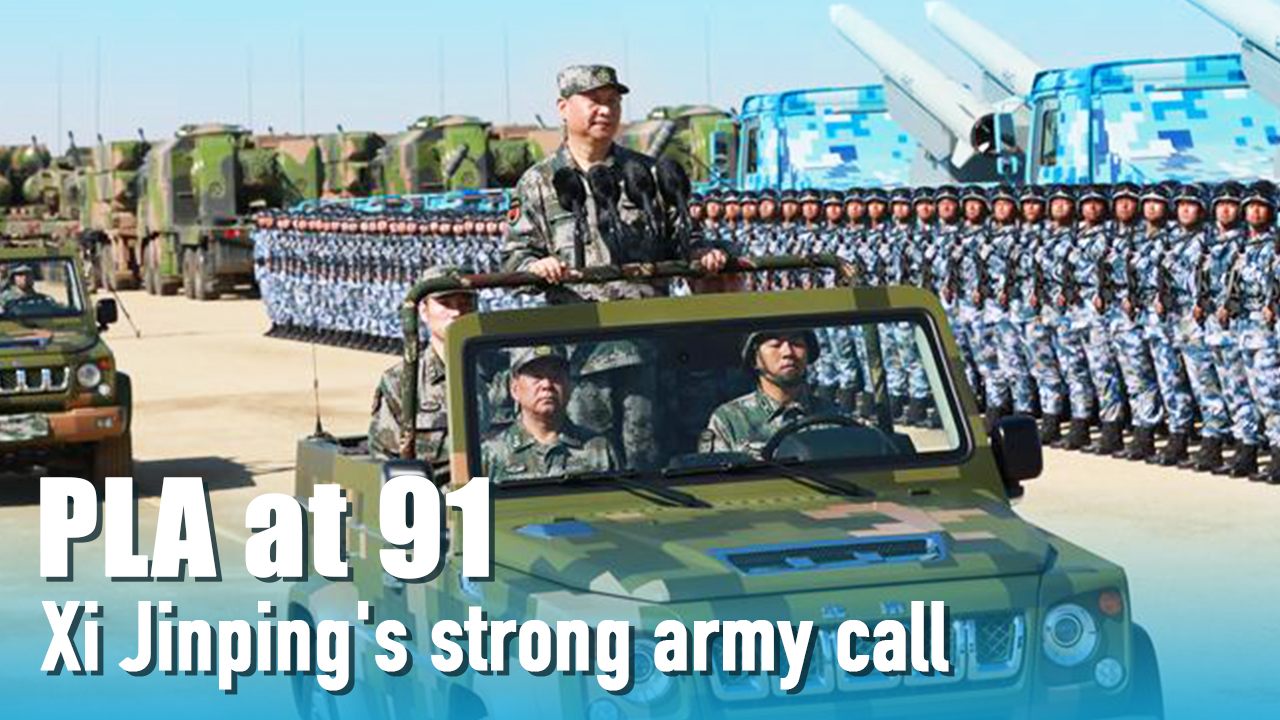
The People's Liberation Army (PLA) marks its 91st anniversary on Wednesday (August 1) amid a far-reaching modernization program. By the mid-21st century, China's army will be "fully transformed into a world-class force," General Secretary of the Communist Party of China (CPC) Central Commitee Xi Jinping pledged at the 19th CPC National Congress in October. The PLA is not only retaining its dedication to traditional requirements, but also building an elite combat force aided by advanced military technology.Will Djibouti Become Latest Country to Fall Into China’s Debt Trap?
Djibouti lies more than 2,500 miles from Sri Lanka but the East African country faces a predicament similar to what its peer across the sea confronted last year: It has borrowed more money from China than it can pay back. In both countries, the money went to infrastructure projects under the aegis of China’s Belt and Road Initiative. Sri Lanka racked up more than $8 billion worth of debt to Chinese sovereign-backed banks at interest rates as high as 7 percent, reaching a level too high to service. With nearly all its revenue going toward debt repayment, last year Sri Lanka resorted to signing over a 70 percent stake and a 99-year lease to the new Chinese-built port at Hambantota.The China Threat Cannot Be Ignored
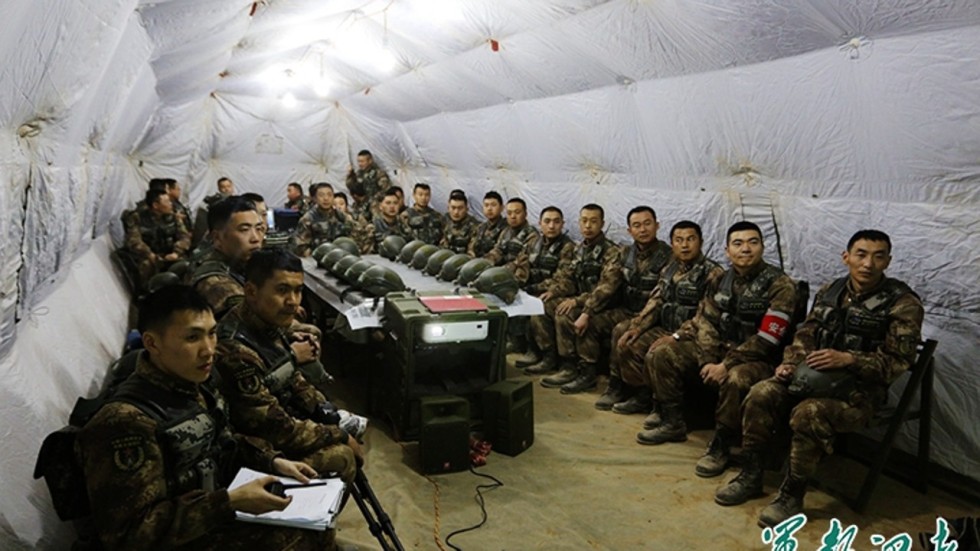
Welcome to the modern military: China’s new combat units prepare for electronic warfare
Will Djibouti Become Latest Country to Fall Into China’s Debt Trap?
Djibouti lies more than 2,500 miles from Sri Lanka but the East African country faces a predicament similar to what its peer across the sea confronted last year: It has borrowed more money from China than it can pay back. In both countries, the money went to infrastructure projects under the aegis of China’s Belt and Road Initiative. Sri Lanka racked up more than $8 billion worth of debt to Chinese sovereign-backed banks at interest rates as high as 7 percent, reaching a level too high to service. With nearly all its revenue going toward debt repayment, last year Sri Lanka resorted to signing over a 70 percent stake and a 99-year lease to the new Chinese-built port at Hambantota.Russia, China Are Outmaneuvering US: Generals Recommend New Authorities, Doctrine
China and Russia are outmaneuvering the US, using aggressive actions that fall short of war, a group of generals and admirals have concluded. To counter them, the US needs new ways to use its military without shooting, concludes a newly released report on the Quantico conclave. The US military will need new legal authorities and new concepts of operation for all domains — land, sea, air, space, and cyberspace. From Little Green Men in Crimea to fortified artificial islands in the South China Sea, from online meddling with US elections to global information operations and to industrial-scale cyber espionage, America’s adversaries have found ways to achieve their objectives and undermine the West without triggering a US military response, operating in what’s come to be called “the grey zone.” No less a figure than Defense Secretary Jim Mattis took on the topic in his National Defense Strategy and in this morning’s graduation address to the Naval Academy.Pompeo's Indo-Pacific Speech: Geoeconomics on a Shoestring
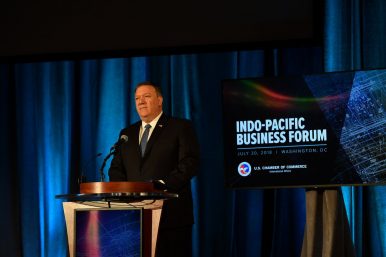
Monday was supposed to be a big day for the United States’ Indo-Pacific economic strategy. Ahead of a trip to Southeast Asia, where he will visit Malaysia, Indonesia, and Singapore, U.S. Secretary of State Mike Pompeo took a break from North Korea diplomacy to show the Indo-Pacific region that the United States was thinking strategically about the geoeconomic future of the region. In a speech to the U.S. Chamber of Commerce’s Indo-Pacific Business Forum, Pompeo outlined what is effectively the United States’ alternative to China’s Belt and Road Initiative: the beginning of an attempt by the United States to add economic ballast to its calls to maintain a “free and open Indo-Pacific.”Mike Pompeo's Plan to Deny China Exclusive Rights to the Indo-Pacific Region
When Secretary of State Mike Pompeo opened the U.S. Chamber of Commerce’s Indo-Pacific Business Forum Monday morning, he stressed the strategic importance of maintaining a “free and open” Indo-Pacific region. And he made it clear that when the United States says “free and open,” it means it. “When we say free, it means we want all nations to be able to protect their sovereignty from coercion . . . when we say open, it means we want all nations to be able to enjoy open access to seas and airways.” And he might have added: the internet. Of course, there’s one country in the Indo-Pacific that has a notoriously closed internet. China’s great firewall is a black hole at the heart of the Indo-Pacific internet. Chinese internet companies like Alibaba and Tencent are eager to expand throughout the region, but the Chinese government keeps its home market firmly closed.China in Africa: win-win development, or a new colonialism?
As their hand-built wooden dhow approaches the shore, Ibrahim Chamume and his fellow fishermen take in the sail and prepare to sell their catch to the small huddle of villagers waiting on the white sand. He has been making a living like this on the Indian Ocean since he was 14. His father was a fisherman, too. Now in his 30s, Ibrahim says earning enough from traditional fishing is tough, but has its compensations. There is the view across the tranquil lagoon to the mangrove swamps; the unspoiled beaches and bays; the lush vegetation and smallholdings growing maize, cassava, cashews and mango. Such scenes must have played out in the tiny Tanzanian village of Mlingotini for centuries.CTC Sentinel 11 (6)
Trump’s $12 Billion Bailout Is No Remedy for Farmers Caught in Trade War
Trade and agriculture experts are warning that U.S. President Donald Trump’s planned $12 billion farm bailout amounts to a misguided attempt to cushion the damage of the administration’s increasing use of tariffs against trading partners and is unlikely to address the long-term risks farmers face of losing their lucrative export markets. The subsidy, outlined last week, could trigger a challenge at the World Trade Organization, where the United States is already under fire for using questionable justifications to impose tariffs on steel and aluminum, the experts said. It has also angered some lawmakers who want protections for industries in their own home states.What if Brexit Happened Without an Exit Deal?
If the March deadline for the United Kingdom to exit the European Union arrives without a Withdrawal Agreement between both parties, Brexit would happen with no transition period, forcing businesses to immediately adjust to the new rules defining EU-UK relations. Under a "no-deal" scenario, British exporters would face EU tariffs that are low on average, but high in specific sectors like automobiles and agriculture. The strongest economic effect of a no-deal scenario would be felt in the United Kingdom and its close trade partners, like Ireland, the Netherlands and Belgium. Without a deal, London and Brussels would probably arrange temporary agreements to minimize disruptions while they continued to negotiate.Improving Force Development Within the U.S. Department of Defense
Donald Trump’s grand strategy
Russian Jamming Poses a Growing Threat to U.S. Troops in Syria
American troops deployed in Syria are increasingly having to defend themselves against Russian jamming devices—electronic attacks with potentially lethal consequences, according to U.S. military officials and analysts. Officers who have experienced the jamming—known as electronic warfare—say it’s no less dangerous than conventional attacks with bombs and artillery. But they also say it’s allowing U.S. troops a rare opportunity to experience Russian technology in the battlefield and figure out how to defend against it. U.S. Army Col. Brian Sullivan described one recent episode to reporters at the U.S. Defense Department last week. He said his troops had encountered a “congested … electronic warfare environment” while fighting in northeastern Syria during their nine-month deployment, which stretched from September 2017 to May 2018.US-Taliban talks could undermine Afghan government
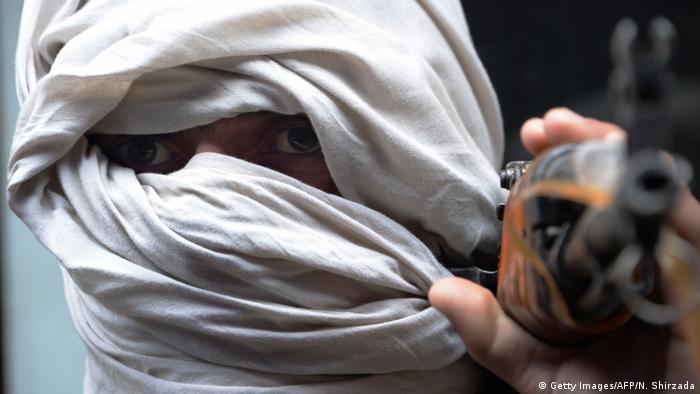
A meeting between US officials and Taliban members in Qatar has raised hopes for peace in Afghanistan, but it also undermines the Afghan government's writ. Is the US willing to pay this price for Taliban talks? Last week, a delegation led by Alice Wells, US deputy assistant secretary of state, held talks with representatives of the Afghan Taliban in Doha, Qatar, in a bid to kick-start peace negotiations and end the protracted Afghan conflict. A Taliban official who participated in talks told Reuters news agency there were "very positive signs from the meeting," which, according to him, was conducted in a "friendly atmosphere."There Is More to Trump’s Trade War than Meets the Eye
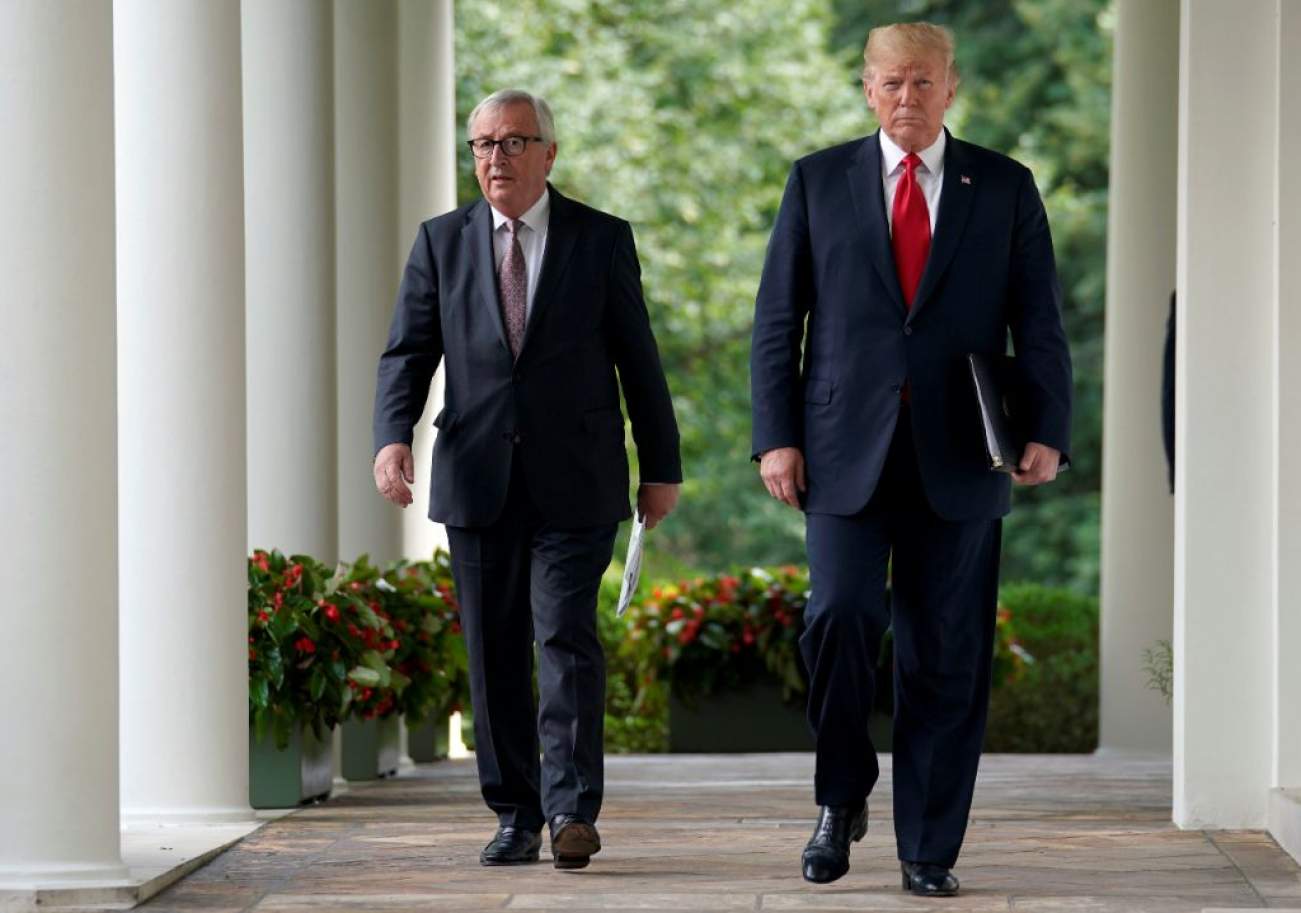
The “trade war” has slipped out of the headlines as quickly as it slipped in, after President Donald Trump’s meeting with EU Commission President Jean-Claude Juncker seemed to promise that Washington would stop escalating and go back to the more familiar negotiating—in fact, negotiating in contexts and using frameworks put forward by pro-trade leaders from industry, Wall Street and both political parties for at least a decade. But deciding that everything is back on track would be wrong. Trump’s tariffs and the international responses, which by one estimate will eventually cost half a percentage point of GDP and more than 360,000 jobs, are still in place.Israel is under massive Chinese, Russian cyber espionage attack
The spy game is changing. It’s increasingly taking place in the daylight rather than in the shadows
The Emperor’s New Clothes
How You Can Use the Dark Web for Threat Intelligence
The Story of an NSA Hacker
Russian Hacking in the US and the Gulf
EXECUTIVE SUMMARY: The covert cyberwar that helped spark the 13-month-old Gulf crisis, which pits a Saudi-United Arab Emirates-led alliance against Qatar, may have just gotten murkier with the indictment of 12 Russian intelligence agents by US Special Counsel Robert Mueller. US Special Counsel Robert Mueller’s indictment of 12 Russian intelligence agents provided detail on website DCLeaks, which was allegedly registered by Russian intelligence officers. The website initially distributed illicitly obtained documents associated with people connected to the Republican Party and later hacked emails from individuals affiliated with the election campaign of Democratic presidential candidate Hillary Clinton.