The Profession of Arms: A Guide for Young Army Officers
It takes courage, especially for a young officer, to check a man met on the road for not saluting properly or for slovenly appearance, but, every time he does, it adds to his stock of moral courage, and whatever the soldier may say, he has respect for the officer who does pull him up.
Read Document →The Dragon's Teeth: Assessing China's Military Modernization
PLA has focused on modernising its capabilities across all warfare domains to achieve these goals. This includes land, air, and maritime operations, nuclear, space, counter-space, electronic warfare and cyberspace operations, aiming to become a fully integrated joint force.
Read Document →Transforming the PLA: A Decade of reorganisation from SSF to ISF
PRC has engaged in a sustained and broad effort to transform the PLA from an infantry-heavy, low-technology, ground forces-centric military into a high-technology, networked force with an increasing emphasis on joint operations and naval and air power projection.
Read Document →Eyes without Borders: Exploring the World of Open Source Intelligence (OSINT) in the Digital Age
Open Source Intelligence (OSINT) is gaining prominence with the rise of social media, the digital society and the vast growth of publicly and commercially available information (PAI and CAI).
Read Document →
The PLA’s Developing Cyber Warfare Capabilities and India's Options
Informationised warfare blurs the lines between peacetime and wartime. A nation in the information age cannot wait for the hostilities to break out to collect intelligence, carryout influence operations, develop antisatellite systems or design computer software weapons.
Read Document →
Galwan and After
Why did China did this when he is under tremendous pressure in all fronts, is this China's salami slice tactics being progressed rigorously, what will be new Rules of Engagement, what will be escalatory control mechanism, who has taken this decision, will there be some pressure put by China in India's North-East through insurgency.
Read Document →
India’s Joint Doctrine for Cyberspace Operations: A Critical Review
Chief of Defence Staff (CDS) General Anil Chauhan and Secretary, Department of Military Affairs, formally released declassified versions of the Joint Doctrines for Cyberspace Operations during the Chiefs of Staff Committee meeting in New Delhi.
Read Document →
Know your Enemy General(now Field Marshal) Syed Aseem Munir
Gen SA Munir's position in the hierarchy of Pakistan was not very comfortable. The state of economy, insurgency in Pakhtoonistan and Balochistan, attack on the Jaffar Express, constant protests by supporters of Imran Khan's supporters inside and outside of parliament.
Read Document →
Decoding Operation SINDOOR: Key Aspects and Implications
Precision strikes were carried out on nine sites—four in Pakistan and five in PoK—linked to anti-India terrorist groups such as the LeT, JeM and the Hizbul Mujahideen. The targeted sites included Muridke (LeT headquarters) and Bahawalpur (JeM headquarters).
Read Document →
Chinese Cyber Exploitation in India's Power Grid - Is There a linkage to Mumbai Power Outage?
The New York Times (NYT), based on analysis by a U.S. based private intelligence firm Recorded Future, reported that a Chinese entity penetrated India’s power grid at multiple load dispatch points. Chinese malware intruded into the control systems that manage electric supply across India, along with a high-voltage transmission substation and a coal-fired power plant
Read Document →22 August 2020
China Could Use Myanmar’s Airspace To Launch Surprise Attack Against India – Reports
Has India Won the Match Over the Maldives?
On Thursday, India’s Minister for External Affairs Subrahmanyam Jaishankar told his Maldivian counterpart Abdulla Shahid that New Delhi would fund the implementation of the Greater Malรฉ Connectivity Project (GMCB) through a $100 million grant and a $400 million line of credit.Tehrik-e-Taliban Pakistan Reunifies with Uncertain Consequences
Where Are the Afghan People in the Intra-Afghan Peace Process?
The Afghan peace process has been a lengthy and arduous one. Breakthroughs, talks, derailment and collapse of talks have marked this peace process since it unofficially began in 2008 and 2009. Efforts continued in one way or another to build trust between the United States, the Taliban, and the Afghan government despite repeated and long impasses. Eventually, the efforts between the U.S. and the Taliban culminated in an agreement in February 2020, which bore fruit for the U.S. in Afghanistan, but sidelined the Afghan government. Afghans Halt Prisoner Release, Delaying Talks With Taliban
The Afghan government said Monday it would not release the last 320 Taliban prisoners it is holding until the insurgents free more captured soldiers, defying a traditional council held last week and further delaying intra-Afghan talks sought by the United States.Uzbekistan’s Role in Afghan Reconciliation
Afghan President Ashraf Ghani recently announced the release of 400 Taliban prisoners in what was supposed to be the last step before direct talks between the Afghan government at the Taliban. While the prisoner release has been halted, hopes remain that the anticipated intra-Afghan talks will occur soon.The Biggest But Not the Strongest: China’s Place in the Fortune Global 500

The Next National Security Strategy: A Way Forward to Counter a Resurgent China
Despite the multitude of domestic issues facing the United States as it approaches a presidential election, policymakers must also not lose sight of enduring foreign threats to the nation. Members of both political parties generally agree China constitutes the preeminent national security concern. How should the United States, in a post-COVID world, check Chinese global influence to best protect American national interests?The Ban on TikTok: The US Struggle against China Spreads to Apps
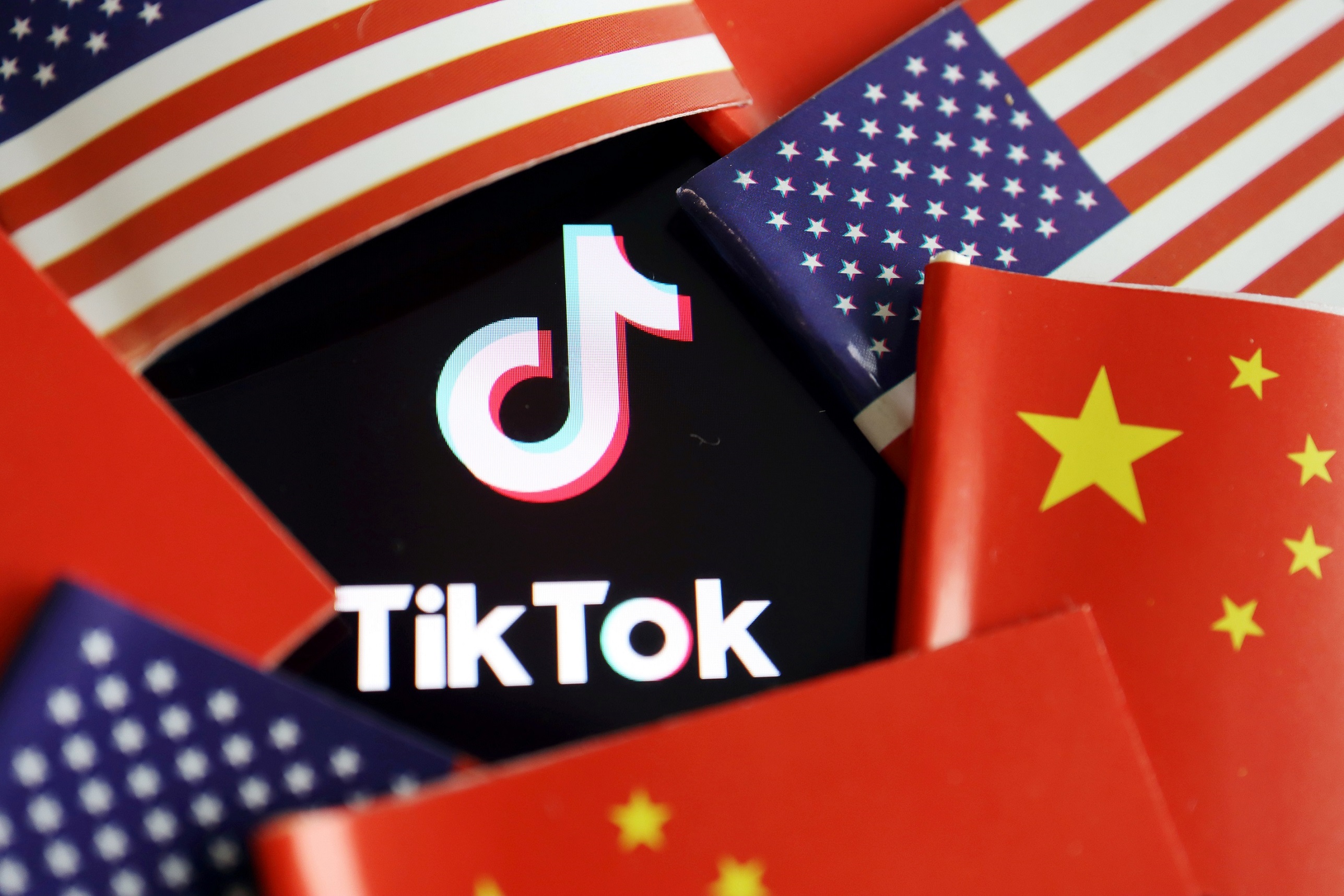
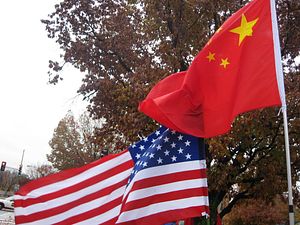
In August 2020 President Trump signed an order banning US companies from conducting transactions with the companies ByteDance and Tencent, the owners of the popular apps TikTok and WeChat, respectively. This is a further step in the deepening struggle between the United States and China, which for the first time is spilling into the field of apps; until now the US administration has refrained from intervening in this area. Israel must review its stance in light of the Clean Network program, launched by the US as part of a Western technology coalition that avoids using Chinese technologies. It must form a clear picture of the risks of various apps used in Israel, in order to allow professional risk management and the formulation of clear policy in this context.China Thinks Cooperation With the US Is ‘Unstoppable.’ It’s a Dangerous Assumption.
On Monday, staff from China’s consulate in Houston, Texas – which was abruptly ordered to close by the U.S. government on July 21 – arrived back in Beijing. They were greeted on the tarmac of the Beijing Capital International Airport by Foreign Minister Wang Yi, who blamed “anti-China forces in the United States” for the steep decline in U.S.-China relations, including the closure of the consulate.Will the ILO Defend China’s Uyghurs?
There is understandable anguish about the human rights abuses being suffered by Muslim Uyghur and other ethnic communities in China’s Xinjiang region. The documentation of violations has grown more graphic over the last two years, while an international response remains largely indeterminate.The UAE Deal May Be a Bittersweet Win for Israel’s Netanyahu
The landmark agreement between Israel and the United Arab Emirates that was announced unexpectedly last week, a prelude to normalized diplomatic relations, is by any measure a triumph for Prime Minister Benjamin Netanyahu. But in the tumultuous, fractious landscape of Israeli politics, Netanyahu’s celebrations have been tempered by bitter recriminations at home, a reminder that in Israel, no win comes without wounds.The UAE makes peace with Israel's war on the Palestinians
After years of informal normalisation, the United Arab Emirates (UAE) has finally reached a formal "peace agreement" with Israel that paves the way for a strategic relationship between the two countries under the auspices of the Trump Administration.Japan and the 'great power competition'
When I joined Pacific Forum, a Honolulu-based think tank, in 2001, the transition to a tripolar world was finally gaining traction. Some far-sighted individuals envisioned the rise of Asia (and not merely a few countries within the region) in the 1970s and ’80s, but serious discussions of power and politics remained focused on the trans-Atlantic space. Asia was largely viewed as a secondary theater.Critical communications infrastructure and COVID-19: An interview with Ericsson’s CEOAugust 20, 2020 | Interview
Goodbye — Sort of — to Germany?
Viruses have big impacts on ecology and evolution as well as human health
ARE AMERICA’S EAST ASIA ALLIES WILLING AND ABLE TO HOST U.S. INTERMEDIATE-RANGE MISSILES?
Eric Gomez, Director of Defense Policy Studies at the Cato Institute, explains that “As the United States and China sink deeper into confrontation and competition, debates over U.S. deployment of missiles in East Asia will become more pressing.” Why US Indo-Pacific strategy will fail
Since Donald Trump was elected to the US presidency, he has expanded the Asia-Pacific region to include the Indian Ocean, renaming the enlarged area “Indo-Pacific” and the Pacific Command as the Indo-Pacific Command, a military theater stretching from the Western US to the Indian Ocean.The Syrian Civil War’s Never-Ending Endgame
Is the Time Right for Japan to Become Five Eyes’ ‘Sixth Eye’?
Japanese Defense Minister Taro Kono spoke to the Nikkei Asian Review recently to reiterate something he and his government have long had an interest in: elevating Japan’s relations with the privileged “Five Eyes” intelligence-sharing group. “Five Eyes,” abbreviated to just FVEY in intelligence community discussions and documents, describes the United States, the United Kingdom, Australia, Canada, and New Zealand.Why Did South Korea Decide to Build Aircraft Carriers?
South Korea has decided to build aircraft carriers. New defense planning documents offer a roadmap for building at least one light carrier by 2030. Some early reports had suggested that the Republic of Korea Navy (ROKN) would try to refit its Dokdo-class amphibious assault ships to operate F-35Bs. While conceptually possible, this plan would have resulted in small, cramped, unsatisfying ships, and would likely have gutted the ROKN’s amphibious capabilities. Between Intelligence and Diplomacy: The information Revolution as a Platform for Upgrading Diplomacy
Military Reasons to Celebrate the Israel-UAE Deal
James Stavridis is a Bloomberg Opinion columnist. He is a retired U.S. Navy admiral and former supreme allied commander of NATO, and dean emeritus of the Fletcher School of Law and Diplomacy at Tufts University. He is also an operating executive consultant at the Carlyle Group and chairs the board of counselors at McLarty Associates.“DEEPFAKES” AND THE LAW OF ARMED CONFLICT: ARE THEY LEGAL?
The use of misleading “deepfakes” has risen dramatically across the globe. As with so much of emerging technology, deepfakes will inevitably become a part of armed conflict. While perfidious deepfakes would almost certainly violate the law of armed conflict, those that amount to ruses would not. Other considerations about the impact on the civilian population are also necessary to determine what uses of deepfakes in armed conflict would be legal.