The Supreme Court’s order to fill up vacancies in armed forces tribunals has brought hope to many martyrs’ families, widows and disabled soldiers for they can now expect early adjudication of their cases. Created in 2009, the AFT had brought relief to many serving and retired army, navy and air force personnel. Cases that had been pending in various courts for decades were adjudicated upon. It was extremely effective with almost a record number of case disposals. But AFT members began to be reduced by end-2016 till they came down to 50 per cent. Now against the authorization for 17 judicial and 17 administrative members, there are only eight judicial and eight administrative members (two of these members are slated to retire by mid-May 2019).The Profession of Arms: A Guide for Young Army Officers
It takes courage, especially for a young officer, to check a man met on the road for not saluting properly or for slovenly appearance, but, every time he does, it adds to his stock of moral courage, and whatever the soldier may say, he has respect for the officer who does pull him up.
Read Document →The Dragon's Teeth: Assessing China's Military Modernization
PLA has focused on modernising its capabilities across all warfare domains to achieve these goals. This includes land, air, and maritime operations, nuclear, space, counter-space, electronic warfare and cyberspace operations, aiming to become a fully integrated joint force.
Read Document →Transforming the PLA: A Decade of reorganisation from SSF to ISF
PRC has engaged in a sustained and broad effort to transform the PLA from an infantry-heavy, low-technology, ground forces-centric military into a high-technology, networked force with an increasing emphasis on joint operations and naval and air power projection.
Read Document →Eyes without Borders: Exploring the World of Open Source Intelligence (OSINT) in the Digital Age
Open Source Intelligence (OSINT) is gaining prominence with the rise of social media, the digital society and the vast growth of publicly and commercially available information (PAI and CAI).
Read Document →
The PLA’s Developing Cyber Warfare Capabilities and India's Options
Informationised warfare blurs the lines between peacetime and wartime. A nation in the information age cannot wait for the hostilities to break out to collect intelligence, carryout influence operations, develop antisatellite systems or design computer software weapons.
Read Document →
Galwan and After
Why did China did this when he is under tremendous pressure in all fronts, is this China's salami slice tactics being progressed rigorously, what will be new Rules of Engagement, what will be escalatory control mechanism, who has taken this decision, will there be some pressure put by China in India's North-East through insurgency.
Read Document →
India’s Joint Doctrine for Cyberspace Operations: A Critical Review
Chief of Defence Staff (CDS) General Anil Chauhan and Secretary, Department of Military Affairs, formally released declassified versions of the Joint Doctrines for Cyberspace Operations during the Chiefs of Staff Committee meeting in New Delhi.
Read Document →
Know your Enemy General(now Field Marshal) Syed Aseem Munir
Gen SA Munir's position in the hierarchy of Pakistan was not very comfortable. The state of economy, insurgency in Pakhtoonistan and Balochistan, attack on the Jaffar Express, constant protests by supporters of Imran Khan's supporters inside and outside of parliament.
Read Document →
Decoding Operation SINDOOR: Key Aspects and Implications
Precision strikes were carried out on nine sites—four in Pakistan and five in PoK—linked to anti-India terrorist groups such as the LeT, JeM and the Hizbul Mujahideen. The targeted sites included Muridke (LeT headquarters) and Bahawalpur (JeM headquarters).
Read Document →
Chinese Cyber Exploitation in India's Power Grid - Is There a linkage to Mumbai Power Outage?
The New York Times (NYT), based on analysis by a U.S. based private intelligence firm Recorded Future, reported that a Chinese entity penetrated India’s power grid at multiple load dispatch points. Chinese malware intruded into the control systems that manage electric supply across India, along with a high-voltage transmission substation and a coal-fired power plant
Read Document →6 May 2019
Soldiers and mandarins: The bureaucracy is trying to make armed forces tribunals ineffective
The Supreme Court’s order to fill up vacancies in armed forces tribunals has brought hope to many martyrs’ families, widows and disabled soldiers for they can now expect early adjudication of their cases. Created in 2009, the AFT had brought relief to many serving and retired army, navy and air force personnel. Cases that had been pending in various courts for decades were adjudicated upon. It was extremely effective with almost a record number of case disposals. But AFT members began to be reduced by end-2016 till they came down to 50 per cent. Now against the authorization for 17 judicial and 17 administrative members, there are only eight judicial and eight administrative members (two of these members are slated to retire by mid-May 2019).The Pakistani Military’s Worst Nightmare Is Coming True
For decades, Pakistan’s powerful military has been in control of the country’s politics whether directly, as during several decades of military dictatorships, or indirectly, as during attempts by civilian leaders to reassert their authority in the 1970s, 1990s, and after 2008.US Military Stops Releasing Afghanistan War Information
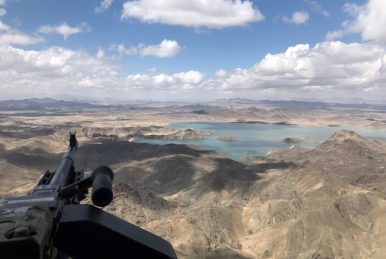
Amid a battlefield stalemate in Afghanistan, the U.S. military has stopped releasing information often cited to measure progress in America’s longest war, calling it of little value in fighting the Taliban insurgency.Sri Lanka bombings and the rise of ISIS in Asia
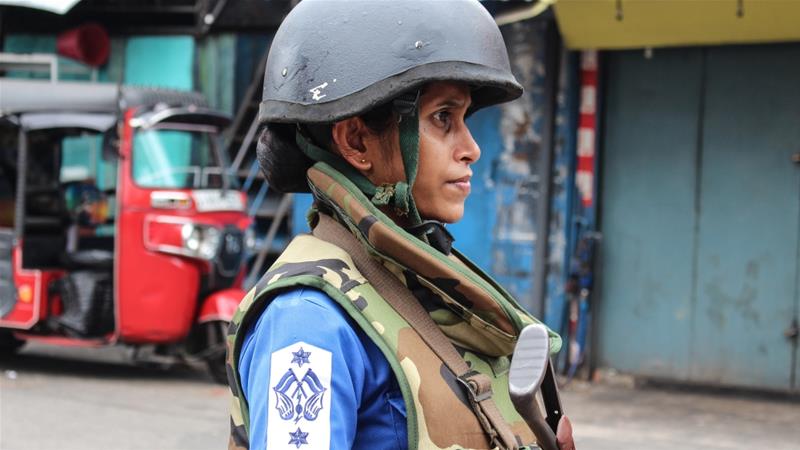
After I reported that ISIS is starting to move its forces to Africa and Asia following the destruction of the Caliphate, the Sri Lanka bombings occurred. Across Asia, ISIS is on the ascent. How should American policy makers respond? What the Easter Attacks in Sri Lanka Tell Us About the Islamic State
While a jihadist attack on Easter was unsurprising, the site of the attack, Sri Lanka, was. The bombings show the Islamic State movement continues to pose a threat through its franchise groups and grassroots terrorists, but are not a useful gauge of its core organization. The jihadist threat in Sri Lanka will no longer be ignored, and future would-be attackers will face a far less permissive environment. A dash of stimulus helps stabilize China’s wobbly economy
China’s Belt and Road Initiative: Why the Price Is Too High
Fears of unsustainable indebtedness among many of the countries that are partnering in China’s Belt and Road Initiative (BRI) set the backdrop for a two-day meeting last week in Beijing. The $1 trillion initiative includes projects in transportation, energy and infrastructure in more than 70 countries across Asia, Europe, Africa and Oceania such as ports, railways, oil and gas pipelines, and power grids, along with plans for new economic corridors.May 4, 1919: The Making of Modern China
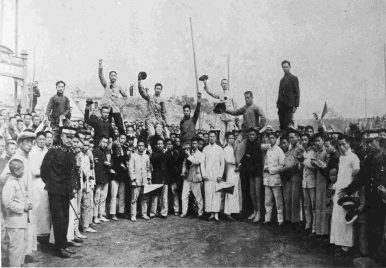
As China marks the 100th anniversary of the 1919 May Fourth demonstrations, it is certainly a challenge to write anything new about this unanimously celebrated event. May Fourth has been studied and discussed from every imaginable angle and political perspective over the last century. It is no longer the case, as it was when Chow Tse-tsung (1916-2007) published his seminal study around the time of its 40th anniversary in 1959, that scholars are divided over whether to see it as a national renaissance or a national catastrophe. Today it is indiscriminately celebrated by progressives and conservatives – with the possible exception of some die-hard Confucian fundamentalists – the Communist (CCP) and Nationalist (KMT) parties, Chinese people and foreigners. It was even briefly appropriated by advocates of independence in the 2008 presidential campaign in Taiwan. However, such unanimity is only achieved at the price of considerable ambiguity as to what is actually being commemorated.China, U.S.: Washington Raises the Stakes in the South China Sea
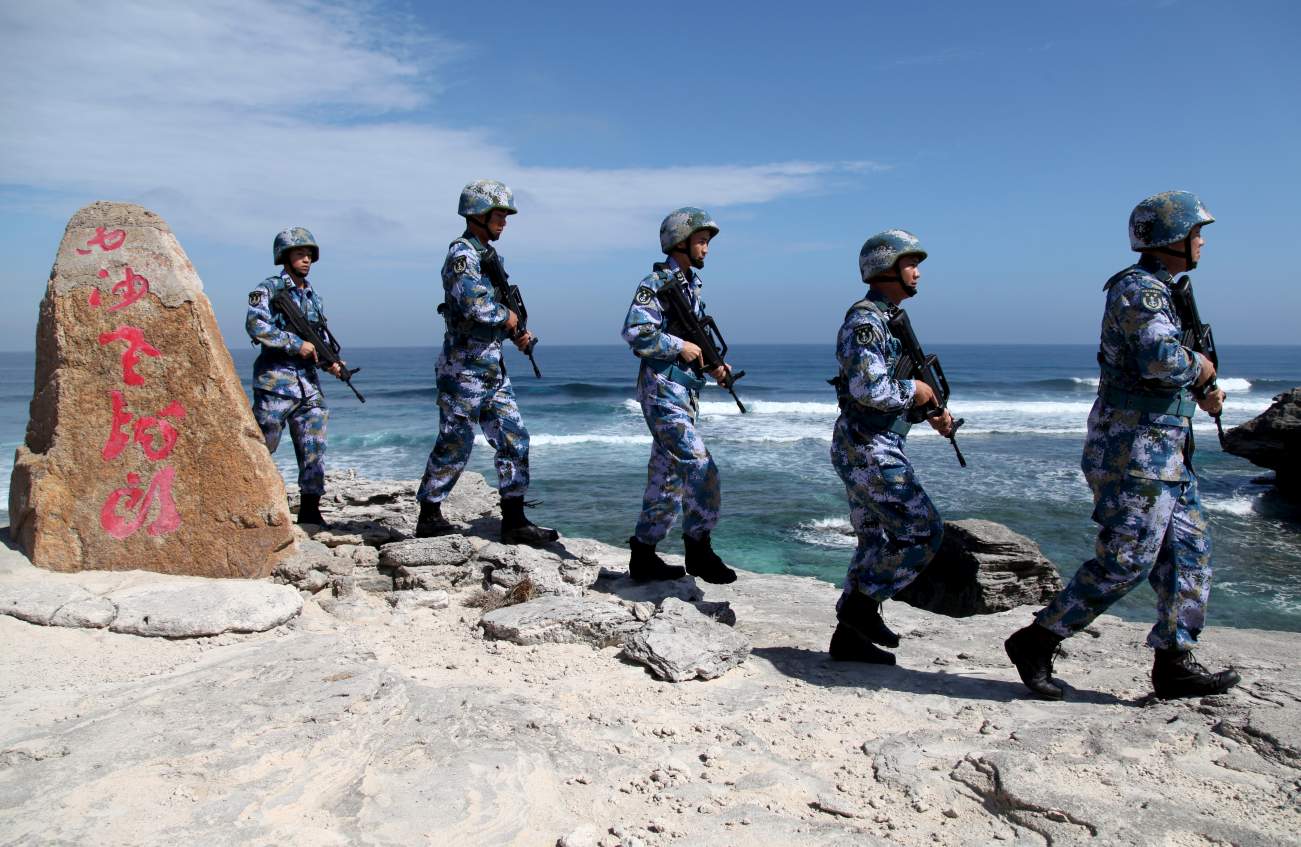
Clashes between the United States and China in the contested waters of the Asia-Pacific region have ramped up in recent months, abetted by the two countries' ongoing great power competition. This is particularly apparent in the South China Sea, where Beijing continues to push for dominance. In response, Washington has begun evolving its strategies to deter China's growing presence — increasing the likelihood for direct confrontation in the region.As ISIS Regroups, the U.S. Is Forgetting the Lessons of Counterinsurgency—Again
The surprise reappearance of the leader of the Islamic State, Abu Bakr al-Baghdadi, in a recently recorded video seems like a throwback to the mid-2000s. The most visible difference from the video recordings Osama bin Laden used then to remind al-Qaida followers he was still alive—and persuade them he was still relevant—is that al-Baghdadi, who was last seen in 2014, is seated on the floor of what seems like a furnished living room, rather than a cave.Challenge Accepted: Why America Needs to Confront Its Adversaries in the Gray Zone
The return of great-power competition has dominated the national-security discussion in the United States since the release of the 2018 National Defense Strategy. However, little of it has been spent focusing on the previous era of great-power competition during the Cold War. Even a cursory exploration of that time-period will turn up documents that demonstrate the benefits of a better understanding of Cold War history. One example is a lecture delivered by the Chief of Naval Operations (CNO), Adm. Arleigh A. Burke, to the Naval War College in December of 1958.Bipartisan Foreign Policy Died This Weekend
Former Indiana Sen. Richard Lugar, who died Sunday at age 87, was the man whom many conservatives had in mind when they railed against the Republican establishment. His long Senate service, from 1977 to 2013, was an affront to advocates of term limits. He was the Senate’s leading authority on foreign policy, a field despised by populists and nationalists as the province of elite sellouts. He was a leading exponent of bipartisanship and compromise, which made him a target for die-hard partisan warriors. It came as no surprise when he was ousted out of politics in 2012 by a Tea Party fanatic.‘We Are Not Negotiating With a Gun to Our Head’
The European Union, like everybody else, is trying to come to grips with a tumultuous era for global trade, with trade wars and tariffs threatening an economic order decades in the making. Foreign Policy spoke to EU Trade Commissioner Cecilia Malmstrรถm about upcoming talks with the United States, never-ending U.S. tariff threats, and how to deal with China’s challenge to the global trading order.The City of Europe’s Future
Russia and NATO: A Dialogue of Differences
On 14 April, General Curtis Scaparrotti, the outgoing Supreme Allied Commander Europe (SACEUR) of NATO Allied Command Operations General, deplored the broken communication process with Russia and a lack of understanding of “each other’s signals”. Immediately afterwards, Russian Deputy Foreign Minister Alexander Grushko denounced the current deadlock with NATO, claiming cooperation had been discontinued and disagreements with the Atlantic Alliance were now “even deeper than before”.Examining the Global Terrorism Landscape
Old Roads And New Paradigms: On The Last BRI Summit – OpEd
On April 26 and 27, the summit of the Belt and Route Initiative, also known as the New Silk Road, was held in Beijing. With the presence of 125 countries, which are involved to a greater or lesser extent, 37 foreign heads of state and government. More than 20 international organizations also participated as guests. The initiative is the great plan and Chinese geostrategic bet, through investments in various infrastructures, boosting to connect Asia with Europe, Africa and even Latin America and the Caribbean. Saudi Gas Ambitions Likely To Have Geopolitical Impact – Analysis
A Saudi push to become a major natural gas player is as much about diversifying the kingdom’s domestic consumption and export mix as it is about taking advantage of harsh US economic sanctions against Iran designed to force a change of the Islamic republic’s policy, if not its regime.Russia's Defense Industry Finds Itself in a Tailspin
Domestic budget limits and decreasing arms exports are set to severely impact the viability of Russian arms manufacturers. The Kremlin's efforts to promote import substitution policies are not succeeding and the defense sector is unlikely to bolster its bottom line by shifting to produce products for the domestic market. The Russian defense industry's inherent weaknesses could become self-perpetuating; the failure to find markets for Russian products will increase the costs of production and, therefore, military modernization.Time to Pursue an International Cyber Treaty?
You will receive occasional promotional offers for programs that support The Nation’s journalism. You can read our Privacy Policy here.Time to sound the alarm about 5G?
This chip was demoed at Jeff Bezos’s secretive tech conference. It could be key to the future of AI.
Recently, on a dazzling morning in Palm Springs, California, Vivienne Szetook to a small stage to deliver perhaps the most nerve-racking presentation of her career.Doubts At The NSA: Shelving A Mass Surveillance Program – OpEd
Earlier this year, Luke Murry, national security adviser for Republican House Minority Leader Kevin McCarthy, revealed that the National Security Agency had been averse over the last six months to using the phone surveillance program that hoovers information from millions of US phone calls and text messages. This was hardly a comforting point; the issue spoke as much to competence as it did to any broader issue of warrantless surveillance of the good people in Freedom’s land. Vast, cumbersome, and generally self-defeating, the essence of such programs is paranoid inefficiency. Put it down to “technical issues”, suggested Murry.Can Courts Clear the Fog of War?
What constitutes an act of war? A military invasion, sure. Hostile acts by smaller armed formations, sure. The blowing up of a bridge by commandos or the poisoning of water, very likely. But a cyberattack? Zurich, one of the world’s leading insurers, claims that’s the case. The confectionary giant Mondelez, one of its customers, argues the opposite. This isn’t an abstract discussion: Two years ago, Mondelez was laid low by NotPetya, a computer virus unleashed by Russia against Ukrainian targets. Now the two companies are battling out the definition of war in court—and regardless of how the ruling turns out, a new fog of war is still settling over society.The Rise and Fall of an Officer Corps
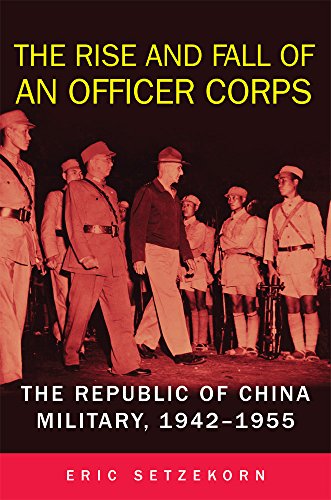
In Taiwan, June 6th, 1955, on the eleventh anniversary of the Allied landing on Normandy, one of the most decorated commanders of World War II was soon to fall from grace. As troops of the Republic of China (ROC) military got ready for a parade in Pingtung, its guest of honor, President Chiang Kai-shek, did not arrive at 0930 as scheduled. When he did show up, and having given an unusually short speech, the Kuomintang (KMT, or Nationalist) leader purportedly also appeared flustered. Two months later on 20th August, 1955, his Chief Military Advisor, General Sun Li-jen, (otherwise referred to as Sun Liren in hanyu pinyin) who had accompanied the Generalissimo at the parade was suddenly placed under house arrest after one of Sun’s former subordinates, Kuo Ting-liang, had admitted to working as a Communist spy under forced confession. This marked the beginning of the 33-year incarceration of one of Republic of China’s most well-known soldiers in modern Chinese history.[1]