Last month, China’s People’s Liberation Army (PLA) engaged in a major military exercise in the Tibet region. The engagement showcased some of the latest weapons in the Chinese military inventory and also spotlighted its deployments in the region more generally.The Profession of Arms: A Guide for Young Army Officers
It takes courage, especially for a young officer, to check a man met on the road for not saluting properly or for slovenly appearance, but, every time he does, it adds to his stock of moral courage, and whatever the soldier may say, he has respect for the officer who does pull him up.
Read Document →The Dragon's Teeth: Assessing China's Military Modernization
PLA has focused on modernising its capabilities across all warfare domains to achieve these goals. This includes land, air, and maritime operations, nuclear, space, counter-space, electronic warfare and cyberspace operations, aiming to become a fully integrated joint force.
Read Document →Transforming the PLA: A Decade of reorganisation from SSF to ISF
PRC has engaged in a sustained and broad effort to transform the PLA from an infantry-heavy, low-technology, ground forces-centric military into a high-technology, networked force with an increasing emphasis on joint operations and naval and air power projection.
Read Document →Eyes without Borders: Exploring the World of Open Source Intelligence (OSINT) in the Digital Age
Open Source Intelligence (OSINT) is gaining prominence with the rise of social media, the digital society and the vast growth of publicly and commercially available information (PAI and CAI).
Read Document →
The PLA’s Developing Cyber Warfare Capabilities and India's Options
Informationised warfare blurs the lines between peacetime and wartime. A nation in the information age cannot wait for the hostilities to break out to collect intelligence, carryout influence operations, develop antisatellite systems or design computer software weapons.
Read Document →
Galwan and After
Why did China did this when he is under tremendous pressure in all fronts, is this China's salami slice tactics being progressed rigorously, what will be new Rules of Engagement, what will be escalatory control mechanism, who has taken this decision, will there be some pressure put by China in India's North-East through insurgency.
Read Document →
India’s Joint Doctrine for Cyberspace Operations: A Critical Review
Chief of Defence Staff (CDS) General Anil Chauhan and Secretary, Department of Military Affairs, formally released declassified versions of the Joint Doctrines for Cyberspace Operations during the Chiefs of Staff Committee meeting in New Delhi.
Read Document →
Know your Enemy General(now Field Marshal) Syed Aseem Munir
Gen SA Munir's position in the hierarchy of Pakistan was not very comfortable. The state of economy, insurgency in Pakhtoonistan and Balochistan, attack on the Jaffar Express, constant protests by supporters of Imran Khan's supporters inside and outside of parliament.
Read Document →
Decoding Operation SINDOOR: Key Aspects and Implications
Precision strikes were carried out on nine sites—four in Pakistan and five in PoK—linked to anti-India terrorist groups such as the LeT, JeM and the Hizbul Mujahideen. The targeted sites included Muridke (LeT headquarters) and Bahawalpur (JeM headquarters).
Read Document →
Chinese Cyber Exploitation in India's Power Grid - Is There a linkage to Mumbai Power Outage?
The New York Times (NYT), based on analysis by a U.S. based private intelligence firm Recorded Future, reported that a Chinese entity penetrated India’s power grid at multiple load dispatch points. Chinese malware intruded into the control systems that manage electric supply across India, along with a high-voltage transmission substation and a coal-fired power plant
Read Document →6 March 2020
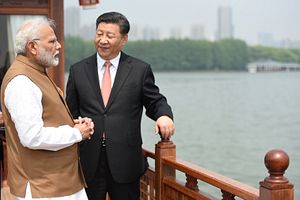
Why China’s Growing Military Might in Tibet Should Worry India
Last month, China’s People’s Liberation Army (PLA) engaged in a major military exercise in the Tibet region. The engagement showcased some of the latest weapons in the Chinese military inventory and also spotlighted its deployments in the region more generally.Wildlife Killing In Northeast India And Potential Threat Of New Deadly Virus – OpEd
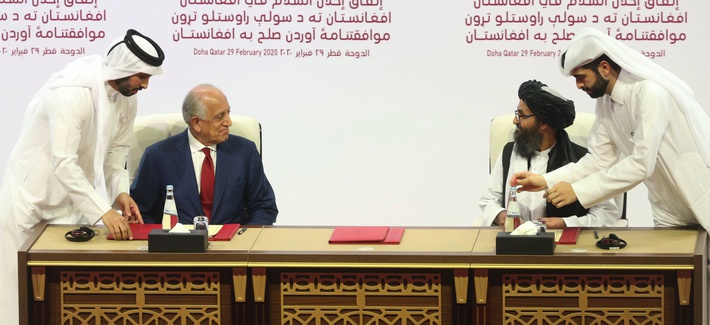
Explainer: The US-Taliban Deal in Afghanistan
What's in the recent agreement between the United States and the Taliban? What might still derail it?Afghanistan: Between Hope and Hopelessness
Enduring Peace Requires Reforms to Afghan Governance
The United States Wants Peace. The Taliban Wants an Emirate.
We Must Make the Right Kind of Peace in Afghanistan, If We Are to Honor Our Sacrifice There.
Why Afghanistan Became an Invisible War
In a century of American wars, no other has been rendered quite so invisible to the public. Americans don’t want to fight in Afghanistan, they don’t want to die in Afghanistan and they don’t really want to hear about Afghanistan.China, ASEAN Band Together in the Fight Against Coronavirus
China’s Foreign Minister Wang Yi, center, poses for a group photo with some of the Foreign ministers of The Association of Southeast Asian Nations (ASEAN) from left, Thailand’s Foreign Minister Don Pramudwinai, Vietnam’s Deputy Prime Minister and Foreign Minister Phแบกm Binh Minh, Philippines’ Foreign Affaires Secretary Teodoro Locsin Jr., and Laos Foreign Minister Saleumxay Kommasith, ahead of the Special ASEAN-China Foreign Ministers’ meeting on the Novel Coronavirus Pneumonia in Vientiane, Laos, Feb. 20, 2020.Credit: AP Photo/Sakchai LalitWill the Coronavirus Topple China’s One-Party Regime?
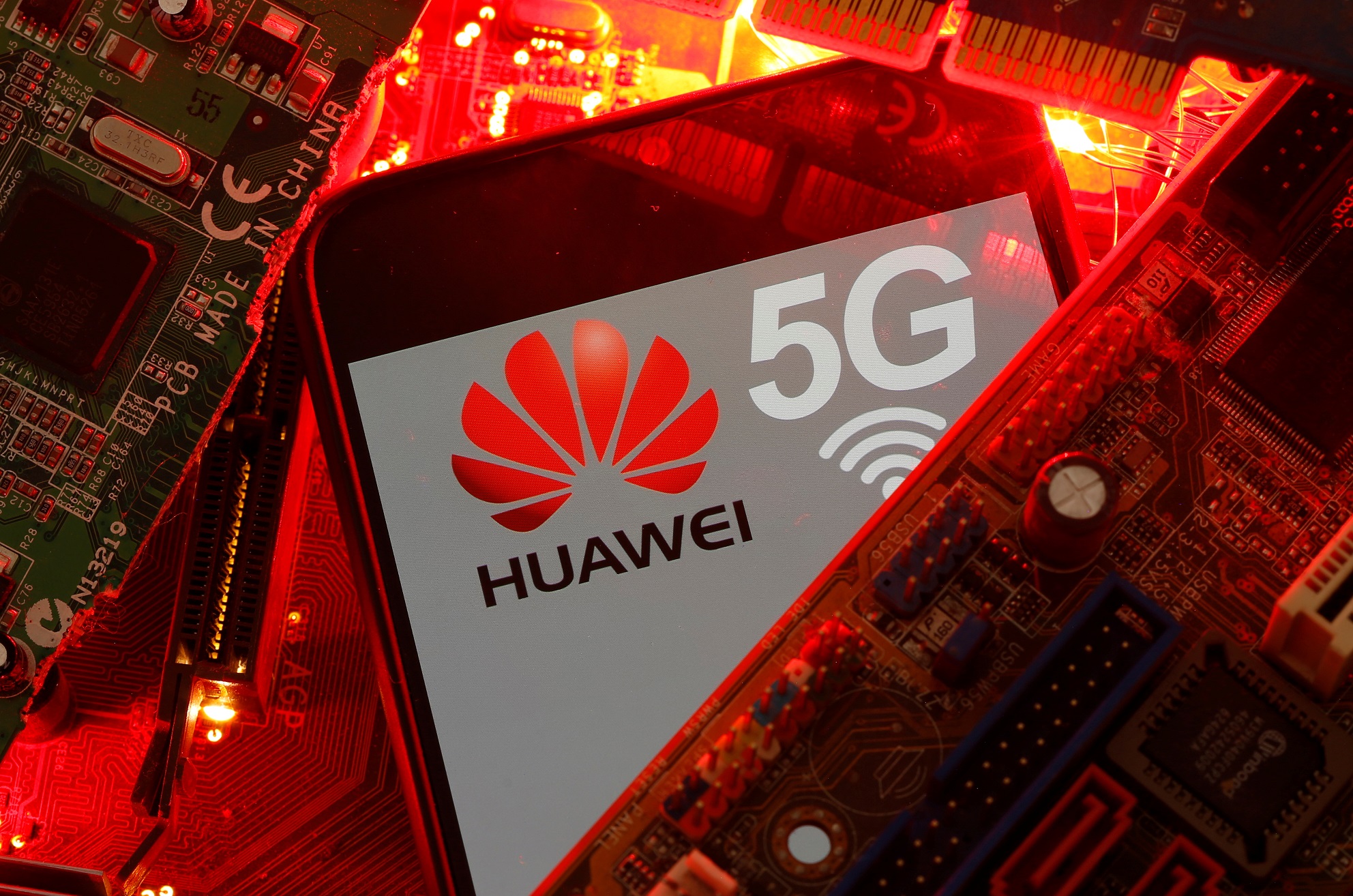
China’s 5G tech is a national security issue ... or is it a trade one?
SAN FRANCISCO — How the Trump administration has approached banning Huawei’s technology for 5G networks has raised a question at the annual RSA Conference: Is the decision rooted in national security issues or trade issues?The Coronavirus Outbreak Is the Shape of Things to Come
Pompeo’s State Department Keeps Supporting Islamic Extremists
Russia's Power Struggle Over the Syrian War Has Prompted Turkey to Seek U.S. Assistance
History Proves Beyond Any Doubt Global Warming Can Kill
Japan’s Space Dream? Cleaning Up the Mess.
At last year’s G-20 Summit in Osaka, the government announced measures to promote Japan’s name in space innovation. Japan has leapt at the opportunity to commercialize technology in the new experimental market of space garbage removal.What Is a Moral Foreign Policy?
The Age of Mass Protests: Understanding an Escalating Global Trend
Global Migration Is Not Abating. Neither Is the Backlash Against It
Trump’s High Court Hears Its First Abortion Case
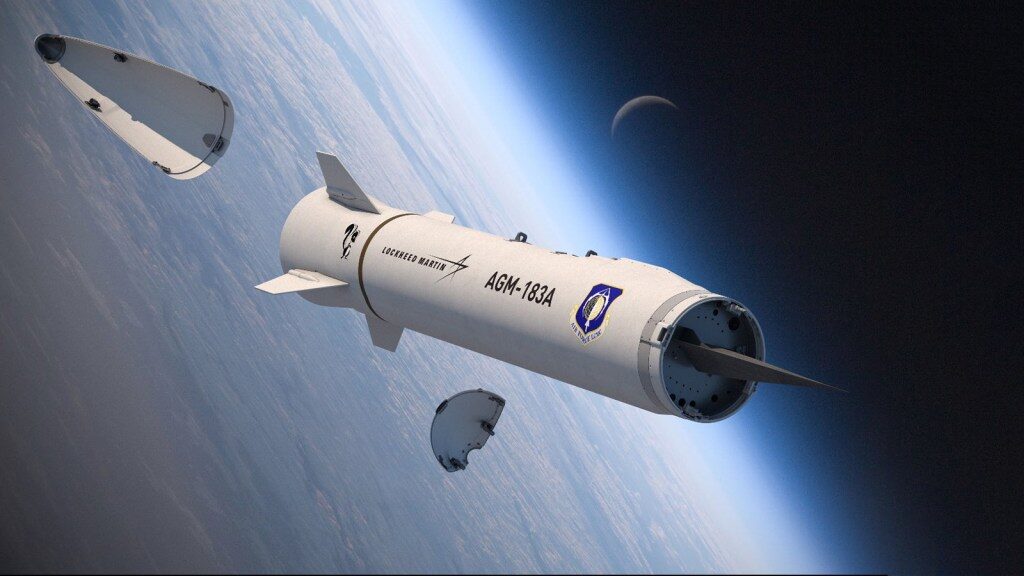
The editorial board is a group of opinion journalists whose views are informed by expertise, research, debate and certain longstanding values. It is separate from the newsroom.Hypersonic Missiles: Plethora Of Boost-Glide & Cruise
PENTAGON: Hypersonic missiles will be deployed across the Army, Navy, Air Force and Marines, not as “niche” weapons but as a broad new capability, according to DoD’s two top officials charged with managing department wide development efforts.Time to Recommit to Syria
How to secure the U.S. government’s technology supply chain
The Great Power Competition over 5G Communications: Limited Success for the American Campaign against Huawei
Despite increasing US pressure on its allies not to install Chinese fifth generation (5G) communications infrastructure, and along with the possibility of punitive measures against those who ignore such warnings, the American campaign against the Chinese company Huawei has met with limited success. Other countries face a dilemma between acceding to the US demands to avoid installing Chinese technology in their communications infrastructure and maintaining proper economic relations with the Chinese power. While some have decided in favor of China, many are adopting equivocal midway solutions combining certain practical limitations with restrained declarative statements. The world's advanced communications system is at the start of a process of technological decoupling with broad strategic ramifications, in which Israel will no doubt be on the Western side. In this framework, Israel, based on its advanced technological capabilities, must take an active role in establishing and contributing to a Western technology coalition. Since Chinese communication infrastructure is not expected in Israel, this position can be leveraged by Israel to strengthen its overall relations with the US in an era of Great Power strategic competition. In parallel, and similar to the US and other countries, Israel should continue advancing its relations with China in areas where commercial and economic ties do not involve serious risks to its national security, and above all, to its relations with the United States.Making Sense of the Information Environment
5G Supply Chain Security: Threats and Solutions
Cybersecurity: Let's get tactical (free PDF)
The future of defense contractor cybersecurity standards
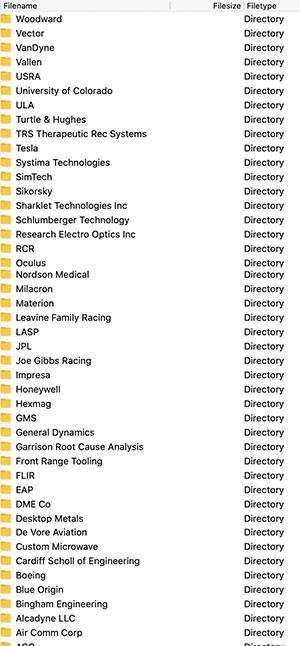
A hacker group says it has major defense companies’ data
DoppelPaymer, a ransomware group, claims to have accessed sensitive data from major defense industry companies through the hacking of Visser Precision LLC, a Colorado-based aerospace, automotive and industrial parts manufacturer. 


/arc-anglerfish-arc2-prod-mco.s3.amazonaws.com/public/OAQHOX7RSBCTDMGSH2FTZ6TD4E.jpg)
/arc-anglerfish-arc2-prod-mco.s3.amazonaws.com/public/RPJIDKGQZNE6BA56IHS6Z5ZDOU.jpg)