A recent investigation revealed that Chinese troops are stationed on Tajikistan’s south-eastern border, 30 kilometres from Pakistan-administered Kashmir across Afghanistan’s Wakhan corridor. India has unsuccessfully sought to establish its own military base in Tajikistan for over 15 years. The discovery of Chinese troops constitutes a severe setback to New Delhi’s Central Asian ambitions.The Profession of Arms: A Guide for Young Army Officers
It takes courage, especially for a young officer, to check a man met on the road for not saluting properly or for slovenly appearance, but, every time he does, it adds to his stock of moral courage, and whatever the soldier may say, he has respect for the officer who does pull him up.
Read Document →The Dragon's Teeth: Assessing China's Military Modernization
PLA has focused on modernising its capabilities across all warfare domains to achieve these goals. This includes land, air, and maritime operations, nuclear, space, counter-space, electronic warfare and cyberspace operations, aiming to become a fully integrated joint force.
Read Document →Transforming the PLA: A Decade of reorganisation from SSF to ISF
PRC has engaged in a sustained and broad effort to transform the PLA from an infantry-heavy, low-technology, ground forces-centric military into a high-technology, networked force with an increasing emphasis on joint operations and naval and air power projection.
Read Document →Eyes without Borders: Exploring the World of Open Source Intelligence (OSINT) in the Digital Age
Open Source Intelligence (OSINT) is gaining prominence with the rise of social media, the digital society and the vast growth of publicly and commercially available information (PAI and CAI).
Read Document →
The PLA’s Developing Cyber Warfare Capabilities and India's Options
Informationised warfare blurs the lines between peacetime and wartime. A nation in the information age cannot wait for the hostilities to break out to collect intelligence, carryout influence operations, develop antisatellite systems or design computer software weapons.
Read Document →
Galwan and After
Why did China did this when he is under tremendous pressure in all fronts, is this China's salami slice tactics being progressed rigorously, what will be new Rules of Engagement, what will be escalatory control mechanism, who has taken this decision, will there be some pressure put by China in India's North-East through insurgency.
Read Document →
India’s Joint Doctrine for Cyberspace Operations: A Critical Review
Chief of Defence Staff (CDS) General Anil Chauhan and Secretary, Department of Military Affairs, formally released declassified versions of the Joint Doctrines for Cyberspace Operations during the Chiefs of Staff Committee meeting in New Delhi.
Read Document →
Know your Enemy General(now Field Marshal) Syed Aseem Munir
Gen SA Munir's position in the hierarchy of Pakistan was not very comfortable. The state of economy, insurgency in Pakhtoonistan and Balochistan, attack on the Jaffar Express, constant protests by supporters of Imran Khan's supporters inside and outside of parliament.
Read Document →
Decoding Operation SINDOOR: Key Aspects and Implications
Precision strikes were carried out on nine sites—four in Pakistan and five in PoK—linked to anti-India terrorist groups such as the LeT, JeM and the Hizbul Mujahideen. The targeted sites included Muridke (LeT headquarters) and Bahawalpur (JeM headquarters).
Read Document →
Chinese Cyber Exploitation in India's Power Grid - Is There a linkage to Mumbai Power Outage?
The New York Times (NYT), based on analysis by a U.S. based private intelligence firm Recorded Future, reported that a Chinese entity penetrated India’s power grid at multiple load dispatch points. Chinese malware intruded into the control systems that manage electric supply across India, along with a high-voltage transmission substation and a coal-fired power plant
Read Document →7 April 2019
China Thwarts India’s Central Asian Ambitions – Analysis
A recent investigation revealed that Chinese troops are stationed on Tajikistan’s south-eastern border, 30 kilometres from Pakistan-administered Kashmir across Afghanistan’s Wakhan corridor. India has unsuccessfully sought to establish its own military base in Tajikistan for over 15 years. The discovery of Chinese troops constitutes a severe setback to New Delhi’s Central Asian ambitions.U.S. India ASAT Test React May Backfire, Experts Say
WASHINGTON: The U.S. failure to speak out publicly and more forcefully against India’s anti-satellite (ASAT) tests may backfire, former U.S. government officials and space experts say, clearing a path for continued testing and development of debris-creating weapons that Pentagon leaders have been saying for years are unacceptable.Why Is Zalmay Khalilzad Such a Controversial Figure in Afghanistan?
When the name Zalmay Khalilzad appeared on the news as a potential nominee for President Trump’s Afghan peace initiative, different reactions surfaced. Some non-Afghan commentators, though not all, welcomed his appointment given his impressive background. Yet, inside Afghanistan, Khalilzad’s appointment was not much welcomed. Indeed, a group of Afghan political activists set up a petition to urge the U.S. government to reconsider their decision given Khalilzad’s “ethnonationalism motivated” prior conduct in Afghanistan, as the petition put it.Left Out: Afghanistan Watches Its Own Peace Process From The Sidelines
Pakistani Estimates of the Eastern River Water Flows
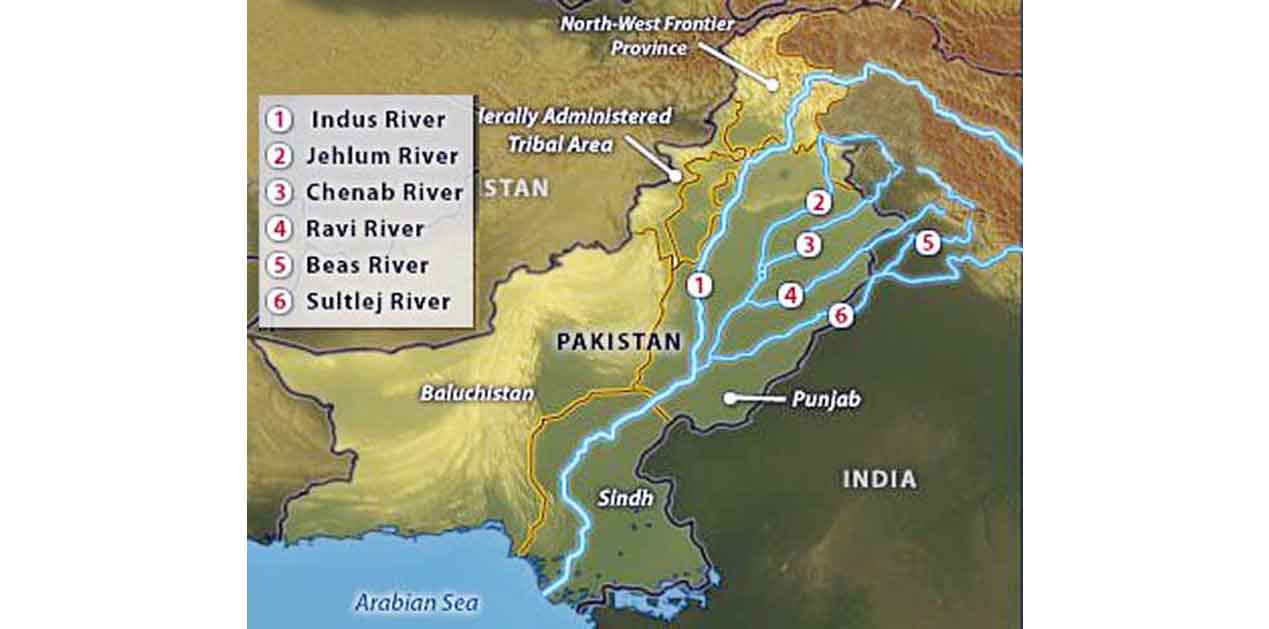
It may be recalled that the Indus Water Treaty, 1960 (IWT) between India and Pakistan, brokered by the World bank, allocated three rivers each, known as the Eastern Rivers (Ravi, Beas, Sutlej) to India, and the Western Rivers (Indus, Chenab, Jhelum) to Pakistan. India has the complete right over the waters of the Eastern Rivers and can also use the waters of the Western Rivers for consumptive uses like drinking, agriculture as mentioned in the Treaty.Afghan army picked the camo pattern most likely to get its troops shot and we paid for it
The Risk of E-Commerce Provisions in the RCEP
The world of digital economies, innovation, and global value chains (GVCs) is changing rapidly. Every day there are stories about new technologies, services, and products that present unexpected possibilities and unforeseen challenges. There is potential to harness these innovations to revolutionize development across ASEAN, especially through regional initiatives that support its small and poorer members. If ASEAN countries are to maximize these opportunities, they will need international, regional, and national rules that facilitate digital industrialization, close the digital divide, and correct the development asymmetries that currently favor developed countries and their corporations. The wrong rules will deny ASEAN writ-large those benefits.Huawei and Managing 5G Risk
Based on cybersecurity concerns, the United States, Australia and New Zealand have staked out policy positions that prevent or strongly discourage the acquisition of Huawei 5G technology for use in the national communications infrastructure of these nations. Other U.S. allies have announced or are considering policy positions that do not go so far and would indeed allow such acquisition at least to some extent.China’s PLA Troops in Venezuela Is Game Changer
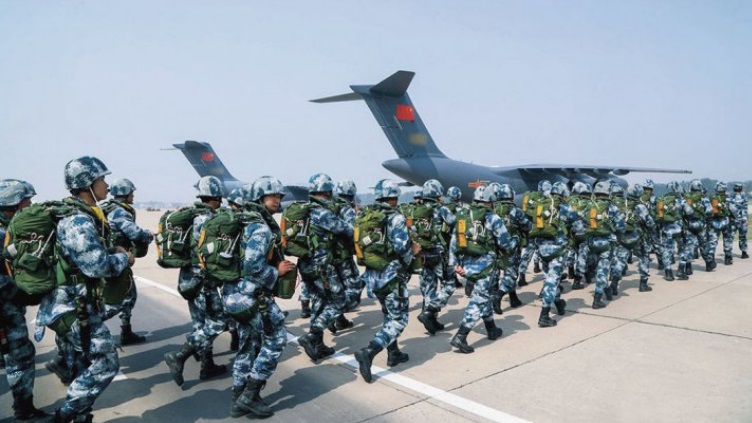
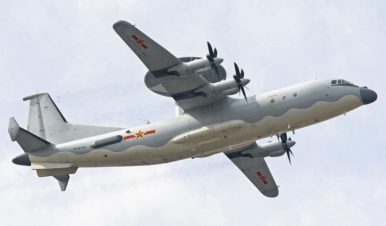
China’s PLAAF conducted its first airdrop and air delivery training exercise using the Y-20 strategic transport aircraft last year circa MayFor NATO, China is the new Russia
WASHINGTON — NATO has spent most of the past 70 years focusing on how to defend the Continent against Russia. To survive the decades ahead, it’s beginning to think more about a threat farther east.Integrity at core of China’s modern military
The Evolving Israel-China Relationship
What is the current status of Israeli-Chinese ties in terms of diplomacy, trade, investment, construction, educational partnerships, scientific cooperation, and tourism?Economic Warfare: The Most Effective Weapon in Chinese Strategy of Unrestricted War
The Chinese characteristics in hybrid warfare can be traced to Sun Zu’s classic Art of War. “To fight and conquer in all battles is not the supreme excellence; the supreme excellence is in breaking enemy’s resistance without fighting.”1 This reflects the oriental thought that violence is the last step towards achieving the national aim. Five thousand years later, similar notes have been echoed in 1999 by two colonels in the People's Liberation Army of China, Qiao Liang and Wang Xiangsui, when they released a book on military strategy called ‘Unrestricted Warfare’, which according to Chinese translation reads as "Warfare beyond Bounds". In chapter 5 of the book, it says "The great masters of warfare techniques during the 21st century will be those who employ innovative methods to recombine various capabilities so as to attain tactical, campaign and strategic goals."2Huawei Will Damage American Security and Prosperity
The Huawei saga has served to illustrate that, just as Beijing and Washington are crafting two stark political alternatives for the world to consider, they are doing the same in the technology and communications arena. China and the United States are in the middle of trade and national security battles, but they are also jostling to determine who will control the future of technology and communications. The Huawei dispute is as much about who has access to and—thus controls—the data of the future, as it is about superpower politics and the rule of law.ISIS Has Not Been Defeated. It’s Alive and Well in Southern Syria.
How Japan Must Pity the Land of the Setting Sun
5 Very Important Things About the World Nobody Knows
Space Threat Assessment 2019
Inside the Chaos Surrounding Britain's Brexit Boondoggle
Britain’s departure from the European Union and the forging of a new cross-Channel relationship was supposed to be one of the “easiest” deals “in human history.” It has, instead, turned out to be a national nightmare and an international embarrassment.Scrutinize Strategic Assumptions on China
History is replete with examples of nations suffering catastrophic military defeat to adversaries who were able to achieve surprise at the strategic level. In retrospect, it seems clear that all the critical warning signs were available in advance. In considering these events, the worthwhile question ultimately becomes this: Why was the essential, known information either ignored or discredited? How was it, for example, that the Russians in June 1941, the Americans in December 1941, the United Nations Forces in October 1951, and the Israelis in October 1973 failed to correctly perceive reality? And, if lessons can be gleaned from these and other historic examples, what conclusions might be drawn by U.S. leaders today—particularly as the nation faces increased competition with China?Europe whole and free: Why NATO’s open door must remain open
Is Flawless Digital Anonymity Possible?
An Air Force for an Era of Great Power Competition
The report summarizes insights and recommendations developed during a CSBA study of the U.S. Air Force's future aircraft inventory. As required by the 2018 National Defense Authorization Act, the report proposes a force planning construct and associated force structure necessary for the United States to support the 2018 National Defense Strategy. This construct would require the Air Force to size and shape its future force to sustain strategic deterrence, defend the U.S. homeland, and be prepared to defeat major acts of aggression by China and Russia as part of the Joint Force. Current, Former Pentagon Leaders Sound Alarm on Chinese Technology in 5G Networks
Global Consequences of Escalating U.S.-Russia Cyber Conflict
Lukasz Olejnik is an independent cybersecurity and privacy researcher, a research associate at the University of Oxford's Centre of Technology and Global Affairs, and a former scientific adviser on cyberwarfare at the International Committee of the Red Cross. Follow him on Twitter at @lukOlejnik.In the Era of Hacking, Bugs Remain a Crucial Espionage Weapon
While cyberattacks offer a powerful means for corporate surveillance, it is important to remember that it is just one option in the espionage toolbox. Some information, such as in-person conversations, cannot be obtained through hacks and thus require the use of other tools, such as human intelligence collection insiders or covert audio and video recorders and transmitters (bugs). Today, bugs are cheaper, smaller and easier to obtain than ever — and the number being deployed and discovered is vastly underreported, masking the true scope of the threat. Therefore, in order to adequately combat corporate espionage, organizations must also implement security measures to protect against bugging. Anatomy of a Taiwan Invasion: The Air Domain
The threat of a Taiwan contingency is the most persistent and likely military confrontation that the Chinese military (the People’s Liberation Army, or PLA) faces, and much of the PLA’s modernization over the last few decades has been designed for such a scenario. Various articles, commentaries, and even videos over the years have considered how a PLA invasion of Taiwan may unfold and the degree of success or failure that each side may enjoy.Report to Congress on U.S. Special Operations Forces
The Army is willing to spend big to support the cyber mission
Multi-Domain Networks: The Army, The Allies & AI
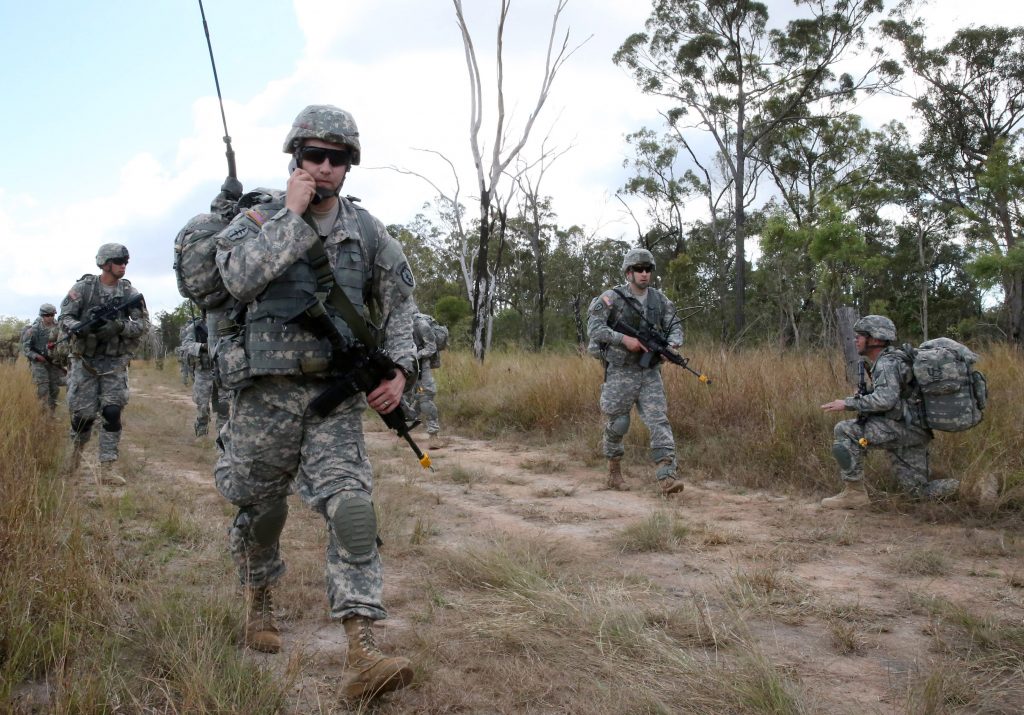
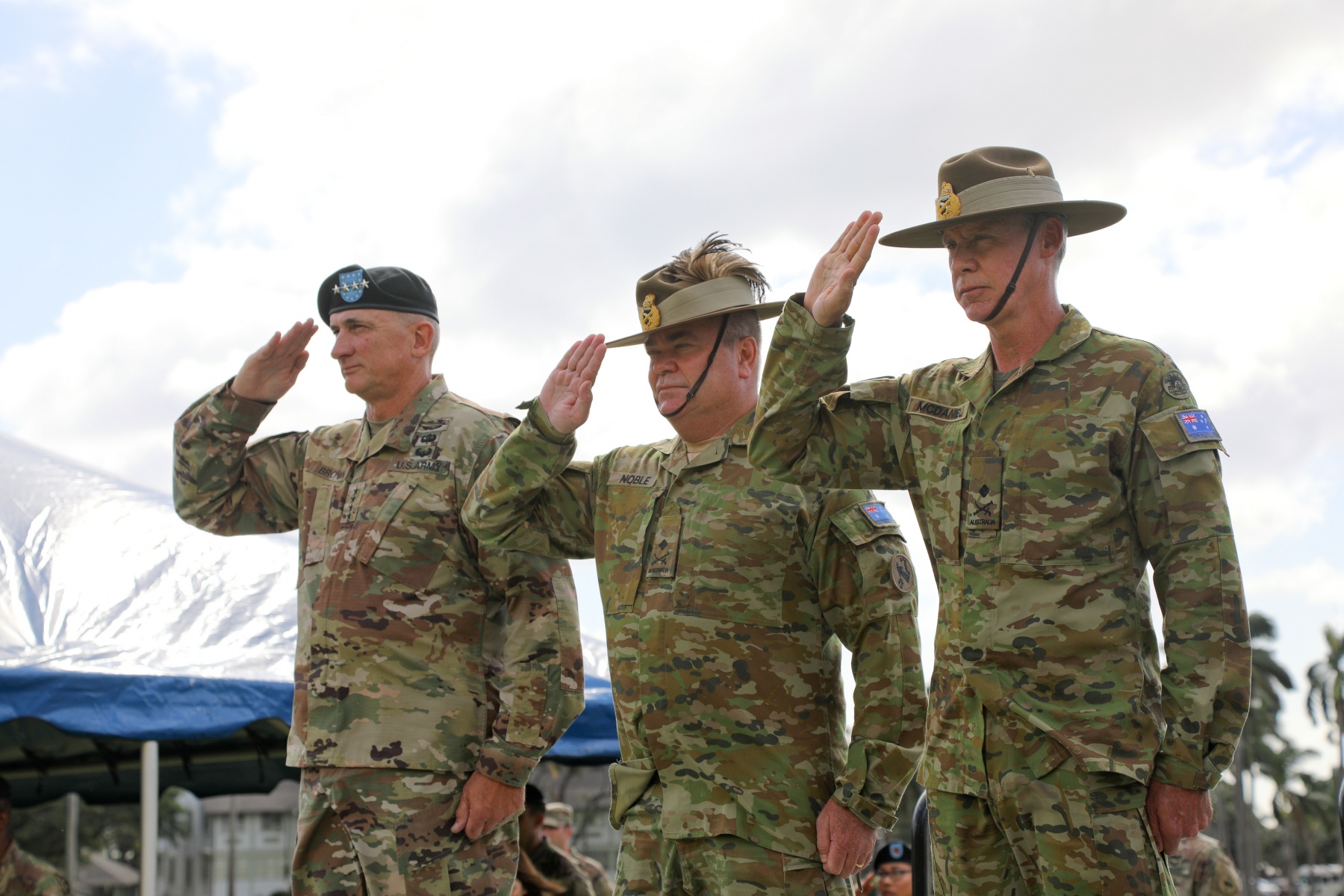
HUNTSVILLE: Working with Australia ought to be easy. It’s a longtime ally with a common language, shared traditions, and a lot of US-built technology and is a member of the Five Eyes. But when American artillerymen arrived in Oz for a recent exercise, the commander of US Army Pacific recounted, they discovered they couldn’t share data — not because of any technical problem, but because of an obscure policy on giving access to foreigners.
Brown’s soldiers got a waiver to connect the artillery networks — “sometimes you’ve just got to ask” — but just asking was counter-cultural in an Army that’s long discouraged coloring outside the lines. You have to “push the system,” Brown said. “What we’d do for years was say, ‘we don’t have those authorities…. Policy says we can’t do that, so we can’t do that.’”
/arc-anglerfish-arc2-prod-mco.s3.amazonaws.com/public/EB4BOAZMGVDA3EI6PO3RTBZGRM.jpg)