The Profession of Arms: A Guide for Young Army Officers
It takes courage, especially for a young officer, to check a man met on the road for not saluting properly or for slovenly appearance, but, every time he does, it adds to his stock of moral courage, and whatever the soldier may say, he has respect for the officer who does pull him up.
Read Document →The Dragon's Teeth: Assessing China's Military Modernization
PLA has focused on modernising its capabilities across all warfare domains to achieve these goals. This includes land, air, and maritime operations, nuclear, space, counter-space, electronic warfare and cyberspace operations, aiming to become a fully integrated joint force.
Read Document →Transforming the PLA: A Decade of reorganisation from SSF to ISF
PRC has engaged in a sustained and broad effort to transform the PLA from an infantry-heavy, low-technology, ground forces-centric military into a high-technology, networked force with an increasing emphasis on joint operations and naval and air power projection.
Read Document →Eyes without Borders: Exploring the World of Open Source Intelligence (OSINT) in the Digital Age
Open Source Intelligence (OSINT) is gaining prominence with the rise of social media, the digital society and the vast growth of publicly and commercially available information (PAI and CAI).
Read Document →
The PLA’s Developing Cyber Warfare Capabilities and India's Options
Informationised warfare blurs the lines between peacetime and wartime. A nation in the information age cannot wait for the hostilities to break out to collect intelligence, carryout influence operations, develop antisatellite systems or design computer software weapons.
Read Document →
Galwan and After
Why did China did this when he is under tremendous pressure in all fronts, is this China's salami slice tactics being progressed rigorously, what will be new Rules of Engagement, what will be escalatory control mechanism, who has taken this decision, will there be some pressure put by China in India's North-East through insurgency.
Read Document →
India’s Joint Doctrine for Cyberspace Operations: A Critical Review
Chief of Defence Staff (CDS) General Anil Chauhan and Secretary, Department of Military Affairs, formally released declassified versions of the Joint Doctrines for Cyberspace Operations during the Chiefs of Staff Committee meeting in New Delhi.
Read Document →
Know your Enemy General(now Field Marshal) Syed Aseem Munir
Gen SA Munir's position in the hierarchy of Pakistan was not very comfortable. The state of economy, insurgency in Pakhtoonistan and Balochistan, attack on the Jaffar Express, constant protests by supporters of Imran Khan's supporters inside and outside of parliament.
Read Document →
Decoding Operation SINDOOR: Key Aspects and Implications
Precision strikes were carried out on nine sites—four in Pakistan and five in PoK—linked to anti-India terrorist groups such as the LeT, JeM and the Hizbul Mujahideen. The targeted sites included Muridke (LeT headquarters) and Bahawalpur (JeM headquarters).
Read Document →
Chinese Cyber Exploitation in India's Power Grid - Is There a linkage to Mumbai Power Outage?
The New York Times (NYT), based on analysis by a U.S. based private intelligence firm Recorded Future, reported that a Chinese entity penetrated India’s power grid at multiple load dispatch points. Chinese malware intruded into the control systems that manage electric supply across India, along with a high-voltage transmission substation and a coal-fired power plant
Read Document →14 March 2019
U.S. presses India to stop buying oil from Venezuela’s Maduro: envoy
Call Me, Maybe? America’s Taliban Hotline and India’s Afghanistan Redux
Everyone Wants a Piece of Afghanistan
President Donald Trump’s intention to withdraw U.S. troops from Afghanistan has given new life to the quest for a political settlement after 41 years of war, including over 17 directly involving the U.S. military. According to both U.S. government and Taliban sources, negotiations between the two sides have led to agreement on the outline of a framework for a deal in which the United States would withdraw troops and the Taliban would guarantee that any future government in which they participate would cooperate with international efforts against terrorism. The Taliban will have to disavow al Qaeda explicitly for the first time.Former Taliban Leader Mullah Omar, “Lived Within Walking Distance Of American Military Bases In Afghanistan For Years, In Embarrassing Failure Of U.S. Intelligence; Though Gen. (Ret.) Petraeus Has His Doubts
What’s Causing China’s Economic Slowdown And How Beijing Will Respond
US ‘Gets Its Ass Handed To It’ In Wargames: Here’s A $24 Billion Fix
“In our games, when we fight Russia and China,” RAND analyst David Ochmanek said this afternoon, “blue gets its ass handed to it.” In other words, in RAND’s wargames, which are often sponsored by the Pentagon, the US forces — colored blue on wargame maps — suffer heavy losses in one scenario after another and still can’t stop Russia or China — red — from achieving their objectives, like overrunning US allies.What’s Causing China’s Economic Slowdown And How Beijing Will Respond
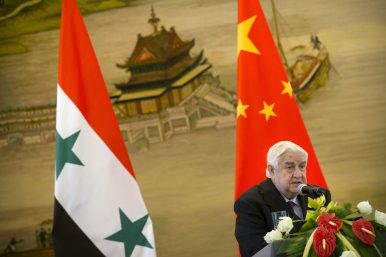
China in Postwar Syria
This is the final article in a serious of four that has explored the nature of China’s growing presence in the Middle East and what China’s increasing leadership means for the region’s economic, humanitarian, and security situation. Part 1 can be found here; part 2 here; and part 3 here.China Isn’t Hearing Asia’s Fears About Its Military Buildup
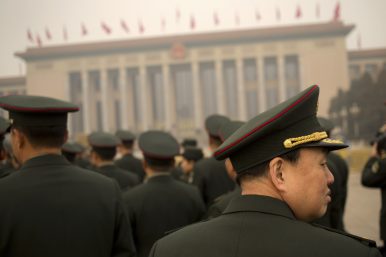
China recently announced a defense budget of 1.19 trillion yen ($177.61 billion). This represents a slower growth rate in the budget, falling to 7.5 percent as against an 8.1 percent increase in 2018. Nevertheless, there are likely to be predictable expressions of concerns at the size of even the publicly announced budget, considering that it is more than three times as large as India’s, which has the second largest defense budget in Asia.Building an Effective and Practical National Approach to Terrorism Prevention
Researchers found major gaps in national terrorism prevention efforts: Shortfalls came not only from limited programmatic focus and resource investment, but also from critics seeking to constrain or halt such efforts. There have been some successes, including community education efforts, formation of public-private partnerships, and development of local capacity to intervene with individuals at risk of radicalizing to violence. However, interviewees viewed those achievements as fragile because of concerns about whether the programs would be sustained. Researchers found that the most effective path for the federal government is to support state, local, nongovernmental, and private organizations' terrorism prevention efforts through funding and other mechanisms. Most interviewees also emphasized that terrorism prevention must include the threat of ideological violence from all sources, not only in words, but also in programming and investments.Think the Commonwealth can save Brexit Britain? That’s utter delusio
I’m struck, as the British parliament moves towards the endgame on Brexit, with the number of times Australia, Canada, New Zealand and India have been advanced by the Brexiteers in the public debate as magical alternatives to Britain’s current trade and investment relationship with the European Union. This is the nuttiest of the many nutty arguments that have emerged from the Land of Hope and Glory set now masquerading as the authentic standard-bearers of British patriotism. It’s utter bollocks.America’s Polarization Is a Foreign Policy Problem, Too
Partisan politics, one sometimes still hears, are supposed to “stop at the water’s edge.” Domestic political quarrels might be intense and occasionally personal, but Americans are supposed to temper their disagreements and link arms when dealing with the outside world.A lesson in Russian disinformation from the pages of a 1982 TV Guide
Alliances Shift as the Syrian War Winds Down
The Nuclear Triad Remains a National Necessity
The Ohio-class ballistic-missile submarine USS Rhode Island returns to its homeport at Naval Submarine Base Kings Bay, Ga., March 7, 2019. (Mass Communication Specialist Second Class Bryan Tomforde)The military community relies on it, our history reminds us of the need for it, and logic demands it.Churchill’s diagnosis of Stalin’s Russia remains true for Putin’s, Bezsmertnyi says
Germany’s Cold War Enemies May Become Partners
POTSDAM, Germany—On a rainy weekday evening in February, Ingo Senftleben, the head of Germany’s center-right Christian Democratic Union (CDU) in the eastern German state of Brandenburg, sat down with about 20 party members and local activists to discuss politics and strategy ahead of state elections this fall. With an increasingly fractured party system here, his CDU has a chance at coming in first and leading the government for the first time in the state’s post-Berlin Wall history.The Evolution of the Strongman
Even as news programs sound alarms about democracy in crisis, the truth is that authoritarian regimes govern a smaller percentage of the world’s countries today than at any time in the post-World War II era. The percentage of authoritarian regimes in power peaked in the late 1970s at the height of the Cold War, reaching about 75 percent. By 2000, just under 50 percent of countries were governed by authoritarian regimes. As of 2017, a scant 38 percent were.Rules of the cyber road for America and Russia
The United States responded weakly after Russian cyber operations disrupted the 2016 presidential election. US President Barack Obama had warned his Russian counterpart, Vladimir Putin, of repercussions, but an effective reply became entangled in the domestic politics of Donald Trump’s election. That could be about to change.Defending Democracy and Human Rights in the Western Hemisphere
What the Speed of Life Means for Security and Society
The envelope arrived with no explanation but a New York City postmark. Kathryn Bouskill tore it open and shook out a small, silvery coin. It was stamped with a “20,” she saw as she turned it over in her hand—not 20 cents, or 20 dollars, but 20 minutes.Is It Time to Abandon the Term Information Operations?
Inside DARPA’s Ambitious ‘AINext’ Program
The defense research agency seeks artificial intelligence tools capable of human-like communication and logical reasoning that far surpass today’s tech.The Robots Are Coming for Our Jobs (Thank God)
US ambassador in Berlin urges Germany to cut ties with Huawei or risk losing access to intelligence: WSJ
Berlin should bar Huawei or other Chinese vendors from constructing Germany's 5G network or risk losing access to U.S. intelligence, according to a letter from U.S. Ambassador Richard Grenell to the country's economics minister, The Wall Street Journal reported Monday.Democracy at Risk: Why Social Media Endangers a Free Society
The future of democracy is at stake, in part due to the various social networks that have been created over the past three decades. Society must now seek out holistic and thoughtful approaches toward protecting free speech.Triton is the world’s most murderous malware, and it’s spreading
Aircraft Carrier Chaos: How the U.S. Navy Lost One of Its Most Deadly Warships
This is a story worth telling and retelling. It supplies insight into material matters, along with examples of grit and fortitude. It also supplies a case study in how not to lead. Let’s detoxify the sea service.Is the United States about to lose control of its secretive Diego Garcia military base?
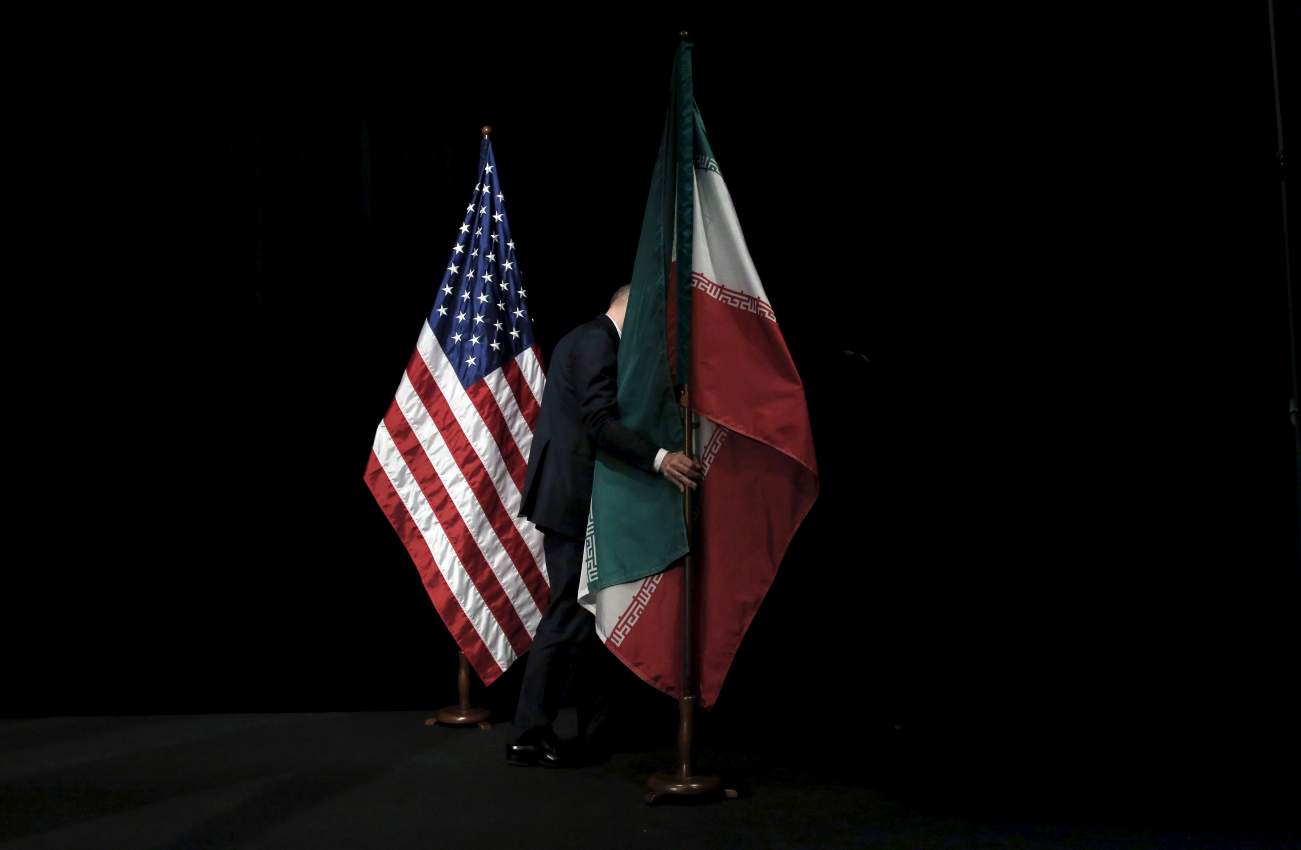
50+ Retired Generals and Diplomats Urge the United States to Reenter Iran Deal
The United States should rejoin the Iran nuclear deal. The 2015 nuclear deal, known as the Joint Comprehensive Plan of Action (JCPOA), put limitations on Iran’s nuclear program that provided assurances that it would not be used to develop weapons, improved American intelligence about potential future development and significantly improved the security of the United States and our allies. Subsequent to the United States’ withdrawal from the deal, Iran’s continued compliance is not ensured and the benefits from the agreement risk being lost. Reentering the Iran nuclear deal advances the United States’ national interests by ensuring these benefits persist and enables us to work more closely with our European allies in ensuring that Iran never obtains nuclear weapons.