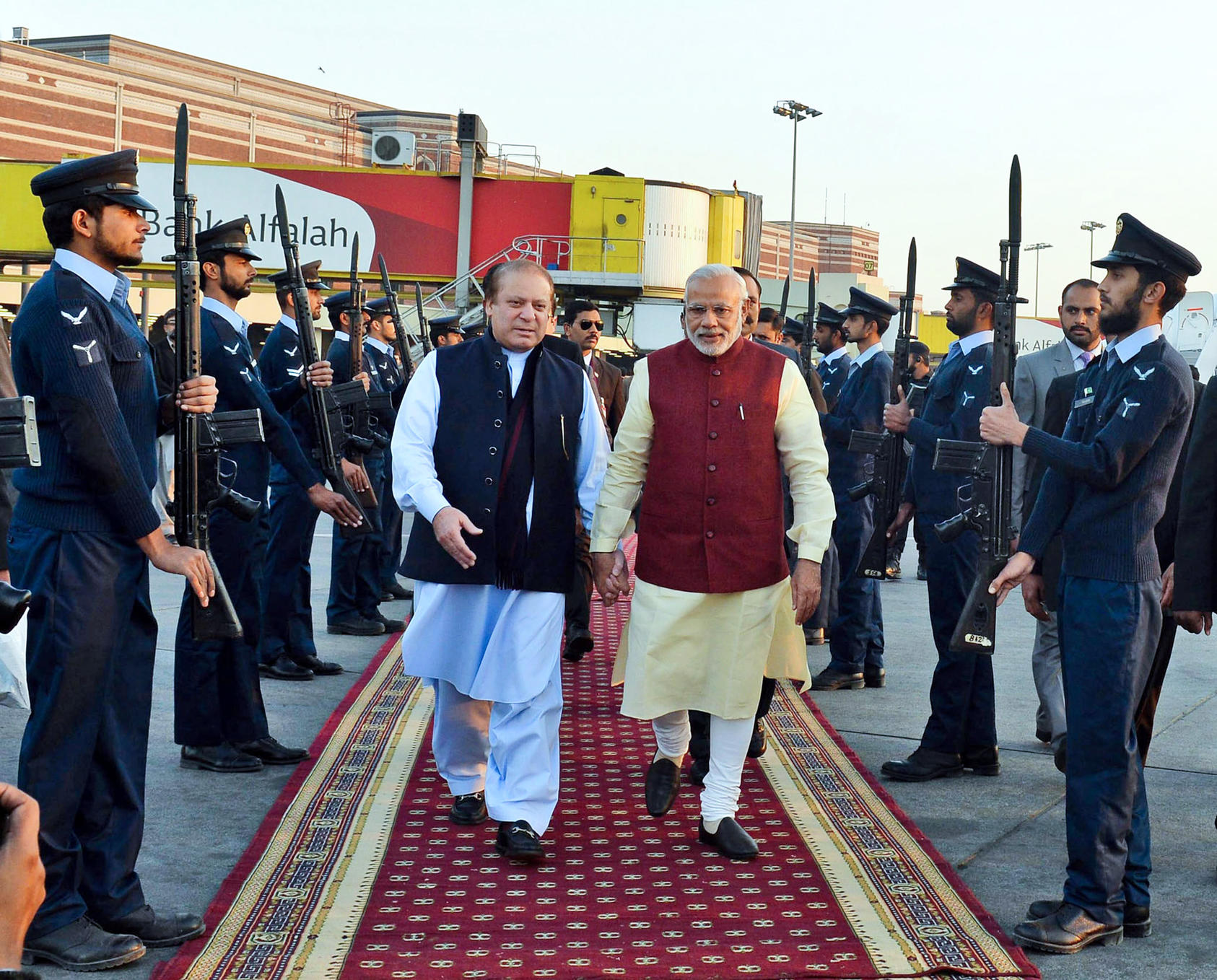
Perennial volatility between India and Pakistan has escalated further recently along their 2,064-mile border. While the historic antagonism between the two nuclear-armed powers remains the central risk, it is playing out today amid gains by radical insurgents in Afghanistan, probing by Russia and Iran, uncertainty over U.S. policy, and rapidly evolving economic ties between Pakistan and China. Join the U.S. Institute of Peace on May 15 for a discussion of the region’s shifting geopolitics and ways current trends might line up with U.S. interests. Photo Courtesy of Indian Press Information Bureau via The New York TimesThe Profession of Arms: A Guide for Young Army Officers
It takes courage, especially for a young officer, to check a man met on the road for not saluting properly or for slovenly appearance, but, every time he does, it adds to his stock of moral courage, and whatever the soldier may say, he has respect for the officer who does pull him up.
Read Document →The Dragon's Teeth: Assessing China's Military Modernization
PLA has focused on modernising its capabilities across all warfare domains to achieve these goals. This includes land, air, and maritime operations, nuclear, space, counter-space, electronic warfare and cyberspace operations, aiming to become a fully integrated joint force.
Read Document →Transforming the PLA: A Decade of reorganisation from SSF to ISF
PRC has engaged in a sustained and broad effort to transform the PLA from an infantry-heavy, low-technology, ground forces-centric military into a high-technology, networked force with an increasing emphasis on joint operations and naval and air power projection.
Read Document →Eyes without Borders: Exploring the World of Open Source Intelligence (OSINT) in the Digital Age
Open Source Intelligence (OSINT) is gaining prominence with the rise of social media, the digital society and the vast growth of publicly and commercially available information (PAI and CAI).
Read Document →
The PLA’s Developing Cyber Warfare Capabilities and India's Options
Informationised warfare blurs the lines between peacetime and wartime. A nation in the information age cannot wait for the hostilities to break out to collect intelligence, carryout influence operations, develop antisatellite systems or design computer software weapons.
Read Document →
Galwan and After
Why did China did this when he is under tremendous pressure in all fronts, is this China's salami slice tactics being progressed rigorously, what will be new Rules of Engagement, what will be escalatory control mechanism, who has taken this decision, will there be some pressure put by China in India's North-East through insurgency.
Read Document →
India’s Joint Doctrine for Cyberspace Operations: A Critical Review
Chief of Defence Staff (CDS) General Anil Chauhan and Secretary, Department of Military Affairs, formally released declassified versions of the Joint Doctrines for Cyberspace Operations during the Chiefs of Staff Committee meeting in New Delhi.
Read Document →
Know your Enemy General(now Field Marshal) Syed Aseem Munir
Gen SA Munir's position in the hierarchy of Pakistan was not very comfortable. The state of economy, insurgency in Pakhtoonistan and Balochistan, attack on the Jaffar Express, constant protests by supporters of Imran Khan's supporters inside and outside of parliament.
Read Document →
Decoding Operation SINDOOR: Key Aspects and Implications
Precision strikes were carried out on nine sites—four in Pakistan and five in PoK—linked to anti-India terrorist groups such as the LeT, JeM and the Hizbul Mujahideen. The targeted sites included Muridke (LeT headquarters) and Bahawalpur (JeM headquarters).
Read Document →
Chinese Cyber Exploitation in India's Power Grid - Is There a linkage to Mumbai Power Outage?
The New York Times (NYT), based on analysis by a U.S. based private intelligence firm Recorded Future, reported that a Chinese entity penetrated India’s power grid at multiple load dispatch points. Chinese malware intruded into the control systems that manage electric supply across India, along with a high-voltage transmission substation and a coal-fired power plant
Read Document →17 May 2017
*** India, Pakistan and South Asia’s New Geopolitics
Perennial volatility between India and Pakistan has escalated further recently along their 2,064-mile border. While the historic antagonism between the two nuclear-armed powers remains the central risk, it is playing out today amid gains by radical insurgents in Afghanistan, probing by Russia and Iran, uncertainty over U.S. policy, and rapidly evolving economic ties between Pakistan and China. Join the U.S. Institute of Peace on May 15 for a discussion of the region’s shifting geopolitics and ways current trends might line up with U.S. interests. Photo Courtesy of Indian Press Information Bureau via The New York Times** China’s Belt and Road: a Game Changer? , ISPI Report
** The US And Turkey Debate Approach To Islamic State
* Russian ‘Cyber Troops’: A Weapon Of Aggression
Speaking to the Russian parliament (Duma) last February, Russian Minister of Defense Sergei Shoigu announced the creation of “information operations troops” (“cyber troops”) within the Armed Forces. He emphasized that state “propaganda should be smart, accurate and effective” and that that these new formations “will be much more efficient than the ‘counter-propaganda’ department that operated during the Soviet period” (TASS, February 22). It is dubious, however, that the responsibilities of “cyber troops” will be reduced solely to “propaganda.” Rather, it seems that this unit is to become the main tool of Russia’s offensive cyber operations as a part of “information warfare.”Will Sending More US Troops to Afghanistan Turn Back Taliban?
As Washington considers sending more U.S. troops to Afghanistan, analysts are skeptical whether the move would help quell a resurgent Taliban or push the insurgent group to the negotiating table.Why CPEC may make Pakistan a complete Chinese 'colony' by 2030
Kabul and the Challenge of Dwindling Foreign Aid
China’s Kashmir Policies and Crisis Management in South Asia
How India brought down the US’ supersonic man
Chuck Yeager is an American icon and will go down in history as the first man to break the sound barrier. But during the 1971 India-Pakistan War, when an Indian pilot shot his personal aircraft, the air ace lost his cool, and demanded retaliation against India. Mercifully, his antics were ignored by then US President Richard Nixon. Afghans Want More US Troops? Show Us Results
Nepal 2017: Where to from here?
The perpetual state of political instability and transition now rest upon the politics of ‘amendments’ in the constitution. Major contentious issues are: the demarcation of federal boundaries, delineation of electoral constituencies in upper house and local bodies on the basis of population, recognition of local languages and provisions of citizenship.Crowded and Complex: The Changing Geopolitics of the South Pacific
Strategic Assessment: China’s Northern Theater Command

Russia, Belt and Road and the ‘Big Picture’
'New Silk Road' and China's hegemonic ambitions
CHINA’S AIRCRAFT CARRIERS ARE COMING, BUT INDIA SHOULD KEEP CALM AND CARRY ON
Recently, two developments concerning China caused a sensation in the media. One of them was about a Chinese humanoid robot named Jia Jia who gave her first interview in English online in an event that got much attention and press coverage around the world. The other was the launch of the China’s second indigenous aircraft carrier, the CV-17 / 001A (also known as the Shandong),to commemorate the 68th anniversary of the People’s Liberation Army Navy (PLAN).Can the Islamic State Survive Financially?
Leading Millennials in the Military
George S. Patton’s Rules on Being an Officer and a Gentleman
The Unimaginable About Wars Is Being Imagined Again, Says Acclaimed Military Strategist Peter Singer
Middle Powers in International Relations
Navy: Cyber resilience also means having a plan to operate without a network
Trump’s latest draft cyber EO focuses on risk management, modernizing legacy IT
Jam The Russians: Army Electronic Warfare Kit Comes To Europe
The Global Media Completely Overreacted To Yesterday's Cyberattacks
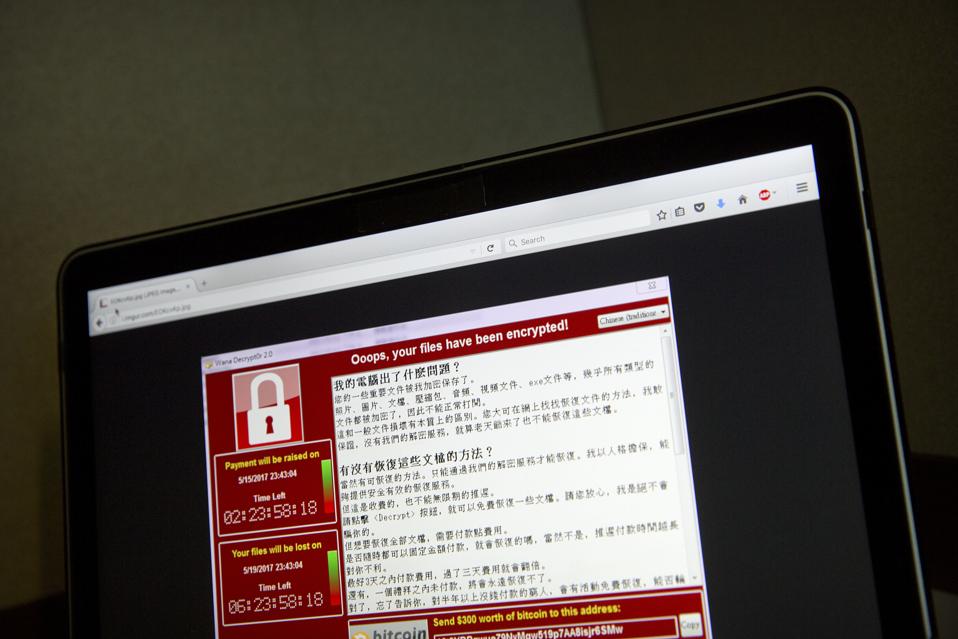
A screenshot of the warning screen from a purported ransomware attack, as captured by a computer user in Taiwan, is seen on laptop in Beijing, Saturday, May 13, 2017. Dozens of countries were hit with a huge cyberextortion attack Friday that locked up computers and held users' files for ransom at a multitude of hospitals, companies and government agencies. (AP Photo/Mark Schiefelbein)