According to Christian Wagner and Siddharth Tripathi, the threat posed by China’s Belt and Road Initiative has induced significant shifts in India’s foreign policy. For instance, India has now adopted a willingness to cooperate with other states like the US within South Asia, meaning it has dispensed with its policy of viewing the region as its natural sphere of influence. Further, India is also addressing China’s challenge by intensifying its efforts to cooperate with other states across its extended neighborhood in Asia, something that could create new opportunities for Germany and Europe.The Profession of Arms: A Guide for Young Army Officers
It takes courage, especially for a young officer, to check a man met on the road for not saluting properly or for slovenly appearance, but, every time he does, it adds to his stock of moral courage, and whatever the soldier may say, he has respect for the officer who does pull him up.
Read Document →The Dragon's Teeth: Assessing China's Military Modernization
PLA has focused on modernising its capabilities across all warfare domains to achieve these goals. This includes land, air, and maritime operations, nuclear, space, counter-space, electronic warfare and cyberspace operations, aiming to become a fully integrated joint force.
Read Document →Transforming the PLA: A Decade of reorganisation from SSF to ISF
PRC has engaged in a sustained and broad effort to transform the PLA from an infantry-heavy, low-technology, ground forces-centric military into a high-technology, networked force with an increasing emphasis on joint operations and naval and air power projection.
Read Document →Eyes without Borders: Exploring the World of Open Source Intelligence (OSINT) in the Digital Age
Open Source Intelligence (OSINT) is gaining prominence with the rise of social media, the digital society and the vast growth of publicly and commercially available information (PAI and CAI).
Read Document →
The PLA’s Developing Cyber Warfare Capabilities and India's Options
Informationised warfare blurs the lines between peacetime and wartime. A nation in the information age cannot wait for the hostilities to break out to collect intelligence, carryout influence operations, develop antisatellite systems or design computer software weapons.
Read Document →
Galwan and After
Why did China did this when he is under tremendous pressure in all fronts, is this China's salami slice tactics being progressed rigorously, what will be new Rules of Engagement, what will be escalatory control mechanism, who has taken this decision, will there be some pressure put by China in India's North-East through insurgency.
Read Document →
India’s Joint Doctrine for Cyberspace Operations: A Critical Review
Chief of Defence Staff (CDS) General Anil Chauhan and Secretary, Department of Military Affairs, formally released declassified versions of the Joint Doctrines for Cyberspace Operations during the Chiefs of Staff Committee meeting in New Delhi.
Read Document →
Know your Enemy General(now Field Marshal) Syed Aseem Munir
Gen SA Munir's position in the hierarchy of Pakistan was not very comfortable. The state of economy, insurgency in Pakhtoonistan and Balochistan, attack on the Jaffar Express, constant protests by supporters of Imran Khan's supporters inside and outside of parliament.
Read Document →
Decoding Operation SINDOOR: Key Aspects and Implications
Precision strikes were carried out on nine sites—four in Pakistan and five in PoK—linked to anti-India terrorist groups such as the LeT, JeM and the Hizbul Mujahideen. The targeted sites included Muridke (LeT headquarters) and Bahawalpur (JeM headquarters).
Read Document →
Chinese Cyber Exploitation in India's Power Grid - Is There a linkage to Mumbai Power Outage?
The New York Times (NYT), based on analysis by a U.S. based private intelligence firm Recorded Future, reported that a Chinese entity penetrated India’s power grid at multiple load dispatch points. Chinese malware intruded into the control systems that manage electric supply across India, along with a high-voltage transmission substation and a coal-fired power plant
Read Document →17 February 2018
India´s Response to the Chinese Belt and Road Initiative
According to Christian Wagner and Siddharth Tripathi, the threat posed by China’s Belt and Road Initiative has induced significant shifts in India’s foreign policy. For instance, India has now adopted a willingness to cooperate with other states like the US within South Asia, meaning it has dispensed with its policy of viewing the region as its natural sphere of influence. Further, India is also addressing China’s challenge by intensifying its efforts to cooperate with other states across its extended neighborhood in Asia, something that could create new opportunities for Germany and Europe.Relations between Washington and Islamabad? It’s Complicated
Bottom Line: Current U.S.-Pakistan relations remain strained as the U.S. maintains that Pakistan’s security and intelligence services are doing the minimum to hunt America’s militant enemies within its borders. Pakistani officials have told The Cipher Brief that they have been searching for a way to restart relations despite public humiliation by President Donald Trump earlier this year. Each side wants to keep the other from seeking alternative support – with China wooing Pakistan, and the U.S. growing closer to India.India warns Pakistan that it will pay for a deadly militant attack on an Indian army camp in Kashmir
Pentagon thinks China could be a partner in Afghanistan
As bombing in Northern Afghanistan’s Badakhshan province dials in on a little known terror group called the East Turkestan Islamic Movement (ETIM), U.S. officials are eyeing a potential partnership with China.How should India deal with Pakistan?
Chinese Envoy Says It's ‘Dangerous’ for U.S. to Confront Beijing
China’s ambassador to the U.S. warned the Trump administration against adopting a confrontational approach to the world’s second-biggest economy.What does China’s declassification of patents reveal about its defence strategy?
China's release of thousands of national defence patents in early 2017 was intended to spur innovation in the civilian sector and forms part of a bold military modernisation drive. But can such moves realistically bring China closer to achieving its strategic goals? A new research report offers a detailed analysis.Where Is Rural Rejuvenation Leading China?
Rather than addressing market distortions, China’s government is turning to a more comfortable strategy. A Weapon Without War: China’s United Front Strategy
“United Front Work is an important magic weapon for the victory of the party’s cause.” – Xi Jinping, October 2017China at the gates: A new power audit of EU-China relations
Pulling Back the Curtain on China’s Rocket Force
What can we learn about China’s most secretive military branch by examining the career paths of its senior officers? Putin Is Struggling to Keep His Wars Separate
Late on Feb. 7 and early on Feb. 8, U.S. forces in Syria likely killed the greatest number of Russians since the end of the Cold War -- more than 200 soldiers. There will, however, be no international repercussions, nor will any of the Russians get posthumous medals like Roman Filipov, the fighter pilot who was shot down over Syria earlier this year and resisted capture until he was forced to blow himself up with a hand grenade.
In 1992, a Russian Nuclear Attack Submarine Crashed into a U.S. Sub
Bloody Noses and Black Eyes: What's in a Limited Strike on North Korea?
Support is building within Washington for a limited strike against North Korea over its pursuit of nuclear arms.Turkey and Iran Push and Pull Over Syria
With its military operation in Afrin and its deployment in Idlib, Turkey has ramped up its involvement in the Syrian conflict.Israel, Hizbollah and Iran: Preventing Another War in Syria
All Guns, No Butter Trump’s budget is a return to the let-’er-rip era of defense spending.
Global Trade: Looking at the Big Picture
Global trade is in flux after the United States has made clear that it is no longer willing to take the lead.The World's Busiest Air Routes
Russia by Cyber, North Korea by Nuke: A New Batch of Grim Warnings from US Intel
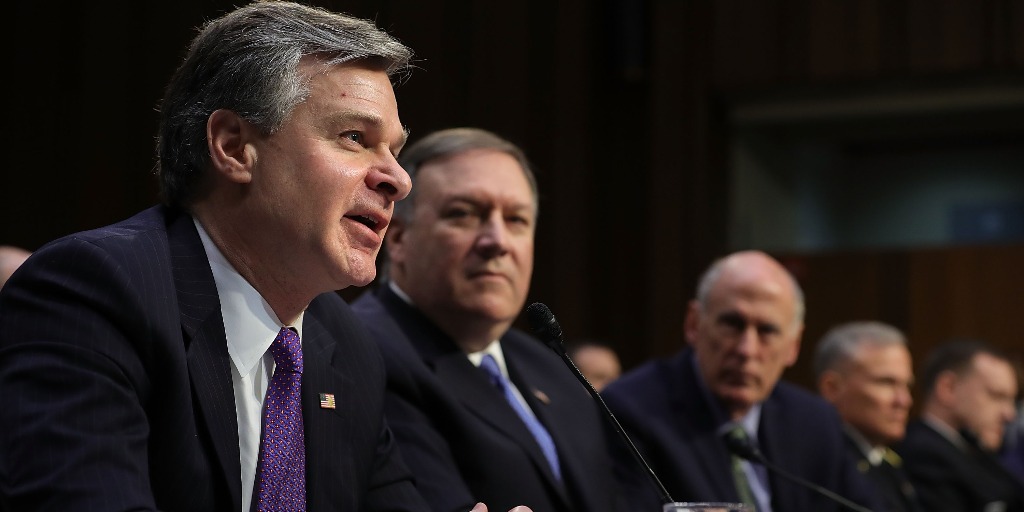
Questioning on Russian election interference and how the Trump White House handles staff clearances dominated the worldwide threat hearing Tuesday, as the Senate intelligence committee grilled leaders of the FBI, CIA, NSA, DNI, DIA and NGA over the contents of the 2018 Worldwide Threat Assessment of the U.S. Intelligence Community.The global space race, 2.0
NEW DELHI — The recent launch of the SpaceX rocket Falcon Heavy is a good illustration of the entry of efficient and innovative private players into an arena long considered the preserve of national governments. But this does not mean that national competition in outer space is disappearing. If anything, it is actually accelerating in Asia. China’s growing space prowess is leading to a space race with India and Japan, which are beginning to pool their resources to better match Beijing.US government can't compete in information war, warns RAND Corporation
261 M1 Tanks Getting Trophy Anti-Missile System As Army Reorients To Major Wars
PENTAGON: The Army’s 2019 budget will upgrade 261 M1 tanks, enough for three brigades, to carry Israeli-made Trophy Active Protection Systems (APS) to guard against anti-tank missiles, service officials said this morning. That’s just one of many funding changes — from buying more howitzer shells to intensifying training exercises — meant to reorient the Army from its counterinsurgency-era focus on light infantry and helicopters to “great power competition” to deter a potential Russian blitzkrieg.The future of war
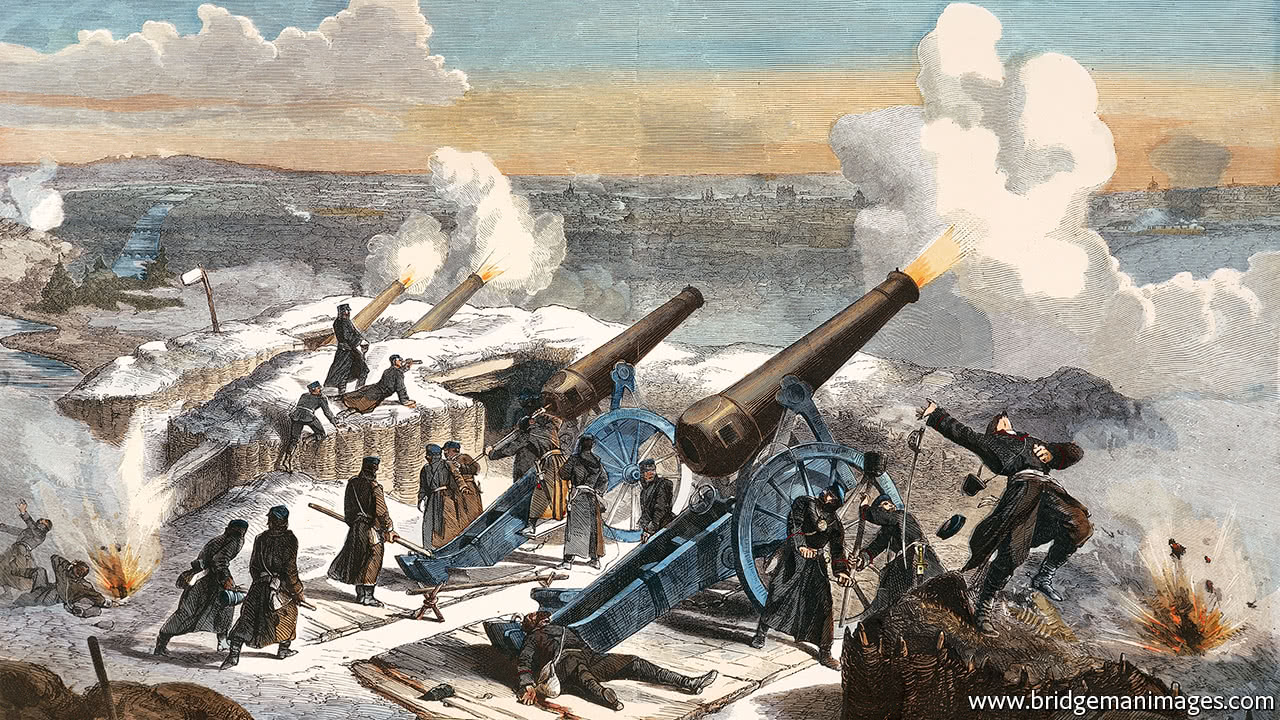
IN THE PAST, predictions about future warfare have often put too much emphasis on new technologies and doctrines. In the 19th century the speedy victory of the Prussian army over France in 1870 convinced European general staffs that rapid mobilisation by rail, quick-firing artillery and a focus on attack would make wars short and decisive. Those ideas were put to the test at the beginning of the first world war. The four years of trench warfare on the western front proved them wrong.