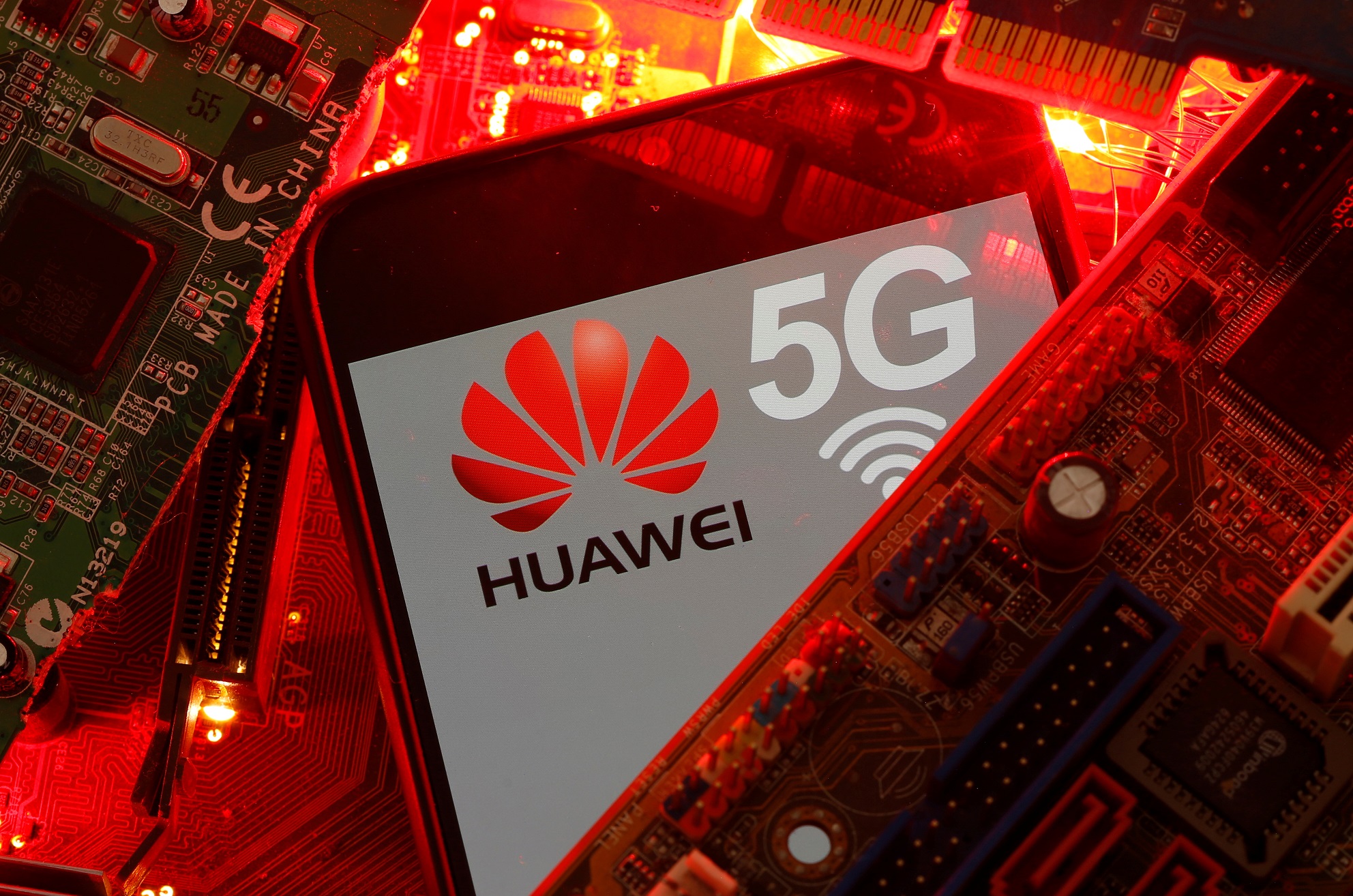
 Despite increasing US pressure on its allies not to install Chinese fifth generation (5G) communications infrastructure, and along with the possibility of punitive measures against those who ignore such warnings, the American campaign against the Chinese company Huawei has met with limited success. Other countries face a dilemma between acceding to the US demands to avoid installing Chinese technology in their communications infrastructure and maintaining proper economic relations with the Chinese power. While some have decided in favor of China, many are adopting equivocal midway solutions combining certain practical limitations with restrained declarative statements. The world's advanced communications system is at the start of a process of technological decoupling with broad strategic ramifications, in which Israel will no doubt be on the Western side. In this framework, Israel, based on its advanced technological capabilities, must take an active role in establishing and contributing to a Western technology coalition. Since Chinese communication infrastructure is not expected in Israel, this position can be leveraged by Israel to strengthen its overall relations with the US in an era of Great Power strategic competition. In parallel, and similar to the US and other countries, Israel should continue advancing its relations with China in areas where commercial and economic ties do not involve serious risks to its national security, and above all, to its relations with the United States.
On January 28, 2020, the British government decided that communications companies defined as high risk, including Chinese companies, would not be permitted to participate in developing the most sensitive core components of the country’s cellular network. It also decided to restrict the scope of the equipment that British cellular providers can purchase from a single company defined as high risk, in order to reduce their dependence on a single provider for the radio access to the cellular network - the segment between the handsets and the cellular sites. The next day, the European Union also published its recommendations for 5G policy, whereby the deployment of networks by high risk communications companies would be restricted but not banned. The European Union’s recommendations are non-binding, and in practice, each country in the EU will determine the extent to which Chinese communications companies can participate in tenders in its territory.
In the backdrop of these decisions were many warnings by senior American officials, part of the broad campaign to deepen the understanding of national security risks posed by Chinese communications companies. The campaign included American security delegations that showed their European colleagues evidence reportedly tying Huawei to people in the security establishment and to China's Communist Party, and even threatened to stop intelligence cooperation with any country that would install Chinese communications infrastructure on its territory. In addition, an indictment was served against Huawei in the US for intellectual property theft and activity in Iran and North Korea that bypassed American sanctions. It seems that the UK and the European Union made efforts to find a middle path between the two powers, combining practical solutions with hazy declarations: partially acceding to American demands without upsetting China, risking its reactions, or missing out on the benefits of its capabilities.
(European Union recommendations for 5G policy)
Most European countries likely still view China as more of an opportunity than a risk, while Australia, Japan, and the US recognize a clear risk in China alongside the economic opportunity in communications and other fields. The difference in these approaches stems mainly from the respective geographic locations, as Australia, Japan, and the US are in the Pacific, an area of geostrategic competition with China. Europe, however, lies further away from China’s sphere of influence and interest, and is exposed mainly to its geo-economic activity. European countries became aware of the potential risks inherent in the Chinese opportunities relatively late, and Europe is still divided in how it views China and in the extent of dependence on it.
While Europe and the US declared at the Munich Conference in February 2020 that action should be taken against China’s increasing influence, there is still a significant dispute between them regarding how to approach this goal. On the one hand, intelligence agencies in Europe also suspect that Chinese communications companies are linked to the Chinese establishment and therefore pose a cyber threat to Europe, and political elements in Europe are concerned about over-reliance on Chinese companies that would provide China with economic leverage against them. On the other hand, the EU’s economy is already very dependent on China. In 2018, European imports from China totaled 395 billion euros, compared to exports to China of 210 billion euros. Any policy that would be interpreted as callously blunt or aggressive toward China could potentially lead to a painful response. The discourse in Europe against banning Huawei from the next generation communications is underway while a large part of the communications infrastructure already operating in many European countries was manufactured by Huawei, and replacing or removing it is not economically justifiable. In contrast, following the British decision, the European Vodafone cellular provider announced that in the next five years, it would remove all Chinese communications equipment installed in “sensitive core systems” in Europe, at a cost of about 200 million euros. These decisions may make it easier for other European countries that until now avoided making a decision on the matter, including Greece, the Czech Republic, and Luxembourg, to permit their cellular providers to sign 5G contracts with China, at least for now and even to a limited extent.
Senior officials at Huawei have announced that from their point of view Europe is a key 5G market, and the company has waged a campaign to counter the American efforts, including threats from Chinese ambassadors in Germany and the UK. The former issued a veiled threat that the German automotive industry would be harmed if it adopted the American line. A report by Oxford Economics illustrates the dependency of European countries on Huawei, and states that the Chinese company’s contribution to European GDP in 2018 was estimated at about $14.24 billion. The company has established more than 20 R&D centers in 12 European countries, employing mostly local workers. For instance, as part of Huawei’s efforts to enter the British market, the Chinese company launched an innovation center in London to promote technological cooperation with British companies in the 5G field, as well as a 20 million pound financing fund for programmers in Britain and Ireland to develop applications for it.
In contrast with European countries, there is no dispute among Middle Eastern countries regarding Huawei. Lebanon, Egypt, Oman, and Saudi Arabia have permitted their cellular providers to install Chinese communications infrastructure. A senior official at a cellular provider in the United Arab Emirates argued that no evidence has been found regarding security risks in Huawei’s technology, and in Jordan, a Huawei technological academy was inaugurated to train students in conjunction with a local university. The same is true of Brazil, which rejected American warnings and is also expected to permit Chinese 5G cellular infrastructure in its territory.
The Sino-US struggle for 5G infrastructure is expected to continue even after the first phase agreement was signed in the so-called “trade war,” and American steps are already expected against those who side with China. For instance, in January 2020, Republican Senator Tom Cotton proposed a bill that would stop American intelligence cooperation with countries that allowed the installation of Chinese communications infrastructure on their territory. Such a step, if approved, could deepen the rift between the United States and its allies, and may push many of them to choose between Chinese communications technology and the significant economic benefits of trade with China, and American economic, political, and security benefits that currently involve more expensive and less advanced communications, and possible damage to political and economic ties with China.
For its part, Israel received clear and explicit warnings on the matter from senior American officials, including President Donald Trump, former National Security Advisor John Bolton, and Secretary of State Mike Pompeo. Israel’s Ministry of Communications recently published the tender for 5G frequencies, while the Israel Security Agency reportedly blocked the inclusion of Chinese companies in Israeli communications infrastructure. In view of the absence of Chinese technology from previous generations of communications infrastructure in Israel, and despite the lack of clear official announcements by the Israeli government on the matter, the likelihood of its 5G infrastructure being built with Chinese technology is low to nonexistent. There were also reports in the media that the request from the Hutchison company of Hong Kong to re-obtain a permit to control the Partner cellular company is currently under consideration by the security establishment, and will most probably be brought to the Committee Supervising Foreign Investments, which was established in late 2019.
 PM Netanyahu and President Xi, March 2017. Photo: Etienne Oliveau / POOL / AFP
Recommendations for Israel
The comprehensive Great Power competition between the United States and China is waged on security, economic, ideological, and technological dimensions. On the advanced communications front, chiefly regarding 5G communications, there appears to be decoupling between the powers, which are competing for the support of other countries. In this field, Israel is for all practical purposes in a position that is closest to that of the US, while declaratively it is maintaining a low profile and is avoiding publicly positioning itself against China. The international jockeying for an advantageous position in 5G communications opens a space for technological, economic, and security cooperation with the US and its allies, as a basis for a Western technological community that will be able to provide competitive alternatives to Chinese products. Such a community could invite Israeli participation, with its technological capital, and enable Israel to strengthen its political, security, and economic ties with the West, Asia, and Europe. Since, in contrast with other countries, Israel is not expected to install 5G infrastructure from China, it should work toward American recognition of its position, and try to offset somewhat the increasing tensions regarding other areas, including Chinese investments in heavy infrastructure and technology in Israel. In parallel, it is important to develop an overall view of foreign companies’ activity in sensitive areas in Israel, in order to enable proper and professional risk management.
Finally, the Israeli policy regarding trade relations with China, similar to that of the United States and others, is divided into three areas: desired areas, prohibited areas, and areas still under consideration. Following the Phalcon and Harpy crises in the past, defense and military exports from Israel to China have been clearly defined as out of bounds, and China understands this. In view of the importance of its communications infrastructure to its national security, and in view of the clear position on the matter taken by the United States, its strategic ally, Israel did well to choose to place that infrastructure in the prohibited area, without needlessly and publicly insulting China, its important trading partner.
No comments:
Post a Comment