5 February 2014

Why al-Qaeda Kicked Out Its Deadly Syria Franchise

After a protracted turf battle, the Islamic State of Iraq and Greater Syria finds itself on the outs. That will likely make things even more dangerous

Feb. 03, 2014

A still image from video obtained on Oct. 26, 2012 shows al-Qaeda leader Ayman al-Zawahiri speaking from an undisclosed location

Early Monday morning the leadership of al-Qaeda disowned Islamic State of Iraq and Greater Syria (ISIS), the most effective of its two franchises fighting in Syria, in a maneuver that could alter the trajectory of the fight against President Bashar Assad. In a message posted on jihadi websites, the al-Qaeda general command stated that its former affiliate “is not a branch of the al-Qaeda group [and al-Qaeda] does not have an organizational relationship with it and is not the group responsible for their actions.”

The move had been a long time in the making. Al-Qaeda leader Ayman al-Zawahiri has grown increasingly frustrated with ISIS, ever since Abu Bakr al-Baghdadi, head of al-Qaeda in Iraq, expanded into the Syrian conflict in April and attempted to bring the local al-Qaeda franchise, the Nusra Front, under his control. Al-Zawahiri intervened in May, admonishing al-Baghdadi to go back to Iraq, but al-Baghdadi refused, snapping back in a terse audio recording. “I have to choose between the rule of God and the rule of al-Zawahiri, and I choose the rule of God.” It was a rare demonstration of defiance in an organization that demands absolute loyalty. Nonetheless, al-Zawahiri seemed prepared to let the matter lie, apparently in recognition of al-Baghdadi’s growing strength; by that time, ISIS, recently strengthened by an influx of foreign fighters, had taken control of the Syrian city of Raqqa. That brought al-Qaeda the closest it had ever been to achieving a long-term goal — establishing an Islamic state.

But ISIS’s savagery and draconian interpretations of Islamic law alienated many Syrians and drove a wedge between rebel groups. On Jan. 3, fighting broke out between ISIS and a new alliance that included the Nusra Front. ISIS has managed to stand its ground, but this most recent al-Qaeda announcement could lead to a greater conflagration. Al-Qaeda central may not have been able to stop al-Baghdadi outright, but the threat of excommunication seemed to have reined in his worst tendencies — his deadly campaign of suicide-bomb attacks in Iraq has not yet been replicated in Syria to the same degree. ISIS is now likely to lash out with increased attacks as it tries to prove its efficacy in spite of losing its valuable al-Qaeda designation.

More: “Syria’s Lost Generation: The Plight of the Youngest Refugees”

A COMMON AGENDA- Coalition politics in Europe and in India

Krishnan Srinivasan

Angela Merkel (right) with SDP leaders

Indian political speculation currently revolves around the possible contours of coalition formation after the forthcoming general elections because it is regarded as unlikely that any party will gain an absolute majority. Coalition governments at the federal level in India have become the norm and are commonplace in democracies elsewhere, especially in countries where the system of proportionate representation is practised. The latest example of coalition formation has been seen in Germany, the most economically powerful country in Europe, whose policies are a critical determinant for the future of the European Union and the Eurozone. Angela Merkel has become chancellor for the third consecutive time, and leads a ‘Grand Coalition’ between her party and her main Opposition, the Social Democrats.

The predominant role played by Germany in Europe is not without its critics. In a recent poll, a large majority of Spaniards, Portuguese, Italians and Greeks rejected Merkel’s policies of tough love, that is, belt-tightening, austerity, balancing budgets, reducing debt, dismissing civil servants, cutting social services and privatizing State assets. The German-inspired reform package for indebted states in the Eurozone is strenuously monitored by the European Union, the International Monetary Fund and the European Central Bank, all of whom are commonly believed to be acting at Merkel’s bidding, and is a precondition for further disbursement of loans. In the case of Greece, the second tranche of the existing loan comes to an end this year, and the recession will still leave a fiscal gap of around five billion euros by 2016. A third loan, accompanied by further austerity measures, is under discussion.

Merkel is quite unfazed by criticism from the Eurozone’s indebted south, the ‘olive belt’ from Cyprus to Portugal. Referring to how Germany acquired its deep pockets by reducing labour costs and strengthening competitiveness, she has declared, “what we have done, everyone can do…we cannot drop the pressure on the south to reform”. Germany leads the European Union of 28 nations and the Eurozone of 18 with no heavyweight support or opposition; France has its economic problems and Britain is famously Eurosceptic and threatens, in an act of wishful thinking, to renegotiate the terms of its membership of the Union.

Europe’s coalitions, like those in India, are fabricated after elections and not before. But unlike India, coalition-building there is a process of long and detailed negotiation, where consensus on every foreseeable eventuality is hammered out on paper. The aim is centrist and the accommodation of incremental differences. In Holland, this document is called a regeerakkoord and is arrived at through the mediation of a respected veteran politician called an informateur, who may or may not become a member of the future government. In Berlin’s case, this procedure took three months and resulted in a 185-page agreement between Merkel’s conservative Christian Democratic Union and the Social Democratic Party, which was subsequently approved by the SDP’s members numbering about half a million. Under the accord, the SDP secures a minimum wage and lower retirement age; the CDU that taxes will not rise, there will be no new federal debt from 2015, and 40-45 per cent of power generation will be from renewable sources from 2025.

India has failed to cash in on its relationship with America

Manoj Joshi
04 February 2014

Why has no leader of the United States of America ever been the chief guest at India's Republic Day parade? 

After all, we have had presidents, prime ministers and kings from all over the world, and, horror of horrors, even leaders from China and Pakistan. But the US seems to be a strange absence in our guest list. 

The choice for a chief guest for the Republic Day is fraught with many meanings. It can be a signal for the strategic direction the country intends to take, such as the one sent by having Prime Minister Shinzo Abe of Japan as the chief guest for the 2014 celebration. 

Likewise, we have had Iran in 2003, Brazil in 2004, Saudi Arabia in 2006, or Indonesia in 2011. 

Another perennial has been the Russian/Soviet president who has come thrice, with President Putin attending most recently in 2007. 

In other cases we celebrated our closeness to another country such as Bhutan, whose king was the chief guest in 2013 for the fourth time. 

Some choices, though, are simply baffling - for example Peru (1987), Argentina (1985) or Bulgaria (1969). 

Symbolism 

In 1958, we had a People's Liberation Marshal, Ye Jianying. 

Even Pakistani leaders have been welcome, notably Governor General Ghulam Mohammed in 1955 and agriculture minister Rana Abdul Hamid in 1965. 

Other leaders of the Western world, the prime ministers and presidents of Britain, Australia, Germany and France have come, but not the Americans. 

Some would say that these are mere symbols and do not mean much. But symbols, too, have their own purpose. 

They are a code that reveals the texture of a relationship. And as symbols go, notice that no American president, even the sainted Lincoln has been graced with a road, leave alone a statue in New Delhi. 

We have an Archbishop Makarios Marg, named after the first president of Cyprus, an Olof Palme road, and roads named after Kwame Nkrumah, Nasser and Mandela, Ataturk, Alexander Dubcek, but none for, say, John Kennedy who came to India's assistance in our dark hour of defeat in 1962. 

In many ways, our relationship with the United States is the most important external relationship we have. 

As the global hegemon since the end of World War II, a friendly US has much to offer - aid, investment, expertise, political heft. 

By the same measure, an unfriendly US can and does cause a great deal of trouble. India has seen both sides of this coin. 

American aid was the key in preventing mass starvation in the 1960s, its expertise revamped our higher education and triggered the green revolution. 

Most crucially, its political blessings ensured that India remained a favoured destination of World Bank assistance, and, more recently, in removing India from the global civil nuclear blacklist. 

In the Trenches of Cyber Warfare

By June L. Kim
Associate Editor
Many fail to appreciate the threats lurking in the cyber realm.

The most dangerous threat to the United States may no longer come from a physical attack, but a cyber one. Terrorist organizations, criminal masterminds, enemy nation-states, and lone anarchists alike could cripple the United States if they gain access to networks that control power grids, gas and oil pipelines, transportation, banking, and financial systems. They could cause blackouts, flood towns, collapse the US economy, reroute gas and oil away from towns, and plenty more. So said James V. Christy II, until recently the director of futures exploration at the Defense Cyber Crime Center.

America’s critical infrastructure is automated and controlled by supervisory controller and data acquisition, or SCADA, systems. Each SCADA system is a centralized computer that monitors, gathers, and processes data and determines what to do next. “It’s not done by a little guy sitting in a room,” said Christy during a November interview.

Imagine the Internet as the highway system, he said. The highway can lead anywhere and there are on-ramps and off-ramps that lead to smaller roads, or networks, that lead to homes, or different infrastructures. The SCADA system would be like the security system for one’s home, he said.

“If you can get past the lock on the door, you can break into anybody’s house,” said Christy, and with the Internet “the highway system got you there. … You could break into the system from anywhere in the world.”

The Defense Cyber Crime Center, or DC3, operates under the executive agency of the Secretary of the Air Force with program oversight by the Air Force Office of Special Investigations. Among other functions, DC3 supports the defense industrial base through the defense collaborative information sharing environment, or DCISE, and supports law enforcement and counterintelligence organizations through the DC3 Analytic Group.

Private companies and defense contractors can send potential threats they find on their networks to DC3. The center then analyzes the threat, “sanitizes it to just the technology portion,” and then shares it with the rest of the members of DCISE, said Christy. “People don’t need to know who did it or why did they it. They just need to know the technology” so they’ll know what happened and how to prevent it, he said.

Evolving Threats

Roughly one-third of the center deals with intrusions and national security matters, said the DC3 director, Steven D. Shirley, while two-thirds supports law enforcement and criminal investigations.

“When we receive evidentiary media from [an agency], we track it … by assigning it an exam number,” Shirley explained. DC3 then identifies and retrieves relevant information through “a reliable, valid, and repeatable empirical process.” Basically, “others conduct investigations [and] we conduct digital forensic examinations in support of their investigations,” he said.

The Man Who Would Be King of Cyber


His eyes are set deep, shrouded in heavy bags that betray the sleepless nights he’s spent at his desk without complaint, according to those who have worked with him. He likes to quote movies, a tic that’s common among Navy officers, and has a penchant for stuffing conversations with film references and an easy laugh, but is driven by what he views as a mission to advance the operational use of cyber.

Vice Adm. Michael Rogers is slated to be the most powerful man in the world, at least as far as the cyber domain is concerned, in March when he talks the reins from Gen. Keith Alexander and becomes the man in charge at the National Security Agency (NSA) and US Cyber Command (CYBERCOM). The dual-hatted job rules both the intelligence and military world of cyber, responsible for protecting critical national security interests from the constant barrage of attacks and incursions emanating from all over the world (but mostly China), and for attacking when the president sees fit. The role is also thoroughly under the microscope of Congress following disclosures by Edward Snowden about how and when the US intelligence community tracks communications.

Rogers, likely knowing that he was in the process of being groomed for continued advancement, has kept out of the spotlight in recent years, despite taking over as head of the Navy’s Fleet Cyber Command in 2011. He rarely talks to reporters, gives speeches, or otherwise postures in public.

He’s fairly good at it though, coming across as personable and knowledgeable, maybe harkening back to his high school days when he “enjoyed participating in the performing arts and broadcasting,” according to the program for a 2012 ceremony where he was honored by his high school. The same program, likely a bit tongue-in-cheek, notes that during his tenure “he managed to avoid signi๏ฌcant notice or accomplishment.”

On his strolls through the halls of his school located on the north side of Chicago, he likely would have bumped into his fellow class of ’77 graduate and another future power broker, Rahm Emanuel. There’s no obvious indication that the two are close, but Emanuel, former White House chief of staff and Obama administration power broker, would have been a useful ally during Rogers’ rise to command over the last couple of years.

But regardless of whether he had White House patronage, Rogers has emerged as a favorite of Alexander’s in recent years (along with Rear Adm. Jan Tighe, who’s someone to watch). While the announcement last week that he was being named NSA head and nominated to run CYBERCOM couldn’t have been a surprise, it’s almost certain that he celebrated with his wife of nearly 30 years Dana nonetheless. Dana, although not a cyber expert herself, has an interesting tie to the scandal that will likely shape Rogers’ tenure.

The U.S. remains vulnerable to EMP attacks.

Fatal Inaction


If all your friends jumped off a bridge, would you jump too? The answer clearly depends on how high the bridge is, but what the question really asks is if carelessly following others is in fact sensible.

The question comes to mind when debating whether to protect critical national infrastructure against large scale electromagnetic pulse, or EMP, events. Although EMP is a well-documented security issue, and one of the very few things that experts believe can dramatically alter our modern way of life, the U.S. government has sadly followed the lead of too many others and done little. This inaction could well prove fatal.

An EMP event can originate naturally from a large solar flare, or artificially as the product of a manmade nuclear detonation occurring high in the Earth's atmosphere. If high energy particles are sent streaming toward Earth from a nuclear explosion (particularly an explosion at an altitude between 25 and 250 miles above the surface) or from a solar flare, the particles will interact with the Earth's magnetic field and wreak havoc on any unhardened electrical infrastructure below.

RoboCop 3D and the Battle over Bigger Big Screens in China

Imax claims that low-cost “China Film Giant Screen” copied its technology.
February 03, 2014


Imax Corporation, the Canadian company responsible for introducing giant movie theater screens, has become embroiled in a legal battle with a Chinese competitor that offers similar (perhaps too similar) technology at a fraction of the cost. The outcome could affect the relationship between film production companies and long-time business partner Imax – as well as international distribution of Hollywood movies and prices at the ticket window.

Montreal-based Imax claims that former employee Gary Tsui stole trade secrets that led to the creation of China Film Giant Screen (CFGS), an emerging player in the large-format screen industry that Imax dominates. CFGS entered the playing field in 2012, showing off its products at the Cannes Film Festival and promising to disrupt the Imax “monopoly” by offering bigger big screen technology on a budget.

Further infuriating Imax executives is another entity, Beijing Cubic Pictures Technology, which converts large-format video to 3D by allegedly copying Imax’s 2D to 3D conversion methods. The company filed suit against Tsui last August.

The chief engineer at CFGS, Tsui is also the founder of Cubic Pictures.

“Tsui worked as a software engineer for Imax in Mississauga, Ontario from 1999 until 2009,” wrote The New York Times. “That year, he gave notice of intent to quit, but was immediately fired after it was learned that he had started Jiangsu Sunway Digital, a company that was bidding for giant-screen business in China at a price cheaper than that offered by Imax.”

The Times added, “A search of Tsui’s computer revealed his ‘rampant use’ of its trade secrets in starting Sunway, which Imax said eventually ‘morphed’ into CFGS.”

Despite the ongoing legal battle, CFGS and Cubic Pictures have attracted the attention of Hollywood production companies and international film distributors. The upcoming remake of cult sci-fi action movie RoboCop, made by MGM and distributed by Sony, will be shown on CFGS screens in China. A 3D version of the film will also be exclusive to China – courtesy of Cubic Pictures.

Lessons Observed on Lessons Observed: IEDs, Advising, and Armor

February 3, 2014 

In the late winter of 2007, while serving as a brigade planner of a unit slated for a deployment to Iraq, I received a phone call from the division headquarters. An operations staffer there told me to call my brigade’s designated representative at the Center for Army Lessons Learned (CALL) to get lessons learned from units that had recently been to Iraq. I did as I was instructed, reaching an amiable civil servant who was eager to help.

“We have all kinds of info. What do you need?”

“I have no idea. What do you have?”

“Everything. Where are you going?”

“We don’t know. Maybe MND-North? There’s no plan yet.”


“Oh, we have lots of stuff on MND-North. What do you need to know about it?”

“I don’t know – we’re about to link in with the division staff this week to get the intel picture. What else should we know?”

“Well, we have 4 years of data and logs on the division’s area of operations and some recent brigade AARs [after action reviews]. We could send you that.”

A little over a week later I received a package with the aforementioned information. The after action reviews were fairly generic, obviously put together by officers who had other duties to perform. The data was either too granular or too high-level to be of use. In the end we deployed to the Multi-National Division – Center on the southern edge of Baghdad and not the northern division closer to Kirkuk; these areas might as well have been in different countries. Most all of the “lessons learned” were useless in the area of operations we were eventually assigned. My experience with CALL in 2007 reinforced the Army adage that there are no lessons learned, only lessons observed.

More recent work by CALL has acknowledged the important difference between lessons observed (recognizing something that ought to be learned) and lessons learned (an observation fully analyzed and used to change military equipment, doctrine, or organization). A handbook on the Center specifies the difference between observations, insights, lessons and “lessons learned:” “Observations, insights, and lessons are not lessons learned because they have not been validated by the Army’s assigned proponents, and there is no assurance an actual change in behavior will occur.” I cannot speak to CALL’s utility today; certainly through 2007 they were very adept at collecting observations and insights, but had some difficulty in actually changing behaviors. This isn’t to pick on CALL, though it was of little value to me in 2007 (I am hoping that they have improved in the interim). In fact, the U.S. Army wasn’t very good at lessons learned before the Center was founded in 1985.

I was reminded of the above conversation after finishing General Donn Starry’s book Armored Combat in Vietnam. Starry, later the prime author ofAirLand Battle, paints In this book a unique picture of the Vietnam War by focusing on the use of armored cavalry, air cavalry, and tanks. The slim volume, published in 1980 but based on research conducted in the mid-1970s, counters the strong narrative that Vietnam was an infantry war and that Vietnamese geography precluded the effective employment of armored forces. Starry is a gripping story-teller and makes free use of engaging anecdotes. And yet, it is only in the final chapter of his observations that the recurring failure of the Army to actually learn becomes readily apparent. Starry presents six major lessons that he observed in Vietnam. Three of these are lessons that the Army merely observed and did not learn. Two decades elapsed between Starry’s public observation of these lessons and the beginning of our more recent years. Yet the Army failed to internalize the lessons of Vietnam, and soldiers have paid the price for it on the battlefields of the last 13 years.

China Thinks It Can Defeat America in Battle

But Beijing doesn’t seem to take into account U.S. submarines
David Axe in War is Boring


The bad news first. The People’s Republic of China now believes it can successfully prevent the United States from intervening in the event of a Chinese invasion of Taiwan or some other military assault by Beijing.

Now the good news. China is wrong—and for one major reason. It apparently disregards the decisive power of America’s nuclear-powered submarines.

Moreover, for economic and demographic reasons Beijing has a narrow historical window in which to use its military to alter the world’s power structure. If China doesn’t make a major military move in the next couple decades, it probably never will.

The U.S. Navy’s submarines—the unsung main defenders of the current world order—must hold the line against China for another 20 years. After that, America can declare a sort of quiet victory in the increasingly chilly Cold War with China.
Chinese Type 071 amphibious assault ship. Via Chinese Internet
How China wins

The bad news came from Lee Fuell, from the U.S. Air Force’s National Air and Space Intelligence Center, during Fuell’s testimony before the U.S.-China Economic and Security Review Commission in Washington, D.C. on Jan. 30.

For years, Chinese military planning assumed that any attack by the People’s Liberation Army on Taiwan or a disputed island would have to begin with a Pearl Harbor-style preemptive missile strike by China against U.S. forces in Japan and Guam. The PLA was so afraid of overwhelming American intervention that it genuinely believed it could not win unless the Americans were removed from the battlefield before the main campaign even began.

A preemptive strike was, needless to say, a highly risky proposition. If it worked, the PLA just might secure enough space and time to defeat defending troops, seize territory and position itself for a favorable post-war settlement.

But if China failed to disable American forces with a surprise attack, Beijing could find itself fighting a full-scale war on at least two fronts: against the country it was invading plus the full might of U.S. Pacific Command, fully mobilized and probably strongly backed by the rest of the world.

That was then. But after two decades of sustained military modernization, the Chinese military has fundamentally changed its strategy in just the last year or so. According to Fuell, recent writings by PLA officers indicate “a growing confidence within the PLA that they can more-readily withstand U.S. involvement.”

The preemptive strike is off the table—and with it, the risk of a full-scale American counterattack. Instead, Beijing believes it can attack Taiwan or another neighbor while also bloodlessly deterring U.S. intervention. It would do so by deploying such overwhelmingly strong military forces—ballistic missiles, aircraft carriers, jet fighters and the like—that Washington dare not get involved.

The knock-on effects of deterring America could be world-changing. “Backing away from our commitments to protect Taiwan, Japan or the Philippines would be tantamount to ceding East Asia to China’s domination,” Roger Cliff, a fellow at the Atlantic Council, said at the same U.S.-China Economic and Security Review Commission hearing on Jan. 30.

Worse, the world’s liberal economic order—and indeed, the whole notion of democracy—could suffer irreparable harm. “The United States has both a moral and a material interest in a world in which democratic nations can survive and thrive,” Cliff asserted.

Run up to the Defence Budget 2014-15: Challenges to Modernisation

February 4, 2014


In mid-February, the Finance Minister would present the Interim Budget 2014-15 to the Parliament in which he would seek Vote-On-Account (VOA) to enable the government to meet the essential expenditure till such time that a new government assumes power and present a regular budget. Although the VOA is of short-term relevance, the interim budget would nonetheless contain the estimates of both revenue receipts and expenditure for the full financial year. It is the prerogative of the next government to revise the estimates and present a regular budget as per its priorities it perceives. Defence being a major charge on the Union Budget, it is worthwhile to analyse the likely impact on it by the unfolding scenario. Some of the likely challenges that the defence ministry would likely to face are discussed as under.

The first and foremost challenge that the defence ministry would face is the impending general election and its likely impact on the union budget as a whole, and the defence budget in particular. It is commonly viewed that in an election year, the incumbent government is tempted to present a populist budget. In that scenario, the Ministry of Defence (MoD) would have reasons to be unhappy, particularly so when the modernisation requirement of the Indian armed forces has reached a stage which is now contingent upon substantial additional resources to remain on course. Nothing would perhaps describe the grave situation better than the overwhelming share of committed liability (arising out of contracts already singed) in the MoD’s total modernisation budget. By 2013-14, the committed liability has reached 96 per cent (in comparison to 92 per cent in the preceding year), meaning that only four per cent (or Rs 2,956 crore) of MoD’s total capital modernisation budget (of Rs 70,489 crore) is available for signing new contracts. Any further tightening on the modernisation budget in the coming financial year would definitely affect the on-going modernisation process.

Assuming that the government defies the common logic and provides ample resources to the defence ministry, there is still very little one can expect on the modernisation front. Since the number of days before a new government comes into power is limited, the incumbent government would unlikely to take decision on major armament programmes which have reached fairly a high stage of contract negotiation. Rather the responsibility to take decision on major acquisition proposals would be shifted to the new government which would also find it difficult to expedite the process given the various oversight concerns that often surround the defence procurement. Given this scenario, the year 2014-15 may well be a year of inaction, as far as modernisation of the Indian armed forces is concerned. Some of the modernisation programmes which are likely to be subjected to this inaction are: the ultra-light howitzers and javelin programmes of the Indian Army; and the medium multi-role combat aircraft (MMRCA), heavy lift and attack helicopters, and tanker aircraft of the Indian air force.

The second challenge that the defence establishment would likely to face is related to the growth prospect of the Indian economy. It is noteworthy to mention that the GDP growth for 2013-14 is expected to be around five per cent, which is lower than 6.1-6.7 per cent estimated by the government initially. The economic slowdown, combined with the tight fiscal situation has already led to tightening of the government purse. What is of more relevance is that the growth prospect in the coming years would also remain subdued although some improvement is expected. According to a recent UN report, the World Economic Situation and Prospects 2014, the Indian economy is likely to grow by 5.3 per cent and 5.7 per cent in 2014 and 2015, respectively. This is in stark contrast with the high annual growth rate of 8-9 per cent registered few years ago.

The Navy’s Getting a Big, Secretive Special Operations ‘Mothership’

Converted cargo vessel to carry copters, commandos
David Axe in War is Boring

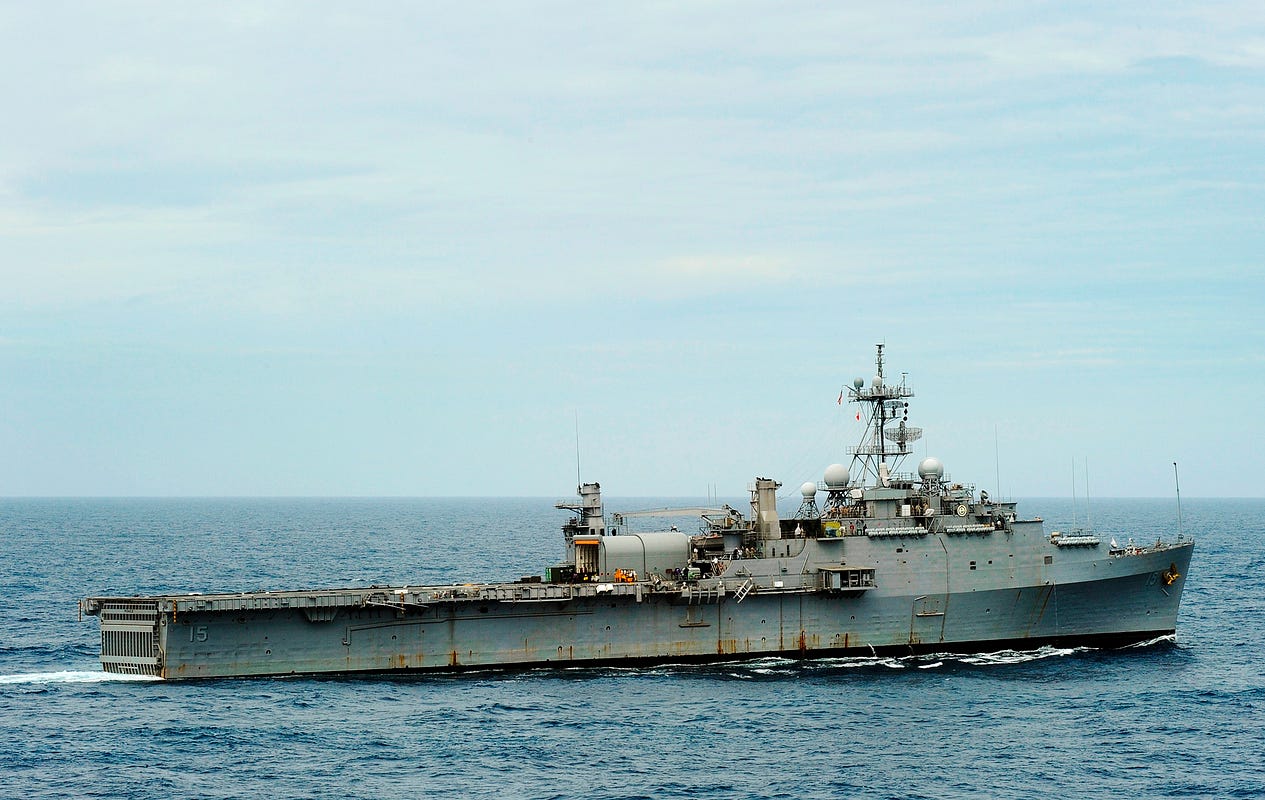
The U.S. Navy is quietly converting a 633-foot-long cargo ship into a secretive helicopter carrier with facilities for supporting a large contingent of Special Operations Forces and all their gear, including jet skis.

Yes, jet skis.

And here’s the really weird thing: almost nobody is talking about the new “mothership” vessel, even though it could significantly expand America’s at-sea commando footprint.

In November, Military Sealift Command—America’s quasi-civilian fleet of more than 100 specialized but lightly armed vessels—awarded an initial $73-million contract to shipping giant Maersk to convert one of its cargo ships to a so-called “Maritime Support Vessel” standard.


Maersk tapped the 30,000-ton displacement M/V Cragside, built in 2011. After enduring a legal protest by rival Crowley, in January Maersk sent Cragside to the Gulf of Mexico for military modifications, most likely at the BAE shipyard upriver in Alabama.

The contract, extendable for up to four years, could be worth up to $143 million. The militarized Cragside could deploy as early as November this year.

MSC is adding a bunch of new hardware to Cragside to allow the vessel to function as a floating base for up to 200 troops and their weapons plus small boats, helicopters and the aforementioned jet skis, which the Navy and Air Force have begun buying and which Navy SEALs could use to sneak along enemy coastlines.

Cragside should be able to sail 8,000 miles at a time at speeds up to 20 knots and in 20-foot seas, needing resupply only every 45 days. The shipyard is adding a highly-secure communications room, a gym and weapons lockers. After all, you can’t house all those Army Delta Force troopers and SEALs without ample weapons lockers and gyms.

The sleek, capacious ship—already fitted with a rear ramp for loading vehicles—is also getting a flight deck big enough for the largest, heaviest U.S. military helicopter, the Navy’s MH-53E. Cragside will also be able to support Army Apache gunships, Navy patrol helicopters, Special Operations Command Little Bird attack copters and even Marine and Air Force V-22 tiltrotors.

Cragside’s hangar must be big enough to hold two Navy helicopters at the same time for maintenance—and has to have the special, subtle lighting that allows crews to use night-vision goggles.

US Navy Explores Sub-Launched Hypersonic Missiles

The Navy is exploring the feasibility of sub-launched hypersonic missiles for conventional prompt global strike program.
February 04, 2014

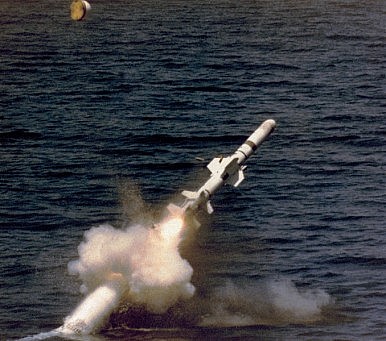
The U.S. Navy is looking into developing a submarine-launched hypersonic missile as part of its conventional prompt global strike (CPGS) program.

According to an Inside Defense article, the Navy’s Strategic Systems Programs office is soliciting proposals for “two-year industry trade studies to flesh out technology options and architecture for an intermediate-range conventional prompt global strike weapon.”

The report said that the competition was part of the Defense Department’s “fiscal year 2014 plan to investigate a launcher, missile and glide body for a weapon with potential game-changing capabilities.” Top among these CPGS capabilities is to develop precision-guided ballistic missiles that can reach any point on the globe within an hour’s time.

Inside Defense went on to say that the Navy’s Strategic Systems Programs office was interested in awarding one or two thirteen-month contracts, each of which would be worth $5 million and be eligible for a one year extension. The statement announcing the competition did caution that: “The industrial effort in this procurement is not intended to be a system-level development of a specific CPGS solution; instead, it is a technical trade study to evaluate technology options and compare the performance and technology cost considerations of these options.”

Although pursuing submarine-launched missiles instead of ground-based ones increases the technical challenges involved, the decision is necessary in light of the United States’ treaty obligations which ban it and Russia from developing ground-launched intermediate missiles with a range of 500-5,500 km. Recent reports, however, suggest that Russia may have recently violated the Intermediate-Range Nuclear Forces Treaty (which also bans conventional missiles), opening up the future possibility of the U.S. developing intermediate-range ground-based missiles as part of its CPGS program.

Some analysts believe there is a nascent hypersonic missile arms race between some of the world’s major powers. The Navy’s competition announcement comes on the heels of China testing its own hypersonic missile vehicle. As my colleague Ankit reported last month, “The hypersonic missile [test] could be a major milestone for China as it modernizes its military technology for strategic nuclear and conventional military purposes.” Ankit, citing Project 2049’s Mark Stokes, went on to note that China is believed to be “working on two such hypersonic flight vehicle programs, both intended for long-range strategic use.” Additionally, Beijing is also believed to be pursuing an independent hypersonic capability, as opposed to one that takes off from China’s intercontinental ballistic missiles (ICBMs).
The end of the tank? The Army says it doesn’t need it, but industry wants to keep building it.

YORK, PA. — When an armored vehicle pulled down the statue of Saddam Hussein in an iconic moment of the Iraq War, it triggered a wave of pride here at the BAE Systems plant where that rig was built. The Marines who rolled to glory in it even showed up to pay their regards to the factory workers.

That bond between the machinists and tradesmen supporting the war effort at home and those fighting on the front lines has held tight for generations — as long as the tank has served as a symbol of military might.

Now that representation of U.S. power is rolling into another sort of morass: the emotional debates playing out as Congress, the military and the defense industry adapt to stark new realities in modern warfare and in the nation’s finances.

As its orders dwindle, the BAE Systems plant is shrinking, too. The company is slowly trimming workers and closing buildings.

In York, there’s “sadness that somebody that has worked here 35 years and is close to retirement is getting laid off,” said Alice Conner, a manufacturing executive at the factory. “There’s also some frustration from management and my engineering staff as we see the skills erode, because we know one day we’re going to be asked to bring these back, and it’s going to be very difficult.”

The manufacturing of tanks — powerful but cumbersome — is no longer essential, the military says. In modern warfare, forces must deploy quickly and “project power over great distances.” Submarines and long-range bombers are needed. Weapons such as drones — nimble and tactical — are the future.

Tanks are something of a relic.

The Army has about 5,000 of them sitting idle or awaiting an upgrade. For the BAE Systems employees in York, keeping the armored vehicle in service means keeping a job. And jobs, after all, are what their representatives in Congress are working to protect in their home districts.

The Army is just one party to this decision. While the military sets its strategic priorities, it’s Congress that allocates money for any purchases. And the defense industry, which ultimately produces the weapons, seeks to influence both the military and Congress.

“The Army’s responsibility is to do what’s best for the taxpayer,” said Heidi Shyu, the top Army buying official. “The CEO of the corporation[’s responsibility] is to do what’s best in terms of shareholders.”

The Army is pushing ahead on a path that could result in at least partial closure of the two U.S. facilities producing these vehicles — buoyed by a new study on the state of the combat vehicle industry due for release next month.

But its plans could be derailed by a Congress unwilling to yield and an industry with a powerful lobby. They argue that letting these lines idle or close would mean letting skills and technology honed over decades go to waste.

The Pentagon has “really made a turn in that they are now trying to solve million-dollar problems without billion-dollar solutions, but Congress keeps redirecting them,” said Brett Lambert, who oversaw the Pentagon’s industrial base policy until last year. “This is a zero-sum game. For every dollar the Pentagon spends on something we don’t need . . . it is a dollar we can’t spend on something we do need.”

A boom, then decline

For decades, BAE Systems’s facility in York has cranked out the Hercules, the Paladin and — most notably and most recently — the Bradley Fighting Vehicle, a 75,000-pound mainstay of the military’s traditional weapons, a kind of armored vehicle that can hold up to 10 men, move at nearly 40 miles per hour and fire a cannon, machine gun and missiles.

AEI/Heritage Foundation Project for the Common Defense (Navy) Weekly Read Board


Posted by The Conservative Wahoo at 4:48 PM 0 Comments

Does the military threaten democracy?

4 February 2014

By Ajai Shukla
Business Standard, 4th Feb 14

At the emotional high point of President Barack Obama’s State of the Union speech last Tuesday, he turned to Sergeant First Class Cory Remsberg, an army ranger seated next to Michelle Obama. The president invoked Remsberg, blind in one eye and riddled with shrapnel from a roadside bomb on his tenth combat deployment in Afghanistan, as a reminder of the price paid to uphold America’s values, Remsberg’s father helped him to his feet. The audience rose and cheered, many cheeks wet with tears.

Two days earlier, on Republic Day, India’s leaders had paid homage to our martyrs. Prime Minister Manmohan Singh drove in a heavily protected convoy down Rajpath to lay a wreath impassively at what serves as a national war memorial. Later, President Pranab Mukherjee, without a flicker of emotion, handed a medal and certificate to Karunam Venkatam, the 67-year-old father of Sub-Inspector K Prasad Babu, an Andhra Pradesh policeman who died last April fighting Maoists. Mr Venkatam, who struggled not to break down, was clearly alone in his personal encounter with a patrimonial, uncaring state.

It is no secret that India’s political and bureaucratic class is oblivious to its armed forces, nor can one expect better from a governing class whose indifference to its starving and undernourished millions has been described in these pages as a crime against humanity. Still, the instinct for self-preservation alone should focus our rulers’ attention on the military’s dire financial and organisational state, which --- appallingly --- is due at least partly to the fear that too much nurturing and strengthening might turn the armed forces into a threat to our own corrupt elites rather than to those ill-disposed towards India.

Several articles in this newspaper (most recently, “Arms acquisitions languish without funds or coordination”, February 3) have highlighted the worrying state of military modernisation. This year the military got just Rs 2,955 crore for new equipment, while Rs 64,680 crore of the modernisation budget went on instalments for weaponry bought during previous years. Next year, there could be even less for new buys.

More funds would be welcome, but India’s fiscal position limits military expenditure. Yet it costs nothing to optimise expenditure by coordinating between the army, navy and air force. With the services competing, as organisations do, to build their respective empires, roles, responsibilities and capabilities are wastefully duplicated. Yet politicians and bureaucrats fear appointing a tri-service chief who could coordinate budgeting and long-term planning to curb wasteful expenditure. In 2001, a group of ministers (India’s strongest version of a committee) recommended appointing a five-star “chief of defence staff” or CDS, who would command all three services. In 2012 a warier Naresh Chandra Task Force recommended appointing a “permanent chairman, chiefs of staff committee”, or Permanent Chairman COSC --- a significantly less powerful, four-star, tri-service chief whose role would be limited to tri-service planning, long-term budgeting and acquisitions.

Where is Egypt going?

February 3, 2014


Now that three years have elapsed since the 2011 Revolution in Egypt, it is pertinent, nay, imperative, to ask the central question: Where is Egypt? Where is it going? On January 25, 2011 Egyptians shed fear of their repressive government that had deprived them of their human rights for decades and gathered in the world famous Tahrir Square to demand that President Hosni Mubarak resign. Mubarak, in office for thirty years, fell eighteen days later. Millions of Egyptians in Tahrir Square and elsewhere saw the exit of Mubarak as signaling the beginning of Egypt’s journey towards democracy. Three years later, it is painfully clear that Egypt has lost its way towards democracy; in fact, it is heading fast in the opposite direction. The police state under Mubarak is being restored; freedom of expression has been drastically abridged; dissent does provoke punishment; political prisoners total up to twenty one thousand; and political demonstrations need prior permission. Egypt is under military rule and a field marshal is soon going to be elected president.

The Egyptians who assembled, or more accurately, who were permitted to assemble, in Tahrir Square on January 2014 did not go there to celebrate the 2011 Revolution. They went there to bury that Revolution and to celebrate the 2003 coup. Many carried big photos of General Abdel Fattah al-Sisi and of Nasser, the most charismatic leader in the Arab world in our times. The obvious intention was to suggest that al-Sisi is the Nasser of the day, and the savior of Egypt. Some carried photographs of Mubarak, a clear indication that the Mubarak loyalists, known asfulul, are actively engaged in politics, supporting the regime in power. It was a state-funded and state-sponsored, superbly and expensively choreographed event. There was a state-of-the-art stage, a far cry from the rickety, shaky one in 2011 the same day. The lighting system was sophisticated and expensive. The crowd was there to cheer General al-Sisi. There were t-shirts and sweets displaying his image in galore. Predictably enough on January 27 the General was promoted Field Marshal and the SCAF(Supreme Council of Armed Forces) ‘approved’ his candidature at the Presidential election, dates for which are yet to be announced. Incidentally, the choreography is unerring. The interim President, Adly Mansour, appointed by al- Sisi, had earlier said that the election to the Parliament would take place before that of the President. Later, it was announced that there was flexibility, meaning the sequence could be reversed. The intention is to take advantage of the current high popularity of al-Sisi whom many women say on television that they want to marry.

It is time to look analytically and critically at the political developments in Egypt since the exit of Mubarak in February 2011. Otherwise it will not be possible to understand what is now happening. The first and foremost point to note is that it was a flawed and incomplete revolution: Mubarak fell, but the ‘the Deep State’ that supported and enabled him to sustain his dictatorship did not fall. The concept of the Deep State was originally applied to Ottoman Turkey and its republican successor founded by Ataturk. It basically meant secret sources of political power. Currently, in Egypt’s case, it means the triumvirate of the Army, the Higher Judiciary, and the Intelligence agencies, generally known as the Mukhabarat in the Arab world. Out of the three the Army is the leader and others are ‘attendant lords’.

The second point to underline is that the Deep State did not want Egypt to be a democracy as it had everything to lose if that were to happen. The SCAF grabbed power when Mubarak fell; Egyptians hold the Army in high esteem and when the Army announced that it would arrange for election in six months time and hand over power to a democratically elected government most Egyptians believed it. However, the Army was in no hurry to hand over power. It delayed the election, finally held and completed in eleven months. Here it is important to look at the collaboration between the Army and the Higher Judiciary. Judge Tahani el Gebali, Deputy President of the Supreme Constitutional Court, was the friend, philosopher, and guide to SCAF in legal matters. She advised the postponement of the election to the parliament pointing out the risk of the Muslim Brotherhood’s victory. When the results came with the Muslim Brotherhood and the Salafists winning a 70% majority, SCAF regretted the holding of election and told her that she was right.

4 February 2014

Bangla Court Establishes BNP-Jamaat Fountainhead of Terrorism

Paper No. 5642 Dated 03-Feb-2014
By Bhaskar Roy

A special court in the port city of Chittagong, Bangladesh, sentenced (Jan 30) 14 to death. They were the principals in illegally importing 10 truck loads of arms, ammunition and explosives on April 01, 2004 by sea. The court ruled that the consignment was destined for Indian separatist/ terrorist organization, the United Liberation Front of Assam (ULFA) to wage war against the Indian state.

The consignment included 1,500 boxes containing 4,930 sophisticated fire arms of different types, 840 rocket launchers, 300 rockets, 27,020 grenades, 2000 grenade launching tubes, 6,392 magazines and 11.41 million rounds of bullets. They were unloaded at the Chittagong Urea Fertilizer Ltd. (CUFL) jetty, which was under the ministry of Industries.

Those sentenced and the positions they held during the BNP-Jamaat-e-Islami government (2001-2006) are as follows: Jamaat chief (Amir) and minister for Industries Motiur Reheman Nizami, BNP leader and minister of state for Home Affairs Lutfozzaman Babar, National Security and Intelligence (NSI) director general Brig. Gen. Abdur Rahim, Directorate General of Forces Intelligence (DGFI) director general Rezzakul Haider Choudhury, former NSI director wing commander Shahabuddin, former CUFL general manager (Admin) Enamul Haque, ex-managing director of CUFL Mohsin Talukdar, and ex- NSI field officer Akbar Hossain Khan. Two others, additional secretary of industry minister Nurul Amin and commander in chief of ULFA stationed in Dhaka, Paresh Barua, were also sentenced. The verdict was delivered after permission from High Court division. Those sentenced can appeal against the judgment.

The enormity of the conspiracy can only be imagined considering the size of the arms consignment. Although there was regular illegal shipment of arms through Bangladesh to Indian insurgents, this was the biggest consignment ever. Paresh Barua was in Chittagong on April 01 to receive the consignment. Unfortunately for the conspirators, the trucks carrying the arms were discovered that night in a routine check by two police officers. These officers were immediately arrested and put in jail in a false arms case. The main case was sought to be buried quietly. Babar even issued a statement that the arms consignment had been destroyed by a court order.

Had the arms crossed the border and reached Assam the devastation it would have created is unimaginable. The ULFA also may have sold parts of the consignment to other Indian insurgents like the Naga NSCN (I/B), the Mizos and the like.

Initial movement in the case was seen after the army-backed caretaker government came into position in November 2007, when the Chittagong metropolitan judge ordered further investigations in February 2008 following a prosecution petition. The trial finally began in November 2011, after the Awami League led alliance government came to power. Judge Mojibur Rehman observed that a small cantonment could have been armed with the weapons seized.