29 April 2014

Boko Haram: The Terror Group That Kidnapped 200 Schoolgirls

April 27, 2014
http://www.realclearworld.com/articles/2014/04/27/boko_haram_the_terror_group_that_kidnapped_200_schoolgirls.html
By Mathieu Guidere


As terrorist attacks go, it was as shocking for its scale and its choice of target: on April 14, at least 200 people were kidnapped from the Government Girls Secondary School in the Nigerian town of Chibok.

More than a week later, the whereabouts of hundreds of young women remain a mystery. Within local communities of Borno province there is much sympathy for parents, but not a huge degree of shock. For this is just the latest in a series of attacks blamed on one outfit: Boko Haram.

To understand the kidnapping, we have to look at the terror group’s history, how it was formed, and how its ideology developed.

Boko Haram has made itself notorious with a long campaign of bombings and mass murders across Nigeria, often in concert with other Islamist groups. But to properly understand the group, we have to look at the terrorist group’s history, how the group was formed, and how its ideology developed.

In the aftermath of September 11 2001, a 30-year-old man called Muhammad Yusuf founded a new religious preaching group in Maiduguri, capital of Nigeria’s Borno State, and gave it the Arabic name “Jamaat ahl as-Sunnah li ad-Dawah wa al-Jihad” (literally, “The Group of the People of Tradition and Call for Jihad”). This group would later become known in Hausa as “Boko Haram”, meaning “Western education is sinful”.

Yusuf had studied theology in Saudi Arabia and converted to Salafism. He was convinced that the Western education model which prevailed in Nigeria, a legacy of British rule, was to blame for the country’s problems; he pledged to fight against it, and to introduce a model inspired by the Taliban’s Afghan education system.

The group began as a gathering of Muslim followers at a mosque and at a Koranic school. These gatherings were for poor families to send their children to study a different but parallel curriculum to the existing one: they were taught Islamic sciences, prophetic traditions, Koranic commentary, rejection of Darwinian evolution and the like. The number of these “schools” increased, attracting young adult students who failed in the government universities. They then began calling themselves “the Nigerian Taliban” (Taliban literally means “student of theology”).

The Arab World’s Options

APRIL 25, 2014,PROJECT SYNDICATE

When the Arab awakening began in 2011, its primary goal should have been to advance pluralism and democracy – causes that were neglected in the Arab world’s first, anti-colonial awakening in the twentieth century. But, after three years of struggle, the process has only just begun. Will the second Arab awakening finally achieve its goals?

The answer depends on which of three models Arab countries use to guide their transition: an inclusive, far-sighted model that aims to build consensus; a winner-take-all approach that excludes large segments of the population; or a stop-at-nothing approach focused on regime survival. These models reflect the vast differences among Arab countries’ current circumstances and prospects for the future.The strongest example of the inclusive model is Tunisia, where former opponents have formed a coalition government, without military interference. Of course, the process was not easy. But, after a tense struggle, Tunisians recognized that cooperation was the only way forward.

In February, Tunisia adopted the Arab world’s most progressive constitution, which establishes equality between men and women, provides for peaceful alternation of government, and recognizes the right of citizens to be without religious belief – an unprecedented move in the region, supported by both Islamist and secular forces. Tunisia’s experience embodies the commitment to pluralism and democracy for which the second Arab awakening stands.

Fortunately, Tunisia is not alone in following this path. Both Yemen and Morocco have undertaken a relatively inclusive political process, with Yemen pursuing a national dialogue and Morocco forming a coalition government.

But this model had failed to take hold in several other countries. Consider Egypt, which has been pursuing the second, exclusionary approach, with all parties believing that they have a monopoly on the truth and thus can ignore or suppress their opponents. Egypt’s Islamists, led by the Muslim Brotherhood, adopted this philosophy while they were in power; the secular forces that ousted them in last July’s military coup are now taking the same approach.

Japan Gains Significant Strategic Pledge from United States: An Analysis

Paper No. 5692 Dated 28-Apr-2014
By Dr. Subhash Kapila

Japan today has a troubled security environment with China having lately indulged in conflict-escalation and political coercion in claiming sovereignty over the Japanese Senkaku Islands.

In this context, Japan gained a significant strategic pledge from the United States during President Obama’s visit to Tokyo last week that security of the Senkaku Islands too is covered under Article 5 of the Japan-US Mutual Security Treaty.

It needs to be recalled that when tensions arose between China and Japan two years back, the United States was diffident and hesitant in conceding that the United States under its Treaty commitments was treaty-bound to assist Japan against any aggression by China against the Senkaku Islands. United States’ ambiguity then was not only causing security concerns but also affecting the credibility of US security commitments not only in Japan but also in the Philippines similarly affected by China’s conflict escalation against it over its South China Sea islands.

The ongoing tour of President Obama to its three military allies in East Asia i.e. Japan, South Korea and the Philippines, and also Malaysia was intended to ‘rebalance’ the US Strategic Pivot to Asia Pacific’ and further provide security reassurances to these nations against the backdrop of China’s unceasing military aggressive provocations in the East China Sea and the South China Sea.

Japan has been a reliable and long-standing ally of the United States and can be said to be the lynch-pin of the United States security architecture in the Asia Pacific. As explained in my last Paper this trip was to be a big strategic challenge for President Obama as the United States could ill-afford to ignore the security concerns of its major military ally in the region and a contending Asian power against Chinese hegemonistic impulses and that the United States could not subordinate this strategic reality to United States illogical ‘China-Hedging Strategy’

In the same context it was brought out earlier too that United States’ credibility was at stake in Asian capitals when it exhibited diffidence in standing up to China’s rising military adventurism in the Asia Pacific when the United States as the global superpower with substantial stakes in the Asia Pacific was found wanting in firmness.

Significant it therefore becomes, and a big strategic gain for Japan, when after hard negotiations, President Obama asserted: “Our commitment to Japan’s security is absolute and Article Five (of the Security Treaty) covers all territories under Japan’s administration including the Senkaku Islands”.

Taiwan Rocked by Anti-Nuclear Protests

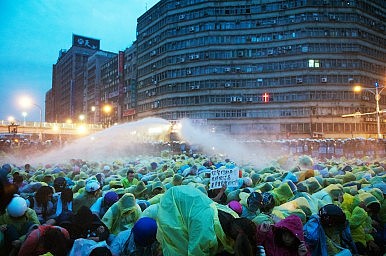
Anti-nuclear protesters have taken to the streets of Taipei to demand the end of atomic energy on the island.
April 28, 2014

Less than a month after the unprecedented occupation of the Legislative Yuan by the Sunflower Movement, riot police and water cannons were once again deployed on the streets of Taipei. But this time, the object of the protests wasn’t a controversial services trade pact with China, but rather nuclear energy, a major point of contention since the 2011 nuclear disaster at the Fukushima Dai-Ichi power plant in Japan.

At the center of the storm is the Fourth Nuclear Power Plant currently under construction in Gongliao, New Taipei City. Though ostensibly a much safer design than earlier generations of reactors, fears remain that the Advanced Boiling Water Reactor (ABWR) at the Fourth power plant is an unstable assemblage of various systems — a nuclear Frankenstein monster, if you will. Moreover, opponents of the project argue that Taiwan, a highly active seismic area, is too vulnerable to natural catastrophes, including tsunamis and powerful typhoons. Also, they argue that the small size of the island and proximity of nuclear power plants to high-density urban centers raise questions about the ability of the government to evacuate the population in case of a nuclear emergency.

According to the Central Weather Bureau, which also monitors seismic activity, Taiwan experiences an average of 2,200 earthquakes annually, of which more than 200 are actually felt. Based on statistics, the island was hit by 96 “catastrophic” earthquakes since 1900. On September 21, 1999, central Taiwan was ravaged by a magnitude 7.3 earthquake that killed 2,415 people and injured more than 11,000, while causing more than $10 billion in damage and disrupting the global supply of key computer components.

Europe’s Dependence on Russian Energy: Deeper Than You Think

APRIL 27, 2014

Ukraine Crisis Shows Eastern Europe at Risk Not Only for Gas, But Also Nuclear Power
BY KATHRYN SPARKS


Steam rises from two of the cooling towers of the Temelín nuclear power plant, one of two in the Czech Republic. The country relies on the plants for a third of its electricity and recently renewed a contract with Russia’s state-owned TVEL to supply nuclear fuel for Temelín.

As European nations decide how staunchly to oppose Russia’s attacks on Ukraine, they have been pondering uneasily the prospect that Moscow could cut off the Russian natural gas supplies upon which many of them depend. Foreign policy specialists across the transatlantic community have scurried to promote ideas, such as a US promise to export gas to Europe, to reduce Russia’s leverage.

Some bad news for this effort is that, across much of Eastern Europe, from Bohemia to the Black Sea, Russia holds a second ace in the energy politics game: nuclear fuel. Five countries – Bulgaria, the Czech Republic, Hungary, Slovakia and Ukraine – rely almost entirely on Russian state-owned companies to fuel their nuclear power plants. For these 80 million Europeans, the Russian state provides services essential to some 42 percent of electricity production.

This dependence on nuclear power, and hence Russian cooperation, is greatest in Slovakia (which gets more than 50 percent of its electricity from nuclear generation) and Ukraine (about 50 percent). Hungary generates 46 percent of its electricity through nuclear; Bulgaria 35 percent and the Czech Republic about one-third.

Europe’s dependence on Russian gas is deepest in the same zone. Four of the five nuclear-dependent states are among at least nine countries that rely on Russian gas pumped through Ukrainian pipelines for about three-quarters of their total gas supply, Atlantic Council Senior Fellow John Roberts wrote last week. They, along with the fifth country, Ukraine itself, are especially vulnerable to any break in Russian gas supplies, whether accidental or intentional, that could occur amid the spreading conflict over eastern Ukraine.

The Europeans’ nuclear dependence on Russia varies in small ways. Ukraine and the Czech Republic do some of the work of making their nuclear fuel, notably mining and milling the raw uranium. But they rely on Russia’s national nuclear-fuel manufacturer, TVEL, for high-tech parts of the process, including enrichment of the uranium and its fabrication into fuel rods for use in Russian-designed reactors. TVEL is a wholly-owned subsidiary of Rosatom, Russia’s state-owned nuclear power conglomerate.

Ukraine Crisis: Who Will Blink First?

OP-ED APRIL 28, 2014, CNN

Russia's seizure of Crimea last month may have unfolded with a lightning quickness, but Vladimir Putin and the West are now engaged in a much slower match of wits on a chessboard stretching across most of eastern Ukraine.

Rather than going for checkmate, both sides now seem content to wait for the other to make a mistake. Putin made a strong first move by placing 40,000 troops on the border -- and separatists, who are not officially linked to Russia, on the ground in Ukraine.

Ulrich Speck
Now Moscow is waiting for the pro-Western government in Kiev to try to retake the parts of the east it has seemingly lost. In Russia's eyes, any such move from the capital would legitimize an overwhelming counterattack -- a re-run of the Georgia crisis in 2008, when President Mikheil Saakashvili lost his nerve, shot first, and prompted a Russian invasion.

Putin's problem is time; he cannot wait forever to strike. Troops cannot remain ready for combat for many months at a time. Separatists in eastern Ukraine are lost without outside support, and may become nervous as time drags on without any glimpse of a light at the end of the tunnel.

On the other side of the board are U.S. President Barack Obama, German Chancellor Angela Merkel and Ukraine's fledgling government. The biggest challenge for Obama and his German counterpart is to keep a united Western front. They need to uphold a credible threat of massive economic sanctions that could undercut the Kremlin's funding if it doesn't toe the line.

But cracks in Western unity are visible everywhere. Europe may be concerned about Russian aggression in Ukraine, but the continent is dragging its collective feet on taking a more confrontational stance towards Putin.

Profitable Development Solutions: How the Private Sector Can Contribute to the Post-2015 Agenda

Report | April 2014

Deliberations around the expiration of the Millennium Development Goals and what comes after them are infused with optimism that the end of extreme poverty is within the world’s grasp. 

When United Nations secretary-general Ban Ki-moon convened a high-level panel to forge a new global post-2015 Development Agenda, the centerpiece of the group’s final report called for “eradicating extreme poverty from the face of the earth by 2030.” The prospects for achieving this goal do not seem so far-fetched; half a billion people have been lifted out of extreme poverty (those living under $1.25 per day) since 2000 alone. However, further progress will require broad-based and sustainable economic growth across the developing world, innovative and affordable ways to deliver basic needs for the poor as well as major new investments to tackle global challenges such as climate change. Addressing these issues will require an all-hands-on-deck approach from all the players involved in international development. Notably, the private sector—from small and medium-sized enterprises to major global corporations— must play an expanded role if this vision is to be realized.

By some measures, this shift is well underway. In 2011, the combined private flows of the 23 traditional donor countries (members of the Organization for Economic Cooperation and Development’s Development Assistance Committee) were four times larger than their official development assistance. Private equity funds have become increasingly significant players in the developing world, even in Sub-Saharan Africa, where the size of investment funds and private capital investment in the region expanded 15-fold and 5-fold respectively in the 2000s. Meanwhile, the developing world is benefiting from the proliferation of thousands of social enterprises that seek to lower the price and increase the accessibility of a range of goods and services for the very poor while still turning a (modest) profit. 


This essay identifies actionable areas that can enhance the development impact of private sector activity while overcoming the mistrust of other development stakeholders. It presents a taxonomy of various private sector actors that distinguishes among the range of constraints they face in contributing to poverty alleviation.


This essay argues that investments in individual enterprises serving low-income customers can be complemented by focused efforts to foster the industry “ecosystem” within which enterprises operate. It suggests that this approach may offer the most promising path for accelerating the discovery of enterprise solutions and the speed with which they are brought to scale.


This essay explores the key issues facing the US government as it engages with the private sector in pursuit of development goals. It offers suggestions for the US government as it deepens such engagement in the post-2015 Development Agenda process..


Download


3.6 MB

Who Will Influence Whom?

APRIL 26, 2014

Ukrainian activists in Kiev have said that nobody asked them if they wanted Russia to come a calling.


Thomas L. Friedman

KIEV, Ukraine — SOMETIMES the simplest question speaks the biggest truth. I was meeting with some Maidan activists here in Kiev last week, and we were talking about Russian President Vladimir Putin’s insistence that Ukraine was part of Russia’s traditional “sphere of influence” and “buffer zone” with the West, and, therefore, America and the European Union need to keep their hands off. At one point, one of the activists, the popular Ukrainian journalist, Vitali Sych, erupted: “Did anyone ask us whether wewanted to be part of his buffer zone?”

Sych’s question cut right to the core of what is unfolding here. Quite simply, a majority of Ukrainians got mad as hell at the game imposed on them — serving as bit players in Putin’s sphere of influence, so Russia could continue to feel like a great power, and also being forced to tolerate a breathtakingly corrupt pro-Russian regime in Kiev. After a bottom-up revolution in the Maidan, Kiev’s central square, which cost 100-plus lives — “the Heavenly Hundred” as they are referred to here — Ukrainians are asserting their own sphere of influence, a desire to be part of the E.U.

But, in doing so, they’re posing a deep philosophical and political challenge to Putin’s Russia — as well as to the E.U. and America. How so?

If Putin loses, and Ukraine breaks free and joins the E.U., it would threaten the very core identity of the Russia that Putin has built and wants to expand — a traditional Russia, where the state dominates the individual and where the glory of Mother Russia comes from the territory it holds, the oil and gas it extracts, the neighbors it dominates, the number of missiles it owns and the geopolitical role it plays in the world — not from empowering its people and nourishing their talents.

If Putin wins and prevents Ukraine from holding a free and fair election on May 25, his malign influence over his neighbors would only grow. And you would see more of what you saw last week when Joe Kaeser, the chief executive of Siemens, the German engineering giant, went to Moscow to slobber over Putin and reassure him that all their deals would proceed — despite what Kaeser called “politically difficult times.” (That’s German for Putin’s blocking Ukrainians from E.U. membership that Germans already enjoy.)

Pacific Partnership: Can an Expensive Exercise Deliver More Value?

Eight years in, it is time to reassess the program, its strengths and its weaknesses. 

By Eileen Natuzzi
April 26, 2014

Since 2006, the U.S. Navy has been conducting Pacific Partnership, a U.S. Defense Department forward readiness humanitarian aid program in the Asia Pacific Region. This program costs U.S. taxpayers roughly $20 million per mission. Captain Jesse Wilson, the 2011 mission commander sees responses to natural disasters in the Pacific as part of Pacific Partnership’s mission. They are a constant reminder that the United States must “be ready and trained to operate collectively and effectively with our partner nations throughout the Pacific.”

Over the past year there have been a number of significant natural disasters in the Pacific Region. In January, category 5 Tropical Cyclone Ian slammed into Tonga’s Ha’apai islands, destroying homes and taking down vital communications. Just over a year ago, the Solomon Islands suffered an 8.1 earthquake followed by a deadly tsunami that left many homeless and to this day still living in tent cities. This year, on April 4, the entire island of Guadalcanal experienced devastating flooding after days of rain dumped meters of rainfall on the island, causing rivers to swell and forge deadly new paths through villages. More than 20 percent of the Solomon Island population has been adversely impacted by this latest disaster.

The U.S. Navy and Pacific Partnership did not mobilize to assist with any of these disasters, despite significant on-the-ground logistical issues in delivering relief. This raises some questions: What is the commitment of the U.S. Navy’s Pacific Partnership to the Pacific Island region? And is the United States taxpayer getting true value for money?

Pacific Partnership came about in response to logistics problems experienced during the Indonesian tsunami response in 2004. The Navy rightfully recognized the need for multinational, coordinated and timely disaster relief to minimize human suffering, diminish economic consequences and mitigate security and instability issues in the effected regions. Every year since its inception Pacific Partnership has grown; today, it is a multinational exercise that includes the Australian, New Zealand and Japanese navies. Pacific Partnership conducts up to six two-week port calls during each three-month mission, during which pre-determined engineering programs are executed, health and dental clinics are held and public health and veterinary medicine education is provided.

America's Treaty Allies: Worth Going to War Over?

Published on The National Interest (http://nationalinterest.org)
April 28, 2014

In a recent essay [3], Justin Logan asks the fundamental question about U.S. alliance commitments: does the existence of such commitments automatically create an interest worth going to war over for the United States?

Explaining that no one in Washington sees any interest in going to war against Russia over the current crisis in Ukraine, Logan wonders whether the United States should contemplate doing so for countries where it has even smaller interests, such as the Baltic states, only because they, unlike Ukraine, are U.S. allies under the North Atlantic Treaty Organization (NATO). He argues that Washington would be misguided to waste blood and treasure just to honor what he refers to as a “sheet of paper,” and warns against the danger of forging alliances in places where there is no interest that warrants war.

Logan raises a critical and timely question as Central and Eastern European NATO allies, particularly the Baltic states and Poland, are asking the United States to ramp up its defense efforts in case Vladimir Putin followed its invasion of Crimea by moving further into Ukraine and by hitting them next. His question also has important echoes in East Asia, where several U.S. allies concerned with China’s growing assertiveness [4] over maritime and territorial disputes are pressing for stronger U.S. commitments to their defense. Echoes can even be found in the Middle East, where many U.S. allies are actively seeking reassurance from Washington because they see the possible conclusion of a historic agreement over Iran’s nuclear program as having the potential to fundamentally transform geopolitics and U.S. priorities in the region.

However, Logan is wrong to argue that the United States should not fight to defend even allies of small strategic importance. More broadly, he is wrong to suggest that the U.S. alliance system is creating more problems than it is solving when it comes to matters of war.

Obama's Receding Foreign-Policy Dreams

APR 27, 2014

President Barack Obama envisioned building a foreign-policy legacy in his second term: a nuclear deal with sanction-strapped Iran, an end to U.S. involvement in conflicts overseas, and a successful pivot to Asia, including a trans-Pacific trade pact.

Fifteen months after his second inaugural, those goals look more problematic, and Syria's Bashar al-Assad and Russia's Vladimir Putin have created new crises. Dashed foreign-policy dreams aren't unique to this second-term president: Dwight D. Eisenhower had to contend with the downing of a spy plane by the Soviet Union, the Iran-contra scandal bedeviled Ronald Reagan, and the Iraq War turned into a nightmare in George W. Bush's second term.

Obama's woes are complicated by a sense -- denied by the White House -- of American disengagement. 
"The perception of American withdrawal is palpable," says Stephen Hadley, the national security adviser to George W. Bush.

"The Europeans and the Gulf states think that we're leaving," says Bill Cohen, who served as defense secretary under President Bill Clinton. "The Asian countries think we're not coming."

Moreover, the president is caught in a contradictory, and unfair, squeeze. On issues such as Syria and Russia, he's depicted as insufficiently aggressive or tough. At the same time, the American public, turned off by the Iraq and Afghanistan wars, wants no part of more aggressive foreign entanglements. Even some Republicans are taking cues from Senator Rand Paul's quasi-isolationists stance.

Some of the specifics seem bleak and intractable. The Syrian civil war is deteriorating, affecting the entire region, and the dictator, Assad, is getting stronger, even as the administration says he must leave power. Despite the valiant efforts of Secretary of State John Kerry, the Israeli-Palestinian peace process is barely on life support.

U.S. officials acknowledge they lack a good read on Putin's intentions. There is a good case to be made that Obama's policies toward Russia are smart in the long run. Yet like every president since Harry Truman, there's little Obama can do to stop Russian aggressiveness in the short term.

What Is Internet Governance?

http://www.cfr.org/internet-policy/internet-governance/p32843

Author: Jonathan Masters, Deputy Editor
April 23, 2014

Introduction
What is Internet governance?
How is the Internet governed?
What role do national governments play?
What is ICANN?
Why is ICANN a focal point of the Internet governance debate?
What is the Internet Governance Forum?
Did the establishment of the IGF resolve the Internet governance debate?
Introduction

Disclosures of controversial U.S. surveillance practices, including the monitoring of some foreign leaders, have reignited an international debate over Internet governance. Some countries hope to leverage the scandal to diminish the influence Washington has over some Internet infrastructure—principally processes managed by the U.S.-based nonprofit, ICANN, that coordinates the unique identifiers (Internet Protocol addresses and domain names) that people and devices use to connect on the Internet. (ICANN is an acronym for the Internet Corporation for Assigned Names and Numbers.) But a broader discussion of Internet governance touches on a range of public policy issues, including freedom of expression, trade, privacy, cybersecurity, and sovereignty.
What is Internet governance?

The term Internet governance has evolved over time, and various groups have attempted to develop working definitions. As the Internet first opened to commerce and the wider public in the mid-1990s, the term referred to a limited set of policy issues associated with the global synchronization and management of domain names (e.g., samplesite.com) and IP addresses (e.g., 7.42.21.42).

But as the Internet became a unified medium for all types of information, the definition broadened considerably. In 2005, the UN-sponsored World Summit on the Information Society defined Internet governance as "the development and application by governments, the private sector and civil society, in their respective roles, of shared principles, norms, rules, decision-making procedures, and programs that shape the evolution and use of the Internet."

As contentious public policy issues have emerged, the concept of Internet governance has conflated management of the technical resources necessary for its stability and continued expansion with discussion of behaviors emerging from the use of the Internet at what is known as the content layer.
Internet users surf at a cyber cafe in Kuala Lumpur August 7, 2009. (Photo: Bazuki Muhammad/Courtesy Reuters)

How is the Internet governed?

Cyber Warfare in the Indian Context

Lt Gen (Retd) Gautam Banerjee, Executive Council, VIF

The Cyber Space

The contemporary era is characterised by what has been described as the ‘information revolution’. This is a phenomenon in which automated processes are activated to marshal and manipulate huge volumes of digitised information as relevant to every field of human endeavours before disseminating that information across a virtually unlimited realm. As human societies across the entire globe as well as the systems governing these become entirely captive to usage of information assets, effective harness of information infrastructure in military engagements too becomes an undeniable obligation.

Information infrastructure is a chain of high-technology systems made up of sensors, transmission media, data processors, information centres and competent personnel to man these, all of which are coupled to form a most effective regulating medium for all global activities. However, the soul of this infrastructure rests in the all pervasive electronic time-space continuum. Described as ‘cyber-space’, this is the arena in which all exactions of societal progress, peace, stability - and war, of course – must be played out. Cyber-space, therefore, is central to the information infrastructure.

Just as it is in case of all other arenas of competitive engagement – land, sea, air, space and perception - the native instinct of usurpation of other’s resources has made it obligatory to protect one’s usage of cyber-space against corruption, subversion and neutralisation by adversarial powers, or even friendly competitors. When this obligation is sought to be fulfilled in the realm of military operations, the concept of Cyber Warfare crystallises. In principle, the term ‘Cyber Warfare’ should be usable only in military context and differentiated from the term ‘Cyber Security’, the latter term being better reserved for civilian information security functions. This distinction is necessary to avoid intrusion of conceptual ambiguities into the nation’s civilian and military security strategies.

The subject matter being vast, in this paper it is proposed to focus the discussion to the basic framework which dictates the terms of engagement in Cyber Warfare.

Information Warfare

Military security of a nation is cultivated by preparing for, or activating if necessary, such extreme inflictions that make the adversary desist from his unbearable animosity. In the nation’s military security functions, the profound role performed by information infrastructure makes it a key military objective, to be nurtured or neutralised as the case may be. Thus, the activities undertaken to gain ‘Information Superiority’ over the adversary through recourse to various kinds of military operations are termed as ‘Information Warfare’. Notably, while the ‘hard’ objects of information infrastructure may be attacked or protected by physical - active and passive - means, the ‘virtual reality’ of cyber-space needs sophisticated science and high-technology to tackle. Thus, within the overall ambit of Information Warfare, when military operations are carried out in the domain of cyber-space, the term used is ‘Cyber Warfare’. It is, however, important to note that while the adversary may be disabled by Cyber Warfare, he may not yet be induced to submit; whereas Information Warfare, when prosecuted, could achieve that purpose.

NATO Is Still the Answer

Published on The Weekly Standard (http://www.weeklystandard.com)
Obama’s floundering Ukraine policy.
John R. Bolton
May 5, 2014, Vol. 19, No. 32

The continuing Ukraine crisis raises both a critical “what if?” question and a pressing policy issue. What if, in April 2008, the Europeans had not rejected President Bush’s proposal to bring Ukraine and Georgia onto a clearly defined path to joining NATO? And today, urgently, should we try again for NATO membership?

When the alliance’s 2008 Bucharest Summit rejected the U.S. plan for Ukraine and Georgia, the defeat was widely attributed to Bush’s unpopularity, stemming from the Iraq war, a convenient excuse for both Europeans and America’s media. The real reason, however, was Europe’s growing reliance on Russian oil and gas, and its barely concealed fear of Moscow’s response to NATO admitting two critical constituent parts of the former USSR. 

Moscow has long understood Western cowardice. Just four months after Bucharest, in a laboratory-like causal connection rare in global politics, Russia dramatically escalated its simmering conflict with Georgia, bombing its tiny neighbor and surging troops to within 30 miles of the capital, Tbilisi. Faced with a U.S. response that looks robust compared with our reaction today in Ukraine, Russia withdrew to Abkhazia and South Ossetia, the two provinces it most wanted to hive off, and hunkered down into the stalemate that Georgia still endures. 

Then-candidate Barack Obama initially called for both Russia and Georgia to exercise restraint, a form of blindness and moral equivalence the Kremlin noted. (After intense criticism, Obama tried to walk back his first reaction.) With its term waning, and facing a daunting economic crisis, the Bush administration did little more for Georgia or Ukraine. 

Obama, by contrast, entered office in 2009 on a wave of domestic and international popularity, shortly thereafter winning the Nobel Peace Prize for no apparent reason. He might well have contemplated the long-term significance of Georgia and Ukraine, but he did not. Instead, intent on blaming Bush for problems in the U.S.-Russia bilateral relationship, Obama unveiled the “reset” button, exemplifying his new policy direction. Out went the national missile defense sites in Poland and the Czech Republic, and in came the lamentable New START arms control treaty (precisely the kind of Cold War thinking Obama would later deride). Other errors followed, including relying on Russian diplomacy to help oust Syria’s Assad regime and eliminate Iran’s nuclear-weapons program, neither of which Moscow had any intention of doing. After Obama induced Russia to support a Security Council resolution that led to the overthrow of Libya’s Qaddafi, Moscow concluded it would do Obama no more favors despite all his prior concessions.

From Houston to Baku: America’s Local Foreign Policymaking

April 28, 2014 

Increasingly, American foreign policy is being shaped in cities beyond Washington – in places like Houston, Texas. While the ongoing crisis in Ukraine with Russia raises energy prices and financial concerns for Americans broadly, businessmen in America’s fourth largest city are busy seeking out new opportunities. As President Obama visits Asia, while trying to simultaneously keep a foot in Europe and the Middle East, Texan politicians have been welcoming foreign investment and touting the benefits of America’s energy revolution. More gas at home means more jobs, economic expansion and an improved trade balance, along with the possibility of exporting liquefied natural gas beyond America’s borders to rebalance the geopolitics of global affairs. The shifting of American foreign policymaking to local hubs like Houston is most apparent in some of the most neglected areas of the world, namely the Turkic region of Eurasia.

The traditional monopoly of foreign policymaking by the Washington elite is being broken by American business and citizen diplomacy. A good example of this is Houston’s sister cities relationship with Baku, the capitol of Azerbaijan – a critical energy supplier, guarantor of regional stability, and ally of America, Israel, and Europe that is now more pivotal for American interests in Eurasia (thanks to Russia’s recent aggression) than at any point in its history. The fact that Houston, not DC, is Baku and Istanbul’s American counterpart, and has become the hub for bilateral U.S.-Turkic economic relations, is telling in and of itself. A dynamic Turkic-American and business-led community in Houston has leveraged opportunities and an entrepreneurial pioneering spirit to create strong economic ties linking the heart of Texas with Eurasia.

American foreign policymaking has traditionally sidelined the Turkic world in favor of larger geopolitical prizes. In particular, American policy has underappreciated smaller regional players like Azerbaijan because of challenges related to its conflict with Armenia over Nagorno-Karabakh and complicated internal developments since Azerbaijan became independent from the Soviet Union. Yet states such as Arkansas, Louisiana, New Mexico, Mississippi, Oklahoma, and Texas, which are creating oil and gas business partnerships with Azerbaijan, are passing resolutions on foreign policy issues in their statehouses and educating both their federal and state representatives about this part of the world regardless of Washington’s disinterest. Therefore, rather than following guidance and talking points from the State Department or White House on Baku – which at any rate have been minimal – these state leaders are championing greater engagement in the local language of energy, investment, and partnerships.

A Rational Approach to Nuclear Weapons Policy

A RATIONAL APPROACH TO NUCLEAR WEAPONS POLICY
April 28, 2014

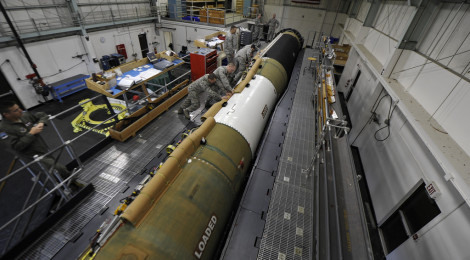
Over the past several years, the U.S. nuclear enterprise has taken an increasing number of shots from public advocates proposing further defense budget cuts and continued reductions in force. These critics suggest that further nuclear arms reductions beyond the New START levels are possible and should be instituted prior to the 2018 deadline for meeting those limits. There are two popular assumptions for this: either because the United States doesn’t “use” nuclear weapons in what some have called the “Second Nuclear Age” or because there is a perception that the cost of sustaining and modernizing nuclear weapons is no longer affordable in a climate of reduced defense budgets. Based on these two assumptions, there have been calls to eliminate one or two legs of the nuclear triad – most focusing on the Air Force’s strategic bombers and ICBM force. These calls come from people who would rather focus on the numbers of nuclear weapons and not the policies and strategies that underlie the desired characteristics of a nuclear enterprise.

The latest of the anti-nuclear screeds is from Dr. Robert Farley, a professor at the University of Kentucky who teaches on national security policy and defense statecraft. I know Dr. Farley and I respect his interests in defense policy and strategy, but I do not understand his article suggesting that it is “Time for America to Rethink the Way We Nuke People.” Let’s look past the flamboyant title that incorrectly suggests that the U.S. government approach to nuclear deterrence consists of thinking of ways to “nuke people.” His actual thesis, which is that the U.S. government maintains a “Cold War” approach to developing its nuclear forces, is not original. His solution, which is to eliminate ICBMs, delay the Long Range Strike Bomber, and rely on the U.S. Navy’s submarine force to provide a minimum nuclear deterrent capability is not a new idea. He does get one thing right, however: America’s nuclear weapons are getting old.

As a result of many contributing factors, the U.S. government has delayed the modernization of its nuclear weapons and associated delivery systems for at least two decades. The point has come at which if significant modernization efforts are not advanced, the credibility of the U.S. nuclear deterrent will be at risk. Because of this 20-year procurement holiday, the cost of modernization is significant. It will take hundreds of billions of dollars to modernize all three legs of the nuclear triad – and this effort will take decades, given the breadth of the effort. The James Martin Center for Nonproliferation Studies recently published a report on the “trillion-dollar nuclear triad” to cast doubt on the wisdom of this modernization effort. A trillion-dollar investment into nuclear weapons certainly sounds ominous, but it’s a disingenuous notion, one that combines numerous disparate costs over a thirty-year period (really, who seriously counts up R&D and acquisition costs over a thirty-year period?). But this meme that “we can’t afford this cost” permeates the internet and is also prominent in Dr. Farley’s article.

The British Perfected the Art of Brewing Tea Inside an Armored Vehicle

Devastating World War II ambush inspired morale-boosting tank kettle
James Simpson in War is Boring

There are few things more British than tea, even if it was originally a Portuguese tradition of brewing South Asian leaves. The culture of tea-drinking permeates British society—including the military.

But tea-break culture posed a big problem for the generals in charge of Britain’s armored formations. Tank crewmen had to stop and climb out of their vehicle in order to have a brew, making it difficult to safely sustain an armored advance.

The answer was the British Army boiling vessel—a built-in kettle for armored vehicles. The boiling vessel represented an urgent response to one disastrous World War II.

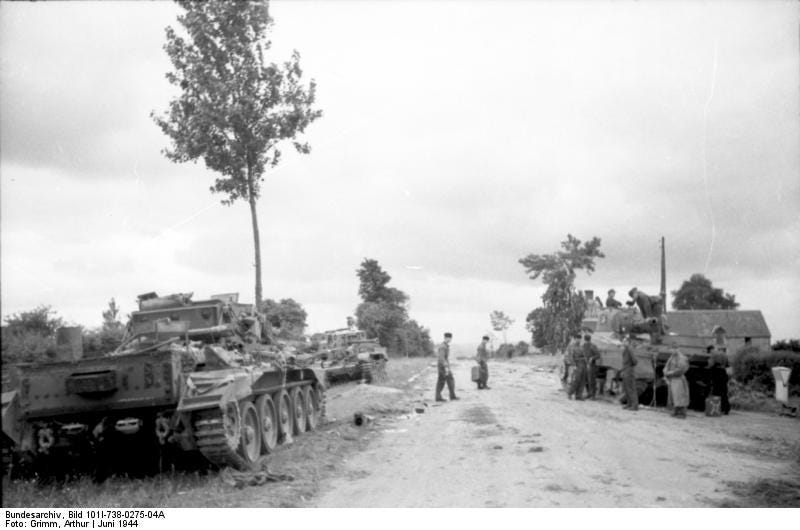
On June 12, 1944, just six days after Allied forces stormed the beaches of Normandy, British general Bernard Montgomery ordered the 22nd Armored Brigade to break through the faltering German line and race to the city of Caen.

The British force had already lost two Cromwell tanks to a German Panzer IV plus another Cromwell and a Stuart in the town of Livry, but on the morning of June 13, the Brits covered four miles without even glimpsing the enemy.

At 8:30 AM, they stopped for morning tea and a spot of maintenance in the crossroads town of Villers-Bocage, 18 miles from Caen.

A squadron of the 4th County of London Yeomanry proceeded to a ridge known as Point 213, a mile outside of town. The British officers held an impromptu briefing in a nearby house while the crews of the squadron’s armored vehicles began brewing tea.

Just 200 meters away, however, a German Tiger tank watched unnoticed.

Knocked-out British vehicles at Point 213. German army archive photo
Tea party

The tank’s commander was Michael Wittman, a highly-decorated veteran of the Battle of Kursk. Wittman had only just completed a five-day drive from Beauvais. His 12-tank company had winnowed to just four serviceable vehicles. Despite exhaustion and shortages, Wittman immediately recognized the opportunity before him.

“I had no time to assemble my company,” he said later. “Instead, I had to act quickly, as I had to assume that the enemy had already spotted me and would destroy me where I stood. I set off with one tank and passed the order to the others not to retreat a single step but to hold their ground.”

At 9:05 AM Wittman engaged the British, destroying a Sherman Firefly—the only British tank carrying the 17-pound gun and thus the only immediate threat to the superior Tiger.

Wittman’s talented and experienced gunner Balthasar Woll continued firing on the move, picking off three parked Cromwells along the road to Point 213 before extending the one-tank rampage through Villers-Bocage, where the other three Tigers provided reinforcement.

The British were caught with their pants down, some quite literally. They scrambled into action. One Firefly crew reversed into a side-street, perfectly positioning to take on Wittman’s Tiger … only to find that the Firefly’s gunner’s seat was empty. They’d left the critical crew member behind.

Overall, the British lost 14 tanks, nine half-tracks, four gun carriers and two anti-tank guns in just the first 15 minutes of the battle.

As the most famous example of several such incidents from the North Africa and European campaigns, the Battle of Villers-Bocage highlighted the danger posed by crews having to vacate their vehicles to take a break.

In 1946, the British Medical Research Council published “A Survey of Casualties Amongst Armored Units in Northwest Europe.” It found that 37 percent of all armored regiment casualties from March 1945 until the end of the war some months later were crew members outside their vehicles.

Being confined to the inside of a tank was a smelly and claustrophobic experience. But the comforts of hot food and drink required open flames that weren’t compatible with the interiors of armored vehicles.

The boiler vessel, first fitted to the postwar Centurion tank, changed that.

The RAK15 Water and Ration Heater from Electrothermal. Electrothermal image
Armored brew

The Centurion design drew from the British Army’s experiences in North Africa. It went on to become one of the most ubiquitous main battle tanks, serving almost everywhere the British had any influence: Iraq, India and South Africa, to name a few countries.

The tank came fitted with a boiler vessel, or bivvie—a cuboid kettle powered by the tank’s electrics. The unit became an essential subsystem for all British Army armor. Today the Electrothermal-made “Cooking/Boiling Vessel FV706656" is fitted to all the Army’s main fighting vehicles.

The basic concept of the boiling vessel has not changed since the 1950s. The large container quickly boils and maintains the heat of a gallon of water for drinking, washing and heating tinned and retort rations.

The unit plugs directly into the vehicle. These days most armored vehicles have auxiliary generators which prevent the vessel draining the batteries.

The boiler vessel helps crews to stay in their vehicles for prolonged periods. This is especially important in chemical, biological, radiological or nuclear scenarios. It also eliminates the need for fires inside and outside vehicles—fires that pose a safety risk and could betray a unit’s location.

The Global Diabetes Epidemic

SundayReview | OPINION
By KASIA LIPSKAAPRIL 25, 2014

Twelve years ago, my husband and I packed up all of our belongings and moved to Trivandrum — a steamy, tropical town at the southern tip of India in Kerala. At the time, I was a medical student interested in studying stroke. For the next six months I dressed in a sari and walked to work on jungle roads. At the hospital, I immediately began seeing a steady stream of young patients affected by strokes, many of whom were so severely disabled that they were unable to work. I initially suspected the cause was tuberculosis or dengue fever — after all, this was the developing world, where infections have long been primary culprits for disease. But I soon learned that my hunch was wrong.

One of my first patients was a woman in her mid-30s who came in with a headache, vomiting and an unsteady gait. Her scan showed a brainstem stroke. Her blood sugars were very high. The underlying cause of her stroke was most likely untreated Type 2 diabetes. Here I was, halfway around the globe, in a vastly foreign culture, but I was looking at a disease — and the lifestyle that fostered it — that was startlingly familiar.

A Disease on the Rise

The portion of the population with diabetes is higher in the United States than in India or China. But the number of people with the disease in India or China is much greater — and expected to increase.

Today, I am an endocrinologist, and diabetes has become a full-blown epidemic in India, China, and throughout many emerging economies.

In the United States, diabetes tends to be a disease that, while certainly not benign, is eminently manageable. Just this month, federal researchers reported that health risks for the approximately 25 million Americans with diabetes had fallen sharply over the last two decades. Elsewhere on the globe, however, diabetes plays out in a dramatically different fashion. Patients often lack access to care and can’t get insulin, blood pressure pills and other medicines that diminish the risk of complications. As more and more people develop the disease, hospitals may soon be overrun with patients experiencing all of its worst outcomes: blindness, limb amputation, kidney failure (necessitating dialysis), coma and death.

28 April 2014

The Russian Snake

As far as Moscow is concerned, using cyber as a warlike offensive tool is the normative first step in a general attack. After Estonia and Georgia, the Ukraine now experiences it first hand
27/4/2014

The prevailing view in the West is that Russia possesses cutting-edge information warfare and electronic warfare capabilities. Experience has shown that Russia does not hesitate to put these capabilities to use as required. 

As far back as 2007, during the confrontation between Russia and Estonia whose trigger was the relocating of the Unknown Soldier Monument from the center of Tallinn, the Estonian capital, to the outskirts, Russian elements staged a substantial DDoS (Distributed Denial of Service) attack against Estonia. The actual involvement of the Russian government in this conflict, named by some parties (who went just a little too far) “The First Cyber War”, remains unclear. 

The attack against Estonia was a small but sufficient example of the axiom according to which in the era of information it is safe to assume that any military confrontation or political tension will include offensive cybernetic elements: damaging or disrupting of information systems or damaging of critical infrastructure/utility systems and processes through the computers controlling them. That was the case during the South Ossetia war in 2008, when Russian and Georgian forces clashed under controversial circumstances. During that conflict, too, pro-Russian cybernetic attacks staged by “unknown sources” disrupted on-line services and websites of the Georgian government as well as the media and banks. A DDoS attack was even staged against Internet services in Georgia generally. At the time, Georgian sources reported that the civilian cellular communication systems and the communication system of the Georgian Army were attacked as well. The use of cyberspace against Georgia had several objectives such as collection of intelligence and disruption of vital processes, but information warfare was also one of those objectives.