9 May 2014

DEMOCRACY IN IRAQ: THE AMERICAN MILITARY’S KOBAYASHI MARU

May 6, 2014

In the Star Trek movies and books, cadets at Starfleet academy take the Kobayashi Maru test. The test is a simulation where the cadet captains a ship tasked with the rescue of a stranded ship’s crew, the Kobayashi Maru. Before the cadet can carry out the rescue they are beset with several Klingon war birds. No course of action the cadet chooses can save the crew of the stranded ship. Almost inevitably, the simulation ends in the destruction of the cadet’s ship and the death of all aboard as well as the crew of the Kobayashi Maru. The test is designed to see if the cadets can maintain their composure while in command of the doomed rescue mission, intended to teach a cadet how to deal with a no-win scenario.

In recent times, there has been a flurry of articles written on problems with the military in general, and the Army in particular, that seek to explain America’s strategic misfortunes in Iraq and elsewhere. William Lindrecently argued that America’s recent defeats are rooted in institutional failure in the American military’s officer personnel system. Others call fordisruptive thinkers. Other critics blame failed military doctrine. But the criticism must pass an if-then test; if we would have implemented the suggested solution, then we would have accomplished our political objective. Unfortunately, none of these suggestions could pass this test. Democracy in Iraq is the Kobayashi Maru; a no-win scenario.

It was not possible to create a “free, democratic, and stable Iraq.” This was well-known almost from the onset and certainly not in the timeframe America was willing to spend supporting this venture. The process of democratization has been studied for some time. Some of the requisites for democracy — economic wealth distributed across the society, political participation, urbanization, and literacy — were identified by Seymour Lipset as early as 1959. Since that time, additional factors have been identified and the originals refined. Based on these well-known factors, it was clear in 2004 that Iraq was not prepared for democracy. As one professor put it:

Iraq lacks any of the preconditions academics generally accept as being necessary for democratization to succeed. It has no middle class to speak of independent from the state; oil revenues, the life-line of any Iraqi regime, are notorious for their ability to centralize rather than democratize power; the country has no tradition of limited or responsible government; national identity is weak in the face of rival religious or ethnic loyalties; regional neighbors will do what they can to undermine whatever democratizing movements exist; and the democrats themselves lack a figure such as Nelson Mandela or Kim Dae Jung who could give them leadership.

Iraq was possibly the worst place on the planet to attempt to create a democracy. One researcher, taking into account the conditions in Iraq at the time of the invasion, estimated the odds of success at 1,725 to 1. In addition to these social factors, a significant portion of the population of Iraq embraced a tribal value system that was antithetical to democratic legitimacy. The values necessary to embrace power sharing and individual rights were largely absent. Values can change, but that takes time. Given enough time it might have been possible to help the Iraqis build a democratic Iraq. How much time? Twenty years at a minimum for successful democratic consolidation. With all the issues Iraq had to deal with, the researcher estimated it would take 50 years to create a free, democratic and stable government. Even Larry Diamond, one of the more ardent supporters of the Bush administration’s attempt to democratize Iraq, had come to the conclusion in late 2004 that due to the conditions in Iraq and the lack of resources committed to the occupation democracy in Iraq would be a long term project.

Even worse, what the military was able to accomplish, a partial democracy, is the most volatile and least predictable form of government known. When all the factors that can be associated with political instability are ranked, being a partial democracy is number one. Certainly elections in Iraq were a triumph of democracy, but elections alone don’t create democracy. Iraqis have voted in large numbers in the past and will certainly do so again in the near future, but as Professor Bruce E Moon observes “… history shows that it has never been the unwillingness to vote that prevented democracy, but rather the failure to honor the results of those elections.” This is particularly true when factionalism — a political system dominated by ethnic or parochial groups that regularly compete for influence — is present. Factionalism tends to limit an interest in power-sharing. You might think that factionalism in any system would be divisive, but it is not necessarily destabilizing. As Professor Jack A. Goldstone and his associates noted in their research on political instability “It is only when factionalism is combined with a relatively high level of open competition for office … that extremely high vulnerability to instability results …”

By holding elections and attempting to create a democratic system in an ethnic and religiously factionalized society, we were creating the very instability we were seeking to suppress. But this was inherent in the mission, and since we had no doctrine on creating or consolidating a democracy, we integrated those tasks into our counterinsurgency and stability doctrine almost ensuring a self-defeating situation.

Ultimately, the mission to create democracy in Iraq was not realistically possible in the time frame allotted. Does this mean that western style democracy is not possible in the Arab world? No. It simply means that the type of social and economic changes that would have to take place to allow for the individual values and intra-group trust necessary for power sharing could not be accomplished in the time given. The seeds of that change have certainly been planted, but it may be several decades before they bear real fruit.

Democracy in Iraq was the American military’s no-win scenario. Therefore, no claims that had we done this or changed that would realistically have altered the result. When looked at from that perspective, how did the American military score on its Kobayashi Maru test? Overall, the military scored pretty well. It never quit. It continued the mission until the political leadership relieved them of that mission. It maintained its dignity and its honor, never turning away from the fight and never blaming those that gave it the impossible mission for its inability to accomplish it. We also learned, or relearned, many lessons. Once the nature of the mission changed from regime change to supporting the nascent Iraqi government, in conjunction with the Department of State, we created Provincial Reconstruction Teams. These teams took the lead on coordinating the training and resources necessary to help build a new Iraqi state. But there was never going to be enough time to see the mission through till the end.

Are there things we can learn from this experience? Yes. Since the military is going to be used to accomplish political objectives by other means, then we should probably learn a little more about the nature of politics, particularly in the less stable portions of the globe. Efforts to learn to understand the human domain are a good start. Perhaps security should be our first objective, and only once that is achieved, promote democracy. We are also rewriting our doctrine giving greater consideration to the existing socio-cultural conditions on the ground. Does this absolve the American military of criticism? No. There is much to learn from Iraq and there is always room for improvement. The officer education and promotion system is probably behind the times and I have already mentioned needed changes in our doctrine. But for criticism to be valid, it needs to relate to the failure it is trying to rectify. In this case, neither a better officer corps nor a better understanding of counterinsurgency principles would likely have changed the outcome as long as success was defined as a stable, democratic Iraq. For all intents and purposes, democracy in Iraq is the Kobayashi Maru.

Lieutenant Colonel Stan Wiechnik enlisted in the Army in 1982 and received his commission in 1993. A veteran of Afghanistan and Iraq, he is a graduate of Command and General Staff College, Indiana University, and Vermont Law School. Currently, he serves in the Office of the Chief, Army Reserve at Fort Belvoir, VA. The views expressed are his own.


A Gordian Knot: Missiles in the Gulf

BY STEIN | 30 APRIL 2014

Saudi Arabia made headlines recently, after it publicly paraded two DF-3s for the first time. The Kingdom secretly purchased these missiles from China in 1987, but has hitherto opted not to show them off in public. The consensus is that the Kingdom’s public display was intended to signal to Washington its current discomfort with the way the US has handled Syria, the Arab Spring, and the Iranian nuclear issue. In addition, the unveiling of the DF-3 also appears aimed at sending a message to Tehran about Riyadh’s capability to strike targets inside the Islamic Republic.

The Saudi decision, while interesting for Riyadhologists, is simply a reminder of the growing prevalence of ballistic and cruise missiles in the region. The concurrent spread of these two systems will have important implications for Gulfee, Iranian, and US security interests moving forward. The DF-3 parade came on the heels of a missile defense conference in Abu Dhabi. At the conference, Frank Rose, US deputy assistant secretary of state for space and defense policy, indicated the United States’ intent to bolster the GCC’s missile defense capabilities. The Gulf States have assiduously worked – with US backing – to augment their missile defense capabilities since the early 1990s. However, all of the efforts to convince the the GCC to cooperate closely on defense issues have failed.

The development of a regional missile defense system, therefore, is sure to run into problems. Nevertheless, the Gulf States have shown a sustained interest in further developing their anti-missile capabilities. And, as Rose indicated, the US continues to hammer away at the idea of using missile defenses to try and unify the GCC states – good luck.

The Kingdom, for example, first purchased 761 PAC-2 GEMS from the United States in 1992. And in 1993, the Saudis doubled down and ordered another 629 PAC-2s (The systems have since been upgraded). Moreover, in November 2012, Qatar requested “11 Patriot Configuration-3 modernized fire units, 11 AN/MPQ-65 radar sets, 11 AN/MSQ-132 engagement control systems, 30 antenna mast groups, 44 M902 launching stations, and 246 Patriot MIM-104E guidance-enhanced missile-TBM (GEM-T) with canisters.”

Qatar’s request moved in tandem with that of Kuwait’s. In July 2012, the Kuwaitis requested “60 PAC-3 missiles, 4 Patriot radars, 4 engagement control stations, 20 launching stations, 2 information coordination centrals and 10 electric power plants.” The missile defense systems are likely to complement the AN/FPS-132 Block 5 Early Warning Radar, which was deployed in Qatar in 2013, and will cover Iran, as well as provide the U.S. – and Doha – with increased space surveillance capabilities. The tiny Gulf Emirate has also purchased two AN/TPY-2 radars, as part of THAAD batteries. The UAE has also purchased the TPY-2 for its planned THAAD system.

ISRAEL SET TO BECOME MAJOR EXPORTER OF NATIONAL GAS

May 4, 2014 


Israeli Set To Become Major Exporter Of Natural Gas

By Global Risk Insights

Situated 80 miles off the northern coast of Israel, the Leviathan holds as much as 19 trillion cubic feet (tcf) of natural gas. Combined with other recent discoveries, the Eastern Mediterranean boasts more than 40 tcf of natural gas. Such large repositories are expected to meet Israel’s domestic natural gas needs for at least the next quarter century.

Demand for gas within Israel has grown as much as 17 percent per year as local business booms and the government continues to fund housing and commercial developments within Israel and the occupied West Bank. Although new gas discoveries offer Israel a form of partial energy security, they also pose a unique opportunity for the long-time natural gas importer to supply its Mediterranean neighbors with a new source of energy.

Israel recently signed natural gas agreements with companies in Jordan and Palestine, which will supply them with energy resources from a neighboring 10 tcf gas field. An initial agreement with Jordan is set to last 15 years, with exports due to begin in early 2016.

A consortium of Israeli and U.S.-based companies, including Israel’s Ratio and Derek Drilling, and U.S.-headquartered Noble Energy, is leading exploration within the Leviathan gas field. They hope that new potential agreements with Egypt, Turkey and Cyprus can help extend the reach of Israeli gas across the Mediterranean, and even to Europe and Asia.

Israel pushes for more exports

As Israel continues its exploration of the Leviathan field, it hopes emerging energy cooperation with Egypt will provide a new export market for its natural gas reserves. Soaring energy demand and a growing population have left Egypt’s liquefied natural gas (LNG) plants in desperate need of new supply.

According to the Egyptian Electric Regulatory Agency, Egypt will lack 20 percent of the natural gas it needs to power its LNG plants this summer. The nation is in talks with the Leviathan consortium to build a sub-sea pipeline linking their LNG plants directly to the Leviathan field.

While exports to Egypt would help to ease Egyptian energy shortages, they would also give Israel access to the Suez Canal. Access to this key waterway allows resources from sub-Mediterranean fields to reach Asian and South American markets, where LNG fetches roughly twice the price paid in Europe.

Israel hopes the promise of new energy will help to normalize ties with Turkey, as well. Once close allies, Turkish-Israeli relations were severely damaged following a deadly attack by Israeli defense forces on a Turkish yacht carrying pro-Palestinian activists heading to Gaza in 2010.

In light of the recent unrest in Ukraine, however, Turkey is seeking to lessen its reliance on Russian gas, which accounts for some 67 percent of its total natural gas imports. Turkish energy officials are currently in talks with the Leviathan consortium to build a sub-sea pipeline connecting Turkish LNG facilities with Israeli gas fields. Construction of the pipeline could “begin in the second half of 2015,” according to Turkish officials.

Africa at a Crossroads

Overcoming the Obstacles to Sustained Growth and Economic Transformation 

MAY 7, 2014 

Many of Africa’s economies are at a crossroads, with an unprecedented opportunity for sustained growth, structural change, and accelerated development. Each will face a unique set of economic and political circumstances, but key to the success of all will be building critically needed infrastructure, deepening regional integration, and building a skilled workforce. Across these three challenges there are new possibilities for corporate and public actors to work in partnership to overcome barriers to investment and structural transformation. This report highlights examples of progress and positive collaboration and identifies areas where African governments can do more to make the most of current opportunities. 

Saudi Arabia’s military exercise was a goodbye wave to America

May 5, 2014 Updated: May 6, 2014

When one of the most powerful militaries in the Middle East holds the largest military exercise in its history, the region and allies would be wise to look beyond the explosions and manoeuvres at the political intent.

Last week’s “Abdullah Sword” military exercises in the north-east of Saudi Arabia brought together 130,000 troops, as well as military jets, helicopters and ships. With the notable exception of Qatar, all the GCC countries were there to observe the exercises, as well as the head of Pakistan’s army.

On the surface, the exercises were timed to coincide with the ninth anniversary of the accession of King Abdullah of Saudi Arabia. But military movements of this order send messages. But to whom?

The obvious answer is Iran, Saudi’s great regional rival, or one of the three states that the Saudis are most concerned about – Syria, Iraq or Yemen. And it will not have escaped Tehran’s notice that the CSS-2 ballistic missiles that Riyadh paraded for the first time last week can easily reach any part of Iran.

Certainly, a message of strength was being telegraphed to the region. But there was also another one, over the heads of the region, to the United States: if you leave, the region can defend itself.

It sometimes appears to be an overstatement to suggest that the United States – which maintains bases in several regional countries – is planning to leave. But leaving does not necessarily entail a complete withdrawal.

Under the Obama presidency, America has departed the Gulf in two ways; the first through disengagement, with the focus of the US president rarely on the detail of the problems of the region.

And secondly through insufficient attention to the relationships that have long formed the diplomatic backbone of the region. By seeking a peace deal with Iran – Saudi Arabian critics would say at any price – the US has angered its traditional allies in the Gulf, who have invested time and effort in the alliance.

In some respects, the disengagement has been a long time coming, but Mr Obama’s policy and personality have accelerated it.

The curse of being a superpower is that policies ripple far beyond the initial problem. When Obama backed down from enforcing his “red lines” over Syria, both allies and enemies took note.

Russia Intends to Reinforce Its Black Sea Fleet This Year With New Ships and Subs

May 6, 2014
Russia to Deploy New Submarines, Ships to Black Sea Fleet-Reports
Reuters

MOSCOW — Russia will beef up its Black Sea fleet this year with new submarines and warships, Defense Minister Sergei Shoigu was quoted as saying on Tuesday, following the annexation of the Crimean peninsula.

New air defense and marine infantry units would also be deployed at the fleet’s bases, which include Sevastopol in Crimea.

"New submarines will join the Black Sea fleet, as well as new-generation surface ships, this year. All this requires much attention from us," Interfax news agency quoted Shoigu as saying.

Shoigu said the fleet would receive funding of 86.7 billion rubles ($2.43 billion) by 2020.

The fleet, which analysts say comprises around 40 frontline warships, is seen as a guarantor of Russia’s southern borders and a platform for projecting power into the Black Sea and the Mediterranean.

Russia’s annexation of Crimea from Ukraine in March sparked the worst East-West crisis since the Cold War. President Vladimir Putin said last month that Russia’s action over Crimea was partly a response to NATO expansion in Eastern Europe.

Russia also feared Ukraine’s new government would cancel a lease allowing the fleet to stay until 2042.

The West has imposed sanctions on Russian officials, businessmen and companies in response to the Crimea annexation, and Washington and Berlin have threatened more penalties if Moscow disrupts Ukraine’s presidential elections scheduled for May 25. ($1 = 35.7522 Russian Rubles)

Ethnic Cleansing in Africa


MAY 5, 2014

The sectarian violence between Christian and Muslim militias and civilian mobs that has plagued Central African Republic for the past several months has tipped into a full-fledged campaign of ethnic cleansing of Muslims from the capital Bangui and the southern part of the country. Efforts to stem the mayhem have so far failed, and the country is on the brink of a de facto partition as Muslims flee toward the country’s northern borders. With 2.2 million people in dire need of humanitarian assistance, donor countries must act quickly to finance the $274 million in emergency aid the United Nations says is urgently needed.

Inside the republic, 600,000 people have left their homes, and, by the end of the year, the United Nations estimates, more than 360,000 people will have fled to impoverished neighboring countries that cannot provide for them. The country’s infrastructure is in tatters, militias and mobs continue to hunt down fleeing civilians, and crops have gone unplanted. The United Nations warns that, at this rate, more children will die in Central African Republic for want of food than from machetes or bullets.

The French now have 2,000 troops in the country working alongside some 5,000 African Union-led peacekeepers. But sectarian tensions have sowed division even among the peacekeepers, with Chadian soldiers charged with siding with the country’s Muslims. The more than 800 Chadian soldiers in the peacekeeping mission left by April 13 after they were accused by the United Nations of firing on civilians at a market, a charge they deny.

The United Nations Security Council has acted wisely to authorize a major new peacekeeping force of 10,000 soldiers and 1,800 police officers to Central African Republic. But there is a real risk the new mission, not scheduled to assume authority until Sept. 15, will arrive too late to prevent the country’s partition into separate Christian and Muslim territories, not to mention the utter destruction of the country and the deaths of millions of people.

It is imperative that everything be done to move this date forward. The United States, Europe and Africa must increase their support for peacekeeping and humanitarian assistance. Unless the violence can be stopped and healing begin, it will be largely impossible to hold elections scheduled to take place in February, a first step toward a lasting, political solution. Strong, immediate intervention is urgently required to prevent the sectarian conflict in Central African Republic from collapsing into outright civil war.

http://www.nytimes.com/2014/05/06/opinion/ethnic-cleansing-in-africa.html?partner=rssnyt&emc=rss&_r=0

What's at stake in war against girls' kidnappers?

By Peter Bergen and Bailey Cahall
May 6, 2014 -- Updated 


Women march together on Monday, May 5, and call for the Nigerian government to rescue over 200 schoolgirls who were kidnapped last month in Chibok, Nigeria. The girls were taken by the Islamist militant group Boko Haram, which means "Western education is sin."

Nigerians protest over kidnapped schoolgirls

Peter Bergen is CNN's national security analyst, a director at the New America Foundation and the author of "Manhunt: The Ten-Year Search for bin Laden -- From 9/11 to Abbottabad." Bailey Cahall is a policy analyst at the New America Foundation's International Security Program. CNN anchor Isha Sesay will be live from Abuja on CNN International, Monday to Thursday at 5pm, 7pm, 8.30pm and 9pm CET.

(CNN) -- Befitting its status as a fast-growing oil exporter, for Nigeria this week was to be a coming out party of sorts, as it hosts the 24th World Economic Forum on Africa. More than a thousand academic, business, civil society and political leaders are supposed to gather in Abuja, Nigeria's capital city, beginning on Wednesday, to discuss"inclusive growth and job creation."

Conflicting with this image of an emerging regional economic powerhouse, just two days before the start of the World Economic Forum meeting, Nigeria is in the international headlines for all the wrong reasons: Abubakar Shekau, the leader of Boko Haram, a militant Islamist organization, released a video on Monday claiming responsibility for kidnapping more than 270 schoolgirls in northern Nigeria last month.

Peter Bergen

The Boko Haram leader explained that the girls should not be attending school and should instead get married. He also threatened to sell the girls in the marketplace because, he said while laughing, "Allah says I should sell. He commands me to sell. I will sell women."

Britain and the limits of austerity

Follow Lawrence Summers
By Lawrence Summers
MAY 5, 2014

The British economy has experienced the most rapid growth in the G7 over the last few months. It increased at an annual rate of more than 3 percent in the last quarter — even as the U.S. economy barely grew, continental Europe remained in the doldrums and Japan struggled to maintain momentum in the face of a major new valued added tax increase.

Many have seized on Britain’s strong performance as vindication of the austerity policy that Britain has followed since 2010, and evidence against the secular stagnation idea that lack of demand is a medium-term constraint on growth in the industrial world.

Interpreting the British strategy correctly is crucial because of the political stakes in Britain, the question of future British economic policy and, most important, because the British experience influences economic policy debates around the globe. Unfortunately, when properly interpreted, the British experience refutes the austerity advocates and confirms John Maynard Keynes’s warning about the dangers of indiscriminate budget cutting during an economic downturn.

Start with the British economy’s current situation. While growth has been rapid recently, this is only because of the depth of the hole that Britain dug for itself. While the U.S. gross domestic product is now well above its pre-crisis peak, in Britain GDP remains below previous peak levels and even short of levels predicted when austerity policies were implemented. Not surprisingly given this dismal record, the debt to GDP ratio is now nearly 10 percentage points higher than forecast, and the date when budget balance is predicted has been pushed back to the end of the decade.

The common excuse offered for Britain’s poor performance is its dependence on financial services. Yet the New York metropolitan area, far more dependent on financial services than Britain, has seen GDP comfortably outstrip its previous peak. Though the euro area has performed poorly, even a casual look at trade statistics confirms that this cannot account for most of Britain’s poor growth.

The U.S. economy grew at a rate of 9 percent for a number of years after the trough of the Great Depression in 1933. Such rapid growth in peacetime is unheard of in U.S. history. Why did it happen? Only because of the depth of the Depression. No one has ever taken the pace of the U.S. recovery from the Great Depression as any validation of the austerity policies that helped create it. Similarly, part of the story of British growth is that it is simply catching up after a major crisis caused a huge output gap to develop.

History shows that deeper recessions are followed by stronger recoveries. For example, the New York metropolitan area, though falling relative to the rest of the country in the 2008 fiscal collapse, enjoyed more rapid growth after.

The rising strategic risks of cyberattacks


Research by McKinsey and the World Economic Forum points to a widening range of technology vulnerabilities and potentially huge losses in value tied to innovation.

May 2014 | byTucker Bailey, Andrea Del Miglio, and Wolf Richter

More and more business value and personal information worldwide are rapidly migrating into digital form on open and globally interconnected technology platforms. As that happens, the risks from cyberattacks become increasingly daunting. Criminals pursue financial gain through fraud and identity theft; competitors steal intellectual property or disrupt business to grab advantage; “hacktivists” pierce online firewalls to make political statements.

Research McKinsey conducted in partnership with the World Economic Forum suggests that companies are struggling with their capabilities in cyberrisk management. As highly visible breaches occur with growing regularity, most technology executives believe that they are losing ground to attackers. Organizations large and small lack the facts to make effective decisions, and traditional “protect the perimeter” technology strategies are proving insufficient. Most companies also have difficulty quantifying the impact of risks and mitigation plans. Much of the damage results from an inadequate response to a breach rather than the breach itself.

Complicating matters further for executives, mitigating the effect of attacks often requires making complicated trade-offs between reducing risk and keeping pace with business demands (see sidebar “Seizing the initiative on cybersecurity: A top-team checklist”). Only a few CEOs realize that the real cost of cybercrime stems from delayed or lost technological innovation—problems resulting in part from how thoroughly companies are screening technology investments for their potential impact on the cyberrisk profile.

Sidebar
Seizing the initiative on cybersecurity: A top-team checklist

These findings emerged from interviews with more than 200 chief information officers, chief information-security officers, regulators, policy makers, technology vendors, law-enforcement officials, and other kinds of practitioners in seven sectors across the Americas, Europe, the Middle East and Africa, and Asia.1 We also drew on a separate McKinsey executive survey on cyberrisk, supplementing this research with an analysis of McKinsey Global Institute (MGI) data on the value-creation potential of innovative technologies. It showed that the economic costs of cybercrimes could run into the trillions of dollars.

Cybersecurity: A National Security Crisis In Microcosm – OpEd


May 6th, 2014
By Lawrence Husick


With its recommendation on April 28, 2014 that one of the most popular Internet browsers, Microsoft’s Internet Explorer, not be used because of a flaw that could allow unlimited access to a personal computer running the Windows operating system (here), US CERT, the United States Computer Readiness Team of the Department of Homeland Security surprised even the most jaded cyber-observer. This announcement, like the thousands that have preceded it (here), hinted at a little-appreciated fact of modern life: the Internet, and the hardware and software on which it depends, is both the most complex technological system ever constructed, and the most vulnerable. Network infrastructure designed to be transparent and efficient is now assaulted using techniques of such complexity that even one misplaced line or punctuation mark buried in millions of lines of code may bring about a serious breach. Open source and proprietary system alike are targets, and regardless of the resources available, organizations from Apple to volunteer code maintainers working on obscure functions can make simple errors of potentially great consequence. Even the US nuclear weapons arsenal is not invulnerable, as noted in a January 2013 report from the Defense Science Board (here).

Those taking advantage of the state of the Internet and of computing in general now range from “script kiddies” – teens intent on exploiting and exploring the hidden world just beyond any Internet portal, to cybercriminals, stealing credit card and identity information, to cyberterrorists who disrupt and deface to score political points, and cyberwarriors, including the United States’ own NSA, Cybercommand, and FBI. Despite the recent warning from US CERT, it is not even clear that all parts of the United States government are on the same cybersecurity page. Recent press reports have stated that the National Security Agency knew about and exploited the “HeartBleed” flaw for many months, without warning either other government agencies or the public about the danger. The message, clear to all by now, is that no electronic system is entirely secure, and that it is now up to individuals to protect their systems and information from all who would compromise and exploit it. The issue for most, however, is one of skill and knowledge: how, without a computer engineering degree and years spent at a keyboard, can we improve security and safeguard our information?

On the systems level, organizations and activists are working to secure the Internet and computer systems against attack. New software is being developed to give added levels of security and encryption. Computers such as Google Chromebooks operate only on the Internet, allowing users to cede most responsibility for security, beyond the choice of a good password, to Google and its army of programmers. Other systems, such as Apple’s OS X, and iOS have been developed with security in mind from the beginning, unlike older systems which had to be patched and retrofitted, never entirely successfully, with antivirus and firewall software. The issue, however, is that while newer computers are demonstrably safer to use, millions of older computers, switches, routers, modems, printers, and other devices remain in use, and vulnerable. Our information passes through these system components, even when we upgrade to newer, better computers. There is no practical way to legislate or regulate the upgrading of all of these systems, and corporations, governments, and individuals seldom have unlimited budgets for new systems and software, together with the millions of hours required to install and implement them.

STEPHEN HAWKING WARNS OF POSSIBLE DIRE THREAT TO MANKIND: ARTIFICIAL INTELLIGENCE MIGHT BE HUMANITY’S WORST MISTAKE

May 5, 2014 

Stephen Hawking Warns Of Possible Dire Threat To Mankind: Artificial Intelligence, He Says, Might Be Humanity’s Worst Mistake


Stephen Hawking, Stuart Russell, Max Tegmark, and Frank Wilczek had an article in London’s, The Independent, regarding the state of artificial intelligence (AI), and where we might be headed in the future. Hawking is the Director of Research, at the Department of Applied Mathematics and Theoretical Physics at Cambridge; and, a 2012 Fundamental Physics Prize laureate for his work on quantum gravity; Stuart Russell is a computer science professor at the University California, Berkeley, and co-author of ‘Artificial Intelligence: A Modern Approach;’ Max Tegmark is a physics professor at the Massachusetts Institute of Technology (MIT), and the author of ‘Our Mathematical Universe;” and, Frank Wilczek is a physics professor at MIT and a 2004 Nobel laureate for his work on the strong nuclear force.

“With the Hollywood blockbuster Transcendence, currently playing in cinemas, showcasing clashing visions for the future of humanity,” the authors write, “it’s tempting to dismiss the notion of highly intelligent machines as mere science fiction. But, this would be a mistake,” the authors add, “and potentially our worst mistake in history. ” AI research is now progressing rapidly,” they write. “Recent landmarks such as self-driving cars, a computer winning at Jeopardy; and, the digital personal assistants Siri, Google Now, and Cortana, are merely symptoms of an IT arms race — fuelled by unprecedented investments and building on an increasingly mature theoretical foundation. Such achievements will probably pale against what the coming decades will bring,” they warn.

“The potential benefits are huge, everything that civilization has to offer is a product of human intelligence; we cannot predict what we might achieve when this intelligence is magnified by the tools that AI may provide; but, the eradication of war, disease, and poverty would be high on anyone’s list. Success in creating AI would be the biggest even in human history,” and if we aren’t careful, “its last,” the authors contend.

“In the near-term,” they add, “world militaries are considering autonomous-weapons systems that can choose and eliminate targets,” and substantial research and development investments are being made across the globe in this fertile area. “In the medium-term,” as emphasized by Erik Brynjolfsson and Andrew McAfee in The Second Machine Age, “AI may transform our economy to bring both great wealth and great dislocation.”

“Looking further ahead, there are no fundamental limits to what can be achieved: there is no physical law precluding particles from being organized in ways that perform even more advanced computations — than the arrangements in human brains. An explosive transition is possible, although it might play out differently from the movie: as Irving Good realized in 1965, machines with super-human intelligence — could repeatedly improve their design even further, triggering what Vernor Vinge called “singularity” and Johnny Depp’s movie character calls “transcendence.”

“One can imagine such technology outsmarting financial markets, out-inventing human researchers, out-manipulating human leaders, and developing weapons we cannot even understand. Whereas the short-term impact of AI depends on who controls it, the long-term impact depends on whether it can be controlled at all. “

Climate change

Scope of the Challenge

Climate change is one of the most significant threats facing the world today. According to the American Meteorological Society, there is a 90 percent probability that global temperatures will rise by 3.5 to 7.4degrees Celsius (6.3 to 13.3 degrees Fahrenheit) in less than one hundred years, with even greater increases over land and the poles. These seemingly minor shifts in temperature could trigger widespread disasters in the form of rising sea levels, violent and volatile weather patterns, desertification, famine, water shortages, and other secondary effects including conflict. In November 2011, the International Energy Agency warned that the world may be fast approaching a tipping point concerning climate change, and suggested that the next five years will be crucial for greenhouse gas reduction efforts.

Avoiding the worst consequences of climate change will require large cuts in global greenhouse gas emissions. Humans produce greenhouse gases by burning coal, oil, and natural gas to generate energy for power, heat, industry, and transportation. Deforestation and agricultural activity also yield climate-changing emissions.

One way to reduce emissions would be to switch from fossil-fuel-based power to alternative sources of energy, such as nuclear, solar, and wind. A second, parallel option would be to achieve greater energy efficiency by developing new technologies and modifying daily behavior so each person produces a smaller carbon footprint. Additionally, retrofitting buildings and developing energy-efficient technology greatly help curb greenhouse gas emissions. All such measures, however, engender significant costs, and the onset of the global financial crisis has placed serious new constraints on national budgets both in the developed and developing worlds. Some climate change experts have expressed concern that the ongoing global financial crisis could defer action on climate change indefinitely.

Even if such reforms were implemented, substantial efforts will still be required to adapt to unavoidable change. Recent climate-related events, such as the flooding in Pakistan and Thailand, have caused focus to fall on adaptation financing for developing countries, which could support infrastructure projects to protect vulnerable areas. Other efforts might include drought-tolerant farming.

Distribution of global emissions reinforces the need for broad multilateral cooperation in mitigating climate change. Fifteen to twenty countries are responsible for roughly 75 percent of global emissions, but no one country accounts for more than about 26 percent. Efforts to cut emissions—mitigation—must therefore be global. Without international cooperation and coordination, some states may free ride on others’ efforts, or even exploit uneven emissions controls to gain competitive advantage. And because the impacts of climate change will be felt around the world, efforts to adapt to climate change—adaptation—will need to be global too.

At the launch of the United Nations Framework Convention on Climate Change seventeenth Conference of Parties (COP-17) in Durban, South Africa, many climate change experts were concerned that the Kyoto Protocol could expire in 2012 with no secondary legally binding accord on limiting global emissions in place. This fear, however, was somewhat assuaged as the nearly two hundred countries present at the COP-17 approved an extension of the protocol through 2017 and potentially 2020. A decision was also reached at the meeting to draft a successor accord to the Kyoto Protocol by 2015, which would ultimately come into force in 2020. Delegates also envisioned that the new accord would include greenhouse gas emissions targets for all countries, regardless of their level of economic development. This framework notably contrasts with that of the Kyoto Protocol, which primarily focuses on reducing emissions emanating from developed countries.

Despite these and other marked successes during the COP-17, the perceived lack of leadership by central players in the climate change debate-—especially the United States-—has elicited increasing concern about the long term prospects of the global climate change regime. Additionally, Canada’s December 2011 decision to withdraw from the Kyoto Protocol—based on domestic economic concerns as well as its view that the world’s top greenhouse gas emitters have refused to ratify the accord—has generated concerns that the Kyoto Protocol itself may be in danger of collapse. Both of these concerns and many other issues will likely be a part of the agenda for the COP-18, scheduled for November 2012 in Qatar.

THE ULTIMATE 360-DEGREE EVALUATION

May 7, 2014 

In the past decade, much has been made about the retention of quality military personnel. In 2011, Tim Kane penned “Why Our Best Officers are Leaving” in The Atlantic, which served as a wakeup call for the military in the midst of the wars in Iraq and Afghanistan. His study, which documented the challenges faced by the Army in retaining its company command-level leaders, set off a firestorm of debate. His recommendations were even more controversial, but to many they resonated.

The “people question” remains relevant as our nation struggles with defining a dynamic 21st century security environment. Rebalancing to the Asia-Pacific, engaging non-state actors, and meeting unpredictable regional challenges will not be possible without the right type of people to execute the missions set forth by policymakers. Boots on the ground and sailors manning forward stationed ships still matter, as they are the true face of strategic frameworks.

This is the context our military services face in a fiscal environment that demands hard choices. While it applies to all the services, we are seeing the people problem up close and personal in the Navy. Many of our peers wonder whether our best officers and enlisted personnel are leaving for the civilian world, and what the long-term implications of such a flight might be.

This concept was recently explored in “Keep a Weather Eye on the Horizon”, a paper released in March that garnered a widespread audience within the U.S. Navy. Key to the argument is that the exodus of quality manpower is cyclical, and predictable, based on knowable factors. However, as a service we tend to respond belatedly because we rely so heavily on post-facto metrics to tell us that people are leaving in increasing numbers – and we now appear to be on the precipice of a new downturn in retention. Compounding the problem is that the armed forces, unlike our civilian counterparts, cannot directly hire into positions of leadership – we must develop our talent from within.

Among the four Department of Defense services, the Navy is unique in that it faces no significant pressure to dramatically cut its force structure. The Air Force is looking to cut 25,000 personnel in the next few years. By 2015, Army will be reduced from 520,000 to 490,000 active personnel. The Marine Corps will fall to 174,000 from their current end strength of 195,000. The Navy, by contrast, will likely remain at or near its current active duty force level of 323,600.

However, raw force structure numbers only tell part of the story. The missing element is the quality of personnel each service is retaining. Ask most flag officers, and they will tell you that each and every service has met its recruitment and retention goals for years on end. While this is largely true, what they fail to disclose is whether these numbers reflect the retention of transformative leaders that will be required for the dynamic nature of 21st century national security challenges.

DOING MORE: LANDPOWER AND ALLIANCES

May 6, 2014 · in Analysis

Russia’s not-so-covert war against the interim authorities in Kyiv is beginning to take on the characteristics of a serious civil conflict, as tactics directed from Moscow appear designed to amplify or otherwise leverage discontent among a minority of ethnic Russians living across eastern and southern Ukraine. In response, the United States has deployed troops to Estonia, Latvia, Lithuania, and Poland, sent air assets to Romania and Poland, and deployed a U.S. Navy ship to the Black Sea, all on a bilateral basis. Meanwhile, a multilateral response by NATO continues to unfold. Although some have referred to NATO’s efforts so far as “toothless,” the reality is that the alliance has contributed substantive assets to date while looking to do more.

For example, NATO has deployed naval vessels in the Baltic Sea, increased air assets performing the Baltic Air Policing mission, and sent reconnaissance assets over Poland and Romania. Deputy Supreme Allied Commander in Europe General (UK) Adrian Bradshaw visited Latvia last week to discuss further efforts.

While necessary, the steps NATO has taken to date aren’t sufficient, and the alliance clearly can and should do more. Even as the alliance’s response develops, however, what is already clear from Washington’s perspective is the value and importance of a firm multilateral, allied response when shared security interests are threatened. American alliances, including and especially NATO, continue to prove their worth as force multipliers when it comes to defending and safeguarding common interests.

However, there’s a sense that the wars in Afghanistan and Iraq have together served to almost exhaust the United States as well as its allies, preventing them from responding as robustly as they otherwise might to perceived threats against shared interests. Additionally, some have questioned not simply whether U.S. allies both in Europe and the Pacificwill a play a significant role in any America-led coalition in the near future – which is largely a political question – but, if so, how they will do so given structural reductions.

Singapore’s smart army


1 May 2014

Author: Michael Raska, RSIS 

Since its inception as a small city-state, Singapore has grappled with insecurity and strategic uncertainty. Traditionally, small states have experienced considerable limitations in balancing their security needs and strategic ambitions with policies directed at maintaining economic growth and social stability. 

These challenges have become even more acute within the context of East Asia’s changing and progressively complex security environment. East Asia’s strategic template is shifting toward a mix of asymmetric anti-access/area-denial threats, low-high intensity conventional conflicts, and a range of non-traditional security challenges. Accordingly, Singapore must devise an adaptive defence posture that takes into account factors such as its lack of strategic depth, resource limitations, changing strategic priorities, as well as external factors, such as increasing geostrategic competition between great powers in the region. 

Unfortunately, the range of policy options available to small states seeking to overcome their external as well as internal geostrategic limitations is not particularly wide. 

Small states have often sought to offset their geostrategic vulnerabilities by strengthening their alliances with great powers — a form of external balancing, in which a great power defends the interests of a small state and ensures at least partial extended deterrence. The downside of this route is that it potentially leads to costly diplomatic attachments and long-term policy constraints. Accordingly in Singapore’s case, external balancing has served as a hedging strategy, allowing Singapore to view both China and the US as potentially useful strategic partners, but not allies. 

Alternatively, other small states have pursued military self-reliance by maximising their internal resources. However, the potential payoffs from internal balancing are limited. Small states, especially those seeking to counterbalance their ‘smallness’ by increasing levels of military expenditure and production, invariably find that the ancillary economic and social costs associated with pursuing self-reliance are high, if not crippling. 

Other foreign policy postures pursued by small states include ‘defensive isolation’, neutrality, and adaptation measures like ‘non-offensive defence’. These notwithstanding, the prevailing structure of the anarchic international system of self-help has traditionally forced most small states to adopt a defensive posture based on a mix of both external and internal balancing. 

Drone Warfare: The Sky's the Limit


IMAGE COURTESY OF FLIKR USER US AIR FORCE.
BY FIRST LIEUTENANT JIMMY BYRN

The sailors of the U.S.S. George Washington never saw it coming. In a matter of minutes the bridge was in flames, the flight deck severely damaged, and hundreds of personnel wounded or killed. They hardly had time to launch their own aircraft before they were swarmed by scores of fast-moving, heavily-armed robots with no fear of death and the ability to outthink even the smartest human being. And worst of all, this was only the first wave.

This scenario is no longer the stuff of science fiction movies. The possibility of planning for an event such as this may be mere decades away and the world is going to have to contend not only with new conventional drone doctrine, but also the question of where to draw the line with respect to the use of drones in conventional warfare.

When the proposed FY 2015 Department of Defense budget was released in March, many of the naysayers claiming that the Pentagon is shifting focus away from drones stood silent. The DoD raised its budgetary request for unmanned aerial vehicles (UAV) by $350 million…and why wouldn’t they?[i] The relative success of UAVs in the Global War On Terror is unmistakable, as evidenced by the recent killing of over 40 suspected Al-Qaeda operatives in Yemen over just a two-day period.[ii] As such, much of the discussion centering around the use of militarized drones focuses on surgical strikes, the morality of these strikes (especially as they pertain to use on U.S. citizens such as Anwar al-Awalki), and the utilization of drones in other unconventional warfare scenarios. These are important discussions worth having of course, however the time to more broadly discuss drone warfare as it pertains to conventional conflict is quickly coming.

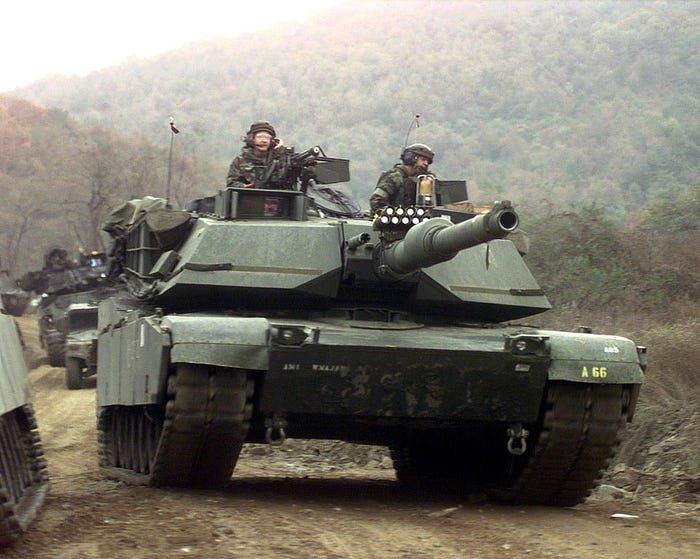
Why the Death of the Tank Is Greatly Exaggerated

Armored vehicles could still rule the battlefield 
by MICHAEL PECK

It was 40 years ago this month that the death of the tank was announced. The iron monsters had blitzed through Sedan, Kiev and Tobruk in World War II. In 1967, Israeli armor had swept through the Sinai like lightning. And then in October 1973, hundreds of burning Israeli tanks, draped in anti-tank missile guidance wires, signaled that something had changed.

The Yom Kippur War spurred critics to ask why armies were spending vast sums of money on vehicles that could be destroyed by a single determined infantryman with an inexpensive weapon. Perhaps it was a sort ofSchadenfreude, revenge for a decades-long panzer terror.

The king of battle had been bested by puny infantrymen armed with Soviet-made wire-guided anti-tank missiles and rocket launchers. That the vaunted Israeli armor had been decimated by Arabs only made the technology seem more impressive. Also not coincidentally, the 1973 war occurred just as the U.S. had finished a long, unsuccessful jungle war where armor could play only a supporting role.

But it turned out that the initial coroner’s report on the tank was wrong. “It never made any sense,” says military analyst Tony Cordesman, who had been dispatched by the Pentagon to study the conflict.

While the Israelis had suffered heavy tank losses, many of those came at the beginning of the conflict, a result of a lethal mix of desperation and overconfidence. In the opening days of the October War, in a desperate bid to rescue their outposts along the Suez Canal, the Israelis had sent their armor — without infantry, artillery or air support — against fortified anti-tank defenses.

The Israeli Defense Forces could have learned from the British, who had seen their gallant armor decimated in boneheaded charges against Rommel’s 88-millimeter guns some 30 years before. At the same time, the Egyptian assault formations that crossed the canal had been heavily reinforced with anti-tank weapons stripped from other Egyptian units — bad luck for the initial Israeli counterattack, but a boon for the later Israeli counteroffensive that struck weaker Egyptian defenses.

MISSION CREEP: Homeland Security a ‘runaway train’


PUBLISHED: Sunday, April 27, 2014
First in a series

WASHINGTON – In November 2002, 14 months after terrorists slammed airplanes into the World Trade Center and Pentagon and killed nearly 3,000 innocent people, President George W. Bush signed a bill into law establishing the U.S. Department of Homeland Security.

The department’s objective was simple, even if its task was not.

“The primary mission of the department is to prevent terrorist attacks within the United States; reduce the vulnerability of the United States to terrorism; minimize the damage, and assist in the recovery from terrorist attacks that do occur within the United States,” the new law said.

The statute also specified that the Department of Homeland Security would respond to natural or human-caused disasters and monitor connections between drug traffickers and terrorists while coordinating efforts to “sever” such ties.

“They’ve kind of lost their way. … The focus – the primary focus – has been substantially diminished.”
– former Homeland Security Secretary Tom Ridge

More than 11 years later, the department’s mission has expanded – greatly.

Today, in addition to protecting America’s borders and airports, the department is interrogating people suspected of pirating movies at Ohio theaters, seizing counterfeit NBA merchandise in San Antonio and working pickpocket cases alongside police in Albuquerque. Homeland Security agents are visiting elementary schools and senior centers to warn of dangers lurking on the Internet.

Some government watchdogs and civil liberties advocates – and even the nation’s first Department of Homeland Security secretary – question how those actions serve the purpose set forth in the 2002 law.

“They’ve kind of lost their way,” former Secretary Tom Ridge told the Journal in Washington this month. “I was proud to be associated with those men and women, but it just seems to me … the focus – the primary focus – has been substantially diminished.”