23 May 2014

Why the West Should Be Ashamed about Ukraine


May 22, 2014

Over the course of events that have transpired during the Ukraine crisis, there have been unwarranted provocations from Moscow, bouts of violence in eastern Ukraine, illegal referenda (and one annexation) and incessant finger pointing in all different directions. But one place at which everyone’s fingers should be pointed is Brussels.

Essentially, what the European Union has done is created a mess that it is unwilling to clean up. What’s worse is that it has not publicly owned up to its share of the fault (a large share at that) for the crisis in Ukraine and Putin’s adventurism. Much of the discussion on this topic has focused on the shortcomings of the Obama administration, punishing Putin, whether NATO expansionism led to where U.S.-Russian relations stand today, and so forth. While these are all valid sands in which to anchor debate, one topic that deserves more attention is the future of U.S.-European relations.

In terms of NATO, if Putin’s land grabbing were to continue or his attention were to turn towards Estonia or Lithuania, NATO would be obligated to get involved militarily. While it is unlikely that Putin is reckless enough to do anything forceful in these countries, the fact that it has even become a possibility is cause for concern. However, if the EU’s unwillingness to do more to punish Putin for perpetuating instability in Ukraine is indicative of how it would act if the situation in Ukraine or Eastern Europe became more dire, then Obama should think seriously about how closely the United States wants to remain aligned with Europe. In terms of NATO, Obama would need to think about how involved the United States should be in European security and defense. This is a European mess, started on Europe’s turf, by the EU.

Putin was right when he stated in his annexation speech that Crimea has historically and culturally been more aligned with Russia. He is right when he describes Ukrainians and Russians as brothers. Russia and Ukraine have histories that are deeply intertwined, dating back to thirteenth-century Kievan Rus’. Ukraine was in Russia’s sphere of influence for many, many years (debatably, it still is, to a certain extent). It is for these reasons that the EU should have expected pushback from Russia when it decided to pull Ukraine in the direction of Western Europe.

Regardless of a strong desire in western Ukraine to establish closer ties with the EU, the EU should not have tried to extend its influence into Ukraine. A Deutsche Welle survey showed a hefty percentage of Ukrainians were hesitant to sign an association agreement with the EU, and a large percentage also wanted to enter Putin’s customs union as well. As the unrest in eastern Ukraine has demonstrated, there are clearly many Ukrainians who did not want the EU association agreement to be signed.

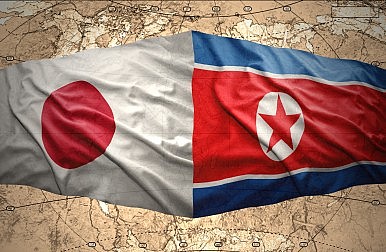
How Japan and North Korea ‘Use’ Each Other


Both North Korean and Japan use each other primarily to posture towards third parties.
May 21, 2014

As Clint reported, the Japanese government announced on Monday that it will hold another round of talks with North Korea later this month. Back in March, Pyongyang and Tokyo held their first government-to-government talks in 16 months.

According to The Japan Times, Foreign Minister Fumio Kishida told reporters on Monday that Japanese and North Korean diplomats will meet in Stockholm on May 26-28 to discuss a wide range of issues, including North Korea’s past abductions of Japanese citizens and its nuclear and ballistic missile program.

The meeting is noteworthy, Clint rightly noted, mainly in that it is being held in Europe instead of Asia. The two sides usually hold their bilateral meetings in Asia, particularly China. The media reports gave no indication as to why the two sides decided to meet in Stockholm this time around but North Korea does maintain diplomatic relations with Sweden.

While it’s impossible to know with any degree of certainty, it’s possible that the decision to hold the talks in Europe rather than China was strategic in nature. One of the reasons that North Korea has mounted something of a charm offensive towards Japan in recent months is to help maximize the small degree of leverage the country holds over China. Beijing has noticeably strengthened its policy against North Korea under Xi Jinping, particularly regarding the country’s nuclear weapons program. Indeed, just this week Russia and China released a joint statement expressing common concern over North Korea’s nuclear program.

By reaching out to Japan at a time when the latter is embroiled in a bitter dispute with China, North Korea is seeking to demonstrate to its patron in Beijing that there are potential consequences for talking a harder line against Pyongyang. Japan too has an interest in demonstrating it can complicate China’s strategic calculus in any way possible, with North Korea being one such way.

Indeed, there is a long history of Japan and the Democratic People’s Republic of Korea (DPRK) using each other for other ends. Take South Korea, for example. Japan and the United States have sought to exploit the common threat North Korea poses to Tokyo, Seoul and Washington to improve relations between South Korea and Japan. Just this week the U.S. tabled another proposal for increased trilateral intelligence sharing regarding North Korea’s missile and nuclear programs. Such proposals have always failed to date, owing to deep mistrust between South Korea and Japan, but nonetheless Pyongyang remains a useful lever for Tokyo to use in trying to improve relations with Seoul without conceding on any of the historical issues.

For North Korea, Japan is first and foremost useful for domestic political purposes. Indeed, Japan’s colonialism is at the heart of the North Korean regime’s domestic legitimacy, as evidenced by—among other things—the fact that it appears in the preamble to the DPRK constitution. As an NK News analysis explains: “The resistance to Japanese aggression is a founding principle of the North Korean State and one of the primary characteristics of Kim Il Sung in the collective memory of North Koreans.”

Taiwan’s Nuclear Future and Authoritarian Past

The intense debate in Taiwan over nuclear power has echoes of a less democratic past.
By Brent Crane
May 21, 2014

Last August, chaos erupted in Taiwanese parliament. Opposing lawmakers thrust hard-clenched fists at one another while fervent activists tossed opened water-bottles from the stands like Molotov cocktails. Politicians and otherwise civilized men wrestled like teenage boys on the floor amid shouts, screams and camera flashes.

The Legislative Yuan had initially assembled to discuss the conditions of a national referendum deciding the fate of Taiwan’s fourth nuclear power plant in Gongliao, New Taipei City. The controversial plant, known ominously throughout the country as Nuke 4, remains a rallying cry for opponents of one of Taiwan’s most charged political subjects: nuclear power. The debate has been energized in recent weeks after former opposition party leader and staunch nuclear energy opponent Lin Yi-hsiung went on hunger-strike in protest of the government’s unwillingness to make concessions with Taiwan’s antinuclear lobby. On the surface, the conflict appears rather black-and-white: it’s the safety-conscious, environmentalists and academics versus the pragmatic economists and government bureaucrats. But the nuclear power debate in Taiwan is about much more than just safety and economics. It’s about reconciling Taiwan’s autocratic past with its democratic present.

Before beginning its transition to democracy in 1987, Taiwan was ruled under autocracy by the (since-reformed) Chinese Nationalists Party (KMT). Expelled from the Mainland following the Communists’ victory in the Chinese Civil War in 1949, the defeated Nationalists fled to Taiwan and established an extensive security state. The Marshal Law era (1949-1987) was a time of strict government censorship, domestic surveillance, unexplained arrests, torture, and executions. Most Taiwanese were not allowed to leave the country and the government went to great lengths to ensure that no one tried to swim across the strait to China. In true Orwellian style, anything that could float – bicycle tires, beach balls – had to be registered with the government.

In February 1947, with only a limited number of KMT troops on the island, what began as anti-government demonstrations quickly spiraled into a mass slaughter. In a matter of days, tens of thousands of civilians were left dead across the country at the hands of KMT security forces. The protests and the subsequent 228 Massacre, as it is now infamously known, prompted the KMT to enact tighter and more ruthless mechanisms of control upon the population in the years that followed. Just as the Communists on the Mainland were trying to purge the society of the bourgeoisie and “capitalist roaders,” so were the Nationalists fervently exposing and eliminating any perceived communist elements on the island. This nearly forty-year campaign is known today as the White Terror, and it, along with the 228 Massacre that preceded it, are critical to understanding the present Taiwanese political psyche.

Three Bishops' Secret Mission to Iran

A wager on peace or a fool's errand?
Maite Elorza
21.05.2014

When representatives from the five permanent members of the U.N. Security Council plus Germany worked in Vienna to finalize a nuclear weapons agreement with Iran last week, they were probably unaware some Catholic bishops had a secret summit of their own with the Islamic Republic.

The four-day meeting in March led by Bishop Richard Pates of Des Moines was not made public until the same week the Vienna talks began. Pates said he, the retired archbishop of Washington Cardinal Theodore McCarrick, and auxiliary Bishop Denis Madden of Baltimore met in Qom with several prominent Islamic clerics to “promote understanding between the peoples of Iran and the United States.” Pope Francis didn’t send an envoy of his own to Qom (and likely declined to, if his relations with the Argentinian authorities are any indication). But Pates said the get-together was in line with the new pontiff’s view that “dialogue is the key to discovering truth and avoiding misunderstanding.”

If only the ayatollahs in Qom believed that. Among the clerics who participated in the summit was Ayatollah Morteza Moghtadaei, one of Supreme Leader Khamenei’s earliest and staunchest supporters. At the time of the meeting, Khamenei was holding (and continues to hold) Christian pastor Youcef Nadarkhani behind bars for his faith. Some days after the bishops left Qom, Khamenei publicly mused whether the Holocaust had happened. The bishops also met with Ayatollah Abdollah Javadi-Amoli who implored Americans in 2004 to “give up” the idea that Iran would cease nuclear production. “Don’t even think that Iran will relinquish scientific progress,” he said.

Lend Rouhani a Hand

As the hard-liners wage a media war against the reform government of Hassan Rouhani and his nascent nuclear deal, the West has to step up and show it means business.
MAY 21, 2014

Iranian President Hassan Rouhani is under fire from his right flank. Less than a year after the reform-minded Rouhani was elected, hard-line critics say that engagement in negotiations with the P5+1 over Iran's nuclear program puts the country in grave danger. The negotiating team is reading the "last rites for the Islamic Republic," one hard-liner said after a May 3 conference of Rouhani critics called "We Are Concerned."

That may be an exaggeration. The Rouhani government, with tentative backing from the powerful clergy, is making earnest efforts to reach an agreement over the future of Iran's nuclear program. But under pressure from political adversaries at home and influential quarters in the Middle East, Rouhani will need the West to cooperate too.

Hard-liners have transformed the negotiations into an excuse to weaken and possibly paralyze the Rouhani administration. They reject the "dishonorable" interim Geneva accord that freezes Iran's nuclear program in return for temporary, partial sanctions relief. They claim that Iran has made every concession, but received nothing in return, and that the most crippling economic sanctions are still in place -- and may not be lifted for years, even if a final agreement is reached. They also claim that the Rouhani administration has colluded with the West and has retreated significantly from Iran's defensible position of maintaining a meaningful nuclear enrichment program, but has received no concessions in exchange for its sacrifices.

While Rouhani's critics oppose the sanctions, they also refuse to make concessions that might get them lifted for good. The sanctions are not a response to Iran's nuclear program, they say, but an instrument to topple the Islamic Republic. They fear that even if Iran and the P5+1 (the five permanent members of the U.N. Security Council -- Britain, China, France, Russia, and the United States -- plus Germany) reach a comprehensive agreement, the sanctions may not be lifted.

The hard-liners declare that Iran's nuclear infrastructure is a national achievement and thus should not be given up or scaled back, and that Iran can resist the sanctions by resorting to what Supreme Leader Ayatollah Khamenei refers to as the "resistance economy" of self-sufficiency. Thus, the hard-liners reject any reduction in the number of centrifuges that Iran may have, oppose redesigning the new research reactor under construction in Arak to produce far less plutonium, and will not accept a complete halt to production of enriched uranium at 19.75 percent.

And the chorus of dissent within Iran is growing louder. In a May 21newspaper editorial, Kayhan, the mouthpiece of the hard-liners, declared that "all the concessions made to Iran in the Geneva accord were only promises" and that in return for Iran's "27 obligations" made to the P5+1, the West had committed itself to stop its efforts to halt the flow of Iran's oil exports. But, claimed the editorial, under U.S. pressure, Iran's oil exports greatly decreased in March and April. Moreover, Iran was to receive payments of $4.2 billion, but has received only $2.65 billion because, due to the sanctions on Iranian banks and financial institutions, the rest of the funds cannot be transferred to Iran. Japan has transferred what it owed Iran to banks in Oman and the United Arab Emirates, but the funds cannot be transferred to Tehran.

Nigerians See their Security Forces as Undisciplined, Inept and Corrupt

May 21, 2014
Nigeria: Shortsighted Decisions
strategypage.com

May 21, 2014: The government has over 20,000 troops and police in the northeast looking for over two hundred school girls Boko Haram kidnapped a month ago. Most Nigerians are not optimistic that the army and police will be successful in finding and rescuing the girls. While the government constantly boasts of the prowess of its security forces, on the ground the average Nigerian sees the army and police as undisciplined, inept and corrupt. Nigerian politicians tend to get very indignant at this criticism of the security forces, which is partly due to the fact that the army and police ultimately protect a very corrupt government. If foreigners bring up this subject the average Nigerian will ruefully agree and often mention a personal encounter with the brutality and corruption of the security forces. But mention any of this to a Nigerian politician and you get a hostile reaction, including denials and, if you are from outside of Africa, accusations of racism. This makes it very difficult for Western nations to help carry out reforms in Nigeria. The problem is that the corrupt politicians do not want honest and efficient police and soldiers because that would be a very direct danger to the political elite. All this makes it virtually impossible to accept much foreign military assistance.

The soldiers in the northeast are even more concerned with the bad attitudes and lack of skills and determination among their leaders and there have been several recent incidents of troops demonstrating their anger and frustration. In one case the car of a division commander was fired on by troops who believed (probably accurately) that shortages of fuel and other supplies they were experiencing were caused by the general stealing money meant for purchasing the supplies. The government plays down these incidents.

The government has admitted that it really doesn’t know exactly what happened when the girls were taken last April. So today a presidential commission has started work in the area where the kidnapping occurred and is interviewing witnesses and people in the area. Apparently there is now general agreement that 276 girls were present in the school when Boko Haram attacked and that at least 57 have escaped and reported that to authorities. The government also fears that Boko Haram will apply pressure on the government to release Boko Haram prisoners and pay lots of cash to get the girls released. The government apparently has a link to Boko Haram leaders via cooperative clergy and local politicians in the northeast and that is the deal being proposed. It is a bad deal because it would provide Boko Haram more cash to keep their operations going and expand and also give the Islamic terrorists an incentive to kidnap more children. Officially the government rejects demands for prisoner exchanges or ransom but because of the secret discussions with Boko Haram it is possible that Boko Haram prisoners could be “released” by a cooperative judge and ransom could be paid secretly to get the girls mysteriously released. This would get the government and army leaders out of the negative media spotlight for the moment but would, long-range, only make the situation up north worse. Unfortunately such shortsighted decisions are the norm, not the exception, in Nigeria.

20,000 Somali and AMISOM Troops Chasing Elusive Al-Shabaab Guerrillas in Somalia

May 19, 2014
Somalia: Operation Eagle Chases Ghosts
strategypage.com

Since April 23 rd over 20,000 peacekeeper and Somali Army troops have been conducting the first major joint offensive in central and southern Somalia. This effort, called Operation Eagle, has officially cleared al Shabaab driven out of most of the area. As a result al Shabaab forces are gone from towns and most villages in the area from central Somalia (west of Mogadishu) south to the Kenyan border. Al Shabaab ordered its gunmen to flee the advance, so it’s become largely a matter of chasing the Islamic terrorists constantly, trying to leave them little opportunity to organize attacks. Because of Operation Eagle most al Shabaab men are now forced to forage and loot to survive, which makes them even less tolerable to the locals. There has been some violence, or threats of violence because of Operation Eagle and this has produced over 50,000 refugees. There are also a lot of roads that go through thinly populated and remote areas where al Shabaab hide and often ambush and rob vehicles. This has made delivery of aid more difficult. There are still over half a million people in the Operation Eagle operating area dependent on food aid. Al Shabaab publically insists that it will fight on, so the peacekeepers are attempting to wear down al Shabaab to the point where the Islamic terrorists are no longer a major threat. That could take years, as in until the end of the decade. That is what has worked against similar terrorist movements in the past and grinding them down still appears to be the only solution.

The big problem in Somalia is with the government, or what passes for one, and the culture of corruption that still thrives. Most government officials see their jobs as an opportunity to steal and they do so at every opportunity. That includes taking bribes from those seeking government jobs or to get someone out of jail or whatever. For the new Somali Army it means poor discipline and indifferent loyalty. Troops will desert whenever they feel like it and will try to take their weapons with them. Al Shabaab knows that a large enough bribe can get most soldiers, even senior officers, to do just about anything. Of course, al Shabaab also has problems with corruption, but it is worse in the army because the army and Somali government are receiving a lot more foreign aid than al Shabaab and for those out to get rich, the government is the place to be. Religious fanatics are a minority in Somalia and they, naturally, gravitate to al Shabaab. Another problem with Operation Eagle is the police and intelligence force sent to restore and main order in the newly liberated towns tend to be more interested in stealing than administering. This does not gain much support for the national government from the locals.

Operation Eagle is also discovering that al Shabaab is not the only problem in the south. Also encountered were several local warlords who had their own private armies and wanted nothing to do with any outside control (al Shabaab or government). When efforts to negotiate fail the warlord must be suppressed with force or left to rule his little part of the landscape and make war on his neighbors. To further complicate matters the warlords and, to a lesser extent, al Shabaab have businessmen and merchants who are close allies but not always armed. So when a town is “liberated” there are often still bad guys in plain sight, collecting information and waiting to help their armed partners regain control. It’s rare for one of the locals to risk retribution by warning the soldiers of who supports who in the area. A major reason for suppressing the warlords is that they often make war on each other and anyone else who seems worth fighting.

Gas Deal Could Complicate Sanctions Threat Against Russia

MAY 21, 2014

China just signed a 30-year, $400 billion natural gas deal with Russia, handing a big win to Russian energy companies desperate to find new export markets. But the pact may have delivered Russian President Vladimir Putin an equally important win in his ongoing standoff with the Obama administration and its European allies over the ongoing crisis in Ukraine. Put simply, the deal may deal a death blow to the foundering Western efforts to punish Putin for his meddling in Ukraine and annexation of the country's Crimean peninsula.

The new pact strengthens an emerging Moscow-Beijing economic alliance that's out of the reach of Western influence -- and financial pressure. The deal, which capped years of tense negotiations, was inked in Shanghai on the sidelines of an Asian economic and security conference that included 40 countries, including Iran and Kazakhstan. Though it will be years before the gas starts flowing to China, the deal raises doubts about how effectively Western countries will be able to use sanctions as a weapon against Putin's Russia.

Former Treasury Department sanctions official Elizabeth Rosenberg, who is now a senior fellow at the Center for a New American Security, said the deal was Russia's "attempt to build up commercial opportunities outside of Europe where it's vulnerable and losing friends."

Sanctions -- Western leaders' weapon of choice in the battle over Ukraine - may have less bite now that Russia has proved it can find other foreign customers for its main export, natural gas. U.S. and European leaders have threatened broad sanctions against whole swaths of the Russian economy, including its finance or energy sectors, if Moscow meddles in Ukraine's presidential election this weekend. But the China deal gives those threats less teeth in the years to come because Russia would have Beijing's gas contract to fall back on, if the West decided to go after the country's crucial energy sector.

"I don't think this inhibits the ability of the U.S. and its partners to impose sanctions in the short term, but I do think it could affect the ultimate price those sanctions would exact in the medium term," said Zachary Goldman, a former Treasury Department sanctions official who now heads the Center on Law and Security at the New York University.

Though Europe still accounts for roughly 75 percent of Russia's gas export market, developing countries could make up a larger proportion over time. The gas going to China wouldn't take away from Europe's portion immediately because the gas is being extracted from different fields, but by increasing the number of buyers, Russia would be less dependent on the European market.

What Have We Really Learned About the Russian Military in the Aftermath of the Seizure of the Crimea

May 19, 2014
Crimea taught us a lesson, but not how the Russian military fights
Dmitry Gorenburg
War on the Rocks

With the rapid operation that resulted in the annexation of Crimea earlier this year, the Russian military returned to the collective consciousness of the American public. Many commentators were impressed with the “little green men’s”professional demeanor and shiny new equipment. In some cases, this impression was undeservedly expanded to apply to the rest of the Russian military. In this context, it is important to discuss what the Crimean operation does and does not tell us about the capabilities of the Russian military.

The first clear lesson from the Crimean operation is that the Russian military understands how to carry out operations with a minimal use of force. This observation may initially seem banal or trivial, but we should keep in mind how Russian troops acted in previous operations in Chechnya and even to some extent in Georgia. Subtlety was not a strong suit in these operations, nor did it seem to be particularly encouraged by the political leadership. Instead, the goal seemed to be to use overwhelming force without much regard for civilian casualties. By contrast, the entire operation in Crimea was conducted with virtually no bloodshed or violence. There were three keys to this success:

Diversionary tactics

The Swedish analyst Johan Norberg was perhaps the first to highlight the significance of the major military exercise that was held on Ukraine’s eastern border in late February. While the Ukrainian government, as well as Western analysts and intelligence agencies, were distracted by the large-scale publicly announced mobilization in Russia’s Western military district, forces from the Southern military district and from airborne and Special Forces units located elsewhere in Russia were quietly transferred to Sevastopol.

Pre-emptive action

Russia’s intervention began while the world’s attention was still focused on the Winter Olympic Games in Sochi, with orders being issued and troops transferred into Sevastopol before the closing ceremonies. The newly installed Ukrainian government was still trying to consolidate its power in Kyiv, while the international community was waiting to see what sorts of policies the new government would pursue and whether it would attempt to reconcile the pro-Russian and pro-EU segments of the population. The Russian government, on the other hand, determined that the overthrow of President Yanukovych posed a serious threat to its interests in Ukraine while at the same time providing an opportunity to resolve the position of the Black Sea Fleet in Crimea once and for all. Accordingly, it acted quickly to take control of the Crimean peninsula, using the political chaos in Ukraine as both a pretext and as cover for the intervention.

Rapid deployment

The Russian military used the element of surprise in combination with the prior presence of its troops at bases on Crimea to take control of the peninsula before the Ukrainian government and the international community had time to fully understand what was happening. The use of troops without insignia was an integral component of this action, as it allowed the Russian government to deny its complicity in the occupation of local government buildings and the blockading of Ukrainian military facilities. These denials created enough confusion to allow for the consolidation of Russian control over the region. Ukrainian troops were essentially confined to their bases before the government could provide them with orders to counter Russian activity.

Russia and China Sign $400 Billion Natural Gas Deal


May 21, 2014
China and Russia Reach 30-Year Gas Deal
Jane Perlez
New York Times

President Vladimir V. Putin of Russia, right, and President Xi Jinping of China on Wednesday in Shanghai, where they signed a deal to send gas through a pipeline from Siberia to China. Credit Pool photo by Mark Ralston BEIJING — China and Russia agreed to a major 30-year natural gas deal on Wednesday that would send gas from Siberia by pipeline to China, according to the China National Petroleum Corporation.

The announcement caps a decade-long negotiation and helps bring Russia and China closer than they have been in many years. The contract was driven to a conclusion by the presence of President Xi Jinping of China and President Vladimir V. Putin of Russia in Shanghai for the last two days.

The notice posted on China National Petroleum’s website said that beginning in 2018, Russia would supply 38 billion cubic meters of natural gas each year to China. China will build the pipeline within its own borders, while Russia will be responsible for the development of the fields and pipeline construction in its territory, the notice said.

The notice said the Irkutsk Kovyktinskoye and Chayandinskoye gas fields in Russia would primarily supply the gas.

The notice did not mention price, but experts said hard bargaining by China for a lower price than European countries were paying for Russian natural gas was at the core of the negotiations.

From Russia With Love (And a Discount)

After years of talks, Moscow and Beijing finally inked a $400 billion deal that will change the face of the global natural gas market.
MAY 21, 2014

After a marathon negotiating session that lasted until almost four in the morning, Russia and China inked one of the world's biggest energy deals Wednesday, a 30-year, $400 billion pact that will send natural gas from Siberia to energy-hungry China.

The successful conclusion of talks that began in the late 1990s, and which were nearly derailed Tuesday on the first day of Russian President Vladimir Putin's trip to China, presages a new era in global energy trade. The implications are potentially huge for Russia, for China and much of Asia, and also for Europe, still Russia's biggest energy consumer.

For Russia, the deal is a way to finally start selling more of its energy to Asia after decades spent supplying Europe with oil and natural gas. For China, the pact offers a way to meet part of its fast-growing demand for energy, especially energy that's cleaner than the dirty coal that has fueled three decades of growth. Europe, meanwhile, is watching the Sino-Russian bear hug with a mixture of relief and apprehension: While the deal potentially gives Russia a way to sidestep European and American pressure on Russia's energy exports in the wake of the Ukraine crisis, it also offers Europe hope of landing its own favorably-priced energy contracts in years to come.

The agreement reached Wednesday calls for Moscow to provide 38 billion cubic meters of natural gas per year to Beijing for three decades. Exact details of the landmark pact are still scanty; Russia's state-owned energy giant Gazprom has not revealed the price at which the contract was signed. But people close to the talks and in the industry said that China had secured a long-term supply of gas at about $350 per thousand cubic meters -- less than what Russia wanted to charge, and less than the $380 that it has traditionally charged European customers.

Heads Won’t Roll

Obama’s talking tough about the VA scandal, so why isn’t he firing anyone?
MAY 21, 2014

President Obama attempted to calm the storm quickly enveloping his handling of a growing Veterans Affairs scandal, laying out a logical approach to getting to the bottom of what has gone wrong - seeking reviews, promising to hold individual staffers accountable, and ordering the department's head, the embattled Eric Shinseki, to give him an initial report next week. The one thing he didn't do was fire Shinseki or anyone else, and that no heads are rolling means he did little to quiet administration critics - and may have instead created new ones.

The president on Wednesday defended Shinseki, a retired four-star general who has led the VA since 2009, as a "great soldier" who would lead the review into the crisis pertaining to allegations of falsified records and "cooking the books," as Obama said, at a number of VA healthcare centers. Obama ordered Shinseki to return to him next week with preliminary results of the review of the problem and vowed punishment would come "once we know the facts."

But Obama dodged questions about whether Shinseki should resign or had offered to.

"Nobody cares about our veterans more than Ric Shinseki," Obama said in his first press conference devoted to the VA scandal -- which centers around allegations that 40 veterans died at a hospital in Phoenix while waiting for care - since it first exploded late last month.

"If you asked me how do I think Ric Shinseki has performed overall, he has put his heart and soul into this thing."

But Obama's dutiful respect for the investigatory process on the records scandal is seen by some critics as being overly focused on the issue at hand, and not the broader one that has frustrated critics for several years. And his remarks Wednesday did little to stop the calls for Shinseki to step down or for Obama himself to take ownership of a problem he made a feature of in his 2008 campaign.

Now the Democratic dam supporting Shinseki may be beginning to burst. Two Democratic lawmakers from Georgia, first John Barrow and then David Scott, called for Shinseki to resign after hearing Obama speak.

"While I don't think a change in leadership will immediately solve the serious problems that plague the VA, I do think it's time to give someone else an opportunity to lead the agency and begin the rebuilding process to ensure these issues never happen again," Barrow said in a statement.

Obama seems to have lost the room on veterans issues, even among some groups which have applauded some of the recent accomplishments by the VA. And for a White House already focused on the real prospect of losing Democratic control of the Senate in the upcoming mid-term elections, the scandal risks handing the GOP another political cudgel to use against the administration and its allies this fall.

U.S. Tech Companies in China Fear Backlash From China Over Cyberspying Allegations

May 20, 2014
U.S. firms brace for China backlash over cyber spying charges
Reuters

U.S. technology companies will likely bear the brunt of soured ties between Beijing and Washington over internet security, after the U.S. Department of Justice charged five Chinese military officers with cyber espionage.

U.S. equipment and software providers such as IBM Corp and Cisco Systems Inchave already seen their China sales drop after last year’s revelations by former National Security Agency (NSA) contractor Edward Snowden of U.S. government spying.

Doing business in China could now get tougher, though any Chinese retaliation over the charges may not be obvious, executives and industry analysts said.

"The environment in China for U.S. technology companies is not very good right now, and this won’t make it better," said James McGregor, chairman for advisory firm APCO China. "But if they’re losing their intellectual property to cyber hacking they probably see this action as necessary and worrisome.”

IBM’s China sales have fallen by a fifth or more for three straight quarters, the Armonk, NY-based firm reported in April. Cisco said last week that its Chinabusiness declined 8 percent in the quarter to April 26.

"There’s always a risk of retribution in China," said a person who works closely with U.S. technology firms. "(But) the damage is so pervasive that no company is going to say that the (U.S.) government has acted inappropriately."

"Companies in any industry seen as a priority for China’s industrial policy could be at risk," the person added.

In December, Google Inc, Microsoft Corp and six other U.S. global technology companies called for an overhaul of practices and laws to limit how governments collect user information amid growing concerns about online surveillance. And last week, Cisco CEO John Chambers wrote to U.S. President Barack Obama calling for “standards of conduct” to ensure that government surveillance doesn’t undermine the ability of U.S. technology firms to sell products globally, the Financial Times reported.

China has consistently denied accusations of cyber espionage, and summoned Max Baucus, U.S. Ambassador to China, to a meeting with Assistant Foreign Minister Zheng Zeguang, state media reported on Tuesday.

China Cyber Indictments: What Happens Next?

May 21, 2014

Earlier this week, the U.S. Department of Justice indicted five People’s Liberation Army officials for hacking into the computers of U.S. companies to steal trade secrets. The indictment alleges that the PLA Five stole information that would be useful to the companies’ competitors in China, including state-owned enterprises (SOEs). This is a significant development, as the U.S. is directly accusing China of stealing information and using it to undermine the competitiveness of U.S. companies. The charges signal that the U.S. sees the theft of intellectual property as a national security threat and is resolved to hold those responsible to account. It also reaffirms a distinction the U.S. makes between spying for profit, which is wrong, and spying for political purposes, which is acceptable. Ultimately, the indictment is aimed at influencing China’s behavior in cyberspace. It’s unlikely to prove effective.

The fifty-six page indictment (PDF) is backed by substantial evidence and describes the methods and motives behind the hacks. In the case of nuclear power plant manufacturer Westinghouse, the company was negotiating in 2010 to build four power plants in China when conspirator Sun Kailiang stole design specifications for pipes, pipe supports, and pipe routing. That information would enable a Chinese competitor looking to build a similar plant to save on research and development costs.

China Expected to Argue That NSA Hackers Steal Chinese Secrets

May 19, 2014 
U.S. Treads Fine Line in Fighting Chinese Espionage 
David E. Sanger 
New York Times 

WASHINGTON — By indicting members of the People’s Liberation Army’s most famous cyberwarfare operation, called Unit 61398 but known among hackers by the moniker “Comment Crew,” the Obama administration is now using the legal system to make a case it has previously confined to classified briefings: that the Chinese military leadership is behind an enormous organized campaign to steal American intellectual property and designs for its own profit. 

For two years now, President Obama and his aides have declared that when the United States spies on China, its goals are sharply different from those of the Chinese who engage in espionage. In public speeches and private conversations with Xi Jinping, the Chinese president, Mr. Obama has argued that it is far more pernicious to use the intelligence instruments of the state for commercial competitive advantage. The United States may do all it can to learn about China’s nuclear arsenal, or about Beijing’s intentions in its territorial disputes with Japan, but it does not, the administration says, steal from China Telecom to help AT&T. 

Attorney General Eric H. Holder Jr. repeated that argument Monday morning as heunsealed an indictment that included allegations that Unit 61398 had stolen trade secrets for nuclear power plants that would save months or years of design work, as well as information from inside an American solar energy company that was pursuing a trade complaint against its Chinese competitors. 

That was only the tip of the iceberg: A Federal report last year, classified but widely circulated, indicated that more than 3,000 American companies had been notified by the F.B.I. that they had been hacked, mostly by Chinese competitors. Statistics like those have been at the heart of the argument that the Chinese activity is increasingly intolerable. 

But the Chinese have already rejected both the facts and the argument, and they used the revelations last year by the former National Security Agency contractor Edward J. Snowden to press their response that the distinction between spying for commerce and spying for national security is a tiny one, and distinctly American. 

U.S. Is Intercepting All Cell Phone Calls in the Bahamas, Greenwald

May 19, 2014
Data Pirates of the Caribbean: The NSA Is Recording Every Cell Phone Call in the Bahamas
Ryan Devereaux, Glenn Greenwald and Laura Poitras
The Intercept

The National Security Agency is secretly intercepting, recording, and archiving the audio of virtually every cell phone conversation on the island nation of the Bahamas.

According to documents provided by NSA whistleblower Edward Snowden, the surveillance is part of a top-secret system – code-named SOMALGET – that was implemented without the knowledge or consent of the Bahamian government. Instead, the agency appears to have used access legally obtained in cooperation with the U.S. Drug Enforcement Administration to open a backdoor to the country’s cellular telephone network, enabling it to covertly record and store the “full-take audio” of every mobile call made to, from and within the Bahamas – and to replay those calls for up to a month.

SOMALGET is part of a broader NSA program called MYSTIC, which The Intercepthas learned is being used to secretly monitor the telecommunications systems of the Bahamas and several other countries, including Mexico, the Philippines, and Kenya. But while MYSTIC scrapes mobile networks for so-called “metadata” – information that reveals the time, source, and destination of calls – SOMALGET is a cutting-edge tool that enables the NSA to vacuum up and store the actual content of every conversation in an entire country.

All told, the NSA is using MYSTIC to gather personal data on mobile calls placed in countries with a combined population of more than 250 million people. And according to classified documents, the agency is seeking funding to export the sweeping surveillance capability elsewhere.

The program raises profound questions about the nature and extent of American surveillance abroad. The U.S. intelligence community routinely justifies its massive spying efforts by citing the threats to national security posed by global terrorism and unpredictable rival nations like Russia and Iran. But the NSA documents indicate that SOMALGET has been deployed in the Bahamas to locate “international narcotics traffickers and special-interest alien smugglers” – traditional law-enforcement concerns, but a far cry from derailing terror plots or intercepting weapons of mass destruction.

“The Bahamas is a stable democracy that shares democratic principles, personal freedoms, and rule of law with the United States,” the State Department concluded in a crime and safety report published last year. “There is little to no threat facing Americans from domestic (Bahamian) terrorism, war, or civil unrest.”

By targeting the Bahamas’ entire mobile network, the NSA is intentionally collecting and retaining intelligence on millions of people who have not been accused of any crime or terrorist activity. Nearly five million Americans visit the country each year, and many prominent U.S. citizens keep homes there, including Sen. Tom Harkin (D-Iowa), Bill Gates, and Oprah Winfrey.

In addition, the program is a serious – and perhaps illegal – abuse of the access to international phone networks that other countries willingly grant the United States for legitimate law-enforcement surveillance. If the NSA is using the Drug Enforcement Administration’s relationship to the Bahamas as a cover for secretly recording the entire country’s mobile phone calls, it could imperil the longstanding tradition of international law enforcement cooperation that the United States enjoys with its allies.

“It’s surprising, the short-sightedness of the government,” says Michael German, a fellow at New York University’s Brennan Center for Justice who spent 16 years as an FBI agent conducting undercover investigations. “That they couldn’t see how exploiting a lawful mechanism to such a degree that you might lose that justifiable access – that’s where the intelligence community is acting in a way that harms its long-term interests, and clearly the long-term national security interests of the United States.”

The NSA refused to comment on the program, but said in a statement that “the implication that NSA’s foreign intelligence collection is arbitrary and unconstrained is false.” The agency also insisted that it follows procedures to “protect the privacy of U.S. persons” whose communications are “incidentally collected.”

Chinese Hackers Used Mundane Spear Phisshing Techniques to Penetrate the Security of America’s Biggest Companies

May 21, 2014
US hacking victims fell prey to mundane ruses
Associated Press

WASHINGTON (AP) — The victims were their own worst enemies.

The hacking techniques the U.S. government says China used against American companies turned out to be disappointingly mundane, tricking employees into opening email attachments or clicking on innocent-looking website links.

The scariest part might be how successfully the ruses worked. With a mouse click or two, employees at big-name American makers of nuclear and solar technology gave away the keys to their computer networks.

In a 31-count indictment announced on Monday the Justice Department said five Chinese military officials operating under hacker aliases such as “Ugly Gorilla,” “KandyGoo” and “Jack Sun” stole confidential business information, sensitive trade secrets and internal communications for competitive advantage. The U.S. identified the alleged victims as Alcoa World Alumina, Westinghouse, Allegheny Technologies, U.S. Steel, United Steelworkers Union and SolarWorld.

China denied it all on Tuesday.

"The Chinese government and Chinese military as well as relevant personnel have never engaged and never participated in so-called cybertheft of trade secrets," Foreign Ministry spokesman Hong Lei said in Beijing. "What the United States should do now is withdraw its indictment."

That’s unlikely. What the Justice Department is doing is spelling out exactly how it says China pulled it off.

The U.S. says the break-ins were more Austin Powers than James Bond. In some cases, the government says, the hackers used “spear-phishing” - a well-known scam to trick specific companies or employees into infecting their own computers.

The hackers are said to have created a fake email account under the misspelled name of a then-Alcoa director and fooled an employee into opening an email attachment called “agenda.zip,” billed as the agenda to a 2008 shareholders’ meeting. It exposed the company’s network. At another time, a hacker allegedly emailed company employees with a link to what appeared to be a report about industry observations, but the link instead installed malicious software that created a back door into the company’s network.

China's Terrible, Horrible, No Good, Very Bad Friend Circles

What happens in WeChat's private chats isn't staying there, and it has the government worried.
MAY 21, 2014

"Life is just like WeChat: you never know which friend will try to sell you something next." Thus wrote one Chinese blogger, bemoaning the proliferation of peer-to-peer commercialism on WeChat, or Weixin in Chinese. It's China's hottest social network, a mobile chat application which revolves around small invite-only groups called "friend circles." For users like him, May 21 brought good news when Chinese Internet giant Tencent, parent company of the messaging platform with somewhere north of 300 million global monthly active users, announced new regulations placing limits on users' ability to sell goods through their friend networks. But the move, and the drumbeat of negative state-media coverage that preceded it, hints at increasing encroachment from government authorities determined to clamp down on China's active online sphere.

The wording of Tencent's latest announcement -- that friend circles are composed of "networks based on relationships of acquaintances" and are not "platforms for business" -- closely mirrors that found in a recent state media blitz targeting several of the platform's most important features. A May 3 article on state news service Xinhua implied that WeChat exploited human relationships and "human weakness" to make money off its popular gaming platform, noting that game revenues topped $96 million in 2013. A May 6 article on the service called "WeChat, how much longer can I love you?" claimed that many feel the messaging service has "taken their lives hostage," to quote one pseudonymous user. On May 13, Xinhua weighed in yet again, reporting that netizens had collectively denounced the so-called "WeChat ‘like' trap," in which users become inundated with endless requests for likes, sometimes even falling victim to scams promising prizes such as free travel in exchange. And on May 20, the day before Tencent announced the new restrictions on friend circles, party mouthpiece People's Daily ran two articles: one in its print editionasking whether users would "flee" WeChat friend circles and another online suggesting that users be wary of what have become "commercial circles" where "WeChat merchants" prey on friendships and human relationships to scalp a little cash.

Starship Troopers vs. Pork-Eating Crusaders: How military and civilian cultures prevent strategic corporals

MAY 21, 2014

By Jim Gourley 
Best Defense chief cultural correspondent

It's not often you see the ACLU stand up for someone's right to express themselves in a politically incorrect and insensitive way, but that's exactly what they did in September 2013 when they sued the Michigan state government on behalf of Iraq war veteran Michael Matwyuk.

The item of dispute was the state's repeated denials of Matwyuk's request for a vanity license plate reading "INF1DL," a reference toinfidel. The Michigan Secretary of State had already intervened in Matwyuk's own suit against the state and issued the plate. In its official request that the ACLU suit be dropped, Michigan claimed that the denial had been "an administrative oversight." The ACLU argued that the state had acted on its written policies against word combinations that might be considered offensive. They wanted to continue the lawsuit because those policies did not clearly identify who had authority for adjudicating whether a particular word or phrase was inappropriate. There was no discussion whether the 57-year-old Matwyuk, who attained the rank of Sergeant, should have exercised better judgment when filing the request in the first place.

Matwyuk is just the most recent high profile example of a bothersome trend in military culture. According to a 2012 article on Military.com, web-based tactical couture retailer Mil-Spec Monkey has sold more than 10,000 "Pork Eating Crusader" patches for wear on combat uniforms. The patch, which features the bust of a man in medieval armor bearing the Knights Templar cross, is still listed on their site in the "troublemakers section," which offers a diverse array of patches to offend other people based on their gender, sexual orientation or religious beliefs. Another section offers a patch made to resemble an army Ranger tab with the word "Infidel" written on it. There is also the new "Infidel Strong" patch, a riff on the Army's recruiting slogan. Those who are bigger fans of sports might prefer the Major League Infidel products offered by Crye Precision, developer and manufacturer of the U.S. military's MultiCam uniforms. Apparently aware of the potential windfall, the company trademarked the name and logo.

Borderlands: Hungary Maneuvers

TUESDAY, MAY 20, 2014 
Stratfor

I am writing this from Budapest, the city in which I was born. I went to the United States so young that all my memories of Hungary were acquired later in life or through my family, whose memories bridged both world wars and the Cold War, all with their attendant horrors. My own deepest memory of Hungary comes from my parents' living room in the Bronx. My older sister was married in November 1956. There was an uprising against the Soviets at the same time, and many of our family members were still there. After the wedding, we returned home and saw the early newspapers and reports on television. My parents discovered that some of the heaviest fighting between the revolutionaries and Soviets had taken place on the street where my aunts lived. A joyous marriage, followed by another catastrophe -- the contrast between America and Hungary. That night, my father asked no one in particular, "Does it ever end?" The answer is no, not here. Which is why I am back in Budapest.

For me, Hungarian was my native language. Stickball was my culture. For my parents, Hungarian was their culture. Hungary was the place where they were young, and their youth was torn away from them. My family was crushed by the Holocaust in Hungary, but my parents never quite blamed the Hungarians as much as they did the Germans. For them, it was always the Germans who were guilty for unleashing the brutishness in the Hungarians. This kitchen table discussion, an obsessive feature of my home life, was an attempt to measure and allocate evil. Others did it differently. This was my parents' view: Except for the Germans, the vastness of evil could not have existed. I was in no position to debate them.

This debate has re-entered history through Hungarian politics. Some have accused Prime Minister Viktor Orban of trying to emulate a man named Miklos Horthy, who ruled Hungary before and during World War II. This is meant as an indictment. If so, at the university of our kitchen table, the lesson of Horthy is more complex and may have some bearing on present-day Hungary. It has become a metaphor for the country today, and Hungarians are divided with earnest passion on an old man long dead.

A Lesson From History

Adm. Miklos Horthy, a regent to a non-existent king and an admiral in the forgotten Austro-Hungarian navy, governed Hungary between 1920 and 1944. Horthy ruled a country that was small and weak. Its population was 9.3 million in 1940. Horthy's goal was to preserve its sovereignty in the face of the rising power of Adolf Hitler and Josef Stalin. Caught between the two -- and by this I mean that both prized Hungary for its strategic position in the Carpathian Basin -- Hungary had few options. Horthy's strategy was to give what he must and as little as he had to in order to retain Hungary's sovereignty. Over time, he had to give more and more as the Germans became more desperate and as the Soviets drew nearer. He did not surrender his room to maneuver; it was taken from him. His experience is one that Hungary's current leadership appears to have studied.

Horthy's strategy meant a great deal to the Jews. He was likely no more anti-Semitic than any member of his class had to be. He might not hire a Jew, but he wasn't going to kill one. This was different from the new style of anti-Semitism introduced by Hitler, which required mass murder. A sneer would no longer do. In Poland and in other countries under German sway, the mass killings started early. In Hungary, Horthy's policy kept them at bay. Not perfectly, of course. Thousands were killed early on, and anti-Jewish laws were passed. But thousands are not hundreds of thousands or millions, and in that time and place it was a huge distinction. Hungary did not join Germany's invasion of the Soviet Union until months after it had started, and Jews, including my father and uncles, were organized in labor battalions, where casualties were appalling. But their wives and children remained home, had food and lived. Horthy conceded no more than he had to, but what he had to do he did. Some say it was opportunism, others mere cowardice of chance. Whatever it was, while it lasted, Hungary was not like Poland or even France. The Jews were not handed over to the Germans.

FAQ’s on Nigeria’s Boko Haram Terror Group

May 21, 2014

Thanks to Steven Aftergood for posting this 23-page backgrounder on Boko Haram written by the Congressional Research Service (CRS). Straightforward answers to questions about this group.