4 June 2014

THOSE WHO FRIGHTEN CHINA

MAY 31, 2014
POSTED BY JIAYANG FAN

Almost a year after September 11th, I returned from high school in Massachusetts to spend two months in Beijing, as the guest of family friends. My hosts, retired office workers, were genial people, and generally incurious about my life in America; the only acknowledgement that I had spent many years abroad was an oblique apology for the absence of hamburgers on the dinner table. But they had less oblique questions about my brush with terrorism in America. Had I had seen the planes? I hadn’t. Did I still feel unsafe in public places? Did I now suspect that certain people I saw walking down the street might be terrorists? And wasn’t that the trouble with the U.S. these days—that it had become a country overrun with terrorists?

After the attack that took place last week in Urumqi, in the Chinese state of Xinjiang, it has become clear that terrorism is no longer a foreign phenomenon. At an outdoor vegetable market on Wednesday morning, two sport-utility vehicles loaded with explosives plowed through a crowd of shoppers, killing forty-three people and wounding more than ninety. Although no public claim of responsibility has been made, the five suspected assailants—four of whom were killed during the attack—have been named as members of a “Uighur terrorist gang,” according to police reports.

It was the deadliest massacre in recent memory, and the fourth in the past month—another sign of the increasingly volatile relations between Uighurs, the culturally distinct minority native to northwest China, and the Han majority, who constitute ninety-five per cent of the country’s population. Unlike many of the previous attacks, which took aim at state entities like police stations or security offices, the Urumqi bombing deliberately targeted civilians. If the assailants intended to maximize casualties, generate publicity, and radicalize Uighurs and Hans who had previously been ambivalent about this conflict, they succeeded spectacularly.

China’s state-run media has long condemned these killings as acts of terrorism—against the “country, society and humanity.” Foreign media outlets have been more wary of the word “terrorism,” sidestepping a term unavoidably freighted with political significance. In March, when the U.S. Embassy referred to a coördinated slaughter in a Kunming train station that left dozens dead as a “senseless act of violence,” thousands of indignant Chinese micro-bloggers accused Americans of applying a double standard. Some asked if we would ever refer to the fall of the Twin Towers as a “regrettable traffic incident,” or to the Boston Marathon bombing as a “fireworks and burning problem.”

Thirteen years ago, terrorism seemed almost exotic to the Chinese, entirely confined to a world outside their borders. Today, citizens are clamoring for recognition of its grave implications in their own nation. Yet the inherently political nature of the crime—particularly when it is framed as a violent protest against state injustice—makes its handling problematic. Especially in a country known for its imperious style of one-party rule, and censorship of opinions that run contrary to the official script.

China’s Strategy Has Completely Eluded Washington

BY PATRICK SMITH,The Fiscal Times
June 2, 2014

The Chinese dragon, awake and alert for some time, is suddenly stretching its arms and embracing what it thinks with conviction is its destiny as a Pacific power. Will the American protectorate in place for 70 years hold, they ask in Tokyo, in Seoul, in Manila, and now even in Hanoi.

The short but unqualified answer is, “No.”

China’s emergence is a matter of history, of geography, and, since Deng opened the reform period in 1978, of accumulated economic power. Behind the rise we witness now lie Beijing’s view that the post 1945 order in the western Pacific must be corrected and a fulsome measure of Middle Kingdom determination. In one of the world’s wounded civilizations, the recovery of lost greatness has been the national dream since Mao took Beijing in 1949.

Does the Obama administration grasp any of this? This has not been clear for some time and grows more questionable now. 

Last Saturday, Reuters reported the U.S. issued one of its strongest warnings to China when Defense Secretary Chuck Hagel told an Asia-Pacific conference that the U.S. “will not look the other way when fundamental principles of the international order are being challenged.”


Hagel said the United States took no position on the merits of rival territorial claims in the region, but added, "We firmly oppose any nation’s use of intimidation, coercion, or the threat of force to assert these claims."

The posture here is not right. The primary lesson to be grasped in Washington and the Asian capitals is that the less time spent with fingers in the dike the better. The task now is to devise sensible, imaginative, sustainable policy responses that protect the interests of the U.S. and its allies while altering the climate in Asia from the poisonous antagonism we have to accommodation and on to cooperation.


This can be done, providing the wit and guts are there.

Recommendation No. 1 for Washington: Cut out the political appointees game in the foreign service. Restore the State Department’s institutional memory with good brains versed in history, the languages, and culture as opposed to rational choice theory.

Recommendation No. 2: Take control of the policy process away from Defense and the military and give it back to State, thus correcting an error that has for decades been detrimental to U.S. interests and the American profile in Asia.

The moment to rebuild strategy, ground up, is upon us for a simple reason: China has chosen it. Beijing has for many years waited for the right occasion to assert itself with concrete actions. As our jargon has it, China is “calling us out.”

There is not much ambiguity on this point. China has been increasingly aggressive in asserting its position in an islands dispute with Japan since last year. Six months ago came its declaration of an air defense zone that intersects with those Japan, South Korea, and Taiwan have had in place, courtesy of American cartographers, since the early Cold War years.

More recently Beijing has advanced maritime claims in the South China Sea that place its rights within a few dozen miles of the Philippines shoreline and 300 miles from the mainland. In its boldest moves to date, it recently towed an oilrig into waters claimed by Vietnam, prompting protests in Hanoi that resulted in four deaths.

China’s FTA Strategy


Beijing takes a strategic approach on free trade agreements, particularly in the face of challenges such as the TPP. 

By Xiaoming Pan
June 01, 2014

The past decade saw China become deeply integrated into the global economy, following its accession to the World Trade Organization in 2001. In addition to removing trade barriers as a member of the multilateral trading system, China had concluded 14 free trade agreements (FTAs) as of April 2014, with neighboring countries and key trading partners. Recent trends suggest that China views FTAs as vital to achieving its economic, political, and strategic interests in the global context.

This post explores the motivations of China’s promotion of FTAs, and examines its FTAs to highlight underlying trends and the future strategies Beijing may pursue in the face of the challenges posed by mega-regional trade deals such as the Trans-Pacific Partnership (TPP) and Regional Economic Comprehensive Partnership (RCEP.)

FTA Strategies 

China is keen to conclude more FTAs with its trade partners to lower tariffs and gain market access in order to boost the competitiveness of its exports. FTA provisions that clarify rules of origin and simplify customs procedures have facilitated trade between China and its trading partners. Over the past decade, tariff reductions coupled with the China’s tax exemption on imported raw materials and other inputs used for export goods have played an important role in China’s rise as a global production network hub. Consequently, multinational enterprises have set up business in China, helping integrate it into global production networks. The role of FTAs in bolstering China’s status within production networks is another incentive for Beijing to pursue more trade deals with more countries.

The FTAs signed by China are also of significance to its foreign policy. While strengthening economic ties with its trade partners, China is able to maintain friendly and cooperative relations with many countries. Most FTAs include provisions calling for dialogue and cooperation among the trade pact parties. FTAs serve as a stabilizing factor in developing and maintaining peaceful relations with neighbors. And they are a useful card for China to play in strengthening bilateral ties.

Assessing China’s Trade Deals

China has one of the busiest FTA programs in Asia. Agreements in place include FTAs with countries such as Chile, Costa Rica, New Zealand, and Switzerland. Meanwhile, FTAs now in the pipeline will boost China’s economic integration with Australia, Japan, the Republic of Korea, Norway, and the Gulf Cooperation Council countries of Bahrain, Kuwait, Oman, Qatar, Saudi Arabia, the United Arab Emirates.

The Great Debate

Let Japan help defend America — and itself
By Clyde Prestowitz 
JUNE 2, 2014

Japanese Prime Minister Shinzo Abe is now following through on actions laid out in his recent bold speech calling for Japan to defend allies who might be under attack.

But wait, you may ask, hasn’t the United States had a mutual security treaty with Japan for more than half a century?

Well, not quite. Yes, Washington has had a mutual defense-security treaty with Tokyo since 1951. But Japan is not committed to defending the United States or any of its armed forces. In fact, Japanese forces are prohibited from helping Washington in time of war — even if the war is in defense of Japan.

This goes back to the postwar U.S. Occupation of Japan and the creation of the Japanese constitution. Determined that Tokyo would never again pose a threat to its Asian neighbors or the United States, Occupation leader General Douglas MacArthur and his staff were sympathetic to Japanese pacifists’ proposal to include a no-war making article in the constitution, then being written with oversight by the Occupation authorities. This worked with the policies of then-Prime Minister Shigeru Yoshida, who wanted to focus on rebuilding the Japanese economy — without the distraction of creating a major defense force.

So Japan’s constitution prohibits engagement in war. Despite using the term “mutual” to describe the U.S.-Japan agreement, there has never been anything mutual about it. It has always been a unilateral U.S. guarantee of Japan’s defense.

This has long suited the U.S. foreign policy leadership, both Democratic and Republican. Washington has preferred to direct a forward defense against possible threats instead of relying on possibly pesky allies. It uses Japan as its most important forward base — particularly for the Seventh Fleet, which patrols Asian and South Pacific waters. The U.S. security community has therefore largely supported Japan’s pacifist policies — while quietly urging that the constitutional interpretation be broadened to allow more support for U.S. and U.N. peacekeeping efforts.

This may have been the right policy for Washington to pursue when the U.S. economy made up about 50 percent of the global gross domestic product; when U.S. military dominance in the Asia-Pacific region was absolute, and when U.S. and Japanese interests more or less coincided. But that situation no longer prevails.

The U.S. economy is now roughly 22 percent of global GDP, on the way to perhaps 15 percent. Relative military power has also shifted. The Pentagon, for example, would not today sail two aircraft carriers into the Taiwan Straits between China and Taiwan as it did in 1995, at a time of tension between Taiwan and mainland China. Nor do U.S. and Japanese interests coincide to the same extent.

Consider, the unoccupied Senkaku Islands, administered by Japan but whose Japanese ownership is disputed by China. These barren rocks are of no strategic or economic value to the United States. Yet, Washington could find itself going to war with China over them because of the peculiarities of the Japanese constitution and the U.S.-Japan security relationship.

Eating Too Much Rice Almost Sank the Japanese Navy

One doctor’s fight against the nutritional woes of a nation

In August 1882 in Incheon Bay near Seoul, four Japanese warships were locked in a tense stand-off with two Chinese warships that had brought troops to quell a revolt on the Korean peninsula.

On paper, the Japanese flotilla outnumbered the Chinese, but the hulls of the Japanese ships hid a deadly secret. Less than half of their crews could man their stations.

The Korean peninsula erupted into conflict on July 23. A soldiers’ protest against ill treatment, unpaid wages and poor provisions turned into widespread mutiny. Ousted from power, the former regent of the king set the mutineers upon the government—and against the Japanese advisers working to modernize the Korean army.

Korean soldiers cornered the chief military adviser in his quarters and stabbed him to death. Another 3,000 mutineers attacked the Japanese Legation. The ambassador ordered his men to burn down the compound and then led his staff to a nearby harbor where they caught a ferry to Incheon.

The flight is depicted in the art below, courtesy of Tokyo Keizai University.

In lashing rain, the rebels chased the Japanese all the way to the port, killing six and wounding five. The roughly two dozen survivors boarded a small boat and cast off. The next morning, the British sloop HMS Flying Fishspotted the row boat and carried the refugees to Nagasaki.

It was a humiliating blow, but the Japanese were not gone for long. The ambassador soon returned to Seoul. This time he had backup.

Four warships sailed alongside to ensure the safe arrival of the ambassador’s government schooner. As ground forces led the ambassador back to Seoul, Kongo, Nisshin, Hiei and Seiki anchored in Incheon Bay. TwoChinese ships also sailed into Incheon at the request of the Korean king.

Tensions between Japan, China and Korea were at an all-time high. Japan was East Asia’s first modern imperialist nation and its neighbors felt threatened by its new ways.

Unknown to the Chinese and Koreans, the Japanese ships were running far below fighting strength. Disease struck down 195 of Kongo’s 330 sailors. Similarly Hiei was down to a third of her regular strength, and Nisshin andKiyoteru weren’t faring much better. The sailors were lethargic, sluggish and—at worst—paralyzed.

There was no one to relieve them. The warship Fusou—designated to reinforce the mission—was in terrible shape back in Tokyo. The same disease had debilitated 180 of its 309 crew.

Sixteen per cent of all disease and injury in the Imperial Japanese Navy in 1882 stemmed from this one sickness. Beriberi. It was a great shame on the nation that one young doctor hoped to cure.

Analysis: The Bible is better for Israel than Confucius


Israel is rightly strengthening ties with the East, but it must first ensure ties with the West are rock solid

The year is 2020. Tensions in the Middle East are rising as the Islamic (Sunni) Federation of Iraq, Syria, and Lebanon reach agreement with the Islamic (Shiite) Republic of Iran to punish any country which rejects their ultimatum: Cut off diplomatic relations with Israel for its decision to annex most of the West Bank - or face the threat of a Middle East oil embargo.

In Beijing, the president of the People’s Republic of China convenes the top echelon of the Communist Party and a clear consensus is reached: China’s national security and economic interests leave Beijing no choice but to suspend relations with Israel.

After all, China receives most of its energy supplies from the Persian Gulf and the Greater Middle East. “Look at the map, comrade president, and note the number of Arab and Muslim countries,” advises the Chinese defense minister. “We need their support in the global competition with the United States.” And he adds: “You cannot even find Israel on the map.”

None of the Chinese leaders recall the Jewish Holocaust or argue that China has a moral and historical obligation to support the Jewish State established in the Holy Land. Indeed, the Chinese refer to World War II as the Asia-Pacific War and know more about the Nanking Massacre than about the gas chambers of Auschwitz. They can quote from the Four Books and Five Classics of Confucianism but not from the Old or New Testament.

Israelis who are irritated by the growing criticism of their government in the West, and dream of establishing new strategic alliances with China, India and other Asian powers as part of a re-orientation of Israel’s foreign policy, should consider the not-so-far-fetched scenario above.

There is no doubt that Israel’s relationship with its Western allies -- going back to Great Britain and its Balfour Declaration, through Western support for the establishment of Israel and the huge military and economic assistance it has received from these countries -- was based in part on hard-core strategic interests. These included containing Soviet influence and Arab radicalism in the Middle East during the Cold War and its aftermath.

But it was a sense of history, religious beliefs and moral commitment – not to mention personal ties with Jews – that led successive US presidents and West European leaders to reject pressure from their pro-Arab defense and foreign ministries, as well as oil companies, to sacrifice ties with Israel for their countries’ interests in the Middle East.

AFRICAN COUNTRIES MUST RE-BENCHMARK THEIR GDP STATISTICS – ANALYSIS


Lagos, Nigeria. Photo by Jrobin08, Wikipedia Commons. 


When Ghana revised its Gross Domestic Product (GDP) figures in 2010, the resultant 60 percent jump in its GDP estimates saw it being upgraded from low-income country to a lower-middle income country. Similarly, Guinea Bissau and The Gambia also discovered that their economies were more than double the size of what had previously been reported after embarking on exercises to recalculate their GDP statistics. Perhaps more pronounced was the giant 89 percent leap by Nigeria to the title of Africa`s biggest economy (with a GDP of around $510 billion) after rebasing its GDP figures in April of this year.

While the ordinary person walking the streets of Accra, Lagos and Abuja did not immediately have more money in their pockets after their respective rebasing exercises, there are benefits to updating national income statistics.

Kudakwashe Kadungure, Senior sub-Saharan Africa Equities Analyst at Imara Africa Securities, a division of Imara SP Reid said, “I think it is generally a positive thing to work with numbers that better reflect the true state of affairs,” in an emailed response to questions on the benefits of revising National Income statistics. “With regards to fiscal planning, especially where taxes are concerned, I think it is definitely in everyone`s interest that governments implement tax policies that are as efficient as possible,” Kudakwashe further added, underlining the importance of governments using tools that are accurate in determining their policies.

In explaining how the updating of national income statistics could potentially lure investors and boost private sector activity, Kudakwashe said, “For an investor interested in a recently rebased economy, one can already see how an understatement in metrics that compares that particular market to a global or regional benchmark (such as consumption per capita vs. GDP per capita) can suggest greater growth prospects than previously thought. The net effect becomes that overall, positive perceptions of the local economy ensue and investors are attracted to such countries after the revision of GDP figures.

“With the Nigerian example, we find that some Africa facing emerging market funds immediately increased their holdings in Nigeria since their asset allocation was also dependent on GDP weighting,” Kudakwashe added.

ARE AMERICA’S RICH MORE GENEROUS?

05/31/2014

In 2009, the two richest men in America organized a confidential dinner meeting of billionaires in New York City, hosted by David Rockefeller. Guests included George Soros, Michael Bloomberg, Ted Turner, and Oprah Winfrey. The topic of discussion was philanthropy. Each billionaire was asked to describe his philosophy of giving. CNN-founder Ted Turner told the story tale of how he had made a spur-of-the-moment decision to donate $1 billion, most of his future, to the United Nations. During this dinner, Bill Gates and Warren Buffet started the biggest fundraising drive in history. Setting examples though their own charity, Gates and Buffet initiated “The Giving Pledge”, a campaign encouraging billionaires to commit the majority of their wealth to philanthropic causes. So far around 113 billionaires have agreed to the pledge.

Billionaires are targeted because Gates and Buffet believe that only they have sufficient funds to make a dent into the world’s major problems. The United States was initially chosen in part because the nation has a stronger culture of donating. The social contract in the United States puts stronger emphasize on giving back something to society by those fortunate enough to have acquired wealth. Bill Gates has already donated close to $30 billion dollars of his own wealth. He has further pledged to donate his remaining wealth of about $60 billion (leaving his three children $10 million each). Omaha billionaire Warren Buffett was inspired by his friend Gates’ example and also pledged all of wealth to charity. Leaving only a small endowment to his children, Buffet stating “I want to give my kids just enough so that they would feel that they could do anything, but not so much that they would feel like doing nothing”.

On average, the wealthy in the United States tend to donate a higher share of assets to charity than those in other countries. There also appears to exist an international correlation between charitable donations and billionaire entrepreneurship. The Johns Hopkins Comparative Nonprofit Sector Project cites data about cross-country differences in charitable donations. The 2004 book “Global Civil Society: Dimensions of the Nonprofit Sector” contains charitable donations as a share of GDP in 36 countries. According to this source Americans donated 1.9% of GDP to charity, compared to 0.3% of GDP in continental Europe.

In the publication “SuperEntrepreneurs – and how your country can get them” we recently examined the circa 1000 self-made men and women who have earned at least $1 billion dollars and who have appeared in Forbes magazine’s list of the world’s richest people between 1996 and 2010. There is a very strong correlation between the per capita number of SuperEntreprenures in different countries and donations to charity as a share of GDP. This relationship holds also when controlling for per capita GDP and tax rates. Other than the United States, countries with a high count of SuperEntreprenures and high charity as a share of GDP includes Israel (1.3 percent of GDP), Canada (1.2 percent) and the United Kingdom (0.8 percent). Several British Superentreprenurs have joined the Gates and Buffet Giving Pledge to donate half their wealth to charity, including Michael Anthony and Richard Branson.

It may be that the strong correlation between charity and the number of SuperEntreprenurs is not causal and reflects cultural differences, such as Anglo-Saxon countries donating more to charity and having more entrepreneurship. To some extent, there may be an interplay between Anglo-Saxon capitalist culture and Anglo-Saxon prescription for charity, especially for the fortunate. Tocqueville has argued that Protestant norms such as industry, frugality, charity and humility were important for American development. The Calvinist Puritan settlers brought with them strong norms of charity from England, which also influenced Canada and Australia. Interestingly, a similar norm towards expectations of charity from the wealthy exists in Jewish culture, which may in part account for the high rate of charity in Israel. The lower rates of charitable giving is found in poorer countries such as Mexico (0.04 percent of GDP) and India (0.09 percent) but also in Germany (0.13 percent) Austria (0.17 percent), Korea (0.18 percent) and Japan (0.22 percent).

In Africa: U.S. promotes security, China does business

By Larry Hanauer and Lyle Morris 
MAY 30, 2014

Secretary of State John Kerry and Chinese Premier Li Keqiang both made high-profile visits to Africa within a week of each other this month. Kerry sought to resolve the continuing violence in South Sudan and the Central African Republic, Li came bearing aid and investment deals.

The United States could learn something from Beijing’s economic playbook.

The two leaders’ agendas could not offer a more vivid picture of the different priorities that each power pursues in Africa. Washington plays regional peacemaker, while Beijing focuses intently on its long-term economic interests.

China’s two-way trade with Africa, for example, has grown by 30 percent a year over the last decade. It is now Africa’s largest trading partner, importing largely natural resources. More than 85 percent of China’s imports from Africa consist of petroleum, copper, iron, and other raw materials needed to build China’s growing domestic infrastructure and fuel its continued economic growth.

Meanwhile, U.S. engagement in Africa is dominated by security issues — particularly counterterrorism, counter-piracy and efforts to resolve internal conflicts. During Kerry’s trip to Ethiopia, Angola and the Democratic Republic of Congo, he embarked on an ambitious security-related agenda aimed at promoting democratic elections; combating al Qaeda in east Africa, and ending violence in South Sudan, eastern Congo and the Central African Republic.

Li visited two of the same countries (Ethiopia and Angola) the next week, as well as Kenya and Nigeria, to pledge $12 billion in development loans to African nations and sign 60 agreements toinvest in local energy and infrastructure projects.

During Li’s visit to Kenya, for example, China offered a $3.8 billion loan to build a railway link between Kenya’s Indian Ocean port of Mombasa and Nairobi. The first stage of the line would link neighboring Uganda, Rwanda, Burundi and South Sudan, increasing intra-regional transportation networks and trade that are crucial for Africa’s economic growth.

This $12 billion in credit adds to the $20 billion in loans that then-Chinese President Hu Jintao promised to African nations in 2012. Good-government advocates have pointed out that African governments often use Chinese loans for vanity projects or other economically inefficient ends — regularly leaving the state on the hook to repay debt that failed to generate economic benefits. Nonetheless, China’s offer demonstrates the scale of its economic involvement in the continent.

Why we need a cyberwar treaty

We must take the prospect of cyberwar seriously – and that means agreeing new international laws to define it

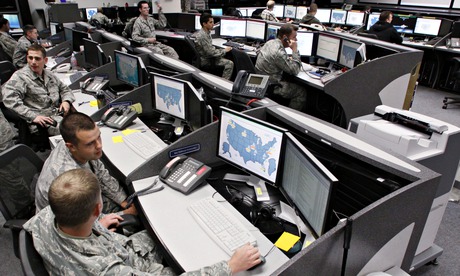
The Air Force Space Command Network Operations & Security Centre in Colorado Springs. ‘The internet has been intensely interesting to armies from its earliest days.’ Photograph: Rick Wilking/Reuters

The last month has been another extraordinary one for cyberspace. Ebay, that internet stalwart and pioneer of digital commerce, whose 120 million active users have over the past 15 years competed for a Virgin Mary toasted cheese sandwich, William Shatner's kidney stones and Michael Phelps's bong has had the personal details and passwords of its entire user base stolen. Meanwhile, the US government has issued federal grand jury indictments against five Chinese military officers for commercial cyber espionage. China reacted angrily calling the charges "fictitious" and "absurd", and denying that the country had ever been involved in digital theft.

Anyone who feels this response is even faintly plausible would do well to consult the exhaustive report on Unit 61398 of the People's Liberation Army, published last year by cybersecurity firm Mandiant. In its 70-odd pages the report builds a detailed and fascinating picture of this Chinese cyber crack commando unit tasked with stealing secrets from commercial and military targets abroad: its infrastructure, tools, tactics, base, and even some of the individuals involved, one of whom was identified because he used his computer skills to circumvent China's Facebook ban (a political irony that is unlikely to have escaped his superiors).

Far from absurd and fictitious, state-led cyber espionage is perfectly logical and real. By its very nature, cyberspace was always bound to be an irresistible magnet for spies and criminals. The internet is a decentralised data network that generates information on an unimaginable scale, accessible through relatively cheap hardware and easily acquired skills. It is the land of milk and honey for those whose business is acquiring what others want to keep from them. Behind the facade of spies and thieves lurks a deeper, far more frightening threat to the integrity of the world wide web. Originally conceived of as a military network in the 1960s, the internet has been intensely interesting to armies from its earliest days.

Pentagon in a jam? Time for a review


Defense Secretary Chuck Hagel issued his latest review on Thursday. | AP PhotoClose
By PHILIP EWING | 6/1/14

Defense Secretary Chuck Hagel’s go-to weapon system is not found on any base, in any hangar or aboard any ship. It’s a review.

If he gets word of problems with the Defense Department’s health system — it’s under review. If he wants to change the composition of the world’s mightiest military force, there’s a review. If he needs to determine how a black female soldier may wear her hair — that takes a review. And they better be “comprehensive,” going from “soup to nuts.” They had better solicit input from all the “key stakeholders.”

In the meantime, sorry, the secretary cannot comment on it until the reviews are complete.

Hagel issued the marching orders for his latest review on Thursday, this time to help him decide what, if anything, to do about DOD’s health system. The Department of Veterans Affairs is under significant political pressure following the embarrassing revelations from its review, so Hagel wants to look inside DOD’s own roughly 56 hospitals to be sure there aren’t similar problems lurking there.


“This is part of leadership and oversight to assure — and constantly assure, and reassure our people that we are doing what we need to do in order to fulfill a commitment we made to them in health care,” he told reporters.

Since he became secretary, Hagel has ordered reviews of the military’s force structure, judicial system, nuclear enterprise — including both nuclear weapons and the Navy’s nuclear warships — its ethics and “professionalism,” base security and security clearances, the rising number of military sexual assaults, the Army’s new uniform and appearance standards, medals and awards and now the health system.

The military services run still more of their own reviews. What about the Marines’ new amphibious vehicle? What about the Navy’s new small surface combatant? What about the Army’s new camouflage pattern?

SEA POWER MATTERS: A PERSONAL THEORY OF POWER


This essay by LCDR BJ Armstrong is part of the Personal Theories of Power series, a joint Bridge-CIMSEC project which asked a group of national security professionals to provide their theory of power and its application. We hope this launches a long and insightful debate that may one day shape policy.

This is offered not as a personal dogma, or a theory of overall power, but instead as some general thoughts on a specific element of national power: sea power.

“The Navy, within the Department of the Navy, shall be organized, trained, and equipped primarily for prompt and sustained combat incident to operations at sea.”

— Title 32, Code of Federal Regulations

It shouldn’t surprise any of us that combat at sea is the focus of the United States Navy. It seems perfectly rational. This focus, codified in law and embraced by recent tradition, results in a view of sea power that skews toward the wartime, both the operational and tactical. Over the past century this has resulted in a slow migration away from the true meaning of the word. “Sea power” has lost the broad political, diplomatic, and economic meaning and the importance that it once had, shifting away from its true and proper place in strategic affairs.

Inspiration and Foundation

Uniformed and civilian senior leaders are not solely responsible for this shift. Strategists, with a broad definition of the label, share a hand in the shift as well. The Clausewitzians and devotees of Sun Tzu have come to dominate the foundations of strategic thought in the 21st century. There is no doubt that the writings of these thinkers offer a great deal to inform military affairs today. There are, however, some issues with using the texts of the Prussian General and the Chinese courtier as baselines for modern views of strategy. In doing so, we take continentalist views of the relationships between states and military force and attempt to apply them to a globalized world.

The migration of sea power toward the operational and tactical, and the attempts to connect it to continentalist strategic ideals, can be seen partially in the rise in popularity of Sir Julian Corbett’s Some Principles of Maritime Strategy. As Alfred Thayer Mahan’s influence has declined Corbett’s has grown and is commonly cited as more “relevant” by naval officers today. Surely, part of this has to do with the simple fact that Corbett wrote more clearly than Mahan did. It also must be stated that one book is not illustrative of the entirety of the British lawyer and lecturer’s thinking on sea power. However, the tendency within Corbett’s book to focus toward operational issues, or the “grammar” of naval strategy, allows it to appeal to a more practically minded, combat centric officer corps.

AMPHIBIOUS POWER: A PERSONAL THEORY OF POWER


This essay is part of the Personal Theories of Power series, which asked a group of national security professionals to provide their theory of power and its application. We hope this launches a long and insightful debate that may one day shape policy.

The two giants of sea power theory, Alfred Thayer Mahan and Sir Julian Corbett, both touched on amphibious operations but both are properly considered sea power theorists. Mahan disliked amphibious operations, declaring that they were “harder to sustain than to make.” He judged them dangerous to those forces extended ashore and that this danger outweighed their potential benefit. In Mahan’s cost-benefit analysis of amphibious operations, they were a waste of resources. Mahan viewed the sea power side of the equation as decisive.

Corbett, however, was more of a fan. Corbett thought that naval forces could rarely be decisive on their own and thus need the ability to project land forces ashore to achieve a decision. But, amphibious forces are dependent on naval forces for protection from enemy naval forces, supply and sustainment, and fire support. For Corbett, the land power side of the equation is decisive.

A little known theorist came down right in the middle. Lieutenant Colonel Earl “Pete” Ellis, USMC, wrote about naval and amphibious strategy in the early 20th Century, including the Marine Corps’ contribution to War Plan Orange, Advanced Base Operations in Micronesia. Ellis viewed amphibious power as a symbiotic relationship between land and sea power. Expeditionary land forces are dependent on naval forces for the necessary sea control, transport, sustainment, and fire support. Naval forces are dependent on those land forces to secure key littoral terrain for protection and to secure forward supply bases. In the course of this analysis, he identified the need for specialized, task-organized amphibious forces that could fill this niche, especially since amphibious assaults were becoming far more difficult in the face of modern artillery and machine guns. Since the focus of all of his writings was on those amphibious forces and their uses, he is perhaps the only amphibious power theorist in history. For Ellis, the mutually reinforcing symbiosis of land and sea power was decisive. He was proved correct during World War II: the US Navy could not strike at the heart of the Imperial Japan without seizing lodgments across the Pacific and Marine and Army forces could not seize those lodgments without Navy transportation, support, and sea control.

In Colin S. Gray’s Theory of War Taxonomy, this theory of amphibious power falls into a category along with Mahan, Douhet, and Schelling. It is clearly not a general theory nor is it a general theory of a domain as it exists at the confluence of land, sea, and air. It does explain “how a particular kind or use of a military power strategically affects the course of conflict as a whole.” A brief look at history illuminates this point.

The Influence of Amphibious Power on History

A few examples from history suffice to illustrate the timeless nature of amphibious power. The first occurred early in the Peloponnesian War. Sparta began the war dominant on land, while Athens was dominant at sea. While Spartan land power allowed her to ravage the fields before Athens herself, Athenian fleets plied the waters of the Mediterranean. In 425 BC, Thucydides landed a fleet at Pylos in Spartan-controlled territory. The fighting that occurred at Pylos and the offshore island of Sphacteria eventually led to the defeat and capture of about 300 Spartan hoplites by Athenian expeditionary forces. Land power and sea control did not lead directly to strategic effect, but the use of sea power to project land power to defeat and capture Spartan hoplites shocked the Greek world and led directly to the Peace of Nicias. The Athenians subsequently botched the peace and thus squandered the strategic effect garnered, but they would not have had the opportunity at all if not for the use of amphibious power.

CIMSEC’S NEW OFFICERS

The officers club in CIMSEC’s tropical island fortress.


The competition was fierce, the candidates outstanding, and the bribes somewhat disappointing.

Congratulations to CIMSEC’s new officers! You can read more about the candidates and their goals here.

President: Scott Cheney-Peters
Vice President: Chris Rawley
Director of Online Content: Matt Hipple
Director of External Affairs: Emil Maine
Director of Operations: Will Yale
Director of Social Media: Paul Pryce
Director of Membership: Matt Merighi
Director of Publications: James Bridger
Treasurer: Bret Perry
Secretary: Mike Carroll

Chapter Presidents:
San Diego, USA: Jeff Anderson
Central Florida, USA: Erek Sanchez
Hampton Roads, USA: Vic Allen
Washington, DC, USA: Scott Cheney-Peters
New York City, USA: Will Allen
UK: Chris Stockdale-Garbutt
New Caledonia: Alix Willemez
Egypt: Elsayed Agrama
India: Himanil Raina

If you’re interested in learning about the roles/responsibilities of Associate Editor, Associate Social Media Director, or Chapter President of an area not listed above, send me an email at director@cimsec.org.

As always, if you have any ideas on how we can make the organization better or would like to help out our all-volunteer effort in any other way, let us know!

NUCLEAR WEAPONS: A PERSONAL THEORY OF POWER


This essay is part of the Personal Theories of Power series, a joint Bridge-CIMSECproject which asked a group of national security professionals to provide their theory of power and its application. We hope this launches a long and insightful debate that may one day shape policy.

Matthew Hallex and Bruce Sugden are defense analysts in Northern Virginia. Their opinions are their own and do not represent those of their employer or clients.

Harold Winton suggests “strategic theory has one foot in reality and another in concepts.”[1] Strategic thinking about nuclear weapons, as practiced in the United States, certainly has one foot in concepts, but its grounding in reality is much shakier. Nuclear thinkers had no data-rich nuclear history to work from and so they built their theory upon deductive models. The result is a body of thought that reflects less an understanding of the worth of nuclear weapons for military practitioners than a collection of elegant models and American preferences that are confused with universal truths. In addressing the topic of nuclear weapons and strategy, we attempt to offer not a novel construct for thinking about nuclear weapons, but to highlight some of the shortcomings of the dominant approach to thinking about strategy and nuclear weapons and to suggest some guideposts to improve strategic thinking.

What’s the use of strategic theory?

Strategic theory should assist the strategist in formulating an effective strategy and should shed light on the proper use of force.[2] The primary take-away a strategic theory should offer the military practitioner is not a collection of lessons that will lead to victory, but, as Frans Osinga stated in his study of John Boyd’s strategic thinking, an illumination of guideposts or “things that need thinking about. It must provide insight and questions, not answers.”[3] This echoes Clausewitz’s observation that theory is a guide to self-education.[4] It is about creating the proper cast of mind to think about the use of force in a particular strategic environment and to consider the relationships between ends, ways, and means within that context.

What is wrong with the dominant U.S. approach to thinking strategically about nuclear weapons?

Lawrence Freedman makes a useful distinction between strategists and the group of “nuclear specialists” who arose in the early days of the Cold War when the insights of classical strategy seemed inadequate to the challenge posed by nuclear weapons.[5] These specialists developed nuclear thought into a technical discipline that relied on deductions and models and grew insensitive to the operational and political challenges of nuclear use — the challenges that a strategic theory must address if it is to be useful for practitioners.

The escalation ladder is one example of the work of nuclear specialists. While the 44 rungs of Herman Kahn’s ladder, covering all states of conflict from peace to Armageddon, has value as an analytical heuristic, its value for military practitioners is less clear. As Colin Gray points out “because one can conceive of thresholds for thought, it does not follow that those thresholds in fact exist. An escalation ladder, in the minds of a harassed policy maker, may offer an illusion of control…that is likely to be negated by the systemic nature of conflict. In the mind of the adversary, some of the rungs may be missing.”[6]

The Private Space Industry 2050-2100 Report Released

Posted on May 13, 2014 by Ben Blutrich

Wikistrat is pleased to release the final report from its recently concluded crowdsourced simulation “The Private Space Industry 2050-2100.”

Nation-states have to date dominated the exploration – and exploitation – of space, even as private companies had involvement all along. As private companies (both old and new) expand the scope of their operations – and ambitions – across this century, some observers compare the expected growth of the private space industry to that seen by commercial air travel and logistics across the past century. In that trajectory, it took roughly a half-century of experimentation and “boot-strapping” to achieve the modern industry that we now take for granted.

Early this year, Wikistrat ran a fourteen-day simulation in which over 75 analysts from around the world collaboratively explored the nature of the private space industry (PSI) in the second half of the 20th Century. Will its activities be similar to those of today (primarily selling goods and services to governments and quasi-government organizations), or will multiple entrepreneurs be operating new businesses in space? Will operations beyond Earth’s orbit be like they are today (confined to expeditions financed by a decreasing scientific budget), or will profitable firms operate on the moon and beyond?

The simulation’s summary report, compiled by Dr. Bruce Wald, synthesizes over 35 trajectories for a variety of existing and future companies collaboratively explored by over 75 Wikistrat analysts.

Click here to download the PDF file of this report.
This entry was posted in Simulation Summaries. Bookmark the permalink.

Parameters Spring 2014


Spring 2014, Vol. 44 No. 1


Special Commentary The New Cold War
by Michael G. Roskin

On Military Interventions Options for Avoiding Counterinsurgencies
by David H. Ucko and Robert C. Egnell

by Stephen Watts and Stephanie Pezard

Challenges for Pacific Command

by Andrew Scobell and Mark Cozad

Reconsidering Future War

by Michael Evans

Reserve Components: Point-Counterpoint

by James D. Campbell

by James "Rick" Morrison

DEPARTMENTS


Review Essays
by Ulrike Esther Franke
by W. Andrew Terrill

Predicting War
Strategic Flexibility
Urban Fighting
World War II
The Civil War

If you would like to be notified by e-mail when the next issue of Parameters is available online, click here.