How a fanatical militant group grew to terrorize Africa’s most-populated country.
June 6, 2014
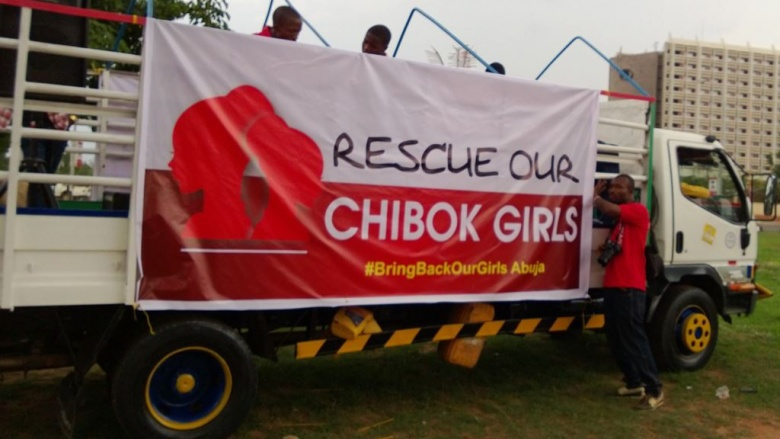
Boko Haram appeared in the consciousness of most Westerners for the first time in April of this year. But the group is not a new arrival on the scene. It has been a growing force in Nigeria for over a decade and has deep roots in the country’s social development going back even further. Its rise is not an accident and signals the emergence of a dangerous, militant religious movement that threatens Nigeria’s survival as a nation-state.
Boko Haram’s story begins with a preacher named Mohammed Marwa, born in 1927. At about age eighteen, he moved to Kano, in what is today northern Nigeria, and began a career as a preacher. His sermons were extreme and often bizarre. He raged against Western culture and its popularity in Nigeria so virulently that he became known as Maitatsine, meaning “The one who damns.” He declared that reading any book other than the Koran was sinful and a sign of paganism. This included a prohibition on reading the Hadiths or Sunnah, the doctrinal equivalent of a Catholic Priest telling parishioners not to read the works of St. Augustine because they do not appear in the Bible. Near the end of his life, he came dangerously close to declaring that he, not Muhammad, was Allah’s true prophet.
At first, Maitatsine was ignored by Nigeria’s political leaders, but as his sermons became increasingly antigovernment in the late 1970s, the government cracked down. The crackdown culminated in an uprising in 1980, where Maitatsine’s followers in Kano began rioting against the government. The city descended into what scholar Elizabeth Isichei described as “virtually civil war.” The death toll from the 1982 riots and subsequent military crackdown was over 4,000 and Maitatsine himself was among those killed.
His movement, however, lived on. Maitatsine’s followers rose up against the government again in 1982 in Bulumkutu and 3,300 people were killed. Two years later, Maitatsine’s followers rose up around Gongola State in violence that killed nearly 1,000 people. Hundreds more were killed a year later in a rising in Bauchi State.
From independence, Nigeria had experienced strife along ethnic and religious lines, but this tension had been the result of different communities fighting over resources and power. In the north, the majority of the population is made of Muslims of the Hausa and Fulani ethnic groups. In the south, the population is predominantly made up of Christians belonging to the Igbo and Yoruba ethnic groups. The fact that the country is nearly evenly divided between Christians and Muslims, and this division closely corresponds to the country’s ethnic and linguistic divisions has been a recipe for political turmoil. But religious fundamentalism has not been a defining characteristic of this strife. Maitatsine’s movement was a sign that the dynamic was changing, and the Islamic fundamentalism that was becoming more prominent in the Middle East in the 1970s was also finding a home in Nigeria.



 Tom Vanden Brook, USA