4 July 2014

The Danger Zone in Naval Arms Races

July 03, 2014

China’s naval advantages are wasting assets, giving Beijing ever more reason to seize the initiative.
We scribblers are embarking on a phase of our careers that will span the rest of our careers — and far beyond. Namely, centennial retrospectives on the seismic events of the 20th century.

Think about it. Last Saturday marked 100 years since Gavrilo Princip felled Archduke Franz Ferdinand in Sarajevo. The 1914 slaying put an end to the long peace following the Congress of Vienna in 1815. It ushered in 75 years of big events galore, culminating in the fall of the Berlin Wall in 1989. World War I, the Versailles Treaty fight, interwar arms control, World War II, the Cold War, Korea, Vietnam — there will be a regular stream of centennials from now until the Naval Diplomat is well into a second career as zombie pundit!!!

Here’s a Great War retrospective geared not to the assassination of an Austrian archduke but to the Anglo-German naval arms race that helped precipitate war. This story concerns the “danger zone” where the German and British navies found themselves during the years leading up to world war. China and America inhabit such a time of peril today, but with a twist. Hence it’s imperative to look back to look ahead, sifting through history for such guidance as it supplies.

Why did a continental power like Germany go to sea? In part because it coveted its own colonial empire, in part to keep up with the Joneses across the North Sea in Britain, in part because warships are too damn sexy for ambitious powers to pass up. Battleship enthusiast Admiral Alfred von Tirpitz masterminded the Imperial German Navy’s rise to eminence vis-á-vis Great Britain’s Royal Navy. Around the turn of the century, Tirpitz shepherded a series of navy bills through the imperial Reichstag, or parliament, to fund construction of Germany’s first oceangoing battle fleet.

Tirpitz freely confessed that his strategy was to build ships, not attain political or strategic aims. Unsurprisingly, there was a slapdash, after-the-fact character to his rationale for a capital-ship navy. Rather than formulate goals and figure out what kind of fleet would achieve them, he retrofitted strategy to a preconceived fleet design. This was a strategy of widgets.

Here’s the theory, such as it is. Tirpitz seemed to think Germany should point a gun at Britain, manifest in an armored High Seas Fleet, in order to face down Britain and carve out its own “place in the sun” of empire. Yet he seemed to think the gun only needed to be of sufficient caliber to wound the opposing gunman. It need not kill. One suspects Clint Eastwood, Hollywood’s prophet of heavy artillery, would disapprove.

Rather than vanquish a stronger Royal Navy outright, Tirpitz envisioned putting to sea a fleet lethal enough to impose unbearable costs on that foe. In other words, the High Seas Fleet need not win a decisive engagement to accomplish Berlin’s goals. It merely needed the capacity to do heavy damage. If it could take to the seas and batter a stronger opponent — even in defeat — it could cost Britain the naval supremacy that the empire on which the sun never set depended. London, believed the admiral, would become pliant to avoid such a fate. It would accommodate itself to Berlin’s desires, and might even agree to a nautical alliance. Either way, Germany could win without fighting.

The Shifting Sands of Northeast Asia’s Alliances

July 03, 2014

China worries about a potential loss of control over Pyongyang, as Japan and North Korea make nice.
This week will witness two unusual bilateral meetings. The first was held in Beijing as Japan and North Korea continue talks over the investigation of abducted Japanese citizens. The second occurs today in Seoul as Chinese President Xi Jinping makes a rare visit to South Korea before visiting North Korea. While bilateral topics will likely take center stage, issues of mutual concern between the pairs will also factor in. Japan’s new interpretation of collective self-defense will give all parties cause to take notice, while North Korea’s intransigence toward China and recent opening toward Japan is likely a factor in the order of Xi’s visits.

There has been little information as yet from the meetings in Beijing. At the opening, Japan’s head delegate Junichi Ihara said it would “be an important step in resolving the outstanding issues that lie between Japan and North Korea.” Japan brought up Pyongyang’s firing of a short-range ballistic missile this weekend, with North Korea defending itself by saying it did not agree to the U.N. Security Council’s ban on such tests, according to theWall Street Journal. However, given the limited nature of the current negotiations, neither side has much to lose, no matter how the talks pan out. Japan’s Prime Minister Shinzo Abe would simply revert to his hardline approach to North Korea’s insincerity on the negotiations and the constant endangering of regional security through Pyongyang’s nuclear weapons and ballistic missile tests. For North Korea, falling back on its decades-long policy of denouncing Japan as an untrustworthy former colonial power usually plays well at home.

However, the potential upsides to the negotiations are significant. A satisfactory settlement for Japan of the abductees issue would be a political coup for Abe, who this week made significant headway in his attempts tonormalize Japan’s military posture. North Korea reaching a settlement (albeit a minor lift in sanctions and increased aid) would be a clear indication to China that Pyongyang can create more options for itself in the region, and thus less relative dependence on Beijing.

The meeting between Xi and South Korean President Park Geun-hye will also give Japan and North Korea reason to take pause. The Chinese media has been highly critical of Japan’s move this week to change the interpretation of Article 9 of its pacifist Constitution. Both Beijing and Seoul have also expressed outrage at Japan’s recent reinvestigation into the possible South Korean influence behind the 1993 Kono statement, which apologized for Japan’s use of “comfort women” during the Second World War. As Xi signals favoritism to Seoul over Pyongyang during his visit, and the two sides resume free trade agreement talks, Xi may likely use Japan’s colonial past to further stoke anti-Tokyo sentiment, much as he tried to do in March this year when visiting Germany. Experts also expect China and South Korea to find common ground on North Korea. Shi Yinhong, an international relations professor at China’s Renmin University, expects that “During the summit talks, China is expected to guarantee that it will continue to seriously implement U.N. Security Council resolutions and maintain its stern attitude toward North Korea because North Korea sticks to nuclear weapons,” according to an interview with Yonhap News Agency.

*** Who Was Saddam Hussein?

July 3, 2014

By Robert Kaplan

The current disintegration of Iraq makes me reflect on the nature of Saddam Hussein's rule. Beyond the American invasion in 2003, which was the proximate cause of Iraq's current instability, there was something more fundamental, more essential to be considered: the very totality of his regime, which was anarchy masquerading as tyranny. Saddam controlled Iraq as though it were his private prison yard, where he was the warden who could do what he wished with the inmates.

The word suffocating does not begin to describe the atmosphere in Saddam's Iraq as I experienced it. When on occasion I would travel to Iraq and then to Syria in the 1980s it was like coming up for liberal humanist air. For in the Syria of Hafez al-Assad there was only terror in the public space; in Iraq the scent of terror invaded the home. I remember diplomats telling me to watch my step in Baghdad, since if I attracted the attention of the security services, there was little anyone could do to help me.

Indeed, even among tyrants there are distinctions. Some tyrants are worse than others. It is important that we recognize such distinctions. Without them the many intricate details that make up ground-level reality and history become distorted. Lately I have seen writers, who are in favor of intervening in Syria but were opposed to intervention in Iraq, argue that while Saddam was brutal, he wasn't as bad as Bashar al Assad. This is nonsense. Intervening in Syria in 2011 might have made more sense than intervening in Iraq in 2003. I'll admit that. But that does not give anyone the right to distort the internal reality of the two countries.

The argument that the younger al Assad is more brutal than Saddam is based upon the number and nature of the casualties in the ongoing Syrian civil war, which are now in the vicinity of 150,000. Well, in the late-1980s, Saddam killed in the infamous Al-Anfal campaign an estimated 100,000 Kurdish civilians alone. That was but one chapter in a blood-curdling, bestial rule that lasted from the mid-1970s to the beginning of the 21st century. Saddam likely killed tens of thousands during the repression that followed the post-Gulf War I rebellion in 1991. He created a nation of informers and interlocking intelligence agencies that maimed and tortured truly a countless number of victims. He initiated the Iran-Iraq War, which killed hundreds of thousands. The total number of his victims, depending upon how you count, may reach upwards of a million. Saddam was beyond "brutal." The word brutal has a generic and insipid ring to it: one that simply does not capture what Iraq was like under his rule. Saddam was in a category all his own, somewhere north of the al Assads and south of Stalin. That's who Saddam Hussein was.

ISIS Displays Weapons Captured in Iraq

July 3, 2014
Jeremy Binnie

IHS Jane’s Defence Weekly , July 2, 2014

ISIL had one T-62 tank running and another on a transporter for the parade. Source: State of Al-Raqqah

The Islamist State of Iraq and the Levant (ISIL) held a parade in the eastern Syrian city of Al-Raqqah on 30 June to show off weapons captured in Iraq and Syria, including a non-operational ‘Scud’ ballistic missile.
The ‘Scud’ missile that was displayed by ISIL on 30 June. (State of Al-Raqqah)

The missile was on a static launcher that had been put on a trailer so it could be towed through the streets by members of the Sunni radical group, which recently shortened its name to the Islamic State.

The launcher was identical to ones found by insurgents when they overran a facility 80 km to the southeast in February 2013. The facility consisted of a large shed containing at least three such launchers, two of them with missiles, that had been built on top of the site of the nuclear reactor that was destroyed by an Israeli airstrike in September 2007.

While there was speculation at the time that the missiles could be launched through hatches in the shed’s roof, the shorter-range ‘Scud’ missiles found at the site could not reach Israel from that location and the exhaust from the first launch would endanger the other missiles and associated equipment.
One of the M198 howitzers that was captured from the Iraqi Army. (State of Al-Raqqah)

The facility is consequently more likely to have been for training purposes or part of a deception plan to conceal the site’s previous usage from the international community.

The parade also included equipment taken from the Iraqi Army, including several up-armoured Humvees and three M198 howitzers being towed by Oshkosh MTVR vehicles. Similar, if not the same guns and trucks were seen in militant hands in Mosul after the Iraqi Army units in the Iraqi city collapsed on 10 June.

While ISIL will probably struggle to use the guns to deliver accurate indirect fire in support of its forces, it might be able to use them against large area targets for as long as the supply of captured ammunition lasts.

Soviet-origin armour was also displayed in the parade, including two T-62 tanks (one on a transporter), a 2S1 Gvozdika self-propelled howitzer, and a BMP-1 infantry fighting vehicle. These vehicles were probably captured from the Syrian military as Iraq only has a limited quantity of Soviet-origin vehicles in service.

Iraqi Security Forces Chasing ISIS “Sleeper Cells” in Baghdad as Militants Prepare to Attack the Iraqi Capital

July 3, 2014

Iraq chases Baghdad sleeper cells as ‘Zero Hour’ looms over capital

Reuters, July 3, 2014


Members of the Iraqi security forces take their positions during an intensive security deployment west of Baghdad, June 24, 2014.

(Reuters) - Iraqi insurgents are preparing for an assault on Baghdad, with sleeper cells planted inside the capital to rise up at “Zero Hour” and aid fighters pushing in from the outskirts, according to senior Iraqi and U.S. security officials.

Sunni fighters have seized wide swathes of the north and west of the country in a three week lightning advance and say they are bearing down on the capital, a city of 7 million people still scarred by the intense street fighting between its Sunni and Shi’ite neighborhoods during U.S. occupation.

The government says it is rounding up members of sleeper cells to help safeguard the capital, and Shi’ite paramilitary groups say they are helping the authorities. Some Sunni residents say the crackdown is being used to intimidate them.

Iraqis speak of a “Zero Hour” as the moment a previously-prepared attack plan would start to unfold.

A high-level Iraqi security official estimated there were 1,500 sleeper cell members hibernating in western Baghdad and a further 1,000 in areas on the outskirts of the capital.

He said their goal was to penetrate the U.S.-made “Green Zone” - a fortified enclave of government buildings on the west bank of the Tigris - as a propaganda victory and then carve out enclaves in west Baghdad and in outlying areas.

“There are so many sleeper cells in Baghdad,” the official said. “They will seize an area and won’t let anyone take it back… In western Baghdad, they are ready and prepared.”

A man who describes himself as a member of one such cell, originally from Anbar province, the mainly Sunni Western area that has been a heartland of the insurgency, said he has been working in Baghdad as a laborer while secretly coordinating intelligence for his group of Sunni fighters.

The attack on the capital will come soon, said the man, who asked to be called Abu Ahmed.

“We are ready. It can come any minute,” he told Reuters during a meeting in a public place, glancing nervously around to see if anyone was watching.

“We will have some surprises,” he said. He pulled his baseball cap down tight on his face and stopped speaking anytime a stranger approached.

A portly man in his mid-30s wearing a striped sports shirt, the man said he fought as part of an insurgent group called the 1920 Revolution Brigades during the U.S. occupation and was jailed by the Iraqi government from 2007-2009.

He gave up fighting in 2010, tired from war and relatively optimistic about the future. But last year, he took up arms again out of anger at a crackdown against Sunni protesters by the Shi’ite-led government, joining the Military Council, a loose federation of Sunni armed groups and tribal fighters that has since emerged as a full-fledged insurgent umbrella group.

While it was not possible to verify all details of his story, Reuters reporters are confident of his identity.

Like many Sunni fighters, Abu Ahmed is not a member of the al Qaeda offshoot once known as the Islamic State in Iraq and the Levant, and is ambivalent about the group which launched the latest uprising by seizing the main northern city Mosul on June 10 and shortened its name this week to the Islamic State.

Pakistan's Frankenstein

By Karamatullah K Ghori
Published: 01st July 2014 06:00 AM

Old adages have a lot of wisdom. There’s one which says the proof of one’s intelligence is that one learns from the mistakes of others. Ordinary people learn from their own mistakes. But, knaves and fools don’t learn even from their own mistakes.

Pakistan in its tortured history of a deeply divided nation has made some horrible mistakes but hardly learnt any lesson from any of them.

The most grievous national blunder was Pakistan’s truncation in 1971 that birthed Bangladesh as a sovereign state. The tragedy hit Pakistan because of its Bonapartes’ crass appetite to hog national fortunes by manipulating its ethnicity-based politics. The majority Bengalis were treated like pariahs. In the end, they hit back and turned the course of Pakistani history.

Another reason of Pakistan’s humiliating defeat in then East Pakistan, to the Indian Army, was that its military leadership had written off East Pakistan as “indefensible” because it had, in their myopic military sense, no strategic depth. It was argued with conviction by the then military geniuses that the defence of East Pakistan lay not there but in West Pakistan, where conventional battles could be fought on an equal turf and on a winnable terrain.

That same military wisdom was also hooked on the notion that West Pakistan—which came to be known as only Pakistan after 1971—needed the “strategic depth” that neighbouring Afghanistan amply provided to face off a more powerful and better resourced “enemy” India. The Pakistani Bonapartes’ infatuation with Afghanistan’s fabled “strategic depth” was the bedrock that induced Pakistan to nurture the Taliban. It’s conventional wisdom in Pakistan that the ISI was the mother goose that laid the eggs for the Afghan Taliban and then hatched them with care to ensure that once in power in Kabul they’d be all too hospitable to allow Pakistan its coveted “strategic depth” in spades against India.

A second string to the philosophy of strategic depth was husbanding militant armed factions—the Lashkar-e-Taiba and others of its ilk—to operate against India. The military genius of the era argued with conviction that it made all the military sense for terrorist groups of a few hundred armed men to tie down several Indian military divisions in Kashmir. It was deemed a stroke of brilliance—cheap and affordable and garnering handsome dividends in return.

But what the “military genius” hadn’t bargained for was the very distinct possibility that the monster created with canny wisdom could one day turn against its own inventor. And it did, on the heels of 9/11 and the American invasion of Afghanistan that toppled the Taliban there. The new monster of the Pakistani Taliban was spawned, virtually overnight and has been savaging Pakistan ever since, to devastating effect.

The Pakistani leadership, especially its military, is still wary of conceding that the horrendous wages of terrorism exacted by the Taliban in Pakistan—more than 50,000 civilians killed in wanton bloodletting, not to mention at least 7,000 soldiers and officers also killed—is a price that shouldn’t have been paid and was avoidable had there been better military sense prevailing.

That’s where the old adage of knaves not even learning from their own horrible mistakes sticks so aptly. And that’s also where friendly advice from someone knowing you so well becomes so relevant and appropriate.

Pakistanis of all stripes don’t tire of flaunting their decades-old “friendship” with the US. They aren’t wrong in their bragging; the two countries have been tied in military alliances since the early 1950s. So advice from an American “friend” ought to appeal to the Pakistanis. It should have all the more traction with them when the “friend” happens to be Hillary Clinton, who as Obama’s first secretary of state was globally known as the Face of America. She was a frequent traveller to Pakistan and was roundly admired there.

Talking to India’s NDTV, in the glow of media blitz kicked off by her recently published memoirs, Hard Choices, Hillary had some hard and harsh words for her Pakistani friends, and she refused to be diplomatic in dispensing them.

Hillary trashed Pakistan’s archaic doctrine of strategic depth and described it as all wrong. She minced no words in knocking the bottom off it. “Their idea”, talking of Pakistani leaders, “that they have these groups (terrorists) to provide strategic depth, as they like to say, vis-à-vis Afghanistan, or vis-à-vis India, I think if that were ever true, which I doubt, but if that were ever true, it no longer is,” she declared.

And since she has the inside knowledge of what havoc this purblind policy of nurturing forces of extreme radicalism within its fold has wreaked on Pakistan, she saw no reason to hold back on conveying sensible advice to her Pakistani friends by admonishing that “Pakistan should, once and for all, go after extremists, shut down their training camps, their safe havens, (and) madrassas that are incubating suicide bombing behaviour”. True friends offer advice without fear. Hillary sees herself as a friend no longer encumbered by the burden of her old office that could’ve kept her from speaking her mind. So, even at the risk of stepping on the tails of her Pakistani “friends” she drove her point straight to the nub of the problem, which is the banal hangover of the Pakistani Bonapartes, as most independent observers will vouch for, on spawning proxies to engage their “enemy” or “enemies” on more than one front. She savaged the pyrrhic concept of proxies to telling effect. “It’s like keeping poisonous snakes in your backyard expecting they will only bite your neighbour and what we are seeing now is the continuing threat to the State of Pakistan by these very same elements.”

The Pakistani intellectual terra has been excited since Hillary went after the movers and shakers with the scalpel of a surgeon. She, no doubt, zeroed in on the festering sore that has afflicted and brutalised Pakistan for so long. But her intended audience were the makers and wreckers of national fortunes. One wonders how they would react to her candid expose of their ruinous “strategic depth” syndrome. Any sage would tell them—as much as Hillary did—that long-term, real and viable, strategic depth can only come with peace with all your neighbours.

Knowing the minds of the Pakistani military “geniuses” one would’ve to be a gambler to wager on them lending an ear to Hillary, or anyone in her class for that matter. But there’s silver lining on the cloud; the incumbent political leaders of South Asia—PMs Modi and Nawaz—have a saner vision of their countries. They are for peace and harmony. They are listening.

Karamatullah K Ghori is a former Pakistani diplomat.

Why the New Caliphate is Irrelevant

July 03, 2014

And why the idea of a caliph just won’t work.

In a surprising development, the Islamic State of Iraq and the Levant (ISIL) recently renamed itself simply the Islamic State (IS) and announced the reestablishment of the Caliphate, headed by the Caliph Ibrahim, formerly known as Abu Bakr Al-Baghdadi. This would allegedly be the first time a Caliph has been proclaimed since the abolishment of the Ottoman Caliphate in 1924. A Caliph is a person who is, intheory, the political and spiritual leader of all Muslims.
This event has been treated as a major milestone by the media and many in the West, as well as some alarmist figures in Iraq. This is because of the enormous, romanticized emphasis both Islamist and orientalist Western thought have placed on the idea of the Caliphate as the harbinger of golden ages and unity. However, the present announcement of a Caliph will be largely irrelevant, just like the concept has been superfluous throughout most of history.

A brief look at Islamic history reveals that the Caliphate has never been a singular institution and quite often not one that wielded any spiritual or political power. In fact, there has never been a time where the title of Caliph has not been contested. There has never been a Caliphate that has brought political stability and unity to all Muslims.


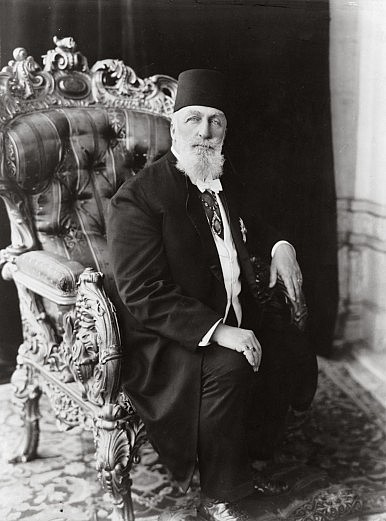
Sultan Abdulmecid II, the last Ottoman Caliph.

After the death of the Prophet Muhammad, his companions ruled the Rashidun Caliphate, which is often touted as the ideal Caliphate by Islamists. However, schism developed even during this Caliphate, and the first three Caliphs were not truly accepted by the followers of the fourth, Ali, son-in-law of the Prophet Muhammad. These followers later became the Shia. Today’s Shia, who account for about a fifth of all Muslims, do not even believe in the concept of the Caliphate, instead holding that spiritual authority is vested in Imams descended from Ali, the last of whom disappeared into occultation a millennium ago.

Ali had frequently fought the family that became the hereditary Umayyad Caliphate after his death. These were in turn overthrown by the Abbasid Caliphate but continued to rule in Spain. In time, the Shia Fatimid Caliphateemerged in Egypt while another Sunni group, the Almohads claimed the same title in Morocco. The Abbasids themselves became puppets from the tenth century onwards, to dynasties with actual power. Indeed, after the Mongols destroyed the Abbasid Caliphate in 1258, the institution lost any meaning. As University of Michigan Professor Juan Cole points out, the term Caliph became a title that any strong ruler could attach to his list of titles, without anyone taking such claims seriously. As such, “sultans or secular emperors sometimes were termed ‘caliphs’ in flowery style by their courtiers.” The Ottoman Sultan was just one such ruler. Simultaneously, the Mughal Emperor also claimed the title, along with various other states, such as the Sokoto Caliphate in West Africa. This goes to show that merely claiming the title of Caliph did not entitle anyone to sole spiritual and political power, nor will it guarantee the survival of anyone’s state.

The Caliphate Fantasy

By KHALED DIABJULY 2, 2014


This story is included with an NYT Opinion subscription.

The jihadist insurgent group ISIS, or as it now prefers to be called, the Islamic State, appears well on the road to achieving its stated goal: the restoration of the caliphate. The concept, which refers to an Islamic state presided over by a leader with both political and religious authority, dates from the various Muslim empires that followed the time of the Prophet Muhammad. From the seventh century onward, the caliph was, literally, his “successor.”

The problem with this new caliphate, which, an ISIS spokesman claimed on Sunday, had been established under Abu Bakr al-Baghdadi, an Islamist militant leader since the early days of the American occupation of Iraq, is that it is ahistorical, to say the least.

The Abbasid caliphate, for example, which ruled from 750 to 1258, was an impressively dynamic and diverse empire. Centered in Baghdad, just down the road from where ISIS is occupying large areas of Iraq, the Abbasid caliphate was centuries ahead of Mr. Baghdadi’s backward-looking cohorts. Abbasid society during its heyday thrived on multiculturalism, science, innovation, learning and culture — in sharp contrast to ISIS’ violent puritanism. The irreverent court poet of the legendary Caliph Harun al-Rashid (circa 763-809), Abu Nuwas, not only penned odes to wine, but also wrote erotic gay verse that would make a modern imam blush.

Centered on the Bayt al-Hikma, Baghdad’s “House of Wisdom,” the Abbasid caliphate produced notable advances in the sciences and mathematics. The modern scientific method itself was invented in Baghdad by Ibn al-Haytham, who has been called “the first true scientist.”

With such a proliferation of intellectuals, Islam itself did not escape skeptical scrutiny. The rationalist Syrian scholar Abu’l Ala Al-Ma’arri was an 11th-century precursor of Richard Dawkins in his scathing assessments of religion. “Do not suppose the statements of the prophets to be true,” he thundered. “The sacred books are only such a set of idle tales as any age could have and indeed did actually produce.”

It is this tolerance of free thought, not to mention the supposed decadence of the caliph’s court, that causes Islamist radicals to hark back to an earlier era, that of Muhammad and his first “successors.” But even these early Rashidun (“rightly guided”) caliphs bear little resemblance to jihadist mythology. Muhammad, the most “rightly guided” of all, composed a strikingly secular document in the Constitution of Medina. It stipulated that Muslims, Jews, Christians and even pagans had equal political and cultural rights — a far cry from ISIS’ punitive attitude toward even fellow Sunnis who do not practice its brand of Islam, let alone Shiites, Christians or other minorities.

How did this ideological fallacy of the Islamist caliphate come about?

In the late 19th century, Arab nationalists were great admirers of Western societies and urged fellow Muslims, in the words of the Egyptian reformer Rifa’a al-Tahtawi, to “understand what the modern world is.” Many not only admired Europe and America but also believed Western pledges to back their independence from the Ottoman Empire.

The first reality check came when Britain and France carved up the Middle East following World War I. Disappointed by the old powers, Arab intellectuals still held out hope that the United States, which had not yet entered Middle Eastern politics in earnest, would live up to its image as a liberator.

But after World War II, America filled the void left by France and Britain by emulating its imperial predecessors. It avoided direct rule but propped up a string of unpopular autocrats. This resulted in an abiding distrust of Western democratic rhetoric.

Then there was the domestic factor. The failure of revolutionary pan-Arabism to deliver its utopian vision of renaissance, unity and freedom led to a disillusionment with secular politics. At the same time, the corruption and subservience to the West of the conservative, oil-rich monarchs turned many Arabs against the traditional deferential model of Islam.

From Arab Spring to Arab Summer


Three and a half years ago, the world was riveted by the massive crowds of youths mobilizing in Cairo's Tahrir Square to demand an end to Egypt's dreary police state. We stared in horror as, at one point, the Interior Ministry mobilized camel drivers to attack the demonstrators. We watched transfixed as the protests spread from one part of Egypt to another and then from country to country across the region. Before it was over, four presidents-for-life would be toppled and others besieged in their palaces.

Some 42 months later, in most of the Middle East and North Africa, the bright hopes for more personal liberties and an end to political and economic stagnation championed by those young people have been dashed. Instead, a number of Arab countries have seen counter-revolutions, while others are engulfed in internecine conflicts and civil wars, creating Mad Max-like scenes of post-apocalyptic horror. But keep one thing in mind: the rebellions of the past three years were led by Arab millennials, twentysomethings who have decades left to come into their own. Don't count them out yet. They have only begun the work of transforming the region.

Given the short span of time since Tahrir Square first filled with protesters and hope, care should be taken in evaluating these massive movements. During the Prague Spring of 1968, for instance, a young dissident playwright, Vaclav Havel, took to the airwaves on Radio Free Czechoslovakia and made a name for himself as Soviet tanks approached. After the Russian invasion, he would be forbidden to stage his plays and 42 months after the Prague Spring was crushed, he was working in a brewery. Only after the fall of the Berlin Wall in 1989 would he emerge as the first president of the Czech Republic.

Three and a half years into the French Revolution, the country was only months away from the outbreak of a pro-royalist Catholic peasant revolt in the Vendée, south of the Loire Valley. The resulting civil war with the republicans would leave more than 100,000 (and possibly as many as 450,000) people dead.

Preparing the Way for a New Arab Future

A Rogue State Along Two Rivers

How ISIS Came to Control Large Portions of Syria and Iraq


By JEREMY ASHKENAS, ARCHIE TSE, DEREK WATKINS and KAREN YOURISH July 3, 2014

The militant group called the Islamic State in Iraq and Syria seemed to surprise many American and Iraqi officials with the recent gains it made in its violent campaign to create a new religious state. But the victories achieved in the past few weeks were built on months of maneuvering along the Tigris and Euphrates Rivers, which define a region known as the cradle of civilization.

The Euphrates

Aleppo: Ejected by Other Rebel Groups 

In 2013, ISIS emerged from the remnants of Al Qaeda in Iraq and began to operate in Syria. The vacuum created by the country’s civil war provided a place for ISIS to rebuild. Syrian rebel groups initially welcomed ISIS as an ally, but soon realized that they did not have the same goals. ISIS was more interested in forming an Islamic state than in toppling the Syrian government — and had no problem with killing other insurgents to make it happen. These tensions culminated in a revolt against ISIS. The group was driven out of Aleppo, Syria's largest city, in January by the other rebels groups.

Full Article Click Here

Ukraine Totally Revamps Top Leadership of Defense Ministry

  1. July 3, 2014

    Ukraine President Appoints New Defense Officials

    Associated Press

    July 3, 20145

    KIEV, Ukraine — Ukraine’s president has appointed new officials to top defense posts as he pledged to stamp out the corruption that has left the country’s armed forces faltering before a pro-Russian insurgency.

    A statement published online late Wednesday announced the appointments of Col.Gen. Valery Heletey as defense minister and Lt.Gen. Viktor Muzhenko as chief of the military’s General Staff.

    Poroshenko also appointed Yury Kosyuk, an agriculture magnate and one of Ukraine’s richest men, to oversee defense issues in the presidential administration, and promised to “purge the army of thieves and grafters.” Accusations of corruption have been rife as Kiev’s operation against the rebels continues.

    Kiev has struggled to assert control over the country’s industrial east, where fighting between government troops and pro-Russia separatists has claimed more than 400 lives since April.

Ukrainian Troops Recapture Key Border Crossing From Pro-Moscow Separatists

Alex Lun
July 2, 2014
Ukraine retakes border crossing from rebels as Poroshenko goes on attack

A pro-Russian APC moves along a street in Donetsk on Tuesday. Fighting in eastern Ukraine resumed hours after president Petro Poroshenko declared an end to a ceasefire. Photograph: EPA
Kiev forces claimed their first victories in Petro Poroshenko's renewed offensive against pro-Russian rebels in eastern Ukraine on Tuesday, taking back a key border crossing and three villages.

Ukrainian troops hit rebel positions with artillery and air strikes after the president declared an end to the ceasefire on Monday night, according to the defence ministry. But limited progress around rebel strongholds suggested the campaign would be a protracted one despite government forces’ new vigour.

Poroshenko congratulated his troops and border guards after they retook the major Dolzhansk border crossing in the Luhansk region, according to his press service. The president had pledged to re-establish control of Ukraine’s border with Russia, which Kiev has long complained is a leaky sieve for weapons and men from its larger neighbour.

In a televised address late on Monday night, Poroshenko said he would not extend the ceasefire that both sides have accused each other of violating and promised to “attack and liberate our land” from “terrorists, rebels, looters”. The president has been under pressure from officials and from the general population to take more decisive action in eastern Ukraine, with hundreds protesting against the ceasefire outside the presidential office on Sunday.

In remarks to a group of Russian ambassadors on Tuesday, Vladimir Putin condemned Poroshenko’s declaration of an end to the ceasefire and new attacks against the rebels.

"Unfortunately, President Poroshenko decided to renew military actions, and we – I mean myself and my colleagues in Europe – couldn’t convince him that the road to reliable, stable and long-term peace can’t lie through war,” the Russian president said.

He also accused the west of wielding Ukraine in a cold war-style policy of containment against Russia.

"We should clearly understand that the events provoked in Ukraine have become the essence of the proverbial politics of containment," he said.

"Let me stress that what has happened in Ukraine is the culmination of negative tendencies in global affairs and they have been accumulating for years," he added.

Noam Chomsky: Our Govt. Is Capable of Creating Total Catastrophe for Humankind

America's real foreign policy exposed.
July 1, 2014 | 

To stay on top of important articles like these, sign up to receive the latest updates from TomDispatch.com here.

The question of how foreign policy is determined is a crucial one in world affairs. In these comments, I can only provide a few hints as to how I think the subject can be productively explored, keeping to the United States for several reasons. First, the U.S. is unmatched in its global significance and impact. Second, it is an unusually open society, possibly uniquely so, which means we know more about it. Finally, it is plainly the most important case for Americans, who are able to influence policy choices in the U.S. -- and indeed for others, insofar as their actions can influence such choices. The general principles, however, extend to the other major powers, and well beyond.

There is a “received standard version,” common to academic scholarship, government pronouncements, and public discourse. It holds that the prime commitment of governments is to ensure security, and that the primary concern of the U.S. and its allies since 1945 was the Russian threat.

There are a number of ways to evaluate the doctrine. One obvious question to ask is: What happened when the Russian threat disappeared in 1989? Answer: everything continued much as before.

The U.S. immediately invaded Panama, killing probably thousands of people and installing a client regime. This was routine practice in U.S.-dominated domains -- but in this case not quite as routine. For first time, a major foreign policy act was not justified by an alleged Russian threat. 

Instead, a series of fraudulent pretexts for the invasion were concocted that collapse instantly on examination. The media chimed in enthusiastically, lauding the magnificent achievement of defeating Panama, unconcerned that the pretexts were ludicrous, that the act itself was a radical violation of international law, and that it was bitterly condemned elsewhere, most harshly in Latin America. Also ignored was the U.S. veto of a unanimous Security Council resolution condemning crimes by U.S. troops during the invasion, with Britain alone abstaining. 

All routine. And all forgotten (which is also routine).

From El Salvador to the Russian Border

The administration of George H.W. Bush issued a new national security policy and defense budget in reaction to the collapse of the global enemy. It was pretty much the same as before, although with new pretexts. It was, it turned out, necessary to maintain a military establishment almost as great as the rest of the world combined and far more advanced in technological sophistication -- but not for defense against the now-nonexistent Soviet Union. Rather, the excuse now was the growing “technological sophistication” of Third World powers. Disciplined intellectuals understood that it would have been improper to collapse in ridicule, so they maintained a proper silence.

The U.S., the new programs insisted, must maintain its “defense industrial base.” The phrase is a euphemism, referring to high-tech industry generally, which relies heavily on extensive state intervention for research and development, often under Pentagon cover, in what economists continue to call the U.S. “free-market economy.” 

One of the most interesting provisions of the new plans had to do with the Middle East. There, it was declared, Washington must maintain intervention forces targeting a crucial region where the major problems “could not have been laid at the Kremlin’s door.” Contrary to 50 years of deceit, it was quietly conceded that the main concern was not the Russians, but rather what is called “radical nationalism,” meaning independent nationalism not under U.S. control.

All of this has evident bearing on the standard version, but it passed unnoticed -- or perhaps, therefore it passed unnoticed.

THE ROLE OF US LAND FORCES IN THE ASIA-PACIFIC – ANALYSIS

By Kimberly Field and Stephan Pikner NDU Press
Soldiers dismount from Stryker vehicle during Foal Eagle 2012 as part of Combined Arms Live Fire Exercise at Rodriguez Range Complex, South Korea (U.S. Army) 

Even as turmoil continues to mark the Middle East, the long-term trends in global security matters are increasingly focused on the Asia-Pacific and China. Indeed, for the structural realists who believe the distribution of power between states is the root of why states do what they do and the primary driver for conditions of peace and war, the rise of China is principal on the security landscape. In contrast, the efforts of the past decade have reduced terrorism to the status of a gnat that the United States will keep chasing around the globe.

While China will not soon surpass the United States as the global diplomatic, military, economic, and soft power leader, its rise is undeniable. In contrast to the stark U.S.–Soviet Union dichotomy, the relationship between America and China has remained more interwoven, complex, and fluid. While the ideological differences between the United States and Soviet Union manifested themselves in the economic, military, and cultural domains, the U.S.-China relationship is a mix of cooperation and competition that requires balance and integration of efforts across all dimensions of national power. Executed poorly, missteps in one area could significantly damage American interests elsewhere; executed well, the relationship could grow into a mutually beneficial one in which “a rising tide lifts all boats.”1

China’s decades of rapid economic growth have underwritten a surge in military modernization, regional assertiveness, and global activity. The People’s Liberation Army (PLA) has taken lessons from the U.S. military’s logistical, tactical, and operational dominance displayed during Operation Desert Storm in 1991, the shock of being unable to deal with the deployment of U.S. Navy aircraft carriers into the Taiwan Straits in 1996, and the performance of Western coalition airpower against Serbian air defenses in Kosovo in 1999.2 These lessons have spurred modernization focused on countering American power projection platforms and their associated communications and surveillance infrastructure. Highly advanced antiship ballistic missiles (ASBMs), coupled with antisatellite weapons and cyberwarfare capabilities, present a serious threat to the U.S. military’s ability to defend its allies and interests. In addition to this military buildup, the reduced American military presence in the Pacific due to wars in Iraq and Afghanistan has coincided with the escalation of longstanding disputes between China and its neighbors regarding the sovereignty of various islands (and their associated maritime exclusive economic zones). These actions have taken China’s neighbors, many of them U.S. allies, aback.

China’s global activity is less overtly aggressive but is increasingly felt. Its veto power on the United Nations (UN) Security Council has limited collective security action against autocratic regimes in Sudan, Syria, and Iran. The growing economy’s insatiable appetite for raw materials and energy has pushed Chinese corporations far afield in search of resources. Africa, in particular, but also South America, the Arctic, and Central Asia, have been popular destinations for investment in research and resource extraction. Chinese-funded improvements in foreign ports (the “string of pearls”) have increased, and these ports can have naval significance.3

The Real American Foreign Policy


The “security” in national security means not the security of the American people but of those who run the national security state. A look at how Washington protects itself and the corporate sector.

The question of how foreign policy is determined is a crucial one in world affairs. In these comments, I can only provide a few hints as to how I think the subject can be productively explored, keeping to the United States for several reasons. First, the U.S. is unmatched in its global significance and impact. Second, it is an unusually open society, possibly uniquely so, which means we know more about it. Finally, it is plainly the most important case for Americans, who are able to influence policy choices in the U.S.—and indeed for others, insofar as their actions can influence such choices. The general principles, however, extend to the other major powers, and well beyond.

There is a “received standard version,” common to academic scholarship, government pronouncements, and public discourse. It holds that the prime commitment of governments is to ensure security, and that the primary concern of the U.S. and its allies since 1945 was the Russian threat.

There are a number of ways to evaluate the doctrine. One obvious question to ask is: What happened when the Russian threat disappeared in 1989? Answer: everything continued much as before.

The U.S. immediately invaded Panama, killing probably thousands of people and installing a client regime. This was routine practice in U.S.-dominated domains—but in this case not quite as routine. For first time, a major foreign policy act was not justified by an alleged Russian threat.

Instead, a series of fraudulent pretexts for the invasion were concocted that collapse instantly on examination. The media chimed in enthusiastically, lauding the magnificent achievement of defeating Panama, unconcerned that the pretexts were ludicrous, that the act itself was a radical violation of international law, and that it was bitterly condemned elsewhere, most harshly in Latin America. Also ignored was the U.S. veto of a unanimous Security Council resolution condemning crimes by U.S. troops during the invasion, with Britain alone abstaining.

Strategic Himalayas: Republican Nepal and External Powers

Publisher: Pentagon Press
ISBN 978-81-8274-761-6
Price: Rs. 995 [Download E-Book]
About the Book

The ten years of Maoist insurgency followed by the political vacuum after the abolition of the monarchy and the delay in the drafting of the Constitution has given credence to the role of external powers in shaping the domestic politics in that country. The book examines the nature of external powers’ role during the political transition in Nepal since 2006. It analyses Nepal’s relations with external powers’ in the framework of ‘small and major powers’.

The book tries to explore the nature of their engagements by discussing the strategic significance of Nepal in regional power politics and the latter’s response to it. In the absence of any in-depth scholarly work thus far, the book tries to fill the gap by addressing the following questions: Is Nepal going to face a new round of strategic competition in the Himalayas? Has there been any visible change in China’s relationship with Nepal after the end of the monarchy? How does the US look at the political transition in Nepal? What is the strategic relevance of Nepal for major European countries? How will India balance the Chinese and US presence in Nepal? Does Nepal figure in Pakistan’s Look East Policy to counter-balance India’s Look West Policy? How will Nepal deal with the competing strategies of the major powers—regional and extra-regional?
Contents

GAO LAUNCHES REVIEW OF CYBER COMMAND MISSION, INTERAGENCY COORDINATION

July 2, 2014
Daily News
GAO Launches Review of Cyber Command Mission, Interagency Coordination


The Government Accountability Office has begun investigating how well U.S. Cyber Command — which has focused on developing forces to blunt attacks against national critical infrastructure — has defined its mission, and how well it is coordinating with other federal agencies involved in cyber operations.

The House Armed Services Committee included a provision requiring the assessment in the version of the fiscal year 2015 defense authorization bill approved last month by the House. The Senate has not yet passed its companion bill.

“Consistent with our Congressional Protocols, GAO is beginning this work in response to a congressional mandate,” GAO wrote in a June 20 weekly activity report that was distributed on June 27 by the Defense Department inspector general’s office.

The GAO report, due March 31, 2015, would review CYBERCOM’s organization, mission, structure and authorities; its operational relationship with the Defense Department’s combatant commands; and whether “effective coordination mechanisms” have been established between the command and other federal agencies that have a role in cyberspace operations.

GAO plans to reach out to multiple stakeholders, including the Office of the Secretary of Defense, the Pentagon’s policy chief, DOD’s chief information officer, the armed services, U.S.

Strategic Command, U.S. Cyber Command, the combatant commands, the Defense Information Systems Agency, the National Security Agency, the Department of Homeland Security and the Justice Department, among other organizations.

Last summer, Rand Beers, then DHS’ acting No. 2 leader, testified before Congress that DHS, DOD and DOJ had agreed to clarify their “cyber jurisdiction” roles.

*** Cyber tools are no substitute for human intelligence

America can keep on playing with its technological toys despite the reality that is slapping it in the face. In Israel the price of making mistakes is much higher.

By Gabi Siboni | Jul. 2, 2014 | 

Israeli soldiers using computers.

The IDF's battle against terrorism also means soldiers using computers - but this does not suffice to thwart every attack. Photo by Moti Milrod

In recent years, the use of cyber tools has taken a central and sometimes exclusive role in the work of many intelligence agencies throughout the world. The documents exposed by Edward Snowden show how willing the Americans are to invest in technological systems to collect information and gather as much intelligence as they can using cyber tools. This almost exclusive reliance on the collection and analysis of intelligence using technology comes at the expense of the human element as a basic component of intelligence-gathering.

Israel’s intelligence community is also conducting a technological race. The agencies have diverted intelligence-gathering resources to cyberspace at the expense of human intelligence-gathering, on the assumption that most of the information there is available and the main challenges are the accessibility of information and the technology of gathering, analysis and use of the relevant intelligence it contains. The transition to such tools also owes its existence to pressure from the industries that develop advanced technologies and want to sell their products.

Unfortunately, reality is not cooperating with this phenomenon, and the kidnapping of Gilad Shaar, Naftali Fraenkel and Eyal Yifrah should serve as a warning signal. This was a planned operation that was carried out under the cybernetic radar of the security agencies, which had difficulty putting together a relevant picture of the situation.

Like Israel, the United States is also having difficulty coping with organizations that keep a low cyber profile. The Islamic State (known until recently as ISIS) works with knives and rifles, leaving American intelligence with its sophisticated technology capabilities yet unable to sketch out a precise and profound picture of the complex reality in the Middle East. We cannot assume that the kidnappers and members of the Islamic State are ignorant of technology. It is more likely that they are well aware of the limitations of technology and work cleverly to minimize their exposure.

The intelligence agencies need to stop and reexamine their quest for the magical solutions of cyber tools. The accomplishments in the war on suicide terror a decade ago were the result of a balance between technology and the human element – a balance that has been broken in recent years.

Not everything that is appropriate in America is appropriate in Israel. America can keep on playing with its technological toys despite the reality that is slapping it in the face, while in Israel the price of making mistakes is much higher.

Army Doctrine on Geospatial Engineering


Posted on Jun.30, 2014 

Those who are involved (or merely interested) in the field of geospatial intelligence will want to know about a new Army doctrinal publication on the subject.

“Geospatial intelligence is the exploitation and analysis of imagery and geospatial information to describe, assess, and visually depict physical features and geographically referenced activities on the earth. Geospatial intelligence consists of imagery, imagery intelligence, and geospatial information.”

The new publication provides a comprehensive introduction to the theory and practice of the field. SeeGeospatial Engineering, ATP 3-34.80, June 2014 (very large pdf).