21 January 2015

WHY SHOULD THE AMERICANS CARE? – OPED

By Muhammad Umar

President Obama’s expected visit to India is causing hysteria in Indian media. Pundits left and right are already busy making too much out of nothing.

Over the past month, media organizations have speculated that during Obama’s visit, a plan will be announced to finally implement the nuclear cooperation deal.

Although at the moment there is a nuclear cooperation deal between the two countries, it has not been executed due to India’s strict liability law, which makes suppliers liable in case of an accident.

The nuclear suppliers are held to unlimited liability both in time and costs, which discourages American suppliers from taking part in the nuclear cooperation deal.

During his visit to the United States late last year, Prime Minister Modi made a commitment to President Obama to amend the liability act, with the aim of reducing the burden on nuclear suppliers. Modi failed to change the act.

The government has now proposed to sell insurance to those companies willing to supply nuclear materials, in an effort to work around the liability law. This proposal has been a direct result of Modi’s botched attempt at amending the law.

Modi hopes that by offering insurance, he will be able to attract American suppliers. But the question remains, why should the American companies be forced to buy insurance, and will the insurance ensure zero liability or will the American companies have to share financial responsibilities?
AUSTRALIA AND INDIA: A NEW ERA IN DEFENCE COOPERATION? – ANALYSIS

By Stephen Westcott

Following a particularly productive year in Indo-Australian relations that saw great strides most notably in defence cooperation, it is timely to reflect upon the events and ask two key questions: what is the status of the bilateral defence relationship entering 2015?; and what, if any, developments are likely to be seen in the coming year?
India-Australia Defence Relations: Looking Back

Since their nadir in 2008-2009, Australian-Indian relations and defence ties have markedly improved. Indeed, defence and security engagement between the two countries have steadily increased to culminate in the signing of the New Framework for Security Cooperation (NFSC) on 18 November 2014 during Prime Minister Narendra Modi’s bilateral visit to Australia. The NFSC combined and expanded several previous agreements and commits both countries to hold annual high-level summits, cooperate closely on counter-terrorism and international crime, hold regular bilateral maritime exercises and focus on the early operationalisation the Civil Nuclear Energy Cooperation Agreement (CNECA) to assist India’s quest for energy security. Most of the statements in the lead up to and after the signing of the NFSC have shown that both sides intend to make maritime security the key pillar in the defence cooperation.

There have been plenty of false starts in the Australian-Indian defence cooperation efforts in the past. In 1998, Australia immediately suspended its defence cooperation with India after the nuclear weapons test. When the fledgling Quadrilateral Initiative in 2007 that saw Australia, India, Japan, Singapore and the US participate in a maritime exercise drew a strong hostile Chinese reaction, the newly elected centre-left Labor government publically withdrew in 2008 in a move that annoyed many Indian officials who saw it as Australia bowing to Chinese pressure.

NE Insurgency: The Religious Dimension

19 Jan , 2015


Before the advent of Christianity, the hill tribes of Assam practiced animism. An important consequence of the spread of British administration in the hills of Assam was undoubtedly the arrival of missionaries, which led to many hill tribes converting to Christianity. People in the Brahmaputra and the Imphal Valleys had already embraced Hinduism before the advent of British colonialists in North-east India.

The spread of Christianity in the hill districts of Assam followed the British administration. The East India Company was more interested in expanding trade in India than spreading Christianity or civilising the tribes. In the early days of colonisation the European community in India was bitterly opposed to missionaries, chiefly because they might have a disturbing effect on Indians.1 The Charter Act of 1813 laid down as a duty of the administration to introduce useful knowledge, help religious and moral improvement, reduce the powers of the East India Company and increase the control of the British Parliament over Indian administration.

The administration and the missionary worked hand in glove, one facilitating the work of the other. Interestingly, the spread of Christianity in the hill areas of North-east has been faster after Independence than before it.

THE AFPAK SITUATION: STRATEGIC JOCKEYING AND CONTINUED UNCERTAINTY – ANALYSIS

By Monish Gulati
JANUARY 19, 2015

A bit of encouraging news came in from Afghanistan after Afghan President Ashraf Ghani nominated ministers for his unity cabinet more than three months after he was sworn in.

Ghani’s chief of staff announced the 25 cabinet nominees during an event at the presidential palace in Kabul on Jan 12 attended by Ghani and government chief executive Abdullah Abdullah. The list will now go before the parliament for approval. During the last three months besides juggling various factional, ethnic and tribal interests Ghani has been attempting to establish a working government to tackle the country’s myriad problems. This article looks at some of the significant developments of the past few months which have influenced the Afghanistan-Pakistan relations.
The Cabinet

Salahuddin Rabbani, the former head of the country’s high peace council, has been nominated as foreign minister, Sher Mohammad Karimi, the military chief of staff, earmarked for defence minister while former general Noor-ur-Haq Ulomi has been nominated as interior minister. The cabinet contains three women, for the portfolios of women’s affairs, culture and higher education. The composition of the cabinet appears to reflect the two rival camps and contains “prominent ethnic and regional power-brokers”. The cabinet has new faces some of whom are hardly known to the public.

Afghanistan watchers and international observers have hailed the nominations as an important step, viewing the cabinet as a significant step forward rather than who has been nominated to the cabinet and why.

Pakistan: No More ‘Good Taliban’?

By Kunwar Khuldune Shahid
January 19, 2015

“There shall be no distinction between good and bad Taliban,” Pakistan Prime Minister Nawaz Sharif exclaimed while chairing the All Parties Conference after the Peshawar school massacre on December 16. Sharif’s words were the ostensible curtain call on Pakistan’s decades-long policy of using Islamist militants to wage proxy jihad in Kashmir and Afghanistan.

Even so, there remained the small matter of affirmation from the military establishment that had founded and expounded the “strategic assets” as an integral part of the foreign policy of a state that has surrendered most of its pull-able strings to the Army.

“I see no reason why the Pakistan army would reverse its Good/Bad Taliban policy,” said Myra MacDonald author of Heights of Madness: The Siachen War, echoing the popular sentiment among the intelligentsia associated with South Asian security.

“The Peshawar attack, however heinous, does not actually change the overall security environment in the region,” she added.

Ayesha Siddiqa, a military analyst and author of Military Inc: Inside Pakistan’s Military Economy, agreed: “While the ‘Good/Bad Taliban’ policy shall remain, the definition might be revised.”

US-China Internet Cooperation

January 19, 2015

After sharp controversy at the World Conference on International Telecommunications (WCIT) in Dubai in 2012, we can usefully take considerable comfort from the confluence of two related but more positive events late in 2014. On October 23, a Chinese citizen and international civil servant for the previous 28 years, Zhao Houlin, became Secretary General of the International Telecommunication Union (ITU), the parent body for the WCIT. Both the ITU and the WCIT had been riven by divisive and polarizing debates about the future of Internet governance. Then, on November 7, the ITU Plenipotentiary Conference (Plenipot for short) that elected Zhao concluded with the Busan Consensus, which encompassed a number of critical aspects of Internet governance.

According to the U.S. lead at the Plenipot, Ambassador Daniel Sepulveda, who is the State Department’s Coordinator for International Communications and Information Policy, the meeting represented an important contrast to the WCIT. “Instead of votes, there was deliberation. Instead of acrimony, there was negotiation,” he reported. The outcome was the result of hard work by those states that had opposed each other at WCIT. This was a reference to both China and the United States. Sepulveda noted that “Representatives from states with diverse policy perspectives played critical linchpin roles in the ups and downs of a dialogue that allowed us to reach agreement and work productively.”

Sepulveda implied that the main consensus regarding Internet governance was a victory for the prior U.S. position at the 2012 WCIT. The Busan meeting agreed, he said, that there would be “no changes to the ITU’s Constitution and Convention, the treaty text, thereby ensuring that its legal remit would not expand beyond telecommunications and into the Internet content or core functionality.” He also reported that “member states decided affirmatively not to increase the ITU’s role in Internet governance or cybersecurity issues, accepting that many of those issues are outside of the mandate of the ITU.”

CHINA’S DRAFT COUNTERTERRORISM LAW IS A RECIPE FOR ABUSES, SAYS HRW

By Eurasia Review

The Chinese government should radically revise its proposed legislation on counterterrorism to make it consistent with international law and the protection of human rights, according to Human Rights Watch. The draft law was made public for consultation in November 2014 and is expected to be adopted in 2015 after minimal revisions.

As currently drafted, the law would legitimate ongoing human rights violations and facilitate future abuses, especially in an environment lacking basic legal protections for criminal suspects and a history of gross human rights abuses committed in the name of counterterrorism. Such violations are evident across the country and particularly in the Xinjiang Uyghur Autonomous Region, the region that has been most affected by acts of terrorism and political violence in recent years.

“China has seen appalling attacks on people, and the government has a duty to respond and protect the population,” said Sophie Richardson, China director at Human Rights Watch. “But in its present form this law is little more than a license to commit human rights abuses. The draft needs to be completely overhauled and brought in line with international legal standards.”

The Chinese government claims that its proposed counterterrorism legislation responds to and conforms with United Nations Security Council resolutions urging countries to take measures to combat and strengthen their cooperation against terrorism. Yet such resolutions have also stressed that countries need to “ensure that any measure taken to combat terrorism comply with all their obligations under international law … in particular international human rights, refugee, and humanitarian law” (Security Council Resolution 1456 (2003))—something that China’s proposed legislation clearly does not do.

CHINA WIELDS NEW WEAPON IN POLLUTION WAR BUT HOW FAR WILL IT GO? – ANALYSIS

By Michael Lelyveld


As China implements its first reform of environmental law in 25 years, the government faces questions about how far the enforcement will go.

On Jan. 1, tougher pollution rules and stiffer penalties came into force under revisions to China’s Environmental Protection Law enacted last April in the first overhaul of the statute since 1989.

“The new amendments to China’s bedrock environmental law put powerful new tools into the hands of environmental officials and the public,” said Barbara Finamore, Asia director at the U.S.-based National Resources Defense Council, in a blog posting when the measure was enacted last year.

The law’s passage by the National People’s Congress (NPC) fulfilled part of Premier Li Keqiang’s promise in March to launch a “war against pollution” after months of smothering smog in China’s cities raised an outcry against environmental neglect.

Among the extensive provisions, the new law lifts a previous cap on environmental fines by imposing daily penalties for continued non-compliance.

The Dragon's Eyes and Ears: Chinese Intelligence at the Crossroads

January 20, 2015


A little over a week ago, Hong Kong media reported and, on January 16,Beijing confirmed investigators had detained Chinese Ministry of State Security Vice Minister Ma Jian as part of China’s ongoing anti-corruption campaign. While Ma’s detention gives Xi Jinping and political analysts the opportunity to boast, his dismissal from the Ministry of State Security (MSS) opens a void at the top of China’s civilian intelligence service. Ma is the third vice minister to be shown the door in recent years, and each could have succeeded Geng Huichang, the current Minister of State Security, who is due to retire in the next two to three years. With an open playing field, the choices made by Xi Jinping and his colleagues will go a long way toward deciding the future of Chinese intelligence.

The MSS has lost its vice ministers to spy scandals and the ever-widening net of President Xi’s anti-corruption campaign that is sweeping up the debris of former security chief Zhou Yongkang’s network. In 2012, under President Hu Jintao, Executive Vice Minister Lu Zhongwei was disciplined and retired early because one of his close aides reportedly spied for a foreign government. Like the current minister, Lu had worked his way up the MSS ranks in the China Institutes of Contemporary International Relations—one of China’s most prestigious international affairs think tanks and staffed entirely by MSS officers. While Lu may only be the second CICIR analyst to rise to the vice-ministerial ranks, he followed a typical MSS pattern of a headquarters bureau director taking the helm of one of the provincial departments, in this case the Tianjin State Security Bureau, prior to being promoted to the front office.

India faces tests before it can overtake China

According to the latest World Bank report, released on January 14, India's growth rate will catch up with China's in the next two years.

Many people consider China and India the engines of the development of Asia, some even regard them the engines of the world.

India is a proud nation, competitive and unwilling to lag behind. So it is eager to challenge China in every aspect, from aerospace, military force, to economic strength.

Thus, as Modi's ambitious "Make in India" plan has been gradually put into practice, and India's economy has progressively recovered in the wake of economic reform measures, voices asking "can India catch up with China" and "when will India overtake China" can be heard once again.

Some predict that India will outrun China economically in 20 years, while some say 50 years. Granted, the economic picture in India is brightening, but it won't be easy for it to displace China as Asia's next economic giant.

India's fast-growing population and inexpensive labor market have made it attractive for foreign investments.

India also enjoys a better marketization than China, and has been making life easier for local businesses. Nonetheless, New Delhi still has some barriers to overcome before taking the next big leap.

Nepal and the Great Power Courtship

By Manish Gyawali
January 20, 2015

Nepal’s first King, Prithvi Narayan Shah, is supposed to have remarked that Nepal was like a yam squeezed between two giant boulders – referring to India and China, of course. The implication was that Nepal needs to carefully balance its relations with its two giant and powerful neighbors to achieve its own ends. But later Nepali Kings and regents tended not to heed those words well, and embarked on adventures that drew in the Chinese and the Indians. His son, the ambitious expansionist Bahadur Shah, got into a scuffle with Tibet that eventually drew in the Chinese. By the time that was over, the Chinese were well within Nepal and only 30 kilometers from Kathmandu. However, Nepalese proved formidable, and the Chinese advanced no further. Still, the adventure was a major drain on Nepal’s resources and as a result Bahadur Shah lost a great deal of face and power. He would spend his last days in prison.

Only a few years later, an even greater catastrophe followed for Nepal as it became embroiled in a war with British India that led to its losing about one third of its territory. The first king’s advice appeared to be correct: Nepal would need to carefully calibrate its relations with its giant neighbors and not rush headlong into confronting or provoking any one of them.

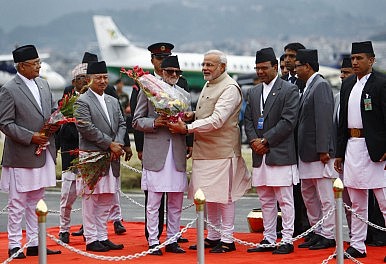
Today, however, Nepal finds itself in a unique position. It is being courted by the very powers, India and China, that for so long had treated it as a peripheral concern. What has changed? For one, internal politics within both India and China are now both quite different. This is especially noticeable in India, with the election of the Hindu conservative Bharatiya Janata Party. The Hindu right in India has long emphasized the cultural and religious links that bind the two countries and had always taken pride in Nepal being the only officially Hindu country in the world. That changed with the declaration that the country had become secular in 2008, a change that many Hindu conservatives in both India and Nepal have never really accepted. Indeed, there is a growing movement within Nepal to hold a referendum on the issue.

Charlie Hebdo Episode Calls for a Debate on Roots of Intolerance

By Jay Bhattacharjee
18th January 2015 

The last week and a half seemed to last forever in one’s mind because of the sheer scale of barbarity and grisliness that one witnessed in the streets of Paris and its suburbs. We have been through this before; the Mumbai assault (particularly the image of the lone Pakistani gunman wreaking havoc on the railway platform), the Nairobi shopping mall massacre two years ago and, of course, the 9/11 events that now seem distant history.

When the world got over its initial horror and revulsion, and the presidents and kings left Paris for their own bailiwicks, it was business as usual for the opinion-makers and the so-called thinkers and intellectuals, specially in the Fourth Estate. After the initial catering to TRPs and all the other parameters that keep the cash counters ringing, the media moghuls and the culture vultures retreated to their lairs from where they preach their convoluted gospels. The three-day interregnum was finished and their fundamental agenda could no longer be ignored.

This writer has been a dispassionate student and observer of the “secular” media and intellectuals for at least two decades. The logic behind the way they respond to events, in the name of so-called balance, is mystifying. The manner in which many of the torchbearers of conscience responded to the Charlie Hebdo episode goes against the very principles they claim to defend —freedom of speech and liberty.

Terror from the Fringes: Searching for Answers in the "Charlie Hebdo" Attacks

By SPIEGEL Staff


How did three, seemingly normal sons of immigrant families turn into radicalized and vicious murderers? SPIEGEL went to Paris to find out. The resulting image is one of an identity search gone horribly wrong.

They were unremarkable. Friendly. That, at least, is how neighbors describe the brothers Chérif and Saïd Kouachi. "Really nice boys," is how the director of the children's home where they grew up remembers them. In their closed Facebook group, former residents of the home comfort each other: "I weep this evening," writes one woman. "I weep for my friends, and I weep for the boys I once knew. I weep for the people."

Can you ever truly know a person? People in the neighborhood where the Paris terrorists lived are filled with incomprehension, and people who were close to them are horrified. Even the wives of the two brothers say they knew nothing of their plans.

Chérif Kouachi was not a person you would remember, says the judge who headed the first investigation against him a decade ago. Most people say that his brother Saïd was even less memorable. But these two unassuming men, together with accomplice Amedy Coulibaly, managed to commit a double attack that, despite its primitive execution, has had a global impact.

How France Grew Its Own Terrorists

JANUARY 16, 2015


In the wake of the massacre of 17 people in Paris last week, some have questioned the role that immigration played in bringing radical Islam to France. Some are even calling for a moratorium on immigration to France from Muslim countries to avoid further terrorist attacks. Although it’s necessary to look to the history of immigration in France to understand how this happened, it’s wrong to think that changes to immigration policy now will make a difference. The damage has already been done.

The truth is, the men who launched these attacks in the name of Islam were French citizens. They were born and educated in France. They didn’t recently immigrate, and they didn’t import terrorism from a foreign land where they were raised. They were radicalized at home, in France. This is why cutting off immigration from North Africa, where most of France’s Muslim population comes from, or other Muslim countries, will not change the strained state of affairs in France among its citizens, or insulate them from further terrorist attacks.

The Kouachi brothers and their accomplice were motivated by religion, as are Islamic terrorists around the world. However, the context in which homegrown western terrorism occurs is important to understand so we can learn from these mistakes. In the case of France, the French Muslim men who join radical Islamist movements often do so in the context of growing up in a country that has never wanted them and whose strong adherence to the principles of Universalism has excluded them from mainstream society.

Iran's End-Game Strategy in Nuclear Negotiations


As U.S. Secretary of State John Kerry and Iranian Foreign Minister Mohammed Javad Zarif met in Geneva last week to discuss ways to expedite negotiations over Iran's nuclear program, U.S. President Barack Obama and Iranian President Hassan Rouhani may have already decided that the timing is right to sign a Comprehensive Joint Plan of Action. Rouhani, a shrewd, seasoned deal-maker who has the confidence of Supreme Leader Ayatollah Ali Khamenei, has taken the measure of the U.S. president over the last year of negotiations. He has positioned Tehran to achieve its key negotiating objective: suspending U.S. and EU sanctions while preserving the key elements of Iran's nuclear program. Rouhani now can present an argument likely to persuade even Khamenei.

As a keen observer of the U.S. and European political scenes, Rouhani no doubt realizes that the U.S. president is heavily invested in concluding what Obama regards as a historic agreement with Tehran. France, Britain, and Germany will probably stay out of the way, especially given the benefits for their major national business concerns. Similarly, Russia and China will support a deal that the Iranian regime approves.

ISIS Still Gobbling Up Territory in Syria Despite 800 US Airstrikes

Flora Drury 
January 18, 2015 

ISIS has almost doubled the land it controls in Syria since the US-led coalition began airstrikes against the extremist group in the summer, a new map has revealed. 

The extremist group has continued to expand its ‘caliphate’, despite more than 800 airstrikes hitting targets in ISIS-controlled areas since last summer. 

The map, created by the Coalition for a Democratic Syria (CDS), shows just how much land has fallen to ISIS - which now has a third of the country under its control. 

Before the summer, the militants controlled just half that. 


The map, created by the Coalition for a Democratic Syria, shows how much land ISIS have gained since August when the airstrikes bagen 

ISRAEL’S EXPLORATION OF GOLAN HEIGHTS: IS IT JUST ABOUT OIL? – ANALYSIS

By Ashay Abbhi


Israel’s decision to begin drilling on the Golan Heights will not only help quench its thirst for oil and water, whilst establishing greater control over the disputed territory. Syria’s reaction will be key to determining whether the move adds further tension to an already volatile region.

Moses led the Israelites to the one place on earth that had no oil. This joke, however, may soon become redundant. After sitting on speculated oil in Golan Heights for twenty years, Israel has finally decided to start drilling. Leftovers of one-time Syrian occupation still haunt the hills, which will soon be echoing with the sounds of large rigs, drilling deep into the core of the earth to search for oil. Ahead of the ripples to come when drilling starts, the international community is already feeling the reverberations. The friction between Israel and Syria, two countries that share joint-custody of Golan Heights, is set to increase considerably.

Golan Heights, arguably the Kashmir of the Middle East, was occupied by Israel in 1967 during the Six-Day war. It wasn’t until 1981 that civil law and administration were extended to it. With 21,000 citizens at present, Israel has slowly increased its presence in the region.

What the Ukraine Crisis Means for Asia

By Nadège Rolland
January 19, 2015

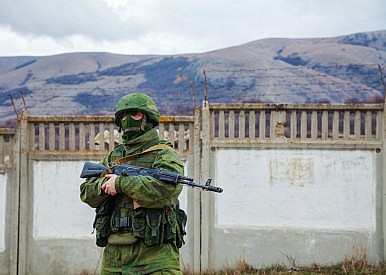
In 2015, the impact of the Russian invasion of Crimea will still be felt across Asia. The crisis came as a wake-up call for post-modern Europe, a reminder that existential threats still exist and that conflicts can hardly be avoided because of purely economic calculations of cost and benefit. Asian powers, for their part, are well aware that geopolitics is not a thing of the past.

A situation where an emerging power wants its great-power status back, considers its sovereignty over land and maritime borders as crucial to its security, and sees its near abroad as its own restricted sphere of influence certainly sounds very familiar to any Asian power today. Even if the analogy stops here, one can still ask what lessons Beijing in particular may learn about the international community’s willingness to sanction Russia’s use of force in Ukraine.

From an Asian perspective, the Ukraine crisis poses the question of the future of U.S. engagement in Asia, a question crucial both to U.S. allies and to other regional countries. Will the emergence of this crisis in Europe distract the U.S. from Asia? Will it impact President Barack Obama’s “rebalance” policy? China no doubt hopes that the rise of Russia will deflect U.S. strategic pressure away from Asia, but U.S. allies are similarly wary of this possibility.

The EU and Russia: Values or Interests?

January 19, 2015

Angela Merkel and the European Parliament are holding firm over maintaining the sanctions the EU imposed on Russia. But where does Federica Mogherini stand?

Elmar Brok is a veteran German Christian Democrat politician and a longstanding member of the European Parliament. As chairman of the parliament's foreign affairs committee, Brok's role has become more important as the European Parliament has gained more powers.

So when, on January 15, European parliamentarians passed a tough resolution on Russia - insisting that sanctions imposed on Moscow after its intervention in eastern Ukraine should remain, and even be broadened - Brok said the parliament had no choice.

"We see nothing so far in Russia that would convince us to lift sanctions," he told Carnegie Europe. "The European Parliament has made it clear that without any progress in implementing the Minsk agreement, [the parliament] will not consider lifting sanctions," he added. So far, all the member states have supported the sanctions - but this unity is not a given.

The Minsk Protocol, a deal between Ukraine, Russia, and Russian-backed separatists to halt the war in eastern Ukraine, is all but in tatters. In recent days, separatists launched an upsurge in fighting around Donetsk international airport and killed Ukrainian civilians in the region. In reality, the accord's ceasefire, supervised by the Organization for Security and Cooperation in Europe, has rarely held since the deal was signed in September 2014.

According to Brok, with a few exceptions in other foreign policy areas, Russia has been uncooperative, to say the least. "Russia is not a constructive partner," he said.

Report Card on Putin’s Modernization of the Russian Armed Forces

Maxim Pyadushkin
January 19, 2015

Although the threat of global conflict seemed to dissipate with the end of the Cold War, the restoration of Russia’s military might have been on Vladimir Putin’s agenda from the very beginning. He came to power in 2000, when the armed forces relied on the remnants of Soviet arsenals due to the sharp decrease in military expenditures in the 1990s.

But Russia faced regional threats to its national interests in the post-Soviet era as well as challenges from insurgents on the North Caucasus. The successful second Chechen War in the early 2000s lent vast public support for Putin’s rule.

At the same time, it showed that the country’s armed forces—a Cold War-era mobilization giant—could not respond quickly to local threats. The initial plan called for two different forces—troops constantly at the ready along with traditional mobilization units. But in 2008, the mixed results of the five-day war with Georgia over the breakaway republics Abkhazia and South Ossetia triggered the more radical transformation of the Russian military into a smaller, but more effective force.

How the Elvis Presley Doctrine Blocked Keystone XL

Robert W. Murray, Christopher Sands
January 20, 2015


In his history of popular culture and the U.S. presidency, What Jefferson Read, Ike Watched and Obama Tweeted, Tevi Troy relates an anecdote about a White House meeting between then-president Richard Nixon and rock ‘n’ roll sensation Elvis Presley. Elvis came to the meeting "dressed in a purple jumpsuit and a white shirt open to the navel with a big gold chain and thick rimmed sunglasses" prompting Nixon to comment, "You dress kind of strange, don't you?"

Elvis replied simply, "You have your show and I have mine."

That sums up the current state of the political battle over the Keystone XL pipeline in Washington, even after the recent Nebraska Supreme Court decision and the subsequent Congressional votes.

Republican majorities were sworn into both the House of Representatives and the Senate on January 6, and began work on a bill to approve the Keystone XL pipeline. Bipartisan congressional efforts to do so twice before—following the 2010 midterm election and just last month—failed, but the popular support for building the Keystone pipeline repeatedly shown in the polls has made this a priority for Republicans and many pro-energy Democrats in Congress.

The Central African Republic: Soaked in Blood

January 19, 2015


In July 1994, the Rwandan Genocide ended after Hutu extremists attempted to extirpate the Tutsi population and killed approximately 800,000 people. Westerners, those precious few who were paying attention, bowed their heads, vowed that nothing like this would ever happen again, and averted their eyes.

But the slaughter didn’t stop; it just moved next door. Militant Hutus fled to neighboring Zaire, exacerbating tensions with the Tutsi population there. This began an intricate chain reaction that destabilized the nation now called Congo and ignited two wars. Estimates vary, but one count puts the number of deaths from the Second Congo War at 5.4 million, giving it the dubious honor of killing more people than any conflict since World War II.

That violence continues today. And now another country in central Africa is coming apart at the seams.

The Central African Republic (CAR) is larger than France and has a population of nearly five million. It’s majority Christian with a small cohort of Muslims concentrated in the north. This religious and geographic divide is reinforced by the weather: during rain season, heavy flooding makes the roads impassable, isolating Muslim communities from the rest of the country.

The Blue Patch of Ignorance

January 19, 2015

The graphic that was on the front page of the New York Times on Saturday is striking. It accompanied a story about how 2014 was Earth's hottest year on record. There is a bar chart showing how average global temperatures have been rising over the past century and markedly so since the 1970s, and how the ten warmest years have all occurred since 1997. But just as eye-catching is a world map that uses color to depict how temperatures in different areas of the globe in 2014 differed from the average for each area: red for hotter and blue for colder, with the intensity of the color indicating how much of a divergence there was from the average. As would be expected with the hottest year on record, most of the map is red. But given that temperatures do not vary uniformly around the world, there is some blue. And the one patch of blue that covers an area with any significant population happens to be over the central and eastern United States, with some adjacent parts of Canada. (Remember those wayward polar vortices last winter?) The only other blue areas that are over parts of continents are in eastern Antarctica, which is uninhabited, and a small piece of northern Namibia and southern Angola, in one of the more sparsely populated parts of Africa.

If weather were the product of some sort of intelligent design, this pattern might lead one to conclude that the designer wanted to tilt debate in the United States on climate change in favor of the climate-change-deniers. No matter how many reminders experts issue that short-term variations in weather are not to be equated with longer term climatological change, there is nothing like a good blast of cold air through Washington to cool receptivity to messages about the need to slow and arrest global warming. There still would be plenty of ostrich-in-the-sand denial on this issue regardless of the current weather, but in general the less that Americans are directly and immediately feeling ill effects of a problem, the less likely that U.S. policy will be shaped to deal with the problem.

The Language of the State of the Union

JANUARY 18, 2015

“He shall from time to time give to the Congress Information of the State of the Union,” stipulates Article Two of the Constitution, “and recommend to their Consideration such Measures as he shall judge necessary and expedient.”

Since 1790, every president has made an annual report to Congress, highlighting the challenges and opportunities facing the nation. Presidents from Jefferson to Taft dispatched lengthy written addresses; since Wilson, most have emulated Washington’s example and delivered shorter remarks in person. Using the Bookworm platform for text analysis, we’ve combed through the full texts of all 224 State of the Union addresses and ranked the frequency with which each president used each word.

An interactive graphic shows the 1,410 different spots on the globe presidents have referenced in 224 speeches.

We invite you to explore these speeches. Click on any individual word and observe how frequently each president employed it. Sort by DATE to see how the word’s use has evolved over time, and by DENSITY to rank the presidents by their propensity to use that particular word. Click on any of the colored bars to summon a list of all the times that the corresponding president used the word in a State of the Union address. Then scroll down below the graph and see how our team of historians interprets what this chart reveals, and what it may conceal.

FREEDOM: Perhaps the defining value of American society, the word is surprisingly rare in the nation's first century. It appears only once in the Constitution, and early presidents used it sparingly. Not until FDR placed the "Four Freedoms" at the heart of his 1941 State of the Union did the term become a staple of presidential rhetoric. Since then, it has flourished, but with a noticeably partisan tilt: the four presidents to use it the most are Eisenhower, Reagan, and the Bushes. To date, Obama has used it less frequently than any president since Warren Harding. Benjamin Schmidt

NSA Penetrated the Computer Network Used by North Korea’s Hackers in 2010, Report

David E. Sanger and Martin Fackler
January 19, 2015

WASHINGTON — The trail that led American officials to blame North Korea for the destructive cyberattack on Sony Pictures Entertainment in November winds back to 2010, when the National Security Agency scrambled to break into the computer systems of a country considered one of the most impenetrable targets on earth.

Spurred by growing concern about North Korea’s maturing capabilities, the American spy agency drilled into the Chinese networks that connect North Korea to the outside world, picked through connections in Malaysia favored by North Korean hackers and penetrated directly into the North with the help of South Korea and other American allies, according to former United States and foreign officials, computer experts later briefed on the operations and a newly disclosed N.S.A. document.

A classified security agency program expanded into an ambitious effort, officials said, to place malware that could track the internal workings of many of the computers and networks used by the North’s hackers, a force that South Korea’s military recently said numbers roughly 6,000 people. Most are commanded by the country’s main intelligence service, called the Reconnaissance General Bureau, and Bureau 121, its secretive hacking unit, with a large outpost in China.

Kim Heung-kwang, a defector, said that in the early 1990s, North Korean computer experts had an idea: Use the Internet to attack the nation’s foes. CreditJean Chung for The New York Times

Kazakhstan Responds to Horrifying – and Strange – ISIS Video

January 19, 2015

Earlier this week, the forces behind the ISIS video production team released one of their most excruciating offerings yet. The video opens with a pair of testimonies – two men, strained and twitching, claiming their work within Russia’s Federal Security Service (FSB), admitting their espionage within ISIS’s ranks. One man, Zhanbolat Mamaev, claims to be from Kazakhstan. The second says his name is Sergei Ashimov, a thirty-year-old former Muslim. Both claim to be searching for tactical information on ISIS – where the group’s leadership is located, information about the Russians in ISIS’s ranks. At some point, their work was found out. The duress in their confessions spills through the screen.

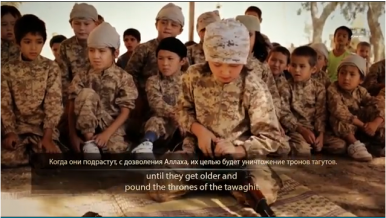
The video then transitions outside, with Mamaev and Ashimov kneeling in the scrub and sunlight. An ISIS fighter stands behind, invoking Quranic verse and ISIS pledge – rote, expected language. Aside this fighter, though, is a child, watching. A young boy, no more than 12 years old. He appears to be the same Kazakh child from an earlier ISIS video, a lead interview who had described how, with the rest of the Kazakh schoolchildren under ISIS’s watch, “We’re going to kill you, O kuffar. Insha’allah, we’ll slaughter you.” This time around, looking emotionless, the child holds a pistol. The incantations finish. The boy raises the gun, and fires, and the two men crumple in front of him. The child keeps firing. The video fades to black.

Side TAO: Documents Reveal Top NSA Hacking Unit

By SPIEGEL Staff


The insert method and other variants of QUANTUM are closely linked to a shadow network operated by the NSA alongside the Internet, with its own, well-hidden infrastructure comprised of "covert" routers and servers. It appears the NSA also incorporates routers and servers from non-NSA networks into its covert network by infecting these networks with "implants" that then allow the government hackers to control the computers remotely. (Click here to read a related article on the NSA's "implants".)


SPIEGEL ONLINEInteractive Graphic: The NSA's Spy CatalogIn this way, the intelligence service seeks to identify and track its targets based on their digital footprints. These identifiers could include certain email addresses or website cookies set on a person's computer. Of course, a cookie doesn't automatically identify a person, but it can if it includes additional information like an email address. In that case, a cookie becomes something like the web equivalent of a fingerprint.

Inside TAO: Documents Reveal Top NSA Hacking Unit

By SPIEGEL Staff


The NSA's TAO hacking unit is considered to be the intelligence agency's top secret weapon. It maintains its own covert network, infiltrates computers around the world and even intercepts shipping deliveries to plant back doors in electronics ordered by those it is targeting.

In January 2010, numerous homeowners in San Antonio, Texas, stood baffled in front of their closed garage doors. They wanted to drive to work or head off to do their grocery shopping, but their garage door openers had gone dead, leaving them stranded. No matter how many times they pressed the buttons, the doors didn't budge. The problem primarily affected residents in the western part of the city, around Military Drive and the interstate highway known as Loop 410.

In the United States, a country of cars and commuters, the mysterious garage door problem quickly became an issue for local politicians. Ultimately, the municipal government solved the riddle. Fault for the error lay with the United States' foreign intelligence service, the National Security Agency, which has offices in San Antonio. Officials at the agency were forced to admit that one of the NSA's radio antennas was broadcasting at the same frequency as the garage door openers. Embarrassed officials at the intelligence agency promised to resolve the issue as quickly as possible, and soon the doors began opening again.

N.S.A. Breached North Korean Networks Before Sony Attack, Officials Say

By DAVID E. SANGER and MARTIN FACKLERJAN

WASHINGTON — The trail that led American officials to blame North Korea for the destructive cyberattack on Sony Pictures Entertainment in November winds back to 2010, when the National Security Agency scrambled to break into the computer systems of a country considered one of the most impenetrable targets on earth.

Spurred by growing concern about North Korea’s maturing capabilities, the American spy agency drilled into the Chinese networks that connect North Korea to the outside world, picked through connections in Malaysia favored by North Korean hackers and penetrated directly into the North with the help of South Korea and other American allies, according to former United States and foreign officials, computer experts later briefed on the operations and a newly disclosed N.S.A. document.

Continue reading the main story

Mr. Shin in 2013.Prominent North Korean Defector Recants Parts of His Story of CaptivityJAN. 18, 2015

F.B.I. Says Little Doubt North Korea Hit Sony JAN. 7, 2015

Sony dropped plans to release “The Interview.”U.S. Said to Find North Korea Ordered Cyberattack on SonyDEC. 17, 2014

The daunting challenge of reporting on cyberwar

By Dave Lee
19 January 2015

The US and UK are soon to take part in cyber war games - testing each other out for when the inevitable real cyberwar kicks off.

It'll be the first time such cooperation will have taken place. An unprecedented arrangement, Downing Street said, to prepare for an unprecedented challenge.

One thing's sure: the nature of war is certainly changing. And with it, so too must the way journalists report on global conflict.

Where a traditional war reporter wouldn't set out without wearing a trusty flak jacket, the war reporters of the imminent future may well be more concerned with a hardy firewall.

But there's a problem. How do you report on a war you can't see happening? How do you hold aggressors to account if you don't know who or where they are?

Hacker graphic When reporting cyber-attacks, some of the facts may never be known

Explained: Cyber war games

The best way to test the resilience of computer security is to try and emulate the various ways hackers could break in.

NSA Surveillance Programs and Preparing for the Next War

Der Spiegel 
January 18, 2015 

Normally, internship applicants need to have polished resumes, with volunteer work on social projects considered a plus. But at Politerain, the job posting calls for candidates with significantly different skill sets. We are, the ad says, “looking for interns who want to break things.” 

Politerain is not a project associated with a conventional company. It is run by a US government intelligence organization, the National Security Agency (NSA). More precisely, it’s operated by the NSA’s digital snipers with Tailored Access Operations (TAO), the department responsible for breaking into computers. 

Potential interns are also told that research into third party computers might include plans to “remotely degrade or destroy opponent computers, routers, servers and network enabled devices by attacking the hardware.” Using a program called Passionatepolka, for example, they may be asked to “remotely brick network cards.” With programs like Berserkr they would implant “persistent backdoors” and “parasitic drivers”. Using another piece of software called Barnfire, they would “erase the BIOS on a brand of servers that act as a backbone to many rival governments.” 

An intern’s tasks might also include remotely destroying the functionality of hard drives. Ultimately, the goal of the internship program was “developing an attacker’s mindset.” 

Bold Alligator training elevates cyber as a domain

Michael Hardy


A training exercise held late last year incorporated new cyber concepts into the combat scenario, seeding radio traffic meant to simulate the radio noise of a populated area with a stream of nefarious messages. The purpose was to train the Marines taking part in the exercise to identify and interpret the chatter that could help them know when the enemy planned to attack.

As reported in Marine Corps Times, the radio and cyber aspects of the exercise, Bold Alligator 14, were devised by the Office of Naval Research.

About 11,000 Marines, U.S. sailors and members of other nations' navies took part in the exercise, held in November off the coasts of Virginia and North Carolina. The scenario sends the Marines on a simulated crisis response mission in hostile territory. While they expect the enemy to attack, they don't know how, when or where. The cyber and electronic warfare specialists involved have to decipher the electronic chatter.

"We modeled a virtual criminal cell and gave them some goals," said Maj. Christian Fitzpatrick, ONR's tactical cyber special projects officer. "One of their goals during Bold Alligator was to purchase a strategic weapon system and use it to target ships off the North Carolina and Virginia coast."

Needed urgently: The Indian National Defence University


A veiled secret of India's defence and strategic culture is the lack of a serious interest in them by the political class. The Indian National Defence University would fill this void,' feels Lieutenant General Anil Chait (retd).

Kerry Longhurst, senior Fellow at the Centre for Security Studies Warsaw, identifies three main components of strategic culture.

First, are the foundational elements, comprising of basic beliefs regarding the use of force, which give strategic culture, its core characteristics.

Then are security policy standpoints she elaborates to be 'contemporary, widely accepted interpretations' which form the basis and rationale for the long-standing policies and practices as applied to the environment.

The core ingredients of a strategic culture are therefore clear and cogent beliefs regarding the use of force, well considered and defined policy parameters and practices relating to security, that a nation adopts and applies in its internal and external affairs.

Even a cursory look into our past approach to security challenges would reveal either an absence, or varying degrees of weakness on all three aspects.

The need to base strategic decisions on rational considerations founded on firm principles has always been known and expounded. But the need for an institution where concepts and thought on all aspects of security and strategy would confluence, was only mooted in 1967 and reiterated later in 1980 by the Sethna Committee.