19 June 2015

Philippine Muslim Rebels Begin Turning Over Weapons, Soldiers

June 18, 2015

Government and rebels do what they can to advance a stalled peace process. 

As expected, Muslim rebels in the Philippines began retiring fighters and handing over weapons to the government this week in a demonstration of their commitment toward an ongoing peace process.

The move is part of a peace agreement inked between the Philippine government, led by President Benigno Aquino III, and the Moro Islamic Liberation Front (MILF) to end one of Asia’s deadliest insurgencies which has killed more than 120,000 people.

Quantitatively, the decommissioning that began on Tuesday was but a small step. 75 firearms, including mortar and rocket launchers, were handed over, while 145 guerillas out of an estimated 10,000 prepared to return back to civilian life. But both sides nonetheless praised it as an important step. Al Haj Murad Ebrahim, the MILF chairman, said that it was proof of the group’s belief that its strength lay not in firearms it held but the affection of the Bangsamoro people it led. Aquino, who was present at the decommissioning, called it a “solid testament to the unreserved and honest participation” of the MILF.

Syria's online battlefield

By Luke Coffey
https://uk.news.yahoo.com/syrias-online-battlefield-100724187.html#yIp1KRB

Syria's online battlefield 

Often cyber warfare is described as a "future threat". Nothing could be further from the truth. Warfare in the cyber domain is now an everyday occurrence - and has been for some time. 

In 2007, Russia carried out a cyberattack against Estonia. The use of the co-called Stuxnet virus to slow down Iran's nuclear enrichment programme has been all but officially acknowledged by the US. During the raid on Osama bin Laden's compound in 2011, the lights mysteriously went out in the city of Abbottabad, even though today nobody has explained exactly how this happened.

Cyber warfare, and the threat it poses, is very real. The civil war in Syria is a great example of this.

The reason why the cyber domain is such an attractive target in modern warfare is because of the level of dependency society has on the internet. Syria is no exception.

Dark side

Green Berets’ efforts to take down ISIS undermined by shoddy U.S. intelligence


June 16, 2015

U.S. Special Forces (USSF) soldiers scan the ground below for threats while flying on a MH-60 Black Hawk during a Fast Rope Insertion Extraction System training exercise. USSF fast roped onto a specific target during the Special Forces Advanced Reconnaissance, 

Army Green Berets planned for a wide range of actions in Iraq this year but bemoaned the sorry state of U.S. intelligence assets in the country to help the local security forces find and kill Islamic State terrorist targets, an internal Army memo says.

The memo, a copy of which was obtained by The Washington Times, states that when U.S. forces exited Iraq in December 2011, “all theater-level enterprise databases were terminated.”

This was forcing U.S. special operations forces in Iraq to track a wide range of intelligence reports “on individual service member laptops and share drives,” the memo says.

Boeing Touts The A-10 Thunderbolt For Sale In Mideast As Ideal Warplane To Fight ISIS

June 16 2015 

A U.S. Air Force A-10 Thunderbolt aircraft from Bagram Air Base flies a combat mission over Afghanistan, in this handout photograph taken on June 14, 2009, and obtained on May 20, 2014. The aging aircraft is now being readied for a possible sale to overseas air forces. Reuters/Staff Sgt. Jason Robertson/U.S. Air Force/Handout via Reuters

The A-10 Thunderbolt, a relic of the Cold War that's been flying for the U.S. Air Force since the 1970s and has narrowly escaped retirement as the Pentagon cuts its spending growth, could be about to find itself in demand once again, more than three decades after the final aircraft came off the production line. 

An unexpected appearance by the brutish-looking aircraft at the glitzy Paris Air Show this week showcased the return to the spotlight of the Warthog, as it's universally known by its crews. Not only has the A-10 found a new lease on life fighting Islamic State group militants in Iraq and Syria, and being deployed to its old hunting grounds in Eastern Europe to deter Russian hostility -- it's now being touted by Boeing as a great aircraft for customers in the Middle East, who would get modernized airplanes dismissed by the U.S. Air Force, which has about 300 left in service. 

The US-Korea Summit That Wasn't

By Woo Jung-Yeop
June 17, 2015

Korean President Park was forced to postpone her visit to the U.S. Can the two sides make good use of the delay? 
Korean President Park Geun-hye’s visit to the United States was postponed less than a week before the planned summit with President Barack Obama, scheduled for June 16. With new cases of Middle East Respiratory Syndrome (MERS) reported on a daily basis, there was speculation that Park would shorten the trip by cancelling her plans in Houston and continue as scheduled for the summit in Washington, but the decision to postpone the visit altogether came as a surprise to many observers. Media reports are now overrun with the question of when and how soon the trip will be rescheduled. However, the focus of Park’s U.S. visit should be on what to discuss, not on when to reschedule.

Messaging Problems

South Korea's Foreign Minister to Make First Trip to Japan

June 18, 2015

Yun Byung-se will visit Japan to commemorate the 50th anniversary of ROK-Japan diplomatic ties. 
For the first time since President Park Geun-hye took office in February 2013, South Korea’s foreign minister will visit Japan. The South Korean Ministry of Foreign Affairs (MOFA) announced on Wednesdaythat “Foreign Minister Yun Byung-se will visit Japan on June 21-22 to attend a reception marking the 50th anniversary of the normalization of the ROK-Japan relations… and meet with his Japanese counterpart Fumio Kishida.”

Japan-South Korea ties have been frosty for the past two years, with historical divisions and a territorial dispute driving a wedge between the two Northeast Asian neighbors. The relationship has been inching forward in past months, both on the bilateral level and trilaterally with China. Japan and South Korea restarted the “two-plus-two” dialogue between their foreign and defense ministers in April, after a five-year hiatus. China, Japan, and South Korea restarted their trilateral foreign ministers’ meeting in late March, raising hopes for a possible summit among the three countries’ leaders.

Why Are North Korean Defectors Being Turned Away in Europe?

June 17, 2015

North Koreans’ asylum claims are often denied, as European countries define them as South Korean citizens. 

North Korean defectors have little hope of finding asylum in Europe due to increasingly strict criteria used to determine claims, according to a reportreleased this week by a U.K.-based advocacy group.
The report by the European Alliance for Human Rights in North Korea says the U.K., France, Belgium, and the Netherlands are rejecting most claims for asylum by North Koreans because they view them as South Korean citizens.

In 2013, the U.K. rejected 30 out of 40 asylum applications made by North Korean defectors, according to the report, titled “A Case for Clarification: European Asylum Policy and North Korean Refugees.” Belgium turned down 99 of 126 claims it received, according to the study. The Netherlands and France, meanwhile, rejected all of the applications they processed – 128 and 19, respectively.

Tsipras Attacks Greece’s Creditors as Pressure Grows on Debts


JUNE 16, 2015 

BRUSSELS — Greece’s prime minister, Alexis Tsipras, on Tuesday blasted his country’s creditors for austerity measures that he said were humiliating and strangling his people as pressure mounted on Athens to present reforms in exchange for bailout funding.

With critical deadlines pressing — the Greek bailout program expires in two weeks, when a huge payment on debt is due — European Union policy makers were discussing the possibility of an emergency summit meeting to determine a solution if eurozone finance ministers fail to broker a deal at their meeting on Thursday.

The standoff with Greece could have severe repercussions for European integration if Greece becomes the first country forced out of the 19-member currency bloc.

European stock markets and the euro were little changed on the day, and only in Athens did things appear particularly bleak, as stocks fell nearly 5 percent and bond yields stood at levels suggesting investors believe default on Greece’s bailout loans was a distinct possibility.

World losing battle against terror, climate change & cyberattacks: Albright

Madeleine K. Albright and Ibrahim A. Gambari4
June 16, 2015 

To confront the crisis in global governance, the United Nations needs key reforms.

As the United Nations marks its 70th anniversarylater this year, there is mounting evidence that the international community is losing the fight against the most pressing security and justice challenges of our time. From Syria to sub-Saharan Africa, a markedincrease in mass atrocities has undermined basic human rights and reversed the trend of declining political violence that began with the end of the Cold War. Climate change, cyberattacks, and the threat of cross-border economic shocks also pose grave implications for global security and justice.

Chinese Military Modernization: Implications for Strategic Nuclear Arms Control

By Stephen J. Cimbala for The Air University
17 June 2015

Is it time for the United States and Russia to factor China into their dialogue on strategic nuclear arms reductions? Stephen Cimbala believes so. As he sees it, Beijing’s military modernization program could lead to the deployment of a ‘more than minimum’ deterrent force within a decade.

This article was originally published in Vol. 9, Issue 2 of Strategic Studies Quarterly, the Strategic Journal of the United States Air Force.

RUSSIA’S HYBRID WAR IN UKRAINE:

June 17, 2015
http://fortunascorner.com/2015/06/17/russias-hybrid-war-in-ukraine/\

Since the change of power in Ukraine in February 2014, Russia has been swift to occupy and annex the Crimean peninsula. In April 2014, separatist riots broke out in Eastern Ukraine, following a very similar pattern to those in Crimea. These actions were accompanied by a strong and intensive, well-coordinated diplomatic, economic and media campaign both in Ukraine and abroad, also supported by pressure exerted by the large Russian military units lined up along the border with Ukraine.

The form of warfare Russia employed in Ukraine in 2014, often called hybrid war, has been aimed at defeating the target country by breaking its ability to resist without actually launching a full-scale military attack. In line with contemporary Russian military thinking on ‘new generation warfare’, hybrid war is built on the combined use of military and non-military means, employing basically the whole spectrum of a state’s policy inventory, including diplomatic, economic, political, social, information and also military means.

This report aims to seek answers to two main research questions. First, what are the main features and characteristics of Russia’s hybrid warfare as conducted in Ukraine? Derived from the first, the second research question is focused on the operational prerequisites for the Russian hybrid war. In other words, is the Russian hybrid war a universal warfare method deployable anywhere, or is it more country or region-specific?

IS ESPIONAGE NECESSARY FOR OUR SECURITY? A HISTORICAL LOOK BACK

June 16, 2015 

Covert operations for intelligence collection, which have not had the same public attention, require much more thorough consideration. Such operations involve the recruiting of agents in foreign nations, encouraging the defection of knowledgeable individuals, audio-surveillance, and other techniques falling under the general heading of espionage. At least for the purpose of this discussion, espionage does not include large-scale and remote-control secret operations such as satellite reconnaissance, “spy planes,” or the interception and analysis of communications and electronic emissions performed outside the borders of the target country.

The information sought by clandestine means may include not only positive intelligence on the plans and programs of other nations but also the quite different category of counterintelligence on threats from foreign intelligence or terrorist groups. While covert intelligence collection abroad has not been free of criticism, it has not, at least since the unique U-2 incident of 1960, seriously embarrassed the U.S. government or caused major international repercussions. However, counterintelligence activities, the responsibility of both the FBI (at home) and the CIA (abroad), have raised some of the most serious domestic issues of illegality and abridgment of civil rights-notably the CIA’s screening and opening of mail to the Soviet Union. 

Two Articles by Former Senior US Intelligence Officers

June 16, 2015

The website of the Association of Former Intelligence Officers (AFIO) has placed online two new scholarly articles on intelligence matters. 

The first article, entitled Decision Advantage, Decision Confidence, written by John MacGaffin and Peter C. Oleson, explains why intelligence information has become so essential to formulation and execution of policy in the U.S.

The second article by Adam D.M. Svendsen, entitled simply Intelligence Liaison, covers the incredibly important subject of how and why intelligence services have collaborated with one another since the dawn of time. Very interesting historical analysis of this overlooked subject in intelligence studies.

Interview With General James Mattis

4/30/2015
http://www.historynet.com/interview-with-general-james-mattis.htm


Over his 41-year Marine Corps career General James Mattis honored his obligation to share lessons learned from combat and his own rigorous study of military history. (DoD Photo) 

Hijacked Malaysian Tanker Sparks Regional Response

June 18, 2015

The country steps up efforts to find a missing vessel with the help of regional states. 

Last week, a Malaysian-registered tanker went missing in the South China Sea near Johor. Though the vessel – believed to be hijacked – still has not been found a week later, the Malaysian government is stepping up its rescue efforts with the help of other neighboring states and willing partners.

The tanker, the MT Orkim Harmony, suddenly lost contact around 8:50pm Thursday night. It was filled with nearly 6,000 tons of RON95 petrol worth some 21 million ringgit (US$5.6 million) and had 22 crew members on board, including 16 Malaysians, five Indonesians and a Myanmar national. Malaysian authorities immediately began combing surrounding waters after they received a missing tanker report from the shipping company Orkim Ship Management Sdn Bhd on Friday morning. But after nearly 50,000 square kilometers has been searched over the past few days, the vessel has yet to be found.

Myanmar’s Refugee Problem Is Worse Than You Thought

June 17, 2015

Two months ago, the world was shocked to discover the persecution endured by the Rohingya ethnic group, which drove many of them to seek asylum in several Southeast Asian countries. The majority of the boat refugees came from Myanmar.

But the refugee problem could be worse. Consider these statistics provided by the United Nations High Commissioner for Refugees: Myanmar’s stateless people are estimated to number 810,000, most of them Rohingya, who are not recognized by the government. In 2012, violence in Rakhine State forced around 140,000 people, including the Rohingya, to flee their homes. Meanwhile, the number of internally displaced persons across the country has already reached 374,000. Refugees who are originally from Myanmar are pegged at 479,706, while those seeking asylum number 48,053. Temporary camps along the Thai border have been established for some 120,000 refugees from Myanmar.

Debt Worries? Not Asia, Says IMF

June 17, 2015

A new report suggests there is scope for governments to borrow more, with one exception. 

A toxic cocktail of debt, deflation and demographics is stalking some of Asia’s biggest economies. Yet according to International Monetary Fund (IMF) researchers, the region still has plenty of room to ramp up government borrowings, with one notable exception.

Titled “When should public debt be reduced?” the recent IMF staff paper has ranked South Korea second only to Norway in its “fiscal space,” defined as the difference between the debt limit and the actual debt-to-gross domestic product (GDP) ratio, which for South Korea was calculated at 241 percent compared to Norway’s 246 percent.

A number of other Asian nations ranked in the top 10, including third-rated New Zealand (228 percent) and fourth-ranked Hong Kong (224 percent). Despite its heated political debate over budgets, Australia placed sixth at 214 percent, followed by Taiwan at 209 percent and 10th-ranked Singapore (193 percent), according to the paper’s authors Raphael Espinoza, Atish Ghosh and Jonathan Ostry.

STRATCOM Must Be Warfighters, Not FAA In Space: Lt. Gen. Kowalski

June 16, 2015

CAPITOL HILL: The US military spends too much time acting as the FAA of space and not enough watching for potential threats, the deputy chief of Strategic Command said today. That has to change as outer space becomes increasingly contested and increasingly intertwined with cyberspace, Lt. Gen. James Kowalski told a Peter Huessy breakfast here.

“How do we envision the Joint Space Operations Center in the future if we’re going to be in an environment where we [must] assume space is under threat?” Kowalski asked. “Today if we have a problem with a communications satellite, we immediately turn to the engineers and [ask], ‘hey, what’s broken on the satellite?’ We need to be in a mindset that we have tofirst rule out that that satellite was under some kind of attack.”

“That’s really not what we’re at,” Kowalski continued. “We spend a lot of time doing catalog and tracking and collision avoidance kind of things,” he said. “If you think about who does that in the airspace, it’s probably not military, it’s a civilian agency,” such as the Federal Aviation Administration. “We need to revisit how we’ve allocated military personnel to what may not be really a military mission.”
Sharon Chand

Ways to Protect the U.S. Grid from Cyberattacks

Judging by the number and type of cyber incidents reported to the U.S. Department of Homeland Security (DHS), attackers appear to be stepping up efforts to access or otherwise harm the electrical grid.

During fiscal year 2014, DHS’s Industrial Control Systems Cyber Emergency Response Team (ICS-CERT) responded to 245 cyber incidents targeting various companies’ industrial control systems, according to a bulletin released March 2015. In the energy sector, which reported the most incidents, industrial control systems monitor and control nuclear power facilities, wastewater collection and treatment plants, oil and gas pipelines, and the generation, transmission and distribution of electricity.

The cyber incidents that energy and other sectors reported encompassed a wide range of attacks, including unauthorized access to Internet-facing industrial control and SCADA (supervisory control and data acquisition) devices, exploitation of zero-day vulnerabilities in those devices, malware, and network scanning and probing.

ISRAELI ARMY TO ESTABLISH CYBER WARFARE COMMAND

Written by NAN
16 June 2015

The Israeli army said on Tuesday that it plans to establish a new command dealing exclusively with cyber warfare.

Currently, the Israeli military has several bodies spread out in different units that deal with the various aspects of a field that is gaining importance from day to day, including cyber defence, cyber attacks and cyber intelligence gathering.

Those will now be brought together under one command within two years, explained the official.

The new cyber command would oversee all operational activities in the cyber dimension.

A military statement said that the cyber dimension ``is of utmost importance in the mission to adapt the Israel Defence Forces (IDF) to the dynamic changes and challenges of modern warfare.

DISA's new framework brings best practices to services management

Amber Corrin
June 9, 2015 

The Defense Information Systems Agency hasreleased a new framework aiming to standardize ITservices and operations throughout the military, formalizing ideas that top officials have been discussing in recent months.

The DoD Enterprise Services Management Framework (DESMF) "provides guidance to standardize the management of IT services across DoD organizations and is the embodiment of the integration of various best practices, frameworks and standards that defines a department-wide service management approach," the memo states.

The framework, a second-edition release that will be followed by a third edition incoming months, reflects broader DoD moves toward centralized IT services that the military services already are moving out on, such as the unified capabilities under development in a joint effort between DISA, the Army and the Air Force.

DISA rolls out new 5-year strategy


Amber Corrin
June 16, 2015 

The Defense Information Systems Agency has released its 2015-2020 strategic plan, laying out core agency missions and objectives in getting IT services to Defense Department users.

The strategic plan centers on a handful of objectives, including:

"We are at an operational crossroads," DISA Director LTG Ronnie Hawkins writes in the opening pages of the strategy. "We continue to operate in a contested battlespace, where the barrier to entry is low and oftentimes unchallenged. We must recognize that mission success is defined by our ability to pre-emptively disrupt, degrade, or deny our adversaries, both internal and external, unimpeded access to the information and capabilities of the Department of Defense Information Network (DODIN). We must sustain our operations and defenses before, during, and after an attack by reducing the attack surface, continually improving defensive cyberspace operations, and effectively commanding and controlling the DODIN."

THE REAL FOG OF CYBERWAR: OPERATIONAL CYBER PLANNING

June 17, 2015
Cyber operations and strategies are assumed to be critically important to national security strategies. The United States has gone to great lengths to involve cyber planning at thenational level, as well as at the operational level in the U.S. military. The problem is that we have little ability to answer the question of “what can we do?” with cyber strategies as they are utilized in the real world. Few really understand the behavior of these unicorn-like operations that are thought to be easy, safe, and cheap. In fact, cyber operations are not easy, nor are they cheap or safe. Not being able to answer critical questions of how to operationalize cyber strategies leaves us also unable to ponder the deeper question of “what should we do?” in cyberspace once we have an idea of capabilities and effects.

WHAT IS POLICY RELEVANCE?

June 17, 2015


Editor’s Note: This is the latest article in our special series, “The Schoolhouse.” The aim of this series is to explore and debate the state of advanced graduate education in international affairs. We aim to move beyond the often-repetitive and tiresome debates about the usefulness of scholarship to policy. We believe there are deeper issues at stake.

Attempts to bridge the gap between academia and the real world, especially in the area of international relations, have accelerated over the last few years. There are several initiatives ongoing, including the Bridging the Gap project, the Tobin Project, the Institute for the Theory and Practice of International Relations (TRIP), and a variety of others. The Bridging the Gap project, for example, trains academics how to ask policy relevant questions and write for public policy audiences. To complement these efforts, our understanding of what policy relevance “is” needs improving. In particular, distinguishing between research with significance for policy and research that is policy actionable — promoting realistic policy actions — can bring analytical clarity to the concept of policy relevance and help enhance efforts to bridge the gap.

CIA Looking for Cutting Edge Big Data Technology in Silicon Valley

Jonathan Vanian
June 17, 2015

What the CIA and Silicon Valley have in common

The CIA’s top techie explained why the intelligence agency is interested in the same big data tech that businesses love.

Doug Wolfe, the CIA’s chief information officer, made an unusual sales pitch to Silicon Valley on Tuesday by arguing that the spy agency and the tech industry have a lot in common.

“Remember, a lot of the solutions we need are similar to the private sector,” he told the crowd at a tech conference in San Francisco, using some tech industry jargon in the process.

Anonymous Backs New Encrypted Social Network to Rival Facebook

June 17, 2015

Individuals appearing in public as Anonymous, wearing Guy Fawkes masks
 
A new social network has been launched, vowing more transparency, security, and privacy than Facebook and other social media giants. Backed by the hacktivist group Anonymous, it will encrypt all messages, shielding data from governments and advertisers.

At first glance, Minds.com appears similar to any other social network. It provides a person’s followers with the latest updates, allowing their friends to comment and promote posts.

But the major difference exists behind the scenes. Minds.com doesn’t aim to profit from gathering data. In fact, its goal is the opposite – to encrypt all messages so they can’t be read by governments or advertisers.

The social network will also reward users for interacting with posts. This can be done by voting, commenting or uploading.

Password recovery scam: How hackers are stealing Gmail, Yahoo Mail accounts


by FP Staff 
Jun 17, 2015

Symantec has observed an increase in a "particular" type of spear-phishing attack targeting mobile users. The purpose of the attack is to gain access to the victim’s email account.

"This social engineering attack is very convincing and we’ve already confirmed that people are falling for it," the security firm said.

Thinkstock

To pull off the attack, the bad guys need to know the target’s email address and mobile number; however, these can be obtained without much effort. The attackers make use of the password recovery feature offered by many email providers, which helps users who have forgotten their passwords gain access to their accounts by, among other options, having a verification code sent to their mobile phone.

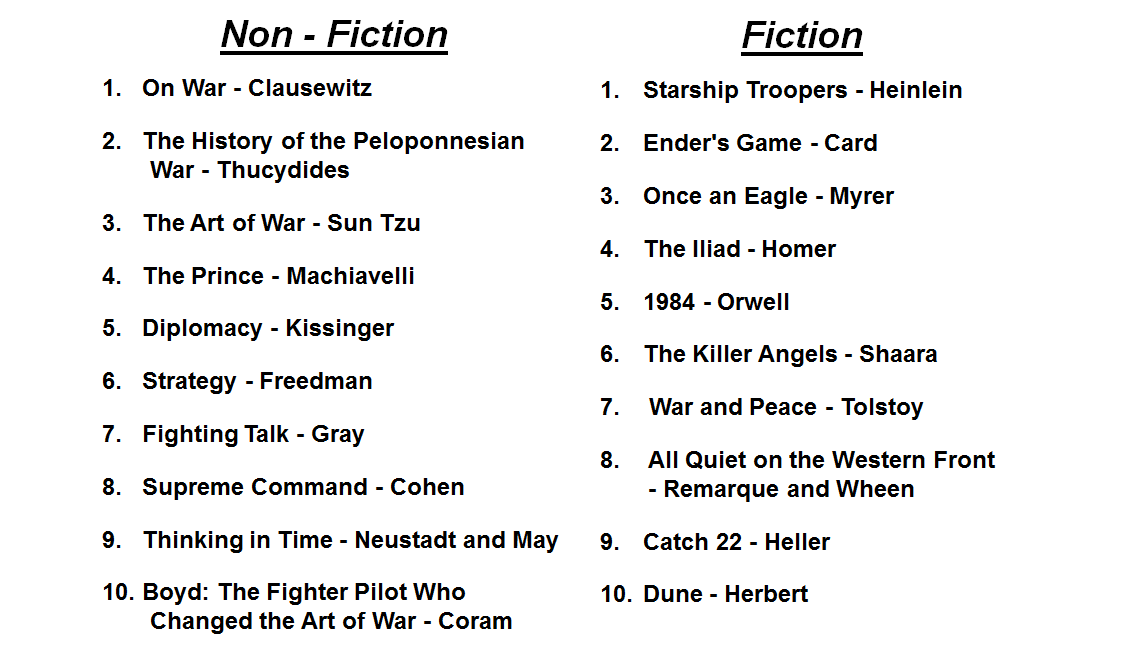
What Successful Strategists Read

L Block (British, 1848–1901) The Bibliophile’s Desk

Aaron Bazin is a career Army officer; Lieutenant Colonel FA 59 (Strategist) with experience at the combatant command level and within the institutional Army. The views expressed in this article do not reflect the official policy or position of the US Army, the Department of Defense, or the US Government.

Stratfor has 11 chilling predictions for what the world will look like a decade from now


Russia will collapse ...

"There will not be an uprising against Moscow, but Moscow's withering ability to support and control the Russian Federation will leave a vacuum," Stratfor warns. "What will exist in this vacuum will be the individual fragments of the Russian Federation."

Watch Now: Defense One Live’s ‘Force of the Future’

JUNE 15, 2015
The Pentagon's acting personnel chief has vowed to upend the military's Cold War-era HR system. Watch him describe how and why.

On June 9, the Pentagon’s acting personnel chief, Brad Carson, talked with Defense One editor Kevin Baron about the military’s plans to overhaul its Cold War-era personnel system, a long-overdue move meant to attract and retain the best and the brightest of today.

Presented before a packed house at the Ritz-Carlton Pentagon City, the event also included a panel composed of top service and DoD personnel leaders who are moving out with reforms of their own.

​Watch the video of the event here. (Free registration is required, but it’s very quick.)

How We’re Planning the Biggest Personnel Overhaul in 45 Years

JUNE 8, 2015

DoD’s acting personnel chief lays out the Pentagon’s plans to manage for talent, not just time served.

Through the current Force of the Future initiative, many leaders throughout the Defense Department are heeding Secretary Ash Carter’s call for innovative thinking about our nation’s most enduring competitive advantage: our people. 

Brad Carson is the acting undersecretary of defense for personnel and readiness.Full Bio

And although we’re justifiably proud of our leading technologies at home and in harm’s way, in reality there is no such thing as a weapons platform that is “unmanned” or “pilotless.” Squarely behind each sophisticated instrument of suasion, each strategic deterrent capability, each overwhelming battlespace enabler, lies precious American talent.

18 June 2015

FALSE EQUIVALENCY IN THE “INDO-PAKISTAN” DISPUTE

http://warontherocks.com/2015/06/false-equivalency-in-the-indo-pakistan-dispute/?singlepage=1
June 16, 2015 ·

In the wake of India’s hot pursuit of militants into Myanmar, Pakistan has raised numerous alarms about Indian aggression. It has issued various warnings that no such Indian incursion into Pakistan will be tolerated. As often happens in such circumstances, the international media has raised the tocsin of the potential for yet another “Indo-Pakistan” clash. Unfortunately, much of this coverage of the so-called India-Pakistan conflict is deeply problematic in that writers, perhaps with good intentions, seek to impose a false equivalence on both nations’ conduct, giving the impression that India and Pakistan contribute equally to the fraught situation that currently exists.

Former US Spymaster: China Could Use OPM Data to Recruit Spies

June 17, 2015

A former NSA and CIA chief outlines the damage the OPM hack could unleash. 
Retired General Michael Hayden is somewhat of an authority on spycraft, having led both the U.S. National Security Agency and the Central Intelligence Agency over his long career. So when he notes that the recent breach at the U.S. Office of Personnel Management—in which the personal information and background information of millions of current and former U.S. federal government employees was stolen by attackers presumed to be based in China—was a “tremendously big deal,” people will listen.

Hayden noted that the OPM data was a “legitimate foreign intelligence target.” Hayden continued: “To grab the equivalent in the Chinese system, I would not have thought twice. I would not have asked permission…This is not ‘shame on China.’ This is ‘shame on us’ for not protecting that kind of information.” Highlighting a possible use case for the information, Hayden noted that the information could help China recruit spies in the United States—a deeply troubling outcome for the United States.

China's Military Strategy

June 16, 2015

China recently published its new Military Strategy. Within this strategy China must be given credit for clearly articulating its version of the “Monroe Doctrine” for the Asia-Pacific region and its desire to no longer play second fiddle to the U.S. globally. Unlike the current U.S. national security strategy, China’s strategy is more narrowly focused on securing its near abroad (the first island chain) while also expanding its military reach to secure its interests globally. Meanwhile, the U.S. faces a complex global landscape, and must confront threats perceived and real emanating from multiple angles while managing significant fiscal constraints.

China’s strategy document — which indicates a more aggressive maritime approach—along with setbacks in Iraq and Syria, and Russia’s continued aggression in the Ukraine, demonstrates the inability for the U.S. to dictate events throughout the globe. Rather the U.S. is forced to react, which raises questions regarding its ability to pivot in any direction. The current U.S. National Security Strategy and subsequent military strategies are designed to simply maintain the status quo while the Chinese Military Strategy seeks to accommodate its rise as a global power.

China Stays Coy on Fighting Islamic State

June 17, 2015

Strangely, Chinese reports of meetings with Iraq’s foreign minister made no mention of IS. 

Iraqi Foreign Minister Ibrahim al-Jaafari has been in China since June 13 for an official visit, including meetings with his Chinese counterpart, Wang Yi, and State Councilor Yang Jiechi.

On June 14, Iraq’s Ministry of Foreign Affairsdescribed the purpose of his visit: “he will, during the visit to China, address the world to side with Iraq in its legitimate war against IS [Islamic State]” (all sic). Jaafari noted that China has “expressed its readiness to support Iraq in its war against the terrorist Islamic State (IS) gangs without joining the international coalition,” referencing a conversation he had with Wang in September 2014. At that time, Jaafari said that Wang had offered China’s help in defeating IS, including providing support for air strikes – although Wang made it clear that China’s existing policies would not allow it to join the U.S.-led international coalition against IS.