Under certain conditions, terrorism can strengthen organizations that employ it; drive the death or spread of ideas; and provoke disruptive population flows that remake states and societies.
10 July 2015
A Frightening Thought: When Terrorism 'Works'
7/7 Attacks and the New Type of Terrorism
July 7, 2015
Ten years after the 7/7 London bombings, ISIS has once again transformed the terrorist threat to the West.
As the smoke and debris cleared, the event was quickly and presciently branded 7/7—Britain’s own pivotal 9/11, a foreboding allusion to an event that would change our security landscape forever. Britain was, of course, no stranger to terrorism, having finally put to rest the violence of the Troubles less than a decade earlier. Indeed, more than a hundred years before the 7/7 attacks, the very same London Underground transport network had also suffered a wave of terrorist bombings at the hands of another group of young violent radicals inspired by a heady religo-political cause. They were the infamous Irish Republican Brotherhood who equally shocked and appalled contemporary audiences at the time, with their Fenian dynamite campaign of 1881-85.
John McCain Accuses President Obama of Failing to Stop ISIS
by JIM MIKLASZEWSKI and COURTNEY KUBE
Sen. John McCain, R-Az., lashed out at the Obama administration's anti-ISIS strategy on Tuesday, saying it was failing and risked leaving the next president with a "disaster."
"Our means and our current level of effort are not aligned with our ends," McCain said. "That suggests we are not winning, and when you are not winning in war, you are losing."
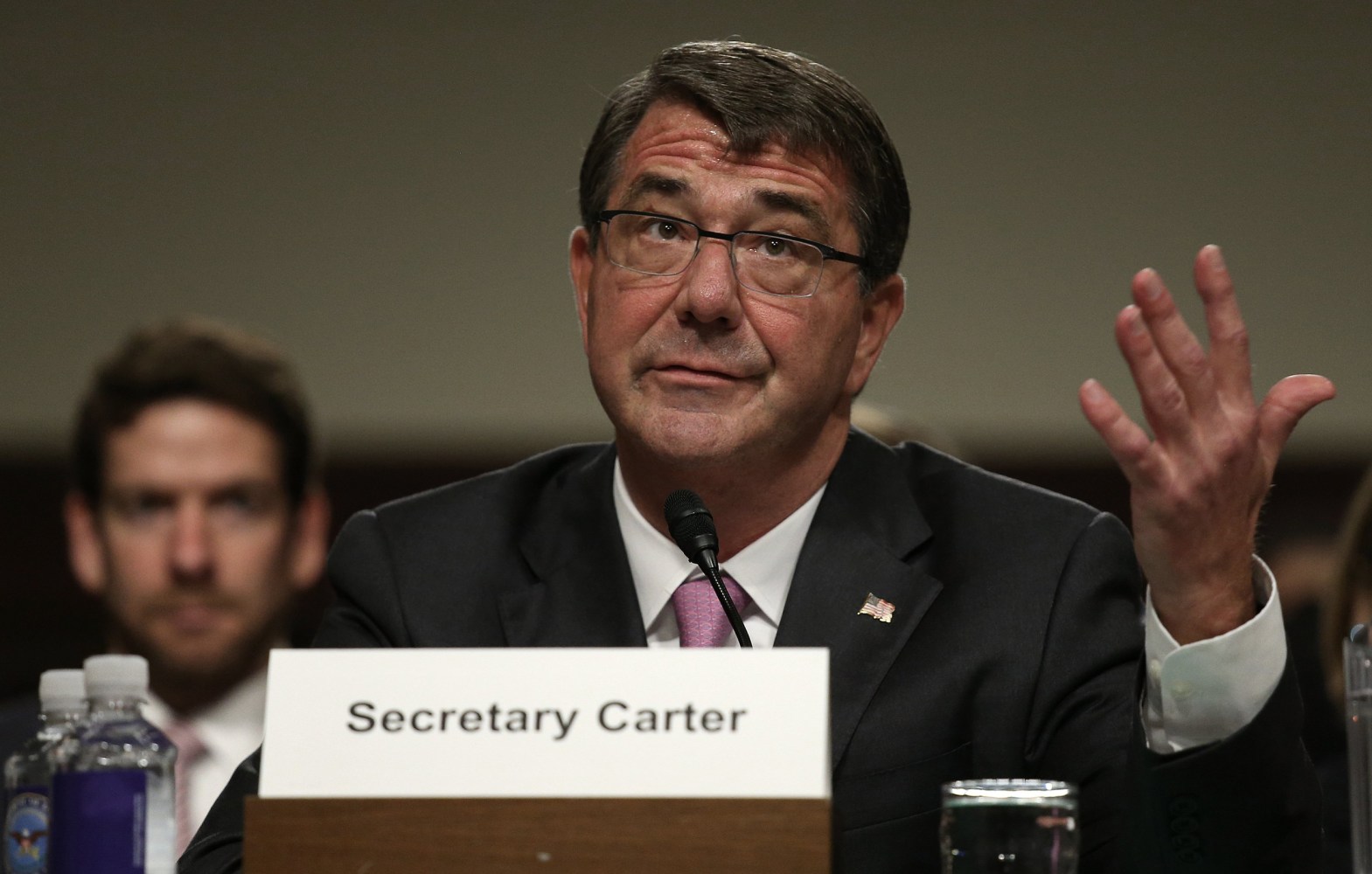
U.S. Secretary of Defense Ashton Carter answered questions from committee chairman Sen. John McCain during a hearing held by the Senate Armed Services Committee. Win McNamee / Getty Images
Is Iraq An Artificial State? Princeton's Sara Pursley
By Joel Wing
July 7, 2015
1. After the fall of Mosul the Islamic State talked about ending the 1916 Skyes-Picot agreement with many western commentators agreeing with them. This deal was made between the French and English after World War I to create spheres of influence in the Middle East. Many point to that as the creation of the modern borders of Iraq and other countries in the region. You dispute that story. What exactly did Sykes –Picot look like?
America Punts on Nuclear Security in Asia
July 8, 2015
"Better locks are not what is most needed now, especially if they serve to legitimize the accumulation of ever larger quantities of plutonium."
As the Obama administration frets over Russia’s apparent decision not to attend next year’s Nuclear Security Summit, the real issue is the U.S. failure to address the threat posed by growing stockpiles of plutonium. Indeed, the president’s approach to nuclear security may well make matters worse.
America's Trillion-Dollar F-35: Lethal Super Weapon or Super Bust?
July 7, 2015
The story is based on a leaked test pilot’s report (PDF) of an air-to-air exercise in January this year. (Note: the report is marked Export Controlled Information FOUO. For ASPI Strategist readers inside government, this is one to access at home.) The crux of the story is that the F-35 was beaten because it couldn’t outturn the F-16, and suffered from “energy disadvantage for every engagement.” To those who have been strident F-35 critics for years, such as Aviation Week’s Bill Sweetman, this was the news they’d been expecting.
Angela's Ashes: How Merkel Failed Greece and Europe
By Peter Mรผller and Renรฉ Pfister
Angela Merkel was already leaving for the weekend when she received the call that would change everything. The chancellor had just had a grueling day, spending all of it in meetings with Greek Prime Minister Alexis Tsipras -- sometimes as part of a larger group, and others with only him and French President Franรงois Hollande.
They discussed debt restructuring and billions of euros in additional investments. When it comes to issues important to him, Tsipras can be exhaustingly stubborn. In the end, though, Merkel was left with the feeling the EU summit was the milestone that could quite possibly mark a turn for the better.
The next Greek crisis: gas shortages
By SARA STEFANINI AND KALINA OROSCHAKOFF
7/7/15
The Greek government’s hunger for cash has stripped the state-run gas company of most of its reserves, raising doubts about how long the country can pay for imports.
As European leaders restart talks Tuesday on a potential third bailout package for Greece, DEPA isn’t sure of what it will do next. If its coffers aren’t replenished soon, DEPA may have to ask its largest gas seller, Russia’s Gazprom, to revisit its terms of delivery.
“Nobody knows at this moment, nobody can give you the answer now,” a source in the company said Monday. “Try to ask next week, because all of us have to see what happens this week. This week is very important.”
New Jordanian Border Surveillance System Becomes Operational
July 9, 2015
Raytheon helps bolster Jordan’s border security
DULLES, Va., July 8 (UPI) – A Raytheon-built system to help Jordan secure its borders with strife-torn Iraq and Syria is now operational.
The system, worth $79 million, was funded by the U.S. Defense Threat Reduction Agency and achieved operational capability three months ahead of schedule, Raytheon said. It includes key command, control, communications, and surveillance, or C3/S, capabilities.
“Raytheon delivers border security capabilities across the globe that help protect countries from a wide range of threats,” Dave Wajsgras, president of Raytheon Intelligence, Information and Services said at a ribbon-cutting ceremony at the Border Security Operations Center in Jordan. “This work is vital in the Middle East, and we are particularly pleased that we were able to deliver these critical security capabilities to Jordan ahead of schedule.”
The ceremony was attended by His Royal Highness Prince Faisal bin Hussein, the U.S. Ambassador to Jordan, DTRA leaders, Raytheon executives and other Jordanian officials.
New Threat Unleashed on the Internet: Hacking Team Says It Has Lost Control of Its Spyware System
July 8, 2015
Surveillance Company Loses Control of Flagship Spy Program
LONDON — Italian surveillance company Hacking Team said Wednesday that it had lost control of its custom-built spy software, unleashing a new threat onto the Internet and depriving the company of its top selling point.
In a statement, Hacking Team said it believed anyone could now deploy its RCS software “against any target of their choice.”
“We believe this is an extremely dangerous situation,” the company said.
Hacking Team’s statement is confirmation that its program’s source code was in the mountain of data pilfered when the company was breached Sunday night. That means that the program — once limited to paying customers — is available to just about anyone who can pick it up and knows how to use it.
The Biggest Myth about North Korea
July 9, 2015
This is wrong. Alliance military actions against North Korea will not automatically trigger a nuclear holocaust or the annihilation of Seoul. Fear, risk aversion and a misunderstanding of North Korea have allowed the most dangerous scenario to be conflated with the most likely one. Rather than being paralyzed by the fact that anything is possible, alliance policy and military planning needs to recognize a simple reality: no matter what North Korea threatens, it will assiduously seek to avoid war-triggering actions. North Korea’s own historical behavior and its widely presumed goal of regime survival confirms as much.
Resignation Casts Further Doubts Over Khmer Rouge Tribunal in Cambodia
The international co-investigating judge at the Khmer Rouge tribunal, Mark Harmon, has resigned casting further doubts over whether fresh trials will proceed at the United Nations-backed war crimes court, now in its ninth year.
He said it was “with considerable regret that I have tendered my resignation, for strictly personal reasons.”
“It was an honor to have been selected to serve … along with my international and Cambodian colleagues, to pursue justice on behalf of the many victims who suffered at the hands of the Khmer Rouge,” he said.
The resignation will become effective once his successor has been sworn into office.
Are the BRICS Building a Non-Western Concert of Powers?
This week’s gathering of the leaders marks the transformation of the BRICS club into a nascent non-Western concert of major powers that focuses on their priorities.
How To Break Into theCIA’s Cloud on Amazon
Looking to steal America’s spy data from Amazon? Hope you’re up for a challenge.
SUBSCRIBE
Patrick Tucker is technology editor for Defense One. He’s also the author of The Naked Future: What Happens in a World That Anticipates Your Every Move? (Current, 2014). Previously, Tucker was deputy editor for The Futurist for nine years. Tucker has written about emerging technology in Slate, The ...Full Bio
Will the Burqa Be Banned in Berlin?
By ANNA SAUERBREY
JULY 6, 2015
BERLIN — IN the last few weeks, many Germans have come to know a young Muslim blogger in Berlin named Betul Ulusoy. Having obtained a law degree, Ms. Ulusoy applied for several jobs in Berlin’s city administration as a trainee, and was hired for a post in the city district of Neukรถlln.
But when she came to sign the contract in a head scarf, she says, she was informed that the administration would have to reconsider the decision because of the city’s “neutrality law.” Like several other German states, Berlin requires its employees in certain positions by law to refrain from wearing religious symbols or dressing in a way that makes them recognizable as members of a certain denomination.
Uncowed, she took her story public and set off a fierce debate about the place of the head scarf in German society.
Someone Just Leaked The Price List for Cyberwar
JULY 6, 2015
A controversial cyber arms dealer gets hacked, revealing sales to the US military and less savory customers around the world.
So far, the exposed documents have already revealed a few key things about the group, its clients, and the business of cyberwar for hire.
The Singapore Military’s New Armored Vehicle
July 09, 2015
On July 8, Singapore’s defense minister Ng Eng Hen commissioned new armored vehicles at a ceremony in the city-state.
According to a statement released by the Ministry of Defense (MINDEF), seen by The Diplomat, The Peacekeeper is a marked improvement on the V200 armored vehicles which it is replacing. First, it boasts a remote control weapon system with three different weapons configurations – a 40mm automatic grenade launcher, a 12.7 mm heavy machine gun, and a 7.62mm coaxial machine gun. A remote control weapon system is important because it allows crew to engage targets accurately even when the vehicle is on the move.
US and Vietnam Should Boost Defense, Economic Ties, Says Communist Party Leader
General Secretary urges both sides to advance their relationship in a major policy speech.
Nguyen Phu Trong, the General Secretary of the Communist Party of Vietnam, told an audience at the Center for Strategic and International Studies, a Washington, D.C.-based think tank, that he hoped that Washington and Hanoi could advance their relationship further as they commemorate the 20th anniversary of the normalization of their ties.
“We have much to do,” Trong said in an address as part of his historic visit to the United States – the first of its kind since normalization – which included a meeting with U.S. President Barack Obama yesterday.
6 Most Powerful Armies of All Time
July 8, 2015
“Power grows out of the barrel of a gun.”
Of all the types of military power, armies are arguably the most important for the simple fact that people live on land, and are likely to continue doing so in the future. As the famous political scientist John J. Mearsheimer has noted: “Armies, along with their supporting air and naval forces, are the paramount form of military power in the modern world.”
YES, GERMANY IS FREE RIDING ON AMERICAN SECURITY
Earlier this week, Ulrich Kรผhn took to these pages to argue that Germans are not free riding on U.S. security provisions, but merely take a different view of security and the way to achieve it. Yet, his arguments are fundamentally flawed and lead to a rather bizarre conclusion. What is more, Kรผhn fails to even define what it means to free ride.
5 Keys to the New USNational Military Strategy
From new nukes to the growing threat of interstate war, the new document is the boldest statement yet of the 'complex and rapidly-changing' global security landscape.
SUBSCRIBE
Dr. Janine Davidson is senior fellow for defense policy at the Council on Foreign Relations. Her areas of expertise include defense strategy and policy, military operations, national security, and civil-military relations. Full Bio
U.S. Army Plans to Cut Troop Numbers to Pre–World War II Levels
July 7, 2015
The decision has prompted the ire of conservative lawmakers
The U.S. Army has announced plans to cut 40,000 troops and 17,000 civilian employees over the next two and a half years in accordance with Pentagon budget reductions.
The plan will decrease the size of the army to 450,000 troops — the lowest it has been since 1940, the year before the U.S. entered World War II. Prior to the Sept. 11 attacks, there were around 480,000 active-duty service members, USA Today reports.
Some of the cuts are the anticipated deflation of the troop surge witnessed in 2012, when the armed conflicts in Iraq and Afghanistan were at their peaks. The remainder reflects an ongoing shrinking of the military budget in the wake of two expensive wars.
Conservative pundits and politicians have openly disparaged the plan, citing mounting tensions in Eastern Europe and the Middle East.
“One person who’s going to be very pleased with this is Vladimir Putin,” said Senator Dan Sullivan, a Republican from Alaska.
On Monday, U.S. President Barack Obama remarked that his administration has no current plans to escalate the military presence in areas of ongoing conflict. There are currently 3,500 stationed in Iraq, a point of frustration for those who view Washington’s response to militant Islamic group ISIS as lukewarm.
Army plans to cut 40,000 troops, lay off 17,000 civilians by 2017
KAP KIM/U.S. ARMY
The Army plans to cut 40,000 soldiers from its ranks over the next two years, a reduction that will affect virtually all of its domestic and foreign posts, the service asserts in a document obtained by USA Today.
The potential troop cut comes as the Obama administration is pondering its next moves against the Islamic State militant group in Iraq and Syria. President Obama said Monday he and military leaders had not discussed sending additional troops to Iraq to fight the Islamic State. There are about 3,500 troops in Iraq.
The biggest and most disruptive layoffs in America are coming from the military
The Army has already discharged 80,000 troops. The next 40,000 will be harder, especially for the communities that depend on them.
Soldiers listen during a town hall with the 10th Mountain Division at Fort Drum, New York, Oct. 31, 2014. (DoD Photo by Mass Communication Specialist 1st Class Daniel Hinton/Released)
The Iraq war was good for the economy of Jefferson County, N.Y. Perhaps too good.
“We had to grow, and grow quickly,” says Carl McLaughlin, executive director of the Fort Drum Regional Liaison Organization, which supports the military base that has been there since the mid-1980s. "Because the community wants to keep Fort Drum here, and it wants to show we’re very supportive, it did a lot of things that were over the top."
As troops poured into the Army base at Fort Drum, the rural area developed at a breakneck pace. With help from state tax breaks, developers built 3,800 units of brand-new housing and 600 hotel rooms. Troops depended on the local hospital system, which received $100 million in upgrades. The school system took on thousands more students. In an area where the last big industry — paper mills — had disappeared decades ago, the infusion of people and cash was welcome.
Here’s the Defining National Security Question of Our Time
Peter W. Singer is a strategist and senior fellow at New America, consultant for the U.S. military and Defense Intelligence Agency, author of multiple bestselling books including Corporate Warriors, Children at War; Wired for War; Cybersecurity and Cyberwar: What Everyone Needs to Know and the ...Full Bio
U.S. and China leaders recently met in Washington for high-level talks and public displays of cooperation. And yet as the diplomats dined with smiles, the Pentagon boosted research on China’s military, launching an initiative that all but mirrors the Cold War effort against the Soviets. The Pentagon’s chief operating officer, Bob Work, explainedthat the military “cannot overlook the competitive aspects of our relationship, especially in the realm of military capabilities.”
Here’s the Defining National Security Question of Our Time
We asked 20 experts whether great powers might ever go to war again.
“The world war is a form of war that the whole world should face up to.” This is what a professor at the PLA National Defense University argued in China’s regime newspaper, and it captures well the dilemma of our times. Such blunt discussions of great power war is either overheated rhetoric—or a harbinger of bad times to come.
Peter W. Singer is a strategist and senior fellow at New America, consultant for the U.S. military and Defense Intelligence Agency, author of multiple bestselling books including Corporate Warriors, Children at War; Wired for War; Cybersecurity and Cyberwar: What Everyone Needs to Know and the ...Full Bio
U.S. and China leaders recently met in Washington for high-level talks and public displays of cooperation. And yet as the diplomats dined with smiles, the Pentagon boosted research on China’s military, launching an initiative that all but mirrors the Cold War effort against the Soviets. The Pentagon’s chief operating officer, Bob Work, explainedthat the military “cannot overlook the competitive aspects of our relationship, especially in the realm of military capabilities.”
Current issue of CrossTalk
July/August 2015
Data Mining and Measurements
Welcome to the online version of CrossTalk magazine! On this website you will find four ways to access this publication:
Mobile Edition: Visitm.crosstalkonline.org from your iPhone, iPad or Android device (phone or tablet).
New Digital Flipbook Version:
Click here to flip through the magazine online. (Requires Adobe Flash 10 or later).
PDF Version:
Click here to download a PDF of the entire issue to your computer.
Table of Contents:
Click here to browse the latest issue's Table of Contents or to download PDFs of each individual article.
If you are interested in accessing content from past issues, click on the archives button at the top of this page for search options.
An Uncertain Glory: India and its Contradictions
Jean Drรจze, Amartya Sen
When India became independent in 1947 after two centuries of colonial rule, it immediately adopted a firmly democratic political system, with multiple parties, freedom of speech, and extensive political rights. The famines of the British era disappeared, and steady economic growth replaced the economic stagnation of the Raj. The growth of the Indian economy quickened further over the last three decades and became the second fastest among large economies. Despite a recent dip, it is still one of the highest in the world.
One of Bloomberg/Businessweek Best Books of 2013, selected by Edmund Phelps
Maintaining rapid as well as environmentally sustainable growth remains an important and achievable goal for India. InAn Uncertain Glory, two of India's leading economists argue that the country's main problems lie in the lack of attention paid to the essential needs of the people, especially of the poor, and often of women. There have been major failures both to foster participatory growth and to make good use of the public resources generated by economic growth to enhance people's living conditions. There is also a continued inadequacy of social services such as schooling and medical care as well as of physical services such as safe water, electricity, drainage, transportation, and sanitation. In the long run, even the feasibility of high economic growth is threatened by the underdevelopment of social and physical infrastructure and the neglect of human capabilities, in contrast with the Asian approach of simultaneous pursuit of economic growth and human development, as pioneered by Japan, South Korea, and China.
9 July 2015
A 'New Chapter' for India and Central Asia?
July 08, 2015
Leaning on history, India and Central Asia eye further security and economic cooperation.
The Uzbek government called upon the shared historical figure Babur, a descendant of the Mongals and Timur and the eventual founder of the Mughal Empire. Babur was born in Andijan, ruling over the Fergana (and then losing it and seeking his fortunes elsewhere) long before there was an Uzbekistan:
Much of the history, literature, music, art and architecture of the Uzbek and Indian people, their mutual enrichment is associated with the name of our great ancestor Zahiriddin Muhammad Babur.
In Uzbekistan, Modi met with President Islam Karimov–who has visited India five times since coming into power in 1991–as well as with Uzbek Prime Minister Shavkat Mirziyoyev, who has served in that position since 2003. Modi tweeted that his discussions with Karimov were “very productive.”
India and Pakistan Are Set to Join the Shanghai Cooperation Organization. So What?
India and Pakistan will join the SCO, but that doesn’t necessarily mean the SCO will start to matter more in Asia.
According to the Press Trust of India, the two prime ministers will meet on the sidelines of the summit on July 10. Modi’s talks with Sharif will be an important litmus test for the state of India-Pakistan relations, which have declined in recent months due to a range of factors, including skirmishes across the Line of Control in Kashmir and Pakistan’s treatment of anti-India terrorists.
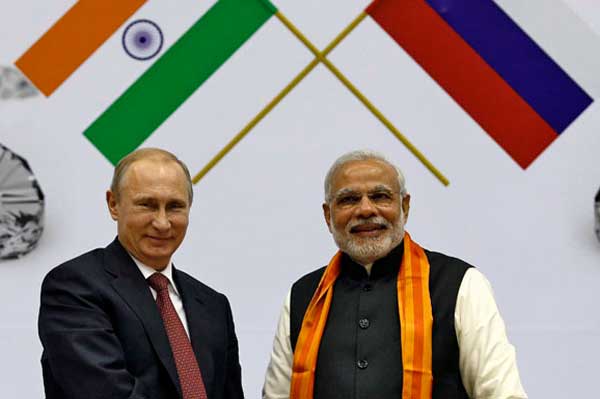
Strengthening the Indo Russian Relationship
By Maj Gen Alok Deb
08 Jul , 2015
…over the last two decades the newly formed Russian Federation’s ties with India did lose some momentum.
How Can China and India Boost Economic Ties?
By Lianlei Bai
July 08, 2015
The bilateral business relationship has underperformed. Here’s what can be done.
There are significant wealth disparities among China’s regions. In fact, most of the coastal provinces and Inner Mongolia (with a combined population of 413 million) have reached GDP per capita (nominal) in excess of $10,000, whereas the rest of China, especially Western provinces such as Gansu, Guizhou and Qinghai, still have GDP per capita as low as $4,297. Given that global GDP per capita is more than $10,000, China is still a developing country.
India's INS Viraat, World's Longest-Serving Aircraft Carrier, Set for Decommissioning
A few mid-week links covering defense, security, and geopolitics in the Asia-Pacific:
Anxiety along the Russia-China border. If you don’t look closely, you may think that Russia and China are two pegs in an ironclad alliance and, while there are good reasons to think that they’ll stay aligned for a while, there are difficulties and anxieties underlying the relations, particularly on the Russian side. As a recent Financial Times report highlights, local politicians in the government of Russia’s Zabaikalsky Krai, a poor area in southern Siberia, on the Chinese border, recently concluded a controversial deal to let a private Chinese firm effectively control and develop 1,000 square kilometers of Russian land over a 49-year lease.
Afghan Officials Reportedly Meet With Taliban in Pakistan
July 08, 2015
Details are few, but this meeting seems to be more ‘official’ than previous rounds of talks.
The Afghan government has pressed for a political solution to the conflict with the Taliban, engaging in a series of informal talks facilitated by Qatar, Norway and China this year. The May meetings in Urumqi, China were organized by Pakistan. The meeting was attended by three members of the old Taliban government and Mohammad Masoom Stanekzai, at the time a member of the High Peace Council and as of July 4 the second nominee for Afghan Defense Minister to be rejected by the parliament. The Urumqi meeting was disavowed by the Taliban, as represented by the official political office based in Qatar–which said the men who attended were not official representatives.
Subscribe to:
Posts (Atom)