11 July 2015

The American Call for Greater Flexibility on Greece

By Michael Leigh
July 8, 2015

BRUSSELS - For the United States, Greece is a valued NATO ally and a land of relative stability, between the faltering Balkans, North Africa, and the Middle East. Its strategic importance throughout the Mediterranean has increased following the failure of the Arab uprisings and the falling-out of two U.S. allies, Turkey and Israel. Greece's cooperation is crucial in counter-terrorism and in efforts to cope with the flow of refugees from Syria and the Horn of Africa. It has become a security partner for Israel, a relationship reflected in growing links between the Greek and Jewish communities in the United States.

The United States has an interest in Europe's drive for greater energy security and diversification of supply away from Russia. Greece aspires to an important role in Europe's energy security through its own offshore exploration for oil and gas and potential future production and through new interconnectors to the Balkans and up into central Europe.

Overall, the "Europeanization" of Greece has saved it from the tribulations of its Balkan neighbors. Much would be lost for the Greek people, the region, the EU, and the United States if Greece became a failed state in an increasingly troubled neighborhood. Russian President Vladimir Putin's efforts to seduce wayward European states might then have greater success.

The New H-6K is China's B-52

July 8, 2015

Beijing’s new bomber flies farther, carries more than older models — but there’s a catch

Today just three countries operate long-range heavy bombers. Russia has 170 or so Bears, Backfires and Blackjacks. America fields 160 swing-wing B-1s, radar-evading B-2s and stalwart B-52s.

China’s bomber force is smaller with around 130 H-6s. And most of the H-6s, copies of Russia’s Cold War Tu-16, lack the long range and heavy payload that many of the Russian and American bombers boast.

But that’s changing. After years of work, the Chinese air force has reportedly outfitted two regiments—together possessing around 36 bombers — with a new, much more capable “K” version of the H-6.

The H-6K is Beijing’s B-52 — a far-flying, fuel-efficient heavy bomber combining a simple, time-tested airframe with modern electronics and powerful, precision weaponry. Although to be fair, the B-52 flies much farther with more bombs and missiles.

Why Is China's Stock Market Crashing?

July 08, 2015

China’s stocks tumbled in recent weeks. Barely three weeks earlier, on June 12 (Friday), Shanghai Composite (SSEC) closed at 5166.35 points, the highest since January 18, 2008. Yet by the end of July 3, the SSEC shed 1481.99 points, losing almost 29 percent of its recent high and more than $2.8 trillion of value (i.e., 10 times of Greece’s annual GDP).

What is vexing for policymakers is that the Chinese stock markets ignored signals from the Chinese leaders and continued their downward fall. Following the 7.40 percent dive on Friday (June 26), the People’s Bank of China (the central bank of China) on Saturday responded by cutting its benchmark interest rates and the amount of reserves certain banks are required to hold. The central bank cut its one-year benchmark lending rate by a quarter of a percentage point to 4.85 percent and its one-year deposit rate by the same scale to 2 percent.

Moreover, Monday, June 29, was supposed to be an auspicious day when the ceremony for the establishment of the Asian Infrastructure Investment Bank (AIIB), a China-led international bank, was held. But investors disregarded these strong signals and continued their selling. The SSEC lost 12 percent for the week, the worst weekly performance since the financial crisis.

Obama Admin Fears Iran Deal Will Release Billions for Terror Attacks

THE BIG PAYBACK
07.08.15
Any nuclear deal with Tehran is going to mean a huge influx of cash for Iran. And even the White House is worried that could mean new funds for Tehran’s terror proxies.

A nuclear agreement with Iran could give Tehran a $100 billion financial windfall—a sum that even the Obama administration is concerned could be used to finance terrorism against American interests.

Iran has billions in assets frozen by an international sanctions regime led by the United States and other world powers. Should a nuclear agreement be reached, as is expected later this week, these assets would be eventually released to the Iranian government.

“We are of course aware and concerned that, despite the massive domestic spending needs facing Iran, some of the resulting sanctions relief could be used by Iran to fund destabilizing actions,” a State Department official told The Daily Beast.

It's Time to Recognize a Failing Strategy

July 8, 2015

In the Islamic State (ISIS), we face a determined enemy melding terrorism and guerrilla warfare with an expansionist, state-building agenda and a mastery of online propaganda. And no country has yet mustered the political will or strategic understanding to defeat the group. In strikingly similar speeches on both sides of the Atlantic on 6 July 6, US President Barack Obama and British Prime Minister David Cameron each admitted that no complete strategy is yet in place, and acknowledged this will be a protracted ‘generational’ struggle with many setbacks.

Over the past year, since its capture of Mosul drew a belated response from the United States, Australia and others, ISIS has adapted to western counterterror efforts, repeatedly beaten Iraqi and Syrian regular troops and Iranian-backed militias, established provinces in Libya, Algeria, Tunisia, Egypt, the Caucasus, Yemen, Afghanistan, Pakistan and Saudi Arabia, and inspired attacks in western states and several North African and Middle Eastern countries.

Who, What, Why: Is it illegal to display an IS flag?


Police have been criticised for not arresting a man who walked through Westminster apparently displaying the black flag associated with the Islamic State group. Is such an act against the law, asks Finlo Rohrer.

The man, with a small child on his shoulders also holding a flag, walked near the Houses of Parliament while draped in the black flag, apparently similar to that used by the Islamist militant group.

The Metropolitan Police said they stopped him but then let him go on his way. "This man was spoken to by officers, with consideration given to relevant legislation, particularly the Public Order Act, and the decision was taken by officers at the time that the man was acting within the law. He was not arrested.

"Wearing, carrying or displaying of an emblem or flag, by itself, is not an offence unless the way in which, or the circumstance in which, the emblem is worn, carried or displayed is such as to cause reasonable suspicion that the person is a supporter or member of a proscribed organisation. While support of and membership of [IS] is unlawful it is not a criminal offence to advocate the creation of an independent state."

The answer

Bangladesh's Success Against Terror

by Tahseen Ali 
July 8, 2015

The U.S. State Department has gone out of its way to praise the government of Bangladesh for fighting against extremism and terror. The accolade is well deserved.

This country of 160 million people is ripe for terrorist influence. According to the State Department's annual Country Reports on Terrorism, "terrorist organizations used social media to spread their radical ideologies and solicit foreign fighters from Bangladesh." Indeed, al Qaeda leader Ayman al Zawahiri once singled out Bangladesh as one of the countries in which the newly-established al Qaeda in the Indian Subcontinent seeks to operate.

Bangladesh has responded adroitly. The government has arrested Bangladeshis who have returned to their country from abroad for attempting to recruit its citizens to join the so-called Islamic State. Indeed, when Indian Prime Minister Narendra Modi visited Bangladesh in June, he praised Prime Minister Sheikh Hasina as a formidable force in fighting regional and global terrorism.

The Third Iraq War

By Lisa Beyer 
Jul 7, 2015

After sending its soldiers to fight in Iraq twice in 20 years, a war-weary U.S. withdrew the last of its troops there in 2011. Three years later, it returned after big chunks of Iraq and Syria fell to the jihadists of Islamic State. No one in authority calls it America’s Third Iraq War, but Operation Inherent Resolve, a 62-nation campaign of airstrikes coupled with the strengthening of Iraqi military and Syrian rebel forces, is led and mostly conducted by the U.S. While President Barack Obama and his critics disagree over whether the effort can defeat Islamic State, others question whether another Iraq war can serve U.S. interests at all.

The Situation

FBI Director Warns Lawmakers ISIS Is Using Encryption To Order Killings

'This is not your grandfather’s al-Qaida,' James Comey told the Senate Judiciary Committee. 

FBI Director James Comey said Wednesday that the Islamic State terrorist network is using Twitter and encryption to recruit thousands of English-language followers and send out kill 

Dustin Volz is a staff correspondent for National Journal covering tech policy. His work has previously appeared in The Washington Post, The Center for Public Integrity, and The Arizona Republic. Dustin is a graduate of Arizona State University and a publisher of Downtown Devil, a hyper-local news ... Full Bio

Appearing before the Senate Judiciary Committee, Comey’s said that ISIS’s sophisticated propaganda on social media allows it to reach 21,000 English-language followers on Twitter, and that potential recruits are often moved onto encrypted mobile-messaging platforms that investigators say are difficult to intercept.

“This is not your grandfather’s al-Qaida,” Comey said. “There’s a device, almost a devil on their shoulder all day long saying, ‘Kill, kill, kill, kill.’ ”

What ISIS Learned From the Cartels

Social media. Beheadings. Dogma. Empty promises. ISIS is copying the Mexican cartel playbook to a T, writes The Cartel author, Don Winslow.

A bound man beheaded in front of a video camera, a chained prisoner burned to death in a cage, the sickening images sent out all over the media.

These are the new horrors on the world scene, the brazenly publicized, technology-driven obscenities of ISIS.

Except they’re not new.

And they’re not ISIS.

They’re Mexico.

British Army Lessons Learned in Afghanistan

Brigadier Ben Barry (ret.) 
July 8, 2015 

The British Army that entered Afghanistan in late in 2001 had a quarter century of successes from Northern Ireland, Zimbabwe, the Falkland Islands, Operation Desert Storm, Bosnia, Kosovo, East Timor and Sierra Leone. All these operations were supported by Parliament, the public and the media. There were remarkably few casualties. Many aspects of these operations were demanding, but in all these conflicts the opposition was of lower average quality than British forces, was mostly unwilling to stand and fight and was overmatched by the arms and joint war-fighting capabilities of the UK and its allies. 

So war in a broken country against enemies who rejected Western values and were prepared to stand, fight and die was a strategic shock. The army was faced with far greater challenges than it had expected. There were periods of intense fighting. Most soldiers, officers and units performed well, often outstandingly so. 

Many International Security Assistance Force (ISAF) nations experienced similar shocks. Those who also provided troops to the US-led Operation Iraqi Freedom were doubly challenged. For the UK this was not only related to the difficulties of sustaining forces in two different operational theatres, but also to the fact that the ever-decreasing popularity of the Iraq War contaminated the public, media and parliamentary popularity of the UK operations in Afghanistan. These factors greatly challenged the British government, its Ministry of Defence (MoD) and the army. All were too slow to adapt. Overall, the British in Afghanistan were not as effective as they could have been. 

The New Siege of Crimea


Western and Ukrainian sanctions are hurting Crimeans while empowering Russia.

Crimea is renowned for a history of enduring two long and brutal sieges of its most famous city, Sevastopol—in the Crimean War (1854-55) and in World War II.

Now a third siege has begun. Since Russia’s annexation of the peninsula in March 2014, the United States and European Union have put Crimea under one of the toughest embargoes in the world. Almost all trade, transport links, and banking transactions have been blocked. The sanctions regime is in fact much harsher than the one on Russia. It is comparable to those imposed on Cuba, Iran, or Sudan, but unique in being applied to a single province of a country rather than a state.

The regime is so strict that American lawyers are advising their clients to have nothing to do with Crimea. Even foreign-made goods that are only 25 percent produced in the United States are subject to the embargo.

Putin is weak


The Russian strongman is terrified of losing control. He should be.

This March, Russian President Vladimir Putin canceled a series of public appearances, and the world promptly seemed to lose its collective mind. Everyone from Russians on social media to mainstream Western journalists speculated wildly about why Putin had "disappeared." Could he be ill? Incapacitated by a stroke? Dead?

After several days passed and Putin failed to surface, the theories grew more exotic. Was this the result of a "silent coup" by the security services? Was there a conspiracy to keep it all quiet? How deep does this go?

Not particularly deep, as it turned out. Putin reappeared a few days later, looking a little pale but otherwise thoroughly alive and un-couped. Although he never offered an official explanation, his waxy pallor suggested he had perhaps been waylaid by a bout of the flu.

The Russian Air Force Keeps Trolling the West

July 8, 2015

On July 4th, 2015 two separate instances of Russian long-range bombers closing on U.S. airspace prompted interceptions by U.S. Air Force F-22 and F-15 fighter aircraft off the coasts of California and Alaska. The bombers, Tupolev TU-95 “Bear” bombers, were intercepted at 10:30 and 11 a.m. Eastern Time.

The bombers did not enter U.S. airspace, and an interception does not mean the destruction of the intercepted aircraft. Around the same time, Russian President Vladimir Putin called President Obama to wish him a happy Independence Day.

Russian bombers did the same thing on July 4, 2013.

In January of this year, two Russian nuclear-capable bombers found their way into air defense zones near Alaska, but were not intercepted. That same month, A Russian Bear bomber was intercepted in the English Channel, flying without its transponder (making it invisible to civilian aircraft) prompting the UK government to summon the Russian Ambassador. In February, Russian Bear bombers were intercepted by an RAF Typhoon near Cornwall, England. Russian media released a video of bomber interceptions from the Russian point of view, featuring British Typhoons, a French Mirage, and a German Eurofighter.

The Heavy Historical Baggage of U.S. Policy Toward the Middle East


There is much to be said for what is commonly called a “zero-based review”—a fresh look at a problem or project unencumbered by existing assumptions and practices. Just about any organization or mission could benefit periodically from such an assessment, to make possible the removal of accumulated historical impedimenta. This is true of U.S. foreign policy, which exhibits far more continuity than is often assumed.

Failure to perceive that continuity stems from the tendency to think in a more disjointed way in terms of presidential administrations. “Doctrines” get attributed to different presidents whether or not the presidents themselves have spoken in such terms. If an administration does not seem doctrinal enough and distinctive enough to pundits, it is apt to be criticized for having “no strategy”. Continuity from one administration to another is not expected and is even rejected.

Inside the Pentagon’s Boot Camp for Cyberwarriors

July 9, 2015 

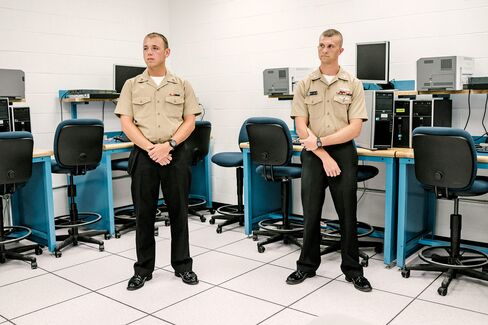
Inside the U.S. Navy’s Corry Station base in Pensacola, Fla., there’s a school that wouldn’t look out of place on any well-manicured college campus—except for a handful of buildings wreathed in barbed wire, with the windows bricked up. That’s to keep electronic signals from getting in or out. The buildings make up the Center for Information Dominance (CID), the Pentagon’s primary boot camp for personnel training in the art of cyberwar.

U.S. Defense Secretary Ashton Carter has said that cyber may one day become the sixth service branch, but the military doesn’t yet have the staff for it. The Pentagon said in April that U.S. Cyber Command, the organization created in 2010 to coordinate military efforts online, won’t reach its six-year goal of deploying 6,200 military and civilian personnel until 2018, two years late. The new force is to be responsible for defending the Pentagon’s computer systems as well as, at the direction of the president or defense secretary, launching cyber attacks. Admiral Michael Rogers, who heads Cyber Command and the National Security Agency, told Congress the government has been “hard-pressed” to find and train qualified service members.

Simply Shocked in Cyberspace

by Michael G. Roskin
7/8/2015

Why doesn't Washington blow its collective stack at Chinese hack attacks? Because we do it too and want to hold down chatter about it so that we can keep doing it. Washington's tardy and mild reaction: "Hacking in cyberspace? We are shocked, simply shocked!" 

Almost comic is the way every form of contestation, war, crime and espionage is instantly modernized with the prefix "cyber" (e.g., cyber-reconnaissance - sneaking into the other guys' computers to see what they've got). 

A little calm is needed in thinking about cybersecurity. First, everyone hacks everyone else, and everyone denies it. China steals much U.S. technology, but imitation may not lead to innovation. If the technology is too advanced for China's skill levels and economy, the stolen secrets are unusable. And, since technology changes so fast, Chinese copycats may go down wrong paths developing yesterday's technology. 

Denouncing Chinese cyberpenetration begs the question of what we do. It is surely plenty, but we want to keep it very close-hold and preserve the present, relatively open networks because they suit us. That may explain federal reluctance to institute a nationwide cybersecurity regime, leaving credit-card companies and corporations to develop their own systems.

How the audacious Pentagon agency that invented the Internet is now trying to save it

July 8 2015

So far, the cybersecurity war has been a lopsided rout. And it’s the bad guys who are on an epic winning streak.
They’ve hacked into retailers, looting credit card information from Target and Home Depot, and stolen sensitive patient data from major health insurers. They’ve hit Hollywood, the media, the Pentagon. And in one of the largest attacks against the federal government, they recently rooted around in the databases of the Office of Personnel Management.

But now the audacious Pentagon research agency that invented the Internet is trying to figure out how to protect it.

The agency’s conclusion: We’re doing cybersecurity all wrong.

Today, most network protective systems are like fire alarms; they sound when there’s smoke, and then the firefighters arrive to extinguish the flames. But the Defense Advanced Research Projects Agency, dubbed the “Department of Mad Scientists,” envisions a massive, automated computer system that not only detects the smoke, but prevents the fire from happening in the first place — or snuffs it out almost immediately.

"On Greece, it is clear that Merkel has failed the test of statesmanship."


In Greece, with one in four unemployed, the people have voted (once again) for an end to self-defeating austerity imposed from abroad. In Brussels and in Berlin, officials and ministers declare their loyalty to a 'European' vision of monetary and fiscal rectitude that might have borrowed its name from Foucault ('discipline and punish') or Dostoyevsky ('crime and punishment'). Across the whole southern half of the continent—from the Pillars of Hercules to the outer approaches to the Hellespont—unemployment has robbed a generation of a future.

Only a decade ago, Europe was mostly remarkable as a place where history had stopped. Nothing symbolized this more than the euro. Today, the single currency is the emblem of a crisis not just in Europe's stagnant economy but in the whole idea of European political unification.

How did we get here?

Jordan's Urgent Need to Reform


"King Abdullah II should not view regional turmoil and domestic stalemate as barriers to reform."
During Jordan’s Army Day ceremony commemorating the Great Arab Revolt at the beginning of June, King Abdullah II incited debate in Jordanian media when he unveiled not the country’s official flag, but a crimson banner bearing the Islamic declaration of faith, blessings and seven-point star. This flag, a centuries-old Hashemite banner, was presented by the Royal Court to signify Jordanian “freedom, unity, independence and the rejection of violence, terrorism and extremism.” While this narrative may emphasize Jordanian unity amid tumult in its neighborhood, it tacitly admits the palace’s growing fears of domestic insecurity.

WHAT DARPA’S NAVAL “DRONE” COULD MEAN FOR THE BALANCE OF POWER

July 9, 2015 

Alongside all the furor of the last decade-and-a-half’s discussions of the operationally, legally, and morally transformative (or otherwise) consequences of unmanned and autonomous aerial vehicles — the now-ubiquitous “drones” debate — another area of remotely operated military technology has been steaming forward with much less fanfare: unmanned naval systems. Remotely operated submersibles are now integral parts of naval mine-hunting andsubmarine rescue. Other unmanned naval systems, such as Israel’sProtector unmanned surface vessel (USV) and in-development NATO equivalents, are more high-profile — and potentially more contentious — in their combination of armament and lack of onboard operators. Yet such USVs have thus far remained most relevant to low-level tactical challenges: close counter-terrorist protection of higher-value naval units (as with Protector), mine countermeasures, communications relay, rudimentary anti-submarine warfare (as with the U.S. Navy’s Fleet-class), and so forth.

Submarine-trailing “drones” approach realization

KEEPING ICBMS “ON ALERT” ENHANCES PRESIDENTIAL DECISION-MAKING

July 9, 2015 

Since 1959, the U. S. Air Force’s ICBMs have been on alert, meaning postured to be ready-to-launch within minutes. This alert posture has generally been considered necessary tosustaining stability with major competitors — first the Soviet Union, and now Russia. Global Zero disagrees. The group claims in a new report that the ICBMs’ high state of readiness is destabilizing mainly because it has a deleterious effect on presidential decision-making. Not only do such claims not hold up well under scrutiny, the discussion misses the mark because the central issue is not presidential decision-making, but adversary decision-making. Let us look at five Global Zero claims.

1. “Keeping ICBMs on alert shortens presidential decision time.”Perhaps because it seems logical, this is the most common misperception regarding ICBMs on alert. With ICBMs on alert, if the United States was attacked, the president has the capability to either withhold launch or launch some, or all, of the ICBMs before the adversary’s weapons arrived at their U.S. targets. It is commonly thought the president might have only 30 minutes of reaction time if such an attack were initiated. Global Zero claims this puts the president under pressure to decide to launch before that half hour is up. This argument fundamentally misunderstands the decision-making process. There are three phases in this process: long-term planning (e.g., developing war plans, acquisition of weapons systems), selection among alternatives under a deadline (e.g., determining immediacy of the threat and appropriate response), and the time between decision and execution or analysis of effect (e.g., initiation of response, analysis of success). During a crisis, time in phase two of this process is of most value because it is within phase two that a presidential decision to use nuclear weapons resides. De-alerting the ICBM force does not increase the time available in phase two, where the president decides whether the situation requires use of a nuclear weapon. De-alerting only increases the time in phase three. It does not give the president more time to make a better decision; it just delays execution of that decision.

NSA Spying on Angela Merkel’s Aides Raises New Questions

Alison Smale
July 9, 2015

German Aides’ Phone Numbers Appear on U.S. Intelligence Documents

BERLIN — Telephone numbers for top aides to Chancellor Angela Merkel ofGermany, as well as for senior figures in the administrations of her predecessors, emerged on an American intelligence document, raising anew questions about the United States’ spying on one of its closest allies.

The lists, part of a trove of United States government documents periodically doled out by the website WikiLeaks, reportedly dated back to the 1990s and included the phone numbers for at least three senior aides to former Chancellor Gerhard Schrรถder, as well as for aides to his predecessor, Helmut Kohl.

The new documents add to a growing pile of allegations that United States intelligence agencies conducted extensive surveillance of the German government. The saga has now run for over two years, emanating from documents revealed by Edward J. Snowden, the former National Security Agencycontractor.

Senate Intelligence Committee Passes Secret Bill Requiring Social Media Operators to Report Online “Terrorist Activities”

July 8, 2015

U.S. Senate bill would make social media report ‘terrorist activity’

WASHINGTON, July 8 (Reuters) - Social media operators such as Twitter, Facebook and YouTube would have to notify federal authorities of online “terrorist activity,” according to the text of a bill approved by the U.S. Senate Intelligence Committee and seen by Reuters on Wednesday.

The types of communication include postings related to “explosives, destructive devices, and weapons of mass destruction,” according to the text. An official familiar with the bill said it was sent to the Senate floor for a vote.

The official said its main purpose was to give social media companies additional legal protection if they reported to the authorities on traffic circulated by their users, rather than coerce them to spy on users.

Hacking Group Best Known for Penetrations of Apple, Facebook and Twitter Has Now Gone Hackers-For-Profit

July 9, 2015

Hackers of Apple, Facebook seen as independent group seeking money

A hacking group best known for breaking into top-tier technology companiesApple Inc, Facebook Inc and Twitter Inc more than two years ago is now believed to be one of a handful of highly skilled independent gangs pursuing corporate secrets for profit.

According to new research from the largest U.S. security software vendor, Symantec Corp, the group appears to be among the few that display significant talent without backing from a national government. The group stays below the radar with a small number of carefully targeted attacks.

“They are very focused, wanting everything valuable from the top companies of the world,” said Vikram Thakur, a Symantec senior manager. “The only way they could use it, in our opinion, is through some financial market or by selling it.”

Thakur said Symantec and other security companies such as FireEye Inc were tracking less than a half dozen such groups, including one called FIN4.

IBM has built the most powerful computer chips in the world

WRITTEN BYMike Murphy
July 09, 2015

This could be big. Er, small. (Flickr/IBM Research)

Since 1965, we have held onto the belief that computing power will double every two years, as argued in a paper by Gordon Moore, the eventual founder of Intel. But in recent years, scientists have been straining to keep Moore’s Law alive, as we start to approach the physical limit of how small we can make silicon chips.

Today (July 9), IBM has announced it has proved it’s possible to produce chips just 7 nanometers wide—or about the width of a few strands of DNA.

“Staying on Moore’s Law is extremely difficult.” 

The New York Times Urges the Troika to “Make an Example of Greece”

by William K. Black, New Economic Perspectives
July 8th, 2015 

It is often the moral and economic blindness of New York Times articles about the EU crisis that is most striking. The newest entry in this field is entitled "Now Europe Must Decide Whether to Make an Example of Greece.

"That is a chilling phrase most associated in our popular culture with a Consigliere and his Don deciding whether to order a mob "hit."

It is, therefore, fitting (albeit over the top) as a criticism of the troika's economic, political, and propaganda war against the Greek people. Except that the article is actually another salvo in that war.

Let's start with the obvious - except to the NYT. "Europe" isn't "decid[ing]" anything. The troika is making the decisions. More precisely, it is the CEOs of the elite German corporations and banks that direct the troika's policies that are making the decisions. The troika simply implements those decisions. The troika consists of the ECB, the IMF, and the European Commission. None of these three entities represents "Europe." None of them will hold a democratic referendum of the peoples of "Europe" to determine policies. Indeed, they are apoplectic that the Greek government dared to ask the people of Greece through a democratic process whether to give in to the troika's latest efforts to extort the Greek government to inflict ever more destructive and economically illiterate malpractice on the Greek people.

Greece By The Numbers

GREG MYRE
JULY 08, 2015

The drachma was Greece's currency before it joined the eurozone in 2001. There's now talk that Greece could leave the euro and return to its old currency, though economists say the transition would be difficult and the drachma would likely be extremely weak.Christopher Furlong/Getty Images

The Greek crisis is messy and complicated, filled with nebulous terms being casually tossed around. Most every story has obligatory mentions of "austerity," "bailouts" and "capital controls," but it can be difficult to determine what, precisely, all that jargon means.

So let's stick to the numbers. Here's a primer on some of the most important ones in the unfolding Greek drama:

2009: The year the crisis began. As the entire global economy reeled, Greece announced it had been understating its budget deficits for years. This upset its European partners, though at the time, it seemed like just one more financial problem among many. But more than five years and two bailouts later, Greece's economic problems are more dire today than when this all began.

The really worrying financial crisis is happening in China, not Greece

09 Jul 2015

China looks like it is heading for its version of the 1929 stock market crash

While all Western eyes remain firmly focused on Greece, a potentially much more significant financial crisis is developing on the other side of world. In some quarters, it’s already being called China’s 1929 – the year of the most infamous stock market crash in history and the start of the economic catastrophe of the Great Depression.

In any normal summer, a 30pc fall in the Chinese stock market – a loss of value roughly equivalent to the UK’s entire economic output last year – after an ascent which had seen share prices more than double within the space of a year would have been front page news across the globe.

The dramatic series of government interventions to stem the panic – hitherto unsuccessful, it should be added – would similarly have been up there at the top of the news agenda. Yet the pantomime of the Greek debt talks, together with the tragi-comedy of will they, won’t they leave the euro, has relegated the story to little more than a footnote - even though 940 companies, more than a third, have now suspended trading on China’s two main indices.

"America in 1929 and China today – are at roughly similar stages of economic development"

SHOULD THE UNITED STATES BUY THE LONG RANGE STRIKE BOMBER? YES

July 9, 2015 


The United States is preparing to restart bomber production. The awarding of a contract this summer for the Long Range Strike Bomber (LRS-B) will end a 20-year production hiatus. While the Department of Defense has officially embraced the need to develop a new bomber for the past decade and has been actively pursuingLRS-B for five years, the award of the development contract represents a substantially higher level of commitment to new bomber production than at any time since shortly after the fall of the Berlin Wall. The pressing question for the Department of Defense and Congress is whether the nation should buy LRS-B at all. They must consider whether LRS-B is cost-effective and affordable within likely budgets, unlike programs such as the Comanche helicopter and Expeditionary Fighting Vehicle that were killed before entering production because they proved unaffordable.

F-105 was the F-35 of the Vietnam Era

By David Axe
July 8, 2015

The U.S. military’s new F-35 Joint Strike Fighter can’t turn fast enough to defeat a much older F-16 in mock air combat, according to an official test pilot report that War Is Boring obtained.
So how will F-35s — on track to be the U.S. Air Force’s most numerous fighter — survive in battle against foes flying much more nimble Russian and Chinese jets?

Look to history for possible answers. Fifty years ago, the Air Force was in a similar predicament. Its main strike fighter was the F-105 Thunderchief — a heavy, high-tech ground-attacker that, much like the F-35, was supposed to also be able to defeat enemy fighters.

But in fact, the F-105 — like the F-35 — turned too slowly to reliably beat the Russian-made MiG-21, the Thunderchief’s main potential rival at the time. So the Air Force worked out special tactics to help the F-105 survive.

The flying branch will have to do the same for the F-35.

The similarities between the F-35 and F-105 are striking. “Both the F-105 and JSF are large, single-seat, single-engine strike fighters, using the most powerful engine of the era … [and] with empty weights in the 27,000-pound class, and wingspans almost identical at 35 feet,” Carlo Kopp, an Australian aerospace analyst, wrote in 2004.

The Shock Troops Who Don't Fear Death

July 8, 2015

BAGHDAD (AP) — Bearded and wearing bright blue bandanas, the Islamic State group's "special forces" unit gathered around their commander just before they attacked the central Syrian town of al-Sukhna. "Victory or martyrdom," they screamed, pledging their allegiance to God and vowing never to retreat.

The IS calls them "Inghemasiyoun," Arabic for "those who immerse themselves." The elite shock troops are possibly the deadliest weapon in the extremist group's arsenal: Fanatical and disciplined, they infiltrate their targets, unleash mayhem and fight to the death, wearing explosives belts to blow themselves up among their opponents if they face defeat. They are credited with many of the group's stunning battlefield successes — including the capture of al-Sukhna in May after the scene shown in an online video released by the group.

"They cause chaos and then their main ground offensive begins," said Redur Khalil, spokesman of the U.S.-backed Kurdish People's Protection Units, which have taken the lead in a string of military successes against the IS in Syria.

Who Says U.S. Defense Industry Can't Innovate?

July 8, 2015

Of late, the never-ending debate in Washington over U.S. defense policy has been dominated by two related topics. The first is the growing concern that this country is losing its long-held qualitative advantage in military capabilities. The second is the continuing decline in defense spending and the resulting need to reform the acquisition system in order to reduce the cost of the defense enterprise generally and ensure the availability of the resources necessary to acquire the next generation of dominant military systems. To meet these challenges, the Department of Defense is pursuing a set of related programs and policies under the broad heading of defense innovation. The rationale for this effort was defined succinctly by Deputy Secretary of Defense Robert Work in his foundational memorandum on the subject:

“I am establishing a broad, department-wide initiative to pursue innovative ways to sustain and advance our military superiority for the 21st Century and improve business operations throughout the Department. We are entering an era where American dominance in key warfighting domains is eroding and we must find new and creative ways to sustain, and in some areas expand, our advantages even as we deal with more limited resources. This will require a focus on new capabilities and becoming more efficient in their development and fielding.”

10 July 2015

Why China's Stock Markets Matter

by STRATFOR

The Shanghai Composite Index fell 6 percent on July 3, rounding out a 28 percent decline since June 12, when the country's stock markets peaked. The deterioration occurred despite intensive government efforts to stabilize prices and revive investor sentiment.

Overt attempts by Beijing included cutting benchmark interest rates and reserve requirement ratios and loosening restrictions on investor access to margin loans, in addition to less overt moves, such as direct interventions to prop up the market with government-backed purchases of blue chip stocks. On Friday, in a clear bid to win investor confidence in its oversight abilities, the securities regulator announced it would investigate signs of potential market manipulation. Yet so far, Beijing's efforts have failed to achieve the desired effect of stimulating, or at least stabilizing, China's leading stock markets.

In the days and weeks ahead, Beijing will not meekly accept the natural winding down of the past year's stock boom turned bubble. Rather, it will continue to work, both overtly and covertly, to prevent prices from collapsing outright - all while seeking to reshape investor sentiment and expectations through investigations, like those recently announced. The question of why Beijing feels compelled to take action remains, especially when any intervention risks exacerbating whatever financial and political fallout may come from an eventual market decline or crash. The answer to this question lies in understanding the role of stock markets in China's economy and Beijing's broader policy priorities, as well as evaluating the potential effects of a stock market crash on both.
Nurturing Consumer Growth

The Chinese government's core policy goal - the crux of its entire economic reform and rebalancing program - is to cultivate a domestic consumer base capable of supporting nationwide growth that is stable, sustainable and less exposed to fluctuations in external demand. To do this requires a boost in average incomes to a level where non-essential purchases become feasible for ordinary people. Additionally, China needs to instill in its citizens a sense of financial security adequate enough to convince them to spend - rather than save - their disposable income.

China has struggled on both fronts over the past two decades. Until recently, China was a country of near-universal poverty. Its post-1978 economic growth model, grounded as it was in low-cost exports and state-led investment into infrastructure construction, necessitated two policies: the systematic repression of manufacturing wages to maintain the competitiveness of exports and the suppression of interest rates on savings deposits. Keeping interest rates low ensured cheap financing for China's state-owned sector, which was responsible for the vast majority of infrastructure development and which survived on credit from state-controlled banks. These factors, more than any supposed cultural inclination to save, explain China's extraordinarily low levels of private household consumption relative to other parts of its economy - and compared to consumption levels in other countries.