4 August 2015

India, Pakistan and the 1971 War POWs

By Alastair Sloan
August 01, 2015
http://thediplomat.com/2015/08/india-pakistan-and-the-1971-war-pows/\

Indian POWs from the Indo-Pakistani War of 1971 remain a sore point in bilateral relations.
The Indian government is coming under pressure to lobby Pakistan for the release of 54 missing prisoners of war, held since the 1971 conflict. While 90,000 Pakistani troops were captured by the Indian Army at the end of the war, and then released as part of the Simla peace agreement, 54 Indian soldiers, officers and pilots continued to be held by Pakistan.

Four and a half decades on, two British human rights lawyers are taking a case to the Supreme Court in Delhi on behalf of the missing men’s families. Successive Indian governments have done little to recover their missing military personnel – perhaps for fear of rocking an already fragile relationship between the two countries. The families are now hoping the Supreme Court judge will rule that the case be handed over for independent arbitration by the International Courts of Justice, a body backed by the United Nations Security Council.
Games Nations Play: The Middle East Conflict — A Game of Gas Pipelines

By Brig Amar Cheema
01 Aug , 2015

A decade may appear to be a microcosm compared to the infinity of time, however, when measured on the scale of geo-politics, a decade can often become an eternity. Viewed in the context of the decade long blood-letting in the Middle East since the US led invasion of Iraq, it would be fair to revisit the US Mission of ‘Winning the Global War on Terror’ and the ‘promotion of freedom as an alternative to tyranny and despair.’[1]

The aim is to highlight the external reasons for the conflict, a conflict that has little chance of waning, since there are major interests involved.

The issue is relevant since far from eliminating terror, not only is the Al Qaeda network intact, their acts of terror have been surpassed by the brutal Islamic State of Iraq and Al Shams and/or the Levant (ISIS/ISIL). In neighbouring Syria, the ‘externally fuelled’ civil war continues and in the last four years, close to 300, 000 people have lost their lives, making Syria the ‘human tragedy of the decade.’ Indeed, the macabre dance of death being played out in the Middle-East, is a travesty of freedom and peace.

What Would Mao Say? Top Chinese General Arrested for Graft

NOZOMU HAYASHI
August 2, 2015

Xi strengthens control after former top military officer detained 

BEIJING–A former officer known as the “don of the military’s northwestern faction” was detained July 30 on suspicion of bribery, a move seen as tightening Chinese President Xi Jinping’s grip over the armed forces.

Guo Boxiong, 73, was stripped of his Communist Party membership and accused of major disciplinary violations in addition to taking bribes, according to the Central Committee Politburo’s decision.

His case was sent to military prosecutors.

Guo served as vice chairman of the Central Military Commission when Hu Jintao was president. The other vice chairman of that time, Xu Caihou, was detained in 2014 on suspicion of corruption, but he died before an indictment could be handed down.

The latest decision means the two top military officers under Xi’s predecessor have been taken into custody.

According to the state-run Xinhua News Agency, Guo is suspected of accepting bribes in exchange for promoting his subordinates. The Politburo decision was described as “an expression of the resolute political resolve to strictly govern the military by law.”

Chinese Military Newspaper Issues Warning About Graft in Army

August 2, 2015

Chinese Military Paper Warns a Corrupt Army Does Not Win Wars

BEIJING — The Chinese military’s official newspaper warned on Sunday that a corrupt army would not win wars, three days after the government announced a former senior officer would be prosecuted for graft.

Serving and retired Chinese military officers as well as state media have questioned whether China’s armed forces are too corrupt to fight and win a war.

President Xi Jinping has made weeding out corruption in the armed forces a top goal and several senior officers have been felled, including two of China’s most senior former military officers, Xu Caihou and Guo Boxiong.

The government said on Thursday that it would prosecute Guo for corruption. Xu died of cancer in March.

“If we allow the growth and spread of corruption, the guns will rust, the pillars will collapse,” the People’s Liberation Army Daily said in a front-page editorial.

“History has repeatedly proven that if corruption is not eliminated, we will defeat ourselves even before a war.”

For the ASEAN-China South China Sea Code of Conduct, Ninth Time Isn't the Charm

August 01, 2015
After consultations in Tianjin, Chinese and ASEAN leaders appear to be no closer to a Code of Conduct for the South China Sea.

Senior officials from China and the Association of Southeast Asian Nations (ASEAN) met in Tianjin, China to discuss the implementation of the 2002 Declaration on the Conduct of Parties in the South China Sea (DOC) and to advance progress toward a more binding Code of Conduct for the South China Sea. The meeting comes as tensions between ASEAN claimants, including the Philippines and Vietnam, and China remain high in the South China Sea, where China has spent the last 18 months carrying out an unprecedented level of artificial island-building and construction on features it occupies in the Spratly Islands. China agreed to begin discussing the Code of Conduct with ASEAN in 2013.

The Tianjin meetings, formally the Ninth Senior Officials’ Meeting on the Implementation of the Declaration on the Conduct of Parties in the South China Sea, had little to offer in the way of deliverables. Leaders did walk away with a new mechanism that could help prevent military escalation in the South China Sea: they agreed to implement a foreign ministers’ hotline specifically to handle any emergencies in the South China Sea. According to Reuters, which reported on the hotline, the mechanism will be formally announced in a joint statement after next week’s meeting of ASEAN foreign ministers.

Six Wars China Is Sure to Fight In the Next 50 Years

By IDR News Network
02 Aug , 2015

On July 8, 2013, the pro-PRC Chinese-language newspaper, Wenweipo, published an article titled “ไธญๅœ‹ๆœชไพ†50ๅนด่ฃกๅฟ…ๆ‰“็š„ๅ…ญๅ ดๆˆฐ็ˆญ (Six Wars China Is Sure to Fight In the Next 50 Years)”.

The anticipated six wars are all irredentist in purpose — the reclaiming of what Chinese believe to be national territories lost since Imperial China was defeated by the Brits in the Opium War of 1840-42. That defeat, in the view of Chinese nationalists, began China’s “Hundred Years of Humiliation.” (See Maria Hsia Chang,Return of the Dragon: China’s Wounded Nationalism. Westview, 2001.

Below is the English translation of the article, from a Hong Kong blog, Midnight Express 2046. (The year 2046 is an allusion to what this blog believes will be the last year of Beijing’s “One County, Two Systems” formula for ruling Hong Kong, and “the last year of brilliance of Hong Kong.”)

Midnight Express 2046 (ME2046) believes this article “is quite a good portrait of modern Chinese imperialism.” What ME2046 omits are:
the original Chinese-language article identifies the source of the article as ไธญๆ–ฐ็ถฒ (ChinaNews.com).
The Chinese-language title of the article includes the word bi (ๅฟ…), which means “must” or “necessarily” or “surely.” That is why the word “sure” in the English-language title of the article.

RIP: America's "Engagement" Strategy towards China?

August 3, 2015

Obama himself appears increasingly exhausted with the limitations of engagement with Beijing. Is it time for a new strategy? 
Since its historic rapprochement with Beijing in the 1970s, America has approached a rising China with an “engagement” strategy guided by two key assumptions: first, that political liberalization would ultimately follow economic growth; and second, that supporting China’s integration into the global order would preempt Beijing from forcibly challenging that order. While confidence in those assumptions has waxed and waned, never did a consensus emerge that they were fundamentally flawed—until now.

Today, Washington is confronting the dreadful realization that with each passing year, the goals of political liberalization and peaceful integration appear to grow more distant, while the prospect for conflict with China draws nearer. Even advocates of engagement, like Dr. David Shambaugh, are warning that the strategy “is unraveling” while domestic repression in China “is the worst it has been in the twenty-five years since Tiananmen.” So what went wrong?

HISTORY’S REAL LESSONS ON THE IRAN DEAL


We are just a short while away from the launch of our new website, and we are holding a sweepstakes to celebrate. You can win your own home bar kit or collections of books on strategy, Asia, and the Middle East. All you have to do is sign up!

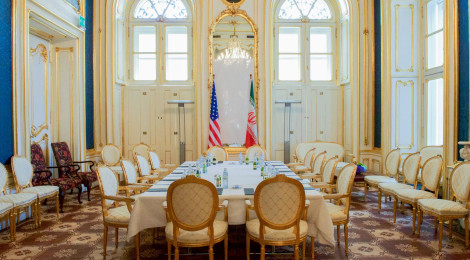
Opponents of the Iran nuclear deal see many virtues and no significant risks in congressional disapproval of the agreement. And they often advance their views with historical arguments. Unfortunately for them and the larger debate on the Iran deal, their reading of history is flawed.

If Congress misses the opportunity to help secure America’s interests abroad, it would not be the first time. The Senate, for example, rejected the Versailles Treaty ending World War I. Whatever the treaty’s flaws, that decision locked America out of the League of Nations, and out of efforts to prevent the rise of Nazism in Germany. In 1999, congressional defeat of the Comprehensive Test Ban Treaty makes it harder for America to challenge nuclear proliferation. And today concerns remain in some quarters about the UN Convention on the Law of the Sea (UNCLOS), rejected in 1960 but championed anew by recent administrations. Unless, and until, we ratify UNCLOS, America has no legal standing to challenge China’s maritime expansion.

U.S.-Trained Syrian Rebel Group Abandons Their Headquarters After Being Attacked by Al Qaeda

August 2, 2015

Syrian Rebel Group Leaves Their HQ After Clash With Al-Qaida

BEIRUT — Clashes between members of al-Qaida’s branch in Syria and a rebel faction in the country’s north believed to have been trained by the U.S. government have stopped after the rebels abandoned their headquarters, activists said Saturday.

The Nusra Front meanwhile released a video showing one of the captured rebels saying that the men in the faction known as Division 30 were trained in Turkey by U.S. officers and sent back to Syria with money and weapons.

The fighting came a few days after the U.S. and Turkey announced the outlines of a deal to help rebels push the Islamic State group back from a strip of territory it controls along the Syrian-Turkish border, replacing it with more moderate rebels backed by Washington and Ankara.

Rami Abdurrahman, who heads the Britain-based Syrian Observatory for Human Rights, said members of the Division 30 faction fled to a nearby area controlled by a Syrian Kurdish militia. Abu al-Hassan Marea, a Syrian activist who is currently in Turkey near the Syrian border, confirmed Saturday that Division 30 fighters have withdrawn from their headquarters.

Abdurrahman and Marea said Division 30 had less than 60 fighters and that on Friday alone the group lost five fighters and 18 others were wounded.

‘IS has managed to repulse most of the world’


IS’s lure is mainly based on its marketing skill and the way it has figured out how to sell its version of jihad to different audiences. Picture shows IS fighters waving flags during a military parade in Syria’s northern Raqqa province in 2014. 

Foreign fighters who manage to get out say the “Caliphate” is more brutal than they expected

Given the terror outfit Islamic State of Iraq and Syria’s meteoric rise and its enormous appeal among Muslim youth all over the world — including India — no nation can afford to ignore its threats. This becomes more imperative after a recent report carried by USA Today that IS is contemplating an attack on India. The fact that as obdurate a nation as Turkey has at last chosen to join the U.S. and other allies in the war against IS would point to a global consensus that the civilised world will have to pay a heavy price if it cannot tame the outlaw.

Against this background, R.K. Raghavan spoke to Dr. Jessica Stern of the Kennedy School of Government in Harvard University.

Despite bombing, Islamic State is no weaker than a year ago


Jul. 31, 2015

WASHINGTON (AP) — After billions of dollars spent and more than 10,000 extremist fighters killed, the Islamic State group is fundamentally no weaker than it was when the U.S.-led bombing campaign began a year ago, American intelligence agencies have concluded.
U.S. military commanders on the ground aren't disputing the assessment, but they point to an upcoming effort to clear the important Sunni city of Ramadi, which fell to the militants in May, as a crucial milestone.

The battle for Ramadi, expected over the next few months, "promises to test the mettle" of Iraq's security forces, Marine Corps Brig. Gen. Kevin J. Killea, who is helping run the U.S.-led coalition effort in Iraq, told reporters at the Pentagon in a video briefing from the region.

The U.S.-led military campaign has put the Islamic State group on defense, Killea said, adding, "There is progress." Witnesses on the ground say the airstrikes and Kurdish ground actions are squeezing the militants in northern Syria, particularly in their self-proclaimed capital in Raqqa.

Egypt: Iran's Next Sunni Enemy


Though quiet, Egypt also fears the Iran nuclear deal.

After an initially cautious response to the Iran nuclear deal, Egypt upped the ante against Tehran last week, with both the Foreign Ministry and the Al-Azhar religious seminary condemning the Islamic Republic’s “interference” in Arab affairs. Cairo has been more circumspect than Israel and the Gulf states in condemning the agreement, but its quiet should not be mistaken for acquiescence—like them, it dreads the effect of a cash-flush and potentially nuclear-armed Iran on its interests and security.

Egypt is, with Saudi Arabia and the Gulf monarchies, a pillar of the Sunni Arab bloc opposed to the spread of Iranian influence in the region. Since Cairo’s July 2013 coup against the Islamist president Mohamed Morsi, it has receivedtens of billions of dollars in Gulf aid—chiefly from the Saudis and United Arab Emirates, both of which share maritime borders with Iran and are directly threatened by its destabilizing regional behavior. With Egypt’s traditionally close ties with Washington at a nadir, Cairo is keen to avoid alienating its foremost regional allies and benefactors.

Obama's 21st-Century Imperialism on Display in Africa

August 3, 2015

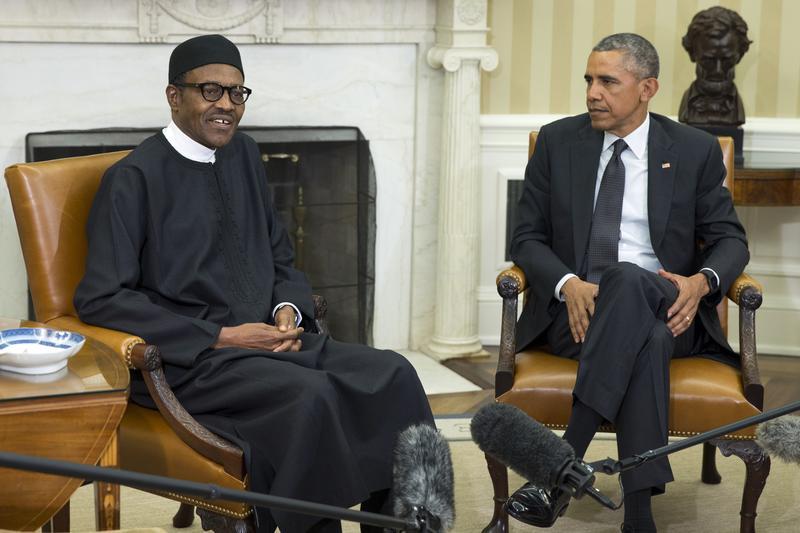
Last month, the eyes of the world were on Africa as President Obama welcomed Nigerian president Muhammadu Buhari to the White House and, for the first time as president, visited his father's home country of Kenya.

Reports indicate that Buhari and U.S. President Barack Obama discussed the Islamic terrorist group Boko Haram, as well as possible political and economic reforms for Buhari's struggling country. Similar discussions took place in Kenya.

While all seemed well on the public front, the reality is that both Buhari's and Obama's visits were used by the White House to promote what Pope Francis called "ideological colonization." This agenda was let slip just days before Buhari arrived in Washington, when the U.S. State Department indicated it would push the Nigerian government to redefine marriage.

According to the Nigerian Pilot, America's Assistant Secretary of State for African Affairs, Linda Thomas-Greenfield, told reporters that "[a]s a policy, we will continue to press the government of Nigeria, as well as other governments which have provided legislation that discriminates against the LGBT community."

Lessons Learned: U.S. Military Should Learn Everything It Can About Russian Electronic Warfare Tactics Used During War in Ukraine

Joe Gould
August 3, 2015

WASHINGTON — The US military has for weeks been training Ukrainian forces in US tactics, but the commander of US Army Europe says Ukrainian forces, who are fighting Russian-backed separatists, have much to teach their US trainers.

Ukrainian forces have grappled with formidable Russian electronic warfare capabilities that analysts say would prove withering even to the US ground forces. The US Army has also jammed insurgent communications from the air and ground on a limited basis, and it is developing a powerful arsenal of jamming systems, but these are not expected until 2023.

“Our soldiers are doing the training with the Ukrainians and we’ve learned a lot from the Ukrainians,” said Lt. Gen. Ben Hodges. “A third of the [Ukrainian] soldiers have served in the … combat zone, and no Americans have been under Russian artillery or rocket fire, or significant Russian electronic warfare, jamming or collecting — and these Ukrainians have. It’s interesting to hear what they have learned.”

Hodges acknowledged that US troops are learning from Ukrainians about Russia’s jamming capability, its ranges, types and the ways it has been employed. He has previously described the quality and sophistication of Russian electronic warfare as “eye-watering.”

Russia maintains an ability to destroy command-and-control networks by jamming radio communications, radars and GPS signals, according to Laurie Buckhout, former chief of the US Army’s electronic warfare division, now CEO of the Corvus Group. In contrast with the US, Russia has large units dedicated to electronic warfare, known as EW, which it dedicates to ground electronic attack, jamming communications, radar and command-and-control nets.

Iran's Master Plan to Retaliate If Israel Strikes


"The name of the game for Iran is to maximize the damage on Israeli and U.S. interests without provoking a conventional military assault."

Ask U.S. Secretary of State John Kerry why the Joint Comprehensive Plan of Action is so important to the foreign policy interests of the United States and its allies, he would likely tell you that the pact averts the possibility of yet another U.S.-led confrontation in the Middle East.

Whether you like all of the agreement’s provisions or not, Kerry has hit that message home as he makes the rounds on television, classified briefings, and testimony in front of Congress: the JCPOA, he argues, is the only lever that the international community has to prevent the Iranians from assembling a nuclear weapons capability over the next 15 years. Anything other than a negotiated settlement, in the administration’s mind, will be a stepping-stone to a war with dramatic repercussions.

Europe's 5 Most Lethal Weapons of War


Europe may no longer be the global force it was in centuries past, but its armed forces operate potent instruments of hard power.

For roughly four centuries, world affairs centered around Europe. Much of Europe’s centrality was based on its superior military power.

Through the middle of the 20th century, Britain, France, Spain, Portugal, and others controlled vast stretches of land in Africa, Asia, and the Americas; some possessions dwarfed all of Europe in size and population. Only two world wars, at the cost of tens of millions of lives, exhausted Europe’s world-dominating military capabilities.

The recent dysfunction in the European Union obscures the continent’s impressive military legacy. Even after the United States eclipsed Europe as the principal Western military power, NATO members developed sizeable arsenals to counter the threat of the Soviet Union and its proxies. With the collapse of the U.S.S.R., Europe’s governments dramatically cut their defense spending. The rise of non-Western nations like China and India further displaced Europe’s global position.

Debris found on Indian Ocean island not related to MH370, Malaysian officials say

News from around the world.

Object a 'domestic ladder', Malaysian Civil Aviation official says

After initial investigations, Malaysian authorities on Sunday rejected the news that an object found on an island in the Indian Ocean was related to missing Malaysian Airlines flight MH370. Malaysia's Director-General of Civil Aviation Azharuddin Abdul Rahman said that the object found on the French island of La Reunion was a "domestic ladder". The debris was found on the island's beach along with a wing flap of a Boeing-777, the model of the missing aircraft. The flight, which was carrying 239 people on board, disappeared while on route to Beijing from Kuala Lumpur in March last year.

300 Muslim Brotherhood loyalists jailed in Egypt

An Egyptian court on Saturday sentenced 300 loyalists of the blacklisted Muslim Brotherhood group to jail over violence charges. Thirty one people were sentenced to 10 years and 269 were sentenced to 3 years after being convicted for various acts of violence. Earlier, Egypt's National Council of Human Rights said that the violence since the removal of former President and Muslim Brotherhood leader Mohamed Morsi had resulted in the death of 2,600 people in the country, including civilians, police officers and army men. Morsi was removed by military forces in 2013 after mass protests against his rule. In June, a court had confirmed the death sentence awarded to Morsi over his alleged role in a mass jailbreak in the 2011 uprising that led to the removal of then-President Hosni Mubabrak.

Obama adopts tough stance against global warming

German Domestic Intelligence Chief Defends Treason Charges Against Blogger for Revealing Eavesdropping Secrets

Deutsche Welle
August 3, 2015

In an interview with German weekly “Bild am Sonntag,” domestic intelligence chief Hans-Georg Maassen defended criminal charges against Netzpolitik reporters Andre Meister, Markus Beckedahl and an “unknown source” for publishing state secrets online.

Maassen, president of Germany’s Federal Office for the Protection of the Constitution (BfV), said that “to continue the fight against extremism and terrorism…it was necessary to guard against the publication of documents classified as confidential or secret.”

However, an investigation into German news site Netzpolitik’s reporters wasfrozen by Federal Prosecutor Harald Range on Friday.

“Everything else is now in the hands of the justice ministry,” Maassen told the German periodical.

Criticism of ‘treason’ charge

High-Tech Companies That Cater to U.S. Intelligence Community Now Selling Their Wares On Wall Street

Bradley Hope
August 3, 2015

Spy Software Gets a Second Life on Wall Street

FRANKLIN, Tenn.—Spies are infiltrating Wall Street.

A wave of companies with ties to the intelligence community is winning over the world of finance, with banks and hedge funds putting the firms’ terrorist-tracking tools to work rooting out employee misconduct before it leads to fines or worse.

“Both Wall Street and the intelligence world want the same thing: to find unknown unknowns in the data,” said Roger Hockenberry, the former chief technology officer of the Central Intelligence Agency’s clandestine services and now a partner at the consulting firm Cognitio Corp. in Washington.

“Financial firms aren’t looking for terrorists, but good customers and attempts at fraud,” he said.

The CIA gave many of these companies their big break: After the terror attacks of September 2001, a private-equity arm of the CIA known as In-Q-Tel began seeding companies that could help it sift through vast repositories of data to quickly identify threats. Those skills have become more valuable on Wall Street as firms try to keep up with rogue traders in increasingly complex and rapidly moving markets.

The Difficulty of Try to Keep So Many Secrets

Peter van Buren
August 3, 2015

What everyone with a Top Secret security clearance knows – or should know

In the world of handling America’s secrets, words – classified, secure, retroactive – have special meanings. I held a Top Secret clearance at the State Department for 24 years and was regularly trained in protecting information as part of that privilege. Here is what some of those words mean in the context of former Secretary of State Hillary Clinton’s emails.

The Inspectors General for the State Department and the intelligence community issued a statement saying Clinton’s personal email system contained classified information. This information, they said, “should never have been transmitted via an unclassified personal system.” The same statement voiced concern that a thumb drive held by Clinton’s lawyer also contains this same secret data. Another report claims the U.S. intelligence community is bracing for the possibility that Clinton’s private email account contains multiple instances of classified information, with some data originating at the CIA and NSA.

A Clinton spokesperson responded that “Any released emails deemed classified by the administration have been done so after the fact, and not at the time they were transmitted.” Clinton claims unequivocally her email contained no classified information, and that no message carried any security marking, such as Confidential or Top Secret.

The key issue in play with Clinton is that it is a violation of national security to maintain classified information on an unclassified system.

Hillary Email Affair Highlights the Fact That U.S. Still Classifies Way Too Much Information

Tom Blanton
August 2, 2015

“America classifies way too much information - and we are all less safe for it”

Tom Blanton is director of the National Security Archive at George Washington University.

Warning: If you hold a security clearance, reading this column could expose you to information that potentially violates your security agreement. Reading this column will certainly expose you to information that is currently classified by some securocrats, though not by others.

The inspectors general of the State Department and the intelligence community have made a security referral to the Justice Department regarding Hillary Clinton’s e-mails on the grounds that some of them were “potentially classified.”

So is this column.

Watch out: Your clearance is at stake.

Pollard Case is a Reminder that Spying is a Dirty Business, Even Amongst Friends

Fred Burton
August 2, 2015

Broken Trust: The Pollard Affair 

For anyone who spent time in the intelligence business, the morning news has a way of dredging up old memories. This November, convicted Israeli spy Jonathan Pollard will go free on parole after 30 years in prison, in what some are calling an overtly political move by the United States to appease Israel after the Iran deal.

I myself have mixed feelings about Pollard’s release. Maybe 30 years is long enough to bring the former U.S. Naval Intelligence analyst to justice. But I still vividly recall what a powerful sense of betrayal the entire intelligence community felt when he was caught and convicted in 1987. As special agents and analysts at the intelligence services, every day we handled sensitive, classified information. Most of us took that responsibility extremely seriously, daily devoting our lives and livelihoods to the defense of U.S. national security and to the protection of state secrets. But Jonathan Pollard broke that trust.

While spying for the Israelis in 1984 and 1985, Pollard delivered Mossad, Israel’s spy agency, more than 800 classified documents — suitcases full at a time — and 1,500 daily intelligence summary wrap-up messages. After he was discovered, a deep fog of anger settled over the U.S. intelligence community. We felt betrayed, not only (or even primarily) by Pollard but by Israel — and specifically, by the Israeli intelligence service. 

Taliban Release Written Statement From the Leader of Haqqani Group Reported to Have Died

August 2, 2015

Afghan Taliban Issues Statement Quoting Haqqani Group Leader

KABUL, Afghanistan — The Afghan Taliban issued a written statement Sunday purportedly quoting Jalaluddin Haqqani, the leader of the notoriously brutal Haqqani insurgent group, in an effort to quell rumors of his death.

The statement, posted to the Taliban’s website, quoted Haqqani mourning the loss of Mullah Mohammad Omar, the one-eyed leader of the group whose death the extremists confirmed last week. The Afghan government says Mullah Omar died in April 2013.

The Taliban have announced that Mullah Akhtar Mohammad Mansoor is their new leader and released a purported audio statement from him Saturday. The statement released Sunday did not include any audio of Haqqani speaking to prove he is alive, however it comes as the Taliban tries to present a unified front behind Mansoor as they continue their nearly 14-year insurgency against the Afghan government.

Relatives of Mullah Omar, including his son Yacoob, have said they do not support Mansoor, hinting at fissures between those who want to continue fledgling peace talks and the movement’s more extreme elements. The statement Sunday said Haqqani backed Mansoor as the Taliban’s leader.

Why the Hillary Email Imbroglio Matters for Those Who Care About Secrecy and Transparency

Trevor Timm
August 2, 2015

Sorry, Hillary Clinton fans: her email errors are definitely newsworthy 

The Hillary Clinton presidential campaign and its supporters have spent the last week trying to paint the continuing scandal over Clinton’s private email server as a partisan persecution with no significance to the presidential race. But anyone who cares about government transparency, overclassification and cybersecurity should care about Clinton’s email scandal – including her strongest supporters. 

Put aside the House’s Benghazi committee and Republican attempts to turn every Clinton misstep into a Great Benghazi Conspiracy. There’s plenty of legitimate reasons this remains a disturbing episode, and it’s a wonder Clinton’s camp isn’t more forthcoming with the media. Whether her supporters like it or not, this is a story, and it’s going to continue to be a story as emails continue to be released over the next year.

First, there’s Clinton herself. She repeatedly denied having classified information in her emails, yet now we find out there are likely “hundreds” of emails containing it (more on that later). One of her closest aides, Philippe Reines, excoriated Gawker months ago for claiming he was using a private email address to conduct state business during his tenure at the State Department, yet he apparently just turned over 20 boxes of emails containing just that. Does the public not deserve an explanation about these seemingly false statements?

Hypocrisy and Spying

Matthew Heiman
August 1, 2015

Spying, the law, and hypocrisy

Recently, German prosecutors said that they were closing their investigation of allegations that the U.S. National Security Agency had tapped Chancellor Angela Merkel’s mobile telephone. The chief prosecutor said there was insufficient evidence to prosecute. The investigation was triggered when the German magazine Der Spiegel published an article citing documents from NSA leaker Edward Snowden. At the time, Chancellor Merkel said, “Spying among friends – that is simply not done.” According to an unnamed German official, the event created the biggest strain in U.S.-German relations since the 2003 invasion of Iraq.

When the Snowden leaks began in 2013, many leaders joined Chancellor Merkel in expressing their outrage over the NSA’s collection of metadata about telephone calls. These expressions of displeasure included arguments that privacy rights had been violated, and that the NSA’s activities were illegal under international law and the domestic law of their countries. French officials described the NSA’s actions as “unacceptable” and “shocking.” During a speech at the United Nations, immediately preceding President Obama’s speech, Dilma Rousseff, president of Brazil, said, “Tampering … in the affairs of other countries is a breach of international law and is an affront of the principles that must guide the relations among them … .”

HACKING MAP: Watch live as 'China launches countless hack attacks on UK and USA'

Jul 29, 2015 

It LOOKS like laser warfare with China and the USA blasting each other with Russia and Europe caught in the middle.


It's cyber warfare as hundreds of NORSECORP
It's cyber warfare as hundreds of "live attacks" blast across globe

But this is more like the plot of a modern version of 1980s Hacking movie War Games.

Digital India: The Foundations – Changing Tyres On A Moving Car


Aashish Chandorkar is a Management Consultant based in Pune and working in Mumbai. He holds diverse interests across politics, economics, sports and Bollywood. He tweets at @c_aashish. 
The government is attempting to change all four tyres of a moving car that is fast running out of fuel. It will need tremendous planning and management skills, cooperation from political parties not friendly to the government and dollops of luck to get this part of Digital India completed.

In the first part of this series of articles on Digital India, we looked at the overall program framework of nine pillars that will have to come together to make this program successful. The building blocks of the program lie in the Digital Foundation Layer, which comprises of three pillars – they deal with creating the physical fiber and telecom infrastructure required to enable the service delivery components, which make up the rest of the Digital India program.

While creating an optical fiber-based broadband infrastructure across the country is the central tenet of this initiative, the government has implicitly also added wireless telecom infrastructure as one of the foundational pillars.

Achieving the targets set by the government for these pillars is, however, the toughest hurdle facing the Digital India program. If Digital India were a track and field event, getting the digital foundation right is the steeplechase of the program – the toughest and most intricate element.

Trans-Pacific Partnership: Hawaii Talks End Without Deal

August 02, 2015
http://thediplomat.com/2015/08/trans-pacific-partnership-hawaii-talks-end-without-deal/

The world economy could be $300 billion poorer after the failure of the latest Trans-Pacific Partnership (TPP) talks in Hawaii. With time running out to salvage a deal, the U.S.-led trade pact risks becoming stalled indefinitely, handing the initiative to China’s rival grouping and reducing the prospect of much-needed productivity gains.

Hopes of a breakthrough were high when negotiators from the 12 TPP nations met Tuesday in the tropical U.S. island state to seek agreement after five years of talks. Comprising Australia, Brunei, Canada, Chile, Japan, Malaysia, Mexico, New Zealand, Peru, Singapore, the United States and Vietnam, the grouping encompasses 40 percent of world gross domestic product (GDP) and a quarter of global exports, with a successful TPP potentially representing the world’s biggest trade accord in more than a decade.

Yet after much fanfare and encouraging initial reports, on Friday the TPP’s trade ministers ended their negotiations, releasing a joint statement that only committed to further talks.

8 Big Changes That Have Improved Load-Bearing Combat Gear

July 31, 2015


Warfighting gear has dramatically improved over the past 15 years.

It goes by many names: Deuce gear, TA-50, or 782 gear. Whatever the nickname, load-bearing equipment is some of the most important kit carried by infantry, special operations, and anyone else whose job is to fight on foot. Since the advent of modular lightweight load-carrying equipment and the accompanying pouch attachment ladder system in the late 1990s, the commercial and government gear market has rapidly grown, particularly since the onset of operations in Afghanistan and Iraq. “Tactical nylon” companies are not just producing innovations in load-bearing gear, but uniforms and footwear as well. Here’s a few areas where troop gear has gotten better.

TWILIGHT STRUGGLE: THE COLD WAR WAS NOT STABLE OR SIMPLE

August 3, 2015 

We are just a short while away from the launch of our new website, and we are holding a sweepstakes to celebrate. You can win your own home bar kit or collections of books on strategy, Asia, and the Middle East. All you have to do is sign up!

The Offshore Balancer

Gosh, I miss the Cold War,” President Bill Clinton remarked in 1993, with a chuckle. His nostalgia was serious. “We had an intellectually coherent thing. The American people knew what the rules were.” Others share Clinton’s nostalgia. When he was secretary of defense, Robert M. Gates recalled the Cold War as a “less complex time,” being “almost nostalgic” for its return. For Secretary of State John Kerry, compared to the bipolar world, “today’s world” of accelerating change and connectedness “is more complicated than anything we have experienced.” More complicated, and therefore more dangerous. Sen. James Inhofe, the ranking Republican on the Senate Armed Services Committee, misses the time of rational bipolar stability when both understood mutually assured destruction, both “knew” what the other “had,” and the Soviet Union could restrain its client states. Today’s rivals in China, North Korea and Russia “are not rational, not logical, they’re nuts.”

Here's How to Fix U.S. Defense Policy


"The next president would do well to have a Mel Laird 2.0 standing by his or her side."

It is January 2017. Welcome to the White House, Mr. (or Ms.) President. Your military is shrunk and worn out by war. The nation’s stature in the world stands diminished after years of lackluster statecraft. Americans are grumpy. The economy is not so hot. Plan on righting all that? Get yourself a defense secretary like Melvin Laird.

This isn’t the first time America’s been in a sorry state. It was pretty much a shambles when Richard Nixon won the White House in 1968. Never a man of modest ambitions, Nixon planned to fix all that. He wanted to reassert American power, winding down the Vietnam War while putting on a brave face with Moscow. He also wanted to steady a shaky economy, tackling rampant inflation and anemic growth. He knew it would be struggle to address both at the same time.

3 August 2015

Revamping India’s scientific ecosystem

August 3, 2015 

There is a massive wave of entrepreneurial energy coursing through India’s arteries. The need is to connect this enthusiasm with excellence in basic and applied research in our higher educational institutions.

A newspaper headline, “The Lament and the Lash”, made waves recently. Interestingly, it was a report on how Chairman Emeritus, Infosys Ltd., N.R. Narayana Murthy had lamented, while delivering the convocation address at the Indian Institute of Science, on July 15, 2015, that India has not produced a single invention that became a global household name. “… let us pause and ask what the contributions of Indian institutions of higher learning particularly IISc and IITs [Indian Institutes of Technology], have been over the last 60-plus years to make our society and the world a better place. Is there one invention from India that has become a household name in the globe? Is there one technology that has transformed the productivity of global corporations? Is there one idea that has led to an earth-shaking invention to delight global citizens? Folks, the reality is that there is no such contribution from India in the last 60 years….,” were his words.

Mr. Murthy then went on to contrast local achievements with some by MIT (the one in Massachusetts, and not Madras or Manipal), recalled the contributions made by Indian scientists in the 1950s and 1960s and then challenged IISc’s finest to revisit that passion. This is a bit of an unfair comparison since most global universities, the West included, would fare poorly in comparison with MIT. According to the Kauffman Foundation report in 2009, MIT alumni founded companies that generated over $2 trillion in revenue a year (the 11th largest economy, when viewed as the GDP of a nation) and provided gainful employment to over 3.3 million people.

India: The Pharmacy of the World Where 'Crazy Drug Combinations' Go Unregulated

August 1st, 2015 

India has been called the pharmacy of the world. Many generic drugs are made there and much of its drug production is exported internationally. Thousands of fixed dose combination (FDC) drugs – where two or more drugs are combined in a set ratio in a single dose form, usually a tablet or capsule – are formulated, made and sold within India.

Many FDCs are safe and effective. They are used in situations where both the drug combination and the doses needed are standardised and stable, for example, in the treatment of HIV, for Parkinson’s disease and in contraceptive pills.

However, in a study investigating these drugs in India, we found thousands of FDCs on the market made up of formulations never approved for marketing by the national regulator, the Central Drugs Standard Control Organisation, and that were likely to be more harmful than beneficial to patients.

As two pharmacologists in India, writing in response to our study put it: