1 October 2015

Conflicting Reconciliation

Ajit Kumar Singh

In a significant shift in policy, on September 24, 2015, Colombo decided to co-sponsor a draft resolution (A/HRC/30/L.29) that was tabled at the 30th session of the United Nations Human Rights Council (UNHRC) in Geneva. The draft resolution titled ‘Promoting reconciliation, accountability and human rights in Sri Lanka’, based on the findings of the OISL [OHCHR (Office of the United Nations High Commissioner for Human Rights) Investigation on Sri Lanka], was sponsored by the former Yugoslav Republic of Macedonia, Montenegro; United Kingdom of Great Britain and Northern Ireland; and United States of America (USA). Notably, the previous regime of Mahinda Rajapaksa had vehemently opposed a strident campaign by the international community, particularly western nations, to interfere in the country's internal affairs in the guise of 'investigation of war crimes' through the adoption of such resolutions.

Hours after the draft resolution was submitted to the Human Rights Council, announcing his Government’s decision on September 24, 2015, Sri Lankan Prime Minister (PM) Ranil Wickremesinghe declared, “Our representative in Geneva, along with the US representative and delegates from other countries agreed to co-sponsor the draft resolution. We are no longer in a cage, and we no longer have to face the pressures. As such of the biggest issues facing our country in the past five to six years has been removed (and) we can face the future with confidence. We can face the future without fear… We have agreed on implementing a political solution and bringing in the necessary constitutional reforms. The world has accepted the fact that we are building a democratic society.”

Review: China and Cybersecurity: Espionage, Strategy, and Politics in the Digital Domain

By Nicholas Gordon
September 29, 2015

The agreement between the United States and China to limit cyberespionage of intellectual property for commercial gain, announced on September 25, caps a tense debate over Chinese activities in cyberspace. Over the past several months, American officials had routinely called high-profile breaches of American digital networks, such as the hacking of the Office of Personnel Management, state-sanctioned espionage. This fed a belief, held by both American and Chinese officials, that China’s “cyberwarfare doctrine” is a way to balance America’s superior conventional capabilities.

Jon R Lindsay, Tai Ming Cheung, and Derek S Reveron have compiled a timely volume of academic papers detailing, in their words,

how China both generates and copes with Internet insecurity through close attention to its domestic institutions and processes.

China's New Blueprint for an 'Ecological Civilization'

By Zhang Chun
September 30, 2015

China is launching a wide-ranging set of ecological reforms in a bid to develop what the government calls an “ecological civilization.”

The reforms address many of the country’s major environmental issues. Proposals cover protection of natural resource rights; establishment of a national parks system; better and stricter systems for protection of arable land and water resources management; establishment of a green financing system; and improvement of environmental compensation mechanisms.

Twelve departments of both the Central Committee and the State Council contributed to the initiative. Given the numerous interests involved, the Central Leading Group on Financial and Economic Affairs, which had no direct stake in the proposals, led the process.

The “ecological civilization” concept first appeared in 2007, in a report to the 17th National People’s Congress. At the Third Plenary Session of the 18th Central Committee in 2013, Xi stressed that China would implement “ecological civilization reforms” – reforms to reconcile contradictions between economic development and the environment. In April this year, the plan was restated, with the release of a document outlining the acceleration of moves to establish an ecological civilization.

China's $3 Billion Message to the UN: Yes, We Are a Responsible Power

September 29, 2015

Chinese President Xi Jinping wrapped up his 2015 visit to the United States with his first-ever address before the United Nations General Assembly on Monday. While his speech was heavy on the usual platitudes of win-win cooperation and mutual respect, Xi also announced a raft of new commitments to the United Nations and the developing world.

Xi’s speech contained three major announcements: a donation of $1 billion dollars over the next 10 years to create a peace and development fund with the United Nations; the establishment of a new standby peacekeeping force of 8,000 troops; and a pledge to provide military assistance worth $100 million to the African Union for peacekeeping missions over the next five years.

Those commitments came after Xi had already pledged $2 billion for an investment fund that will help the world’s least developed countries meet UN development goals, with far more to come: the goal is to invest $12 billion in the world’s poorest countries by 2030. Xi made that pledge on Saturday at the UN Sustainable Development Summit. Xi also said China would offer debt relief for the world’s “least developed countries, landlocked developing countries, and small island developing countries,” without naming any specific countries or the amount of debt to be absolved.

China Policy: Memo for the Next US President

By Mercy A. Kuo and Angelica O. Tang
September 29, 2015

The Rebalance authors Mercy Kuo and Angie Tang regularly engage subject-matter experts, policy practitioners and strategic thinkers across the globe for their diverse insights into the U.S. rebalance to Asia. This conversation with Leland R. Miller –president of China Beige Book International, a leading expert on China’s financial system, and frequent guest on media outlets such as CNBC, CNBC Asia, Bloomberg TV and Radio, CNN, BBC, FOX News, FOX Business, and China’s CCTV, among others; his work is featured regularly in such publications as The Wall Street Journal, The Financial Times, The New York Times, South China Morning Post, TIME, The New Yorker, The Atlantic, Forbes, Foreign Policy, and The Washington Post – is the seventeenth in “The Rebalance Insight Series.” 

If the next U.S. president had a first 100-days plan upon assuming office, what key priorities for U.S. Asia and China policy should be in that plan?

Tajikistan's Terror Group List Just Got Bigger

September 30, 2015

Tuesday, Tajik President Emomali Rahmon took the podium in New York City to deliver a speech during the UN General Assembly debate. Meanwhile, back in Tajikistan a high court has ruled that the Islamic Renaissance Party (IRPT) should be branded a terrorist organization.

RFE/RL commented in reporting on the recent blacklisting that the ruling “clears the way for authorities to crack down further on the Islamic Renaissance Party of Tajikistan’s (IRPT) leadership and rank-and-file, seemingly cementing the fate of a party that was until recently a major player on the country’s political scene.”

In New York, Rahmon’s speech was wide-ranging, as most other UN General Assembly debate speeches tend to be, but gave ample time to combating international terrorism and extremism, which he called a “top priority.”:

The evil empire of Saudi Arabia is the West’s real enemy

27 September 2015

Saudis are active at every level of the terror chain: planners to financiers, cadres to foot soldiers, ideologists to cheerleaders 

The Clock Tower and the Grand Mosque in the Saudi holy city of Mecca, September 25, 2015 MOHAMMED AL-SHAIKH/AFP/Getty Images

Iran is seriously mistrusted by Israel and America. North Korea protects its nuclear secrets and is ruled by an erratic, vicious man.Vladimir Putin’s territorial ambitions alarm democratic nations. The newest peril, Isis, the wild child of Islamists, has shocked the whole world. But top of this list should be Saudi Arabia – degenerate, malignant, pitiless, powerful and as dangerous as any of those listed above. 

The state systematically transmits its sick form of Islam across the globe, instigates and funds hatreds, while crushing human freedoms and aspiration. But the West genuflects to its rulers. Last week Saudi Arabia was appointed chair of the UN Human Rights Council, a choice welcomed by Washington. Mark Toner, a spokesperson for the State Department, said: “We talk about human rights concerns with them. As to this leadership role, we hope that it is an occasion for them to look into human rights around the world and also within their own borders.”

Confronting the Islamic State—and the Limits of American Power

Sept. 25, 2015

Russia’s deployment of military equipment and personnel to Syria, combined with revelations about failed U.S. efforts to train and equip Syrian rebels, has rekindled criticisms of the Obama administration’s strategy against the self-declared Islamic State. The U.S. approach has been attacked from both sides of the political aisle, characterized as mission creep by some and weak incrementalism by others. During last week’s presidential debate, in particular, most of the Republican presidential candidates vied to burnish their national security credentials by vowing to expand U.S. military operations to defeat the Islamic State. However, the urge to “do something” in Iraq and Syria is a slippery slope to another open-ended military commitment in the Middle East that the U.S. would be better off avoiding.

In 2014, President Barack Obama pledged to “ultimately destroy” the Islamic State, but over a year later, the administration’s admittedly “incomplete” strategy has failed to even contain the group. Absent a political solution, the Pentagon appears reticent to get more involved in Iraq, and even more so Syria, while the White House has been bullied into expanding the U.S. air war by hawks who equate Obama’s prudence with timorousness. But there are good reasons to be wary of an expanded American intervention in Iraq and Syria. ...

How to Defeat the Islamic State: Crafting a Rational War Strategy

Anthony N. Celso

Introduction

The Islamic State of Iraq and al-Sham (ISIS) caliphate declaration is the most significant historical event since the Cold War’s end. ISIS’ jihadist state has unhinged the Mideast, contributed to destabilizing refugee flows and inspired global terrorism. Military reaction by the United States and its allies to ISIS has been dysfunctional and ineffective.

This essay examines ISIS’ caliphate and the security challenges the jihadist state portends. These problems have been poorly addressed by the Obama Administration’s low cost/minimum riskcontainment policy. Above all the essay is concerned with crafting an alternative war strategy to destroy the caliphate’s institutional edifice.

The analysis has four parts. First, the roots of ISIS’ formation are explained. Second, the caliphate’s emergence and the security challenges it presents to regional and international order are discussed. Third, the failure of Western policy makers to address this problem is presented. Fourth, an alternative war plan is developed to exploit the strategic vulnerabilities of the jihadist transnational state.

ISIS’ Origins

A crucial US ally may be facing civil war


Sertac Kayar/ReutersMasked members of YDG-H, youth wing of the outlawed Kurdistan Workers Party (PKK), sit next to their weapons in Silvan, near the southeastern city of Diyarbakir, Turkey, August 17, 2015.

Turkish politics are slipping deeper into a state of chaos, with important implications for U.S. policy in the Middle East—and especially in Syria.

In the last couple of weeks, not a day has gone by without reports of military personnel and police officers killed by Kurdistan Worker’s Party (PKK) attacks, civilians trapped in towns under curfew, and of Turkish Air Force raids on PKK hold-outs. Since thesuicide bombing in Suruรง on July 20, there have been at least 132 documented deaths of Turkish security personnel and hundreds of PKK fighters and civilianscaught in the cross-fire. 


Clashes between security forces and the militarized Kurdish youth in Kurdish towns are also common, as the latter attempts to secure self-declared pockets of PKK rule. Media outlets are replete with footage of trenches and barricades, dug by the Kurdish fighters to block security forces.

US, Vietnam Eye Deeper Coast Guard Cooperation

September 30, 2015

The head of the U.S. Coast Guard has expressed interest in deepening cooperation with Vietnam, local media outlets reported last week.

According to the People’s Army Newspaper, Admiral Paul Zukunft, the Commandant of the U.S. Coast Guard, made the comment during a September 21 meeting with Lieutenant General Vo Van Tuan, the deputy chief of the general staff of the Vietnam People’s Army.

The areas reportedly being considered include information sharing, delegation exchanges, and training.

As I have noted before, the United States and Vietnam have been looking to strengthen their security relationship as the two sides commemorate the 20th anniversary of the normalization of their ties this year (See: “What’s Next for US-Vietnam Relations?”). In line with a 2011 memorandum of understanding, U.S.-Vietnam defense cooperation has been proceeding in five areas: high-level dialogues; maritime security; search and rescue; humanitarian assistance and disaster relief; and peacekeeping.

Putin to Visit Tokyo as Japan, Russia Restart Peace Talks

September 30, 2015

On Monday, Russian President Vladimir Putin and U.S. President Barack Obama took oblique (but obvious) aim at each other over the Syrian civil war in their respective speeches before the United Nations General Assembly. Putin and Obama also held a tense (though “surprisingly very frank,” according to the Russian leader) meeting Monday afternoon. While all eyes were on those tensions, Putin also held a meeting with Japanese Prime Minister Shinzo Abe – a much more friendly encounter.

Abe and Putin met on the sidelines on the UNGA in New York on September 28. The meeting was expected; on September 25, Japanese Foreign Minister Fumio Kishida told reporters that he believes “frank exchanges of views will take place between the two countries’ leaders,” particularly “regarding the peace treaty negotiations, that is, in particular the territorial issue.”

Last Rites of 'Abbottism:' Australian Bureaucrats' Internal Security Confusion

September 30, 2015

The Australian Attorney General’s Department has published a propaganda booklet on countering violent extremism that equates radical thought with a threat to the rights and freedoms of other people. It says:

Radicalization:a process during which an individual’s beliefs move from being relatively mainstream to being supportive of drastic change in society that would have a negative impact on the rights and freedoms of others. 
This booklet has evoked satire around the country under the hashtag “#freekaren” for its use of a fictional case study involving “Karen” which gets close to equating environmental activism with terrorism. Of course that was not the intent, but the only sane conclusion to be drawn about this booklet is that is ideologically tainted. It represents the worst of Australian bureaucratic paternalism and ignorance, while managing to capture rather well, if in soft and glossy tones, the brutish and intolerant conservatism of former Prime Minister Tony Abbott. The booklet was prepared under his watch.

IMP Papers

Digital India vs Net Neutrality

September 30, 2015

In the US, the government eventually came out decisively in favour of net neutrality.

Today, when you start up your computer or iPhone and open a web browser such as Chrome or Safari, you can access over 100 million domain names with a few clicks. Your data costs do not change depending on whether you go to Rediff or Flipkart, or whether you download an app to order pizza or post on Twitter or watch a YouTube video. Your data provider — be it Airtel or Reliance or BSNL — does not discriminate between different kinds of content, only how much data you use. This is the benefit of a neutral net, a system that has worked to the advantage of both internet users (who have enjoyed greater choice of content) and numerous start-ups (which have enjoyed unparalleled market access).

But a shift is underway. When Prime Minister Narendra Modi visited California to drum up support for his Digital India initiative, he effectively endorsed Facebook founder Mark Zuckerberg’s vision of expanded access to a pared down internet. Expanded access is, after all, one of the three pillars of Digital India (the other two being e-governance and electronics manufacturing). Why not shift costs to content providers (such as babajobs.com), who enter into exclusive contracts with data providers (such as Reliance), all enabled by Facebook’s Free Basics app? Such an arrangement could expand internet use rapidly in a country where some 80 per cent of the population does not have access, benefiting crores of people. It would also, naturally, benefit Facebook.

Abenomics 2.0: A Reform Reboot For Japan?

September 30, 2015

Japanese Prime Minister Shinzo Abe has declared “stage two” of his Abenomics program for resuscitating the Japanese economy, with a goal of raising gross domestic product (GDP) by 20 percent to 600 trillion yen ($5 trillion) by 2020, among other targets. But with the nation’s deflation demon yet to be slain and the economy slowing, the Abe administration’s mixed progress on reform has given critics plenty of ammunition.

On September 24, Abe marked his re-election as head of the ruling Liberal Democratic Party (LDP) by announcing three new policy “arrows,” headlined by the GDP target, which would see the world’s third-biggest economy reach 594 trillion yen in fiscal 2020 and 616 trillion yen the following year, assuming a real GDP growth rate of at least 2 percent. Other measures include keeping the population above 100 million people as well as enhancing social security for one of the world’s richest but fastest aging societies.

“For the next three years, I’d like to promote measures with an eye on the future. Today, Abenomics is entering its second phase,” Abe was quoted saying by the Japan Times.

“Low fertility and aging is a structural problem long neglected in Japanese society, and I intend to tackle it head-on,” he declared.

From MonsterMind to TreasureMap, we’ve only just scratched the surface of the United States’ hyper-clandestine offensive capabilities.

BY JAMES BAMFORD
SEPTEMBER 29, 2015

From MonsterMind to TreasureMap, we’ve only just scratched the surface of the United States’ hyper-clandestine offensive capabilities.

To Stephen Gerwin, chief of the Howard County Bureau of Utilities, it was “a peculiar project.” His workers were told they needed to get background checks and sign nondisclosure forms before they could begin work on a wastewater pump station in a forested area near the Little Patuxent River. “You sign a document that says if you say anything,” he told the Washington Post in 2014, “you go to jail for a million years.”

According to restricted documents and blueprints that I reviewed, what makes the pump station so sensitive is that it is intended to supply upwards of 2 million gallons of water each day to a massive, highly secretive construction project code-named Site M.

Located adjacent to the National Security Agency (NSA) at Fort Meade, Maryland, and scheduled to be completed in 2016, Site M is the future home of U.S. Cyber Command, an NSA-affiliated organization created six years ago to direct the United States’ digital wars. It will host a mammoth cyberbrain — a 600,000-square-foot, $896.5 million supercomputer facility called the High Performance Computing Center-2.

ASEAN to Step Up Fight Against Transnational Crime

September 30, 2015

The Association of Southeast Asian Nations (ASEAN) is looking to step up its efforts to tackle transnational crime under Malaysia’s chairmanship of the regional grouping, the country’s deputy prime minister said Tuesday following a meeting on the issue in Kuala Lumpur.

Deputy Prime Minister Ahmad Zahid Hamidi, who concurrently serves as home minister, told a press conference at the 10th ASEAN Ministerial Meeting on Transnational Crime (AMMTC) that Southeast Asian states had agreed to several measures to boost their fight against transnational crime.

In a nod to the growing importance of transnational crime as an issue, ASEAN states have agreed to hold the AMMTC annually instead of biannually starting in 2016. Furthermore, Southeast Asian countries have agreed to expand the scope of the issue itself, recognizing the rise of new forms of transnational crime over the past few years. Whilst transnational crime traditionally is limited to eight areas – drug trafficking, terrorism, economic crimes, human trafficking, money laundering, piracy, weapon smuggling and cybercrime – three new areas have been added: illicit trafficking in wildlife, illicit trafficking in timber, and people smuggling.

Abe Outlines Why Japan Should Join the UN Security Council

September 30, 2015

The United Nations General Assembly’s general debate headed into its second day Tuesday. After speeches by U.S. President Barack Obama, Chinese President Xi Jinping, Russian President Vladimir Putin, and South Korean President Park Geun-hye on Monday, it was Japanese Prime Minister Shinzo Abe’s turn today. In his speech, Abe presented Japan’s vision for the United Nations, ending with a plea for Tokyo to take up a seat on the Security Council (UNSC).

“Japan seeks to become a permanent member of the Security Council and make a contribution commensurate with that stature,” Abe declared.

Indeed, much of Abe’s speech read like a cover letter for Japan’s bid to gain permanent membership in the UNSC. “Japan has a history of supporting nation-building in a variety of places,” Abe said. “Now more than ever, Japan wishes to offer that wealth of experience, unstintingly.”

Russian SIGINT Effort to Solve TOR Anonymizer Service Runs Into Trouble

September 28, 2015

Russia Chokes On Tor

Back in mid-2014 Russia offered a prize of $111,000 for whoever could deliver, by August 20th 2014, software that would allow Russian security services to identify people on the Internet using Tor (The Onion Router), a system that enables users to access the Internet anonymously. On August 22nd Russia announced that an unnamed Russian contractor, with a top security clearance, had received the $111,000 prize. No other details were provided at the time. A year later is was revealed that the winner of the Tor prize is now spending even more on lawyers to try and get out of the contract to crack Tor’s security. It seems the winners found that their theoretical solution was too difficult to implement effectively. In part this was because the worldwide community of programmers and software engineers that developed Tor is constantly upgrading it. Cracking Tor security is firing at a moving target and one that constantly changes shape and is quite resistant to damage. Tor is not perfect but it has proved very resistant to attack. A lot of people are trying to crack Tor, which is also used by criminals and Islamic terrorists was well as people trying to avoid government surveillance. This is a matter of life and death in many countries, including Russia. 

Statement of 3rd Myanmar Opium Farmer Forum

25 September 2015
Source Link

On 11 and 12 September 2015 opium farmers and representatives of opium farming communities from Kayah State, Shan State, Kachin State and Chin State, came together in Upper Myanmar to discuss the drug policies affecting their lives. Following from the discussions the farmers issued a statement with recommendations to policy makers nationally and internationally.
Projects

We, opium farmers and representatives of opium farming communities from Kayah State, Shan State, Kachin State and Chin State, came together in Upper Myanmar to discuss the drug policies affecting our lives and to make the following recommendations:

We grow opium in order to ensure food security for our family and to provide our basic needs, and to have access to health and education. We grow opium because of poverty and because we live in isolated and mountainous and high elevated areas, where it is difficult to grow other crops, infrastructure is weak and we face difficulties to transport crops, and where we have difficulty to access markets. We also have little access to land to grow other crops. The large majority of opium farmers are not rich and grow it for their survival. Therefore, they should not be treated as criminals.

Will Indonesia's Military Budget Fall or Rise?

September 30, 2015

Over the weekend, reports surfaced that the Indonesian legislature had agreed to a proposal to boost the country’s defense budget in order to fund new purchases following earlier cuts being mulled.
According to ANTARA News, Mahfudz Siddiq, the Chairman of Commission I of the House of Representatives (DPR), said on September 25 that he had agreed in principle to a proposal advanced by Defense Minister Ryamizard Ryacudu to increase the military budget by Rp37 trillion. Around Rp30 trillion of that amount, Siddiq said, would be used to purchase military equipment, with the rest going to other areas like troop welfare.

The development is not surprising. Indonesian legislators, including Siddiq himself, had expressed deep concern when it was revealed earlier this month that Indonesia may be cutting its 2016 defense budget (See: “Why is Indonesia Set to Cut its Military Budget for 2016?”). As I wrote then, some had expressed concerns that it might affect the purchase of important new hardware for Indonesia, including Su-35 jets and submarines from Russia (See: “Indonesia to Buy New Submarines from Russia”).

Australia’s New Defence Minister

September 30, 2015

Australia not only has a new prime minister, in what Taiwanese animators have called the “revolving door of Australian politics,” but a new Defence Minister. That portfolio has, at times, revolved so swiftly the centrifugal force could power a fairground.

Since January 2006 Australia has had ten Defence Ministers, serving an average of a year to under two years. Stephen Smith, under both Rudd and Gillard lasted four days past three years. David Johnson, a year and a third, lost the job after saying he wouldn’t trust the Australian Submarine Corporation to “build a canoe.” He was replaced by Kevin Andrews who has now been succeeded by Marise Payne, the first woman to hold the portfolio.

What you’ll find in a new book I co-edited about lessons from Iraq and Afghanistan

SEPTEMBER 28, 2015 

Lessons Encountered: Learning from the Long War, began in the summer of 2014 with two questions from General Martin Dempsey, Chairman of the Joint Chiefs: What were the costs and benefits of the campaigns in Iraq and Afghanistan, and what were the strategic lessons of these campaigns? The National Defense University’s Institute of National Strategic Studies was tasked to answer them within a year. The book’s primary audience is senior officers, their senior advisors, and the students in Joint Professional Military Education courses — the future leaders of the Armed Forces.

The introduction addresses the difficulty of learning strategic lessons and previews the major lessons identified in the study. The first chapters analyze the early campaigns in Afghanistan and Iraq, and then surge operations in both campaigns. The next segment addresses decision-making, implementation, and unity of effort. The book then turns to the all-important issue of raising and mentoring indigenous security forces, the basis for the U.S. exit strategy in both campaigns. That chapter is followed by one on legal issues. The final chapter analyzes costs and benefits, dissects decision-making in both campaigns, and summarizes the lessons encountered.

The Military Isn’t Preparing People for Private-Sector Success

SEP 28, 2015 

And that’s a good thing: Thriving in business requires a shallow, materialist outlook that is out of place in the armed forces.

Those considered successful in America seem, at least superficially, to cover a fairly broad spectrum: the business entrepreneur, the pop star, the professional athlete, perhaps a surgeon. Yet while their success derives from very different activities, one feature they all share in common is wealth. To be successful in America means to be rich, and much of our culture is monomaniacally focused on getting rich.
There is one major subset of Americans for whom this is not the case, who have not put making money at the center of their lives: service members. And it shows: Many retired service members are not doing well once they enter the private sector. As former Federal Reserve Chairman Ben Bernanke said at a Brookings Institution event last month, “If you go into the military at age 18—versus an identical person who stays in the private sector and takes a private sector job—10 years later, if you leave the military, your skills and wages are probably not going to be as quite as high on average as the private-sector person.” Living as we do in a climate where to say anything that could be vaguely construed as “anti-troop” is anathema, his remarks were quite controversial.

To give some context, the subject of the Brookings event was “defense spending and its economic impacts,” and Bernanke’s comments were referring to the cost of maintaining a 1.4 million-person military—which he believes could be offset by better training service members to enter the workforce once they leave the military. In making his case, Bernanke specifically referenced the average unemployment rate of 7 percent for vets returning to the private sector, higher than the national average of 5.3 percent. If veterans were better able to contribute to the general economy once they separated from the service, America could more efficiently maintain a large military. The case that Bernanke is making might seem cold and removed, but it’s a characteristically unsentimental argument coming as it does from one of the nation’s top economists.

Self Study is not Enough Thoughts on Preparing for War

The profession of arms exacts a penalty when we allow apathy or complacency to dull our knowledge and skills. Recently, Joe Byerlydescribed it this way:

“Imagine if someone told you that a year from today, you would be required to take a test in which every wrong answer resulted in the loss of a human life. How would you approach studying for the test?”

Byerly’s ideas resonated deeply with a diverse audience. Initiative in professional development is critical, but self-study is not enough. Self-study adds knowledge, but we must add skill and wisdom, qualities that are much harder to develop. Skill moves knowledge from the head to the hands, and wisdom moves knowledge and skill from head and hands to the heart.
Skill

In the information age, there is no lack of knowledge. Fundamentally, we lack skill in application of knowledge we possess. Exercise, or training, is what transforms knowledge into skill. Certainly both of these activities are common in our profession, but the skills we need may not be the ones for which a curriculum exists. An example illustrates the difference between knowledge and skill.

A Clausewitz for Every Season


On misreading On War.

In 1975, Colin Powell entered the National War College in Washington, DC. Once there, Powell, a veteran of two tours in Vietnam, read Carl von Clausewitz’s On War for the first time. He was bowled over. On War was, Powell recalled in My American Journey, “like a beam of light from the past, still illuminating present-day military quandaries.” What particularly impressed him was Clausewitz’s view that the military itself formed only “one leg in a triad” whose other two elements were the government and the people. All three elements had to be engaged for war to be sustainable. In the Vietnam War, America’s had not been.

Powell may have been right about the Vietnam War, but not about Clausewitz. Like many others before him, Powell misread the final section of On War’s opening chapter—that which describes war as “a strange trinity.” Its three elements are not the people, the army and the government, but hate, chance and reason. Clausewitz went on to associate each of these three elements more particularly with the passions of the people, with the commander and his army, and with the political direction of the government. But in doing so he moved from the “trinity” itself to its application. The people, the army and the government are elements of the state, not elements of war. The distinction is crucial to the relevance of On War today.

30 September 2015

‘We want everyone to be on the Internet’

September 29, 2015

Reuters"We need to ensure a regulatory framework that enables Net neutrality protections and the ability to work on new models for access," Mr. Zuckerberg said.

Facebook founder-CEO Mark Zuckerberg says it is most important for India to get the Net neutrality debate right, as it has the most number of unconnected people

Interacting with a select group of journalists, including Srinivasan Ramani of The Hindu, who were invited to the headquarters of Facebook, CEO Mark Zuckerberg and his senior colleagues fielded questions on Net neutrality, content regulation and perceptions about Facebook

Srinivasan RamaniFacebook is increasingly becoming not just a social media platform for interaction and discussion of issues related to the public sphere, but also a platform for traditional media to 'break' news. There is the worry in India though that social media is relatively unfiltered as a medium and is used by anti-social elements to spread rumours that could create a law and order issue. The government in India complains that the response time of social media companies is not good enough to prevent the spread of false information and that’s why they have to take steps such as shutting down the Internet to halt these. How would you respond to this reasoning from law enforcement agencies?

Helicopter Fleet for the IAF

By Gp Capt AK Sachdev
29 Sep , 2015

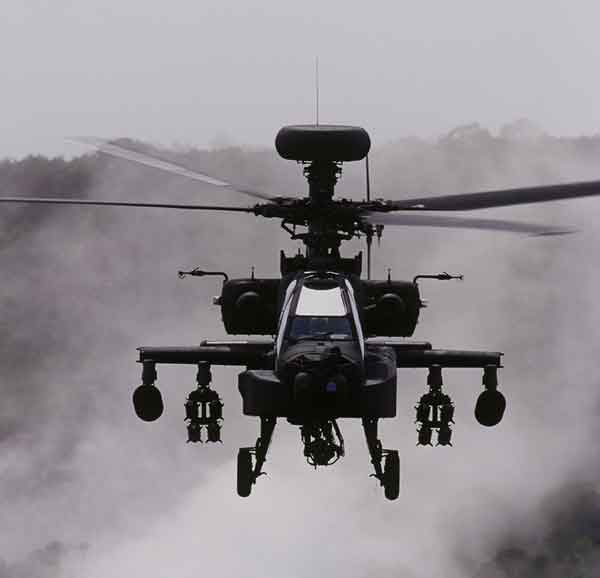
Although the US lost out in the MMRCA race, the consideration of life-cycle costs has tilted the balance in favour of US products when it comes to the C-17 Globemaster III, the C-130J Super Hercules and the AH-64D Apache Longbow. Similarly, French technology has scored over Russian expertise in the regime of aerial tankers. On the other hand, the progressions in the Mi-17 family and the advantage of maintaining continuity of fleet type, as also the fact that there are no comparable Western helicopters, have kept the IAF’s interest in that lineage intact. Thus, we have an interesting mix of Russian and Western technology in the IAF’s helicopter stream. Those in the IAF who are privy to life-cycle costs and reliability factors privately acknowledge that Western technologies are more appealing in the long run.

India's Unsinkable Aircraft Carrier

September 26, 2015
http://www.epw.in/commentary/indias-unsinkable-aircraft-carrier.html


An exploration of what the Andaman and Nicobar Islands mean to India--as a nation and as a state. This article suggests that the manner in which it has been visualised as a peg in the country's geopolitical strategy reduces the possibilities its location and history provide to India. It further argues that it would be self-defeating to view these islands merely from a geopolitical angle and not factor in the many histories of the people who inhabit it at present.

Itty Abraham (itty123@gmail.com) is a scholar of international relations and nuclear histories based at the National University of Singapore.

I have been searching for the origin of the term “unsinkable aircraft carrier” for some time now without much success. The term appears to be of World War II vintage, probably of American origin; but I have yet to identify the original usage or author. Etymology aside, the phrase “unsinkable aircraft carrier” is now associated with the Andaman and Nicobar Islands (ANI), the 750-km long archipelago that is a Union Territory of India, but whose northern tip lies much closer to Myanmar than Kolkata and whose southernmost point is just a few score kilometres from Indonesia. It was here, between 1942 and 1945, that the Japanese set up an occupation government, and planned their invasion of India and the defence of their Southeast Asian territories. In his Concise History of Southeast Asia (1961), the historian Nicholas Tarling identifies ANI as part of Southeast Asia, albeit without explanation. And, as the 2004 tsunami made clear in an entirely different way, the environmental challenges faced by the ANI have much more in common with Phuket and Aceh than Vizag or Kozhikode. Go a step further and it is not unreasonable to propose that the ANI are Southeast Asian lands that happen to belong to India.

A World without Pakistan will be more peaceful

By Dr Amarjit Singh
29 Sep , 2015

Understanding the region from the Indus River to the Syrian-Turkish border is not always easy. Convoluted by thousands of years of history, including boasting the world’s first great power – the Persian Empire – and running through Shia and Sunni regions in what was once partly Buddhist, partly Zoroastrian, influenced strongly by the Aryan Vedic cult, intersecting with the Jewish faith, and spanning the ancient Indus and Babylonian civilizations – this region is now massively messed up instead of being at the forefront of advancing civilization through its wealth of accumulated wisdom. To add to its strategic importance, the region has strong deposits of mineral oil that have the potential to upset the world economy, but which is accompanied by acerbic and fundamental versions of aggressive Islamists that make reconciliation with the people in this region quite difficult.

Afghanistan’s Newest Attack Helicopter a ‘Total Mess’?

September 28, 2015

Afghanistan’s most decorated pilot, Colonel Qalandar Shah Qalandari, recently questioned the usefulness of a new fleet of American-made light attack helicopter gunships, according to an interview published in the New York Times.

Among other things, Colonel Qalandari said that the new helicopters cannot reach areas where Taliban insurgents are normally operating, since the helicopter cannot cross the mountain ranges that surround Kabul, and that the aircraft is also dangerous to operate.

“It’s unsafe to fly, the engine is too weak, the tail rotor is defective and it’s not armored. If we go down after the enemy we’re going to have enemy return fire, which we can’t survive. If we go up higher, we can’t visually target the enemy,” he noted. “Even the guns are no good.”

The Taliban Take Kunduz: An Eyewitness Account

September 29, 2015

One of the most important cities in Northern Afghanistan’s, Kunduz has been under siege by the Taliban since this afternoon. For the first time in 14 years, a major Afghan city has fallen into the hands of the Islamist insurgent group, bringing new uncertainties to the war-torn nation.

The Diplomat’s Sanjay Kumar spoke to Ehsan, an Afghan government official in Kunduz, who due to security reasons has chosen not to reveal his real name and occupation. He describes the situation in the city.

The Diplomat: How serious is the situation in Kunduz?

Ehsan: The situation is very serious. Everyone who can be considered allied to the government, be it international NGO workers, government servants, army personnel, and police are trapped inside the city. The whole population is trapped. The Taliban is busy looting the government buildings, but so far they have not harmed the local people. They are mixing with local people and trying to take them into confidence. The insurgents are hiding in people’s houses.

Is the World Paying Attention to Afghanistan Anymore?

September 28, 2015
http://thediplomat.com/2015/09/is-the-world-paying-attention-to-afghanistan-anymore/

As world leaders flocked to New York City over the weekend to participate in the annual UN General Assembly debate this week, the United States, China, and Afghanistan co-chaired a high-level event on Afghanistan. A senior state department official, giving abackground briefing to the media after the event, was asked if it was really just a “let’s pat ourselves on the back kind of meeting.” He replied that it wasn’t, saying in a somewhat convoluted fashion that the parties gathered were still paying attention to Afghanistan.

Remarks from Afghan Foreign Minister Salahuddin Rabbani, Afghan Chief Executive Abdullah Abdullah, U.S. Secretary of State John Kerry and Chinese Foreign Minister Wang Yi were public, but journalists were not present for statements delivered by Pakistani Foreign Minister Sartaj Aziz, Federica Mogherini, the EU high representative for foreign affairs and security policy, as well as statements from the ministers of foreign affairs of Turkey, Italy, Saudi Arabia, Islamic Republic of Iran, Australia, Kazakhstan, and Norway.

Taliban Capture City of Kunduz in Northern Afghanistan

Joseph Goldstein and Mujib Masha, New York Times 
September 28, 2015

KABUL, Afghanistan — After months of besieging the northern Afghan provincial capital of Kunduz, Taliban fighters took over the city on Monday just hours after advancing, officials said, as government security forces fully retreated to the city’s outlying airport. 

The Taliban victory, coming suddenly after what had appeared to be a stalemate through the summer, gave the insurgents a military and political prize — the capture of a major Afghan city — that has eluded them since 2001. And it presented the government of President Ashraf Ghani, which has been alarmed about insurgent advances in the surrounding province for a year, with a demoralizing setback less than a year after the formal end of the NATO combat mission in Afghanistan. 

Afghan officials vowed that a counterattack was coming, as commando forces were said to be flowing north to Kunduz. But by Monday night, only dozens of fighters were reported to have linked up with security forces who had gathered at the airport. 

The white Taliban flag was flying over several public areas of the city, residents said, and by nightfall the insurgents had set fire to police facilities and were looting jewelry shops.