18 December 2015

Advanced Research and Development of Mission-Focused Analytics for a Decision Advantage (ARMADA)

Solicitation Number: BAA-AFRL-RIK-2015-0012
Agency: Department of the Air Force
Office: Air Force Materiel Command
Location: AFRL/RIK - Rome
Copy the url below for a direct link to this page.
Bookmark this page by right-clicking here and choosing "Bookmark This Link..."
Original Synopsis Nov 12, 2015
Solicitation Number:
BAA-AFRL-RIK-2015-0012
Notice Type:
Presolicitation
Synopsis:
Added: Nov 12, 2015 1:55 pm
NAICS CODE: 541712
FEDERAL AGENCY NAME: Department of the Air Force, Air Force Materiel Command, AFRL - Rome Research Site, AFRL/Information Directorate, 26 Electronic Parkway, Rome, NY, 13441-4514

BROAD AGENCY ANNOUNCEMENT (BAA) TITLE: Advanced Research and Development of Mission-Focused Analytics for a Decision Advantage (ARMADA)
BAA ANNOUNCEMENT TYPE: Initial announcement
BAA NUMBER: BAA-AFRL-RIK-2015-0012
CATALOG OF FEDERAL DOMESTIC ASSISTANCE (CFDA) Number: 12.800
I. FUNDING OPPORTUNITY DESCRIPTION:
This Broad Agency Announcement (BAA) seeks to provide research and development for forming a revolutionary approach to information fusion and analysis by leveraging service-oriented architecture, open standards, and cutting-edge fusion and analytical algorithms to provide real-time (or near real-time) intelligence for decision makers. This BAA shall research and develop novel techniques to assist users with discovering the golden nuggets in the data - potential approaches include fusing diverse data sources, filtering noise, and leveraging pattern learning to derive patterns of life. Further, technical capabilities developed under this BAA will minimize user time spent gathering data and reporting data, while preserving and providing more time for analysis. This will be accomplished through several means to include a data framework that can easily and quickly connect to sundry data sources, a rich, intuitive personalized workspace and experience, a variety of user-defined visualization displays, machine learning to assist and automate mundane tasks, and a custom report generation tool.

This BAA will research and develop: (1) Analytic services that provide a greater understanding of diverse data sources to assist decision makers and deliver a decision advantage. This includes multi-INT and all source fusion, correlating data within and across diverse, heterogeneous data sources to determine patterns of life and indications and warnings, and project future activity in the near term;
(2) An enterprise platform that will host analytics, customizable workspaces and visualizations, a data framework for connecting to diverse and potentially heterogeneous data sources, security and authorization components, and provide a software development kit (SDK) and application programming interface (API). The intent is to develop a platform that other third parties (e.g. vendors) can leverage and implement new software components providing a much broader and deeper enterprise experience that is agile and flexible; and (3) Develop evaluation metrics and scenarios, and perform testing to ensure satisfaction of key performance parameters.
Mission Requirements:
The research, development, test, and evaluation (RDT&E) performed under the auspices of this BAA shall address a breadth of mission domains to include Command, Control, Communication, Computers, Intelligence, Surveillance, Reconnaissance (C4ISR) for air, space and cyber. Specific applications of this research and development include, but are not limited to:
1) Custom software infrastructure that is deployable, maintainable, and elastic; The software framework shall provide ingestion (discover, access, model), persistence, analytics, visualization, publication/reporting and system management components
2) Mission data file development to inform understanding of mission environment and provide mission decision-making parameters to inform machine observe, orient, decide, and act (OODA) loop
3) Global, user-defined common operating picture for air, space and cyber operations that can support multiple areas of responsibility (AORs) and Multi-INT feeds; custom visualizations and applications for geospatial and temporal analysis
4) Open Source Intelligence (OSINT) exploitation and analysis of social media, news feeds, and other publicly available information
5) Entity extraction and resolution within and across data sources
6) Disseminate fused air tracks and provide alerts for detected anomalies
7) Mission planning of network-enabled weapons and intelligence, surveillance, and reconnaissance (ISR) platforms
8) Machine-to-machine integration of mission planning and collection management systems across the Air Operations Centers (AOCs) and Air Force Distributed Common Ground System (AF-DCGS) sites
9) Conduct gain/loss analysis for collection management
10) Command and control of cyber forces and mission planning
11) Operational level command and control capabilities (bridging strategic to tactical-unit level) to plan, coordinate, and execute non-kinetic capabilities with kinetic means to deliver synchronized global effects
12) Provide systems engineering, integration, training and testing
13) Interface with existing programs of record to obtain access to data sources (e.g. Air Operations Center Weapons System (AOC WS), Air Force Distributed Common Ground System (AF-DCGS), Global Command and Control System-Joint (GCCS-J), Modernized Integrated Database (MIDB), Command Post of the Future (CPOF)

The Companies That Make the Most From the World’s Wars

http://warisboring.com/articles/the-companies-that-make-the-most-from-the-worlds-wars/
Most arms revenue flows to America and Western Europe, but Russia and China are catching up
Industry December 16, 2015 Peter Dörrie 1
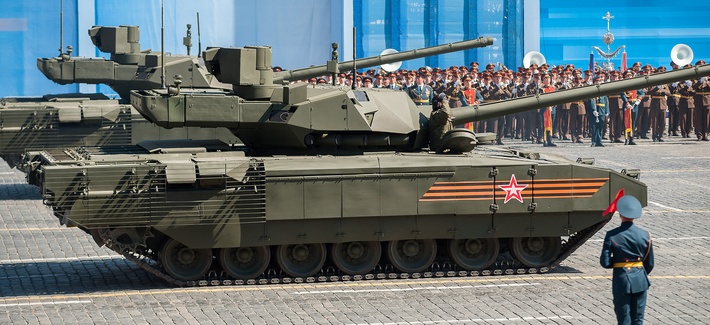
The Stockholm International Peace Research Institute has published its list of the world’s top 100 arms manufacturers. Overall, the 100 largest defense contractors totaled $401 billion in sales 2014, though the actual number is probably even higher, because the list excludes Chinese companies “due to the lack of data.”
This is a healthy chunk of the total worldwide military expenditure during the same year, which was $1.776 trillion including China.

In other words — of every dollar that governments around the world spent on their militaries in 2014, about 23 cents ended up in the pockets of one of the 100 companies on SIPRI’s list, many of which are privately owned.
However, there are some interesting regional discrepancies. To put it simply, nobody profits from selling weapons nearly as much as U.S. defense companies and even among those, Lockheed Martin is the 800-pound gorilla. The Maryland-based firm sold arms and services worth $37.47 billion in 2014, according to SIPRI, leaps and bounds ahead of its closest rival, Boeing, which still made a cool $28.30 billion.

SIPRI predicts Lockheed Martin’s revenue from defense goods and services to exceed $40 billion in 2015, owing to the acquisition of Sikorsky Aircraft, which manufactures the UH-60 Black Hawk helicopter among other products, and would be ranked 24th on the list by itself.

Avoid a false sense of cybersecurity by dodging these three pitfalls

http://www.csmonitor.com/World/Passcode/2015/1215/Avoid-a-false-sense-of-cybersecurity-by-dodging-these-three-pitfalls?cmpid=ema:nws:Daily%2520Newsletter%2520%2812-15-2015%29&utm_source=Sailthru&utm_medium=email&utm_campaign=20151215_Newsletter:%20Daily&utm_term=Daily
More cybersecurity spending does not mean better cyber defenses when technology, people, and strategy aren’t utilized correctly.
By Lockheed Martin December 15, 2015

More than 60 percent of US information technology professionals said their cybersecurity budgets have increased up to 30 percent in the last 12 to 18 months, according to a recent Lockheed Martin survey.
Cybersecurity is being discussed on an unprecedented scale, including in corporate board rooms — thus, the boost in funding.

And while we’re happy to see more resources coming to the problem, the ways in which additional dollars for cyber defense are being spent leave much to be desired. That makes us wonder: Are we being lulled into a false sense of cybersecurity?
A false sense of cybersecurity — three pitfalls to avoid (Lockheed Martin white paper)
Are our misconceptions of three key areas — technology, staffing, and strategy — keeping us from an effective cybersecurity approach?

The Pentagon is Nervous about Russian and Chinese Killer Robots

http://www.defenseone.com/threats/2015/12/pentagon-nervous-about-russian-and-chinese-killer-robots/124465/?oref=d_brief_nl
December 14, 2015 By Patrick Tucker
The Pentagon is rushing to keep up with Russian and Chinese efforts to develop highly autonomous robots — in Russia’s case, ones capable of independently carrying out military operations, deputy defense secretary Robert Work told a Center for New American Security national security forum today. 

Patrick Tucker is technology editor for Defense One. He’s also the author of The Naked Future: What Happens in a World That Anticipates Your Every Move? (Current, 2014). Previously, Tucker was deputy editor for The Futurist for nine years. Tucker has written about emerging technology in Slate, The ... Full Bio
Work quoted the Defense Science Board’s summer study on autonomy and AI, which said that the human race stands at “an inflection point” in the development of artificial intelligence. Different nations, he noted, are reacting in very different ways.

“We know that China is already investing heavily in robotics and autonomy and the Russian Chief of General Staff [Valery Vasilevich] Gerasimov recently said that the Russian military is preparing to fight on a roboticized battlefield and he said, and I quote, ‘In the near future, it is possible that a complete roboticized unit will be created capable of independently conducting military operations.’”

The Centurion Mindset and the Army’s Strategic Leader Paradigm

December 15, 2015 ·
Strategic Leadership  The Centurion Mindset and the Army’s Strategic Leader Paradigm
Jason W. Warren
http://www.strategicstudiesinstitute.army.mil/pubs/parameters/issues/Autumn_2015/6_Warren.pdf
Abstract: Army culture does not currently value or incentivize education and broadening for senior leaders, as it did prior to 1950. Various structural factors, such as the creation of a mega-bureaucracy, co-equal service branches, and a fixation with tactics, have contributed to the decline in numbers of educated and broadened leaders in the molds of Generals Pershing, MacArthur, and Eisenhower. The Army’s strategic performance since the Korean War is symptomatic of this cultural decline. 
 
On October 12, 1972, General Creighton Abrams became Chief of Staff of the Army (CSA), a promotion that symbolized the further devaluation of broadly educated leaders in favor of tactically minded “centurions.” Centurions in the Roman legions, combining the command authority of a contemporary company commander with the experience of a sergeant major who directed tactics. Superior legates or generals orchestrated campaigns to achieve Rome’s strategic objectives.1 Abrams epitomized the tactically centered centurion paradigm, and it is no small irony the US main battle tank bears his name. In his mold, well-meaning but misguided Army leaders of the post-World War II era, have championed tactical career progression that stunted officer strategic broadening, and ensured the rise of centurions often incapable of performing as true “generalists.” The institution’s transition from valuing an officer career path that produced sufficiently developed leaders helped birth the so-called training revolution, which Abrams and like-minded leaders enshrined. These men sought to ensure “no more Task Force Smiths” would occur, referring to an untrained and underequipped Army task force that North Korean tanks rolled over in 1950.

The military's real problem: Fewer Americans are joining

http://www.politico.com/agenda/the-militarys-real-problem-fewer-americans-are-joining-000005
When I was a commander in Iraq, many of my men were unfit for the battlefield. My unit needed them anyway.
By John Spencer, 12/15/15 

When President Barack Obama announced that women would be eligible for combat roles in the military earlier this month, he stated “our armed forces have taken another historic step toward harnessing the talents and skills of all our citizens.” Secretary of Defense Ash Carter echoed those thoughts: “Our force of the future must continue to benefit from the best people America has to offer … in the 21st century, that includes drawing strength from the broadest possible pool of people.”

This change is going to help the military in any number of ways: It’s a step toward greater fairness, and it makes a new talent pool available to combat positions. But before we get too complacent, the Army has another challenge in front of it that opening the door to women is just one small step toward solving: It is understaffed for the challenges it faces, and faces an even bigger recruiting struggle ahead.
The number of Americans eligible to serve in the military is dramatically shrinking, leaving the Army at its smallest size in over 75 years and forcing units to rely on unstable and unprepared servicemen. That puts both our military troops and the country at risk.

17 December 2015

Ten truths about the 1962 War

http://www.indiandefencereview.com/idr-issues?issue_id=47
11 December, 2015 ,  By Claude Arpi
Issue Net Edition | Date : 25 May , 2015
Here are some truths about the 1962 China’s War which are not often mentioned in history books or Reports from the Government.
Of course, this list is not exhaustive.

1. The precise location of the border
In the Army HQ in Delhi as well as locally in the NEFA, nobody was really sure where exactly the border (the famous McMahon Line) was. It is the reason why the famous Henderson-Brooks report has been kept out of the eyes of the Indian public for fifty years. Till the fateful day of October 20, 1962, the Army bosses in Delhi were unable to tell the local commanders where the border in Tawang sector precisely was?

2. There was no map
Lt. Gen. Niranjan Prasad, GOC 4 Infantry Division wrote in his memoirs (The Fall of Towang): “It is hard to understand how any purposeful negotiation could have been conducted with Communist China [in 1960] when even such elementary details as accurate maps were not produced; or, if they were in existence, they were certainly not made available to the Army, who had been given the responsibility for ensuring the security of the border.”
…when Lt. Gen. Kaul was evacuated from the Namkha chu on October 8, having fallen sick due to the altitude, he was carried pick-a-back by ‘local’ porters. It was later discovered that one of them was a Chinese interpreter in a PoW camp in Tibet. The secrets were out!

The Army had no map.
There is the story of Capt. H.S. Talwar of the elite 17 Parachute Field Regiment who was asked to reinforce Tsangle, an advance post, north of the Namkha chu on October 16. Without map, he and his men roamed around for 2 days in the snow; they finally landed a few kilometers east at a 2 Rajputs camp (and were eventually taken PoWs to Tibet with Brig. John Dalvi on October 21).

3. Some troops fought extremely well
Take the example of the 2 Rajputs under the command of Lt. Col. Maha Singh Rikh who moved to the banks of the Namka chu river by October 10 as a part of 7 Infantry Brigade. The brigade was stretched out along nearly 20 kilometers front beside the river. It was a five-day march to walk from an end to the other (the confluence with the Namjiang chu). Not a single man from the Rajputs was awarded any gallantry medal, because there was no one left to write the citations; all the officers or JCOs who were not killed or seriously wounded were taken POWs. Out of 513 all ranks on the banks of the river, the 2 Rajput lost 282 men, 81 were wounded and captured, while 90 others were taken prisoners. Only 60 other ranks, mostly from the administrative elements got back.
Major B.K. Pant of 2 Rajput displayed exemplary heroism while wounded in the stomach and legs. Though his Company suffered heavy casualties, he continued to lead and inspire his men, exhorting them to fight till the last man. When the Chinese finally managed to kill him, his last words were “Men of the Rajput Regiment, you were born to die for your country. God has selected this small river for which you must die. Stand up and fight like true Rajputs.” Ditto for 4 Rajputs under Lt. Col. B. Avasthi in the Sela-Bomdila sector
The Indian troops fought pitches battles in the Walong sector of the NEFA and Chushul in Ladakh where the Chinese were inflicted heavy losses.

How Much Longer Will Ghani Trust Pakistan?

14 Dec, 2015 

Khyber Sarban is a policy commentator in Afghanistan and has been an adviser in Afghanistan's Independent Directorate of Local Governance. 

The Afghan president has invested immense political capital in his outreach to Pakistan. But, he has only setbacks to show for it. How long before Ashraf Ghani loses patience with Pakistan?

When the new Afghan president, Mohammad Ashraf Ghani, courageously attempted a rapprochement with Pakistan almost a year ago, there was a sense of cautious optimism in the region. In an effort to bring an end to Pakistan’s decades long ‘undeclared war’ on Afghanistan, he spoke of joint efforts to combat terrorism and enhanced bilateral cooperation for regional stability, economic prosperity and trade. 

Afghan Province, Teetering to the Taliban, Draws In Extra U.S. Forces

By DAVID JOLLY and TAIMOOR SHAH
DEC. 13, 2015 

KABUL, Afghanistan — Alarmed that large stretches of Helmand Province are falling to the Taliban, American Special Operations forces have secretly taken a more central role in the fighting to save crucial areas of the province, as more air power and ground troops have been committed to the battle, according to Western and Afghan officials.

A Western diplomat said last week that United States Special Operations forces had been engaged in combat in Helmand for weeks, and that there were more American forces fighting there than at any time since President Obama last year announced a formal end to combat operations in Afghanistan.

The extent of the American role has been kept largely secret, with senior Afghan officials in the area saying they are under orders not to divulge the level of cooperation, especially by Special Operations forces on the ground. The secrecy reflects the Pentagon’s concern that the involvement may suggest that the American combat role, which was supposed to have ended in December 2014, is still far beyond the official “train, advise and assist” mission.

Civil Nuclear Cooperation With Pakistan: Prospects and Consequences


George Perkovich Testimony December 8, 2015 House Committee on Foreign Affairs 

It is an honor to appear before the subcommittee today to address the interesting and important issues surrounding potential nuclear cooperation with Pakistan. Having worked on nuclear challenges in South Asia since 1992, I am keenly aware of the complexities of any U.S. policy in this domain. The subcommittee should be applauded for its determination to explore these issues. 

At the outset I should say that I think it highly unlikely that the governments of the United States and Pakistan would be able to agree on conditions that would motivate both states to complete a nuclear cooperation agreement. Thus, this discussion is largely hypothetical in my view. Nonetheless, the national, regional, and global interests that would be involved in pursuing such a deal are important enough to make even a hypothetical discussion worthwhile. 

Myanmar: The Twilight Of The Generals


December 13, 2015: The military situation in the north may, or may not change in 2016. That won’t be known until the new government takes control in March. Unless, of course, the army stages another coup, like it did in 1990 when a newly elected government threatened the power and privileges of the generals. The new government intends to do just that. 

In the north, mainly in Shan state, the army has continued to defeat the rebels mainly by outmaneuvering and threatened to surround them. Over 10,000 civilians (most of them SSA-N supporters) have been forced to flee their homes in the past few weeks. The military is using airstrikes and artillery against villages, to either kill rebels there or force the civilians to flee. In mid-October the government signed another peace treaty with eight tribal rebel groups. Not signing were several other groups, especially the TNLA (Tang National Liberation Army), KIA (Kachin Independence Army), Kokang, SSA-N (Shan State Army-North) and Arakan Army which are currently fighting the army. Most of these defiant rebel groups are still fighting because the army has continually violated the 2012 ceasefire. The army continues the decades old offensive against the tribal rebels mainly because it is profitable to do so. 

Hybrid Warfare With Chinese Characteristics

By Michael Raska for RSIS 
15 December 2015
http://www.isn.ethz.ch/Digital-Library/Articles/Detail/?lng=en&id=195268

Taiwan was once the principal target of China’s hybrid warfare activities. Not any more, says Michael Raska. Members of the European Union have also become the focus of Beijing’s strategic influence operations, especially those countries that are part of China’s 16+1 regional cooperation formula. 

This commentary was originally published by the S. Rajaratnam School of International Studies (RSIS) on 2 December 2015.

While China’s foreign policy has traditionally relied on economic leverage and “soft power” diplomacy as its primary means of power projection, Beijing has been also actively exploiting concepts associated with strategic information operations as a means to direct influence on the process and outcome in areas of strategic competition. 

In 2003, the Central Military Commission (CMC) approved the guiding conceptual umbrella for information operations for the People’s Liberation Army (PLA) - the “Three Warfares” (san zhong zhanfa). The concept is based on three mutually-reinforcing strategies: (1) the coordinated use of strategic psychological operations, (2) overt and covert media manipulation, and (3) legal warfare designed to manipulate strategies, defense policies, and perceptions of target audiences abroad. 

Operationalising the “Three Warfares” 

Iran After the Nuclear Deal


With the nuclear accord between Tehran and world powers in force, a chief question is what it means for Iran. The clash between competing visions of the country’s future has heightened since the deal. Many, there and abroad, believe it could rebalance domestic politics. It not only has boosted the profile of those who promoted it, but, more fundamentally, it has opened space for new debates in a domestic sphere that was dominated by the nuclear issue for more than a decade. Yet, the political system, with its multiple power centres and tutelary bodies, inherently favours continuity. As its guardians try to quell the deal’s reverberations and preserve the balance of power, any attempt by Western countries to play politics within the Iranian system – for instance by trying to push it in a “moderate” direction – could well backfire. If world powers hope to progress on areas of concern and common interest, they must engage Iran as it is, not the Iran they wish to see. To start, all sides should fulfil their commitments under the nuclear deal.

What no one wants to admit about fighting ISIS: the US has only bad choices

December 8, 2015

ISIS really is different. Its ultimate and obsessed-over goal, to bring on the apocalypse, makes the group impossible to reason with. It can inspire far-off individuals, people who have never been to the Middle East or met an ISIS member, to turn themselves into suicidal killers — which makes containing ISIS to Syria and Iraq impossible.

Yet for all the ways ISIS is different, it is, all told, not so unlike the many ideologically driven insurgencies and warlord-style mini-states that have come before it. Its fighters are not invincible, 10-foot-tall warriors; they've already lost 20 percent of their territory in just the past year. And the organization has basic, earthly needs: funding, territory, and a base of popular support. Those things can be taken away. The world has defeated such groups many times before, and it can defeat this one.

For all the angry rhetoric in the presidential race, there is a surprising degree of consensus on what it would take for the United States to lead the global effort to defeat ISIS. The steps to victory are difficult and numerous, but they're neither impossible nor even really unknown.

Counter-Terrorism: The Origins Of Islamic Terrorism


December 15, 2015: The U.S. Army Special Forces has assigned some troops to come up with ways to counter the way ISIL (al Qaeda in Iraq and Syria) uses the Internet and mass media to successfully recruit. Unlike most Islamic terrorism experts the Special Forces troops have lots of experience with Islamic terrorists and the Moslem populations they operate in and recruit from. The Special Forces troops who specialize in the Middle East also know that the main reason ISIL gains so many recruits is because many Moslems support Islamic terrorism and that is nothing new. 

Moslems in general say they oppose Islamic terrorism and that Islam is the “religion of peace.” But given the fact that 95 percent of terrorism deaths are attributable to Islamic terrorists and that has been the case for over two decades what is one to make of the situation? Multiple surveys of Moslem populations worldwide show that about 12 percent of the 1.5 billion Moslems on the planet support Islamic terrorism. That’s nearly 200 million people. That explains why after every major Islamic terrorists attack in the West there are open and unmolested (by the police or anyone else) celebrations in most Moslem nations and even in some where Moslems are a minority. This was noted in the wake of the September 11, 2001 attacks, but most governments of these Moslem nations made loud and unequivocal condemnations of these Islamic terror attacks, at least to non-Moslem countries. But internally Westerners who were present in Moslem countries at the time (as some U.S. military personnel were) often saw these celebrations and those who spoke the local language had no illusions about what was being celebrated. There are no such celebrations (most of the time) when the Islamic terrorists are killing Moslems somewhere. In fact most of the victims of Islamic terrorism are Moslems. Thus Moslems can say, with some degree of truth that all Moslems condemn Islamic terrorist violence, without adding that this regret only applies when the victims are fellow Moslems. 

The Machiavelli of Maryland

9 December 2015


Military strategist, classical scholar, cattle rancher – and an adviser to presidents, prime ministers, and the Dalai Lama. Just who is Edward Luttwak? And why do very powerful people pay vast sums for his advice? 

Edward Luttwak earns $1m a year advising governments and writing books. Photograph: Jocelyn Augustino/Commissioned for The Guardian 

People contact Edward Luttwak with unusual requests. The prime minister of Kazakhstan wants to find a way to remove ethnic Russians from a city on his northern border; a major Asian government wants a plan to train its new intelligence services; an Italian chemical company wants help settling an asbestos lawsuit with a local commune; a citizens’ group in Tonga wants to scare away Japanese dolphin poachers from its shores; the London Review of Books wants a piece on the Armenian genocide; a woman is having a custody battle over her children in Washington DC – can Luttwak “reason” with her husband? And that is just in the last 12 months.

The Paris Climate Agreement At A Glance: Infographic Bonus


-- this post authored by Emil Jeyaratnam, James Whitmore, Michael Hopkin, and Wes Mountain editors at The Conversation

On December 12, 2015 in Paris, the United Nations Framework Convention on Climate Change finally came to a landmark agreement.

Signed by 196 nations, the Paris Agreement is the first comprehensive global treaty to combat climate change, and will follow on from the Kyoto Protocol when it ends in 2020. It will enter into force once it is ratified by at least 55 countries, covering at least 55% of global greenhouse gas emissions.

The key points follow.

Emil Jeyaratnam, Multimedia Editor, The Conversation; James Whitmore, Editor, Environment & Energy, The Conversation; Michael Hopkin, Environment + Energy Editor, The Conversation, and Wes Mountain, Deputy Multimedia Editor, The Conversation

This article was originally published on The Conversation. Read the original articl

Today’s Energy Security Risks: Complacency, Uncertainty, and Ideology

By David L. Goldwyn
15 December 2015 

This article was originally published by the Atlantic Council on 3 December, 2015.

At the 2015 Atlantic Council Energy and Economic Summit in Istanbul, twenty-one Ministers and senior officials from Europe, Asia, North America, and the Middle East met to assess the changing geopolitics of energy security. The assembly was a reminder that energy security — the ability of a nation to secure affordable, reliable, and sustainable supplies to maintain national power — is very different for each nation.

It was clear that advances in technology — in oil and gas, and renewables — have changed the geopolitics of energy dramatically, and mostly for the better, from the world of 2008 or even 2011. We have moved from an era of resource scarcity to abundance, from a concentration of resources to ubiquity of access, and from monopoly power in oil and gas to gas on gas competition in Europe. There is now a clear de-linkage of oil and gas pricing, more hub pricing and a growing spot market in LNG. Floating LNG and containerized shipping are enabling lower cost and quicker access of nations to gas, helping them move away from coal. US shale, with huge resources, low extraction costs, and rapid drilling times may help put a ceiling on the price of oil. Changes in wind, solar, and energy efficiency technology have driven down the cost of renewables in many countries, making them cost competitive with coal or gas in many cases.

Counter-Terrorism: What Keeps Islamic Terrorism Going


December 11, 2015: Many in the West believe that the current outbreak of Islamic terrorism began when the United States reacted too violently to the September 11, 2001 attacks. Islamic terrorist violence is nearly nine times greater now than it was in 2000 and many in the West believe that this is largely because the West is fighting back. The other view is that Islam was, alone among the major religions, founded as a militant faith and has continued to preach constant struggle against non-Moslems no matter what. Many Westerners are put off by these facts and prefer to believe that no religion could be that violent and self-destructive. Yet the historical record shows Islam to be consistently violent, aggressive and extremely hostile towards non-Moslems. 

What triggered the current plague of Islamic violence was more than a trillion dollars of oil income flowing into the Middle East since the 1960s plus an unexpected (and misinterpreted) Islamic victory over Russia in Afghanistan during the 1980s. That victory was largely funded by billions of dollars in Arab (mainly Saudi Arabian) oil money. That cash did not just buy weapons but also supplied thousands of conservative Islamic clergy preaching the need for holy war in Pakistan and establishing mosques and religious schools dedicated to keeping this struggle going after Russia left Afghanistan in 1989. Remember that the Russians were not defeated in Afghanistan, they just saw no future in continuing to kill Moslems there when their communist empire was falling apart because of bankruptcy and corruption. Two years after the last Russians left Afghanistan the Soviet Union dissolved and was no more. The holy war that began in Afghanistan continued, with the new targets being the United States and the West in general.

DoD eyeing commercial cloud options for secret data

http://www.c4isrnet.com/story/military-tech/disa/2015/12/11/dod-eyeing-commercial-cloud-options-for-secret-data/77170104/
Amber Corrin, Senior Staff Writer  December 11, 2015
The Defense Department's cold feelings toward moving any of its classified data to a commercial cloud provider might be warming up as the department evaluates options for commercial cloud companies to handle and store secret information.
As DoD moves more of its data to the cloud, most of that data is unclassified, less-sensitive data categorized at lower "impact levels," which is how DoD rates its data sensitivity. Impact levels 1 through 5 involve increasingly sensitive and tightly controlled unclassified data, but impact level 6 is classified secret data that so far only is approved for storage on internal DoD systems, such as the Defense Information Systems Agency's milCloud.

But that could change, according to Rob Vietmeyer, associate director for cloud computing and agile development in the enterprise services and integration directorate at the DoD CIO's office.
FREE WHITEPAPER: The brave new cloud

DoD eyeing commercial cloud options for secret data


Amber Corrin, 
December 11, 2015 

The Defense Department's cold feelings toward moving any of its classified data to a commercial cloud provider might be warming up as the department evaluates options for commercial cloud companies to handle and store secret information.

As DoD moves more of its data to the cloud, most of that data is unclassified, less-sensitive data categorized at lower "impact levels," which is how DoD rates its data sensitivity. Impact levels 1 through 5 involve increasingly sensitive and tightly controlled unclassified data, but impact level 6 is classified secret data that so far only is approved for storage on internal DoD systems, such as the Defense Information Systems Agency's milCloud.

But that could change, according to Rob Vietmeyer, associate director for cloud computing and agile development in the enterprise services and integration directorate at the DoD CIO's office.

U.S. Has Spent Months Secretly Mapping the Locations of All ISIS Propaganda Sites

Gus Taylor
December 15, 2015

U.S. has mapped Islamic State propaganda centers, won’t launch strikes

In a secret project tied to the overall U.S. campaign against the Islamic State, intelligence officials have spent months mapping out known physical locations of media safe houses where the extremist group’s operatives are compiling, editing and curating raw video and print materials into finished digital propaganda products for dissemination across the Internet.

Most of the locations are embedded in heavily residential areas in Syria, Iraq and Libya and are not being targeted by U.S. airstrikes because of Obama administration concerns about civilian casualties, according to sources who spoke to The Washington Times only on the condition of anonymity.

The White House also has been pressing the intelligence community to continue studying the facilities for a deeper understanding of how the Islamic State and its media enterprises operate, the sources said.While the White House, CIA and Pentagon declined to comment on the clandestine mapping project, its existence was revealed amid mounting debate over whether the administration’s strategy is robust enough for countering the professionalized blitz of digital propaganda that the Islamic State group, also known as ISIS and ISIL, is using to recruit fighters and radicalize supporters around the world.

New security training app for sailors' smartphones


Mark D. Faram, 
December 14, 2015 

OPSEC violations are only a few thumb taps away. And now, so is guidance about how to avoid them.

In December, the Navy released an app designed as a one-stop shop for all things operational security. Topics range from cautions against using geotagging on your smartphone to age-old threats like an eavesdropping server.

What you need to know:

1. Downloading it. "Naval OPSEC" is the Navy's fifth mobile application and can be downloaded on Apple iTunes and Google Play. You can quickly review and complete your requirement for OPSEC General Military Training on the app.

“We’re trying to provide as many options as possible for command and sailors by increasing the different methods we can deliver training,” said Bill Marvel, GMT program manager at the Naval Education and Training Command. “We still have people who like to give and receive instructor-led training. But where we have the ability to increase access to that training through a mobile application, then we’d like to do it.”

America’s Secret Arsenal: Cyber Weapons Of Mass Disruption

December 14, 2015 

Danny Vinik had an online article on Politico, (Dec. 9, 2015) about the U.S.’s growing arsenal of cyber weapons. He contends that America has the most powerful arsenal of cyber weapons on Earth. “Today, it remains one of the most sophisticated, and mysterious offensive [cyber weapon] operations ever launched. Stuxnet, the computer virus specifically engineered to attack Iran’s nuclear reactors. Discovered in 2010, and now widely believed to be a collaboration between the U.S., and Israel, its existence raised an urgent question: Just what is the U.S. government doing to attack its opponents in the cyber realm?,” he asks.

“Stuxnet’s origins have never been officially acknowledged, and the extent of American meddling in malware is still unknown. But, for the past few years, there’s been something new developing within the U.S. military that has taken “cyber” from a theoretical idea to a deliberate — if secretive — part of U.S. policy. The first ripple came in January 2013,” Mr. Vinik writes, ‘when the Washington Post reported that the Pentagon was significantly expanding its cyber security forces across all the service branches. By that October, the U.S. Army had launched two teams of technical experts dedicated purely to the cyber realm. Just a year later, the number was up to 10.”

Cyber strike and robot weapons: Can the UK dominate the Fifth Domain of war?

by Lewis
Dec 15, 2015

Eight years ago, deep within the area now controlled by the self-proclaimed ISIS/Daesh caliphate, a secret nuclear reactor was under construction by the Syrian, North Korean, and Iranian governments. Its purpose was the production of plutonium for use in nuclear weapons.

On September 6, 2007 a strike force of Israeli aircraft entered Syrian airspace. The Israeli aviators’ mission was to destroy the reactor.

The Syrian nuclear reactor, before and after the Israeli strike in 2007. At that time the Syrian air defence system, which had been supplied largely by Russia, was considered to be one of the toughest in the world outside the major military powers. It had scores of radars and many hundreds of heavy surface-to-air missiles, some of them capable of bringing down aircraft no matter how high or fast they might be flying. Syria also possessed fighter jets, including the advanced Mig-29. All this equipment was tied together by a sophisticated computer and communications network.

DOD could declare the spectrum a domain of warfare


The Defense Department’s recent emphasis on the importance of the electromagnetic spectrum could be coming to a head, as the department is considering recognizing the spectrum as a sixth domain of operations, in addition to land, air, sea, space and cyberspace, which officially was declared a domain in 2011. 

In a statement to Breaking Defense, DOD CIO Terry Halvorsen said, “the Department will investigate all requirements and ramifications of its enactment, to include the potential recognition of the EMS as a domain.”

Several, if not all, operations currently rely on the electromagnetic spectrum, which is why the military is placing greater importance on electronic warfare. Countries such as China and Russia have been honing advanced capabilities, such as the ability to jam GPS and other signals, within this sphere. The United States, meanwhile, has largely neglected EW, spending the last 14 years focused on the mostly uncontested spectrum environments in the Middle East, as several military officials have recently noted

Pentagon May Declare Sixth Domain of War, Because Why the Hell Not?

December 14, 2015

For millennia, warfare was conducted on the land or sea. About a century ago, we added a third domain, the air. Suddenly, we’ve gone domain happy, with the Air Force successfully lobbying to declare space and even “cyberspace” as separate domains. Now, there’s serious talk of declaring the electromagnetic spectrum its own domain, too.

Mark Pomerlea, reporting for Defense Systems:

The Defense Department’s recent emphasis on the importance of the electromagnetic spectrum could be coming to a head, as the department is considering recognizing the spectrum as a sixth domain of operations, in addition to land, air, sea, space and cyberspace, which officially was declared a domain in 2011.

Information Warfare: Mighty Microsoft And Its Sidekick FBI


December 15, 2015: The U.S. FBI (Federal Bureau of Investigation) and Microsoft recently announced another successful operation against hackers that severely damaged the Dorknet botnet and the software that sustains it. The Dorknet organization infects over 100,000 PCs a month and uses them for large scale extortion and larceny via the Internet. Dorknet usually controls a million or more PCs at any one time. The hackers behind Dorknet also sell other hackers software (mainly NgrBot) to build their own botnets. What makes Dorknet so dangerous is that it uses worm malware. Worms automatically seek out vulnerable PCs, inflects them and then keeps going. Microsoft is the major threat to Dorknet. But Microsoft is not alone as it works with a growing network of computer security firms that share information on malware and jointly adjust their security software to block and track malware like Dorknet. The FBI, and similar organizations worldwide, assist in this by conducting criminal investigations based on evidence collected by Microsoft and its consortium of security firms. Microsoft took the lead in helping the FBI overcome a shortage of technical knowledge about PCs and the Internet. This was, and is, a common problem throughout government. But it is particularly serious when the organization responsible for dealing with Internet criminals is not trained or equipped to do so. 

What Makes The Best Battle Rifle: The M16 Or AK-47?


THE FACTS: Among combat rifles, two weapons stand out: the M16 with its modern variant, the M4 carbine; and the AK-47. The M16 and M4 model of rifles are the standard-issue combat weapons in the American military. This generation of rifle has seen action from the jungles of Vietnam to the deserts of Iraq and the valleys of Afghanistan. It’s known for being deadly accurate, though perhaps prone to jamming. On the other end lies the AK-47, a rifle of Russian design that has changed little over the better part of a century, and has spread to every corner of the world. It is known for remarkable durability and ease of use. But what makes the better battle rifle, the M16 or the AK-47?

choose a side

Criticisms of the M16’s reliability are overblown, but more importantly, it is the most accurate and the most lethal battle rifle ever fielded by the U.S. military. In battle, lethality and accuracy trump everything else. 

The AK-47’s durability and ease of use makes it the quintessential battle rifle for the modern world. This rifle has been around for decades, has millions of easy to acquire parts, and doesn’t seem to be going anywhere.

Will US Pursue ‘Enhanced Human Ops?’ DepSecDef Wonders

December 14, 2015 

WASHINGTON: The Defense Department’s Third Offset Strategy is designed to create new advantages over adversaries now that Russia and China are developing stealth fighters, cyber weapons, and precision missile arsenals of their own. With studies well underway and up to $15 billion budgeted for experimentation in 2017, the emerging answer is a cluster of technologies related to artificial intelligence.

But that advantage is not likely to last long, Deputy Defense Secretary Bob Work warns. Since the revolution in artificial intelligence and robotics is being driven by the commercial sector, and software crosses borders easily (legitimately or not), it’s entirely possible for the Russians and Chinese to exploit the same technologies we do, Work said. In fact, their more flexible ethics may allow them to exploit technologies we don’t.

Understanding The Dark Side of Leadership

https://medium.com/the-smoking-gun/toxic-5b93097f532c#.28v10znx9

“You learn far more from negative leadership than positive leadership. Because you learn how not to do it.” — General H. Norman Schwarzkopf

It wasn't that he was a bad guy, he was actually fairly likable. He was sort of a wallflower, the kind of unremarkable person most of us pass by without noticing. He had a mind for the mundane little details, the kind of officer who thrives on the duties of the staff. He survived the drawdown of the early 90s by learning to do well at the jobs few of us wanted, away from the deep talent pools where the career risks were highest. He was an average officer in every respect. A careerist who rowed well when the ship captain was looking, who let others do the heavy rowing when he wasn’t.

Then the Army selected him to command. He thrived on the idea of being in command, but not the responsibilities that came with being the commander. Command required him to make decisions, decisions that carried risk. And risk was not part of the equation for him. Risk incurred threats to his career, his promotability, his self-image. But as a commander, the Army did what the Army tends to do: it surrounded him with leaders who could make the hard decisions for him, who would bear the burden of command decisions he was unwilling and unable to make.

He wasn't much of a leader. But was he toxic?

Fun and games at Army CGSC: Now they’re gonna take attendance on faculty

December 14, 2015 

I’m not kidding. See page 4 of this document, fresh from Leavenworth. “Departments will monitor the attendance of their faculty” at professional development meetings. For this they got PhDs? This strikes me as a knuckle-headed way to treat a faculty that is supposed to be world-class.

There’s more. Just to make sure that Air Force, Navy and Marine officers don’t slip in some subversive information, it is mandated that “A DJIMO [department of joint, interagency and multinational ops] faculty will be in the classroom whenever a sister service student is teaching.”

And enough of that nonsense about Army officers studying ethics or understanding the media — that stuff appears to be on the chopping block. “Departments will review the need for subjects or events added over time that are not linked to a documented requirement, (examples: ethics, media panel, certain resiliency training, negotiations, contracting) and propose their elimination or a method to incorporate the pertinent subject matter into other instruction blocks.”

An American General Staff Must Remain a Heretical Thought

December 14, 2015

Congressional hearings on the provisions of the thirty year old Goldwater Nichols Act of 1986 have the potential to substantially improve defense decision-making and move the nation toward a 21st century defense organization. They have also allowed old, discredited concepts to surface in a time where not all recognize their potential for harm. One of these is the idea of an American “General Staff” that would supposedly be an improvement over the current Joint Chiefs of Staff system. Historically, the General Staff has been a product of continental, authoritarian regimes focused on operational and tactical land warfare, and not one of democratic nations with global interests. A U.S. version of this organization has been proposed in similar forms since 1941, and has not improved with age. In the post World War 2 period, the idea of an American General Staff has been used as a means of ensuring or usurping military control within the U.S. military and U.S. civilian government organization. Centralization of military decision-making has never yielded good results and even the relatively modest Goldwater Nichols reforms have led to several significant poor outcomes since 1986. A plurality of inputs in defense decision-making, as practiced by the Allied powers during the Second World War, and in the early and middle Cold War, is well proven as a system to ensure maximum review and vetting of strategic defense decisions. As the nation looks to get more out of its shrinking defense establishment, the implementation of a General Staff represents a retrograde movement toward increased despotism in defense organization.