4 January 2016

Searching For Voices Of Sanity In Kashmir – OpEd

http://www.eurasiareview.com/31122015-searching-for-voices-of-sanity-in-kashmir-oped/
By Dr. Adfar Shah December 31, 2015

Kashmiri youth continue to die needlessly one after the other – either as militants in encounters with the security forces or die as Zahid Bhat, a 19-year-old boy who was recently set ablaze by a mob in Udhampur and thus became the victim of a hate crime and beef politics. There are also thousands of other youth who have been killed in one way or another. Amid this never ending chaos, communal politics — and now especially cow politics — the people have lost hope in the system to do anything worthwhile and stem this needless loss of young and vibrant lives.

Deep frustration – especially frustration among the youth – has reached a new zenith and is in imminent danger of exploding! Today, in contemporary Kashmir, what youth from any section, class or educational background of Kashmiri society have in common is their horrible experiences and pathetic lived realities, as well as a distrust in and hopelessness with the system. Given such a dismal state of affairs prevailing in the Kashmir Valley and belonging to the same context, I too was greatly upset after the unruly mob attacked the truck in Udhampur and burned two youth mercilessly – one of whom succumbed to his severe burn injuries later. With never-ceasing civilian killings, regular encounters especially in south Kashmir, rising communal hatred in Jammu, the monster of hopelessness stalks every right thinking individual; with the uncalled for beef violence, every sane person feels disgusted. In utter despair I sent a text message to my teacher and the message read thus: “Sir, Kashmir is again, predictably enough, on the boil and it is really getting worse day by day. Zahid’s killing will further instigate violence and motivate the already inflamed youth, towards counter violence. What do you surmise is the way out to this terrible situation of uncertainty and cycle of violence?” After a moment I received a terse one liner which succinctly read as, “Voices of Sanity!”
In search of Sane Voices

Chinese Intelligence is infiltrating and intimidating Uighur exile communities Around the World

Holding the fate of families in its hands, China controls refugees abroad
Reuters, December 30, 2015
MONTREAL/MUNICH – Erkin Kurban, an ethnic Uighur from China’s frontier region of Xinjiang, left his homeland for Canada back in 1999. When he returned to Xinjiang for a visit in April 2013, he had not seen his family for more than 13 years. Kurban was especially excited about seeing his 85-year-old mother.
His joy was short-lived. On the third day after his arrival, an agent of China’s pervasive security police summoned him for a meeting at a police station. Over the next 10 hours, Kurban, a 55-year-old long-distance truck driver, was grilled on his activities in Canada and the United States. His interrogators urged him to send reports on fellow Uighur exiles when he went back, leaving him with a stark choice: Spy for China or never come back to see his family again.
 
The interrogators had a particular target in mind. For 90 minutes they demanded information on Washington-based Rebiya Kadeer, the most prominent leader of the Uighur community in exile and an outspoken critic of China’s treatment of the Turkic-speaking Muslim people in Xinjiang.
“They asked me who was active in the leadership and who was doing what,” said Kurban, as he steered his 53-foot tractor trailer on a long haul trip from California to Montreal. “They also wanted to know what Rebiya Kadeer was doing and what projects she had.”
Kurban’s interrogation is part of a global campaign of intelligence gathering and harassment by China against the Uighur community abroad. The effort is aimed at neutralizing the community’s leaders, whom Beijing accuses of plotting independence, and sowing distrust and discord among its members. With the power to treat family members back home as hostages, Chinese security services have strong leverage over Uighurs living overseas, thousands of whom have fled what they say is persecution by the authorities in Xinjiang. 

China creates Cyber Warfare Army Division

http://www.albanydailystar.com/world/china-creates-cyber-warfare-army-division-15046.html
by Ray Courtney | @ | January 2, 2016 0

China has created three new military bodies as part of reforms to modernise its military – the world’s largest standing force – and improve its fighting capacity. President Xi Jinping gaved military flags to the leaders of the three new units – a general command for the People’s Liberation Army, a missile force and a strategic support force. The new Strategic Support Force will likely focus on cyber warfare.
China’s Modernization of Army

By 2020, the northeast region in China should have achieved medium-high growth and met the target of building a moderately prosperous society, according to a statement released after the meeting, held by the Political Bureau of the Communist Party of China Central Committee yesterday.
Xi described the modernization reform as “a major policy decision to realize the Chinese dream of a strong army”. “Catch, catch, catch, catch”, chants the rapper, in a reference to Operation Fox Hunt, Mr Xi’s crackdown on alleged corrupt officials which has extended as far as Australia and Canada as targeted executives and bureaucrats flee arrest on the mainland.

Xi recalled the large-scale commemoration for the 70th anniversary of victory in the Chinese People’s War of Resistance Against Japanese Aggression and in the World Anti-Fascist War.
The reform will include cutting troops from 2.3 million to 2 million, phasing out outdated armaments, developing new weapons systems and reducing the size of the militia.
Xi said the three new units were created as part of a modernization reform and “to realize the Chinese dream of a strong military.” He has promulgated the idea of a “Chinese dream” involving “the great renewal of the Chinese nation” and sees a strong military as key to this.

China’s Space Warfare Capabilities Growing

Bill Gertz
Washington Times, December 30, 2015
Following recent tests of anti-satellite missiles and near-space hypersonic vehicles, China ’s military will soon create a new Space Force within the People’s Liberation Army, a sign Beijing is preparing for future space warfare.Military analysts say there has been no official announcement of the new space warfare unit; however, unofficial sources in China revealed the unit will be part of a new Strategic Support Forces service that will include nuclear missiles — currently under the Second Artillery Force — along with an electronic information forces, cyber warfare units and electronic and signals intelligence. The shift to space and information warfare is part of a major military reorganization that has been underway in China for the past several years. It’s designed to transform the once ground forces-heavy PLA into a high-technology force.
China conducted the sixth test of a hypersonic strike vehicle on Nov. 23, after having carried out an anti-satellite missile test on Oct. 30. Both weapons are part of China’s large-scale high-technology arms buildup.A Chinese Internet military blogger posted photos of a purported flight test on Dec. 13 in northwestern China of what was described as either a missile defense interceptor test or anti-satellite missile test.

As reported by Inside the Ring on Oct. 15, the annual report of the U.S.-China Economic and Security Review Commission warned that “China is pursuing a broad and robust array of counterspace capabilities, which includes direct-ascent anti-satellite missiles, co-orbital anti-satellite systems, computer network operations, ground-based satellite jammers and directed energy weapons.”“The Strategic Support Forces appear to have been inspired by the U.S. Strategic Command, which also controls missiles, space assets and cyberwarfare,” said Rick Fisher, a Chinese military affairs specialist. “It appears that the Space Force will control China’s military and commercial satellite program, its manned space program plus an increasing number of space combat programs.” The new unit also is expected to control China’s future strategic missile defense forces.Mr. Fisher, with the International Assessment and Strategy Center, said in addition to ground-launched anti-satellite missiles, future PLA space weapons may include aircraft-launched ASATs, laser-armed low earth orbit combat platforms, low earth orbit bombers and dual-use civilian military space shuttles.

China’s ‘good monk’ versus ‘bad monk’

http://www.dailypioneer.com/columnists/edit/chinas-good-monk-versus-bad-monk.html
Thursday, 31 December 2015 | Claude Arpi | i

Beijing is busy manipulating even the religious sentiments of its citizens. Earlier it practised atheism, but realising the people’s deep faith in Buddhism, it has begun promoting its official religious leaders
Modern China has several facets. Unfortunately, the most disturbing, the totalitarian one, has come to the fore during the past year. Take the example of Ursula Gauthier, the French correspondent based in Beijing for the weekly, L’Obs; the renewal of her Press visa was refused by the authorities. because she had offended the Chinese Government with an article questioning Beijing’s Xinjiang policy and refusing to compare some events there to terrorism.

Then, the National People’s Congress Standing Committee passed China’s first counter-terrorism law. In an editorial, The South China Morning Post commented: “Wherever Governments have passed unprecedented security laws to confront the threat of terrorism to civilised society and its way of life, their actions have prompted concerns about adverse effects on freedom of expression and intellectual property rights.” For sure, life will be tougher for the minorities and citizens in general who dare to express their genuine grievances.
Further, news agency Xinhua stated that the new counter-terrorism law makes it legal for China’s People’s Liberation Army to get involved in anti-terror operations abroad. Does it mean the PLA can be sent anywhere, when China’s interests are at stake, for counter-terrorist missions? These signs demonstrate a high degree of nervousness.

Last weekend, President Xi Jinping and the entire 11-member Central Military Commission visited the offices of The PLA Daily. Mr Xi called on the journalists/officers to play a leading role in “strengthening the military”. President Xi affirmed, “The PLA Daily must adhere to the leadership of the Communist Party of China and serve the PLA.” He added that the publication should uphold party principles and “unswervingly” embrace the CPC leadership.

Gauging The Jihadist Movement In 2016: The Al Qaeda Camp

from STRATFOR
-- this post authored by Scott Stewart
Since 2006, Stratfor has published an annual forecast for the overall jihadist movement. For the first several years, the forecast focused primarily on al Qaeda - a fact reflected in the titles we chose - but as the jihadist threat changed, stemming from a larger movement beyond that one organization, we dropped the "al Qaeda" from the title in 2009. In 2013 we changed the format of the jihadist forecast to a multi-part series because it had become too difficult to cover the topic in just one piece.

The 2013 series laid out the goals and objectives of the jihadist movement, as well as terrorist and insurgent theory. These elements were then used as standards to measure the status of various components of the jihadist movement and forecast what to anticipate in the year ahead. We have not repeated the sections on objectives and theory, but readers may find it useful to review these foundational pieces before reading further; they can be found here and here. Last year's analysis on defining the jihadist movement can be found here for reference.

This year, I will focus on three components of the jihadist movement: the al Qaeda pole, the Islamic State pole and grassroots jihadists. This particular piece will examine al Qaeda and its various branches.
Status of the Core
The al Qaeda core organization under the leadership of Ayman al-Zawahiri remains weak. Over the past year it has not conducted any significant attacks, and its ideological clout has continued to wane. Indeed, there is a general sense that statements from al Qaeda franchise group leaders such as al Qaeda in the Arabian Peninsula leader Qasim al-Raymi and Jabhat al-Nusra leader Abu Mohammed al-Golani carry more weight than al-Zawahiri's.

Is this the beginning of the end for Isil in Iraq?

http://www.telegraph.co.uk/news/worldnews/islamic-state/12073408/Is-this-the-beginning-of-the-end-for-Isil-in-Iraq.html
The recapture of Ramadi is hugely significant for the coalition – but tougher battles lie ahead in Syria
Members of the Iraqi security forces hold an Iraqi flag with an Islamic State flag which they had pulled down at a government complex in the city of Ramadi
By Con Coughlin, 30 Dec 2015

Abu Bakr al-Baghdadi, the self-styled leader of the Islamic State of Iraq and the Levant (Isil), must regret ever making his boastful Boxing Day message that, for all the coalition’s efforts, his organisation continues to grow and expand.
The dawn of 2016 finds Isil very much on the defensive in both Iraq and Syria"
No sooner had his message been broadcast through the Arab media than the Iraqi government announced one of the most significant military gains of 2015 – the recapture of the Sunni stronghold of Ramadi just 60 miles from the capital Baghdad. Isil’s capture of Ramadi last spring represented a severe setback to Haider al-Abadi, the Iraqi prime minister, who, with the help of several Iranian-backed militias, had just succeeded in recapturing another iconic Sunni position from Isil, former Iraqi dictator Saddam Hussein’s home town of Tikrit.

The liberation of Tikrit, moreover, was supposed to be the precursor for a far more challenging military offensive to liberate Mosul, Iraq’s second city, which was overrun during Isil’s initial invasion of Iraq in the summer of 2014. But the manner of Isil’s capture of Ramadi, where a few hundred jihadist fighters managed to rout a far stronger and better-equipped Iraqi force, put paid to any thoughts of liberating Mosul. On the contrary, the Iraqi military’s dire performance at Ramadi totally undermined the confidence of coalition commanders in its ability to take the fight to Isil. Thus the much-vaunted plan to liberate Mosul was quietly shelved in favour of rebuilding the war-fighting military capability of the Iraqi Security Forces (ISF).
In the complex campaign to destroy Isil in both Iraq and Syria, coalition leaders have concluded that it is vital that the ISF has the will as well as the strength to defeat its highly motivated and well-resourced foe. If the threat posed by jihadist fanatics can be eradicated in Iraq, then that will provide a firm platform from which to launch a decisive push to crush Isil in neighbouring Syria.

How ISIS Actually Lost Ramadi

 thedailybeast.com
by Nancy A. Youssef,Shane Harris ,  Dec. 30, 2015
It’s one of several ways in which the simplistic narrative of the battle for Ramadi is giving way to a more nuanced story-one that presents both promise and peril as the fight against ISIS continues. For those looking for good news, there was plenty: the emergence of Iraq’s elite fighters, and the apparent absence of the Shia militias which have threatened to turn the ISIS conflict into a sectarian war.

But there was troubling news as well. The Iraqi army’s inability to lead the five month battle for Ramadi leaves many in the Pentagon dubious of plans to liberate ISIS’s biggest Iraqi stronghold, in Mosul, despite pronouncements from Iraqi political leaders that the operation is on the horizon. The ISF can, at best, carry out the ancillary aspects of war fighting. And the elite counterterrorism unit is not large enough to do the job of liberating-and holding-multiple cities simultaneously.
The battle of Ramadi suggests that Iraq’s counterterrorism forces, an elite group akin to the U.S. Army’s Special Forces, are the Baghdad government’s most capable fighters. They can move block by block with the backing of coalition air forces that kill scores of ISIS militants, so that Iraq’s conventional forces don’t have to confront them.

“This was attrition warfare. This was not an aggressive ISF ground campaign. They were mostly coordinating and providing security for the counter terrorism unit and maintaining a perimeter, which can be quite taxing,” one defense adviser to the war on ISIS explained to the Daily Beast. “It was mostly about pinpointing ISIS positions to call in airstrikes, clearing booby traps so you could open up mobility corridors.”

Iraqi commandos and U.S. airstrikes drove the terror army from much of the city. But that war plan could backfire the next time around.
Pentagon officials hailed the U.S.-trained Iraqi army this week for retaking much of the western city of Ramadi from the self-proclaimed Islamic State.

A letter to a young Muslim on the future of Western Islam

http://qz.com/579526/a-letter-to-a-young-muslim-on-the-future-of-western-islam/
Written by Haroon Moghul Senior Correspondent, Religion Dispatches
December 27, 2015
We have failed you.
While jihadist movements continue to expand their reach, anti-Muslim bigotry is becoming more and more mainstream. Both narratives mean to deny the possibility of meaningful coexistence. Which is the identity and the reality of thirty million of us.
Thirty million Western Muslims, spread out across Europe (excluding Russia), the United States, Canada, Australia, and New Zealand. But though we had every reason to speak out, we have barely begun to come together.

When we are talked about, it’s either as a problem (terrorism) to be solved, or as the solution (counter-terrorism) to the problem we’re held responsible for. We have little to no relevance outside national security.
And because we do not seem to matter, we might begin to feel as if we do not exist.

I will not excuse myself by saying that we could not have known how bad it would have gotten, or that the forces arrayed against our narratives were too entrenched. I will not soften the blow, either, by hoping it is always darkest before dawn. Because it may get darker.
God does not change the condition of a people until they change themselves. I ask myself how we have gotten to this juncture. I reflect on what I could have done differently. If my life’s experiences can be of any benefit, even as a cautionary tale, then I offer them.

What follows is neither exhaustive nor conclusive, but an outline for what you can do, and what I think you must do, to reverse this state of affairs, to help build the kinds of communities our history and heritage promises we can.
Part I covers our relations to the wider world; Part II concerns our own communities and identities.
Part I: All allies, foreign and domestic
1. First and foremost
People will ask you, “Are you Muslim or are you American?” (Or some other such question.) You will answer, “Yes.”
People will also ask you, “Do you condemn terrorism?” And you must not say “Islam is a religion of peace.”
You will do more than condemn, too. You will show that you are actively involved in building narratives that compete with the dangerous ones. I know you won’t do this because powerful people are asking the questions, but because you, like me, want better for your communities.

The True Cost of Ending ISIS

http://nationalinterest.org/feature/the-true-cost-ending-isis-14759?page=show
Alexander Kirss, December 30, 2015

What would be the true cost of definitively defeating the Islamic State in Iraq and Syria (ISIS)? The answer should properly be measured in trillions of dollars, not $500 million per month for a no fly zone or the $330 million per month the United States is currently dispensing. It is increasingly clear that air power alone is insufficient either to defeat ISIS or to ensure the necessary post-conflict stability to prevent the rise of a similar terrorist threat in the region. Large numbers of ground troops—more than a token number of American Special Forces—would be required to achieve this goal.

Despite the recent announcement of an “Islamic military alliance against ISIS”headed by Saudi Arabia and the recent success of the Iraqi army in pushing ISIS out of the city of Ramadi, it is unlikely that the United States would be able to wholly outsource ground operations to local partners. Saudi Arabia is already engaged in an inconclusive military intervention in Yemen and the nascent alliance likely lacks both the political will for a long-term deployment and sufficient numbers of ground troops to pull it off. When the Iraqi army pivots north to the much larger city of Mosul, the potential for civilian casualties increases and the U.S.-led coalition will not be able to use airpower with as much impunity. Even if Kurdish forces were able to roll back ISIS on their own, the political costs for Turkey and the central Iraqi government would be far too high for either of them to support such a plan regardless of U.S. preferences.

The closest point of comparison for a comprehensive military campaign to destroy ISIS is the U.S. invasion and occupation of Iraq, which cost approximately $900 billion. There are two important considerations to keep in mind, however, when comparing the potential costs of defeating ISIS to past actions in Iraq. First, the cost of major operations in Iraq from 2003-2011 bought failure—in so far as it set the preconditions that allowed ISIS to form in the first place. Costs would likely be higher, therefore, if the U.S. sought to not only defeat ISIS once and for all but also to fully reconstruct Iraq and Syria and provide the necessary assistance to other regional states to prevent the rise of Islamist terrorism in those areas. (As Andrew Bowen has noted, ISIS’s “brand represents a broader long-term challenge than the actual ‘state.’”)

Ukraine Investigating Possible Russian Cyber Attack On Its Energy Grid

Ukraine to probe suspected Russian cyber attack on grid
Reuters, December 31, 2015
KIEV, Dec 31 (Reuters) - Ukraine will investigate a suspected cyber attack on its power grid, the energy ministry said on Thursday, an incident the country’s secret service has blamed on Russia.
A power company in western Ukraine, Prykarpattyaoblenergo, said on Dec. 23 that a swath of the area it serves had been left without energy, including the regional capital Ivano-Frankivsk, due to “interference” in the work of the system.

Ukraine’s SBU state security service blamed Russia, which has not so far commented on the allegation. The energy ministry in Kiev said on Thursday that it had set up a special commission to investigate what happened.
While cyber attacks are commonplace, few successful assaults on industrial targets have been documented. If the SBU’s accusations are validated by the probe, it would be the first time a specific power outage has been credibly linked to a cyber attack, said Robert Lee, a former U.S. Air Force cyber warfare operations officer.

Lee said it was too early to say whether the SBU’s account was credible. If the claims are validated, then the incident could prompt other nations to use similar tactics.
“Once there is a precedent, that would open up avenues for states to feel comfortable in going that route,” said Lee, chief executive of cyber security firm Dragos Security.

The World According to Russia

http://www.theatlantic.com/international/archive/2015/12/russia-putin-miroporyadok/422196/
A documentary on state television gives a glimpse of Vladimir Putin’s philosophy.
JEFFREY TAYLER, DEC 30, 2015
 
“Do you realize what you have done?” Vladimir Putin demanded at the United Nations in September. The question was a rebuke to the American-led bloc of countries that initially viewed with optimism the Arab Spring, which began five years ago this month, but has since given way to chaos and Islamist violence across once-stable parts of the Middle East and North Africa. Those events, and much else, look different when viewed from Russia than they do from the United States, and a documentary that aired recently on Russian state television helps explain the worldview behind Putin’s question.
The two-hour-plus film, Miroporyadok (World Order), explores, in the words of its narrator Vladimir Solovyov, “what is happening with us [Russians], what sort of world we have inherited from our parents, and what sort of world we will leave to our children.” Partly through interviews with the Russian president himself, it also offers a window on Putin’s own realpolitik perspective, one that I’ve found to be widely shared throughout Russia over many years of living in the country—a worldview according to which international relations consist of competing blocs of nations pursuing their interests, and the violation of sovereignty is a recipe for instability. This stands in contrast to Obama’s own position, which he stated at the UN two years ago, that “sovereignty cannot be a shield for tyrants to commit wanton murder, or an excuse for the international community to turn a blind eye to slaughter.”

Brave New War“I believe,” Putin tells Solovyov, “that no one should ever impose any sort of values he considers correct on anyone. We have our own values, our own conceptions of justice.” Putin doesn’t name names here, but the implication is clear throughout: World Order endeavors to incriminate American foreign policy and place the blame for the current chaos in the Middle East on the United States. The film’s anti-Americanism is subtle but relentless, and the spin comes mostly from omission of relevant facts. And though it originated within the Russian state propaganda machine, some of its criticisms of wrongheaded U.S. policies and blundering interventions in the Middle East since September 11, 2001, would give American liberals, centrists, and even a few conservatives little cause for dispute. Yet the documentary goes further, leaving the strong impression that greedy, bungling, incorrigibly myopic conspirators “from across the ocean” (a phrase Putin uses repeatedly in the film to describe the U.S. leadership) bent on world domination are to blame; Russia comes off as unjustly demonized and Russians themselves forced to suffer economically as a result. 

Why Big Oil Should Kill Itself

https://www.project-syndicate.org/commentary/marginal-pricing-end-of-western-oil-producers-by-anatole-kaletsky-2015-12
Anatole Kaletsky, DEC 23, 2015 16
LONDON – Now that oil prices have settled into a long-term range of $30-50 per barrel (as described here a year ago), energy users everywhere are enjoying an annual income boost worth more than $2 trillion. The net result will almost certainly accelerate global growth, because the beneficiaries of this enormous income redistribution are mostly lower- and middle-income households that spend all they earn.
Of course, there will be some big losers – mainly governments in oil-producing countries, which will run down reserves and borrow in financial markets for as long as possible, rather than cut public spending. That, after all, is politicians’ preferred approach, especially when they are fighting wars, defying geopolitical pressures, or confronting popular revolts.

But not all producers will lose equally. One group really is cutting back sharply: Western oil companies, which have announced investment reductions worth about $200 billion this year. That has contributed to the weakness of stock markets worldwide; yet, paradoxically, oil companies’ shareholders could end up benefiting handsomely from the new era of cheap oil.
Just one condition must be met. The managements of leading energy companies must face economic reality and abandon their wasteful obsession with finding new oil. The 75 biggest oil companies are still investing more than $650 billion annually to find and extract fossil fuels in ever more challenging environments. This has been one of the greatest misallocations of capital in history – economically feasible only because of artificial monopoly prices.

But the monopoly has fallen on hard times. Assuming that a combination of shale development, environmental pressure, and advances in clean energy keep the OPEC cartel paralyzed, oil will now trade like any other commodity in a normal competitive market, as it did from 1986 to 2005. As investors appreciate this new reality, they will focus on a basic principle of economics: “marginal cost pricing.”
In a normal competitive market, prices will be set by the cost of producing an extra barrel from the cheapest oilfields with spare capacity. This means that all the reserves in Saudi Arabia, Iran, Iraq, Russia, and Central Asia would have to be fully developed and exhausted before anyone even bothered exploring under the Arctic ice cap or deep in the Gulf of Mexico or hundreds of miles off the Brazilian coast.

2015, The Year That Was: Environment And Energy

from The Conversation
-- this post authored by Martin LaMonica, The Conversation
As we approach 2016, we look back at the big - even world-changing - stories of The Conversation's environment and energy coverage this year.

The biggest story of 2105 from the environment and energy desk is a clear choice but, paradoxically, its impact is still murky.
The COP21 United Nations climate summit in December yielded the Paris Agreement, which includes pledges from nearly 200 countries to dramatically lower greenhouse gas emissions in the years ahead.

Most everyone can agree that it's a remarkable demonstration of the world's commitment to combat climate change, but whether it's a historic turning point in greenhouse gas emissions is very much a matter of debate.
Indeed, moments after the gavel went down in Paris amid much celebration, a number of questions arose, including how accountable countries will be to their commitments and whether there will be sufficient money to help developing countries adapt to the effects of climate change and move off of fossil fuels.

Here in the US, the question was: could Congress and a subsequent president unravel or block Obama's signature climate policies? (Short version: it wouldn't be easy.)
How the energy system is changing - or isn't
In the run-up to Paris, The Conversation published a number of articles to explore the effects of climate change and how our energy system is (or isn't) changing.
Given how much capital is already invested in our fossil fuel-dominated energy system, it will take decades to replace the energy infrastructure, even with climate-friendly policies.

How strongly do Americans support religious rights? Depends on the religion.

http://www.csmonitor.com/USA/Society/2015/1230/How-strongly-do-Americans-support-religious-rights-Depends-on-the-religion.?cmpid=ema:nws:Weekly%2520Newsletter%2520%2801-02-2016%29&utm_source=Sailthru&utm_medium=email&utm_campaign=20160102_Newsletter:%20Weekender&utm_term=Weekend_Best_of_Web
Some 8 in 10 Americans say it's important for religious freedom to be protected for Christians, a new poll finds. That number drops to 6 in 10 when it comes to protecting the religious rights of Muslims.
By Stacy Teicher Khadaroo, Staff writer December 30, 2015

Religious liberty is a key principle of American democracy, but public support for individuals’ right to exercise that freedom still varies by which religion they practice.
In a new poll, 82 percent of Americans say it’s very or extremely important for Christians to be allowed to practice freely, compared with 61 percent who say the same for Muslims. (For Jews, the figure is 72 percent; for Mormons, 67 percent; and for people with no religion, 63 percent.)

The gaps in part reflect the fact that the United States has always struggled to live up to the ideals in its Constitution. But they also raise the question of whether the relative success of America’s experiment with religious diversity can survive for future generations when 4 out of 10 don’t believe strongly in protecting the rights of all.
Recommended:Are you smarter than an atheist? A religious quiz
“On one hand, it’s heartening that a majority of American people understand that religious liberty is for everyone…, [but] the goal is to have enough in support of this arrangement that it actually works,” says Charles Haynes, director of the Religious Freedom Center of the Newseum Institute in Washington.

Your Internet router is a security risk. Here's why

http://www.csmonitor.com/World/Passcode/2015/1202/Your-Internet-router-is-a-security-risk.-Here-s-why
Not only are many home and small office routers sold with security vulnerabilities, the devices are often difficult for users to update and easy for hackers to penetrate.
By Rachel Stern, Correspondent December 2, 2015
BERLIN — Over the past year, a team of hackers invaded more than 100,000 home routers around the world, gaining access to the devices through weak and default passwords.
But they weren't out to swipe users' personal information or infect computers with malicious software. Quite the opposite. They set out to rid insecure routers of malware and in the process make them safer.

The vigilante techies, who recently revealed themselves as the White Team when they published their source code on GitLab, developed their Linux.Wifatch software in part to prove how easy it is to compromise small office and home routers.
Recommended: How well do you know hacker movies?
Security researchers have long warned that home and office routers can be a malicious hacker's entryway into a computer system. But router security has long been overlooked or ignored by consumers and manufactures alike. Making matters worse, the router is often the last piece of hardware that is updated or replaced, as it’s often hidden away and forgotten in cabinets and closets.
Yet, these devices act as gateways between an individual or businesses' devices and the Internet, making them crucial components in even the smallest home networks. When routers are compromised or aren't secure, malicious hackers can infect them with malware, reengineer routers to direct user to spam sites, or take them over for use in distributed denial of service, or DDoS, attacks to overwhelm targets' networks with Web traffic.
"There are routers that have spent years on the market and haven’t seen a single security update," says Jan-Peter Kleinhans, program manager of the European Digital Agenda Program at the stiftung neue verantwortung (New Responsibility Foundation) in Berlin.

Digital divide widens as the Web adopts stronger encryption standard

http://www.csmonitor.com/World/Passcode/2015/1230/Digital-divide-widens-as-the-Web-adopts-stronger-encryption-standard?cmpid=ema:nws:Weekly%2520Newsletter%2520%2801-02-2016%29&utm_source=Sailthru&utm_medium=email&utm_campaign=20160102_Newsletter:%20Weekender&utm_term=Weekend_Best_of_Web

Because the switch to a newer encryption algorithm means older phones won't be able to use basic Web security measures, many in the developing world will be at greater risk from criminals and online surveillance.
By Joshua Eaton December 30, 2015
On New Year's Day, a change meant to strengthen online security will have the inverse effect, too, leaving millions of users' Web traffic completely exposed.
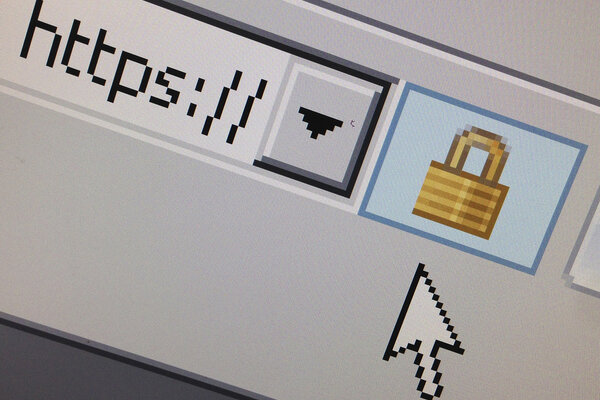
Microsoft, Google, and Mozilla will start phasing out older Internet encryption in Edge, Chrome, and Firefox browsers in favor of a newer, more secure standard. The aim is to get websites to adopt a beefier security method for ensuring private communications and safe bank transactions over the Internet.

But Web browsers that haven't been updated in the past few years or older generations of many mobile devices, which are commonplace in much of the developing world, will be unable to use the updated encryption standard. That means that many of those users will lose access to online functions protected by the Web protocol called Secure HTTP, or HTTPS.
Recommended: Your Internet router is a security risk. Here's why
Losing HTTPS access will put users at risk from hackers and digital thieves, says Kurt Rohloff, an associate professor of computer science at the New Jersey Institute of Technology. It will also block one of the simplest ways of avoiding online surveillance and censorship.

That's especially concerning because older phones are common in many countries with the highest levels of online censorship, says Mr. Rohloff. "If they’re basically forced to use these older devices, they won’t be able to protect themselves from local governments that would be snooping on their communications."
Insecure mobile access is a bigger concern in developing countries where many people depend on their phones to access the Web, sats Joseph Bonneau, a tech fellow at the Electronic Frontier Foundation (EFF). "Of course, for many users they only have Internet access through their mobile devices, so insecurity of mobile browsing means insecurity of all of their browsing," he said in an e-mail.

Top 15 Cyber Hack Attacks of 2015

Top 15 Cyber Attacks and Security Breaches in 2015
HackRead,  December 29, 2015
With 2016, just a few days away, let’s have a flashback of the top 15 security incidents that took place this year.

Hacking Team In June, the hacking team (a security exploit vendor) faced a data breach from an unknown hacker, who leaked their database, internal emails and their source code developed for the spying toolkit on GitHub.
What made this leak so massive for the hackers is that in the leaked data they found zero-day bugs which they used in their own attacks. Most media agencies didn’t realize this and when the hack took place, kept on criticizing the company for selling spying tools to third world governments.
What was even worse is that even after knowing about the hackers trying to exploit zero-day vulnerabilities, Adobe took several days to fix their zero-day flaws in Flash. During that time, most people had already disabled Flash. Even Chrome and firefox disabled flash due to constant reports of users not satisfied with flash.

Comcast: Comcast Corporation, an American multinational mass media company found its users’ login credentials sold on the dark web. The company confirmed that over 200,000 users were affected from the breach. However, the company failed to catch the culprit behind the breach.

 Ashley Madison Back in July, hackers breached the security of the online dating portal “Ashley Madison”. The hackers were able to leak data from the site including site’s database, internal emails and source code in relation to some of their internal apps.
Once the data on the site was published online by the hackers, it had severe consequence; even some of the site’s users tried to commit suicide due to the threats from crooks for having extra-marital relationships.
The site in late summer received another breach in which passwords belonging to 11 million accounts were cracked by a group of hackers.

VTech VTech is a Chinese company which builds and develops learning toys faced a data breach that leaked private information of 4.8 million parents and 200,000 children. Those numbers increased later on to 6.7 million.
This was a massive breach because it involved personal details of so many children which can be used by hackers later for hiding their identities.

Mitary: An Alternative to the Brutalities of the Modern Economy

http://www.theatlantic.com/business/archive/2015/12/military-versus-private-sector/422124/
The millions of service members who live on military bases around the world experience a kind of economic and social security that is foreign to most of America’s middle class.
Scott Beauchamp, Dec 29, 2015
Economic insecurity is an important theme this election cycle. As Bernie Sanders frequently mentions in his stump speeches, the top 1 percent of workers in America earn more than the bottom 50 percent combined. Real wages for workers have been stagnant since the late ‘70s and have actually fallen since 2007. According to a recent Associated Press poll, “Four out of five U.S. adults struggle with joblessness, near poverty or reliance on welfare for at least parts of their lives, a sign of deteriorating economic security and an elusive American dream.”
 
But a few jobs buck these trends by their very nature. Registered nursing is expected to experience nation-wide shortages until at least 2030, giving such workers bargaining power that helps them avoid being replaced. Police and firefighter unions are too strong (and their work too dangerously complex) to imagine a near future of part-time contract workers with no benefits responding to armed robberies or industrial fires. But perhaps the clearest example of a job that resists, at least to some degree, the vagaries of market demand is the military. As counterintuitive as it may sound, the military provides an alternative to the brutalities of modern economy. And the contrast between the animating logic of the martial life and the gig economy says a lot about humans and what they need to feel fulfilled.In the military, clothing, food, shelter, and medical care are guaranteed. And although it offers less choice about what to wear or where to live than the private sector, there’s a baseline of care for service members that doesn’t exist in the civilian world. The military invests time and money in service members while making the maximum effort to keep their morale high. The millions of service members who live on military bases around the world experience a kind of economic and social security that isn’t comparable with any other working-class community in America. There are schools, golf courses, public parks, movie theaters, and campsites maintained for their use. While some have called the military a “socialist paradise,” as The Daily Beast’s Jacob Siegel has suggested, there’s a practical reason for the full-service benefits: Military members are simply more effective at defending the country when they’re healthy, happy, and untroubled by issues at home. Napoleon’s dictum that an army marches on its stomach is absolutely true. Likewise, marching requires vaccinations and boots. (In fact, five years after separating from the Army as an infantryman, I still occasionally wear the boots I deployed in.)

The Sin Digoo Affair

URL:http://www.secureworks.com/research/threats/sindigoo/
Date: 29 February 2012
Author: Joe Stewart, Director of Malware Research, Dell SecureWorks Counter Threat Unit Research Team
"We cannot enter into informed alliances until we are acquainted with the designs of our neighbors and the plans of our adversaries." - Sun Tzu, The Art of War

Introduction
The story of the Sin Digoo affair begins with a set of Internet domain registrations dating back to 2004. Between 2004 and 2011, a person using the email address jeno_1980@hotmail.com registered several domains using the names "Tawnya Grilth" and "Eric Charles". Curiously, all of the "Tawnya Grilth" domains showed the registrant's physical address to be a post office box in the fictional/misspelled town of "Sin Digoo", California.


Figure 1. Characteristics of domains registered by jeno_1980@hotmail.com.

In 2006 and 2007, jeno_1980@hotmail.com registered a number of domains under the "Tawnya Grilth" alias that have appeared repeatedly on reports published by various automated malware analysis systems and antivirus websites. The Dell SecureWorks CTUSM research team examined malware samples using these domains and concluded that these domains were involved in a larger pattern of malware-based espionage, sometimes referred to as Advanced Persistent Threat (APT) activity.
Espionage malware

There are two primary malware families involved with the Sin Digoo domains. One is known as "Enfal", which is short for "EtenFalcon", a string found inside early samples. The involvement of actors using this malware for espionage was first detailed in 2010 in a joint report by the Information Warfare Monitor and the Shadowserver Foundation. The report, titled "Shadows in the Cloud: Investigating Cyber Espionage 2.0," was a continuation of research from an earlier report titled "Tracking GhostNet: Investigating a Cyber Espionage Network." A later report by antivirus firm Trend Micro titled "The LURID Downloader" further details a campaign of espionage by this malware against targets worldwide.


Figure 2. Sin Digoo connection to Enfal malware.

Everything You Ever Wanted to Know About NSA SIGINT Sites in Japan But Were Afraid to Ask

January 1, 2016
US signals intelligence (SIGINT) activities in Japan 1945 – 2015: A Visual Guide
Desmond Ball and Richard Tanter,
The Nautilus Institute, December 23, 2015
Full report available here [6MB].
I. Introduction

The US maintained signals intelligence (SIGINT) activities at about 100 sites in Japan during the Cold War, probably than in any other country. In Japan today, about 1,000 US personnel are engaged in SIGINT, Information Operations, Internet surveillance and Network Warfare activities, mainly at Yokusuka, Misawa, Yokota Air Base in Tokyo, Camp Hansen and Kadena Air Base in Okinawa, and the US Embassy in Tokyo. The US SIGINT activities in Japan have directly supported US nuclear war planning, Korean War and Vietnam operations, and since September 2011, the ‘Global War on Terror’. The technological developments over these seven decades have been stupendous. The end of the Cold War coincided with the beginning of the World Wide Web and the Internet age. Surveillance of the Internet and computer network systems became the highest priority. Intelligence became conflated with operations, with a proliferation of Information Operations (IO) and Cyber-warfare units. There has been no Japanese involvement in the US SIGINT activities, and no direct cooperation between US and Japanese SIGINT stations, apart from limited cooperation with respect to particular crises, and with the partial exception of Camelus at Camp Hansen since 2007. Japan is a Third Party to the UKUSA Agreements under which the US and Japan exchange certain designated intercept materials, including HF/VHF DF bearings, but excluding higher level cryptologic material.
Authors
Desmond Ball is Emeritus Professor at the Australian National University (ANU). He was a Special Professor at the ANU’s Strategic and Defence Studies Centre from 1987 to 2013, and he served as Head of the Centre from 1984 to 1991.
Richard Tanter is Senior Research Associate at the Nautilus Institute and Honorary Professor in the School of Political and Social Sciences at the University of Melbourne.

Cyber Ethics Vex Online Warfighters

http://www.afcea.org/content/?q=Article-cyber-ethics-vex-online-warfighters

A soldier monitors computer screens during a Joint Users Interoperability Communications Exercise, or JUICE, annual event. JUICE includes network planning, systems integration, network operations and computer network defense to identify ways to improve operational capabilities.
January 1, 2016,  By Sandra Jontz

The United States wrestles with daunting guidelines to carry out warfare in the fifth domain.
A burgeoning breed of combatants fights in a convoluted new domain where no one has blazed a trail, where no history books offer lessons or guidance. These warriors sometimes use untested offensive and defensive network maneuvers to secure cyberspace, the increasingly important and congested battleground rapidly becoming the attack venue of choice.

The technology to succeed in this ongoing fight actually already exists, as does the well-trained work force, experts say. The question now hovers over what ethical guidelines the United States will employ to carry out cyber warfare—where dynamic real-world events shape the malleable rules of engagement.
“We are responsible for training technically and tactically competent leaders who are about to enter a world where they have to make decisions that have never been made before—in a very sort of cloudy and complex environment,” says Maj. Charlie Lewis, USA, chief of the Cyber Leader College at the Army Cyber Center of Excellence, Fort Gordon, Georgia. “We’re expecting a lot [from] these 23-, 24-year-olds.”

Military leaders must consider the ethics of warfare as they draft policies that will govern cyber operators’ missions in this disruptive experience of war, says Gen. Larry D. Welch, USAF (Ret.), the 12th chief of staff of the U.S. Air Force. “The cyberwarrior encounters a moral issue ... only if the legal order is seen as morally unacceptable. While that has been an issue in other domains in the past, it is, in fact, less likely in the cyber domain. Cyberwarriors simply do not face the kind of conditions that produced the My Lai massacre, for example,” Gen. Welch says of one of the most horrific incidents of U.S. violence against civilians during the Vietnam War. “They don’t operate out in an environment where [they are] responsible for the life or death of some set of warriors who operate alongside of them.”

Don’t Leave Jointness to the Services: Preserving Joint Officer Development amid Goldwater-Nichols Reform


http://warontherocks.com/2015/12/dont-leave-jointness-to-the-services-preserving-joint-officer-development-amid-goldwater-nichols-reform/
Ryan Shaw and Miriam Krieger,  December 30, 2015

You can’t say they’re not ambitious: While simultaneously facing the myriad problems of a disintegrating global order and resetting from two long wars amid tightening budgets, our senior military and civilian leaders are also undertaking a fundamental revamp of the personnel systems that have shaped our joint force for decades. In addition to the just-announced opening of all military career fields to women, Secretary of Defense Ash Carter recently published the first tranche of proposals from Force of the Future, a reform effort that aims to import from the civilian sector some of the best practices of 21st-century talent management. Meanwhile, the Senate and House Armed Services Committees are considering sweeping reform of the 1986 Goldwater-Nichols Department of Defense Reorganization Act, and the chairman of the Joint Chiefs of Staff is launching “Joint Forces Next,” a study to “evolve how we select, train, educate, and manage the talent of tomorrow’s leaders.”

Each of these efforts is ambitious and courageous and should be applauded. The inadequacies of our industrial-era recruitment, training, promotion, and retention systems are well documented and all too familiar to those of us who serve.

Change is badly needed and we should not let orthodoxy or inertia stand in the way, but neither should we pursue change for its own sake or try to fix what’s not broken. Our first commitment, as both Hippocrates and the House Armed Services Committee would have it, should be to do no harm. Three decades under Goldwater-Nichols and more than a decade at war have built a culture of true jointness that is the envy of militaries around the world. As officers currently serving in joint assignments, we fear that some of the changes now under consideration place that jointness at risk. We encourage our decision-makers to consider carefully the potential impact of these proposals, both individually and in combination.
http://www.wsj.com/articles/the-battlefield-as-a-test-of-character-1451345760
by Ben SUMMERS, Dec. 28, 2015
After winning the battle of Trenton on Dec. 26, 1776, George Washington ordered his troops to treat captured soldiers “with humanity, and let them have no reason to complain of our copying the brutal example of the British Army in their treatment of our unfortunate brethren who have fallen into their hands.”

It wasn’t uncommon for British and Hessian soldiers to torture or execute wounded American revolutionaries on the battlefield. Still, Gen. Washington refused to betray his sense of decency and humanity.
Character is often measured in how we react when our values are most tested. In a bleak winter 239 years ago, after crossing the Delaware on Christmas, Washington’s order for humanity taught our nation something about character.

Six years ago on a helicopter mission in Afghanistan, a soldier taught me something about character that I’ll never forget. It was August 2009, and our company of Blackhawk pilots and crew chiefs was in the midst of a deadly month for coalition forces. As the pace of medevac missions increased and the casualties mounted, our frustrations toward Afghanistan—the land, the war, our enemy—mounted.
One hot August afternoon, we were called on a mission to evacuate wounded Afghan soldiers and civilians. This daytime mission took us into the Kherwar Bowl—a Taliban haven with high altitudes and dust that made any mission dangerous. I was a pilot in our Blackhawk, and a soldier who I knew was having a particularly tough time with his deployment was manning one of our machine guns. We raced to the site with medical staff onboard to assist the wounded.

As we landed, we immediately assessed a grim situation for the wounded Afghans. The bodies entering our helicopter looked lifeless. Despair filled the cockpit. Were the wounded enemy combatants or supporters of the coalition? What U.S. troops were waiting for our assistance while we evacuated these men? The questions only added to the malaise of frustration and death in the air. That’s when the soldier, who didn’t fit anyone’s typical idea of a hero, came over the intercom system.
“Sir, I’m jumping off the gun,” he said. We weren’t taking enemy fire, so with my permission he left his machine gun and rushed to the back of the helicopter to aid the wounded. It didn’t matter that the patients were Afghans and possibly enemy combatants. To him, there were lives that needed and deserved a helping hand.