18 April 2016

* Stratfor: Debunking the Myth of Total Security

Summary: Here Stratfor addresses one of the central myths of 21st century US politics — that the government should provide total security to its citizens, who happily trade away their rights in exchange for this chimera. We can free ourselves from these fears!
Lead analyst: Scott Stewart
Stratfor, 14 April 2016
Last week, someone asked me whether I thought it was safe to travel to Izmir, Turkey. Thanks to my line of work, these kinds of questions no longer surprise me. People have been asking me such things for almost as long as I can remember. And since I have gained visibility through my work as Stratfor’s lead terrorism and security analyst and as the author of a book on travel security, the inquiries have become only more frequent.
Most of the time, I don’t mind offering travel security advice. By Dave Grossman’s model of human nature, I am a sheepdog-type person (as opposed to a sheep or wolf), naturally predisposed to protect people. Moreover, I appreciate people’s efforts to understand the environment they are going to visit. After all, foreknowledge goes a long way toward avoiding unpleasant surprises.

But I suspect that my responses to these kinds of questions often surprise the people asking, especially those who seem to just want an empty reassurance that their trip will be a safe one. This is because in reality, no place is truly safe from every possible threat; the idea of total security is a myth. Risk is inherent in every single thing we do — or don’t do. I incurred a risk when I got out of bed this morning, another when I exercised and countless more during my commute. Although obviously some activities are riskier than others, none of our actions are completely risk-free. Even if I were to live isolated in a hermetically sealed bubble, there would still be risks to my health (and sanity).
And, of course, the same goes for travel.


Understanding Risks and Threats
Rather than give a patent yes or no ruling on the safety of a particular trip, such as the trip to Izmir, I prefer to outline the various dangers that lurk in a given locale and help prospective travelers to contextualize them. In fact, the article I wrote a few weeks ago describing the diverse terrorist threats in Turkey adapted some of the information I have supplied the many other people to ask me about traveling to Turkey in the past couple months. Some, but not all.
People tend to fixate on the highly publicized terrorist threat that groups such as the Kurdistan Workers’ Party, the Kurdistan Freedom Falcons and the Islamic State pose in Turkey. By its nature, with its spectacular, made-for-media events and the type of coverage it attracts, terrorism seems a far more common and deadly occurrence than it is. Indeed, terrorism-related deaths overshadow the larger number of deaths that result from other causes each year. But in truth, other dangers present a far more likely risk to a traveler in Turkey than terrorism does. These include fires, natural disasters, accidents and disease.
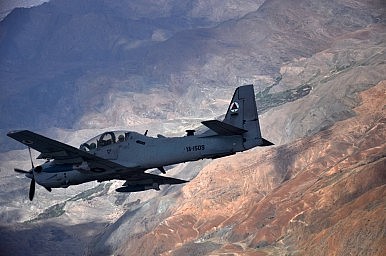
Afghanistan: Will the Afghan Air Force Make a Difference in the 2016 Fighting Season?


Image Credit: U.S. Air Force
The Afghan Air Force will, for the first time, deploy new light attack aircraft in its fight against insurgents this year.
April 14, 2016
While the Taliban officially launched their annual spring offensive this week pledging large-scale attacks, the Afghan National Defense and Security Forces (ANDSF) will for the first time in 15 years be able to deploy a light attack aircraft specifically designed for counterinsurgency operations in their fight against the insurgents.
The Afghan Air Force (AAF) will begin this year’s fighting season with eight new Embraer/Sierra Nevada Corporation A-29 Super Tucano light attack aircraft in its arsenal. The first four A-29 aircraft arrived at Hamid Karzai International Airport in Kabul on January 15. Four more planes were delivered in March.
No additional aircraft deliveries are expected this year. Four more A-29 Tucanos are slated for delivery in 2017 and the remaining eight will be handed over to the AAF by the end of 2018, bringing up the total number of A-29 Tucanos to 20. The United States Air Force funded the aircraft with $427 million under its so-called Light Air Support program.


Brazilian aircraft maker Embraer and its U.S. partner Sierra Nevada Corporation where initially awarded the contract to supply 20 A-29 light attack aircraft in 2011. However, the contract was cancelled in 2012 due to a dissatisfaction of USAF leadership “with the quality of the documentation supporting the award decision.” However, the contract was re-awarded to Embraer and Sierra Nevada Corporation in 2013.
“In hindsight, I wish we would’ve started that years ago,” the commander of U.S. Forces in Afghanistan, General John F. Campbell said in front of the U.S. House of Representatives Armed Services Committee in March 2015, yet “we are where we are. (…) Quite frankly, we can’t get it out there quick enough for them.”

Pakistani Spy Agency Paid $200,000 for Attack on CIA Base at Khost, Docs

Declassified U.S. document suggests Pakistani link to attack on CIA agents
Reuters, April 14, 2016
WASHINGTON (Reuters) - A Pakistani intelligence officer paid $200,000 to an extremist network to facilitate a deadly suicide bomb attack on CIA operatives at a base in Afghanistan in 2009, according to a declassified U.S. government document obtained by an independent research group.
The heavily redacted document obtained by the National Security Archive, a nongovernmental research institute at George Washington University, suggests that Pakistan’s spy agency, the Inter-Services Intelligence directorate, and the Haqqani network were involved in facilitating the attack.
The Dec. 30, 2009 attack on Forward Operating Base Chapman in Khost in eastern Afghanistan, carried out by a Jordanian doctor who was working as a double agent for al Qaeda and the Taliban, was one of the most devastating in the history of the Central Intelligence Agency, killing seven and wounding six.
The document, dated February 2010, said an unidentified Pakistani ISI officer provided $200,000 to Haqqani and another man “to enable the attack on Chapman.” An Afghan border commander in Khost was promised $100,000 of the money to facilitate the attack but died in the bombing, it said.

A spokesman for Pakistan’s embassy in Washington did not have any immediate comment.
Because the document is heavily censored, it is not clear whether it represents an intelligence agency consensus or fragmentary reporting. One line, which has been crossed out, says: “This is an information report, not finally evaluated intelligence.”
The document is almost entirely redacted - except for two passages discussing the ISI’s alleged involvement in the attack at Forward Operating Base Chapman.
The United States in 2012 designated the Pakistan-based Haqqani network as a terrorist organization. The year before, U.S. Navy Admiral Mike Mullen, then the top U.S. military officer, caused a stir when he told Congress that the Haqqani network was a “veritable arm” of the ISI.

The declassified U.S. government document can be found here: (here)
The National Security Archive, which works to challenge government secrecy, obtained the document under a Freedom of Information Act (FOIA) request.
Lauren Harper, who reported on the documents for the organization, said the initial FOIA request had gone to the U.S. State Department. The State Department forwarded the request to the Defense Intelligence Agency, which released the redacted papers.

* Book Review: Sy Hersh’s “The Killing of Osama bin Laden”

Review ‘The Killing of Osama Bin Laden’ by Seymour Hersh details a grave threat to our democracy
Zach Dorfman, Los Angeles Times, April 14, 2016
Governments, in order to fulfill their national security objectives, must sometimes shroud their activities in secrecy. This is regrettable, if inevitable. But secrecy can also be employed as a kind of intellectual asphyxiant, used to choke off a population’s interrogational faculties by depriving it of the capacity to make informed judgments about its government’s short-term activities and long-term aims. “Secrecy is a form of regulation,” wrote Daniel Patrick Moynihan in 1998. “At times, in the name of national security, secrecy has put that very security in harm’s way.”
It is the demands of state secrecy, their distressing effects on U.S. foreign policy — and ultimately their subversion of the democratic process — that unify the four essays in Seymour Hersh’s “The Killing of Osama Bin Laden,” all of which were previously published in the London Review of Books. In the book, Hersh, an indefatigable investigative reporter (he broke the story of the My Lai massacre in 1969; the CIA domestic-spying scandal in 1974; and the torture scandal at Abu Ghraib prison in Iraq in 2004), documents a series of covert operations — and their sometimes-unforeseen repercussions — carried out in Syria, Libya and Pakistan by the United States and its allies during the Obama administration.
Hersh leans heavily on anonymous sources in his reportage. This is understandable, given his subject matter, but how you read the book will depend on the faith you place in these sources and in Hersh’s own judgment about their veracity. I think the record here is mixed, at best.

Consider, for instance, Hersh’s reporting on the war in Syria, which dominates three of the four chapters. (The book’s title is thus a bit of a misnomer.) Hersh argues that the nerve gas attacks in the Damascus suburb of Ghouta in 2013 were not perpetrated by Assad’s forces but by the Al Nusra Front, an Al Qaeda affiliate. According to Hersh, Al Nusra was directly assisted by the Turkish government, which believed that a chemical weapons attack traced to Assad — even if it was actually committed by agents provocateurs — would force the Obama administration to enter the war against the Syrian government.
The Ghouta attacks led President Obama to threaten military action against the Assad regime, as he had previously asserted that the use of such weapons would constitute a “red line” potentially precipitating intervention. Hersh claims that Obama reversed course in the face of mounting classified evidence casting doubt on Assad’s culpability, as well as resistance from the Joint Chiefs, who feared a spiraling regional conflict. (Throughout the book, military and Defense officials often appear wiser and more deliberative than the CIA leadership and other senior Obama administration officials, raising questions about source bias and interservice rivalry.)
In any case, this is an explosive account. The sarin attacks in Ghouta killed hundreds of civilians, including many children. They were war crimes. If, as Hersh claims, the Turkish government aided an Al Qaeda affiliate in procuring and employing chemical weapons in order to goad the U.S. into open warfare against the Assad regime, it could seriously damage our alliance with Turkey, a crucial NATO ally.

* What does "nuclear terrorism" really mean?

7 April 2016
http://thebulletin.org/what-does-nuclear-terrorism-really-mean9309
Elisabeth Eaves
There are few scarier pairs of words: “nuclear,” evoking the great 20th century fear of atomic annihilation, and “terrorism,” the bogeyman of the 21st. Put them together and you’ve got a frightening specter. Since European authorities revealed that the group behind the November 2015 Paris terrorist attacks was also spying on a senior nuclear official in Belgium, many news sources have reported that the threat of “nuclear terrorism” is upon us.
But what does that actually mean? The news stories don’t always say, and sometimes they fail to distinguish among events that would look completely different from one another, if they ever came to pass. In fact, “nuclear terrorism” can refer to several possible occurrences, all of which are best avoided. But if you’re the glass-half-full type, you may take some solace in knowing that the most dire scenario is also the least probable.
Here is what nuclear terrorism most likely won’t look like: A self-styled Islamic State caliph successfully launching a ballistic missile with a nuclear warhead at Washington, incinerating millions of people in a giant mushroom cloud. There are so many technical, financial, military, and logistical barriers that it would be extremely unlikely that even the most dogged, nuclear-obsessed extremist group could make that happen.

But just because nuclear terrorism won’t look like a Cold War nightmare come to life doesn’t mean we should rest easy. In a March 2016 report, the Harvard Kennedy School’s Belfer Center for Science and International Affairs laid out three potential types of “nuclear or radiological terrorism.” One possibility—the hardest to achieve, but by far the most devastating if it were to occur—is that terrorists will acquire or build and then detonate a nuclear bomb in a major city. A second possibility is that they will set off a “dirty bomb,” a weapon made of radioactive material attached to conventional explosives, sometimes referred to as a radiological dispersal device or RDD. Executing this scenario would be so easy that many experts are surprised it hasn’t happened already. A third possibility, which the Belfer Center estimates would fall somewhere between the other two in terms of severity and likelihood, is that terrorists will sabotage a nuclear facility, releasing radioactive material over a wide area.
Least likely: a nuclear weapon. The reason the first scenario is improbable is that it’s difficult to steal, buy, or make a nuclear weapon. While there are about 10,000 nuclear warheads in the world, most are heavily guarded and don’t lie around fully assembled. To steal one would require the cooperation of more than just one corrupt or coerced person.

Out of Africa


Thomas L. Friedman APRIL 13, 2016

Agadez, NIGER — It’s Monday and that means it’s moving day in Agadez, the northern Niger desert crossroad that is the main launching pad for migrants out of West Africa. Fleeing devastated agriculture, overpopulation and unemployment, migrants from a dozen countries gather here in caravans every Monday night and make a mad dash through the Sahara to Libya, hoping to eventually hop across the Mediterranean to Europe.
This caravan’s assembly is quite a scene to witness. Although it is evening, it’s still 105 degrees, and there is little more than a crescent moon to illuminate the night. Then, all of a sudden, the desert comes alive.
Using the WhatsApp messaging service on their cellphones, the local smugglers, who are tied in with networks of traffickers extending across West Africa, start coordinating the surreptitious loading of migrants from safe houses and basements across the city. They’ve been gathering all week from Senegal, Sierra Leone, Nigeria, Ivory Coast, Liberia, Chad, Guinea, Cameroon, Mali and other towns in Niger.

With 15 to 20 men — no women — crammed together into the back of each Toyota pickup, their arms and legs spilling over the sides, the vehicles pop out of alleyways and follow scout cars that have zoomed ahead to make sure there are no pesky police officers or border guards lurking who have not been paid off.
It’s like watching a symphony, but you have no idea where the conductor is. Eventually, they all converge at a gathering point north of the city, forming a giant caravan of 100 to 200 vehicles — the strength in numbers needed to ward off deserts bandits.

Poor Niger. Agadez, with its warrens of ornate mud-walled buildings, is a remarkable Unesco World Heritage site, but the city has been abandoned by tourists after attacks nearby by Boko Haram and other jihadists. So, as one smuggler explains to me, the cars and buses of the tourist industry have now been repurposed into a migration industry. There are now wildcat recruiters, linked to smugglers, all across West Africa who appeal to the mothers of boys to put up the $400 to $500 to send them to seek out jobs in Libya or Europe. Few make it, but others keep coming.
I am standing at the Agadez highway control station watching this parade. As the Toyotas whisk by me, kicking up dust, they paint the desert road with stunning moonlit silhouettes of young men, silently standing in the back of each vehicle. The thought that their Promised Land is war-ravaged Libya tells you how desperate are the conditions they’re leaving. Between 9,000 and 10,000 men make this journey every month.Continue reading the main story

Could There Be a Terrorist Fukushima?


http://www.nytimes.com/2016/04/05/opinion/could-there-be-a-terrorist-fukushima.html?_r=0
By GRAHAM ALLISON and WILLIAM H. TOBEY,  APRIL 4, 2016

The attacks in Brussels last month were a stark reminder of the terrorists’ resolve, and of our continued vulnerabilities, including in an area of paramount concern: nuclear security.
The attackers struck an airport and the subway, but some Belgian investigators believe they seemed to have fallen back on those targets because they felt the authorities closing in on them, and that their original plan may have been to strike a nuclear plant. A few months ago, during a raid in the apartment of a suspect linked to the November attacks in Paris, investigators found surveillance footage of a senior Belgian nuclear official. Belgian police are said to have connected two of the Brussels terrorists to that footage.
Security at Belgium’s nuclear sites is notoriously poor. In August 2014, someone — as yet unidentified — drained 65,000 liters of lubricant from the turbine used to produce electricity at the country’s Doel 4 nuclear power plant. No penetration was detected, leading investigators to suspect an inside job.
In 2012, two workers at the same plant reportedly left Belgium to fight in Syria, eventually joining the Islamic State. One of them is believed to have died in Syria; the other was convicted of terrorism-related crimes after returning to Belgium.

Yet still too little is being done to secure nuclear plants. That goes not only for Belgium: Nuclear facilities throughout the world remain vulnerable.
Every weekday, get thought-provoking commentary from Op-Ed columnists, The Times editorial board and contributing writers from around the world.
During the Nuclear Security Summit in Washington last week, more than 50 leaders announced that significant amounts of highly enriched uranium had been moved from various countries to secure storage sites and that a key nuclear-security treaty would be strengthened. But the improved version of that treaty is inadequate: It doesn’t even call for arming the guards who look after bomb-grade nuclear material.
Discussions about nuclear terrorism also tend to focus on the risk of terrorists stealing weapons-grade material or making a dirty bomb. But they often overlook the danger of terrorists attacking a nuclear plant in order to set off a Chernobyl- or Fukushima-like disaster.
That risk is real, however, and has been known for a while. The master planner of the 9/11 attacks had considered crashing a jumbo jet into a nuclear facility near New York City. A Qaeda training manual lists nuclear plants as among the best targets for spreading fear in the United States.

* No Exit In China

from STRATFOR
-- this post authored by Thomas Vien
In the 18th century after a passing breeze caused him to lose his place in a book, a Chinese scholar named Xu Jun wrote this short poem: "The clear breeze is illiterate, so why does it insist on rummaging through the pages of a book?" Though this couplet was seemingly harmless, the Manchu-ruled Qing Dynasty (1645-1911) executed Xu in 1730 for seditious thought.
The Qing, invaders from the Manchurian steppe whose dynastic name meant "clear" or "pure," were acutely sensitive to the insinuation that they were illiterate barbarians despite adopting the trappings of Chinese civilization. Countless other poets shared Xu's fate during the dynasty's infamous literary inquisitions. While this paranoia appears excessive, it was a reflection of a very real problem for the Manchus.
The Qing, like all other Chinese central governments, struggled to contain dissent across a continent-sized empire. This proved doubly difficult because a small number of ethnic Manchus ruled over a far larger population of resentful Han Chinese. Han rebellion, which often coalesced around the purported superiority of Han culture, was a constant threat, shaking the foundations of the empire from the mid-19th century. Eventually, Han-led revolution swept away the Qing - and the entire imperial Chinese system - in 1911, leading to the formation of the Republic of China. This, in turn, quickly split along factional lines into warlord cliques. Truly effective central rule did not return until the Communists seized power in 1949.

Paranoia appears to be on the upswing in China once again as President Xi Jinping attempts to force painful structural reforms past resentful provincial and local governments, the bitter medicine for years of distortions imposed by China's wave of economic stimulus. Outwardly, he seems well poised to do this. Observers often call him the most powerful Chinese leader since Mao Zedong. On the outside, it appears to be true. Xi is in the midst of an epochal housecleaning with his anti-corruption campaign, which has disrupted countless power networks and, in the process, created numerous enemies.
Since 2012, the Central Commission for Discipline Inspection (CCDI), the Communist Party's top anti-graft agency, has investigated and punished hundreds of thousands of officials. The campaign is set to continue, with all arms of the government completed before the 19th Party Congress in 2017. By doing this, Xi has eliminated political rivals, and seemingly, the system of consensus-based politics that had prevailed in China since 1978 - a system intended to be a hold on the emergence of individualistic dictatorship and the policy ills that flowed from it. It is a system now seen by Xi as unsuitable for handling China's entangled economic problems, such as overcapacity in heavy industry and ballooning corporate debt. But China's ruling authorities are behaving as if they are anything but secure - since February, Chinese censors have responded harshly to seemingly innocent slips in the press. Beijing's harsh response suggests that political struggle is more intense in China than it has been in decades.
Reading Between the Lines on China's Paranoia
Ahead of the annual plenary sessions of China's National People's Congress (NPC) and Chinese People's Political Consultative Congress (CPPCC), Xi embarked on a widely publicized tour of China's top three state media outlets. During the tour, the media was encouraged to swear unflinching loyalty to the party - effectively Xi himself, who had recently cast himself as the "core of the Party." The surname of the media, Xi demanded, must be "the Party." Within days, the CCDI launched an anti-corruption investigation targeting both the Central Propaganda Department and the government's top censorship agency. The message was clear - Xi was demanding even more obedience from the already heavily controlled state media.

China’s Chairman Builds a Cult of Personality


http://time.com/4277504/chinas-chairman/?xid=time_socialflow_twitter
While growth in the economy slows, Xi Jinping follows in Mao’s footsteps—and some members of the Communist Party aren’t happy

Millions of commemorative plates bear his portrait, a Mona Lisa smile leavened by the benign air of Winnie the Pooh. Poets lavish ornate verse on him–“My eyes are giving birth to this poem/My fingers are burning on my cell phone,” wrote one amateur bard in February, describing his search for the perfect paean. Bookstores across China give prime display to his collection of speeches and essays, which has sold more than 5 million copies, according to state media. His ideology is even enshrined in an animated rap video, with one line that goes: “It’s everyone’s dream to build a moderately prosperous society. Comprehensively.” A killer rhyme it is not, but who cares when you’re almost certainly the most powerful ruler on the planet?

Little more than three years into his decade-long tenure, Chinese President Xi Jinping has already accumulated more authority than any of his predecessors since Mao Zedong, the founder of the communist People’s Republic of China. Xi has taken personal control of policymaking on everything from the economy, national security and foreign affairs to the Internet, the environment and maritime disputes. Now the 62-year-old scion of Chinese Communist Party (CCP) royalty stands at the center of a personality cult not seen in the People’s Republic since the days when frenzied Red Guards cheered Chairman Mao’s launch of the Cultural Revolution. “Xi is directing a building-god campaign, and he is the god,” says Zhang Lifan, one of a shrinking circle of Beijing scholars who dare to question China’s leader.

Five decades after the Great Proletarian Cultural Revolution was launched in 1966–sparking a political cataclysm that upended hundreds of millions of lives–Xi is using some of Mao’s strategies to unite the masses and burnish his personal rule, injecting Marxist and Maoist ideology back into Chinese life. Hundreds of thousands of cadres have been forced to attend ideological education classes, while Xi’s government rails against “hostile foreign forces” it believes are intent on weakening a resurgent China. “Like Mao, Xi thinks if China succumbs to Western values, these forces will destroy not only China’s exceptionalism but also the stability of the Chinese Communist Party,” says Roderick MacFarquhar, a Harvard expert on Chinese politics.

Opinion: Declassify the Last Secret Parts of the 9/11 Report

Histories that shouldn’t be secret
George F. Will, Washington Post, April 16, 2016
When President Obama departs for Saudi Arabia, an incubator of the 9/11 attacks, he will leave behind a dispute about government secrecy. The suppression of 28 pages, first from a public congressional inquiry and then from the 2004 report by the 9/11 Commission, has spared the Saudis embarrassment, which would be mild punishment for complicity in 2,977 murders. When Obama returns, he should keep his promise to release the pages. Then he should further curtail senseless secrecy by countermanding the CIA’s refusal to release its official history of the 1961 Bay of Pigs debacle.
The nature of the 28 pages pertaining to 9/11 can be inferred from this carefully worded sentence in the commission’s report: “We have found no evidence that the Saudi government as an institution or senior Saudi officials individually funded [al-Qaeda]” (emphases added). Together, those five italicized words constitute a loophole large enough to fly a hijacked airliner through.

CBS’s “60 Minutes” recently reported that former Florida senator Bob Graham, a Democrat who chaired the Senate Select Committee on Intelligence and co-chaired the bipartisan joint congressional inquiry into 9/11 intelligence failures, says the pages suggest the existence of a network that supported the hijackers when they were in the United States. Former Democratic congressman from Indiana Tim Roemer, who was a member of the joint inquiry and then of the commission, and who has studied the 28 pages, says they contain (as “60 Minutes” expressed his judgment) “provocative evidence — some verified, and some not” of possible “official Saudi assistance for two of the hijackers who settled in Southern California.” “60 Minutes” said the two Saudi nationals had “extremely limited language skills and no experience with Western culture.” Yet “they managed to get everything they needed, from housing to flight lessons,” after being seen in the company of a diplomat from Saudi Arabia’s Los Angeles consulate.
Before John Lehman was a member of the 9/11 Commission — which unanimously supported release of its report uncensored — he was a member of Henry Kissinger’s National Security Council staff during the Nixon administration and was secretary of the Navy during the Reagan administration. Lehman understands the serious and the spurious arguments connecting secrecy to security. He says the 28 pages contain no “smoking gun,” but he believes that senior Saudi officials knew that Saudis were assisting al-Qaeda. And he believes that because Saudi Arabia spends enormous sums worldwide funding schools that teach the virulent variant of Islam called Wahhabism, it is unsurprising that 15 of the 19 hijackers were Saudis.
Now, about the Bay of Pigs invasion of April 17, 1961, a feckless use of American power that radiated disasters: President John F. Kennedy promptly deepened U.S. involvement in Vietnam; Nikita Khrushchev, unimpressed, built the Berlin Wall and installed missiles in Cuba. Why should the CIA history remain secret 55 years after the invasion?

No, a new surge isn’t the solution to ISIS

http://nationalinterest.org/blog/the-skeptics/no-new-surge-isnt-the-solution-isis-15779?page=show
Bonnie Kristian , April 14, 2016

How do you solve a problem like ISIS? To hear Sen. John McCain (R-Ariz.) tell it, the solution is putting huge numbers of American troops on the ground in the Middle East right now.
“I bore witness to the failed policy of gradual escalation that ultimately led to our nation’s defeat in the Vietnam War,” McCain recently wrote to Secretary of Defense Ashton Carter. Now, he added, “I fear this administration’s grudging incrementalism in the war against the Islamic State (ISIL) risks another slow, grinding failure for our nation.”
Though McCain’s letter brings up some important points—like how many Americans are presently on the ground in Iraq, a figure about which the White House has been exceedingly imprecise—his central contention is made with no regard for cost, consequence, or recent history. It is an irresponsible approach to foreign policy that the last decade and a half has found more than wanting. Indeed, the whole war on terror is arguably a “slow, grinding failure,” and throwing good money after bad isn't going to change that. Worse yet, what McCain proposes is exactly what ISIS itself hopes to provoke, while polling data suggests it will only turn local hearts and minds against us.

There was a time, perhaps, when McCain’s argument would have been less absurd. That time was before we’d spent trillions (and mysteriously lost billions) of dollars on fifteen years of quagmire—all while the $19 trillion national debt mounts ever higher, no matter which party is in charge. It was before we’d deployed hundreds of thousands of Americans halfway around the globe to fight wars which seem to have no end in sight. It was before nearly 8,000 of them died in the process.
It was before Washington brought the war on terror home by running roughshod over the Constitution (plus rule of law more broadly) with mass surveillance of innocents and groping of babies and old ladies at the airport. It was before we conducted so many airstrikes on ISIS that our military is now literally running out of bombs.
It was before we’d done precisely the sort of surge McCain seems to be advocating only to end up a few years later plagued by ISIS anyway.
It was before we realized the sort of reckless foreign policy McCain avows isn’t all it’s cracked up to be. It’s not affordable; it’s not restrained; and it’s certainly not effective.

Soviet Group of Forces in Syria More Capable Than Before, Analysis

On ground in Syria, scant evidence of draw down trumpeted by Kremlin
Reuters, April 15, 2016
The Russian Navy’s landing ship Saratov sails in the Bosphorus, on its way to the Mediterranean Sea, in Istanbul, Turkey April 14, 2016. Picture taken April 14, 2016.
MOSCOW A month since Vladimir Putin announced the withdrawal of most Russian forces from Syria, his military contingent there is as strong as ever, with fewer jets but many more attack helicopters able to provide closer combat support to government troops.
A Reuters analysis of publicly available tracking data shows no letup in supply missions: the Russian military has maintained regular cargo flights to its Hmeimim airbase in western Syria since Putin’s declaration on March 14.
Supply runs have also continued via the “Syrian Express” shipping route, Russian engineering troops have been deployed to the ancient city of Palmyra and further information has surfaced about Russian special forces operating in Syria - suggesting the Kremlin is more deeply embroiled in the conflict than it previously acknowledged.“There hasn’t been a drawdown in any meaningful way,” said Nick de Larrinaga, Europe Editor of IHS Jane’s Defence Weekly. “Russia’s military presence in Syria is just as powerful now as it was at the end of 2015.”
Announcing a drawdown gave Putin some breathing space from Western political pressure over the operation, and an opportunity to carry out maintenance on heavily-used jets.
But by keeping a strong military force in place, Putin is maintaining his power to influence the situation in Syria by shoring up President Bashar al-Assad, Moscow’s closest ally in the Middle East.
He will also want to secure Russia’s role in efforts to broker a resolution to the conflict - a process the Kremlin has used to reassert itself as a global political power after being ostracized by the West over the Ukraine crisis.

As recently as Thursday, photos and video footage taken by Turkish bloggers for their online project Bosphorus Naval News showed a Russian Navy landing ship - the Saratov - en route to Russia’s Tartous naval facility in the western Syrian province of Latakia loaded with at least ten military trucks.
The Saratov is a regular feature on Russia’s “Syrian Express” shipping route, which Moscow has used to transport increased supplies and equipment to Syria since the military draw down was announced.
The Russian Defence Ministry did not respond to written questions submitted by Reuters

“MORE FORMIDABLE FORCE”
Russian troops and equipment have also been deployed to Syria by air in recent weeks.
An Ilyushin Il-76 cargo plane operated by the Russian Air Force under registration number RA-78830 has flown two supply trips a month to Syria since December. Its last flight to Russia’s Latakia airbase was on April 9-10 according to tracking data on website FlightRadar24.com.
Able to carry up to 145 people or 50 tonnes of equipment, Il-76 planes have been used to transport heavy vehicles including helicopters to Syria, a Russian Air Force colonel told Reuters, bolstering the number of gunships in the country as Russia’s jet force deployment is wound down.

Can Ukraine Achieve a Reform Breakthrough?

05 April 2016
The key question is whether Ukrainians themselves can overcome the chief impediment to reform – the capture of the state by a narrow class of wealthy business people and their associates.
Summary
Ukrainians showed impressive resilience in 2014 in the face of revolution and Russian aggression that led to war. With strong Western support, the new government was able to stabilize Ukraine’s perilous financial situation and start a reform effort designed to shift the country onto a European path of development. Inevitably, it did not take long for the revolutionary zeal of the ‘Maidan’ to collide with Ukraine’s deeply embedded problems of governance. These slowed the momentum of reforms in 2015, leading to the breakdown of the ruling coalition in early 2016.
It is easy to characterize Ukraine’s latest attempt to reform as a repeat of the unrealized potential of the 2004 Orange Revolution. This view is premature and disregards the fact that Ukraine has changed significantly since then. The country today has a much stronger sense of independent identity, symbolized by its rapidly developing civil society. The external environment is also markedly different. Moscow’s break with Europe and its efforts to compel Ukraine to be part of a Russian sphere of influence have finally forced Ukrainian elites to make a choice between modernization on a Russian or a European model. Fearful of the danger of Ukraine’s destabilization, Western countries are also showing an unprecedented level of support for its reform efforts.

These external factors will not alone determine whether Ukraine’s reforms will reach a critical mass. The key question is whether Ukrainians themselves can find the will and the means to overcome the chief impediment to reform – the capture of the state by a narrow class of wealthy business people and their associates.
Ukraine’s weak institutions and its experience of 25 years of misrule since independence place an extraordinary burden on reformist forces. The pressures driving reform at present marginally outweigh those impeding them. However, the struggle of the ‘new’ against the ‘old’ is playing itself out slowly and painfully, making it impossible to judge definitively at this point whether Ukraine’s reforms are destined to succeed or fail.

Research Paper: Can Ukraine Achieve a Reform Breakthrough?

PDF | 312.23 KB

- See more at: https://www.chathamhouse.org/publication/can-ukraine-achieve-reform-breakthrough#sthash.vixkEX6L.dpuf - See more at: https://www.chathamhouse.org/publication/can-ukraine-achieve-reform-breakthrough#sthash.vixkEX6L.dpuf

Where is In-Q-Tel, the CIA’s Venture Capital Firm, Investing Its Money?

The CIA Is Investing in Firms That Mine Your Tweets and Instagram Photos
Lee Fang, The Intercept, April 14, 2016

SOFT ROBOTS THAT can grasp delicate objects, computer algorithms designed to spot an “insider threat,” and artificial intelligence that will sift through large data sets — these are just a few of the technologies being pursued by companies with investment from In-Q-Tel, the CIA’s venture capital firm, according to a document obtained by The Intercept.
Yet among the 38 previously undisclosed companies receiving In-Q-Tel funding, the research focus that stands out is social media mining and surveillance; the portfolio document lists several tech companies pursuing work in this area, including Dataminr, Geofeedia, PATHAR, and TransVoyant.

In-Q-Tel’s investment process.
Screen grab from In-Q-Tel’s website.
Those four firms, which provide unique tools to mine data from platforms such as Twitter, presented at a February “CEO Summit” in San Jose sponsored by the fund, along with other In-Q-Tel portfolio companies.
The investments appear to reflect the CIA’s increasing focus on monitoring social media. Last September, David Cohen, the CIA’s second-highest ranking official, spoke at length at Cornell University about a litany of challenges stemming from the new media landscape. The Islamic State’s “sophisticated use of Twitter and other social media platforms is a perfect example of the malign use of these technologies,” he said.
Social media also offers a wealth of potential intelligence; Cohen noted that Twitter messages from the Islamic State, sometimes called ISIL, have provided useful information. “ISIL’s tweets and other social media messages publicizing their activities often produce information that, especially in the aggregate, provides real intelligence value,” he said.
The latest round of In-Q-Tel investments comes as the CIA has revamped its outreach to Silicon Valley, establishing a new wing, the Directorate of Digital Innovation, which is tasked with developing and deploying cutting-edge solutions by directly engaging the private sector. The directorate is working closely with In-Q-Tel to integrate the latest technology into agency-wide intelligence capabilities.

Germany Thinks Cyber

https://www.thetrumpet.com/article/13755.19.0.0/world/military/germany-thinks-cyber
April 16, 2016 •

“Defending Germany’s Freedom in Cyber Space” is the new slogan for the German Bundeswehr’s advertising campaign. The campaign’s goal is to raise awareness of the 800 new job openings for soldiers in the information technology (it) sector, as well as 700 job openings for it administrators in the military and civilian sectors. Right now, the Bundeswehr is looking for experts.
Although the Bundeswehr is already Germany’s largest employer of it specialists, with 21,000 occupied positions, it is investing another $4.1 million in advertising campaigns to attract German it experts. This might be a result of the 71 million cyberattacks that were directed against Bundeswehr servers during 2015. Spiegel wrote in March that these cyberattacks caused the Bundeswehr to react: “In the future, the Department of Defense will strike back with its own cyberforce, so it is looking for it professionals” (Trumpet translation throughout).
Defense Minster Ursula von der Leyen saw the need to strengthen the cyber forces last year. announcing in September actions to do so. Sรผddeutsche Zeitung described her plans as gathering cyber resources from every different sector into one separate military organization. The new organizational sector would be on the same level as the Army, Air Force and Navy. In other words, this new cyber department is equally as important to the safety of the country as the Army.

As these plans were brought to the public’s attention, von der Leyen explained that this new Cyber Command would enable Germany to cooperate on the same level with other nations, such as the United States.
The Bundeswehr’s it department will also work on its offensive cyber skills. The goal is not to merely deal with the consequence of a hacker’s attack, but to completely prevent one. Since 2005, Germany has had 60 IT experts stationed in the Tomburg Caserne in Rheinbach where they practice attacks on foreign systems. This is one of the sectors that will be integrated into the rest of the cyber department.
Although such an increased focus on cyber protection is crucial, there are quite a few critics. Andrej Hunko, a member of parliament of the left, is one of them. He expressed his concerns in a recent ard report published on April 8:

Swedish air controllers debunk cyber attack disruption theory Solar storms blamed for outage


http://www.theregister.co.uk/2016/04/15/sweden_air_traffic_cyberattack_debunked/
15 Apr 2016 at 19:20, John Leyden
Sweden's civil aviation administration (LFV) has concluded that radar disruptions that affected services in Stockholm and Malmรถ last November were down to the effects of a solar flare, scotching rumors reported by El Reg and others earlier this week that a hacker group linked to Russian intelligence might be to blame.
Radar stations were not relaying the correct data to air traffic control during the afternoon of November 4, prompting controllers to switch over onto a different way of managing the aircraft, and to restrict the number of planes allowed into Swedish airspace. The disruption lasted for around 90 minutes.

An investigation by LFV did consider the possibility that a cyber attack against the system might be behind the disruption, but this theory was quickly discounted by aviation experts.
"Early on in our investigation we had this as one ... hypothesis," said Ulf Thibblin, technical director at LFV in an official statement.
"But there was nothing in our radar data or internet traffic logs to support or confirm a possible cyber attack. Also, we had the relationship in time [translation problem –ed] with space weather, plus there were a few more technical reasons which excluded a cyber attack," he added.
Political cynics may say never believe anything until it's officially denied, but it's more honest to admit a lapse in our normally skeptical perspective on anything that smacks of cyberwar hype. Norwegian blogger site aldrimer.no, the original source, based its story on a single unnamed NATO source, who said that although a solar storm was blamed even at the time, behind the scenes the Swedes were notifying NATO about a serious, ongoing cyber attack.

The digital pressures weighing on telecoms

McKinsey Quarterly April 2016
By Jacques Bughin
Advances in communications devices and new business models are weakening the industry’s hold on consumers, a survey of executives suggests.
Digitization is profoundly changing the competitive boundaries of the telecommunications industry. Core voice and messaging businesses have continued to shrink, in part because of regulatory pressures, but also because social media has opened new communications channels beyond traditional voice service.
Today, companies face another wave of change, from new digital devices and more robust models for delivering telecom services—a point confirmed by a recent survey of 254 executives from companies representing more than a third of global revenues in telecommunications, media, and technology.1 We asked the respondents about three areas of industry disruption: new consumer touchpoints created by devices based on Internet of Things technologies, over-the-top (OTT) business models that disintermediate existing communications platforms and services, and the potential of these changes to commoditize the incumbents’ brand positions (exhibit).


Exhibit


Over the near term, respondents note a pair of challenges that will affect these companies’ ability to control consumer touchpoints. A range of technologies, including those embedded in watches, apparel, and glasses, are vying to occupy the interface with telecom customers. Fortified with communications capabilities, these devices create new forms of engagement with consumers—beyond the forces unleashed by smartphones—offering location-based innovations from health monitoring to new ways of targeting ads and promotions.2 Executives also foresee rising adoption levels for smart home technologies that measure energy usage, food consumption, the physical condition of appliances, and more, establishing new platforms for a range of services mediated by machines. Both sets of technologies open the door to new digital competitors that may take over the telecom players’ direct relationships with their customers.
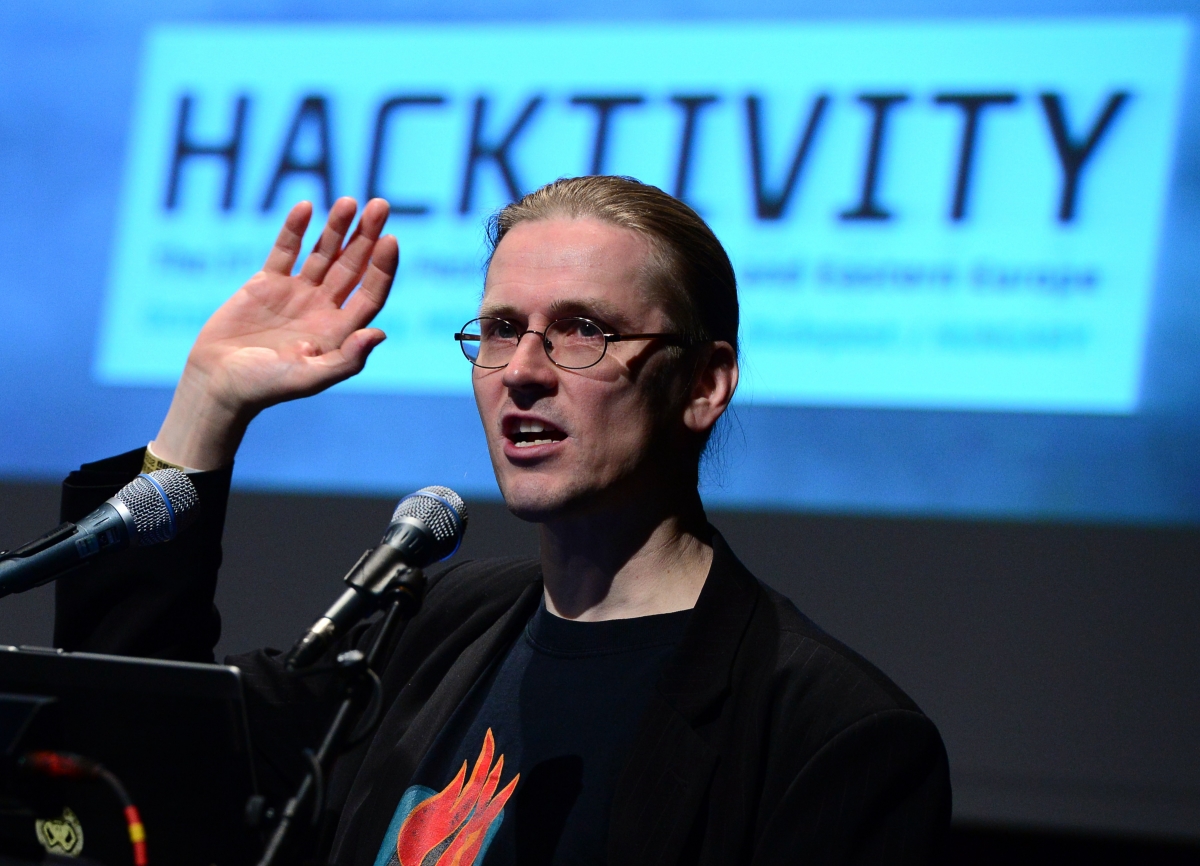
Inside the new era of warfare: Exploring the 'cyber arms race' with Mikko Hyppรถnen

http://www.ibtimes.co.uk/inside-new-era-warfare-exploring-cyber-arms-race-mikko-hypponen-1555084
By Jason Murdock April 16, 2016
Chief research officer of F-Secure, Mikko Hypponen of Finland gives his lecture in Theatre Hall of the MOM cultural center, in Budapest,
Not many security experts like the term 'cyberwar', and Mikko Hyppรถnen used to be one of them. But in the wake of recent attacks on critical infrastructure in Ukraine and a rise in the sophistication of nation-state hacking, something changed along the way.
"I have changed my opinion about cyberwar," Hyppรถnen told IBTimes UK. "I used to hate the word and I would always explain to people that whenever you hear or see headlines about cyberwar it's never war – it's typically spying or espionage – which is not war. Even if its nation states doing it, that's not war."
Hyppรถnen, who has been the chief research officer at Helsinki-based security firm F-Secure since the early 1990s, is well known in security circles for both his knowledge of malware and programming, and his straight-talking attitude when it comes to issues relating to state-sponsored spying, hacktivism and cybercrime.

He told IBTimes UK it was the hacking incident in Ukraine last year that changed his mind on the nuances of the much-criticised term. "When you look what happened in Ukraine, when you have two countries that are at war and you have an attack on critical infrastructure that is not stealing anything, but [instead] shutting down power for 200,000 people, that's not espionage, that's not spying – in my book that's cyberwar," he says.
To this end, Hyppรถnen believes we are now "at the very beginning of the next arms race". This – he argues – will bring clear advantages for the governments large enough to conduct cyber-operations, although it could mean trouble for the citizens caught in the middle.

Time Wasted and Lessons Learnt

April 12th, 2016 by A Junior Officer Contribution

It takes considerable knowledge just to recognise the extent of your own ignorance.
Thomas Sowell[1]
Introduction

The leadership, readiness, resilience, mental toughness and moral courage of Army’s junior leaders are topics that entice passionate debate. The result of these robust discussions often concludes with a clear outline of the faults of junior officers: ‘they didn’t rehearse,’ ‘they walked past poor standards,’ ‘they are overly familiar with their soldiers,’ and ‘they lack moral courage’. In writing this post, I offer no excuse for poor leadership and decision making. Rather, I offer a small collection of thoughts gathered during a year of awakened perspective as a Platoon Commander. It was a year in which my once strongly held view of military leadership was challenged and overturned.[2]
I have had to come to terms with being responsible for or associated with very poor examples of leadership. Truly accepting this realisation has been a difficult process, but one that has been important. Important because as I look back at my time in command of soldiers, I ask:
What could I have done better?
How do I help educate others on the mistakes I made?
Junior leaders can create their own adversity so psychological preparedness from the beginning of training is important. Ultimately, it was my lack of mental preparedness that led to me being, what I would consider ‘below worn rank’ as a leader in my first attempt at command. This post offers some thoughts on ways to enhance the experience of junior leaders by discussing:
Leadership and readiness
Training:
Disciplined
Simple
Resilience
Reality based
360 degree reporting

It is clear that my thoughts on these topics, with such little personal experience, are by no means original or complete but there are benefits in adding to the continuing passionate debate.
Leadership and Readiness

This post does not presume to have the answer. Select pieces of text can be cited and shining examples of leadership and courage can be placed onto paper in colloquial rhetoric, but for words to take effect we must be honest. Honest with ourselves, our peers, our subordinates and our superiors. If we consider the true implication of air-land operations in a digital age pitted against a peer enemy in a foreign and austere environment, everyone of us must answer the questions:
Are we ready?
Have we ensured that our soldiers are ready?

Excellence in leadership is never more necessary or crucial than in the military.[3] In Jim Fredrick’s Black Hearts, there is a clearly identifiable story line of a difficult situation made worse by the lack of attention to detail and the lack of moral courage in the junior leaders of Bravo Company, 502nd Infantry Regiment, 101st Airborne Division. It was “life and death stuff…and if we don’t change how we lead soldiers, and we don’t honestly look at what caused this to happen; it’s going to happen again.”[4]

In reading this open and honest account of battlefield leadership, I assessed and interrogated the numerous instances in my own past where I had ‘let things slip’ or ‘walked past a poor standard’ not willing to do the right thing. It is only through honest self reflection that we can start to understand where we went wrong. Leadership influences the group’s outlook – if the leader does not care about robust training, the soldiers do not care, and if the soldiers do not care then training benefit and a readiness mindset are lost.
One merely has to open the first page of Julian Thompson’s No Picnic: 3 Commando Brigade in the Falklands to understand the importance of ensuring that you personally, and your organisation, are as prepared as possible to achieve the mission.

The Secret U.S. Army Study That Targets Moscow A quarter century after the Cold War, the Pentagon is worried about Russia’s military prowess again. By Bryan Bender April 14, 2016 Read more: http://www.politico.com/magazine/story/2016/04/moscow-pentagon-us-secret-study-213811#ixzz45pJh4EXS


Lieutenant General H.R. McMaster has a shaved head and gung-ho manner that only add to his reputation as the U.S. Army’s leading warrior-intellectual, one who often quotes famed Prussian general and military theorist Carl Von Clausewitz. A decade ago, McMaster fought a pitched battle inside the Pentagon for a new concept of warfare to address the threat from Islamist terrorists and insurgents in Afghanistan, Iraq and other trouble spots. Now, his new mission is more focused. Target: Moscow.
POLITICO has learned that, following the stunning success of Russia’s quasi-secret incursion into Ukraine, McMaster is quietly overseeing a high-level government panel intended to figure out how the Army should adapt to this Russian wake-up call. Partly, it is a tacit admission of failure on the part of the Army — and the U.S. government more broadly.

“It is clear that while our Army was engaged in Afghanistan and Iraq, Russia studied U.S. capabilities and vulnerabilities and embarked on an ambitious and largely successful modernization effort,” McMaster told the Senate Armed Services Committee last week. “In Ukraine, for example, the combination of unmanned aerial systems and offensive cyber and advanced electronic warfare capabilities depict a high degree of technological sophistication.”

In Ukraine, a rapidly mobilized Russian-supplied rebel army with surprisingly lethal tanks, artillery and anti-tank weapons has unleashed swarms of unmanned aerial vehicles and cyberattacks that shut down battlefield communications and even GPS.
The discussions of what has been gleaned so far on visits to Ukraine—and from various other studies conducted by experts in and out of government in the U.S. and Europe—have highlighted a series of early takeaways, according to a copy of a briefing that was delivered in recent weeks to the top leadership in the Pentagon and in allied capitals.

Walsh: Marines May Protect Tanks With Active and EW Protection Systems, Much Like Ship Self-Defense


April 14, 2016 6:30 AM • Updated: April 14, 2016 7:18 AM

Cpl. Henry Estrada a gunner with 1st Tank Battalion from Lewisville, Texas, guides an M1A1 Abrams Main Battle Tank off the Landing Craft Air Cushion during rail operations at Dogu Beach, Republic of Korea, on March 15, 2016. US Marine Corps Photo

As anti-tank threats are growing increasingly sophisticated, the Marine Corps is looking at protecting its ground vehicles with active protection and electronic warfare systems to fend off incoming rounds the same way ships and planes do today.

Lt. Gen. Robert Walsh, deputy commandant for combat development and integration, said at a Senate Armed Services seapower subcommittee hearing on Wednesday that as technology proliferates, the anti-tank threat is rapidly evolving. The Navy is investing in protecting its ships and aircraft from similar threats, and Walsh said it’s time for the Marine Corps to take the same approach for its ground vehicles.

“When we start getting threats on our aircraft, our helicopters, our fixed wing aircraft, [from] infrared missiles, we quickly put out a capability to defeat those types of missiles,” he said.
“Now we’re seeing the threat on the ground changing, becoming a much more sophisticated threat on the ground. What we’ve continued to do is up-armor our capabilities on the ground, put armor on them. We’ve got to start thinking more with a higher technology capability, with vehicle protective systems, active protective systems that can defeat anti-tank guided munitions, RPGs (rocket-propelled grenades) … along with soft capability, which is the technology our aircraft have.”

To that end, the Marine Corps is partnering with the Army to test out the Israeli Trophy Active Protection System (APS). The Army is leasing four systems and will experiment with their Stryker combat vehicle and M1A2 tanks. The Marine Corps is currently modifying some of its M1A1 tanks to install mounts for the Trophy system, and the service will later work with the Army to test the protective system on the Marine tanks against anti-tank guided missiles and RPGs, he told USNI News after the hearing.