3 May 2016

Society and politicians must respond to the sacrifices

By Air Marshal B D Jayal
01 May , 2016
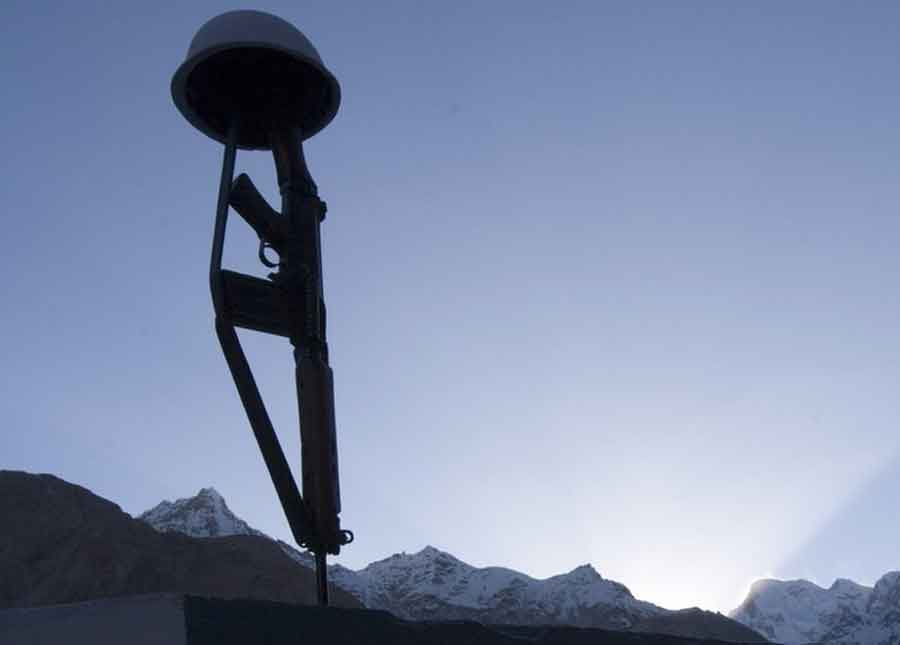
Of late the Indian armed forces have more often than not been in the news for reasons that appear to reflect a lowering of both personal and institutional moral and ethical standards. The reasons are many, not least the rising demand from the public at large for accountability and a round-the-clock electronic media hungry for sensational news. But beyond these fairly legitimate aspects of a vibrant democracy lie the general societal expectations — that members of our armed forces are expected to be a cut above the rest and, whilst society may be somewhat tolerant of the shenanigans of our administrators and politicians, it draws the line when the decay spreads to our armed forces.

The professionalism of the military is judged not just by the achievement of various mission objectives, but by whether these were achieved through fighting a moral and ethical battle.

In a way, members of society bind members of the armed forces to an unwritten professional contract — that of mutual trust whereby they authorize the armed forces to use their awesome military power to ensure the people’s security, but within the bounds of moral and ethical codes of conduct and behaviour. A contract neither articulated nor legal — yet that has the sanction of a moral binding force, for what is a nation’s military without the moral support of its people?
No Use of Combat Air Power in 1962

By Air Vice Marshal AK Tiwary
02 May , 2016

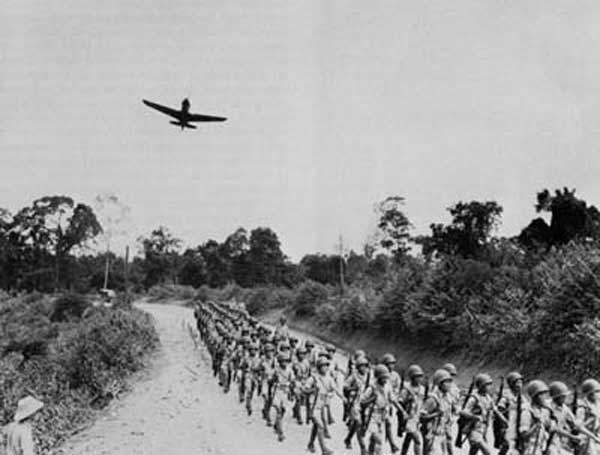
In 1962 as the war clouds gathered over the Himalayan mountains, Indian Army beefed up its defences. As a result IAF was asked to undertake tremendous surge in air maintenance – nearly thrice the normal amount. The air maintenance flying in Sep 1962 was 1179 hours. It increased to 3263 hours in Nov 1962. However, the inflow at the receiving end of air maintenance was not as spectacular. The dropping zones (DZ) were sub optimum; there was shortage of dropping equipment; there were too few porters to retrieve the dropped load and take it to Army posts; the identification between different items of dropped air load was ineffective or absent. All this resulted in around 80 percent of the drop being irretrievable.1 This despite the valiant effort of IAF transport crew and helicopter crew which continued to provide much needed support. This has been well recorded and appreciated. They are the reasons of not using combat air – that are little known. This article is devoted to this second part.

During the Sino-Indian War of 1962, the political leadership did not use the combat air arm of the IAF. General Kaul the Army Commander responsible in NEFA, later confessed, “Lastly, we made a great mistake in not employing our Air Force in a close support role during these operations”.

Nurturing Military Institutions: For the Good of the Nation

By Lt Gen Gautam Banerjee
02 May , 2016

Over the following decades, while the nation’s military capability went through cycles of rise and fall depending upon the degree of the Government’s geo-strategic naivety, denigration of the soldiery proceeded unhindered, some by contrived default and some by manipulative designs of the defence managers. Blatant tricks in ‘saving’ money against military expenditure and to keep the forces in perpetual state of ‘want’ seemed to have become a cause celebre among the defence bureaucracy – with ready endorsement of their political masters, of course.

“A country that refuses to respect its armed forces will eventually end up getting forces that will not respect the nation’s aspirations”.

An Institution Exclusive

The tradition of celebrating the soldiery is a profitable lesson that the state-societies have learnt over the millennia of their existence…

Nation-states raise military institutions to protect their sovereign interests in a compellingly predatory world and when more agreeable methods of dispute resolution fail to deliver. They do so at excruciatingly heavy economic, but more than that societal, costs because irrespective of the outcomes, military ventures tend to leave permanent marks on a nation’s mind.

Buy (IDDM) or Buy (Indian): Horns of a Dilemma

By Amit Cowshish
02 May , 2016

All defence acquisition proposals were required to be classified under one of five categories until the incomplete version of the Defence Procurement Procedure (DPP) 2016, released on 28 March 2016 on the opening day of DefExpo 2016 at Goa, added yet another category to the list. Termed ‘Indian (Designed, Developed and Manufactured)’, or Buy (IDDM), this category replaces ‘Buy (Indian)’ as the most preferred category in the hierarchical order of procurement categories. Besides these two categories, the hierarchy of categories consists of ‘Buy and Make (Indian)’, ‘Buy and Make’, and ‘Buy (Global)’, in that order.

There is another category, called ‘Make’, which has been delinked from this hierarchy but nevertheless retained in DPP 2016 with some modifications. The ‘Make’ projects entail design, development and manufacture of prototypes of equipment by Indian companies. The ‘Make’ category is different from the ‘Buy (IDDM)’ category. While the former entails development of prototypes offuturistic equipment, weapon systems and other platforms, the latter is intended for outright purchase of equipment.

A Dry Ice-Bucket Challenge To Shame The Indian ‘Intellects’

May 1, 2016

For 60 years, what did we academicians and university research fellows do about water crises in India? 

Yogita Ashok Desai. 12 year old. Died with a heat stroke while fetching water from a handpump in her village. (ANI news)

“સુખી હું તેથી કોને શું / who cares if I’m happy

દુ:ખી હું તેથી કોને શું / who cares if I’m sad

જગતમાં કંઈ પડ્યા જીવ / so many beings lie in this society 

દુ:ખી કંઈ ને સુખી કંઈક” / some lie happy, nowhere resides sad

-- Govardhanram Tripathi, “Saraswatichandra”

Last week in Salt Lake City (Utah, USA), at one of the grandest physics conferences of the year, I was at all awe seeing multiple astrophysics talks mentioning the gravitational-wave detector going to be built in India. It is, of course, a moment of national pride, and the time we operate this detector, the feat is going to be no less than ISRO’s future manned mission to the moon. 

Oblivious to the walls of these conference centres and our 24x7 wifi/air-conditioned research institutes, exists a parallel universe. On paper, that universe has the same laws of physics and the law of land as our research labs, but the level of human rights in them seems darker than the darkest parts of our physical universe. In a news that did not become Twitter trend, a 12-year old village girl from Maharashtra, Yogita Ashok Desai, died of heat stroke while fetching water from a hand pump. Any person with a soul out there, I bet if you can stare at her picture in school uniform for more than 10 seconds and not feel a needle poking from Yogita’s universe to yours. 

Six Years Down the Line, And the Infantry Still Waits for Basic Assault Rifles


May 01, 2016

Six Years Down the Line, And the Infantry Still Waits for Basic Assault Rifles

NEW DELHI: The Indian Army’s six-year long wait for an assault rifle is nowhere near fruition. 

Neither is the debate over whether the army wants to eventually induct a 5.56x5mm or a 7.62x39mm calibre rifle into service, after inept attempts to import a multi-calibre rifle were scrapped last June. 

Efforts to acquire such a weapon system were initiated in 2010, after the army declared that the Defence Research and development Organisation (DRDO)- designed Indian Small Arms System (INSAS) 5.56x45mm assault rifle, was ‘operationally unsound’. 

In 2012 former Defence Minister A K Antony told parliament that the INSAS rifle had been overtaken by ‘technological development’- a euphemism for a poorly designed weapon system, which the army had grudgingly inducted into service in the late 1990’s, amidst a myriad problems. 

The INSAS rifles magazine was known to often crack in extreme hot and cold climates in Rajasthan and Siachen, whilst the weapon was prone to jamming during firefights. 

Consequently, global tenders were floated in 2011 for 66,000 multi-calibre rifles weighing no more than 3.6kg, alongside the ability to switch from 5.56x45mm cal to 7.72x39 cal just by changing their barrel and magazine. 

'India should treat Kashmiris as equals, but are Kashmiris ready to be treated as equals?'

A selection of readers' opinions over the past week.

Equal citizens

A very well written article but it seems like something has been left out. India should treat Kashmiris as equals, but are Kashmiris ready to be treated as equals (“Opinion: To solve Kashmir crisis, India first needs to treat Kashmiris as equal citizens”)?

Many Kashmiri students studying out of Jammu and Kashmir have raised slogans in favour of Pakistan and against India. Is this also India’s mistake? Are Kashmiris ready to ask for the removal of Article 370 which gives special status to Jammu and Kashmir?

Why has the writer failed to put across these points? – Manoj Saini

Although the writer has been impartial to some extent, how could she declare the Handwara episode as a rumour? We live in Kashmir and we know better what is happening over here. We know that the facts are distorted. So before bailing out the rapists, she ought to have thought a thousand times. – Magray Abumouazzin

Do you mean equal citizens to the ones in India who have all the same problems including poverty, bad roads, floods, corruption, lack of most basic amenities, among other things? Despite these problems, they do not damage, kill and kick out minorities but engage with the democratic system to try and improve the situation.

Less cliches, please. Kashmiri Muslims are not special. The choice to burn or build has always been theirs. Do not always blame India – that argument does not fly anymore. India has changed and more and more of us have started questioning the intentions of the Valley’s dominant communities. – Atul Wokhlu

Why Pak is convulsing over a woman’s account of her sex life

May 1, 2016

Earlier this week, a young Pakistani woman wrote a candid piece online about her premarital sex life in Islamabad. Alleging that Pakistanis watch more porn privately than any other nation in the world (she didn’t quote her sources) while publicly maintaining a façade of piety, she took them to task for being a bunch of sexually repressed hypocrites. She didn’t just dole it out, she was pretty forthright about herself. She listed the number of partners she’d had (a dozen by the age of 19) and described the location of her trysts (cars, expensive hotel rooms, and once her boyfriend’s father’s office which had an attached bedroom – your surprise is not unmerited).

But she didn’t have a great time because of all the secrecy, lies and subterfuge involved. And the fact that her partners were an unadventurous, boring lot.

She had the gumption to write all this under her own name: Zahra Haider. Miss Haider currently lives in Canada where she is dating non-judgmental, non-Pakistani men and having, by her own account, a fulfilling experience.

Meanwhile in her home country, the proverbial s*** has hit the fan. Her compatriots — most of them men, I must add — have spewed their fury, outrage and disgust in a stream of abusive tweets. Admittedly a few have also maintained that her private life is her own business. I won’t go into what some have threatened to do to her but suffice it to say she has been denounced for all manner of sins. She’s a liar. She’s a slut. She’s brought shame to her family.

(Ab)normal Nuclear Pakistan

By Sobia Paracha
April 27, 2016

Pakistan’s nuclear policy is a product of both mistrust toward the U.S. and threat perceptions vis-a-vis India. 

Security threats from India and Pakistan-U.S. mistrust on nuclear non-proliferation are both important drivers of Pakistan’s nuclear policy and factors contributing to Pakistan’s dependence on nuclear weapons for defense and diplomacy. A recalibration of Pakistan’s nuclear policies would require enhanced trust in the United States and the non-proliferation regime. There is little that has been done by the two parties to enhance each other’s confidence. However, the recent statement given by President Barack Obama at the Nuclear Security Summit in Washington D.C., which pointed to both India and Pakistan as contributors to the nuclear dangers in South Asia, is a minor step in the right direction.

The Pakistan-U.S. mistrust is also reflected in the way discussions on making Pakistan a normal nuclear state were conducted in both Washington D.C. and Islamabad. The recent discussion in the U.S. on bringing Pakistan into nuclear mainstream (see, for example, this report by Toby Dalton and Michael Krepon) advocates an incremental approach that requires Islamabad to take measures like signing the Comprehensive Nuclear-Test-Ban Treaty (CTBT), helping initiate fissile material cut-off treaty (FMCT) negotiations, and adopting restraint in fissile material production and fielding short-range ballistic missiles (SRBM). The normalization debate emanating from the West assumes that an internal paradigm shift in security perceptions of Pakistan is possible or at least required. Pakistan’s policy of full spectrum deterrence is characterized as nuclear competition with India and the West has advocated restraint, yet the Pakistani position is that the country is only taking minimal steps for credibly deterring India.

Pakistan’s Nuclear Program and Minimal Deterrence

Afghan I.G. Report: Neither Pentagon Nor Afghan Government Know How Many Soldiers and Police Are On Duty

April Quarterly Report, “Security: The Eroding Bedrock”

Special Inspector General for Afghanistan Reconstruction (SIGAR)

April 30, 2016

Today, SIGAR released its 31st (April 2016) Quarterly Report to Congress.

The report notes:

– The opening section titled “Security: The Eroding Bedrock,” notes that SIGAR’s work indicates five major challenges that confront U.S. efforts to develop the Afghan National Defense and Security Forces (ANDSF) into a force capable of defending the country: (1) limited oversight visibility, (2) questionable force-strength numbers, (3) unreliable capability assessments, (4) limited on-budget assistance capacity, and (5) uncertain long-term sustainability.

– With fewer forces in theater, the United States military has lost much of its ability to make direct observations, provide tactical mentoring, and collect reliable information on ANDSF capability and effectiveness.

– SIGAR’s assessment that neither the United States nor its Afghan allies know how many Afghan soldiers and police actually exist, how many are in fact available for duty, or, by extension, the true nature of their operational capabilities, is troubling.

– SIGAR is concerned that measures of ANDSF capabilities and effectiveness have never been very reliable and are getting worse.

– The U.S. ability to influence operational outcomes on the ground is constricting, while ANDSF capability has not correspondingly risen.

The Diplomat: "Russia and China's strengthening heralds a return to a multi-polar political structure"

By Vestnik Kavkaza
Apr 27,2016

The international publication The Diplomat writes about the ways Russia and China oppose unilateralism in world politics. In 1990 Charles Krauthammer declared that the center of the world power is the United States, calling the country the ‘only superpower.’ However, the theory of international relations, particularly neorealism, proves that the unbalanced force of a unipolar international system has always stimulated the emergence of new great powers and the restoration of multi-polarity in the world.

Many analysts say the US’s unipolarity is now coming to an end. The global financial crisis of 2008 revealed the cracks in the economy of the American hegemony, especially against the background of a number of developing countries. In addition, America is also showing signs of ‘war fatigue’ after 10 years of active military campaigns in Afghanistan and Iraq, as evidenced by the low-key intervention in the conflict in the Middle East and the transition mainly to the war against terrorism. There has been a long-awaited return of two other world leaders – Russia and China – on the world political arena, which can become competitors to the US.

Over the past 10 years Russia has repeatedly demonstrated its willingness to use diplomacy toward the United States, NATO and the EU, while remaining on equal footing with the leading states. Despite the rapprochement between Moscow and Washington, the incompatibility of the positions of the two states initially indicated that the cooperation would be short-lived. Russia is actively pursuing a foreign policy of assistance to its longtime partners, Iran and Syria, which, in turn, weakens the US position in the Middle East. Even despite the anti-Russian sanctions, the Kremlin is able to construct a foreign policy in such a way that Russia's prestige as a superpower is strengthened more and more.

How India must respond to growing Chinese military might

April 28, 2016 

As China begins rejuvenation of its military power, there is an urgent need for transformation of the Indian military, says Lieutenant General Anil Chait (retd).

Throughout Chinese history, political power has always been founded on control of the military.

President Xi Jinping's appearance in battle dress, with insignia on April 19, highlights his more direct role in military affairs.

Xi, with the new title of commander-in-chief of the joint operations command centre on his collars, asked the officers to follow trends in military revolution.

He asked them to 'change their ideas, innovate and tackle difficulties, in a bid to build a joint battle command system, that was absolutely loyal, resourceful in fighting, efficient in commanding, courageous and capable of winning wars,' driven by information technology, Xinhua quoted Xi as saying.

Xi has overseen reorganisation of the People's Liberation Army's command structure into theatre commands aimed at better integrating of the different services. Coordination between services has traditionally been regarded as a weak point.

He also ordered a 300,000-person reduction in forces, balancing it with joint operations.

The notion of the 'Chinese Dream' by Xi, has been built around the 'rejuvenation' of the Chinese nation, with military power as an important component for its revival.

The strategy involving military campaign in the war zone is to be operationalised under the strategic guidance of a designated Central Military Commission member.

Russia Backs China's Challenges to U.S. Over Asian Flashpoints

April 29, 2016 

Don't Miss Out — Follow Bloomberg On 

Lavrov Opposes U.S. missile-defense system in South Korea 

Russia offered support for China’s opposition to U.S. actions in two of Asia’s biggest security flash points amid mounting tensions on the Korean Peninsula and in the South China Sea.

Foreign ministers from China and Russia expressed "grave concern" about the possible U.S. deployment of the Thaad anti-missile system in South Korea to defend against the growing North Korean nuclear threat. Russia also backed China’s stance that non-claimants like the U.S. shouldn’t "interfere" in territorial disputes in the South China Sea.

Speaking at a joint press conference with his Chinese counterpart Wang Yi in Beijing on Friday, Russian Foreign Minister Sergei Lavrov said the two sides had a "unified position" on North Korea. He warned against any attempts to use the nuclear threat "as a justification for building up military potential on the Korean Peninsula."

The U.S.’s missile shield plan and its naval challenges to China’s claims to more than 80 percent of the South China Sea have fueled tensions among the dominant powers in Asia. China fears that the Terminal High Altitude Area Defense system could be used against its own weaponry. It has also been lobbying for international support for its position on the South China Sea as it braces for a ruling by an international arbitration panel on a challenge to its claims by the Philippines.

Flashpoint Issues New Report Demonstrating Advancement of ISIS’s Organized Cyber Capabilities

April 28, 2016

NEW YORK CITY – April 28, 2016 – Flashpoint, the global leader in Deep & Dark Web data and intelligence, today announced the release of a new report analyzing the cyber capabilities of the Islamic State (ISIS), titled Hacking for ISIS: The Emergent Cyber Threat Landscape. The report concludes that while the threat that emanates from ISIS-inspired cyber attacks is of high concern, especially in light of the formation of a new United Cyber Caliphate composed of previously disparate pro-ISIS hacking collectives, these hacking groups still operate unofficially and remain poorly organized and are likely underfunded.

“Given prior attacks that compromised the CENTCOM and Newsweek Twitter accounts, new concerns regarding ISIS’s cyber capabilities have clearly emerged. Until recently, our analysis of the group's overall capabilities indicated that they were neither advanced nor did they demonstrate sophisticated targeting,” said Laith Alkhouri, Director of Research & Analysis for the Middle East and North Africa and a co-founder at Flashpoint. “With the latest unification of multiple pro-ISIS cyber groups under one umbrella, there now appears to be a higher interest and willingness amongst ISIS supporters in coordinating and elevating cyber attacks against governments and companies.”

For the vast majority of its existence, the pro-ISIS hacking landscape was composed of at least five distinct groups that launched campaigns in support of the terror group. Evidence indicated that these collectives overlapped or coordinated with one another in certain campaigns, pooling their resources and manpower. This confluence culminated in the April 4, 2016, announcement of a new group called the “United Cyber Caliphate,” following the formal merger of several groups. These efforts suggest a growing pro-ISIS community of hackers that is expected to expand further, especially if the collective’s online operations become successful. Even limited success could inflate their notoriety and enable them to continue to grow their capabilities and attract talent.

ISIS is assembling a cyber army


Apr 28, 2016

Following the deadly assaults on Europe in late 2015 and early 2016, reports emerged suggesting that ISIS has an army of organized hackers who can provide consistent, round the clock support to foot soldiers. However, new information on the matter seems to suggest that ISIS’s remaining hacking arm is nothing more than a propaganda machine capable of dealing minor hits, if any, to enemies. But ISIS is showing more interest in expanding its hacking capabilities.

The news comes at a time when the U.S. government has declared cyber war on the Islamic paramilitary organization.

A report from Flashpoint called Hacking for ISIS: The Emergent Cyber Threat Landscape, first seen by Ars Technica, says that ISIS in April merged four independent pro-ISIS cyber teams into a single group called the United Cyber Caliphate. The group is made of the Sons Caliphate Army, the Caliphate Cyber Army, the Ghost Caliphate Section and Kalashnikov E-Security Team.

These sound like rather scary organizations, but Flashpoint says they can’t do that much harm as they lack the expertise to conduct sophisticated digital assaults.

What Explains the Flow of Foreign Fighters to ISIS?


NBER Working Paper No. 22190

Issued in April 2016

NBER Program(s): DEV LS POL

This paper provides the first systematic analysis of the link between economic, political, and social conditions and the global phenomenon of ISIS foreign fighters. We find that poor economic conditions do not drive participation in ISIS. In contrast, the number of ISIS foreign fighters is positively correlated with a country's GDP per capita and Human Development Index (HDI). In fact, many foreign fighters originate from countries with high levels of economic development, low income inequality, and highly developed political institutions. Other factors that explain the number of ISIS foreign fighters are the size of a country's Muslim population and its ethnic homogeneity. Although we cannot directly determine why people join ISIS, our results suggest that the flow of foreign fighters to ISIS is driven not by economic or political conditions but rather by ideology and the difficulty of assimilation into homogeneous Western countries. 


How to Beat ISIS: Blow Up the Money

by Robert Windrem and William M. Arkin 

Watch The U.S. Blow Up ISIS Money 2:36 

The U.S. has quietly turned to a new strategy in fighting ISIS — follow the money, then blow it up, U.S. officials tell NBC News. 

At least four times in the past four months, U.S. military jets have targeted [major] ISIS financial centers, destroying them in strikes that have turned millions of U.S. dollars into confetti. The U.S. has also killed ISIS financial leaders — its "oil minister" in 2015 and its "finance minister" in March. 

The strikes are the fruit of a secret cyber war in which the U.S. is tracking, manipulating and even stealing or destroying the financial assets of terrorists. Five years after the SEAL raid that killed Osama bin Laden on May 1, 2011, it's a subtle shift from the U.S. strategy against al Qaeda in which degrading the operational leadership was the priority. 

Just as unraveling the courier network was critical to tracking bin Laden, the cyber efforts against the ISIS financial network are critical to upending ISIS, say U.S. officials. Unlike al Qaeda, ISIS is trying to run a government and control a big chunk of land, and it has a constant need for hard currency to pay its fighters and bureaucrats and feed its population. The war is not just about tracing the movement of money but the movement of individuals linked to the cash. 

North Korea Continues to Stir Controversy

By Radhakrishna Rao
01 May , 2016

India has reasons to worry about North Korean nuclear and rocket tests. Though not an immediate neighbour of the country, North Korea by its act transferring some of the critical missile technologies to Pakistan has contributed to the growing tension between India and Pakistan. For instance the much touted Ghauri missile of Pakistan is claimed to be a clone of North Korea’s Nodong missile. In all likelihood North Korea would help Pakistan in its quest of miniaturising its nuclear warheads, believe strategic analysts specializing in South Asian affairs.

There never seems to be an end to the “fantastic claims” with which North Korea continues to cast a spell on the world. Described as a “rogue state” and “reclusive kingdom”, North Korea continues to remain in limelight for all the wrong reasons.

The North Korean political leadership would like the world to believe that it has already qualified a rocket engine meant to propel its new ICBM that is capable of staging nuclear strikes…

Now the North Korean political leadership would like the world to believe that it has already qualified a rocket engine meant to propel its new Inter Continental Ballistic Missile (ICBM) that is capable of staging nuclear strikes on the US. But then the rocket engine is said to have gone through only a ground testing phase and it may need to go through many more tests before it becomes robust enough to drive an ICBM.

Are these the new migration superpowers?

Mark Leonard Director, European Council on Foreign Relations

26 April 2016
https://www.weforum.org/agenda/2016/04/are-these-the-new-migration-superpowers/


We have entered the age of migration. If all the people who live outside the country of their birth united to form their own – a republic of the rootless – it would be the fifth-largest country in the world, with a population of more than 240 million people.


Though much has been written about how a world on the move is changing national politics, there has been little consideration of its geopolitical effects. But the mass movement of people is already creating three types of migration superpowers: new colonialists, integrators, and go-betweens.
Image: The Economist


The new colonialists call to mind the settlers from Europe who spread across the world in the eighteenth and nineteenth centuries, benefiting not just themselves, but also their homelands. Similarly, the most mobile populations of the twenty-first century are helping their countries of origin obtain access to markets, technology, and a political voice in the world.


What OMB is doing on federal cybersecurity, and what it should be doing

04/27/16

Tim Starks has written about cybersecurity since 2003, when he began at Congressional Quarterly as a homeland security reporter. While at CQ Roll Call, he mainly covered intelligence, but he also had stretches as a foreign policy reporter and defense reporter. In 2009, he won the National Press Club's Sandy Hume Memorial Award for Excellence in Political Journalism.

He left CQ Roll Call in March of 2015. Before coming to Politico he spent several months freelancing, writing for the Economist, the New Republic, Foreign Policy, Vice, Bloomberg and the Guardian.

He grew up in Evansville, Ind. and graduated from the University of Southern Indiana with a degree in print journalism. His first full-time reporting job was covering city hall for the Evansville Press, the former afternoon daily. He was a Pulliam Fellow at the Indianapolis Star, and participated in the Politics and Journalism Semester at the chain of newspapers anchored by the Las Vegas Review-Journal. He also was the Statehouse Bureau Chief at the Evansville Courier & Press and established the Washington bureau of the New York Sun. Some of his other freelance work has been for the Chicago Tribune, Glamour, Deutsche Welle, Ring and BookForum.

He is the founder of The Queensberry Rules, dubbed an "indispensable boxing blog" by the Wall Street Journal. He's also fond of fantasy basketball and real-life basketball — he is from Indiana, after all — and gets way too bent out of shape over people rooting against the home team or not walking on the right side of the sidewalk. 

With help from Darren Goode 

Analysis: Are US, Israel winning or losing newest cyber battles


As part of its “cyber bomb,” the US has placed implants within ISIS’s networks so it can mimic their behaviors and orders. 

Keeping track of the cyber battles between the US and Israel and their cyber adversaries is dizzying and constantly changing.

The US is certainly upgrading its cyber capabilities to undermine groups such as ISIS. The New York Times reported on Sunday that the US Department of Defense’s Cyber Command unit is mounting an offensive against ISIS to block it from spreading its message, recruiting members, paying fighters and from exercising command and control functions such as issuing instructions online.

As part of its “cyber bomb,” the US has placed implants within ISIS’s networks so it can mimic their behaviors and orders, and make slight changes to redirect ISIS fighters in a way that leaves them exposed to ground or drone assaults. 

These are the practical measures the US has shied away from using until now because of legal issues and the possibility of a boomerang effect. For example, there are also reports that the US came close to paralyzing Syria’s air force a few years ago to hamper its barrel bombing of civilian populations, but held off because it could cause diplomatic complications with third countries.

U.S. cyberwar against ISIS could use methods and tactics criminals use against enterprises

Apr 27, 2016

Cyberwar against ISIS could bring into play tools and tactics that corporate security pros face every day, only this time they will be used as part of a larger objective than criminal profit.

Computerworld’s annual IT Salary Survey results are in. Find out what your peers said about their

The goals of the offensive are to disrupt communications within ISIS and between the group and potential recruits, according to a story in the New York Times.

To meet those goals, U.S. Cyber Command could use such means as DDoS and man-in-the-middle attacks, banking Trojans and even ransomware-type attacks that irreversibly encrypt machines (but skip the ransom), experts say.


Cyber operations would support traditional military tactics and carry out missions traditional military forces cannot, they say.

Knocking out communications ahead of ground attacks is standard military protocol and it used to be done using air attacks against communication centers, says James Barnett, a retired U.S. admiral who heads the cybersecurity practice at Washington law firm Venable LLP.

Next-generation enterprise security architecture to combat cyber weaponry


Why is the IT industry beginning to look at next-generation enterprise security architecture? According to Johna Till Johnson, CEO at Nemertes Research, the number -- and nature -- of threats is changing with each passing hour. And as threats become more complex and multifaceted, consequences for not protecting the business rise. This reality keeps many CIOs up at night. 

Johna Till Johnson 

The Industries That Are Being Disrupted the Most by Digital


March 21, 2016

https://hbr.org/2016/03/the-industries-that-are-being-disrupted-the-most-by-digital


We’re at a critical time for the digital economy. Digital is no longer the shiny front end of the organization – it’s integrated into every aspect of today’s companies. As digital technologies continue to transform the economy, many leaders are struggling to set a digital strategy, shift organizational structures, and remove the barriers that are keeping them from maximizing the potential impact of new digital technologies.

Every year, Russell Reynolds Associates surveys more than 2,000 C-level executives on the impact, structure, barriers, and enablers of digital technologies across 15 industries. The barometer below shows the percentage of executives surveyed who responded that their business would be moderately or massively disrupted by digital in the next 12 months, broken down by industry.


Unsurprisingly, the most disrupted organizations were B2C, with media being the most disrupted and telecoms and consumer financial services close behind.
Insight Center


Sponsored by Accenture
Strategies for growth in a connected world.

90% of these organizations profess to having a digital strategy in place. But the sheer pace of change has created a skills gap, which is stopping many of these organizations from moving more quickly. Just over half of the respondents answered “yes” to the question “Do you have the right people to define your digital strategy?” It might be hard for people in HR to hear, but only 20% of those who responded said that their HR function was enabling them to transform, ranking them even lower than finance — an area not exactly known for its agility.

What The Bangladesh SWIFT Hack Teaches About The Future Of Cybersecurity And Cyberwar

Apr 30, 2016 

Hacked By Def Con Press Preview during the 2016 Tribeca Film Festival in New York City. (Rob Kim/Getty Images for Tribeca Film Festival)

Cybersecurity headlines this week have been filled with emerging details of the February 2016 cyber theft of 81 million dollars from the Bangladesh central bank’s holdings in the New York Federal Reserve Bank. In a nutshell, highly skilled attackers crafted an intricately customized assortment of malware that ran on the bank’s own computers and issued what appeared to be legitimate SWIFT monetary transfer orders. The software went to great lengths to hide the transactions from bank personnel, from deleting database entries to altering hardcopy paper printouts. What can we learn from this attack about the future of cybersecurity and cyberwarfare?

BAE Systems has a lengthy technical readout on the likely tools, techniques and workflow the attackers used to penetrate Bangladesh Bank’s networks and infiltrate its SWIFT-connected computers. As bad as the attack was, it could have been far worse. The attackers initially attempted to loot the bank of a grand total of 951 million dollars, but most transfers were blocked, leaving the robbers with just 81 million which was routed through bank accounts and casinos in the Philippines and remain missing.

It further turns out that this was not an isolated attack. Reuters reports that SWIFT quietly notified its customers earlier this week that “SWIFT is aware of a number of recent cyber incidents in which malicious insiders or external attackers have managed to submit SWIFT messages from financial institutions’ back-offices, PCs or workstations connected to their local interface to the SWIFT network.”

The Best Radio Antenna Is One That's a Tank

Apr 27, 2016

​University of Wisconsin engineers have done it, devising a new and better way for military vehicles to communicate.​
"Whip" antennas—those long metal rods that used to extend from our cars—look pretty cool in a Smokey and the Bandit kind of way. But for military vehicles, they're not such a great solution.

Troops in the field communicate using relatively low frequency radio signals. The upside is that they don't require much power and can travel long distances. But to operate efficiently, antennas need to be at least one-quarter the length of the radio waves they transmit. Since military comms use the HF band where radio waves can range from 10 to 100 yards in length, big antennas are better. But putting huge antennas on a Humvee or an armored personnel carrier or a tank just isn't practical. Short antennas, meanwhile, are inefficient, operating in a narrow bandwidth and dissipating as much as 90 percent of input power as useless heat instead of useful broadcast radio signals. 

"If a large metallic structure is there, why not take advantage of it?"

But what if you could effectively enlarge antenna size by using the vehicle itself as an antenna? That's what University of Wisconsin–Madison engineers are seeking to do as part of a project supported by the Office of Naval Research (ONR). "We're basically looking at using the 'antennas' traditionally mounted on military vehicles as a means of exciting the platform itself," says Nader Behdad, associate professor of electrical and computer engineering at UW–Madison. "If a large metallic structure is there, why not take advantage of it?" 

The Battle Over U.S. Military History


by PAUL HUARD

Loved by ordinary Americans, hated by scholars? The answer is more complicated than you might think

Walk into any book store or scan a cable television line-up and you will see plenty of evidence that ordinary Americans love military history.

Bookshelves groan under the weight of new titles examining generals, battles and weapons. Every year, Hollywood or foreign film producers release a handful of films based on war-related themes or topics that usually do well at the box office. And History Channel carries so many documentaries about World War II that its nickname is “Hitler Channel.”

But do scholars of history share the love? When it comes to the serious, academic study of history in the United States, some say the relationship between Mars and Clio — she’s the muse of history, in case you don’t know — is no love match.

Advocates for academic research into military history sometimes quietly complain that colleagues often regard the discipline as a haven for warmongers and weapons-nuts.

Other academics say that’s nonsense—that it’s mere jealousy on the part of some professional historians, as military history no longer holds the place of prominence that it did a generation ago in university history departments.

The truth about the national state of military history is far more complex — and much more interesting — than the stereotypes imply. What emerges is a picture of a still-important and vibrant path of inquiry within the academy that being shaped by the larger changes in the study of history during the last 50 years.

USAF adopts Israeli battlefield technique in combat operations against ISIS

28 April 2016 

The US Air Force (USAF) has adopted a new battlefield technique, which Israel has used in the past, as part of its fight against ISIS.

The technique, known as knock operation, is used to get women and children out of threat area when attacking enemies.

USAF has adopted this technique for the first time to minimise civilian casualties as ISIS have been using civilians as human shields.

The US troops used this technique to attack an ISIS financier, who is said to be the major distributor of funds to fighters.

USAF personnel put a Hellfire on top of the building using an air burst so it would not destroy the building, and then knocked on the roof to warn the women and children inside about the attack.

The air force troops carried out the operations after they had ensured women and children were out of the building.

USAF major general Peter E. Gersten said: "We watched him come and go from his house, we watched his supplies, we watched the security that was involved in it.

Natural Pandemics, Extreme Warfare - Most Serious Threats Faced by Humanity

30.04.2016

Oxford’s Global Priorities Project has compiled a list of catastrophes - both natural and self-engineered - that could kill off 10 percent or more of the human population: natural pandemics and extreme conventional warfare are the most important global risks, with artificial intelligence (AI) and natural disasters also posing serious threats.

The researchers of the Global Challenges Foundation have ranked the most dangerous threats facing our civilization according to probability.

The likeliest risks include nuclear war and pandemics (both natural and deliberately engineered), followed by disasters stemming from runaway climate change, geoengineering run amok, and disruptions posed by artificial intelligence.


Global Catastrophic Risks 2016

The report, entitled Global Catastrophic Risks 2016, also included low-probability — but high impact —events, like asteroid impacts and supervolcanic eruptions.