3 September 2016

*** THE ORDINARY AND UNIQUE IN RUSSIA’S ELECTORAL INFORMATION WARFARE GAME

SEPTEMBER 1, 2016

Vladimir Putin has been busy this summer and the name of the game is information warfare. One of the most recent episodes is a Russian-sponsored disinformation campaign targeting Sweden. The operation involved the dissemination of false stories regarding the consequences for Sweden of entering into a military partnership of some sort with NATO. The fabrications included NATO’s intention of stockpiling nuclear weapons on Swedish soil, exemptions that would allow U.S. soldiers to commit heinous crimes free from prosecution, and more. The obvious objective is to sow mistrust between Sweden and NATO in an effort to weaken and limit the reach of the alliance.

Earlier this summer on the other side of the Atlantic, Russia embarked on a different kind of information warfare: Interference in a U.S. presidential election. In July, evidence emerged that Russia hacked the servers of the Democratic National Committees, turning over roughly 20,000 e-mails to Wikileaks, which promptly published the materials online. One likely motivation for the hack, assuming that it was indeed a state-sponsored intrusion by Russia (whichseems likely), was to undermine Hillary Clinton’s presidential campaign by embarrassing top Democratic officials and furthering the image that Clinton — and the political apparatus supporting her — are corrupt and untrustworthy. Thetiming of the hack lends credence to this sort of motivation.

Russia’s attempts at information warfare, especially the efforts to influence the presidential election, are certainlycause for concern. But it is important that we take a step back and ask whether the conditions rendering this kind of operation desirable and feasible are something we can expect from Russia in the future or if this is something closer to an aberration. My money’s on the latter.

Meet the New Electoral Manipulation, Same as the Old Electoral Manipulation

** THE CONSISTENT INCOHERENCE OF GRAND STRATEGY

SEPTEMBER 1, 2016

The importance of grand strategy should be evident today as the United States finds itself at a transition point. In a world of rising powers, revisionary but systemically declining states, rogues with nukes, and violent extremists withproto-state status, the need for clear direction is manifest. If there was ever an age in which a disciplined appreciation of threats, clearly prioritized goals, and the corresponding recalibration of the various instruments of national power were required, this is it.

The notion of grand strategy, albeit terribly hubristic sounding, is a decidedly practical art and a necessity for powers great and small. Such strategies are applied by accident or by deliberate rationalization in the pursuit of a country’s best interests. Yet, there are few agreements about what constitutes a grand strategy and even what the best definition is. In this new book, a young scholar, Lukas Milevski seeks to map out what he concludes is a muddled conception of strategic theory. Early chapters examine thinking on strategy from the Napoleonic era up to and through the two world wars of the 20th century. The back half details the fall and rise of grand strategy, through the Cold War’s emphasis on nuclear theory to today’s re-emerging interest. The author of this terse book begins his project by noting, “Few employed grand strategy, fewer employed it meaningfully and with definition, few associated themselves with it in practice, and few saw utility in the term.”

To Milevski, our ideas about grand strategy are “scattershot” and ahistorical. Ironically, I am partial to the definition postulated by Dr. Colin Gray, who defined it in The Strategy Bridge as “the direction and use made of any or all the assets of a security community, including its military instrument, for the purposes of policy as decided by politics.” This definition is not limited to states per se, is mute on its relevance to peacetime competition or wartime, and explicitly refers to all of the power assets of a community, rather than just its military services.

** Lessons From A Bangalore Kidnapping

01 September 2016

from STRATFOR

India is consistently ranked among the countries with the highest kidnapping risk, a lesson Ishaan Bapat learned firsthand. On his way home from his private university in Bangalore on Aug. 23, the 19-year-old was grabbed by two men and bundled into a car while waiting for a bus at a cafe. Bapat usually made the 19-kilometers (12-mile) commute by motorbike, but because his bike was in the shop, he took a bus and decided to grab a bite to eat during a transfer. Within a few hours of abducting him, Bapat's kidnappers used his phone to contact his parents.

Despite the assailants' warnings, Bapat's parents opted to call the police, who responded quickly and comprehensively, dispatching 30 officers across the city to look for him. By 9 the next morning, Bapat's kidnappers had dropped him off about 8 kilometers from his residence in central Bangalore, leaving him to catch a cab home.

Though it ended better than most, Bapat's story is all too familiar in India, which has a reported kidnapping rate of 6.6 per 100,000 people (a figure that could well be higher since kidnappings often go unreported). But his case provides a useful study in kidnapping - and how to avoid it.
Making a Kidnapping

In a kidnapping, a victim's socio-economic privilege can be a double-edged sword. Bapat is a student at a private college that charges an annual tuition well above the yearly income of an average Indian family. His father is an executive at an electronics firm in the area with reported revenues of $80 million in 2015. Though these factors likely influenced the robust police response to Bapat's kidnapping, they may also have made him more susceptible to attack in the first place. Police have not yet determined the intent behind the kidnapping, but they suspect that the crime was financially motivated. Given the status of Bapat's father, investigators are exploring personal or business rivalries as possible motives as well. These kinds of kidnappings are fairly common in India and often ensnare targets' family members.

* How To Deal With Being Passed Over For Promotion


September 1, 2016

The sooner you accept your fate, the faster you and your family adjust and plan for a new future.

The choice to become a career Army officer is more than just choosing a job. It’s a transition into a life unique and separate from the civilian world. The Army becomes our community, our culture, and our family. The word “officer” stops being a thing that you do, and becomes a thing that you are. You literally dedicate your life to the Army.

Now, imagine that despite the dedication, when the time comes, you are not selected for promotion. If you are a captain or major, this means that you are on a track out of the military. For most people, this also means that you won’t be able to complete the 20 years of service necessary to qualify for a standard retirement. You soon realize that by falling short on the promotion board, you lose more than just your military career: Your long-term plans for yourselves and your family unravel, and even your way of life will be taken from you.

This is the situation that I saw friends stumble through over the last two years, and it’s the situation that I was shocked to find myself in when this year’s results were released. When my board results were released, I was surprised.

The Kübler-Ross model of dealing with loss says that people go through five stages of grieving: denial, anger, bargaining, depression and acceptance. Framing the experience this way can help you understand — as it helped me — the experience of getting passed over for promotion, and provide a way to switch onto a more useful track for yourself and your family.

Stage 1: Denial.

Modi’s Visit to Vietnam: Re-asserting Freedom of Navigation in Troubled Waters

By Maj Gen PK Chakravorty
02 Sep , 2016

India is extremely fortunate to have a Prime Minister who is leaving no stone unturned to activate our Act East policy. Prime Minister Narendra Modi will visit Vietnam on September 3, 2016. From there he will proceed to attend the G 20 summit in Hangzhou, China followed by the East Asian Summit at Vientiane, Laos; a long official trip which would involve tremendous discussions on numerous issues. 

The Vietnamese Ambassador to India, Ton Sinh Thanh, welcomed the decision and it is expected that the visit will open a new page in the bilateral relationship between two intense strategic partners. It is pertinent to note that Vietnam has been visited by our President, Foreign Minister and Defence Minister. Significantly, the visit will be first by an Indian Prime Minister in the last 15 years. The Vietnamese Ambassador has stated that both countries are gearing up to celebrate milestones in the form of 45th anniversary of diplomatic relations and 10 years of establishment of the strategic partnership.

Though the visit is short it would be packed with discussions on the economic, cultural and security issues. The economic issues likely to be discussed would be: oil fields in the South China Sea; commencement of the work at Soc Tranh thermal power plant; imaging projects in outer space and other industrial projects.

The major focus would be on the recent ruling by the Permanent Court of Arbitration (PCA) on the South China Sea. Knowing the close relations between the two countries – Vietnam and China, this issue would be discussed between the top leaders of both countries. The PCA rejected China’s contention that the dispute is regarding Maritime Boundary delimitation and therefore excluded from Dispute settlement by Article 298 of the UNCLOS Convention. It observed that a dispute concerning whether a State has an entitlement to a maritime zone is a distinct matter and there is no confusion. The PCA also rejected the Chinese argument that as per 2002 ASEAN – China declaration on the conduct of parties in the South China Sea, Philippines was not correct in initiating arbitration. The Tribunal observed that it was a political agreement and not legally binding.

How Big Data Is Going To Stop Power Theft In Rural India

September 01, 2016

The Rural Electrification Corporation is planning to install equipment that will transmit usage data from metres at each of the country’s 100,000 rural feeder stations,which will identify spots where power theft is rampant.

The biggest problem for discoms in India, arguably, is what are called Aggregated Technical and Commercial losses (AT&C). As Aashish Chandorkar says in this piece, “transmitted power is lost partly due to technical reasons over the power networks, but mostly because of thefts and people using illegal, unpaid-for hooks to divert available power to their homes and establishments.” Some states lose as much as 50 percent of power transmitted to AT&C losses. This Mint report claimsthat in India, ‘regional distributors lose almost 23% of the electricity they buy through theft, unmetered usage and dissipation through old wires’. 

How can discoms decrease or prevent AT&C losses?

If discoms knew just where the AT&C losses are occurring (and also where the losses are likely to happen in future) it would help them take preventive measures in anticipation. 

Good News

Bhutan China Boundary Dispute – Progressing Towards Resolution

SR Research 
Sep 1, 2016 

Bhutan China Boundary Dispute – Progressing Towards Resolution

The 24th Round of Bhutan – China Boundary Talks was held in Beijing on 11th August 2016. The report of the Joint Technical Field Survey in the Western Sector adjoining the strategic Chumbi Valley was endorsed in the meeting. This denotes steady progress in resolution of the differences by both sides.

Historically China has boundary disputes with 14 neighbours with whom it shares the land border. Of these disputes 12 have been mutually settled. India and Bhutan are the only two neighbours with whom negotiations are ongoing for resolution of the dispute.

India and China have established the mechanism of the Special Representatives of the Prime Minsters for resolution of the dispute. Annual dialogues are held under this mechanism. The 19th Special Representatives’ Meeting on the China-India Boundary issue was held in Beijing on 20 April this year (2016). State Councilor Yang Jiechi, was the special representative from China and National Security Adviser Ajit Doval represented India

Both countries agreed to the Special Representatives mechanism appointed in 2003 which set off a three-stage process. The first stage of an agreement on the guiding principles and setting political parameters for settlement has been completed in 2005. Dialogue is on for the second stage to work out a framework for settlement which is likely to be long drawn as there is a basic difference on which portion of the boundary constitutes the dispute. Thereafter joint surveys, demarcation and delineation will be carried out.

Boundary talks between China and Bhutan are more advanced than that with India. The talks between Bhutan and China began in 1984. The basis for boundary negotiations between the two countries are two treaties: the Four guiding principles on the settlement of the boundary issues, signed in 1988, and the agreement on maintenance of peace and tranquillity along the border areas, signed in 1998. 

What’s Left of the Syrian Arab Army? Not much

by TOM COOPER

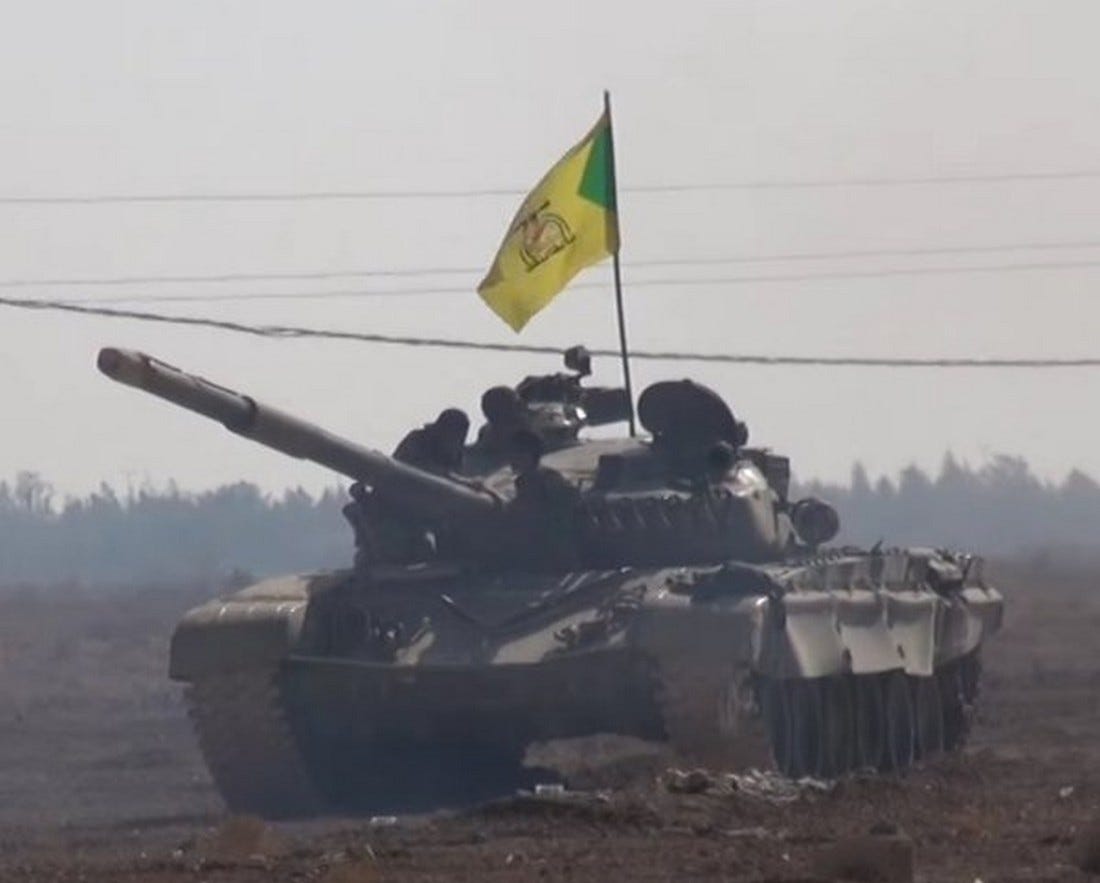
This ex-SAA T-72 was photographed while being operated by the Kataib Hezbollah in the Aleppo area in November 2015.

The general impression is that the Syrian Arab Army remains the largest military force involved in the Syrian Civil War, and that — together with the so-called National Defense Forces — it remains the dominant military service under the control of government of Pres. Bashar Al Assad.

Media that are at least sympathetic to the Al-Assad regime remain insistent in presenting the image of the “SAA fighting on all front lines” — only sometimes supported by the NDF and, less often, by “allies.”

The devil is in the details, as some say. Indeed, a closer examination of facts on the ground reveals an entirely different picture. The SAA and NDF are nearly extinct.

Because of draft-avoidance and defections — and because Al Assad’s regime was skeptical of the loyalty of the majority of its military units — the SAA never managed to fully mobilize.

Not one of around 20 divisions it used to have has ever managed to deploy more than one-third of its nominal strength on the battlefield. The resulting 20 brigade-size task forces — each between 2,000- and 4,000-strong — were then further hit by several waves of mass defections, but also extensive losses caused by the incompetence of their commanders.

Terrorist and Insurgent Teleoperated Sniper Rifles and Machine Guns

August 29, 2016 

Terrorist and Insurgent Teleoperated Sniper Rifles and Machine Guns by Robert J. Bunker and Alma Keshavarz, Foreign Military Studies Office

This data set consists of twenty-one teleoperated weapons systems used by terrorist and insurgent groups. It is worth noting that there are many more systems’ images available, but no group affiliation could be associated with them, which is why they were not included in this research project. The plethora of videos and photos on social media indicates that terror and insurgent groups are increasingly turning to improvised weaponry use on the battlefield. One class of improvised weapon that is emerging is remote controlled sniper rifles and machine guns. They are being used across Syria, Iraq, and a lone case in Libya as early as 2011. Typically, rifles or machine guns are improvised to be secured on a base—either mobile or stationary—and linked to cables, which are connected to a remote and screen. Some systems are more refined than others, such as with cameras, but all have at least proven to be somewhat effective. The Free Syrian Army (FSA) was at the forefront of using improvised weaponry for the better part of 2013, based on what is still available on social media. But other rebel groups as well as Islamic State and Al Qaeda affiliates caught on to the trend quickly…

Lessons From Syria: The Enemy of My Enemy Is Not Necessarily My Friend

ANNE BARNARD
August 30, 2016

Knowing the Risks, Some Syrian Rebels Seek a Lift From Turks’ Incursion

BEIRUT, Lebanon — The rebel fighter, a former major in the Syrian Army, thought he had finally found what he was looking for: a group with strong international backing that was gearing up for an offensive against his two most hated enemies, the Syrian government and the Islamic State militant group.

But within days of crossing into Syria, backed by Turkish planes, tanks and special forces troops and American warplanes, the fighter, Saadeddine Somaa, found himself fighting Kurdish militias that, like him, counted the Islamic State and the government of PresidentBashar al-Assad among their foes.

That was because the Turks, who supplied the weapons and the cash, were calling the shots, and they considered the Kurds enemy No. 1. The Kurds, for their part, considerTurkey an enemy, and so as the Turkish-led troops advanced, the Kurdish militias attacked.

For all the hope the new offensive had inspired in Mr. Somaa and other Syrian insurgents, it showed once again how even rebels fighting against the Islamic State and Mr. Assad — both targets for defeat under stated American policy — remain dependent on backers who only partly share their goals.

“Everyone is pursuing their own interests, not Syria’s,” he said in a long telephone interview from Jarabulus, the border town the Turkish-led force took from Islamic State, known also as ISIS or ISIL, on the first day of the offensive. “The problem is the same everywhere in Syria.”

Does Killing Terrorist Leaders Make Any Difference? Scholars Are Doubtful

August 31, 2016


It seems obvious: Killing terrorist leaders should weaken their organizations, depriving those groups of strategic direction and ideological appeal. The death of someone like Abu Muhammad al-Adnani, a senior Islamic State figure reported killed on Tuesday in Syria, should seem like a significant setback for the group.

But scholars have struggled to find evidence that killing leaders is an effective way to dismantle terrorist organizations, instead finding ample evidence that it makes little difference. That research seems to apply especially to the Islamic State, also known as ISIS or ISIL, whose attributes make it resilient to losing even a top figure like Mr. Adnani.

Two features make a terrorist group able to withstand a senior officer’s death, according to research by Jenna Jordan, a Georgia Tech professor and a leading expert on the subject.

The first is popular support. Groups need a steady stream of recruits and a pool of potential new leaders. Support among civilians in areas in which the groups primarily operate also makes them more stable, by broadening support networks and helping them to safely retrench when needed. Leaders are usually killed in or near communities that support them, resulting in those communities rallying behind the terrorist group and against whoever did the killing.

Three Americans Die Fighting ISIS


The U.S. government says it is trying to repatriate the bodies of three American civilians killed while fighting ISIS in Syria.

According to one local Kurdish report, the men were killed over the weekend and identified as Levi Shirley, William Savage, and Jordan MacTaggart. The Washington Post reported Shirley’s death in July, while Denver 7 reported MacTaggart’s earlier this month. Kurdish fighters mourning the men carried signs with the purported photos.

The Americans, whom officials have yet to positively identify, were near the northern Syrian city of Manbij, home to a key ISIS supply route to Turkey, helping the Kurds wrest the city out of the terror group’s hands when they killed.

Earlier this month, Manbij fell out of ISIS control, a major loss for the extremists.

“We have been working to help facilitate the return of the reported remains of private U.S. citizens killed in Syria. We remain in close contact with local authorities and stand ready to provide all appropriate consular assistance. We have no additional information to offer at this time,” John Kirby, U.S. State Department spokesman, said in a statement to The Daily Beast.

The bodies are in Irbil and U.S. officials are seeking to identify and transport them to the United States.

No. 2 ISIS Leader Killed by Apparent U.S. Airstrike in Syria

August 31, 2016

Key Islamic State leader killed in apparent U.S. strike in Syria

BEIRUT/WASHINGTON (Reuters) - Islamic State said on Tuesday one of its most prominent and longest-serving leaders was killed in what appeared to be an American air strike in Syria, depriving the militant group of the man in charge of directing attacks overseas.

A U.S. defense official told Reuters the United States targeted Abu Muhammad al-Adnani in a Tuesday strike on a vehicle traveling in the Syrian town of al-Bab. The official stopped short of confirming Adnani’s death, however.

Such U.S. assessments often take days and often lag behind official announcements by militant groups.

Adnani was one of the last living senior members, along with self-appointed caliph Abu Bakr al-Baghdadi, who founded the group and stunned the Middle East by seizing huge tracts of Iraq and Syria in 2014.

As Islamic State’s spokesman, Adnani was its most visible member. As head of external operations, he was in charge of attacks overseas, including Europe, that have become an increasingly important tactic for the group as its core Iraqi and Syrian territory has been eroded by military losses.

The group reacted by saying his death would not harm it, and his killers would face “torment”, a statement in the group’s al-Naba newspaper said, according to the Site Intelligence monitoring group.

ISIS Destroys Iraqi Base Further Delaying Mosul Operation

August 31, 2016

ISIS Destroys Iraqi Base Further Delaying Mosul Operation

QAYARA AIR BASE, Iraq — The air base that Iraqi forces hope to use as a staging area to take Mosul back from the Islamic State group was almost completely destroyed by the retreating militants, raising new doubts over whether the long-awaited operation will begin this year.

Iraqi forces seized the Qayara air base south of Mosul in July, in what U.S. and Iraqi officials said was a major step toward the eventual liberation of the country’s second largest city, which fell to IS in 2014. Prime Minister Haider al-Abadi called on Mosul residents “to get ready for the liberation of their areas.”

But Iraqi army commanders stationed at the base say it will take months of reconstruction before it is ready to receive cargo planes and house the tens of thousands of troops needed for the march on Mosul. Their assessments call into question whether Iraq will be able to launch the operation this year, as the prime minister has repeatedly pledged.

“Daesh began destroying this base from the moment they took it over,” Col. Karim Rodan Salim said, referring to IS by its Arabic acronym. “No less than 95 percent of the base has been destroyed.”

IS militants stripped buildings of wiring, toppled blast walls, leveled airplane hangars with explosives and mined runways.

Salim and his men are living in trailers on a patch of tarmac in the shadow of one of the partially collapsed hangers. At a nearby runway dozens of piles of dirt and rocks mark suspected explosives left by IS, Salim said. He estimates it will take at least six months of rebuilding before the base is ready for the 50,000 troops he says will be needed to retake Mosul.

Germany investigating 64 suspected extremist Islamists in armed forces

August 31, 2016

Germany investigating 64 suspected extremist Islamists in armed forces

Germany’s military counter-intelligence agency is investigating 64 suspected “extremist Islamists” working for the armed forces, a spokesman for the Defence Ministry said on Wednesday.

The 64 could include civilian as well as uniformed employees, the spokesman added. People judged to be “extremist Islamists” are not permitted to work for the military.

Between 2007 and 2016, 30 “extremist Islamists” went to Syria or Iraq after being employed in the armed forces, the spokesman said. Nineteen people were discharged from the forces for being “extremist Islamists” during that period.

Germans have been unsettled by a series of violent attacks on civilians, two of which were claimed by Islamic State.

The agency is currently only allowed to run checks on people who already work in the armed forces. The cabinet on Wednesday approved proposals to change the law to permit such checks to be made on applicants to join.

On Sunday Welt am Sonntag newspaper said a draft document justifying the changes said there were indications Islamists were trying to get into the military for training. 

The armed forces employ 250,000 people.

Japan’s Concerns on President Obama’s Extended Nuclear Deterrence

By Prof K.V. Kesavan
02 Sep , 2016

There has been considerable discussion in Japan on what many Japanese analysts consider a likely change in US policy on its nuclear deterrence posture. Many Japanese experts who have been watching President Obama’s nuclear policy believe that in the closing months of his tenure, Obama may launch measures to push his agenda articulated in his Prague speech 2009. There is considerable concern that Obama might even come out with a new declaration whereby the US would pledge not to use nuclear weapons first unless an adversary threatened to use them against the US. Many even believe that the Obama administration might like to consider it as one of his lasting legacies.

But such a decision would mark a major departure from the decades old US policy. Even during the cold war years, when other nuclear powers pledged not to use nuclear weapons, the US alone refused to make such a declaration. The end of the cold war notwithstanding, the US continued to cling on to its posture even though many analysts argued that there was no need for the US to do so. President Obama did not include it in his 2009 Prague speech even though there was strong expectation to that effect. In 2010 the Nuclear Posture Review ( NPR ) indicated clearly Obama’s vision on the future role of the nuclear weapons. To be sure, it carried no specific reference to “no first use” of nuclear weapons. But it stated several things that were intended to reduce the salience of the nuclear weapons. It placed greater importance on the prevention of nuclear terrorism and proliferation; it stressed the need to reduce the role of nuclear weapons in national security strategy; it underlined the need to maintain strategic deterrence and stability; it also emphasised the need to strengthen regional deterrence to reassure US allies and partners and it further recognised the importance of sustaining a safe, secure and effective nuclear arsenal.

The NPR indicated changes to the prevailing U.S. nuclear policy. It noted that the US would not use nuclear weapons against non-nuclear weapons states that are party to the NPT and in compliance with non-proliferation obligations. It spelt out clearly the fundamental role of the nuclear weapons to deter nuclear attack on the US, its allies and partners. It categorically assured that the US nuclear posture will play a vital role in regional security architecture and that proliferating states must understand that any attack on the US or its allies or partners would be defeated.

A new approach to ending terrorism

By the Monitor's Editorial Board 
AUGUST 21, 2016

In a TV speech, Morocco’s king appeals to the millions of Moroccans living in the West to counter the false arguments of Islamic State that might appeal to disaffected young Muslims and lead them to violent acts. 

The primary threat to the United States, says FBI director James Comey, is the effort of Islamic State to inspire people via the internet to engage in acts of violence inside the US. European officials worry even more about such terrorist acts. Reaching potential IS recruits, however, has been difficult on both continents. Now one Arab leader has offered some help with a novel outreach to those from his country, and their children, living in the West.

“I wish to call on Moroccans living abroad,” said King Mohammed VI in a televised speech Aug. 20, “to remain firmly committed to their religious values and to their time-honored traditions as they face up to this phenomenon which has nothing to do with their culture or background.”

The monarch of the North African nation was not speaking to a small crowd. Some five million Moroccans or their direct descendants live abroad, mostly in Europe. Many have been responsible for recent acts of violence in France and Belgium, either inspired or directed by IS. In addition, an estimated 1,500 Moroccans have joined IS to fight in Syria or Iraq.

Infographic Of The Day: Timeline Of Breakthroughs In Solar Power

Solar panels provide cost-effective and environmentally friendly form of energy production.


The Need for U.S.-Russian Cooperation in Syria Is Growing

August 31, 2016

The talks on possible cooperation in Syria between the United States and Russia seem to be never-ending, and they are still to produce significant results. The fragile ceasefire of spring 2016 was not a product of direct U.S.-Russian common action; rather, it came about after each Washington and Moscow each used their leverage to force participants of the Syrian civil war to adhere to the ceasefire. Now, the question stands whether both powers can act in concert to address the terrorism threat. Chances for such development are higher than one could suppose while analyzing the general state of U.S.–Russian relations. To understand this, it is necessary to assess the strategic frameworks for Washington’s and Moscow’s policies in the region.

The American Framework

A recent Washington Postinvestigation on what went wrong with the U.S. policy towards Iraq after the withdrawal of its troops is a must-read for anybody trying to prepare such an assessment for American actions. On the face of it, the investigation is more concerned with Hillary Clinton’s candidacy and her legacy as a Secretary of State. However, it is impossible not to notice that America’s problems in Iraq can be traced back to general shortcomings of both American foreign-policy decisionmaking and its strategy toward the Middle East or, rather, the lack of the latter.

On the level of foreign-policy decisionmaking, the Washington Post wrote about the difficulties in dealing with the consequences of pulling the American troops out of Iraq and the lack of cooperation between the executive branch and the Congress. The article provokes even more important thoughts about America’s policy towards the region. First, it points out the obvious: the American attempts of state-building in the region result only in a waste of resources and, very likely, a deterioration of the security situation. Second, any moves in the Middle East should be based on a long-term strategy considering the region as a whole. With no understanding of how the destinies of Middle Eastern countries are intertwined, Band-Aid “solutions” are a direct route to trouble.

Obama’s Legacy Regarding Chemical Weapons in Syria

Daniel R. DePetris
August 31, 2016

Is Obama’s Syrian Chemical-Weapons Legacy So Bad?

President Barack Obama would like nothing more than to cruise the next five months into retirement after eight grey-hair-inducing years. The world, of course, would keep on going and new crises would inevitably put up during those five months, but one could argue that Obama deserves at least a little downtime; Congress took seven weeks off, so why can’t he play a few more rounds of golf with his buddies?

If Syria weren’t such a catastrophe—with more refugees and fresh war crimes almost every day—cruising towards Inauguration Day may actually be possible. But the civil war in Syria will be keeping the president and his staff awake at night to the very last moment of the Obama presidency. Despite the intervention in Libya being labeled by Obama himself as his biggest mistake and greatest regret, it will be the slaughter in Syria and what is conventionally perceived as a weak U.S. response that will likely be viewed by historians and pundits as the biggest stain on his legacy. Nicholas Kristof of the New York Times has already leapt to that conclusion: “I admire Obama for expanding health care and averting a nuclear crisis with Iran, but allowing Syria’s civil war and suffering to drag on unchallenged has been his worst mistake, casting a shadow over his legacy.”

The year-long investigation by the United Nations and the Organization for the Prohibition of Chemical Weapons, which found that the Assad regime used chemical weapons in at least two instances (likely many more) on the battlefield in 2014 and 2015, has onlycompounded that judgment in the minds of many. Those in the liberal-internationalist and neoconservative crowds in Washington who were already aghast at Obama’s deal with Vladimir Putin to remove and destroy Syria’s chemical-weapons stockpile have crowed that this latest report is an unfortunate but inevitable consequence of the president’s naïveté in the face of a dictator. Ditto Speaker Paul Ryan, who blasted the chemical-weapons agreement at the time and marked the three-year anniversary of the gas attack with a terse statement claiming that the agreement “stabilized the regime.” And ditto Elliott Abrams, George W. Bush’s top Middle East official in the National Security Council: “If President Obama had reacted strongly to previous uses of poison gas by Assad, this would not be happening in Syria today.” Even Roger Cohen of the New York Times piled on: “Obama’s decision in 2013, at a time when ISIS scarcely existed, not to uphold the American ‘red line’ on Assad’s use of chemical weapons was a pivotal moment in which he undermined America’s word.”

WikiLeaks and Russia

JO BECKER, STEVEN ERLANGER and ERIC SCHMITT 
September 1, 2016 

How Russia Often Benefits When Julian Assange Reveals the West’s Secrets 

Julian Assange was in classic didactic form, holding forth on the topic that consumes him — the perfidy of big government and especially of the United States. 

Mr. Assange, the editor of WikiLeaks, rose to global fame in 2010 for releasing huge caches of highly classified American government communications that exposed the underbelly of its wars in Afghanistan and Iraq and its sometimes cynical diplomatic maneuvering around the world. But in a televised interview last September, it was clear that he still had plenty to say about “The World According to US Empire,” the subtitle of his latest book, “The WikiLeaks Files.” 

From the cramped confines of the Ecuadorean Embassy in London, where he was granted asylum four years ago amid a legal imbroglio, Mr. Assange proffered a vision of America as superbully: a nation that has achieved imperial power by proclaiming allegiance to principles of human rights while deploying its military-intelligence apparatus in “pincer” formation to “push” countries into doing its bidding, and punishing people like him who dare to speak the truth. 

Notably absent from Mr. Assange’s analysis, however, was criticism of another world power, Russia, or its president, Vladimir V. Putin, who has hardly lived up to WikiLeaks’ ideal of transparency. Mr. Putin’s government has cracked down hard on dissent — spying on, jailing, and, critics charge, sometimes assassinating opponents while consolidating control over the news media and internet. If Mr. Assange appreciated the irony of the moment — denouncing censorship in an interview on Russia Today, the Kremlin-controlled English-language propaganda channel — it was not readily apparent. 

CYBERCOM wants adversary to know it's hacked

August 31, 2016

As all 133 teams that make up the Cyber Mission Force under U.S. Cyber Command is beginning to reach initial operational capability and continue into both defensive and offensive operations around the globe, America’s cyber warriors need cyber tools to conduct their missions. However, unlike the tools used by members of the intelligence community, which seek to operate without being detected, the Defense Department is interested in “louder” tools.

First reported by FedScoop, Cyber Command’s Executive Director Shawn Turskey said the command desires tools that can be attributed to DoD.

“In the intelligence community you never want to be caught, you want be low and slow, you never really want to be attributed. There’s a different paradigm from where you are at in the intelligence community,” Tuskey said at a government cybersecurity workshop hosted by the Department of Homeland Security August 30, according to FedScoop reporter Chris Bing. “But there’s another space over here, where maybe you definitely want to be louder, where attribution is important to you and you actually want the adversary to know.”

An official at Cyber Command, speaking to C4ISRNET on background, said joint force commanders might want their goals or objectives to be known in order to convey a message. Some cyber teams work directly to support the objectives of joint force commanders by providing options in cyberspace in furtherance of these goals.

To Counter Russia’s Cyber Prowess,US Army Launches Rapid-Tech Office

BY PATRICK TUCKERREAD BIO
AUGUST 31, 2016

The battle for eastern Ukraine shows how the pace of innovation in electronic warfare is picking up.

On Wednesday, Army Secretary Eric Fanning announced a new Rapid Capabilities Office to accelerate the development of cyber, electronic warfare, and position-and-timing gear. Read that to mean: outfitting troops to stand up to the IT and EW prowess of adversaries like Russia, according to one expert who spoke toDefense One.

“This office will address capability gaps that we’re seeing in real time, right now from our commanders in the field,” said a statement from Maj. Gen. Walter E. Piatt, who will direct operations for the office. “Our adversaries are modernizing at a rapid rate, and in some cases, our capabilities are inadequate to keep up, To maintain our edge, it’s vital that we can evolve existing and new technology at a pace that keeps it relevant to today’s and tomorrow’s conflicts.”

That rapid technological progression is on full display, for example, in eastern Ukraine, where Ukrainian soldiers have been battling Russian-backed forces since 2014. For example, Russian-backed separatists have used EW and GPS-spoofing to jam and misdirect the drones that Ukrainian troops use to scope out enemy positions. “Over the past several years we’ve learned from what we’ve seen from Russia and Ukraine, and later in Syria, and from the different capabilities they’ve brought to the battlefield. We’ve seen the combination of unmanned aerial systems and offensive cyber and advanced electronic warfare capabilities and how they provided Russian forces a new degree of sophistication,” said Fanning.

CNAS Releases New Report on Digital Resiliency and Warfare

August 29, 2016

CNAS Releases New Report on Digital Resiliency and Warfare by Jacquelyn Schneider, Center for a New American Security

The Center for a New American Security (CNAS) has released a new report recommending the U.S. military focus greater attention, both within the acquisition process and during training and tactics development, on digital resiliency. The report is authored by Jacquelyn Schneider, an adjunct research associate with the CNAS Military, Veterans, and Society Program, and Ph.D. candidate in political science at The George Washington University.

Introduction

Over the last 20 years, digital technologies have revolutionized modern warfare. From network-centric warfare of the 1990s to Donald Rumsfeld’s transformation to today’s Third Offset, digital technologies have become the linchpin of U.S. weapons, tactics, and strategy. Soldiers on the battlefield coordinate air strikes using digital datalink and a tablet.

Headquarters commanders, once reliant on radios to receive battle updates, watch digital feeds of streaming videos on common operating pictures populated by terabytes of near real time digital data. Cruise missiles and bombs receive satellite relays of digital navigation and targeting updates to destroy enemy targets day and night, in rain and snow, in foliage-covered jungles and dense urban centers. Digital data and the networks that store, process, and disseminate that data have made the U.S. military extraordinarily capable.

But these digital capabilities have also made the U.S. military extraordinarily vulnerable. A 2013 Defense Science Board Report warned, “the cyber threat is serious ... with present capabilities and technology it is not possible to defend with confidence against the most sophisticated cyber attacks.” The FY 2014 Annual Report from the DoD’s Operational Test and Evaluation Director concluded, “the continued development of advanced cyber intrusion techniques makes it likely that determined cyber adversaries can acquire a foothold in most DoD networks, and could be in a position to degrade important DoD missions when and if they chose to.” Meanwhile, reports have surfaced of vulnerabilities within the defense industrial base3 and next-generation weapons systems.

The NSA Research Director Wants Hackers to Know Who She Is

Paul O'Donnell
August 31, 2016

The NSA Research Director Wants Hackers to Know Who She Is\
Even before Edward Snowden, the National Security Agency—the super-secret electronic spy outfit at Fort Meade—had started showing signs of thaw. Locally, NSA employees were acknowledging to friends and neighbors where they worked, while increasing links to Silicon Valley opened NSA to the outside world. Then in June 2013 came Snowden’s leak of documents demonstrating the level of surveillance aimed at US citizens, and the Agency That Would Not Be Named made headlines. In the scrutiny from the press and Congress that followed, one quip had it that NSA stood for Not Secret Anymore.

At the time, Deborah Frincke, a computer scientist and cyberresearcher, was still settling in as the agency’s research director, taking charge of developing cutting-edge tools for protecting the government’s computer systems and cracking those of our enemies. Frincke had spent most of her career as a specialist in computer security, first at the University of Idaho, then at the federal Pacific Northwest National Lab in Seattle. A relative outsider at NSA and the first woman to head the research directorate, Frincke found herself uniquely disposed to explain NSA to the world, and the world to NSA. We talked to her recently for an update.

So NSA has been making news.

Once or twice!

How did the Snowden controversy affect people inside the walls?

It was certainly very hard in the early days. It was hurtful to people who work so hard to save lives and obey the Constitution, and now the country doesn’t trust them. As one whose role is outwardly leaning, I’ve tried to explain how people outside the agency could have such a misunderstanding. I think we’ve rebounded now, and I think we understand why people got an impression that they did.

Polaris Industries Scores Big With the Canadian Military

Rich Duprey

Aug 31, 2016 
Source Link

The powersport vehicle maker's popular ATV design could soon be testing new markets abroad.

Polaris Industries' (NYSE:PII) investment in an all-new diesel-power version of its popular RZR all-terrain, side-by-side vehicle looks like it's already paying off. The powersport vehicle manufacturer announced last week that the Canadian military will acquire 36 MRZR-D utility vehicles and 12 tactical trailers for evaluation. Polaris says there is an option for up to 18 more MRZR-Ds and up to six more tactical trailers to be delivered under a contract awarded in June. 
Going where ATVs haven't gone before

The MRZR-D is not your typical trail ATV, and not least because the public can't get its hands on one. These are military-issue-only vehicles, and they're powered by turbo-diesel engines, giving them greater range and more power than their gas-powered siblings.

Polaris has been providing the U.S. military with MRZRs since 2013, and was awarded an $83 million five-year, indefinite-delivery, indefinite-quantity contract a year ago for its MRZR 2 and MRZR 4. However, the U.S. Special Operations Command has been looking for an improved version that would be transportable to forward-deployed troops via its CV-22 Osprey tiltrotor helicopter. While the ultralight MRZR helped the military in that capacity, it has some limitations, primarily its reliance upon gasoline, which may be in short supply or unavailable in the hot spots in which these vehicles are needed.

The Coming Fiscal Tsunami Dooms America's Global Empire

August 31, 2016

Those who dream of a permanent American imperium dismiss any difficulties or challenges. The U.S. remains strong, other nations aren’t likely to overtake America.

Most important, with work, Washington can maintain its military edge. So what if Americans have to sacrifice to sustain the force structure necessary to impose Washington’s will on other states? It is Uncle Sam’s destiny to rule the globe. People should cheerfully pay.

Yet for most Americans the more relevant destiny is living longer and facing the challenge of paying for ever more expensive health care. Federal deficits are back on the rise. There isn’t going to be much money for the national government to spend on “discretionary” items, including underwriting wealthy allies, rebuilding failed states, and enforcing international norms.

So far ignored in a presidential race most notable for the improbable candidacy of Donald Trump, America’s fiscal position is deteriorating sharply. Earlier this year the Congressional Budget Office (CBO) forecast that the federal deficit was back on the rise in 2016, with steady increases likely over the next decade.

The latest report finds a sharp jump just since the earlier report in March. Now CBO expects this year’s deficit to run $590 billion, or about a third more than last year. The only good news in the agency’s estimate is that the cumulative deficit over the next decade will be a bit lower than previously predicted because CBO expects the Federal Reserve to continue holding down interest rates. If that changes, or if the Fed no longer finds that it can keep rates down close to zero, this good news will disappear.

How the West Built a Failed State in Kosovo

August 31, 2016

Since NATO’s intervention in 1999, Kosovo has been the subject of an unprecedented degree of international supervision. UNMIK, EULEX and K-FOR were afforded extensive, and essentially unaccountable, powers to maintain law and order and regulate Kosovo’s economy, judiciary and political system. In per capita terms, Kosovo has received the largest flow of aid ever distributed to a developing country: the international community put twenty-five times more money and fifty times more troops on a per capita basis into post-conflict Kosovo than into post-conflict Afghanistan.

Regularly heralded as a success story, Kosovo is championed by some as proof that not all projects launched under the banner of liberal internationalism fail. Indicatively, Victoria Nuland, U.S. assistant secretary of state for European and Eurasian Affairs, recently lauded Kosovo’s “considerable progress” and “political stability,” and expressed her expectation that Kosovo would become “a multi-ethnic country where Kosovo Serbs, Kosovo Albanians, all ethnicities can live in peace, because not only does the region need that but the planet needs it and Kosovo has an opportunity to set that example.”

Yet, despite the hyperbole and the extraordinary scale of the state-building project, Kosovo currently suffers from a crippling array of problems, and bears the hallmarks of a failed state. This could be verified by consulting the Failed State Index but for the fact that—illustrative of its contemporary predicament—Kosovo is not considered a “recognized sovereign state.”