7 September 2016

Confident of Winning India’s Wars with Indian Solutions, Indian Army Seen Tirelessly Interacting with Industry and Academia

September 4, 2016 

Ina bid to promote awareness on Indian Army’s modernisation needs, discovering capabilities of the industry and encouraging long terms research in academia at various industrial hubs across the country, Indian Army is making all out efforts to reach out to the industry and academia in every nook and corner of the country.

Supported by industry associations including CII and FICCI, the Indian Army under an effort spearheaded by India’s Deputy Chief of Army Staff, Lt General Subrata Saha, UYSM, YSM, VSM** and his team of senior army officers have been extensively interacting with industry bodies and academia to take forward its objective of modernising the Army’s need by way of indigenous solutions.

These interactions are also in line with Prime Minister, Narendra Modi’s ‘Make in India Drive” and Defence Minister’s Manohar Parrikar’s push for modernisation through indigenization. To achieve this, the India Army’s team under Gen Saha has been seeking “Generation Next” solutions from the Industry while posing “Problem Definition” challenges to the academia to address its needs.

About 20 plus such interactions have been held so far with the industry (that includes large, medium, small, MSMEs and start-ups) and academia (including various IITs and DRDO). These events provided an exclusive opportunity to the industry and academia representatives to understand the requirements and interact with the top brass of Indian Army and seek clarifications directly from the user.

The latest in the series of such interactions that took place on Sep 2 at IISC, Bangalore, General Subrata Saha gave an impressive talk on “Indian Army’s Niche Industrial Requirements – Opportunities for Start-ups, MSMEs & Niche Technology Players.”

Later during his interactive session, Gen Saha and his team held discussions on the problems being faced by Startups & MSMEs in taking proven technology to “Finished Products” required by the user (Indian Army).

Pakistan: Khyber Pakhtunkhwa Slow Burn – Analysis

By Tushar Ranjan Mohanty* 
SEPTEMBER 5, 2016

At least 13 persons were killed and another 41 were injured when a suicide bomber blew himself up near the entrance of District and sessions court of Mardan District in Khyber Pakhtunkhwa (KP) on September 2, 2016. Four lawyers and three Policemen were among the dead. District Police Officer (DPO), Mardan, Faisal Shahzad said the attacker detonated a hand grenade before exploding his suicide vest. The bomb contained eight kilograms of explosive material, the DPO said, adding that security arrangements at the site of the attack helped mitigate the damage. The Tehreek-e-Taliban Pakistan (TTP) splinter, Jama’at-ul-Ahrar (JuA), claimed responsibility for the attack.

If the suicide bomber had not been restricted at the security check point, the incident may well have been a replay of the August 8, 2016 Quetta Civil Hospital suicide attack, in which there were 55 lawyers among 74 people killed. The lawyer fraternity had gathered at the hospital to mourn the killing of Balochistan Bar Association (BBA) President Bilal Anwar Kasi in a gun attack earlier on August 8.

The Mardan court suicide attack comes just hours after terrorists of JuA attacked the Christian Colony in the Warsak Dam area of provincial capital Peshawar in the morning of September 2. One civilian, one Levies official and four suicide bombers were killed in an exchange of fire with Security Forces (SFs) in that incident. Two Frontier Corps (FC) personnel, a Policeman and two private guards sustained injuries in the attack. Firing reportedly began around 6 am (PST), when terrorists wearing suicide jackets attacked the colony. Two of the attackers detonated their suicide jackets, while the other two were killed by SFs. Director General (DG) of Inter-Services Public Relations (ISPR) Lieutenant General Asim Bajwa confirmed “all four suicide bombers were killed”.

Did al Qaeda exchange former Pakistani army chief’s son for Zawahiri’s daughters?

September 2, 2016

Al Qaeda claims that two of Ayman al Zawahiri’s daughters and a third woman were released weeks ago in exchange for the son of General Ashfaq Pervez Kayani, Pakistan’s former spymaster who also served as the Chief of Army Staff until 2013.

The 20th edition of Al Masra magazine, which was posted online in late August, featured the claim on its front page. Al Masra is produced by a media shop affiliated with Al Qaeda in the Arabian Peninsula (AQAP), but it reports on news from all parts of al Qaeda’s global network.

The Long War Journal cannot independently confirm the hostage exchange. There does not appear to be any reporting in the Pakistani press indicating that Kayani’s son had been kidnapped, let alone involved in a high-profile hostage swap.

Al Qaeda sources announced in early August that Zawahiri’s daughters had been released. Independent accounts indicate that the global jihadist organization had been trying to secure their release in exchange for the kidnapped sons of Pakistan’s elite.

The editors of Al Masra included a box (seen on the right) highlighting the story on the front page and saying that “detaining” the “son of the Pakistani Army Commander” led to the release. The newsletter’s authors claimed a series of tweets posted online in mid-August provided the insider details of the story. A pdf of the tweets, with accompanying images, can be viewed here. WARNING: The tweets include graphic images of an alleged Pakistani spy beheaded by al Qaeda for supposedly leading authorities to Zawahiri’s daughters.

NEW MULTILATERALISM FOR MARITIME SOUTHEAST ASIA: MORE VALUE PER CARAT

SEPTEMBER 5, 2016

SeventhFleetAmphib
The last dozen years have been tumultuous for maritime Southeast Asia. Twelve years ago, a tsunami killed a quarter-million people in Indonesia and Thailand. Since then, cyclones, typhoons, tsunamis, and coastal floods have killed hundreds of thousands and impacted millions more. The same period witnessed three airliners crash into the ocean and a fourth simply disappear. Pirates attacked more than one thousand ships and hundreds of people have been killed in ferry disasters, 116 of them aboard a ship that dramatically sank in Manila Bay after a terrorist bombing. Recognizing that forces of nature, lost aircraft, drifting ships, terrorists, and criminals do not respect political boundaries, the maritime security forces of the region have amped up multinational cooperation both with each other and with extra-regional partners such as the United States. The U.S. Navy has readily taken part in multilateral cooperation in the region, using its expanding fleet capabilities to execute operations while simultaneously modernizing its exercises to advance regional maritime security capacity.

Recent Southeast Asian multinational maritime crisis operations involving the U.S. Navy include the 2004 Indian Ocean tsunami response, relief operations after Typhoon Yolanda, and the searches for Malaysian Airlines flightMH370 and AirAsia flight QZ8501. Decades have passed since the U.S. Navy has participated in a strictly bilateral naval operation in Southeast Asia. It is almost impossible to imagine a future scenario where the United States would respond to a regional maritime crisis on a bilateral basis. Yet there is a disconnect here between operations and training. In contrast to the growth in multilateral operations, the bulk of U.S. maritime security training in Southeast Asia have remained bilateral. Experiences from recent multinational operations have demonstrated that the challenges associated with bringing together a wide range of capabilities, skill levels, and communications protocols are among the most formidable barriers to operational success. To better align operations and training, the U.S. Seventh Fleet and its regional partners are now seeking to introduce new multilateral elements into previously bilateral exercises.

Rebalancing: A Larger and More Capable U.S. Pacific Fleet

Getting Tougher: Vietnam’s Response To China’s South China Sea Bases – Analysis

By Felix K. Chang*
SEPTEMBER 6, 2016
(FPRI) — Over the last few months, Vietnam has quietly deployed the components of several Extended Range Artillery (EXTRA) rocket systems to five of the islands that it occupies in the Spratly archipelago, according to Western officials. If true, Vietnam likely did so in response to China’s construction of military facilities on the islands that it controls across the region. Vietnam has reportedly dispersed and camouflaged the EXTRA rocket systems, but can arm them within days.[1] While Vietnam currently lacks the real-time surveillance and reconnaissance needed for the systems to target ships at sea, they can put at risk China’s island bases. With a maximum range of 150 km and an accuracy of within 10 meters, they could render inoperable many of China’s newly built airfields.

Vietnam is not a country known to shrink from a challenge, even when the odds are stacked against it. So far, that has been the case in the South China Sea where the growth of China’s naval might and its determination to assert sovereignty over the region have made the odds of successfully resisting it increasingly steep. Hanoi is doing what it can. It has lavishly spent on new Kilo-class submarines and Gephard-class frigates from Russia. It has accepted Japanese help to build a more robust coast guard. It has even strengthened its military ties with the Philippines, despite its concerns over Manila’s commitment and strength. (Indeed, the Philippines’ new president, Rodrigo Duterte, has eased the confrontational approach of his predecessor by offering to open talks with China based on the recent arbitration court ruling.)

China’s Quantum Satellite Experiments: Strategic And Military Implications – Analysis

By Michael Raska*
SEPTEMBER 6, 2016

While China’s quantum science satellite (QSS) project is part of the Strategic Priority Programme on Space Science, the country’s first space exploration programme intended purely for scientific research, its experiments have significant military implications.

On August 16, 2016 China launched the world’s first quantum communications experiment satellite into orbit from the Jiuquan Satellite Launch Centre in the Gobi Desert. The small satellite, recently named Micius after an ancient Chinese philosopher, is tasked to establish a hack-proof communication line – a quantum key distribution network, while performing a series of quantum entanglement experiments in space for the first time.

The quantum science satellite (QSS) programme is the third mission of the 2011 Strategic Priority Programme on Space Science that includes a series of satellite launches between 2015 and 2030 to explore black holes, dark matter, and cosmic background radiation. Research on quantum technology is also a key priority, including in the 13th Five-Year Plan, China’s latest economic blueprint for research and development released in March 2016. The QSS is sponsored and managed by the China Academy of Sciences (CAS), and led by chief scientist Pan Jianwei. Its mission payload was developed jointly by the CAS’s Shanghai Institute of Technical Physics (SITP) and the University of Science and Technology of China (USTC).

“Quantum Internet” and Communication Experiments

Training the People's Liberation Army Air Force Surface-to-Air Missile (SAM) Forces


Research Questions 
How is China training its ground-based air defense units, and what insights can this training provide for assessing Chinese air defense capabilities? 
In what way do PLAAF SAM training activities shape operational effectiveness at the unit level? 
What are the key themes, strengths, and weaknesses of training conducted by PLAAF SAM units? 

This report analyzes key trends and themes in China's People's Liberation Army Air Force (PLAAF) surface-to-air missile (SAM) unit training. After providing background information on China's air defense forces, the report introduces the basics of PLAAF SAM training, including training requirements, trends in recent training activities, and analysis of training themes.

Based on this research, we found that PLAAF SAM units are improving their capabilities, although progress is uneven and capabilities may vary significantly between similarly equipped units. Based on data collected on PLAAF SAM training activities, the intensity of SAM training varies across China's former seven military regions. SAM units near the capital area and in the coastal regions appear to be most active. SAM units follow a yearly training cycle, with training peaking during the summer and early fall. Content-wise, PLAAF SAM units are engaging in more realistic and challenging combat training compared with the mid-2000s. They have increased the duration and difficulty of their training, continue to emphasize denial and deception tactics, and focus significant efforts on countering low- and extreme-low-altitude targets. SAM units are engaging in substantial mobility and night training, but face logistical hurdles that undercut their ability to rapidly move to operating locations and safety concerns that hinder their ability to engage in difficult and sophisticated training. There is limited joint and combined-arms training, but units appear to be moving beyond simple altitude de-confliction toward sharing data, employing more sophisticated target identification methods, and coordinating firepower with aviation units.

Key Findings

The U.S. Energy War With Green China

by Nomi Prins

"For, in the final analysis, our most basic common link is that we all inhabit this small planet. We all breathe the same air." 

I've been in China meeting with members of the International Monetary Fund (IMF) and the New Development Bank (NDB, launched by the BRICS). Here's what I found out: Green is the new black.

Nomi Prins and Dr. Raphael Lam, resident representative of China for the IMF. July 2016

As Jim Rickards has explained, the shift away from the dollar as the world's reserve currency creates an opening for a new global superpower. Other countries are making their moves to fill that spot, and none is moving more quickly than China.

China has two big moves lined up, and the first one is happening at the G20 meeting on Sept. 4. Jim Rickards says that this will be the day the dollar dies. This will also be the day China shows that it is an equal to the U.S. and any other country vying for world supremacy.

A massive part of world dominance is control over energy. Before, that meant oil. Now, it means green energy. The U.S. and China are racing to control green energy. For China, that's how they can clinch the title of new world superpower. For the U.S., it's a last-ditch effort to hold their ground.
Why Green Energy Matters

At one point, having a significant oil stock reserve was a national security priority for White House administrations. Now, sustainable energy is. Why? Because if other nations open avenues of renewable energy sources to run their economies, global reliance on oil and fossil fuels will face competition as a sector.

DECISIVE MILITARY DEFECTIONS IN SYRIA: A CASE OF WISHFUL THINKING

SEPTEMBER 5, 2016

Since March 2011, observers of the Syrian conflict watched with anticipation the behavior of Syria’s security forces, hoping that they would eventually follow the examples of the Tunisian, Egyptian, or Libyan security forces during the heady days of the Arab spring. Yet after five years, the Syrian security forces remain largely loyal to the Assad regime, with no shift in sight. Indeed, the Assad regime’s endurance is explained by the steadfast loyalty of the top brass of the Syrian Arab Army and the myriad security and intelligence agencies. Their refusal to abandon the regime’s pursuit of a security solution — despite pleas by peaceful protestors from the early days of the uprising for the army to stand with them — can now be seen as one of the main reasons that ensured this civil war would be a long one.

As the regime escalated its violent response to protests, defections did accelerate. But aside from occasional cases of high-ranking defectors who were already outside the trusted security circles, the majority of defections were non-commissioned officers or conscripts. Those mainly joined the Free Syrian Army (FSA) or fled the country with their families to escape retaliation. The few cases of high-ranking defections in the first two years of the war had aninsignificant impact on the calculations of the regime, its decision-making process, and the morale of security forces, which were largely able to maintain cohesion and resilience.

The regime has shielded itself against the risk of coups, key defections and fragmentation through a decades-long process of integrating and embedding into the security establishment both clan members and loyalist Alawites, followers of the esoteric offshoot of Shia Islam that the Assad family belongs to. The composition of security forces and the concentration of leadership into a very narrow cohort of individuals and families — most of which are now under E.U. and U.S. sanctions — has served the ultimate purpose of protecting the ruling family from a perennial threat of a Sunni-led revolt. Given this sectarian structure and its dynamics, it is not surprising that noticeable high-ranking military defections from core leadership have not occurred. The seemingly paradoxical ability of a “minoritarian” regime to withstand more than five years of onslaught in what has largely become a sectarian proxy-war owes itself to the politics of sectarian stacking in the military, which exacerbated Sunni officers’ grievances and alienation.

Russia’s Overtures In East Asia – Analysis

By Sandip Kumar Mishra* 
SEPTEMBER 6, 2016

The Eastern Economic Forum (EEF) was held in Vladivostok, Russia, on 2 September 2016, a day before the G-20 Summit Meet in Hangzhou, China It was attended by the Russian President Vladimir Putin, Japanese Prime Minister Shinzo Abe, the South Korean President Park Geun-hye and the Australian Prime Minister Malcolm Turnbull. On the sidelines of the EEF, a bilateral meeting between the leaders of Russia and South Korea was also held. During this meeting, the Russian leader surprised his South Korean counterpart by giving her a special gift. It was a work of calligraphy, written in Chinese, by Park’s father, the late former President Park Chung-hee in 1979 (the year he was assassinated), which read, “with strong teamwork, let’s move forward together.” It was indeed a special gesture from Putin. Ahead of the bilateral talks, South Korea was concerned that its consent for the US-led THAAD battery on the peninsula meant that Russia-South Korea relations would be strained beyond repair. It was a pleasant surprise for the South Korean leader that even though Russia had gone along with China in its criticism of the THAAD installation on the Peninsula, it wanted to continue economic and other cooperation with South Korea.

Putin stressed after the meeting that he “had in-depth discussions about the current situation on the Korean Peninsula and reached an agreement that the two nations do not accept the self-proclaimed nuclear status of Pyongyang.” Furthermore, both the leaders also agreed to begin negotiations on a free trade agreement (FTA) between South Korea and the Russia-led Eurasian Economic Union (EAEU), which consists of Russia, Armenia, Belarus, Kazakhstan, and Kyrgyzstan. The feasibility study on this has already been concluded and the process of negotiations may begin in October 2016. In addition to this Russia and South Korea signed 24 MoUs, thereby expanding the range of their bilateral cooperation.

How big a military threat is Russia, really?

By Anna Mulrine Grobe
August 29, 2016

Understanding each other Some US generals see Putin's moves in Ukraine and Syria as dangerously aggressive. Others see calculated efforts aimed at blunting Western influence but not directly challenging the US.

In a recent talk at one of America’s premier war colleges, the nation’s top military officer warned incoming students about the dangers of Russian aggression.

Gen. Joe Dunford, chairman of the Joint Chiefs of Staff, pointed to Russia’s annexation of Crimea, its meddling in Ukraine, and its aid to the Syrian regime. Even in the face of a severe economic squeeze, "they are modernizing their nuclear enterprise, they are modernizing their submarine force," he said. Such warnings have become increasingly dire in foreign policy circles.

Is Russia really the dire military threat that it's made out to be?

Many longtime Russia analysts concur that there is certainly a role for a robust military posture but that Russia's moves don't merit the level of alarm that they have generated.

Russian President Vladimir Putin has made it clear that he has “no interest in challenging our military where we make it clear we don’t want to be challenged,” says Olga Oliker, director of the Russia and Eurasia program at the Center for Strategic and International Studies in Washington. Instead, “the Russians are terrified of us. They see themselves as pushing back against US hegemony – and they really do see this, this isn’t just rhetoric.... We are what they build against.”

What Might Determine The Course Of U.S. Nuclear Development For Decades To Come

by Karl Rhodes

Five years ago, Stanford economist Geoffrey Rothwell and Berkeley economist Lucas Davis made a $20 bet on the cost of two nuclear reactors under construction in Georgia. Rothwell wagered that units three and four at Georgia Power's Vogtle Electric Generating Plant would cost less than $4,200 per kilowatt of capacity. Davis bet they would cost more.

"I went easy on Geoff and agreed to exclude financing costs and focus only on the 'overnight' cost of construction," quips Davis, who heads the Energy Institute in the Haas School of Business at the University of California, Berkeley.

"I can't remember whether we used 2007 dollars or 2011 dollars," hedges Rothwell, who retired from Stanford University to become principal economist for the Nuclear Energy Agency at the Organisation for Economic Co-operation and Development.

Davis and Rothwell are not the first to gamble on the high upfront costs of nuclear power plants. Nuclear construction boomed in the 1960s and early 1970s, but in the mid-1970s, rising electricity prices triggered increased scrutiny of utilities' capital expenditures. Safety and environmental fears also intensified in 1979 when a film called The China Syndrome portrayed a nuclear power plant on the verge of a total meltdown. The movie debuted 12 days before a partial meltdown occurred at Three Mile Island in Pennsylvania. No one got hurt, but the incident created a sense of panic that radiated throughout the nation. Orders for new reactors dwindled to zero in the United States, but most American reactors continued to deliver clean, reliable, low-cost power for decades with no major problems.

In response to growing fears of global warming, the Environmental Protection Agency has issued restrictions on carbon-dioxide emissions from power plants.

*** A tale of three cities: India’s exclusionary urbanisation


Sep 03 2016

A tale of three cities: India’s exclusionary urbanisation

India has been witnessing rapid urbanisation in the last decade, particularly in its large and medium-size cities. As more and more people move towards cities and towns, it is imperative to build an understanding of how cities are geared in terms of growth and inclusion. In what ways do India’s marginalised communities get excluded from the country’s growing urban spaces? This paper studies how individuals and groups are included in — or excluded from — urban transitions. It is based on an empirical examination of inclusion in three Indian cities, part of a project of ORF with the Peace Research Institute Oslo (PRIO) in Norway, and also describes the processes of exclusion that have become embedded in India’s urban spaces.
Introduction

“Our urban spaces and governance mechanisms have become the theatres for political conflicts and economic struggles. ‘Exclusionary’ urbanization is benefitting certain social groups to the detriment of others, and directing resources to large metropolises depriving small and medium towns of funds needed for infrastructure and essential services” — Hamid Ansari, Vice President of India. [i]

By most indications, India’s future seems to be urban. [ii] According to reliable estimates, [iii] the country’s urban population will increase by half a billion over the next four decades (or nearly one million a month). With cities currently contributing a mammoth 70 percent of India’s GDP, there is little doubt that urban spaces will continue to grow, and for a number of reasons, [iv] among them, the economic opportunities that they offer their inhabitants. Further, for societies like India where the layers of caste and hierarchy often serve as obstacles for individual progress, cities also offer opportunities for upward mobility and assimilation. It is little wonder that India’s cities receive an enormous influx of people belonging to oppressed and marginalised communities. The last decade, for example, saw an increase of 40 percent in the population of dalits in urban areas. Historically, too, India’s religious minorities have been migrating to the cities in large numbers. [v]

The Intelligence Studies Essay: "Hybrid Warfare" at Home: Asymmetric Tactics Are Not Just Used in Ukraine, They Are Employed against the United States, and Have Been for Quite Some Time


August 29, 2016

Darren E. Tromblay has served as an intelligence analyst with the U.S. government for more than a decade. He holds an MA from the Elliott School of International Affairs at George Washington University, an MS from the National Defense Intelligence College, and a BA from the University of California and is a graduate of the National Intelligence University’s Denial and Deception Advanced Studies Program. Mr. Tromblay is the author of The U.S. Domestic Intelligence Enterprise, published by Taylor & Francis in 2016 and a co-author of Securing U.S. Innovation, which will be published by Rowman & Littlefield later this year, and has been published by Intelligence and National Security, Small Wars Journal, and the International Journal of Intelligence Ethics. He can be reachedat Tromblay@gwu.edu. The views expressed in this essay are entirely and solely the author’s rather than those of any U.S. government agency.

“Hybrid Warfare” at Home: Asymmetric Tactics Are Not Just Used in Ukraine, they Are Employed against the United States, and Have Been for Quite Some Time

by Darren E. Tromblay

Executive Summary

The hacking and release of Democratic National Committee emails is a recent example of “hybrid warfare” likely directed against the United States by foreign entities. The term “hybrid warfare” which has been in particular vogue since Russia’s destabilization of Ukraine is a vague and much-debated concept. However, it often seems to be applied in situations in which a foreign power endeavors to undermine another’s ability to govern by fomenting or exploiting domestic unrest (rather than engage in coercion using military force). The resultant vacuum of power gives the sponsor plausible deniability and an opportunity to enhance its own influence by filling that vacuum. It also forces the victimized government to focus on internal problems, making it more difficult for that government to pursue objectives internationally (and, therefore, diminishing its role as a competitor on the global stage.)

Cyberspace, the Final Frontier

August 30, 2016 

BESA Center Perspectives Paper No. 360, August 30, 2016

EXECUTIVE SUMMARY: Israel’s young cyber industry is proving to be a remarkable success story. Between the National Cyber Bureau and the budding Cyber Defense Agency, Israel can protect its critical infrastructure and continue cementing its position as a global cybersecurity powerhouse.

Sometimes dramatic advances are made in important fields far from the public eye, overshadowed by senseless media uproars over insignificant things. One of these leaps was made a month ago when Israel's cybersecurity legislation entered a new phase. After prolonged discussions, the Knesset voted in favor of a temporary provision laying the groundwork for Israel's civilian cyber defenses.

In 2012, following the recommendations of a committee headed by Maj. Gen. (res.) Isaac Ben-Israel, the National Cyber Bureau (NCB) was established at the Prime Minister's Office. The NCB has come a long way since then, and its framework of principles allows Israel to better protect its civilian cyber infrastructures.

This was a case in which the quality of the human capital involved in the government's efforts would have significant impact on the fate of the initiative. A high bar was set for those involved with the NCB. They would have to be top-notch individuals, ready and willing to dedicate their time, energy and skills to a project whose objectives are sometimes ambiguous.

Digitally-Enabled Warfare: The Capability-Vulnerability Paradox

August 29, 2016 


Jacquelyn Schneider, a Ph.D. candidate in political science at George Washington University, recommends the U.S. military focus greater attention, both within the acquisition process and during training and tactics development, on digital resiliency.


Open Source Software and the Department of Defense

Ben FitzGerald, Peter L. Levin, Jacqueline Parziale 
August 26, 2016 


A report by the CNAS Technology and National Security Program recommends the Department of Defense invest more in open source software and embrace it as a critical element of its efforts to maintain military technical superiority. The report is authored by CNAS Senior Fellow Ben FitzGerald, Adjunct Senior Fellow Dr. Peter Levin, and Researcher Jacqueline Parziale.

NATO Article 5 and Cyber Warfare: NATO’s Ambiguous and Outdated Procedure for Determining When Cyber Aggression Qualifies as an Armed Attack

Stephen Jackson, J.D.,
August 16, 2016 

Center for Infrastructure Protection and Homeland Security, George Mason University 
Introduction At the outset of the North Atlantic Treaty Organization’s (NATO) founding, the original 12 Western nations included Article 5 within the Washington Treaty, which codified the concept of collective self-defense, first featured in the Charter of the United Nations of 1945.[1] NATO Article 5 provides that “an armed attack against one or more of [the NATO allies] in Europe or North America shall be considered an attack against them all….”[2] In the event of an armed attack against a NATO Party, “each of them, in exercise of the right of individual or collective self-defence recognized by Article 51 of the Charter of the United Nations, will assist the Party or Parties so attacked by taking forthwith . . . such action as it deems necessary, including the use of armed force, to restore and maintain the security of the North Atlantic area.”[3] Although only formally invoked once,[4] Article 5 is the main pillar of NATO, and serves as a deterrent against hostilities by non-NATO nations and non-state actors.

Since NATO’s creation in 1949, the manner in which nations engage in warfare has changed dramatically. This evolution includes incorporation of cyberspace into conducting warfare and securing national defense. For instance, Deputy Assistant Secretary of Defense Aaron Hughes recently testified before the Congress that “[the Department of Defense] relies heavily on cyberspace for virtually everything we do.”[5] Possibly the most blatant use of cyberspace in modern warfare occurred on December 23, 2015, when the Ukrainian power grid experienced major disruption from a sophisticated external cyber attack, largely rumored to be linked to the Russian Federation’s hostile occupation and annexation of Crimea.[6]

In an expression of NATO’s current abilities to counter advanced armed attacks, the Heads of State and Government of the North Atlantic Council issued the Wales Summit Declaration (Wales Declaration) on September 5, 2014. In the Wales Declaration, the Heads of State and Government outlined the threat of cyber threats and attacks, reaffirming NATO’s policy of “prevention, detection, resilience, recovery, and defence.”[7] The Wales Declaration further stated that the norms of international law, which include humanitarian law (jus in bello) and the UN Charter, directly apply to the realm of cyberspace.[8] At the core of these international norms is the concept of collective self-defense incorporated in NATO Article 5 and UN Charter Article 51. The Wales Declaration concluded by providing that NATO Article 5 in fact applies to cyber attacks, as determined by the North Atlantic Council on a “case-by-case basis.” Less than a year later, NATO Secretary General Jens Stoltenberg reiterated that a cyber attack could amount to an armed attack and trigger Article 5’s collective defense provisions.[9]

The world wide cage


Technology promised to set us free. Instead it has trained us to withdraw from the world into distraction and dependency 

Mark Zuckerberg, founder of Facebook, speaks on the stage at the Mobile World Congress in Barcelona, Spain, February 2016. Photo by Albert Gea/Reuters

is a technology and culture writer whose work has appeared in The Atlantic, The Wall Street Journal, The New York Times, Wired, Nature and MIT Technology Review, among others. His latest book is Utopia Is Creepy (2016). 

Has the internet given you a greater sense of freedom in your life?

It was a scene out of an Ambien nightmare: a jackal with the face of Mark Zuckerberg stood over a freshly killed zebra, gnawing at the animal’s innards. But I was not asleep. The vision arrived midday, triggered by the Facebook founder’s announcement – in spring 2011 – that ‘The only meat I’m eating is from animals I’ve killed myself.’ Zuckerberg had begun his new ‘personal challenge’, he told Fortune magazine, by boiling a lobster alive. Then he dispatched a chicken. Continuing up the food chain, he offed a pig and slit a goat’s throat. On a hunting expedition, he reportedly put a bullet in a bison. He was ‘learning a lot’, he said, ‘about sustainable living’.

I managed to delete the image of the jackal-man from my memory. What I couldn’t shake was a sense that in the young entrepreneur’s latest pastime lay a metaphor awaiting explication. If only I could bring it into focus, piece its parts together, I might gain what I had long sought: a deeper understanding of the strange times in which we live.

What did the predacious Zuckerberg represent? What meaning might the lobster’s reddened claw hold? And what of that bison, surely the most symbolically resonant of American fauna? I was on to something. At the least, I figured, I’d be able to squeeze a decent blog post out of the story.

LEMOA — A most serious strategic mistake, and�onsequences


India has signed the Logistics Exchange Memorandum of Agreement (LEMOA) with the United States, with Defence Minister Manohar Parrikar and Defence Secretary Ashton Carter doing the formalities in Washington. It is, perhaps, the most serious strategic mistake made by the country in its nearly seven decades of independent existence.
The text of the accord has not been made public and is unlikely to be at the request of the Narendra Modi government lest public scrutiny raise a political storm at home, providing ready ammunition to the opposition parties. The two countries, courtesy LEMOA, will use each other’s naval and air bases and facilities, it is said. But because the Indian Navy and and the Indian Air Force rarely stretch their reach beyond the Indian Ocean region in the one case and the western border with Pakistan in the other case, it is mostly the US military that will be reaping the benefits. Indian basing will permit deployed American forces to pull longer, more sustained naval and air operations in the extended region to realize US policy goals.

As repeatedly warned in my writings since Manmohan Singh first signed the deal with George W Bush in July 2005 and in my recent book, ‘Why India is Not a Great Power (Yet)’, there WILL be a heavy foreign and military cost for this loss of strategic autonomy. India’s stepping firmly into a treaty ally role of the US in all but name will mean several things:

1) Russia will necessarily begin distancing itself from India; the military supply relationship will become more attenuated. There will be no incentive for Moscow to treat India and the Indian armed forces as other than a cash-cow. The warmth will be gone but, as likely, so will valued Russian platforms like the Akula-II SSN, which will be withdrawn. Depending upon just how intimate the Indo-US embrace is, it’d be foolish for Moscow to risk Indians handling cutting edge weapons platforms such as the Akula when there’s every likelihood US naval personnel will be able to go over the boat with a fine tooth comb. As it is, Russians have always derated the most advanced Russian equipment before transferring/selling them to India by about 33%. This has been standard Russian practice to minimize the risk of technology theft not so much by Indians as by India’s “friends”.

CAN MILITARIZATION BE A GOOD THING FOR AMERICA’S POLICE?

SEPTEMBER 6, 2016

In Sangin, Afghanistan, during the fall of 2011, Marine Lieutenant Joshua Waddell identified a suspected bomb-maker while conducting surveillance operations. After obtaining permission from his battalion headquarters, Waddell ordered his men to engage the bomb-maker, wounding the suspected insurgent. As soon as the bomb-maker was hit, a group of civilians — possibly teenagers — rushed to his aid, placing him on a tractor in an attempt to evacuate him from the battlefield. Waddell ordered his snipers to fire on the tractor to disable it so that they could capture the bomb-maker. After discovering that the civilians were minors, Waddell’s chain of command accused him of violating the rules of engagement. They removed him from his leadership position and froze his promotions for two years. Later exonerated and permitted to continue his career, Waddell’s story exemplifies the extent to which the U.S. military can hold its personnel to account in how they use lethal force.

With so many recent cases of police officers using lethal force against unarmed civilians, could it be that the problem with America’s police is that they are not militarized enough? That is the provocative suggestion offered by Rachel Tecott and Sara Plana at Monkey Cage. While most writing on domestic police militarization focuses on equipment, Tecott and Plana describe the differences between military and police rules on the use of force, proffering that U.S. police would do well to adopt the training and legal standards used by the military. They are absolutely right that police often do not train on the use of force — or rather the means to prevent using force — but they exaggerate the standards of accountability in the military, particularly compared to police forces.

Still, the core of their argument is correct: Increased militarization of American policing would undoubtedly improve civil-police relations. But Tecott and Plana use the term differently than most, referencing accountability, discipline, and training when commenters generally use it to refer to equipment and mindset. In other words, American police need professionalization.

Before addressing this bigger picture, we should recognize that, contrary to Tecott and Plana, the standards governing police use of force are not weaker than those that govern uniformed members of the military. As an example of stricter military standards, Tecott and Plana point to the escalation procedures printed on the back of the rules of engagement (ROE) card given to every service member who deployed to Iraq and Afghanistan. Escalation of force procedures are designed to prevent the use of deadly force when less-than-lethal means might have the same effect, beginning with a verbal warning through physical restraint up to deadly force. The escalation procedures, however, are easily circumvented if the service member feels that U.S. forces or key U.S. property are in danger, as encapsulated by the “nothing in these rules limits your inherent authority and obligation to take all necessary and appropriate action” sentence printed in bold capital letters on both sides of the card. This “self-defense” standard is in fact similar to that used by law enforcement officers. Tecott and Plana’s criticism of the rules governing the police and praise of military standards, therefore, obscures existing similarities between the two.

It is difficult to discuss the legal restrictions on police in the United States because of the plethora of laws and authorities that govern them across states and localities. For the most part, major training and conduct concerns are under the purview of individual states, which can have drastically different standards and norms. Nonetheless, states as disparate as Illinois and Texas have explicit restrictions on the use of deadly force, with state training standards on the conduct of measures short of deadly force. In practice, these statutes provide equal guidance with equal legal compulsion as the military’s ROE.

Holding police officers and military personnel accountable for their use of deadly force rests with the prosecutors that stand partially outside, and yet beside, those they ostensibly should hold to account. Civilian and military prosecutors are put in a tough place where they are expected to work with their colleagues on the line, making it difficult to aggressively pursue wrongdoing. Tecott and Plana are right to point out that police are rarely held to account for their use of deadly force. But the idea that ROE violations are much better prosecuted in the military strains credulity. Most successful prosecutions occurred far from a combat situation, where the facts are easier to discern and the absence of hostile intent and acts, therefore making the use of lethal force illegal, easier to establish. But charges against soldiers who appear to violate the ROE in the heat of combat rarely stick, even in the most egregious cases.

While most states provide instruction on escalation procedures and the legal and moral ramifications of the use of force, these blocks of instruction are rarely required in annual training, as opposed to the annual requirement for officers to show proficiency with their weapons. Police professional organizations should push state bodies and individual agencies to adopt rigorous and regular training, as suggested by Tecott and Plana. But we also must keep in mind that the U.S. military is sized so that it can cycle its forces through operations, rest, and training. Police forces are not; and adding training to their schedules removes personnel from their operational roles.

Training of this sort, if emulating military training, is one element of the concept of professionalization. In the field of civil-military relations, Samuel Huntington’s The Solider and the State is the seminal work that defines civilian-military interactions and the concept of the professional. Professionals are distinct from tradesmen in three characteristics: expertise, corporateness, and responsibility. The first, expertise, is gained through two phases: liberal and specialized educations. Specialized education extends beyond the technical details of the profession, but also includes immersion in the traditions of that profession. Corporateness is “a sense of organic unity and consciousness […] as a group apart from laymen.” Many advanced trades would qualify as professions under these two characteristics, but what sets professions truly apart is the profession’s inherent responsibility whose client is society itself.

While elements of Huntington’s book have not aged well, his elucidation of professionalization and professionalization’s relationship to how the military interacts with civilians has. However, the law enforcement profession has no such seminal work, suggesting that The Police and the State is long overdue. With over 18,000 individual law enforcement agencies with at least one sworn officer, establishing norms of police professionalism and civil-police relations is not an easy task, especially when compared to civil-military relations. Without a critical examination of the nature of the police profession, and its implication on how the police interact with those they serve, law enforcement is unlikely to evolve into a true profession capable of making changes of the sort suggested by Tecott and Plana.


Jason Fritz is a senior editor at War on the Rocks. He is also a senior consultant at the Noetic Group and a doctoral student in the Department of Justice, Law and Criminology at American University’s School of Public Affairs.

6 September 2016

*** America’s Great Fishing Expedition in Kashmir

AUG 26 2016 

India is assured of an ally in the United States on the Kashmir issue; the US — under the tenets of Westphalian sovereignty — has chosen to back India unequivocally. Yet it was not always so. There was a time soon after India’s Independence that the US government, through the State Department, was actively consorting with National Conference leader and Prime Minister of Jammu & Kashmir Sheikh Abdullah to look for ways by which to secure a geo-strategic toehold in the area. This report is revelatory of those events, where Americans, including Ambassador to India, Loy Henderson, and his wife Elise, were in dialogue with Abdullah. It is a result of the author’s research for his book-in-progress, Nehru and Kashmir — a book based on classified documents, confidential aide memoirs, and personal correspondence bequeathed to the author by his grandfather, who was Officer on Special Duty (OSD) to Prime Minister Jawaharlal Nehru for close to 20 years.
When the US fished in Kashmir’s troubled waters

Sometime in the middle of August, media reports quoted Pakistan officials as saying that the Organisation of Islamic Countries (OIC) “has expressed concern at the violations of human rights in the state.” The OIC — widely discredited for its failure to curb human rights violations by Islamists around the world — has chosen to ring its familiar apocalyptic tone on Kashmir in what may only be referred to as a complete rejection of rationalism. Instead of looking inwards and examining the extremist Islamisation taking place in the Arab world, the OIC has decided instead to dwell on the Kashmir situation and reaffirm its support for the right to self-determination of the people there.

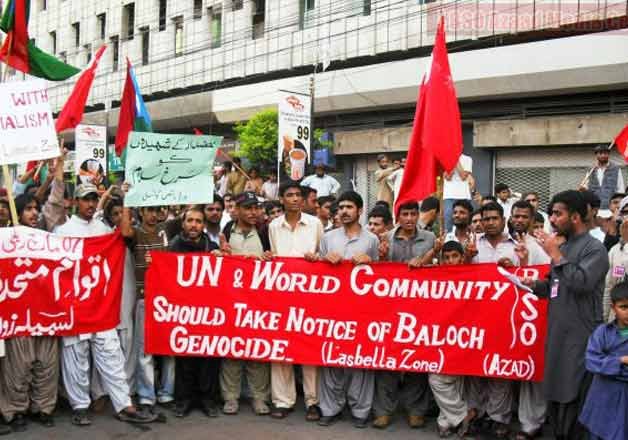
Balochistan issues and International Law

By Rakesh Kr Sinha
05 Sep , 2016

Oppenheim defines ‘intervention’ as “dictatorial interference by a State in the affairs of another State for the purpose of maintaining or altering the actual condition of things”. The United Nation’s Charter under Article- 2(4) establishes the ‘principle of non interference’. This ‘principle’ draws its strength from the basic tenet of equality and sovereignty of the member States within the UN framework. Quincy Wright had said that “intervention may be diplomatic as well as military. A diplomatic communication of pre-emptory or threatening tone, implying possible use of military or other coercive measures may constitute intervention”.

…the way forward to actual relief and mitigation of the sufferings of people, lies only in an effective ‘intervention’ in Balochistan under the auspices of UN. Balochistan is too serious a problem to be managed through political rhetoric alone.

Prime Minister Narendra Modi’s reference to the instances of violation of human rights in Balochistan or thanking them for using kind words for him qualifies to be an act of ‘diplomatic intervention’ only as per the above definition.

At this time, the human right violations and genocide in Balochistan have reached such a scale of an enormity as could (should) shake up the collective conscience of the international community. Prime Minister Modi’s reference to Balochistan in his Independence Day speech triggered an avalanche of angry reactions from Pakistani and Chinese establishment and media but, nevertheless, it also brought up this issue on international agenda and to that extent this diplomatic adventurism appears to be on target. However, the way forward to actual relief and mitigation of the sufferings of people, lies only in an effective ‘intervention’ in Balochistan under the auspices of UN. Balochistan is too serious a problem to be managed through political rhetoric alone.

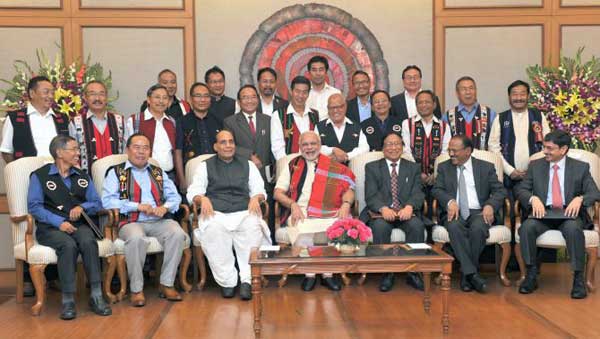
Naga ‘Framework Agreement’ and Its Aftermath

By Pradeep Singh Chhonkar
05 Sep , 2016

The signing of the historic “Framework Agreement” between the Government of India (GoI) and the National Socialist Council of Nagaland Issac-Muivah (NSCN-IM) on 3 August 2015 had brought glimmers of hope amongst the Naga populace. The contents of the framework agreement are, however, not in the public domain, leading to differing perceptions amongst the various stakeholders.

The NSCN-IM has been able to galvanise broad consensus amongst the Naga political and social entities with respect to its ongoing negotiations with the GoI. Prominent Naga social bodies including the Naga Hoho, Naga Student Federation, Naga Mothers Association, Naga Peoples’ Movement for Human Rights and United Naga Council – most of whom were already amenable to the NSCN-IM’s idea of a settlement for the Nagas – have given their consent to the process. There are continuous efforts by the outfit to re-establish its clout and dominance in the claimed areas of Nagalim, including the Naga-inhabited areas of Manipur, Assam and Arunachal Pradesh. Attempts by the outfit to reshape the existing construct of tribal loyalties in Eastern Nagaland has gathered pace after the defection of self-styled ‘General’, Khole Konyak, of the erstwhile NSCN-Khole-Khitovi (NSCN-KK) to the NSCN-IM, which was followed by a large scale defection of Konyak leaders as well as cadres.

The Nagas of Manipur, in general, are known to be supporting the ongoing peace process despite the prevailing anxiety over the contents of the framework agreement and its possible impact on their status. There is an ongoing awareness campaign on the social media in Manipur wherein the Over Ground Workers (OGWs) of the NSCN-IM have been highlighting the apathy and discriminatory policies of the Manipur government against the tribals. The outfit’s attempts to create divisions among the Aimol tribe, which is mainly based in Chandel district of Manipur, and its continuous engagement with the Lamkang tribe is aimed at the merger of such smaller tribes into the Naga fold. In Assam, especially along the border areas with Manipur and Nagaland, there are attempts by NSCN-IM cadres to intimidate the non-Naga population in Naga-dominated areas which conform to the territorial claims of greater Nagalim.