 A new RAND study has detailed the threat posed by the development and diffusion of hypersonic weapons, and has proposed a solution: multilateral arms control. The report, authored by Richard Speier, George Nacouzi, Carrie A. Lee, and Richard M. Moore, sets out the technical challenges and implications provided by hypersonics, and from these develops strategic implications regarding the most appropriate international response.
8 October 2017
Understanding the Threat Posed by Hypersonic Weapons
A new RAND study has detailed the threat posed by the development and diffusion of hypersonic weapons, and has proposed a solution: multilateral arms control. The report, authored by Richard Speier, George Nacouzi, Carrie A. Lee, and Richard M. Moore, sets out the technical challenges and implications provided by hypersonics, and from these develops strategic implications regarding the most appropriate international response.Cosmic Decisions: A Ptolemaic View of Military Decisions
By Daniel Sukman
One of the more complicated aspects of war is how military commanders and civilian policymakers arrive at decisions. At each level of warfare, from the tactical to the strategic, and including the cross-cutting institutional level of war, speed and consequences in decisions vary. Thinking about the speed of decisions in terms of planets, revolving in an orbit at various distances from the center offers a method to conceptualize the various speeds. Each orbit accounts for one decision at the various levels of war. Moreover, the decision space at each of the levels of war occurs in the context of the security environment.
7 October 2017
Think Tank Pay to Researchers
Recently I attended a seminar organised by a reputed Think Tank in India. Some of their recent publications were on display and one could pick up those. Annual Report of the Think Tank was also there.
A cursory look at the balance sheet in the annual report gave out some interesting data. In the last financial year they received Rs 19.69 crores as Foreign Contribution for Designated Projects. One would be interested to know who are the foreign contributors. Expenditure on Staff salary and Benefits showed Rs 89 Lakhs.
Seeing the events they organise, the number of research papers they publish one feels there is a tremendous work load on the research staff, half of them are under 35 years of age. I have a fair idea how much other Think Tanks like USI, CLAWS, CAPS, CENJOWS, VIF and to some extent IDSA pays. Peanuts. Not surprisingly they employ retired people and service officers on study leave. You cannot blame them. Except IDSA others run the org on shoe string budgets.
Here when they have so much funds, do they pay their researchers adequately. At least at say, UGC scale of lecturer/ Asst Prof/ Prof?
We have heard Honourable Minister Piyush Goel stating that it is good that top 100 companies are shedding people. They will become entrepreneurs and become job provider. Hope this Think Tank does not make their researchers job givers.
I must admit I have no idea how much they pay to their researchers. If they pay well, it is well and good. If not, then food for thought perhaps.
Indian Air Force: 2025
By Air Marshal Anil Chopra
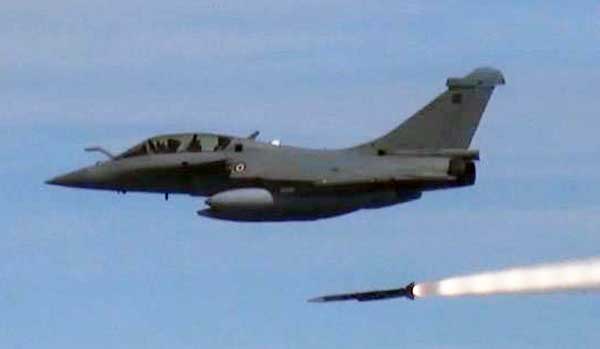 With the Middle East in flames and Pakistan military-terrorist nexus routinely triggering border skirmishes, India is virtually at war. China now has a vibrant aircraft industry and routinely displays aggressive behaviour on the Sino-Indian border. Very close military and economic links between China and Pakistan is a cause of concern for India. Build up of India’s military strength has not kept pace with the increasing threat. The new government’s ‘Make in India’ thrust especially on defence is a very welcome move.
North Korea and South China Sea Flashpoints: Are worthwhile Options left on US Table?
By Maj Gen SB Asthana
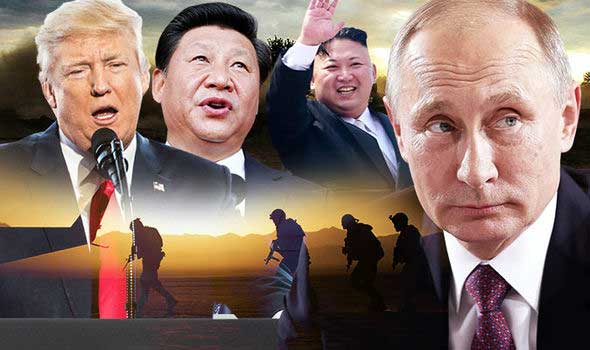 During recent verbal exchanges of provocative statements between US and North Korea, US has been maintaining that they have ‘All the options on the table’, while Kim continued with missile tests shocking Japan and South Korea.The idea of US to resolve the crisis through China did not work, which resulted in US giving indication during recent visit of Rex Tillerson to China that they may be trying for direct talks to North Korea in some manner? President Trumps indicator of “Not to waste time” on Kim, indicates that the options on the table are reducing at a very fast pace.Have the US strategic thinkers gone wrong all these years?
India’s Solar Panel Wars Heat up
By Sarah Watson
 Prime Minister Narendra Modi has made solar power a key plank of his energy independence and climate change agenda. India has set a target of reaching 100 gigawatts (GW) of solar generation capacity by 2022; it still has 86.5 GW to go. Cheap solar modules will be key to reaching that target, but India’s abysmal balance of trade in solar equipment has spurred calls for protective measures. With domestic content requirements nixed by the World Trade Organization (WTO), the Modi government may seek other means of protecting domestic capacity. But experience shows that simply offering special opportunities to domestic manufacturers has failed to boost the industry in the past.
The danger of all talk and no action
Brahma Chellaney
 Recently, India branded Pakistan a “Terroristan”. And its external affairs minister told the United Nations that Pakistan, as the world’s “pre-eminent terror export factory”, has just one national accomplishment to boast of. Yet New Delhi is loath to back its words with even modest action, such as downsizing Pakistan’s bloated, Inter-Services Intelligence (ISI)-infested high commission in New Delhi, withdrawing the unilaterally granted “most favoured nation” status, leveraging the Indus Waters Treaty (IWT), or halting the barter trade across the line of control (LoC) that the National Investigation Agency has identified as financing terrorism.
Democratic powers must intensify Indian Ocean cooperation
Brahma Chellaney
 As if to highlight this trend, the Chinese navy recently conducted live-fire drills in the western Indian Ocean. China’s state-run Xinhua news agency quoted the fleet commander as saying that his ships “carried out strikes against ‘enemy’ surface ships” in an “exercise that lasted several days.” The fleet included a destroyer, a guided-missile frigate and a supply vessel. Earlier this year, similar live-fire drills were carried out in the eastern Indian Ocean by a Chinese fleet that also included a destroyer.
It's Time to Make Afghanistan Someone Else's Problem
BARRY R. POSEN
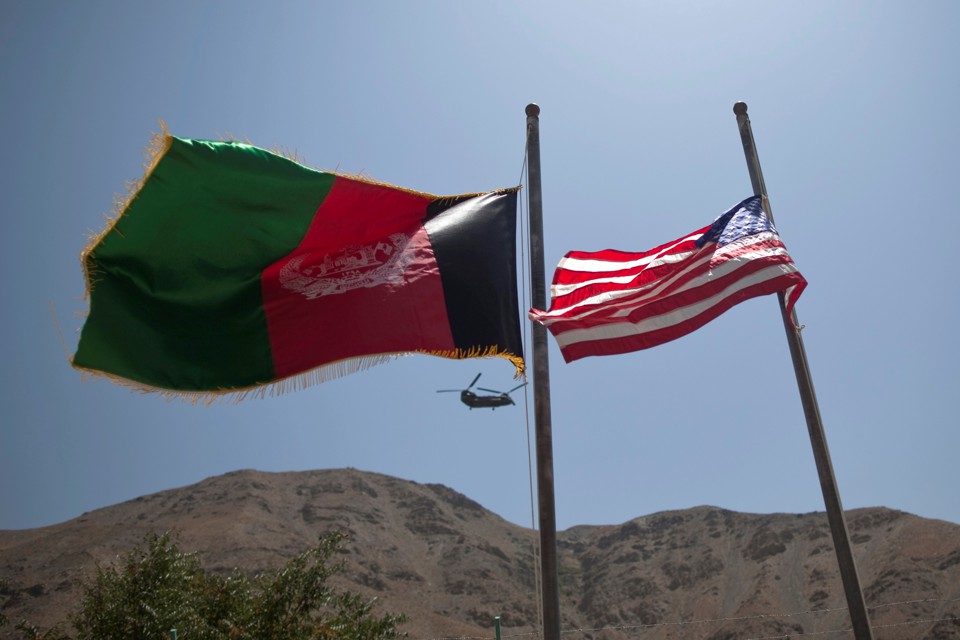 The Trump administration, as well as its critics, are reportedly wrestling with the question of a new strategy for the war in Afghanistan, where the government has shown no signs of being able to turn the tide in the 16-year war against the Taliban. General John Nicholson, the commander of U.S. forces in Afghanistan,with support from Secretary of Defense James Mattis and National Security Adviser H.R. McMaster, has asked for more troops, apparently in service of a strategy that, for the moment, seeks simply to “not lose.”
 Pakistan Draws a New Battle Line in the Afghan War
If India increases its involvement in Afghanistan, Pakistan will strengthen its opposition to pushing the Taliban into negotiations.
Pakistan will continue supporting the Taliban to prevent an alliance between Afghanistan and India.
Islamabad and Washington's threats against one another will limit the punitive measures both sides impose.
Pakistan’s Intelligence Service 'Has Connections With Terrorist Groups'
By Bill Roggio
During a hearing yesterday in front of the Senate Armed Services Committee, General Joseph Dunford, the Chairman of the Joints Chiefs of Staff said that Pakistan’s Inter-Services Intelligence Directorate (ISI) continues to support terrorist groups. Despite this announcement, Dunford and Secretary of Defense James Mattis remain hopeful that the US can rein in the rogue nation.
Mattis and Dunford placed all of the blame for Pakistan’s support of terrorist groups on the ISI, and essentially absolved Pakistan’s government and the military of any responsibility for both incubating and supporting regional and global jihadist organizations.
The Pentagon has a new acronym for Afghanistan. Can it win the war?
By: Aaron Mehta
/arc-anglerfish-arc2-prod-mco.s3.amazonaws.com/public/PFDN36NEMNBOVFK3KJZC4QTAJM.jpg) WASHINGTON ― The Trump administration’s Afghanistan strategy has a new acronym, one which the Pentagon’s top officials say will lay the groundwork for a stable Afghanistan in the future.
WASHINGTON ― The Trump administration’s Afghanistan strategy has a new acronym, one which the Pentagon’s top officials say will lay the groundwork for a stable Afghanistan in the future.
Appearing in front of the Senate Armed Services Committee, U.S. Secretary of Defense Jim Mattis described the strategy as “R4+S,” which stands for “regionalize, realign, reinforce, reconcile and sustain.”
The long history of Rohingya Islamist militancy
Brahma Chellaney
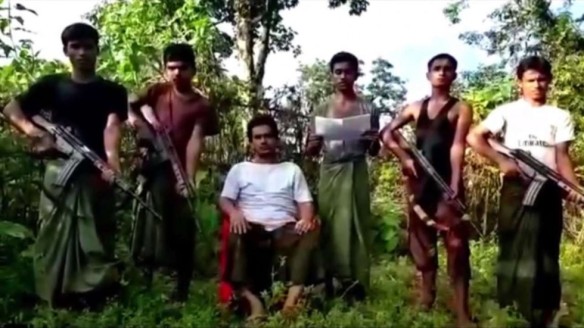 The current international narrative on the plight of Myanmar’s persecuted Rohingya minority has failed to recognize the roots of the present crisis or the growing transnational jihadist links of Rohingya militants, who have stepped up attacks. Contrary to the perception that the Rohingya militancy has arisen from military repression in recent years, Myanmar’s jihad scourge is decades old, with Rohingya Islamist violence beginning even before Myanmar gained independence in 1948.
China’s Espionage Dynasty: Economic Death by a Thousand Cuts
 The criminal culture of theft that has been injected into virtually every line of China’s 13th Five-Year Plan is unprecedented. From state sponsored smash and grab hacking and techno-pilfering, to corporate espionage and targeted theft of IP, never before in recorded history has IP transfer occurred at such a rapid velocity.
In this report, entitled “China’s Espionage Dynasty: Economic Death by a Thousand Cuts,” ICIT offers a comprehensive analysis of the primary structure of Chinese espionage initiatives and discuss the layers of espionage and theft as well as the malicious actors who carry out these overt and covert attacks on Western industry. Specifically, this report discusses:
A Lasting Defeat: The Campaign to Destroy ISIS
Ash Carter
 On December 11, 2016, just before my time as Secretary of Defense would end, I stepped off a C-130 transport plane onto a cold and dusty patch of northern Iraq that had been on my mind for more than a year: an Iraqi military airfield called Qayyarah West. Q-West, as it was known to the American military, was a talisman of progress on one of the defining issues of my time as secretary, the fight to defeat ISIS. A year before, General Joe Dunford and I had briefed the President on a plan to energize the counter-ISIS fight. We had laid out a series of military tasks, in Iraq and Syria, that would lead us to the liberation of ISIS’ strongholds in Mosul, Iraq, and Raqqa, Syria. Q-West was a fulcrum of that plan. Ejecting ISIS and turning the airstrip into a logistics hub was essential to seizing Mosul, just 40 miles to the north.
What ever happened to the Army’s EW capabilities?
By: Mark Pomerleau
/arc-anglerfish-arc2-prod-mco.s3.amazonaws.com/public/E2LFNNMPNBGVBAOTGPYPEVGVJQ.jpg) After some atrophy, electronic warfare is making a resurgence within the Army and the military writ large. This is an acknowledgement of the advanced capabilities of adversaries in this space, in which some top commanders have candidly expressed that the U.S. is outgunned in EW.
After some atrophy, electronic warfare is making a resurgence within the Army and the military writ large. This is an acknowledgement of the advanced capabilities of adversaries in this space, in which some top commanders have candidly expressed that the U.S. is outgunned in EW.Everything You Need to Know: Russia's 'Tactical' Nuclear Weapons
Dave Majumdar
 In recent months there has much hysteria in Washington about Russia allegedly lowering its nuclear threshold and particularly about Moscow’s arsenal of non-strategic nuclear weapons. However, there is little evidence that Moscow has lowered its nuclear threshold—nor are there concrete figures available for how many non-strategic nuclear weapons the Kremlin has in its inventory.
Non-Strategic Nuclear Weapons:
Our best hope against nuclear war
By David Ignatius
 Consider what is, for the moment, an entirely hypothetical question: What might Defense Secretary Jim Mattis do if he received an order from President Trump to launch a nuclear attack on North Korea in retaliation, say, for a hydrogen bomb test that had gone awry?
Certainly, Mattis could try to talk the president out of the attack, if he thought the action was unwise. He could request delays to prepare for contingencies or gather intelligence. He could even, perhaps, argue that the action raised legal questions, because it might cause disproportionate civilian casualties in North and South Korea and thereby violate the laws of war.
Why Tactical Nuclear Weapons Are Still A Thing
BY ALBERT J. MAURONI
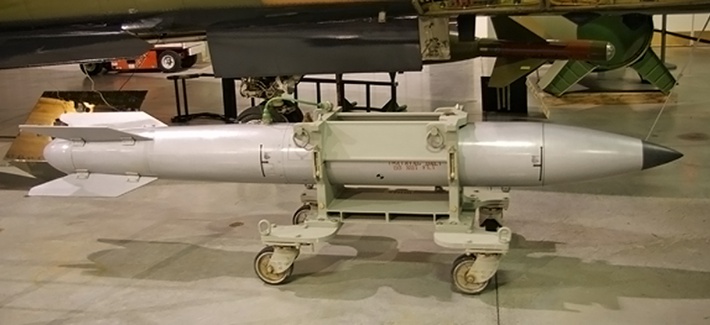 Michael Krepon recently published an article in Defense Onein which he called the potential development and employment of tactical nuclear weapons “unwise” and strategically unsound. His argument includes several statements that illustrate the yawning chasm between arms control experts and military planners today when it comes to the subject of the utility of nuclear weapons. As is often the case, he uses illustrations and questionable statements that date to the Cold War to discuss the contemporary challenge of nuclear modernization. Here are some thoughts as to why tactical nuclear weapons are being advanced as a valid, contemporary — and necessary — defense capability.
2018 INDEX OF U.S. MILITARY STRENGTH
Source Link
The United States maintains a military
force primarily to protect the homeland
from attack and to protect its interests abroad.
Although there are secondary uses for the military—such
as assisting civil authorities in times
of emergency or deterring enemies—that amplify
other elements of national power such as
diplomacy or economic initiatives, America’s
armed forces exist above all else so that the U.S.
can physically impose its will on an enemy and
change the conditions of a threaten.
Where is technology taking the economy?
By W. Brian Arthur
We are creating an intelligence that is external to humans and housed in the virtual economy. This is bringing us into a new economic era—a distributive one—where different rules apply.
A year ago in Oslo Airport I checked in to an SAS flight. One airline kiosk issued a boarding pass, another punched out a luggage tag, then a computer screen showed me how to attach it and another where I should set the luggage on a conveyor. I encountered no single human being. The incident wasn’t important but it left me feeling oddly that I was out of human care, that something in our world had shifted.
CSIS On The Second Space Age: ‘Diverse, Disruptive, Disordered And Dangerous’
By COLIN CLARK
 We knew space was congested, contested and all that. But the folks at CSIS have recast that to good effect in a report actually worth reading in detail. The Second Space Age (yes, they’ve come up with a catchy rubric!) is, they say, more diverse, disruptive, disordered, and dangerous than the first space age.”
Robotic Swarms in Offensive Maneuver
By Jules Hurst
For many years, military scientists have contemplated the advent of swarming tactics as an evolution within maneuver warfare, and futurists have contemplated the execution of the tactics by cooperative teams of semi-autonomous drones. These projections expound on strengths demonstrated by hive-minded organisms such as bees or ants, which work cooperatively to defeat larger invaders through non-hierarchal communications. Other swarm theorists reference the deadly effectiveness of the ephemeral, loose formations of horse archers of the Asian steppe against less flexible foes. Whatever the source of inspiration, few authors move beyond the abstract employment of robotic swarms. To fully explore swarm utility in fire and maneuver, swarms should be inserted into the tactical concepts of today—chiefly, the five forms of offensive maneuver recognized under Army doctrine.
US is ‘outgunned’ in electronic warfare, says cyber commander
/arc-anglerfish-arc2-prod-mco.s3.amazonaws.com/public/V6MOLNPMJVEFTBQDSCSL3ZMWE4.jpg) Capt. Thomas Mesloh, electronic warfare officer for the 2nd Squadron, 108th Cavalry Regiment, 224th Sustainment Brigade, 103rd Sustainment Command (Expeditionary), discusses the measurements on a spectrum analyzer with a convoy escort team commander at Contingency Operating Base Adder, Iraq. (Sgt. Alan Smithee/Army)
Capt. Thomas Mesloh, electronic warfare officer for the 2nd Squadron, 108th Cavalry Regiment, 224th Sustainment Brigade, 103rd Sustainment Command (Expeditionary), discusses the measurements on a spectrum analyzer with a convoy escort team commander at Contingency Operating Base Adder, Iraq. (Sgt. Alan Smithee/Army)TIMELESS LESSONS FROM THE OCTOBER 1973 ARAB-ISRAELI WAR
David Wallsh
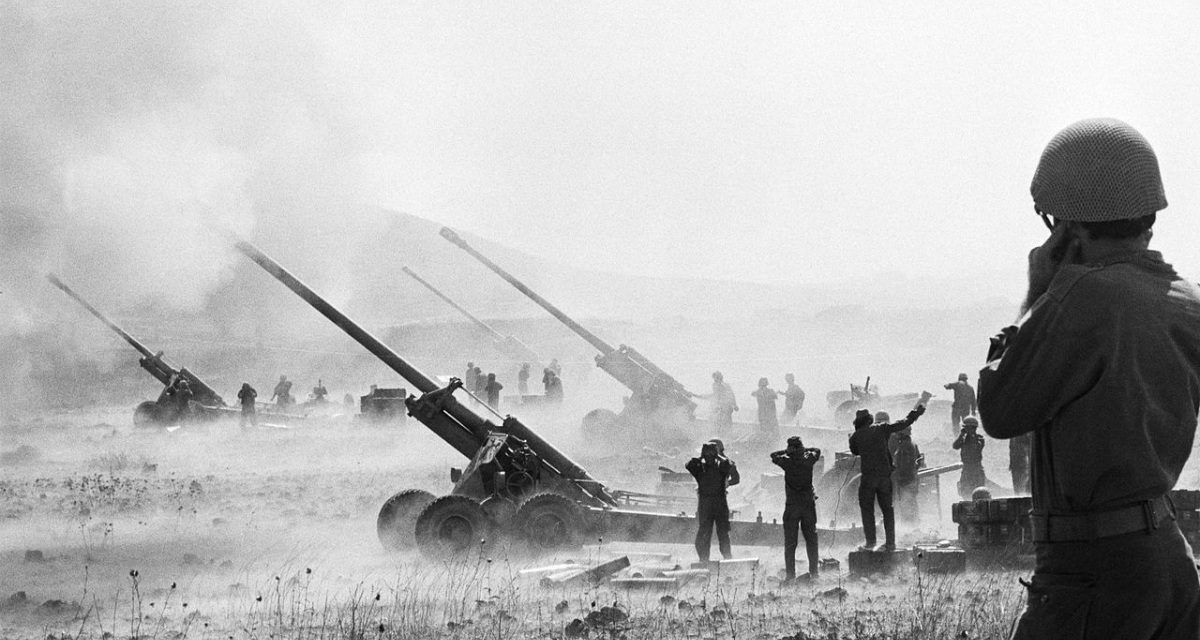 This week marks the forty-fourth anniversary of the beginning of the 1973 Arab-Israeli War. Known as the Yom Kippur War in Israel and the Ramadan or October War in Egypt and Syria, the dramatic events of October 1973 profoundly altered the course of Middle East politics, eventually leading to the 1979 Egyptian-Israeli peace treaty and Cairo’s realignment away from the Soviet Union and toward the United States. Indeed, the 1973 war serves as a textbook case study in the use of military means for political ends, and provides still other lessons for modern warfare that remain as fundamental today as they were forty-four years ago. The occasion of this anniversary provides an opportunity to highlight some of these enduring lessons, as well as to apply them to America’s present national security challenges.
Are There Too Many General Officers for Today’s Military?
By Gregory C. McCarthy

Oct. 1, 2017 — There are approximately 900 Active-duty general/flag officers (GO/FOs) today of 1.3 million troops. This is a ratio of 1 GO/FO for every 1,400 troops. During World War II, an admittedly different era, there were more than 2,000 GO/FOs for a little more than 12 million Active troops (1:6,000). This development represents “rank creep” that does not enhance mission success but clutters the chain of command, adds bureaucratic layers to decisions, and costs taxpayers additional money from funding higher paygrades to fill positions.
Butter Bar to Four Star: Deficiencies in Leader Development
By Benjamin Ray
Lieutenant Colonel Benjamin Ray Ogden, USA, wrote this essay while a student at the U.S. Army War College. It won the Strategic Research Paper category of the 2017 Chairman of the Joint Chiefs of Staff Strategic Essay Competition.
It’s incredibly easy . . . to work harder and harder at climbing the ladder of success only to discover it’s leaning against the wrong wall.
6 October 2017
The House Armed Committee hearing.
The newspapers have extensively covered the statements made by James N Mattis, US Secy of Defence and Joseph F. Dunford, Chairman of the Joint Chief of Staff at the House Armed Committee hearing.
One does not get the sense of the complete hearing if you don’t see the hearing. The 3 hours and 14 minute hearing has to be viewed to understand how the present US Govt is planning to address South Asian region. It is available at https://armedservices.house.gov/legislation/hearings/us-defense-strategy-afghanistan
How about putting our RM and Chief of Armed Forces to answer searching questions under a parliamentary committee. There is no aide to help out. One has to be one his own.
MPs need not worry. They can employ experts to help them understand issues on National Security and draft questionnaire. People like me who are loath to appear before the idiot box and available.
Just flying kite.
DID CHINA USE WATER AS A WEAPON IN THE DOKLAM STANDOFF?
JOEL WUTHNOW
 Editor’s Note: This is the tenth installment of “Southern (Dis)Comfort,” a new series from War on the Rocks and the Stimson Center. The series seeks to unpack the dynamics of intensifying competition — military, economic, diplomatic — in Southern Asia, principally between China, India, Pakistan, and the United States. Catch up on the rest of the series.
 Why India is worried about China's dam projects on the Brahmaputra river
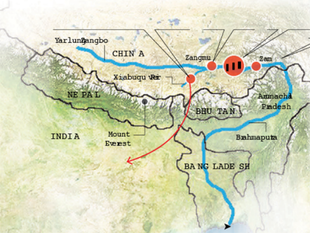 NEW DELHI: Within days of India announcing plans to assert its right within the Indus Water Treaty with Pakistan, China said it was building a dam on a tributary of the Yarlung Zangbo, as Brahmaputra is known in Tibet. This will be its 'most expensive hydel project'. Here's all about the project, the tributary and why India worries about the project.
Why India sees red
Modern Biotechnology and India’s Governance Imperatives
ANANTH PADMANABHAN, R. SHASHANK REDDY, SHRUTI SHARMA
Like all countries, India faces the reality that modern biotechnology is unlocking many advances in healthcare, food and energy security, and environmental conservation. At the same time, these same breakthroughs are ushering in a host of potential threats, including biological warfare and irreversible alterations to the human gene pool.
To navigate this complex policy landscape, India needs to craft a more streamlined regulatory system and take other concrete steps to support growth in its domestic biotech sector. Doing so would likely help New Delhi—a much-needed voice from the developing world—vie for a chance to play a leading role in discussions on global governance, as nations begin formulating responsible global standards in response to recent biotech innovations.
India's Rohingya Policy: Is it Legally Sound?
Abhijit Iyer Mitra
When Union Home Minister Rajnath Singh labelled Rohingya refugees in India “illegal immigrants” he was patently wrong. The difference between illegal immigrants and refugees is quite simple – choice. An illegal immigrant chooses to cross borders, while refugees have no choice, migrating because of extreme duress in their normal habitat. The question in the legal sense, from the Indian point of view, is different. First, does it have a legal obligation to abide by the UN Refugee Convention to which it is not a member? Second, at what point are its legal obligations to refugees trumped by the need to maintain domestic law and order?
WHEN MARSHALL MET PERSHING
BENJAMIN RUNKLE
Today marks the 100th anniversary of one of the key moments leading to the Allied victory over the Axis powers in World War II.
 Don’t worry, your math is not wrong.
Oct. 3, 1917, is the centennial of General John J. Pershing’s inspection of the 1st Infantry Division at Gondrecourt, France. This obscure event would not only have significant repercussions for the American effort in the next world war, but also offer lessons for leadership development in the U.S. military a century later.
Beyond the call of duty!
By Lt Gen H S Panag
 The first-ever Param Vishisht Seva Medal of the Indian Army was awarded to Lt Gen B M Kaul in 1960, notably for the successful completion of Operation Amar – the construction of 1,450 barracks/family quarters for troops in Ambala – which was inaugurated by the Prime Minister on August 20, 1958. This project was the brainchild of the Defence Minister VK Krishna Menon. To save on cost, the project entailed using troops as labour for the construction. Gen Thimayya, the Chief of Army Staff, was opposed to the project, but during his absence for a visit to the USA, Maj Gen B M Kaul, then General Officer Commanding (GOC) of 4 Infantry Division at Ambala, directly approached the Defence Minister and got the necessary approvals. The famous Red Eagle division rose to the occasion under his dynamic command and successfully completed the projected in a record seven months.
Subscribe to:
Posts (Atom)