10 October 2017

America's Autopilot Wars

By Andrew Bacevich

Consider, if you will, these two indisputable facts. First, the United States is today more or less permanently engaged in hostilities in not one faraway place, but at least seven. Second, the vast majority of the American people could not care less. 

Nor can it be said that we don’t care because we don’t know. True, government authorities withhold certain aspects of ongoing military operations or release only details that they find convenient. Yet information describing what U.S. forces are doing (and where) is readily available, even if buried in recent months by barrages of presidential tweets. Here, for anyone interested, are press releases issued by United States Central Command for just one recent week:

The Key Powers´ Construction of the Mediterranean


How should the EU balance its own policies and interests in the Mediterranean against those of other major and regional powers? To find out, this publication examines the role and influence of eight leading stakeholders in the Mediterranean, including the US, Russia, China, Iran, Saudi Arabia, Qatar, Turkey and Israel. More specifically, the text´s authors look at how these actors 1) perceive the Mediterranean; 2) interact with the EU, states, non-state actors and international organizations with regard to the region; and 3) pursue their national interests in the region.

A reminder that we pay for our wars in money and blood

Larry Kummer

Summary: We ignore our wars (hardly mentioned in the campaigns). We pay for our wars, hot and cold, in two ways — in money and blood. Let’s look at the toll in both. This will be an unpopular post. Neither Left nor Right cares to look at the toll of our wars. Both prefer their poo-throwing fights.


What if the Crossing had Failed?

BY MARTIN VAN CREVELD

My name is Ben Levy. Lieutenant Colonel Shimon Ben Levy, of the historical branch of the Israeli General Staff. My boss, acting in the name of chief of staff General Rafael Eitan (”Raful,” as he is popularly known), has ordered me to do an interesting study: namely to inquire, as best I can, what might have happened if the 1973 Israeli crossing of the Suez Canal—arguably the most important move in the entire war—had failed. Why he wants the study I have no idea.

9 October 2017

Lull at Doklam: Time for a Holistic Strategic Review

By Maj Gen GG Dwivedi

The recent standoff at Doklam had raised genuine concerns about the situation escalating, given that the opposing troops stood ‘eye ball to eye ball’ for over 10 weeks. While the crisis has been defused for the time being, the probability of a future flare up cannot be ruled out. Post the disengagement, Chinese troops have fortified their positions in the Doklam Plateau with the declared intent of resuming the road construction activity at an appropriate time. The military build-up, which had been undertaken by the two sides in the wake of the crisis, remains in place. The current period of lull is, therefore, a tactical pause. In all prudence, Doklam should be taken as a nudge to initiate a holistic strategic review.

From Drug Trafficking to Cultivation: A Global “Unchallenged” Nexus

By Anant Mishra

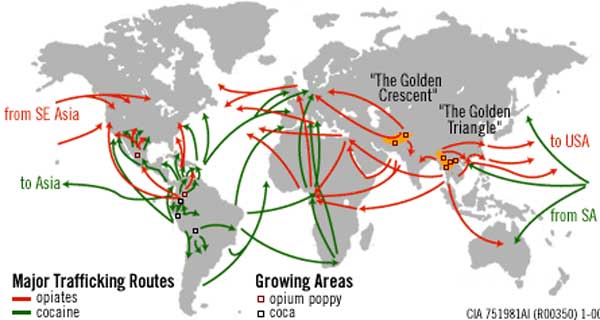
In the light of growing “intense” nexus between transnational organized crime factions, sex traffickers, gun runners and money launderers, today, drug trafficking has become one of the most “complex yet diverse” issue in the world with an ability to seriously cripple socio-politico-economic architecture of a country while seriously damaging its legislative institutions.

Two King Cobras Named Ravi Dhir

By Dr Krishna S Dhir, PhD

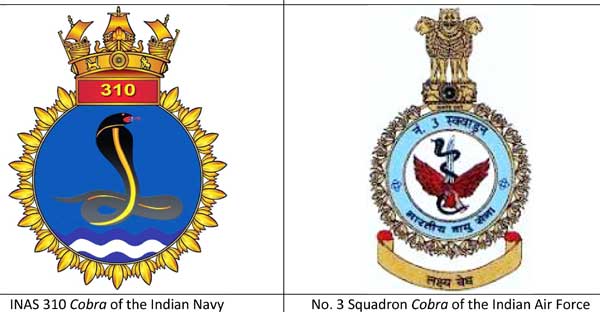
In the Indian Armed Forces there are two Cobra Squadrons, both engaged in reconnaissance, albeit in different Services, and, amazingly, both had a Ravi Dhir for their Commanding Officers … yes, two different individuals with the same name! One Cobra Squadron is with the Indian Navy and the other with the Indian Air Force. On 21st of March in 1961, INAS (Indian Naval Air Squadron) 310 was created in Hyeres, France, with 12 newly acquired Breguet 1050 Alizé aircrafts, which were later augmented by two more in 1968. The Squadron was named Cobra.

Birth of the Indian Air Force (IAF)

By Air Vice Marshal AK Tiwary

“Preparation for war is an expansive, burdensome business, yet there is one important part of it that costs little – STUDY.” 
— Field Marshal Slim

The IAF was created on paper on 8th Oct, 1932 by the Indian Air Force Act of 1932 and on that fateful day six Indian officers were granted the King’s Commission. The IAF actually took to Wings on 01 Apr, 1933 when it was equipped with four Wapiti aircraft.

Fighter Squadron Strength IAF’s Top Priority - Air Chief Marshal BS Dhanoa

By Lt Gen (Dr) JS Bajwa

Augmenting our fighter squadron strength is our top priority. To achieve this, the IAF is looking at new inductions and mid-life upgrades. If all the inductions take place as planned, the IAF is expected to achieve its authorised strength of fighter squadrons – Air Chief Marshal BS Dhanoa

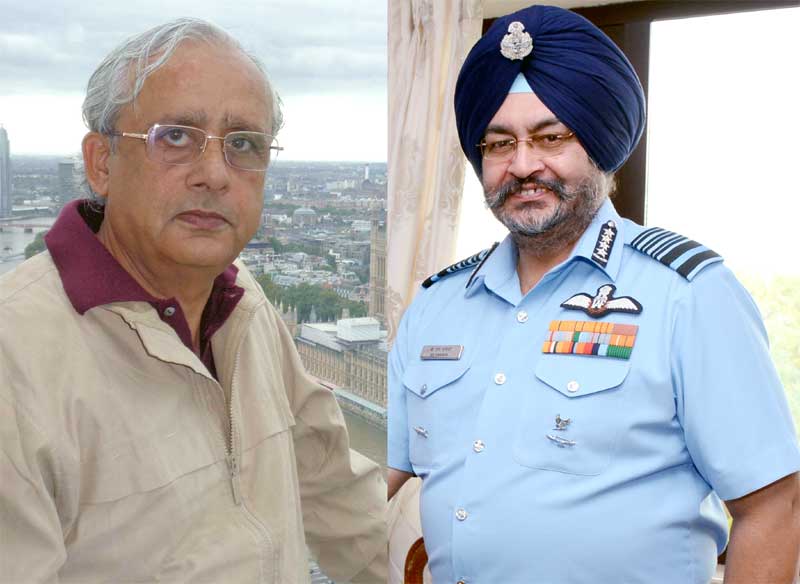
Indian Defence Review (IDR) had the unique privilege to interview the Chief of Air Staff Air Chief Marshal Birender Singh Dhanoa, prior to the Air Force Day on 8th October 2017. Details of the candid response of the Chief of Air Staff to the IDR’s pointed questions are given below:-

Afghanistan: U.S. Offers Pakistan yet Another 'Last Chance'

By Hussain Nadim

Following US President Donald Trump's address on Afghanistan policy in August, US Defense Secretary Jim Mattis said in a Senate Armed Service Committee hearing that the US is willing to work with Pakistan 'one more time' in Afghanistan. In another hearing, General Joseph Dunford, Chairman of the Joint Chiefs of Staff, alleged that Pakistan's Inter-Services Intelligence (ISI) maintains links with terrorist groups.

For Pakistan, neither calls for 'one last chance' nor allegations of ISI links with terrorist groups are anything new. As such, the same old US policy repackaged by a new administration is likely to get the same old response from Pakistan.

The Chinese Communist Party: Candid and Transparent?

By David Gitter

As the upcoming Chinese Communist Party (CCP) 19th Party Congress brings new changes to China’s elite politics and national development, foreign observers will be searching for authoritative Chinese publications to follow new trends. Just as state media outlets sponsored special webpages to report on the 17th and 18th Party Congress, we can expect the same for the 19th.

The Chinese Dream in Peril: Xi Jinping and the Korean Crisis

By Anthony Miller

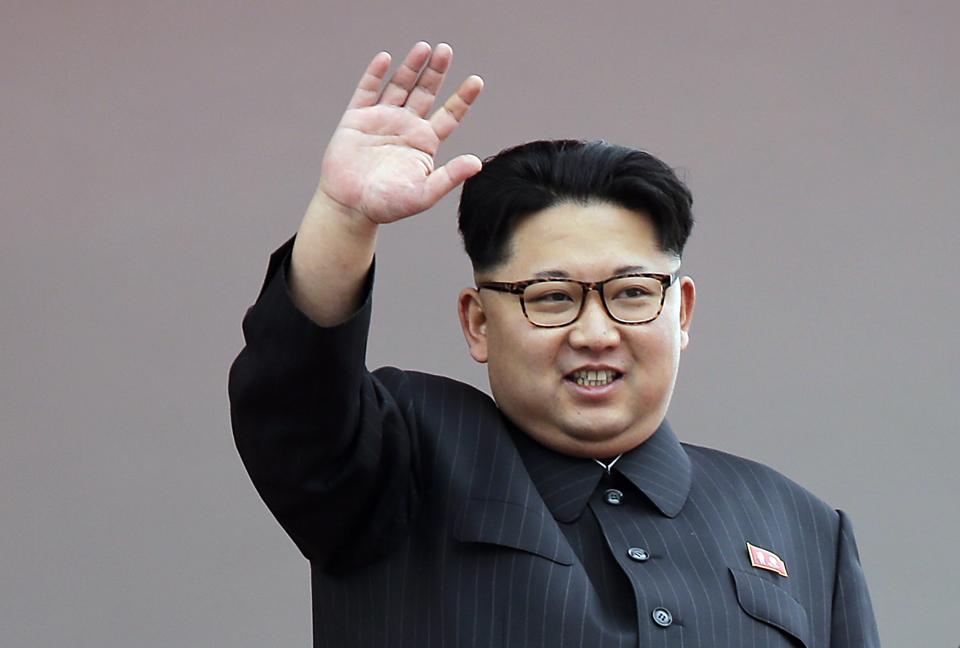
With tensions escalating rapidly again on the Korean peninsula, the attention of the world invariably has returned to the question of whether or not the solution to the crisis lies in Beijing. After months of continuing missile tests by North Korea despite sanctions and global condemnation, Kim Jong-un’s regime claims to have tested a hydrogen bomb and once again launched an intercontinental ballistic missile over Japan. North Korea’s march toward wielding a nuclear arsenal against its neighbors and far off enemies, like the United States, is nearing completion. For Xi Jinping and the Chinese Communist Party (CCP), North Korea’s obstinate drive toward becoming a nuclear force has dealt Beijing a critical challenge at a moment when the party would prefer to focus on other matters seen as as essential to its rise as a regional and world power.

An expert's assessment on US options over North Korea


As the doomsday rhetoric intensifies between two untested and inexperienced leaders in Pyongyang and Washington, the risk of actual combat is rising.

At the United Nations, U.S. President Donald Trump shocked most of the U.N. General Assembly by threatening to "totally destroy" North Korea to end the "suicide mission" of its "Rocket Man" leader. North Korea has threatened to create a "sea of fire" in both South Korea and the U.S. On Sept. 23, U.S. B-1 bombers flew close to North Korea's east coast on what the Pentagon said was a mission to demonstrate the military options available to Trump. The U.S. president warned that Kim Jong Un and his foreign minister, Ri Yong Ho, "won't be around much longer" if they continue their rhetoric.

Russian Robots: Fear Jammers, Not Terminators

By SYDNEY J. FREEDBERG JR.

Despite a few grandiose claims and snazzy videos of robots shooting guns, Russia remains behind “the Chinese, Iranians, and the Turks” in developing armed unmanned systems, let alone the United States, CNA expert Samuel Bendett said this morning. The bad news, Bendett said, is that Russia’s notoriously bureaucratic military-industrial complex is finally getting its act together on robotics, with massive new investment and significant innovation. Worst of all, the one area where Russia isahead is the invisible high ground the US Army ceded 20 years ago: electronic warfare.

Against North Korea, Deterrence of a Different Kind

By Omar Lamrani

Since the turn of the millennium, war between nuclear powers has never loomed so near. As North Korea sprints toward the finish line in its race to build a credible nuclear deterrent, the window of opportunity to stop it is shrinking. With time running out, the United States may yet launch a preventive strike against Pyongyang's nuclear and missile programs, convinced that military intervention is the only way to halt its smaller adversary in its tracks.


The Las Vegas Attack Will Inspire Copycats from STRATFOR

by Scott Stewart
"The Las Vegas Attack Will Inspire Copycats" is republished with permission of Stratfor.

As the closing act of the three-day, open-air Route 91 Harvest Music Festival took the stage the evening of Oct. 1 on the Las Vegas Strip, a 64-year-old man used a sledgehammer to smash out two windows in his suite at the adjacent Mandalay Bay hotel. His perch on the 32nd floor gave him a clear field of fire on the 22,000 or so concertgoers below. He took aim with one in the arsenal of guns in his room and opened fire. The shooter's intent was clear - he wanted to create as much carnage as possible. The crowd below remained oblivious to the threat 100 meters (328 feet) above and 400 meters away until bullets began raining down.

Understanding the Threat Posed by Hypersonic Weapons

By Robert Farley

A new RAND study has detailed the threat posed by the development and diffusion of hypersonic weapons, and has proposed a solution: multilateral arms control. The report, authored by Richard Speier, George Nacouzi, Carrie A. Lee, and Richard M. Moore, sets out the technical challenges and implications provided by hypersonics, and from these develops strategic implications regarding the most appropriate international response.

MASQUERADING HACKERS ARE FORCING A RETHINK OF HOW ATTACKS ARE TRACED

Kim Zetter

THE GROWING PROPENSITY of government hackers to reuse code and computers from rival nations is undermining the integrity of hacking investigations and calling into question how online attacks are attributed, according to researchers from Kaspersky Lab.

In a paper set for release today at the Virus Bulletin digital security conference in Madrid, the researchers highlight cases in which they’ve seen hackers acting on behalf of nation-states stealing tools and hijacking infrastructure previously used by hackers of other nation-states. Investigators need to watch out for signs of this or risk tracing attacks to the wrong perpetrators, the researchers said.

What Will US-Philippines Military Exercises Look Like in 2018?

By Prashanth Parameswaran
October 07, 2017

Last week, the chief of staff of the Armed Forces of the Philippines (AFP) disclosed to reporters in Manila that the United States and the Philippines had decided to boost the level of exercises and engagement between them for 2018 following a recent meeting between the two sides.

8 October 2017

Comparison Israel and India in Technology Space

In 2017, Israel's population was an estimated approximately 87 lakh people. In 2017 population of Delhi is estimated to be over 1.9 crores. Population of National Capital Region  is estimated to be over 2.7 crores as of January, 2017.

Some comparisons are stark.

GDP per Capita of Israel is US$37,262, 24th rank. India's GDP per capita is US$ 1,723 , 142 rank. World average is US$10,038.

Israel's quality university education and the establishment of a highly motivated and educated populace is largely responsible for spurring the country's high technology boom and rapid economic development,

It has the second-largest number of startup companies in the world after the United States,and the third-largest number of NASDAQ-listed companies after the U.S. and China, Israel was also ranked 4th in the world by share of people in high-skilled employment. Leading exports include machinery and equipment, software, cut diamonds, agricultural products, chemicals, and textiles and apparel; in 2016, Israeli exports reached $51.61 billion. Israel has an impressive record for creating profit driven technologies making the country a top choice for many business leaders and high technology industry giants. Intel and Microsoft built their first overseas research and development facilities in Israel, and other high-tech multi-national corporations, such as IBM, Google, Apple, HP, Cisco Systems, Facebook and Motorola have opened R&D centres in the country.

Israel's development of cutting-edge technologies in software, communications and the life sciences have evoked comparisons with Silicon Va world average . Israel ranks 10th in the Bloomberg Innovation Index, and is 2nd in the world in expenditure on research and development as a percentage of GDP. Israel boasts 140 scientists, technicians, and engineers per 10,000 employees, the highest number in the world (in comparison, the same is 85 for the U.S.). Israel has produced six Nobel Prize-winning scientists since 2004 and has been frequently ranked as one of the countries with the highest ratios of scientific papers per capita in the world. Israel has led the world in stem-cell research papers per capita since 2000. Israeli universities are ranked among the top 50 world universities in computer science (Technion and Tel Aviv University), mathematics (Hebrew University of Jerusalem) and chemistry (Weizmann Institute of Science).

The ongoing shortage of water in the country has spurred innovation in water conservation techniques, and a substantial agricultural modernization, drip irrigation, was invented in Israel. Israel is also at the technological forefront of desalination and water recycling. Israel is set to become a net exporter of water in the coming years.Israel has embraced solar energy; its engineers are on the cutting edge of solar energy technology and its solar companies work on projects around the world. Over 90% of Israeli homes use solar energy for hot water, the highest per capita in the world.

Israel's military relies heavily on high-tech weapons systems designed and manufactured in Israel as well as some foreign imports. The Arrow missile is one of the world's few operational anti-ballistic missile systems. The Python air-to-air missile series is often considered one of the most crucial weapons in its military history. Israel's Spike missile is one of the most widely exported ATGMs in the world. Israel's Iron Dome anti-missile air defense system gained worldwide acclaim after intercepting hundreds of Qassam, 122 mm Grad and Fajr-5 artillery rockets fired by Palestinian militants from the Gaza Strip. Since the Yom Kippur War, Israel has developed a network of reconnaissance satellites. The success of the Ofeq program has made Israel one of seven countries capable of launching such satellites.Israel ranked 7th globally for arms exports in 2016. The majority of Israel's arms exports are unreported for security reasons. 

Israel's exports are also similar to India's . The top exports of Israel are gems, electronic equipment, pharmaceuticals, machinary, medical technical equipment, other chemical goods, aircraft and spacecrafts, plastics, fertilizers and organic chemicals.

In recent years, India has become one of the biggest refined product exporters in Asia with petroleum accounting for around 20 percent of total exports. The country also exports: engineering goods (19 percent of the total shipments), chemical and pharmaceutical products (14 percent), gems and jewellery (14 percent), agricultural and allied products (10 percent) and textiles and clothing (10 percent).

However, there are lot of similarities with India. Like us Israel has fought major wars in 48, 67 and 73. 82 Bekka Valley, July 2006 Second Lebanon War , The 2008–09 Gaza War in recent times. Continuous trouble with Hezbollah and Hamas exists.

One wonders what is it that takes Israel with less than half the population of Delhi has taken them far above us. The top IT companies of USA has also opened their offices in India and employs substantial people. We are acknowledged to be software giant. Nowadays there is lot of talk about start ups, innovations etc. By sheer number if we select properly from these numbers we can have world class people, process and technology. I was once told by the cyber czar of India that private sector, all the big behemoths, only talk big, interested in orders, do not carry out any research, use available applications from the market whereas our requirement is indigenous technology. By their performance it seems to be true.

Lets have a look at the defence electronics and cyber space.

The story of how Israel has become a factory for producing new technologies is familiar to most people in the space: take the best and the brightest out of high school, assign them to Unit 8200 for their obligatory military service, give them a few years in computer science finishing school, and then fund their startup.What it cannot explain is how so many young Israeli entrepreneurs have could tackle problem sets like industrial control systems, telecommunications, and automobile security.Beyond 8200, what Israel has is a top to bottom organization for cybersecurity that starts with the National Cyber Bureau, which oversees the national computer emergency response team (CERT) that coordinates with private sectorled collaboration centers.Israel is now in the process of building out a series of sectorbased CERTs.They then add to this operational activity close collaboration between academia and the venture capital community through a series of Cyber Innovation and Research Centers. The result is that an alum of 8200 is able to build a startup that addresses problems inside sectors that few people even understand. But the collaborative model between government, industry, finance and academia in Israel can and should be replicated

If our claims are correct, we have extremely capable people in our armed forces, DRDO, academia and industry in a field like cyber space. We are struggling due to lack of indigenous technology. The Government had announced availability of funds to the tune of 900 crores, fund is not an issue. Then why cannot we go ahead?

Any takers?
 

Pakistan Draws a New Battle Line in the Afghan War


In the war in Afghanistan, Pakistan plays both sides. On the one hand, the country aids the United States in its fight against the Taliban. Pakistan offers NATO forces access to the port of Karachi to transit supplies to their bases in landlocked Afghanistan and tacitly allows the CIA to conduct drone strikes against militant hideouts in the semi-autonomous Federally Administered Tribal Areas. Yet on the other hand, Pakistan has nurtured the Taliban for more than 20 years. Pakistan's government in Islamabad supports the group as a means to many ends, including stabilizing Afghanistan, opening trade and energy routes to Central Asia, formalizing the Durand Line, and establishing a government in Kabul hostile to archrival India. By assisting both the United States and the Taliban throughout their nearly 16-year conflict, Pakistan has managed to benefit from an alliance with Washington, collecting over $33 billion in aid since 2002, while also pursuing its security objectives.

Pakistan in the Middle East: A Cautious Balance

By Huma Yusuf

Discussions about Pakistan’s foreign policy challenges typically focus on its relations with its neighbors – particularly India and Afghanistan – and with greater powers such as the United States and China. But Pakistan’s relations with the Middle East are shifting at the fastest clip with significant implications for its security and economy. The way in which Pakistan responds to the deepening regional rivalry between Saudi Arabia and Iran as well as the ongoing dispute within the Gulf Cooperation Council (GCC) will have a major impact on stability in the near term.

Catalonia's Bid for Independence Is a Zero-Sum Game


When asked about Madrid's potential reaction to the independence process in Catalonia, many Catalans used to say, "as soon as they send the tanks, they will have lost the battle." On Oct. 1, the Spanish

Measuring radiation doses in mass-casualty emergencies

KEVIN CAMPHAUSEN
4 OCTOBER 2017

For the first time since 1981, when China deployed the DF-5 intercontinental ballistic missile, a new state has gained the capability to target the United States with a nuclear weapon. On July 4 and again on July 28, North Korea launched the Hwasong-14—a two-stage, liquid-fueled ballistic missile that demonstrated the capability to reach the continental United States. The US intelligence community assesses that North Korea has nuclear warheads compact and light enough to fit on the Hwasong-14 and that North Korea will be able to deploy a nuclear-armed intercontinental ballistic missile within one or two years. North Korea demonstrated another new capability on September 3, testing what it claimed was a thermonuclear weapon. While the exact configuration of this “advanced nuclear device” remains unknown, the device’s estimated yield is 140 kilotons, so the test represents a quantum leap in the destructive potential of North Korea’s nuclear arsenal.

North Korean Challenges to USA

By Bhupesh Jain

The world woke up on 15 Sep 17 with yet another launch of a missile by North Korea. A missile this time flew over the Northern Japanese Island of Hokkaido and landed in the Pacific[i]. It triggered emergency alerts in Japan. The alerts warned citizens to seek shelter. At the end of August 2017 too, an Intermediate Range Ballistic Missile launched by North Korea crashed into the sea more than 1000 kilometers East of Hokkaido[ii].

Here’s how the Army wants to integrate cyber, EW into operational formations

By: Mark Pomerleau

The Army is continuing to evolve concepts to fight and win in future operating environments, which will increasingly involve digital means of combat effects. What will these capabilities look like, and how will they impact the overall force structure?

Outmatched, Army begins long road to electronic warfare rollout


By: Mark Pomerleau   
The U.S. Army Rapid Capabilities Office is delivering quick-reaction electronic warfare solutions to the European theater, and these systems will help inform the development of more permanent programs of record. (Sgt. Michael Spandau/Army)


Marine cyber defense command educates new units on cyberwarfare

By: Mark Pomerleau   

As the Marine Corps’ Marine Expeditionary Forces Information Group – MEF Information Group or MIG, is coming online, the service’s chief cyber operations outfit will be offering education to help leaders understand how cyber can be employed into traditional operations.

Hackers wanted: Special ops leaders seek soldiers who can fight the enemy up close and online

By: Todd South   
Special operations soldiers fast-rope from an MH-60 to an objective. Special operations leaders are now seeking soldiers who can excel on the battlefield as well as in the cyber domain.

Already in high demand for their rare and elite skills, special operations soldiers need to add one more capability to their toolbox: cyber.

'We are losing the cyber war' says Oracle's Larry Ellison as he introduces automated security

Tom Allen
Source Link

Automation has long been a hot button topic for the cybersecurity industry, promising automatic patching and a move away from the legacy ‘fingerprinting' style of defence. Oracle CTO Larry Ellison joined the chorus today at OpenWorld, announcing the "highly-automated" Oracle Management and Security Cloud (OMSC).

The Cyber Underground – Resistance to Active Measures and Propaganda: “The Disruptors” - Motto: “Think For Yourself”

by David S. Maxwell

The open societies of the US and free and democratic nations are being subverted by active measures and propaganda to undermine political processes and sow cultural and political divisions to allow closed societies of revisionist and revolutionary powers to dominate in international affairs. The way to counter this effort is through a grass roots resistance movement that consists of an educated, activist, energetic, and empowered youth who seek to be part of something larger than themselves and validate their self-worth as disruptors of the status quo. However, the closed societies are challenging their ability to disrupt because active measures and propaganda have taken away their initiative.

Cyber Sovereignty and Online Borders Do Not Improve International Security

By Hugo Zylberber, Nikolas Ott

Hugo Zylberberg is a Fellow for Technology and Policy at Columbia University's School of International and Public Affairs. Nikolas Ott is a Mercator Fellow at the Mercator Program Center for International Affairs (Stiftung Mercator). This op-ed is based on a publication that was presented at the 2017 CyFy Conference in New Delhi, India.

In 2100 BCE, the ancient city-states of Lagash and Umma in Mesopotamia concluded the first recorded agreement to solve a border dispute. Little did they realize they were setting in motion a chain of events that would forever alter the course of history. Nearly 4000 years later, physical borders are still very much at the center of international relations and increasingly creeping onto the online world. Today, internet fragmentation—the process of erecting digital borders on a seemingly borderless space—is threatening to splinter the internet into loose internet-states.

The US Air Force Has a New Chip to Foster Secure Communications


The US Air Force has developed a new “Mini Crypto” chip that will allow hardware like unmanned aerial vehicles and explosive ordinance disposal robots to communicate and exchange data securely.

The chip is a self-contained encryption engine that is capable of creating a unique, session-based key that the receiving party needs to use to decrypt the message or data. The process meets the NSA’s stringent security standards, making it difficult and resource-intensive for other entities to access the information being relayed.

Understanding the Threat Posed by Hypersonic Weapons


A new RAND study has detailed the threat posed by the development and diffusion of hypersonic weapons, and has proposed a solution: multilateral arms control. The report, authored by Richard Speier, George Nacouzi, Carrie A. Lee, and Richard M. Moore, sets out the technical challenges and implications provided by hypersonics, and from these develops strategic implications regarding the most appropriate international response.


Cosmic Decisions: A Ptolemaic View of Military Decisions

By Daniel Sukman

One of the more complicated aspects of war is how military commanders and civilian policymakers arrive at decisions. At each level of warfare, from the tactical to the strategic, and including the cross-cutting institutional level of war, speed and consequences in decisions vary. Thinking about the speed of decisions in terms of planets, revolving in an orbit at various distances from the center offers a method to conceptualize the various speeds. Each orbit accounts for one decision at the various levels of war. Moreover, the decision space at each of the levels of war occurs in the context of the security environment.