13 October 2017

Iran, Trump And The Art Of The Nuclear Deal

by Matthew Bey

Deep ideological differences and mutual mistrust have marred the relationship between the United States and Iran since the Islamic Republic replaced the nation's monarchy nearly four decades ago. But time has done little to heal the wounds that each country has inflicted on the other. Their enduring enmity will be on full display this week as U.S. President Donald Trump prepares to "decertify" the deal Iran has struck with global powers on its nuclear program by arguing that the agreement isn't in the best interest of U.S. national security. Though Washington will likely keep sanctions relief for Tehran in place for now, Trump's speech will trigger a 60-day review period during which Congress will have the power to reimpose them.

RUSSIA SAYS NORTH KOREA POSSIBLY POSSESSES 20-30 NUCLEAR BOMBS


North Korea has developed the necessary scientific and industrial basis for manufacturing nuclear weapons and might be possessing 20 to 30 nuclear devices at the moment, former Chief of Staff of the Russian Strategic Rocket Forces (RVSN) Col. Gen. Viktor Yesin said. “At the present time, the DPRK possibly possesses 20-30 implosion-type nuclear devices,” Yesin said at a conference of the International Luxembourg Forum on Preventing Nuclear Catastrophe on Tuesday. North Korea finished the modernization of its nuclear weapons industry in 2015 and now possesses delivery vehicles whose ranges vary from 65 to 1,300 kilometers, Yesin said. The DPRK uses the nuclear warheads it currently possesses to arm its air bombs and ballistic missile warheads, he said. “The DPRK nuclear weapons industry can manufacture up to seven nuclear warheads a year” and could potentially increase this production to ten nuclear warheads a year, Yesin said.

Manners and Political Life


I married a woman born in Australia, of that class that emulated English culture. Loving her as I did, I did not understand the British obsession with table manners. For her, eating a bowl of soup was a work of art, a complex of motions difficult for me to master, and to me incomprehensible in purpose. From the beginning of our love, dinner became for me an exercise of obscure rules governing the movement of food to my mouth. It was a time when conversation was carefully hedged by taboos and obligations. Some things were not discussed at dinner.

A ‘common European home’


Mike Scrafton

For Russia, the great prize is a Europe where it’s accepted on equal terms with other European nations and can share in Europe’s economic and technological progress. A ‘common European home’ was a core element of the Gorbachev revolution and remains an objective today.

South Korea developing graphite ‘blackout bombs’ to paralyse North’s electrical grid

By Julian Ryall

South Korean F-15K fighter jets drop bombs as they fly over the Korean Peninsula during a joint drills with the U.S

South Korea is ready to deploy graphite bombs – also known as “blackout bombs” – that will paralyse North Korea’s electrical power plants in the event of war breaking out on the peninsula.

The Ties That Bind: Germany and the United States in a New Era


As German Chancellor Angela Merkel enters her fourth term in office, this publication examines four key areas that could present opportunities for closer cooperation between the US and Germany. More specifically, the topics covered include 1) Washington and Berlin’s roles in NATO as well as burden sharing within the Alliance; 2) the transatlantic community’s response to increased Russian assertiveness; 3) US-German trade relations, including Washington’s trade deficit with Berlin; and 4) how there is significant untapped potential to increase energy sector ties between the two countries.


British spy boss says cyber security as important as fighting terrorism


Protecting Britain from cyber crime is as important as defending it against terrorism, the head of Britain’s GCHQ spy agency said on Monday.

Britain has suffered a number of high-profile cyber attacks this year, including one in May on the state-run National Health Service which crippled some computer systems and caused huge disruption, and another on parliament in June.

North Korean hackers stole U.S. and South Korean wartime plans, Seoul lawmaker says

Anna Fifield

North Korean hackers stole a huge trove of classified U.S. and South Korean military documents last year, including a plan to “decapitate” the leadership in Pyongyang in the event of war, a lawmaker in Seoul said Tuesday.

The revelations, if substantiated, come at a time of heightened tensions over North Korea, with President Trump most recently saying that “only one thing will work” when it comes to Pyongyang, hinting at military action.

BALTICS BATTLE RUSSIA IN ONLINE DISINFORMATION WAR


From the hacking attack on Estonia in 2007 to the fake news targeting the NATO battalions on the alliance’s eastern border in 2017 — the Baltic states have been the bull’s-eye of Russian-backed digital warfare.

Ten years ago, Estonians awoke to find the country paralyzed by a mass cyberattack and in the grip of street riots, with Russian protesters traveling across the border to participate against “Nazism” and “blasphemy.” The Estonian goverment’s decision to relocate a memorial to Soviet soldiers in the capital Tallinn had sparked the biggest crisis since the country’s independence.

The Lost Art of Giving (Negative) Feedback


Earlier in my military career, a respected mentor of mine commented that “the Army has lost the art of giving negative feedback.” That statement resonated with me and has stuck with me for years since then. From my experience, Army leaders either fail to provide quality feedback to their subordinates intended to improve them, or do so in an ineffective and destructive manner (which undermines the ultimate purpose). We either are too afraid to have the hard conversations, fail to make time to provide feedback, or (worst case) we out right don’t value developing members of our team or organization with feedback. No matter the reason, it is our subordinates who suffer because a critical aspect of their leader development is missing.

The Myth of Accidental War

By James H Nolt

As the rhetoric and warlike maneuvers of the U.S. and North Korea accelerate, the media are increasingly considering the prospect of “accidental” war between the U.S. and North Korea. But if war does start, it will not be accidental. It depends on deliberate choices by both sides about whether to escalate violence or pull back and reassess. Those choices are made by politicians, who are often swayed by domestic political pressures.

12 October 2017

India's Grand Strategy

Grand strategy comprises the "purposeful employment of all instruments of power available to a security community". The British Military historian B. H. Liddell Hart who introduced the term ‘grand strategy’ in academic discourse states: 
The role of grand strategy is to co-ordinate and direct all the resources of a nation, or band of nations, towards the attainment of the political object of the war – the goal defined by fundamental policy. 
Grand strategy should both calculate and develop the economic resources and man-power of nations in order to sustain the fighting services. Also the moral resources – for to foster the people's willing spirit is often as important as to possess the more concrete forms of power. Grand strategy, too, should regulate the distribution of power between the several services, and between the services and industry. Moreover, fighting power is but one of the instruments of grand strategy – which should take account of and apply the power of financial pressure, and, not least of ethical pressure, to weaken the opponent's will. ... 
Furthermore, while the horizons of strategy is bounded by the war, grand strategy looks beyond the war to the subsequent peace. It should not only combine the various instruments, but so regulate their use as to avoid damage to the future state of peace – for its security and prosperity. 

Grand strategy expands on the traditional idea of strategy in three ways:
Expanding strategy beyond military means to include diplomatic, financial, economic, informational, etc. means

Examining internal in addition to external forces – taking into account both the various instruments of power and the internal policies necessary for their implementation (conscription, for example)

Including consideration of periods of peacetime in addition to wartime

Christopher Layne states that grand strategy “must be grounded in a conception of the national interest”. Thinking in terms of national interest improves the quality of statecraft by forcing decision makers to ask the right questions- about the relations of ends to means, about what is desirable- when they formulate grand strategy.”
[ Layne, Christopher (2006). The Peace of Illusion: American Grand Strategy from 1940s to the Present, Ithaca: Cornell University Press, p.203]

Edward Luttwak has argued that the grand-strategy level of politico-military analysis is indeed intrinsic to statehood: All states have a grand strategy, whether they know it or not. That is inevitable because grand strategy is simply the level at which knowledge and persuasion, or in modern terms intelligence and diplomacy, interact with military strength to determine outcomes in a world with other states, with their own “grand strategies.” 

Enough has been written after publication of the seminal paper by George K Tanham of Rand Corporation on Indian Strategic Thought in 1992. The jury is divided whether India has a strategic culture or not. We will not revisit those. 

Does India have a grand strategy? Indian government doesn’t articulate a ‘grand strategy’ like the U.S. which bring out its National security Strategy at regular interval. But, absence of an articulated grand strategy doesn’t mean that India does not have a grand strategy. 

Indeed, the existence of an Indian “grand strategy” that sets out political objectives for Indian power projection—and then ensures military, economic, intelligence and educational development—coordinated toward these objectives, is presently being debated within Indian strategic circles. This debate focuses particularly on the ultimate requirements and specific policy proposals for an Indian grand strategy. However, these debates have focused primarily on current Indian policy problems and recommended solutions based upon Western historical role models. Taking a broader perspective, with a wider range of historical case studies, may help reframe the debate in the Indian context, as well as the general academic discourse on grand strategy. 

Kautilya in the Arthashastra lists threefold duties of a ruler in the internal administration which provides a useful tool to discern the national interest. These are raksha (protection from external aggression), palana(maintenance of law and order) and yogakshema(safeguarding the well being of people).

The Arthashastra serves as a cumulative manual for grand strategy development. It is telling that it organizes its recommendations into two main categories: those focused on cultivating the perception, judgment and decisionmaking ability of the political leadership, and those focused on building a responsive, coercive state able to implement the will of the leadership and develop and extract the necessary resources for it. While the volume is still a work of its time, in its focus on personalized kingship as the default form of rule and on building effective state mechanisms to enforce and inform this rule, these two bedrock themes—effective political judgment by the leadership and a supportive implementation structure—recur throughout the text. 

A strategy, after all, is a means to an end, and it will depend ultimately on India’s leadership.In the Mahabharata, Vidura, counsellor to his brother, King Dhritarashtra, lists the qualities of wise men: self-knowledge, exertion, forbearance, and adherence to duty. A wise king, he argues, must be able to discriminate between right and wrong, and he must be able to control allies, neutrals, and enemies through gifts, conciliatory gestures, sowing disagreement, and ruthlessness. As these passages show, strategic instinct—what was later described as chanakyaniti or kautilyam—has been ever-present in India. But as Dhritarashtra learned as a result of his own follies and shortcomings, even the sagest advice, when left unheeded, can result in misfortune. 

[Dhruva Jaishankar, Indian Strategy in a Non-Strategic Age available at https://www.brookings.edu/wp-content/uploads/2017/08/india-now-and-in-transition.pdf] 


Whether we agree on India's Grand Strategy or not the world is looking at Chinese and Indian Strategies to Become Superpowers.
[ Melly Hu & Kyle W. Johnson, Against the Tide: A Look at Chinese and Indian Strategies to Become Superpowers, October 10, 2017 , available at https://www.realcleardefense.com/articles/2017/10/10/chinese_and_indian_strategies_to_become_superpowers_112453.html ]

According to John Mearsheimer’s theory of offensive realism, great powers vie for the status of world superpower by amassing power at the expense of other states. It is presumed that the ultimate and most ideal power conditions for a state are achieved when a state reaches total hegemony. However, Mearsheimer argues that this task is impossible for two reasons: first, that great powers will always find incentive to tilt the balance of power in their favor and second, that great powers will never be satisfied with the status quo of power. Therefore, the more achievable goal is for a great power to pursue the status of a superpower rather than the coveted position of global hegemon. It is here that we find China and India. 

To determine the point at which a state becomes a superpower, scholars have created varying definitions and frameworks. According to Alice Lyman Miller’s framework, a superpower is measured by its ascendancy in the four axes of power: military, political, economic, and cultural. Dominance in any one of these may enhance a nation’s power, but “extreme advancement, advantage, and dominance on each of these dimensions” are required to attain the stature of a superpower. By these parameters, the United States is currently the only state to enjoy this status unambiguously since the collapse of the Soviet Union, therefore making it the global hegemon of our day. 

Military Strategies 

Although conventional warfare has been rapidly evolving in the 21st century, Mearsheimer contends that “power in international politics is largely a product of the military forces a state possesses." India tends to enjoy the benefits of the U.S. being an offshore balancer. With respect to Pakistan, one of India’s most prominent military concerns, New Delhi looks to Washington as a counterbalance for powers such as China which side with its historic rival. According to Jonathan Holslag, “China continues to be Pakistan’s most privileged military partner as it is the only power that has invested substantially in the country’s nuclear programme.” India looks upon this relationship as a coercive strategy directed at them, further necessitating American support. Recently, India’s ban on trade with North Korea has won it favours with the U.S. After China India is one of the most trading partners of North Korea. The decisive move also aligned India with the UN’s sanctions, demonstrating their allegiance with the West more generally. Here, India’s strategy to sacrifice trade with an internationally unpopular state is pursued in hopes of exchanging favours with the global hegemon and its allies. 

Economic Strategies

India, while also a large and stable economy, is challenged with transitioning traditional economic strategies to the level of modern sectors. It is also behind China with regard to foreign investment and trade. India is only now focusing on the export market as an economic strategy, just as China did decades ago. This economic progression was not met without discord; the liberal reforms since the 2000s further marginalized the poor by privatizing land and being pro-corporate. Until these issues are addressed, India will not be in the same position as China to lead international economic policies such as the Trans-Pacific Partnership.; 

Nevertheless, India is at an advantage in one way: it has enjoyed friendly relations with other great powers in the last decades, meaning that such powers are not as prone to use economic coercion against India as they are against China. Where India has focused directly on cultivating powerful partners but failed to achieve comprehensive economic strength, China has emphasized integrating with the world economy, such as membership in the World Trade Organization (WTO).This lends China legitimacy while also enhancing their economic development and reinforcing their position as a market leader. India will be unable to participate on the same level until it reassesses its economic priorities. 

Political Strategies 

Indian politics do not face questions of legitimacy as China does. India is a model of dynamic liberalism and democracy at work. Its institutions, including Parliament, the judiciary, and the civil services, function in unison to preserve popular legitimacy in such a diverse nation. Its political tradition has developed along the lines of what is expected within the international community: regular democratic elections, peaceful transfers of power, and dedication to non-proliferation. The UN has recently lauded India for its commitment to multilateralism and its place as the second largest contributor to peacekeeping missions. Democracies, however, lack the option to unilaterally alter governing practices in the style of authoritarian states. Therefore, while India may enjoy the international legitimacy of a democratic power, it still suffers from the internal effects of corruption and cannot combat them using China’s methods. 

India looks not to nationalism but to international relationships and openness for success in its foreign relations. Unlike China, India has developed a strong, bilateral relationship with the U.S. New Delhi has also come to buttress America’s network of relationships and influence in East Asia as it builds stronger ties in the region. These relationships not only provide India increased influence and standing in Asia, but also bind it more closely to the world’s current political, economic, and cultural monolith. This is not say that India’s foreign policy is one-sided; its pursuit of global ties has also allowed it a close diplomatic relationship with Washington’s rival, Russia, a relationship resulting in part from American support for Pakistan. This approach has done much to enhance India’s legitimacy and reputation worldwide. 

Cultural Strategies 

India commands an abundance of cultural resources. These resources are multifaceted and include everything from music, art, and film to yoga and spiritualism, and the country can also boast of strong democratic values. New Delhi has been criticized of failing to utilize these soft power reserves effectively in the past, and analysts have even cast doubt on the extent of India’s potential cultural influence. More recently, however, current Indian Prime Minister Narendra Modi has begun to utilize India’s soft power in a conscious strategy. Even as Modi emphasizes his country’s democratic allies and promotes Indian culture on state visits and in official policy, India is simultaneously expanding its hard power resources. In addition to being the world’s largest weapons importer, India is also working to grow its own domestic defence industry and its navy. Perhaps due to India’s status as a democratic power, it has faced less criticism than China in its extension of soft, cultural power. 

Strategic gain within any axis of power serves the interests of a given state. Equally important, however, is the perception of other countries with regard to a state’s strategic approach. Rising states coveting superpower status, therefore, must devise their grand strategies with this in mind should they wish to ascend to the top. 

In the near future India's grand strategy should include : to continually engage both China and the United States in an equal but differentiated manner. With the United States, India will need to continue pushing for deeper economic and people-to-people exchanges, solicit support on global governance, develop greater coordination and interoperability in the Indo-Pacific, and further enhance cooperation on counterterrorism. With China, India will have to manage its border dispute by negotiating from a position of strength, contest Chinese political and military influence in India’s immediate periphery, seek common ground on multilateral affairs, and develop a sustainable and mutually beneficial economic and commercial relationship. New developments – including the prospect of a less open United States and new forms of Chinese involvement in India’s immediate region – will challenge many of India’s longstanding assumptions. Achieving these objectives will require both strategic clarity – and malleability – on India’s part. 

[Dhruva Jaishankar, UNEASY TRIANGLE: INDIA’S EVOLVING RELATIONS WITH THE UNITED STATES AND CHINA , available at ; http://perthusasia.edu.au/getattachment/Our-Work/Realising-the-Indo-Pacific/PU-24-India-Book-WEB.pdf.aspx?lang=en-AU ]


* General’s Intelligence Vs Artificial Intelligence – Can Military Strategy become an Algorithm?

By Navneet Bhushan

11th May 1997 is a significant day. Besides being exactly a year before India conducted its second nuclear tests, it is the day that IBM’s Deep Blue computer made Gary Kasparov, the human world champion, concede defeat in less than 20 moves in the 6th Game of Chess that they played together. Kasparov reflect today, 20 years later, in his book “Deep Thinking – where machine intelligence ends and human creativity begins”, even if he would have won, it was just a matter of time when computers would have started winning. The supporters of Artificial Intelligence – called the hard AI – were delighted then – proclaiming a day, not in too far in future ahead, when machines will be able to replicate the human decision-making process. 

China’s Airborne Capability – Honed and Ready

By Lt Gen Prakash Katoch

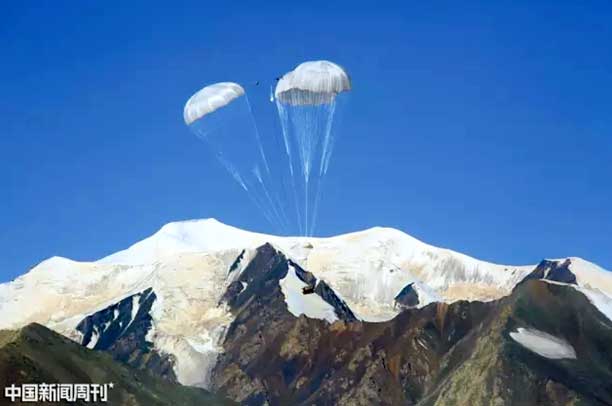
Since the reorganization of the PLA was ordered in January 2016, there was not much news about China’s Airborne Corps albeit it was appreciated China will continue to maintain its airborne capability in its quest of China-centric Asia and aspirations of becoming a global power, even surpassing the US. The 43rd, 44th and 45th Divisions of China’s 15th Airborne Corps were equated with America’s 82 and 101 Airborne Divisions.

Comprehensive Integrated Border Management System: Issues and Challenges

Pushpita Das

On September 30, 2017, Border Security Force (BSF) personnel detected a cross-border tunnel in the forest area of Damala nullah in Jammu’s Arnia sub-sector. The tunnel, reportedly 14 feet long, three feet high and 2.5 feet wide, was designed to facilitate the easy infiltration of terrorists from Pakistan into India. This was the second such tunnel discovered in the Jammu sector along the India-Pakistan international boundary during 2017 and the fifth since 2012. The four other tunnels discovered were in Ramgarh sub-sector (February 2017), Allah Mai de Kothe, R S Pura Sector (March 2016), Pallanwala sector (August 2014), and Shakkergarh area (July 2012).

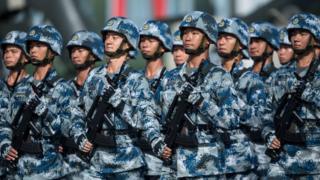
China congress: Military facelift a sign of bigger changes


Of the many noteworthy developments that have characterised Chinese President Xi Jinping's first five-year term, none stands out as much as military reform, and this reveals a great deal about the coming political trajectory in China, writes political analyst Cheng Li.

Analyst Raises Scenario of China’s Takeover of North Korea, Others Have Doubts

By Natalie Liu

Bill Emmott, the former editor-in-chief of The Economist magazine, said such a move by China would not only gain Beijing a solid foothold on the Korean Peninsula, but also the opportunity to strengthen its own geopolitical position, enhance its global power status, perhaps even the ability to claim the reputation of a peacemaker.


Conflict with China Revisited

by James Dobbins, Andrew Scobell, Edmund J. Burke, David C. Gompert, Derek Grossman, Eric Heginbotham, Howard Shatz
Source Link

Although armed conflict between the United States and China is not likely, the possibility is real enough to require prudent policies and effective deterrent measures. In the past six years, the range and capabilities of Chinese air and sea defenses have continued to grow, making U.S. forward basing more vulnerable and the direct defense of U.S. interests in the East Asia region potentially more costly.

Status Report on the Situation in Syria


The rebels are falling apart. Russia, Iran, Turkey and the Assads have used their “de-escalation” zones into slaughterhouses by resuming attacks on pro-rebel civilians and any rebels they can catch. ISIL is rapidly losing it personnel and territory because of constant attacks by just about everyone (Turks, Kurds, Assad and his Iranian and Russian allies as well as the Americans and sundry other minor players). As ISIL is being put down everyone is thinking about the next phase of the civil war. The winners want to get rewarded for their service. The Syrian Kurds want autonomy in the northeast (mainly Hasakah province) and protection of Turkish efforts to keep the Syrian Kurds away from the Turkish border. That’s going to be a problem. There are more problems in the north, such as the FSA (Free Syrian Army). This group was a major player early on because it was largely secular and popular with Western nations. But most Syrian rebels preferred more radical groups like al Qaeda and eventually ISIL (Islamic State in Iraq and the Levant). FSA continued to exist and eventually found a patron in Turkey, which apparently plans to turn over control of the Syrian side of the border to FSA, if the Assads and Syrian Kurds can be taken care of.

What Realists Don’t Understand About Law

BY OONA HATHAWAY, SCOTT J. SHAPIRO

In our recent book The Internationalists, we point to a change in the legal status of war as the core cause of the shift. Realists have reacted with incredulity. Stephen M. Walt, for example, argued in Foreign Policy that if we are right, “I’ve been guilty of educational malpractice for the past 30 years.” He concludes that, thankfully, he can leave his lecture notes intact because we have failed to prove our case.

Israeli Air Force eyes 3-D printing as a hedge against wartime disruptions

By: Barbara Opall

In a country steeped in political controversy and surrounded by strategic threats, military planners in Israel are looking to 3-D printing to bolster wartime self-sufficiency in the event of embargoes or supply chain disruptions.

Here at Depot 22 ― the Israeli Air Force’s central depot tasked with repairing and maintaining much of the force’s fixed-wing aircraft ― commanders are preparing to transition from 3-D scanning of selected parts to actual 3-D printing of those parts. The transition process, officers say, involves meticulous evaluation and testing, and will focus only on nonstructural parts that can endure stress loads of flight.

Massive drill validates Israel’s cyber-secure C4I network

By: Barbara Opall-Rome

After-action analysis from last month’s massive drill at Israel’s northern border has validated, with very few exceptions, more than a decade worth of development, deployment and operational procedures associated with the military’s cyber-secure, C4I-operational network, the military’s chief signal officer said.

“Our concept of fighting in the cyber domain was validated in the latest drill,” Brig. Gen. Netanel Cohen, the Israel Defense Forces‘ chief signal officer, told Defense News. “We took all the digital transformation of the past decade, and … bottom line: It worked.”

From AIDS to Zika Brazilian Approaches to Protecting Health in Critical Contexts

October 10, 2017

In May 2017, a small team from the CSIS Global Health Policy Center visited Brazil to better understand the country’s approaches toward issues of global health security. This includes preventing and responding to infectious disease outbreaks, bolstering pandemic preparedness capacities in the region, strengthening Brazil’s national disease surveillance network, scientific and technical collaboration, and health preparations in advance of mass gatherings. Based on our conversations in Brazil and in the United States, the team concluded that the history of U.S.-Brazil engagement on health, as well as Brazil’s recent experiences addressing the 2015–2016 Zika outbreak and preparing for the 2016 Olympics in Rio de Janeiro, offer important lessons for the U.S. government to consider, both as it rethinks its relationships on health with other middle-income countries and as it advances its health security agenda in the years to come.

The science of spying: how the CIA secretly recruits foreign scientists and academics

Daniel Golden

The CIA agent tapped softly on the hotel room door. After the keynote speeches, panel discussions and dinner, the conference attendees had retired for the night. Audio and visual surveillance of the room showed that the nuclear scientist’s minders from the Islamic Revolutionary Guard Corps were sleeping, but he was still awake. Sure enough, he opened the door, alone.

A Hypothetical Nuclear Attack on Seoul and Tokyo: The Human Cost of War on the Korean Peninsula

BY: MICHAEL J. ZAGUREK JR.

At various times over the past few weeks, US President Donald Trump and other members of his administration have threatened to use military force to prevent North Korea from conducting additional nuclear or ballistic missile tests. The US carrying out any military option raises a significant risk of military escalation by the North, including the use of nuclear weapons against South Korea and Japan. According to the calculations presented below, if the “unthinkable” happened, nuclear detonations over Seoul and Tokyo with North Korea’s current estimated weapon yields could result in as many as 2.1 million fatalities and 7.7 million injuries.

Tactics against the North or Tactics for Naught? South Korea Embroiled in Debate over Tactical Nuclear Weapons Deployment

Jiwon Ra 

September 3rd, South Korean citizens are quickly taking a more aggressive stance towards the regime. This is reflected in rapidly shifting public opinion supporting hardline measures such as the deployment of extra THAAD units and the redeployment of U.S. tactical nuclear weapons. A public poll conducted by Korea Society Opinion Institute (KSOI) several days after the incident found that 68.2% of 1,014 respondents were in favor of deploying tactical nuclear weapons on Korean soil to as a response to the North Korean nuclear threat. An earlier opinion poll conducted by the East Asia Institute in June showed that 67.2% of those surveyed agreed to the idea of nuclear weapons in South Korea. These results seem to indicate that animosity among the South Korean population towards the Kim Jong-un regime and its adventuristic maneuvers has been brewing over the past few years.

What Makes the Ukraine a Hotbed of Intrigue and Scandal? Or Why You Can’t Trust the Ukrainian Security Service

Andrew E. Higgins and Andrew Kramer

POLTAVA, Ukraine — After four years of investigation by the German police, the F.B.I. and other crime-fighting agencies around the world, heavily armed security officers stormed an apartment in the central Ukrainian town of Poltava. After a brief exchange of gunfire, they captured their prey: the man suspected of leading a cybercrime gang accused of stealing more than $100 million.


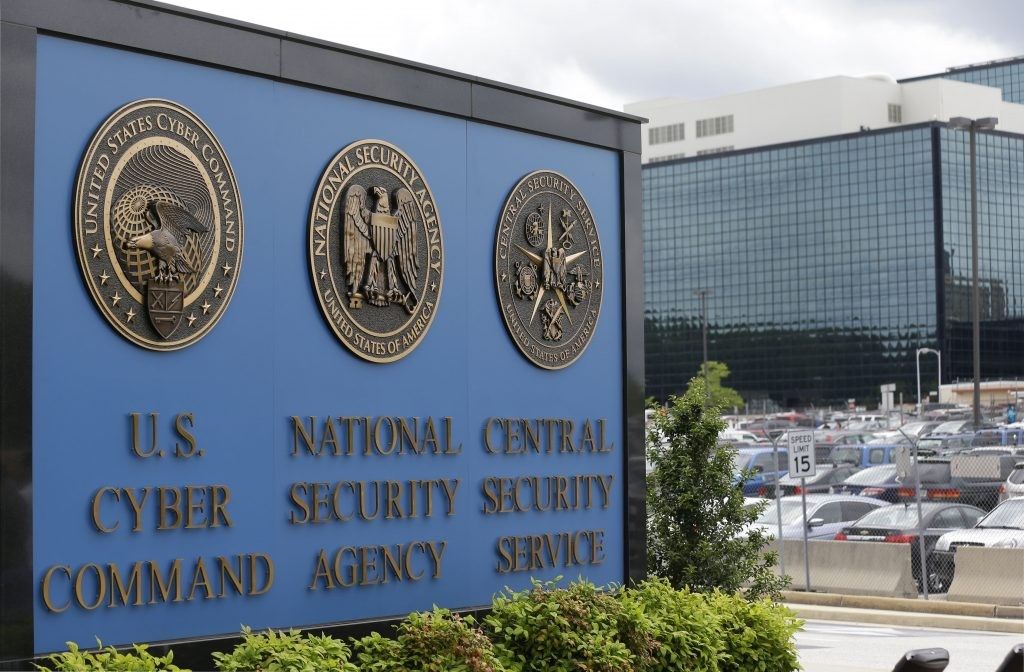
NSA and Kaspersky Ensnarled by Russian Web


LEVI MAXEY 

U.S. companies got a disturbing preview of just how Russia might be able to steal their secrets, with news that Kaspersky Lab anti-virus software was allegedly used to hack an unsuspecting NSA contractor.

Russian state-sponsored hackers reportedly stole critical details on how the U.S. conducts cyber espionage and defends against cyber operations directed at its classified networks, when they hacked the computer of the contractor who had uploaded highly classified documents onto a home computer, according to The Wall Street Journal.

THE POTENTIAL OF SOCIAL MEDIA INTELLIGENCE TO IMPROVE PEOPLE’S LIVES SOCIAL MEDIA DATA FOR GOOD

BY STEFAAN VERHULST AND ANDREW YOUNG

The twenty-first century will be challenging on many fronts. From historically catastrophic natural disasters resulting from climate change to inequality to refugee and terrorism crises, it is clear that we need not only new solutions, but new insights and methods of arriving at solutions. Data, and the intelligence gained from it through advances in data science, is increasingly being seen as part of the answer. This report explores the premise that data—and in particular the vast stores of data and the unique analytical expertise held by social media companies—may indeed provide for a new type of intelligence that could help develop solutions to today’s challenges.

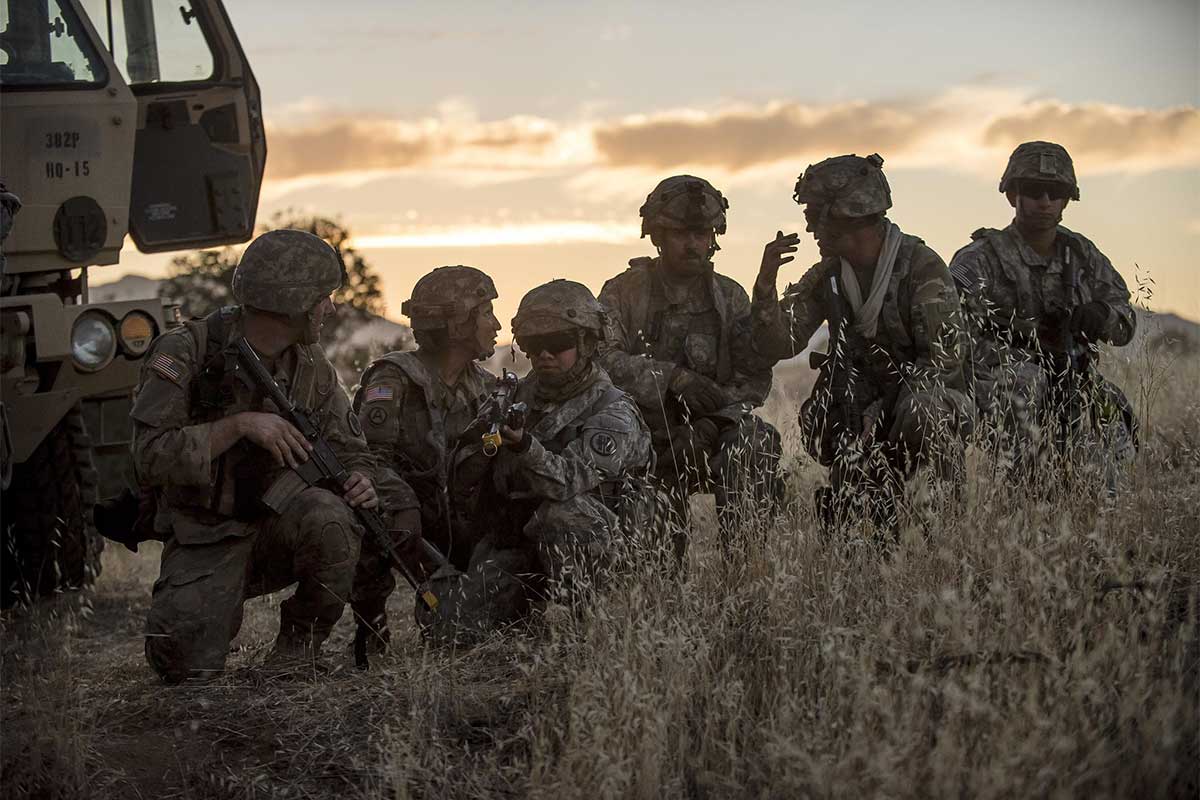
Op-Ed: Readiness vs. Relevance Is Army's Dilemma


The critical state of Army readiness, the convergence of battlefield domains and restricted budgets have impacted the service's ability to prepare properly and protect the U.S. from evolving threats.

The U.S. Army is roughly $7-to-$9 billion short of the funds needed to begin modernizing the force for modern warfare, and several of its capabilities could be outmatched by adversaries in conflict.

Here’s how the Army’s Rapid Capabilities Office is working cyber

By: Mark Pomerleau 

While cyber was one of the original three topics of focus for the Rapid Capabilities Office, which stood up officially in August 2016, it has taken a backseat of sorts behind electronic warfare and position, navigation and timing challenges.

Army rolls out new plan to modernize communications networks and weapons

by Sandra Erwin

Rising powers like Russia and China are arming their militaries with advanced weapons and electronic warfare systems that could threaten U.S. dominance in precision-guided missiles and communications technologies. Army leaders acknowledge that a dysfunctional procurement system is mostly to blame and are moving to reorganize the service’s Vietnam-era bureaucracy.

RECONNECTING ATHENS AND SPARTA: A REVIEW OF OPMS XXI AT 20 YEARS


Twenty years ago, the Officer Personnel Management System (OPMS) XXI Task Force published its final report, launching landmark personnel reform for the Army officer corps. The year-long task force—commissioned by then Chief of Staff of the Army (CSA) General Dennis J. Reimer and chaired by then Major General David H. Ohle in 1996—opened its report with the argument that the existing OPMS required “field-grade officers to do too many things today for them to excel at any one of them.”

11 October 2017

Release of latest US Army Field Manual FM 3-0

I was doing staff course in Defence Services Staff College in 1993-94. Euphoria of the first gulf war was continuing. The power of technology on a highly depleted force was on full display. Nobody can deny US Military's penchant for inventing new jargons. At DSSC people were reading newly published Field Manuals like FM 100-5 Operations. Fashionably it was called as 100 dash five!There were other documents like Rand Corporation Report on India's Strategic Culture and Indian Air Force. Though we were unable to produce this kind of documents there is or was no dearth of critics. Nobody says what the Americans say are correct. But at least produce those kind of documents. I have earlier said if you give peanuts you get monkeys. In Indian Think Tanks you get senior retired service or foreign service officers. It is too much to expect from them to produce such documents.


However character of warfare changes, And changed quickly. The adversaryies adopted, did nor fight US Force on Force and US got entangled in long drawn affairs like Iraq and Afganistan. US Armed forces coined LICO, Asymmetric Warfare,Irregular, unconventional, SASO, OOTW followed by 4GW, long was, small war, Hybrid war, Grey area war and now multi domain battle and many more. Two Colonels of PLA wrote on Unrestricted War. Indian Army borrowed from Israel and published a doctrine called sub conventional warfare. There were other terms like proxy war et al also.

US Army updates its Field Manuals regularly within 3 to 5 years. The eagerly awaited Field Manual FM 3-0 has just been published.From a 60 - 70 odd page document it has become voluminous 364 page document. Nowadays they also publish ADP 3-0 and ADRP 3-0 as supporting documents.

In a recent AUSA Conference US Army has published their draft concept of operations, US Army Chief is taking some drastic steps for readiness, acquisition and their communication networks.

It will be interesting to see what our all talk no action fauz does on the concept, doctrine front.

The foreword to this newly released document says :

“Today’s operational environment presents threats to the Army and joint force that are significantly more dangerous in terms of capability and magnitude than those we faced in Iraq and Afghanistan. Major regional powers like Russia, China, Iran, and North Korea are actively seeking to gain strategic positional advantage. These nations, and other adversaries, are fielding capabilities to deny long-held U.S. freedom of action in the air, land, maritime, space, and cyberspace domains and reduce U.S. influence in critical areas of the world.”
“In some contexts they already have overmatch or parity, a challenge the joint force has not faced in twenty-five years.”

That assessment appears in the Foreword to the newly updated US Army Field Manual 3.0 on Operations that was officially released today.
The Field Manual describes the conduct of operations in the new environment, with notably new material on the cyber and space domains.
“Threat operations [by adversaries] in cyberspace are often less encumbered by treaty, law, and policy restrictions than those imposed on U.S. forces, which may allow adversaries or enemies an initial advantage,” the manual states.

The unclassified field manual was released along with two supporting volumes:

ADP 3-0. Operations, Army Doctrine Publication, October 2017, and
ADRP 3-0. Operations, Army Doctrine Reference Publication, October 2017

Last week, Secretary of Defence James Mattis issued a memorandum to all military personnel and DoD employees warning against leaks of classified or otherwise restricted defense information.

“It is a violation of our oath to divulge, in any fashion, non-public DoD information, classified or unclassified, to anyone without the required security clearance as well as a specific need to know in performance of their duties,” he wrote.

How The Kautilyan Nearly Lost Us Siachen

Jay Bhattacharjee

In most democracies in recent years, many public figures, comprising politicians at all levels, senior civil servants and functionaries, including military officers, have shared their experiences and memories after hanging up their boots. The Whitehall lot started this trend in the mid-1950s and their counterparts across the Atlantic followed suit.