10 November 2017

Two Sides of Europe’s Defense Coin

By Daniel Keohane

If Italy and Poland developed a strategic consensus and acted accordingly, it would be a revolution for European defense.

Toward the end of 2015, a few defense experts raised their eyebrows at a Credit Suisse report on the future of globalization. This wide-ranging assessment contained a short analysis of global military power, ranking the top 20 countries in the world. Weighing six elements of conventional warfare, the Credit Suisse analysts considered Poland a stronger military power than Germany, and Italy came ahead of the United Kingdom.

OPEC and Strategic Questions in the Oil Market

By Severin Fischer for Center for Security Studies (CSS)

The massive expansion of shale oil extraction in the US marked the beginning of a global glut in the petroleum markets. According to Severin Fischer, this is just one of many factors raising the pressure on OPEC and other oil producers. So, how has OPEC responded to the growing supply of relatively cheap oil? In this article, Fischer responds and identifies two possible future trajectories for the global oil market.

Health Security: The Global Context

By Ursula Jasper for Center for Security Studies (CSS)

Due to global mobility and the deeply interconnected nature of the contemporary world, national efforts do not suffice to keep infectious disease such as Ebola, SARS or H1N1 from spreading across borders. As a result, states must coordinate their efforts to identify and contain outbreaks as quickly as possible. To that aim, Ursula Jaspers contends, the international community must do more to improve the implementation of the WHO’s International Health Regulations.

From Russia With Paranoia


Russia is delaying making repairs to a Russian nuclear sub India leased and the reason appears to be Russian suspicion that India is violating the lease agreement and allowing American naval personnel to get a close look at the Russian sub. This is prohibited by the lease agreement, which included a clause that called for a Russian naval officer to be aboard the leased sub at all times to prevent such snooping and to provide technical assistance. There is also a dispute over the extent of the damage. The sonar dome has a hole in it and this occurred while the sub was at sea last August. But it is believed the damage may have been made worse, or be entirely because of a collision while the sub was navigating the narrow channel it has to pass through to reach its southern India base at Vizag. If the damage is too extensive the sub would have to return to Russia for repairs and be out of action for a lot longer. The Indian inspection team has already delivered its report but Russia insisted on sending its own inspection team to examine the damaged sonar dome.

Shadowy cyber-espionage group ‘Sowbug’ has been hacking diplomatic secrets for years

Jason Murdock

A shadowy cyber-espionage group that has operated in secret since at least 2015 has been exposed by researchers from Symantec this week (7 November). Analysis shows how it uses a new form of malware dubbed “Felismus” to launch targeted attacks on governments. The hackers, codenamed 'Sowbug’, were spotted conducting clandestine attacks and document thefts from foreign policy institutions, government bodies and diplomatic targets in South America and south east Asia – including Argentina, Brazil, Ecuador, Peru and Malaysia.

Multi-Domain Battle's Impact on Civil Infrastructure

by Kyle Borne

The concept of Multi-Domain Battle (MDB) recognizes the fundamental shift in how potential adversaries of the United States engage in geostrategic means with which to achieve geopolitical goals via means below-armed-conflict. MDB employs all the warfighting domains to achieve these ends. There are numerous aspects to MDB and to be honest I’m still learning what they are and how they interrelate. While reading all of this preliminary, non-doctrinal, unofficial literature one key question can be identified: Given the nearly total reliance of the military on civilian infrastructure, how do we achieve the objectives of securing the Strategic and Operational Support Areas? Senior leaders and planners within the military have relied on unfettered access to the internet for the last 16 years to conduct operations, this assumption is no longer guaranteed in MDB.

7 November 2017

RUSSIAN INFLUENCE OPERATIONS IN US ELECTIONS

Maj Gen PK Mallick, VSM (Retd)

Over the past several years, the Russian Federation has engaged in an unprecedented effort to attempt to influence American politics. A key component of that overall effort has been focused on social media, especially widely used platforms like Facebook, Google and Twitter. By using social media tools to manipulate audiences, Russia has been able to support its policy priorities and create divisions by disseminating information which weakens its perceived adversaries.

Russians use social media more subtly to do something far more dangerous – destroy US democracy from the inside out. With features like account anonymity, unlimited audience access, low cost technology tools, plausible deniability – social media provides Russia an unprecedented opportunity to execute their arts of manipulation and subversion known as Active Measures. Russia has conducted the most successful influence operation to date by infiltrating, steering and now coordinating like-minded audiences across the Western world to subvert democratic governance. The rapid spread of Russian disinformation enflames electoral divisions and employs indigenous American audiences to support the Kremlin’s foreign policy of breaking all unions and alliances that challenge their rise. 

Each social media company has uncovered some piece of Russia’s social media influence campaign but no one company alone can fully comprehend the extent of Russian operations. As they conduct investigations into their data, they’ll each detect only those accounts where the Kremlin failed to hide its hand, seeing only the tip of the iceberg floating above the social media sea upon which they float. Within the Kremlin’s playbook, each social media platform serves a function, a role in an interlocking social media ecosystem where Russia infiltrates, engages, influences and manipulates targeted American audiences. Russia’s Active Measures in social media and those nefarious dark campaigns emerging in the future will need five complementary social media functions to conduct effective full spectrum social media influence campaigns: reconnaissance, hosting, placement, propagation, and saturation.

*** The Next Space Race Is Artificial Intelligence

BY JOHN R. ALLEN, AMIR HUSAIN

Nearly 60 years ago, then-Senate Majority Leader Lyndon B. Johnson seized his colleagues with a stark Cold War warning: Whoever wins the space race, he predicted, would gain “control, total control, over the Earth for purposes of tyranny or for the service of freedom.”

The United States won that race not only by reaching the moon but by inspiring the next generation of scientists, technologists, and optimists.
Trending Articles

Recently, Russian President Vladimir Putin echoed Johnson’s forecast in light of the next great technological race: artificial intelligence, or AI. “Whoever becomes the leader in this sphere will become the ruler of the world,” Putin said.

Johnson, leaning into the consequences of the Soviet threat, can be accused of hyperbole. Putin can be accused of the same and, perhaps, worse. But there is truth in their common understanding of technology’s power, one that transcends generations and geopolitics. Right now, we fear, the United States is at risk of losing this critical race.

One of us commanded 150,000 troops from 50 nations; the other invents AI technologies that are used in — among other applications — energy, finance, and systems for our national defense. We have seen firsthand how AI will transform warfare, from autonomous flight control systems that can revolutionize air combat to algorithms that can give commanders an unprecedented and precise view of the battlefield. Soon, AI also will become the most potent enabler of competitive advantage throughout most areas of our society and economy, both in work and leisure — with consequences far beyond the usual debate about automation supplanting manufacturing jobs.

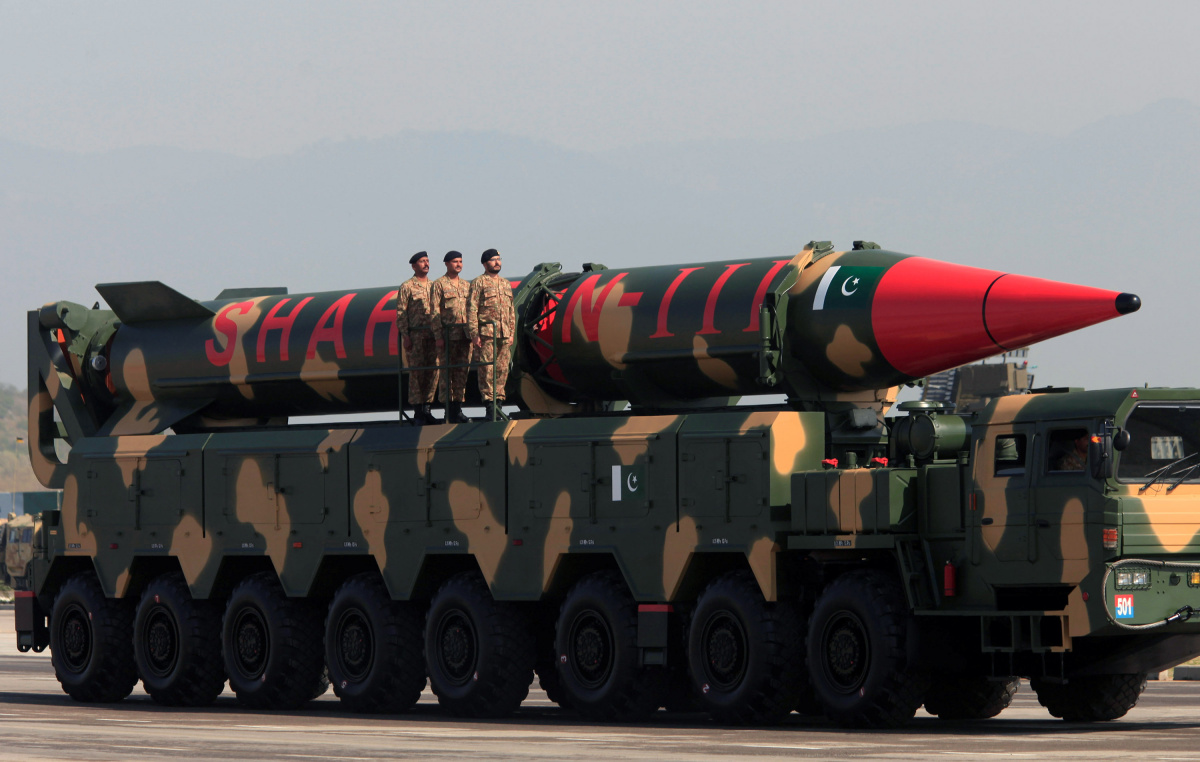
Pakistan Says It's Ready to Use Nuclear Weapons—Should India Worry?

Zachary Keck

Asif’s statement about Pakistan’s willingness to use nuclear weapons is in line with Islamabad's long-standing nuclear doctrine. In contrast to India and China, which both maintain no first use nuclear doctrines, Pakistan has always maintained that it could resort to nuclear weapons to blunt a conventional attack from India.

Pakistan is ready to use nuclear weapons against India, a senior Pakistani official confirmed on Monday.

Appearing on the Pakistani television channel “Geo,” Pakistan’s Defense Minister Khawaja Asif said that Islamabad is willing to use nuclear weapons to ensure its survival.

“We should pray that such an option never arises, but if we need to use them (nuclear weapons) for our survival we will,” Asif said, according to Geo’s website. His remark was widely reported by Indian media outlets.

Asif went on to accuse India of supporting anti-Pakistani terrorist groups in a proxy war against Islamabad. “Fuelling terrorism directly or indirectly is India’s proxy war in Pakistan,” Asif said. He singled out Tehreek-e-Taliban Pakistan (TTP), the Pakistani Taliban, and Baloch separatists as two of the groups that India is allegedly supporting.

The upper Han


FIVE men who ran a bookshop in Hong Kong disappeared in mysterious circumstances in late 2015. One was apparently spirited away from the territory by agents from the mainland; another was abducted from Thailand. All later turned up in Chinese jails, accused of selling salacious works about the country’s leaders. One bookseller had a British passport and another a Swedish one but the two suffered the same disregard for legal process as Chinese citizens who anger the regime. Their embassies were denied access for weeks. The government considered both these men as intrinsically “Chinese”. This is indicative of a far broader attitude. China lays claim not just to booksellers in Hong Kong but, to a degree, an entire diaspora.

China’s foreign minister declared that Lee Bo, the British passport-holder, was “first and foremost a Chinese citizen”. The government may have reckoned that his “home-return permit”, issued to permanent residents of Hong Kong, trumped his foreign papers. Since the territory returned to mainland rule in 1997, China considers that Hong Kongers of Chinese descent are its nationals. Gui Minhai, the Swede taken from Thailand, said on Chinese television, in what was probably a forced confession: “I truly feel that I am Chinese.”

The Fall of a Jihadist Bastion: A History of the Battle of Mosul (October 2016 – July 2017)


By: Brian Glyn Williams, Robert Troy Souza

Islamic State’s (IS) greatest conquest was its bold June 2014 seizure of Mosul, Iraq’s second largest city and home to approximately two million predominately Sunni inhabitants. For almost three years, IS dug in to defend this strategic stronghold and the site of the declaration of the IS khilafah (caliphate) by Abu Bakr al-Baghdadi, the self-styled “Caliph Ibrahim” (al-Jazeera, July 6, 2014). When a U.S.-backed coalition of jostling Kurdish Peshmerga, Iranian-backed Shia militias and Iraqi Security Forces made up of 114,000 troops launched “Operation We are Coming Nineveh” on October 16, 2016, they knew they were in for a bloody slog to dislodge IS fighters who had “worm-holed” the city, creating tunnels through buildings and building extensive defensive barricades. [1] They were not mistaken in this assumption, and for nine months the allies battled their way first through modern east Mosul, then through the warrens of older west Mosul on the opposite side of the Tigris.

The Promise of a Bridge in Bangladesh

By Sajeeb Wazed

The first span of the once-controversial Padma Bridge linking the north and south of Bangladesh is now in place. The bridge’s now-very visible rush to completion shows the promise in the country’s economic future.

The Padma Bridge will connect the relatively poor agricultural districts of Shariatpur and Madaripur to the more affluent, urbanized regions of Munshigani next to Dhaka, the capital. At nearly four miles, the bridge will be the longest in the Padma-Brahmaputra-Meghna river basin. It will ease pressure on the country’s leading seaport in Chittagong, 150 miles southeast of Dhaka, by directly linking the capital and the Mongla Port, the country’s second busiest seaport, which is 182 miles to Dhaka’s southwest.

The bridge will cost as much as $3.5 billion and will be paid for entirely by the government of Bangladesh. It is the first and highest-profile of several infrastructure projects that the government plans to fund and complete over the next several years.

Ukraine Has Gas for Upcoming Winter, but Time for Reforms Is Running Out


Ukraine has entered a new heating season with almost 17 billion cubic meters (bcm) of natural gas stored in its underground reservoirs, according to Ukrtransgaz, the gas transportation and storage subsidiary of the state-owned oil and gas company Naftogaz Ukrainy (Utg.ua, accessed October 30). This is more than Ukraine stored up in anticipation of winter both last year as well as two years ago. As such, winter 2017–2018 will be the third heating season in a row that Ukraine will have enough stored gas to make it through the cold months since natural gas purchases from Russia’s Gazprom were stopped in November 2015. Having built the foundations for stable gas deliveries from the European Union via Slovakia, Poland and Hungary, Ukraine has proved that it can survive without Gazprom, which used to account for 100 percent of its imports of the “blue fuel.” Although, it bears pointing out that much of the gas that Ukraine is buying from the EU is actually Russian gas pumped in the reverse direction.

A small country fights a big war against Russian hybrid warfare

By L. Todd Wood

In the U.S. we are witnessing firsthand the new hybrid warfare of the 21st century — cyberattacks, disinformation, financial shenanigans, social media manipulation and corruption — a combination of weapons for which the West has yet to find an effective defense. There is, however, one small country that has found a way to deal with this plethora of threats and actually find a way forward.

Moldova, the small former Soviet republic wedged between Ukraine and Romania, has gone through multiple cycles of boom and bust on its quest to become a developed, free, secure, market economy. Corruption in most Eastern European countries is well established and pervasive, a giant sucking hole swallowing up growth and prosperity. It has been no different in Chisinau. And like Ukraine, Moldova’s struggles are vastly complicated by a giant neighbor to the east that will do anything in its power to prevent its onetime republic from being pulled into the West’s orbit, never to return.

Moldova, geographically isolated and small, has two “breakaway” regions, Transdniestria and Gagauzia. In Transdniestria, there are a few thousand Russian troops and a massive Soviet ammunition depot. The two sides fought a war over the future of the enclave in the early 1990s. Tensions are still thick.

Russia’s Hybrid Attacks Should, At Long Last, Force the EU and NATO to Team Up


Five ways these largely congruent yet poorly coordinated organizations could start putting their collective capabilities to best use.

Russia is using hybrid attacks to strike throughout Europe and even across the Atlantic: election interference in the U.S. and France; kidnappings and attempted assassinations in Estonia and Montenegro; cyber-attacks in Norway, Poland, Ukraine, and elsewhere. But the transatlantic community’s ability to respond is hindered by the rift between two organizations that should be leading the way: NATO and the EU.

Despite having 22 member states in common, the organizations have long talked with each other as if the commonality at their core does not exist. While they pay lip service to partnership and cooperation, NATO and the EU have struggled merely to communicate and coordinate, let alone implement anything together.

Recent years have brought increasing recognition of the need to overcome this impasse. Last year’s Joint Declaration touched off improvements in NATO-EU relations, and notable movement toward collective efforts includes the EU’s Joint Framework and Finland’s new European Center of Excellence for Countering Hybrid Threats (Hybrid COE). Supported by many NATO and EUnations, the Helsinki-based center will serve as a hub for collective analysis, joint exercises and training, and other activities.

Preparing for What Comes Next in North Korea


Highlights 

By moving carrier strike groups and stealth fighter jets into the region, the United States will enhance its force posture in and around North Korea. 

The preparations do not necessarily suggest that the United States is getting ready to launch a war — though they will elevate the risk in the region. 

Tracking U.S. military movements around the Korean Peninsula will offer insight into the standoff between Washington and Pyongyang. 

North Korea is still racing to achieve a comprehensive nuclear deterrent. And the closer it gets to its goal, the less time the United States and its allies have to try to stop it. Depending on factors such as the strength of U.S. intelligence, the progress of North Korea’s missiles and nuclear programs and how much risk Washington and its allies are willing to tolerate, the United States may already have missed its opportunity for preventive military action. Official assessments indicate that, at most, Washington has 18 months before the window closes; after that, the United States and its allies probably will have no choice but to adopt a policy of deterrence toward North Korea.

The Russian War on Terror

Ilan Berman

The Kremlin needs a real plan to mitigate the threat of returnee ISIS figthers.

Which country ranks as the largest source of foreign fighters for the Islamic State’s “caliphate” in Syria and Iraq?

That dubious distinction doesn’t belong to a Middle Eastern state, despite the fact that countries such as Saudi Arabia have historically been major contributors of radicals to the Islamic State’s ranks. Nor is it a North African nation, even though Tunisia had previously served as the preeminent supplier of fighters for the Syrian front.

Rather, the most active contributor to the current contingent of jihadis supporting the Islamic State is none other than the Russian Federation. That is the finding of a new report from the Soufan Group, a leading U.S. counterterrorism consultancy. The study, entitled “Beyond the Caliphate: Foreign Fighters and the Threat of Returnees,” notes that—while the number of foreign fighters from places like Tunisia has declined appreciably over the past two years—those of Russian origin have not.

On the contrary, Russia’s contribution to the “caliphate” has actually increased over time. In all, the report details, 3,417 Russian nationals are believed to have joined the ranks of ISIS since the organization’s leader, Abu Bakr al-Baghdadi, announced the formal establishment of its state in mid-2014. That figure represents a forty percent increase over the 2,400 Russian nationals that were estimated to have joined the group as of 2015.

The Changing Geopolitics of Energy

JOSEPH S. NYE

TOKYO – In 2008, when the United States’ National Intelligence Council (NIC) published its volume Global Trends 2025, a key prediction was tighter energy competition. Chinese demand was growing, and non-OPEC sources like the North Sea were being depleted. After two decades of low and relatively stable prices, oil prices had soared to more than $100 per barrel in 2006. Many experts spoke of “peak oil” – the idea that reserves had “topped off” – and anticipated that production would become concentrated in the low-cost but unstable Middle East, where even Saudi Arabia was thought to be fully explored, with no more giant fields likely to be found.

The US was regarded as increasingly dependent on energy imports, and this, together with rising prices, was seen as a major limit on American geopolitical influence. Power had shifted to the producers.

The NIC analysts did not neglect the possibility of a technological surprise, but they focused on the wrong technology. Emphasizing the potential of renewables such as solar, wind, and hydro, they missed the main act.

Beware: this Russian cyber warfare threatens every democracy

Natalie Nougayrède

Anyone in Europe and Britain worried about the state of US democracy should take time to watch the videos of this week’s congressional hearings over Russian online meddling in the 2016 presidential election. If the words “checks and balances” mean anything, this surely is it.

My favourite moment is when senator Dianne Feinstein leans into the microphone and says sternly to the Facebook, Twitter and Google representatives(whose evasive answers have exasperated her): “You don’t get it! This is a very big deal. What we’re talking about is cataclysmic. It is cyber warfare. A major foreign power with sophistication and ability got involved in our presidential election.”

We don’t yet know the full picture. In particular, we don’t know if Russian-promoted bots, trolls and online ads had an impact that in any way altered the outcome of the US election. At this stage, to claim they did may be crediting Vladimir Putin with more power than he actually wields. What emerged from the hearings is that Russia’s likeliest goal was to sow discord and confusion among citizens of the world’s most powerful democracy.

Russia’s attempts to undermine western democracies may be only the tip of the iceberg. Think China 

The Trump Campaign Indictments Matter, but Not for the Reasons You Think

Source Link

It's easy to look at a string of recent indictments against members of U.S. President Donald Trump's former campaign staff and get sidetracked by the partisan rhetoric flying back and forth. But calls for impeachment from the left and claims of a state-sponsored set-up from the right ignore the deeper intrigue beneath the surface.

At the heart of the political turmoil is Russia, which believes itself to be a great power by right but has been held back by an international system designed and dominated by the West, with the United States at its helm. From its seat in Moscow, the Kremlin is determined to see this system undone and has worked tirelessly toward that end using every means it can except military force. Its inherent weakness, however, has determined the tools at its disposal.

Characterizing Russia as a weak nation might seem counterintuitive, but that doesn't make the description any less accurate. The country's options are limited and will likely only narrow in the years ahead. Over the past few years, cracks have begun to emerge in the political structure that Russian President Vladimir Putin built around himself. The government's tight grip on power is slowly starting to slip in the face of growing opposition groups, mounting regional resistance, enduring economic stagnation, increasing financial burdens, substantial international pressure and the rise of a new generation of citizens more willing than ever to challenge the establishment over corruption and hardship. All of these issues signal greater internal instability on the horizon, and as the Russian state grows more fragile, it will act decisively to mitigate any additional threats from beyond its borders. 

Nuclear Triad: Pentagon Taking Steps to Modernize Global Strike Weapons

By Jon Harper

As potential adversaries enhance their long-range weapons, the United States is moving forward with plans to bolster its own global strike capabilities. The stakes are high as officials try to keep their programs on time and on budget.

Russia, China and North Korea are modernizing their strategic weapon systems, defense officials and independent analysts have noted. At the same time, tensions are boiling in the Asia-Pacific following Pyongyang’s recent tests of intercontinental ballistic missiles and nuclear warheads that could potentially reach the U.S. homeland.

To bolster deterrence and assure anxious allies, the Air Force has flown long-range bombers such as the B-52 near the Korean Peninsula and conducted an ICBM test without a warhead. The Navy has deployed ballistic missile submarines to the region, and allowed officials from allied nations to tour the USS Pennsylvania while it was docked in Guam.

“A lot of that diplomatically is just a show of force,” Gen. Robin Rand, commander of Air Force Global Strike Command, said during a meeting with reporters at the Air Force Association’s Air, Space and Cyber Conference in National Harbor, Maryland. It signaled that “we’re ready to fight tonight,” he added.

Machine Intelligence and Human Ingenuity Can Achieve the Impossible

By Josh Sullivan and Angela Zutavern

This is an adapted excerpt from The Mathematical Corporation: Where Machine Intelligence and Human Ingenuity Achieve the Impossible Copyright © 2017. It is available from PublicAffairs, an imprint of Perseus Books LLC, a subsidiary of Hachette Book Group Inc.

Imagine flying over a major city at night — say, Chicago or Paris or Beijing — and it is completely dark below. It is just a void of light akin to nighttime in the middle of the ocean.

Then imagine someone flips on the power grid, and you see today’s web of human activity light up. Imagine further that someone flips the switch again, and you glimpse a future image of the city. Where you once thought there was nothing, there is a universe of action — both present and future. Enormous detail radiates from the darkness, and you perceive and envision features you never knew existed.

This ability to “flip the switch” to see formerly hidden details and vital insights about the future expresses the potential of the mathematical corporation. Thanks to leaps in technology, we can get a new fine-grained, high-resolution picture of aspects we could never distinguish before. With machine intelligence, built on the bundle of technologies known as data science, we can see patterns, anomalies and associations that were previously cloaked in obscurity.

Four takeaways from the Senate Intelligence hearing with Facebook, Twitter and Google


Attorneys for tech giants Facebook, Twitter and Google appeared on Capitol Hill for the second day in a row on Wednesday, testifying before the Senate Intelligence Committee about their efforts to prevent Russian meddling in U.S. politics. The same firms answered questions from the Senate Judiciary Committee on Tuesday.

On the off chance that you didn’t spend three hours watching Wednesday’s hearing live, here are four takeaways to get you caught up:

Facebook, Twitter and Google agree that they could have done better in 2016

The first step is admitting you have a problem, right?

Sen. Ron Wyden (D-Ore.) demanded a yes-or-no answer to the following question from representatives of all three companies: “Are you satisfied with your platform’s response to foreign interference in the 2016 election?”

Google general counsel Kent Walker tried to dodge, at first. “We are constantly doing better,” he replied. Pressed by Wyden, he said, “We could have done more.”

Under pressure, social media giants acknowledge their platforms were used by Russia to meddle in 2016 elections


WASHINGTON (AP) — In three exhaustive hearings this week, executives from Facebook, Twitter and Google acknowledged that their platforms were used by Russia to try and create division over such disparate issues as immigration, gun control and politics. House investigators released a trove of Facebook and Twitter ads that showed just how extraordinary the cyber intrusion was.

The companies’ admissions and disclosures over the last several months have given congressional investigators one of their first real wins in the Russia probes. The committees have been frustrated by delays — and overshadowed by special counsel Robert Mueller — since they launched probes into Russian interference in the 2016 election earlier this year. Initially dismissive of Russia’s threat, all three companies have pledged improvements since lawmakers ramped up pressure and called them to testify.

It’s unclear what next steps Congress will take. The top Democrat on the Senate intelligence panel, Virginia Sen. Mark Warner, has co-sponsored legislation that would bring political ad rules from TV, radio and print to the internet. Warner calls it “the lightest touch possible,” but many Republicans have been lukewarm.

Is Big Data Up to the Military Challenge?

By Beverly Cooper

In today’s big data environments, it is not that “we don’t know what we don’t know.” It is actually “we don’t know what we do know,” according to Col. Pete Don, USA, deputy senior intelligence officer for intelligence operations, U.S. Army Pacific. “We are being dazzled with so much data that it is hard to focus and find the needle in the haystack." The net seizes our attention only to scatter it, he contends. Col. Don joined three other colleagues as part of a panel on cybersecurity intelligence at TechNet Asia-Pacific

The problem could be that “we are gathering more needles to find the right needle,” suggested Col. Matt Rau, USMC, commander Joint Intelligence Operations Center, U.S. Pacific Command. Col. Rau suggested that big data could give us what is promised if we process data faster than the enemy to anticipate the next move “before he can make it.”

But, Col. Don acknowledges that there are silos of data we have not tapped into or shared. “Today’s Internet of Things world saturates us with big data across all domains, cyber, logistics, medical, all data. We need a complete picture to enable decisions.” 

The Future of EU Defence: A European Space, Data and Cyber Agency?

By Jean-Pierre Darnis 

According to Jean-Pierre Darnis, converging technological and political trends in the space, data and cyber domains are providing opportunities for the EU to establish supra-national defense policy responses. Indeed, Darnis argues that the EU can find justification for the creation of such EU-level responses in 1) the globally pervasive nature of technological advances in these arenas and their potential for dual-use applications; 2) the inability of member states to fund defensive cyber and space capabilities on their own, and more.

Sovereignty has always been a tricky issue for EU Defence policy. When it comes to the use of military forces, it is difficult to bypass the views of member states. This is not only a legal issue related to the prerogatives of individual member states versus those of the communitarian Union, but rather an issue of democratic control: the use of force is deeply rooted in the political constituencies of EU member states.

Two kinds of risks emerge when seeking to find a common denominator in terms of military affairs in Europe. The first, is to go along with countries pushing for a full spectrum use of force, such as France, which might be too ambitious for most EU member states. The second, is to limit EU defence capabilities and exposure to a minimum, an approach that seems somewhat unsatisfactory in terms of operational capabilities.

Why Twitter Is the Best Social Media Platform For Disinformation


Twitter is the most open social media platform, which is partly why it’s used by so many politicians, celebrities, journalists, tech types, conference goers, and experts working on fast-moving topics. As we learned over the past year, Twitter’s openness used by adversarial governments trying to influence elections. Twitter is marketing itself as a news platform, the go-to place to find out, in the words of its slogan, “What’s happening?”

So what’s happening with disinformation on Twitter? That is very hard to tell, because Twitter is actively making it easier to hide evidence of wrongdoing and making it harder to investigate abuse by limiting and monitoring third party research, and by forcing data companies to delete evidence as requested by users. The San Francisco-based firm has long been the platform of choice for adversarial intelligence agencies, malicious automated accounts (so-called bots), and extremists at the fringes. Driven by ideology and the market, the most open and liberal social media platform has become a threat to open and liberal democracy.

6 November 2017

MICROELECTRONICS SECURITY IN INDIAN DEFENCE MANUFACTURING

Maj Gen PK Mallick, VSM (Retd)

INTRODUCTION

India continues to remain the world's largest arms importer, accounting for 14% of the global imports in the 2011-2015 time frame. India spent Rs. 83,458.31 Crore on arms imports in a matter of three years ending 2013-14. The Modi government in its first year cleared 39 capital procurement proposals, of which 32 proposals worth ₹889 billion (US$14 billion) (or 96% of value of total proposals) were categorized as Buy (Indian) and Buy and Make (Indian). India is planning to set aside about Rs 2,12,843 crore by way of capital expenditure to buy weapons and related military hardware in the next two years.

There are several Indian SMEs that cater to the Defense industry by supplying sub-assemblies and components and providing services like system integration. Under the Make in India initiative, these organizations are set to enhance their manufacturing and development efficiency, thereby contributing to making India self-reliant in defense production

We have nine DPSUs. 41 ordnance factories are spread across 26 different locations and employ close to 1,25,000 people

Whether directly purchased or manufactured in India or totally indigenous production there are a very large percentage of hardware and softwares which are of foreign origin. For example In the indigenously made Tejas fighter aircraft and the BrahMos missiles there will be imported parts. There is an urgent need to analyse and evaluate the security aspects of microelectronic devices in our defence equipments : both imported and indigenously manufactured. The existing supply chain management of these devices and chips needs to be addressed.

Microelectronics

At the end of the 20th century the market for personal computers dominated demand for integrated circuits. This has begun to flatten as demand migrates to other devices, including those that are part of the internet of things. This drives the microelectronics industry to search for new markets, and to restructure itself to serve those markets profitably. New segments generating significant demand are cloud computing, big data and artificial intelligence, which are increasing demand for servers and data centers and social media in which companies like Facebook and YouTube want to store, manage and process massive volumes of data as quickly and cost-efficiently as possible. Other emerging segments include medical, industrial, automotive and the previously mentioned internet of things.

Microelectronics use tiny components, micro or nano-scale, to manufacture electronics and terminology in this area can get confusing. Microelectronics can be considered a broad category within which falls surface-mounted technologies — think motherboards and printed circuit boards — and semiconductor integrated circuits, which, along with other components, are assembled onto circuit boards to create complex assemblies that are then integrated into products, in many cases with software that gives function to a computer

Adding another level of complexity, an integrated circuit that integrates all components of a computer or other electronic systems into a single integrated circuit is known as a system-on-chip. The advancing technology is quite complex, with systems-on-chip and sophisticated components dominating the semiconductor and microelectronics market. Advanced semiconductor design uses electronic design automation that enables the modular design of circuits that contain billions of transistors. The trend is toward the integration of complete electronic systems onto a single chip, reducing cost, size and power consumption while increasing performance. 

The Armed Forces are highly reliant on acquiring customized and commercial off-the-shelf computers, communications equipment, integrated circuits, application software, and other information communications.

Modern weapons systems have depended on microelectronics since the inception of integrated

circuits over fifty years ago. Today, most electronics contain programmable components of ever

increasing complexity. Electronics provide capabilities that are critical to defence requirements and the effectiveness and lethality of weapons systems are increasingly dependent upon the electronics subsystems they employ. Since the Second World War days the speed of a naval warship has not increased much, the technology of the air frame of a fighter aircraft or a tank has improved but the rate of change is nothing compared to electronics field being embedded in these platforms. In the case of aircraft, for example, avionics, multifunctional displays, communication control panels and related electronic systems and components have spread throughout the airframe, not only to improve performance and mission capabilities, but also to reduce acquisition and operating costs. Solid-state, modular electronics, and other innovations such as "fly-by-wire" and "fly-by-light" flight controls, have replaced some of the conventional components, thereby eliminating the huge amount of wiring, hydraulic hoses and steel cables found on previous generations of aircraft. 

Because system configurations typically remain unchanged for very long periods of time, compromising microelectronics can create persistent vulnerabilities. Exploitation of vulnerabilities in microelectronics and embedded software can cause mission failure in modern weapons systems. Integrated circuits in microelectronics are used in everything from cruise missiles to drones and classified computer systems. Building a kill switch into a computer chip could mean embedding as few as 1,000 transistors hidden throughout the hundreds of millions that are already in the original design. It could shut down a radar system, steer a missile off course, or cause an airplane engine to fail catastrophically. Beginning with radar and data processing, microelectronics has underpinned every military and national security system. It is not an exaggeration to say that national security depends on these tiny devices.

The tremendous demand for smart weapons and stronger military systems along with the emergence of cyber terrorism as well as electronic and information warfare have changed the design requirements for military related electronic sensors and systems. Nowadays, the radical extremists and adversaries try to cyber murder and kill these systems at software and/or hardware level and perform operations, such as cyber espionage, subverting the routing path and targeting point of a launched missile or sabotaging the manufacturing process of chemical, biological, radiological, and nuclear (CBRN) weapons. The architect of an attack can be an insider traitor or outsider criminal, and his/her position can be in any stage of the software and/or hardware design and development. In this regard, the defense companies are required to provide the missiles, the aircraft fighters, and any other military-related products with the highest level of safety and quality standards.

Hardware Vs Software. For all the attention paid in recent years to cybersecurity, it remains largely software focused, both in terms of the techniques employed and the expertise of the people and companies working in the field. This is a blind spot; hardware represents a gaping and exploitable hole in the current approach to cybersecurity. While software cybersecurity remains critically important, a complete cybersecurity strategy now requires consideration of hardware as well. Hardware is an especially critical part of this puzzle. Compared with software, hardware vulnerabilities are harder to detect, more destructive, and harder to repair.

Hardware based cyberattacks are : 

Harder to conduct than software attacks, since far fewer people have the necessary skills and access 

Harder to defend against, since replacing corrupted hardware can be extremely difficult and expensive

It does not mean that hardware cybersecurity will require the same level of effort and expense that has been directed to software cybersecurity. Software has always been, and will remain, the more significant vulnerability. But the commonly held view that software is the only vulnerability is out of step with the reality of how today’s systems are designed and built. At the 2011 Aspen Security Forum, retired Gen. Michael Hayden, who formerly headed both the CIA and NSA, said with respect to compromised hardware, “Frankly, it’s not a problem that can be solved . . . This is a condition that you have to manage”.

Malicious Insertion And The Exploitation Of Latent Vulnerabilities. Insertion of a malicious microelectronic vulnerability via the supply chain can occur at any time during production and fielding of a weapons system or during sustainment of the fielded system. No matter where an attack occurs in the lifecycle of the system, an attacker seeking to exploit a maliciously inserted vulnerability must execute each step in the kill chain:

Intelligence and planning: gathering information on target system and suppliers to develop supply chain attack vector.

Design and create: developing malicious hardware or software for insertion into target supply chain. May be done in an attacker-owned facility or by an insider in a legitimate facility.

Insert: incorporating malicious hardware or software into target system through its supply
chain.

Achieve effect: actuating and operating malicious hardware or software to achieve an effect.

Exploitation via malicious insertion has, however, been confirmed in the commercial sector. Prominent recent examples include Volkswagen’s insertion of a “defeat device” to thwart emissions testing and insertion of embedded code into Juniper® routers.

As chips have gotten more complex and design teams have grown larger and more globalized, the opportunities to insert hidden malicious functionality have increased.. The prudent question, therefore, is not “will intentionally compromised hardware will end up in the defense electronics supply chain?” but “how do we maintain security when it inevitably does?” 

A cyberattack launched using a chip containing compromised circuits could: 

Exfiltrate data while making the chip appear to function normally. 

Corrupt data within the chip.

Stop the chip from functioning.

Design corruption is a very real, growing threat for multiple reasons: 

The laws of statistics guarantee that there are people with the skills, access, and motivation to intentionally compromise a chip design

A skilled attacker could compromise a design in a manner minimizing the chance of detection.

The threat of attribution is not a sufficiently strong disincentive.

A skilled attacker could introduce a flaw with plausible deniability.

An attacker could afford to cast a wide net, knowing that only a tiny fraction of the corrupted chips would end up in systems of interest.

Supply Chain Management

The security and integrity of defence electronic systems is challenged by the presence of counterfeit integrated circuits (ICs) in the supply chain. Counterfeiters use a variety of easy and inexpensive techniques to recycle discarded ICs, alter them and reintroduce them to the supply chain for profit. These parts have questionable reliability and may not function as specified. The failure of a fielded defence system due to the presence of a counterfeit IC can jeopardize the success of a mission and put lives at risk. Chip design has become so globally interconnected that, for all but the most narrowly tailored applications and systems, there is no longer any economically practical way to avoid complex international supply chains.

Overview Of The Cyber Supply Chain Landscape. The supply chain for microelectronics parts is complex, involving multiple industry sectors. By the time a defense system is fielded, microelectronic components in that system are likely to be obsolete and may be unavailable from the original equipment manufacturer (OEM) or its sub-tier suppliers. This may force the government to purchase from distributors where pedigree is less secure and provenance is more difficult to track. Furthermore, the longer a system is in the field with the same microelectronic parts and embedded software, the more likely it is that adversaries will be able to gain system information and to insert or discover vulnerabilities. 

The supply chain is almost completely unprotected against a threat that may turn out to be more significant in the long term: Chips could be intentionally compromised during the design process, before they are even manufactured. If placed into the design with sufficient skill, these built in vulnerabilities would be extremely difficult to detect during testing. And, they could be exploited months or years later to disrupt or exfiltrate data from a system containing the compromised chip.


Of course ensuring supply chain management in today’s world would be next to impossible. Take the example of a simple desk top computer. Its Liquid Crystal Display may have come from China, Czech Republic, Japan, Poland, Singapore, Slovak Republic, South Korea, Taiwan; Memory from China, Israel, Italy, Japan, Malaysia, Philippines, Puerto Rico, Singapore, South Korea, Taiwan, United States; Processor from Canada, China, Costa Rica, Ireland, Israel, Malaysia, Singapore, United States, Vietnam; Mother Board from Taiwan and Hard Disk Drive from China, Ireland, Japan, Malaysia, Philippines, Singapore, Thailand, United States. How do you ensure that there is no embedded malware in any of these hardwares?

Best Practices

The problem is universal. Examining some of the best practices of the advanced countries of the world should help. Let us see how USA copes up with this issue.

USA has to figure out a way to stay ahead of this threat and provide the Department of Defense and the intelligence community with a stable domestic supply chain while maintaining a leading edge on microelectronic devices that have no commercial demand. USA must also do more to collaborate with the private sector and develop innovative ways around this problem. Once dominated by domestic sources, microelectronics manufacturing is now largely conducted outside the U.S, primarily in Asia, and largely focused on high-volume production and short life cycles driven by demand for customer electronics. In contrast, DOD requirements for microelectronics tend to be low volume, with unique requirements, that generally are needed for very long periods because weapon systems are often sustained over decades.

DOD developed the Trusted Supplier Program as part of its overall Trusted Defense System Strategy. This strategy focuses on assessing DOD programs for their vulnerabilities and developing policies for requiring trust, meaning all the people and processes used to design, manufacture, and distribute national security critical components must be assessed for integrity. In 2006, DOD began expanding the number of trusted suppliers through an accreditation process, but only one, IBM, had the capabilities to provide leading-edge technologies that meet their needs. In July of 2015, Global Foundries purchased IBM’s U.S.-based Trusted Foundry, creating concerns associated with the Department’s reliance on a sole source and single-qualified IBM-based technology component. These components are designed specifically for and used in many of DOD’s major defense acquisition programs.


DoD’s strategy to ensure that critical and sensitive electronics remain viable includes :

Protection of microelectronics designs and intellectual property;

Aadvanced hardware analysis capabilities; 

Physical, functional, and design verification and validation

A new trust model that leverages commercial state-of-the-art capabilities. 

While understanding and attempting to assure the integrity of the supply chain is critical, at the end of the day, designers and system developers need to convince themselves that the delivered electronic products will actually function as advertised, for the length of time needed by the mission, under the conditions expected, and be free from tampering or malicious content. To do so requires rigorous testing and a well-designed certification scheme. Maintaining and assuring the complete integrity of the supply chain is difficult because of the complexity and interconnectedness of the supply chain elements. Items include the raw materials, development tools, facilities and their integrity (production and storage), and the complex machines used to produce parts and their associated programming. The supply chain, and the ability to assure its integrity, becomes a very important issue for weapon system developers and electronic component manufacturers. 

Critical components may be comprised of software, firmware, or hardware, whether specifically designed for DOD or commercially sourced. The protection of critical components is addressed through secure engineering designs and architectures, supply chain risk management practices, software and hardware assurance activities, and antitamper techniques. The Department is deploying business intelligence tools utilizing big data principles to leverage the latest technologies and analysis techniques. This will allow DOD to engage proactively in the future to ensure that they have access to commercially driven technologies that maintain the military advantage on the battlefield.

Access to design information is very important to the ability to cost effectively perform independent verification of microelectronic components. If these files and other design information are delivered to the government as one of the deliverables in a contract, the time and cost to verify these components can be minimized. The term ‘‘acquire to verify’’ has been coined to promote this idea. 

Obtaining trusted and trustable leading-edge microelectronics is critical to maintaining the U.S. military’s technological advantage. As foreign sources of integrated circuit design and manufacturing capabilities increase their presence in the defense supply chain, the defense industry faces increasing challenges to obtain critical electronic components both in acquisition and sustainment phases.

This is a challenge that needs to be met head-on and will not go away. The funding necessary to develop a parallel, defense-centric, and completely isolated source of electronics for military applications is unimaginable and simply not available. The defense community must adopt practices that allow it to assure itself of trusted sources of supply in what amounts to a foreign-dominated and contested environment

Conclusion

India has a huge import bill for its defence needs. The DPSUs also manufacture lot of equipments including aircrafts and warships. Most of the electronic components are imported. One can easily visualize a situation like the following :

In a war with China in a critical situation some of our major platforms/ weapon systems malfunction .

We are at war with Pakistan. USA wants us to stop the campaign we don’t want to do. Suddenly some of our critical infrastructure or weapon platforms stop functioning. 

In the open domain not much information is available as to how India plans to overcome the microelectronics vulnerabilities. It will be prudent to start thinking on these lines, if not already done.