24 December 2017

Trump’s National Security Strategy Is a Farce


Roger Cohen 

Nikki Haley, the American ambassador to the United Nations, presented what she said was evidence that Iran was violating one of its international agreements.

The Trump Administration has put out its new national security strategy. This is a farce. On any one issue, President Trump and his team have several contradictory positions. That’s what happens when your priority as president is to use foreign policy to throw red meat to your base while other cabinet members are scrambling to stop Armageddon.

Why the United States Is Wary of the WTO


It can be difficult to separate the important from unimportant on any given day. Reflections mean to do exactly that — by thinking about what happened today, we can consider what might happen tomorrow.

The end of the Cold War brought about a different view of free trade in the United States. Through almost 50 years of negotiations, the United States spearheaded the establishment of the World Trade Organization as Washington sought to shape the global trading regime — and the trading order in the West — as a bulwark against communism. But times have changed, and amid a frontal assault by the United States this week, the WTO's 11th Ministerial Conference came to an undignified end Dec. 13 in Buenos Aires, Argentina.

Trump and Bannon’s 'Pivot to Asia'?

Curt Mills

The former White House chief strategist talks the “valley of decision” in Japan; the White House unveils a bellicosely anti-China National Security Strategy.

For all that has been made of the contrasts between President Donald Trump and former President Barack Obama, there are a number of similarities. For one, both were outsider presidents who inherited a remarkably similar portfolio in their first year: proliferation threats in North Korea and Iran, a flagging healthcare system, a somewhat undefined desire to end America’s permawar in the Middle East, and near-unprecedented partisan division and national unease about the U.S. economic future. History will judge whether the fact that Trump has inherited a strikingly similar slate of challenges speaks poorly of Obama, or rather, attests to the long-term nature or even outright implacability of the challenges at hand.

The Pentagon’s New Artificial Intelligence Is Already Hunting Terrorists

BY MARCUS WEISGERBER

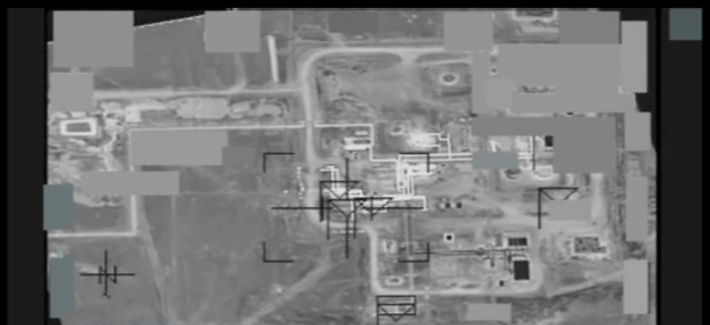
After less than eight months of development, the algorithms are helping intel analysts exploit drove video over the battlefield.
Earlier this month at an undisclosed location in the Middle East, computers using special algorithms helped intelligence analysts identify objects in a video feed from a small ScanEagle drone over the battlefield.

A few days into the trials, the computer identified objects — people, cars, types of building — correctly about 60 percent of the time. Just over a week on the job — and a handful of on-the-fly software updates later — the machine’s accuracy improved to around 80 percent. Next month, when its creators send the technology back to war with more software and hardware updates, they believe it will become even more accurate.

The FBI and CIA need more political management, not less

BY JAMES DURSO

The Bolsheviks were wrong about everything except the need to defeat (real) fascism, and the necessity for firm control of the Cheka, the secret police.

Michael Morell, the former Acting Director of the CIA, recently confessedthat maybe it was a mistake for himself, the former chief of the CIA and NSA, Gen. Michael Hayden, and the then-Director of the CIA, John Brennan, to criticize candidate Donald Trump. He admitted that he failed to understand how Trump would interpret their campaign criticism, which is pretty damning coming from someone who briefed presidents on how foreign leaders think.

Here’s Why the Trump Administration Called Out North Korea’s Cyberattacks

BY JOSEPH MARKSSENIOR

The attribution announcement made three big arguments and North Korea’s culpability was only one of them.

Trump Homeland Security officials put policy into practice Tuesday when they attributed a massive, transnational ransomware attack to the North Korean regime.

During a 30-minute press briefing, Homeland Security Adviser Tom Bossert and Homeland Security Department cyber official Jeanette Manfra repeatedly hammered on key pillars of the administration’s cybersecurity strategy and touted the administration’s cyber priorities.

US short of options to punish NKorea for WannaCry cyberattack

By: Matthew Pennington and Ken Thomas 

WASHINGTON (AP) — The Trump administration vowed Tuesday that North Korea would be held accountable for a May cyberattack that affected 150 countries, but it didn’t say how, highlighting the difficulty of punishing a pariah nation already sanctioned to the hilt for its nuclear weapons program.

The WannaCry ransomware attack infected hundreds of thousands of computers worldwide and crippled parts of Britain’s National Health Service. It was the highest-profile cyberattack North Korea has been blamed for since the 2014 hack of Sony Pictures after it produced “The Interview,” a satirical movie imagining a CIA plot to kill leader Kim Jong Un.

Feds officially pin WannaCry ransomware attack on North Korea

By: Jessie Bur 

Seven months after the WannaCry malware attack infected and held ransom thousands of computers worldwide, Homeland Security Adviser Tom Bossert announced Tuesday that the U.S. is officially attributing the cyberattack to the North Korean government.

“After careful investigation, the United States is publicly attributing the massive WannaCry cyberattack to North Korea. We do not make this allegation lightly. We do so with evidence and we do so with partners,” said Bossert, adding that the U.K., New Zealand, Australia and Japan have seen the analysis and agree with the attribution.

Here’s how the Army is trying to integrate information operations

By: Mark Pomerleau 

A soldier from 2nd Brigade, 1st Armored Division uses a Handheld, Manpack, and Small Form Fit Manpack radio to communicate while conducting dismounted operations at the Army's Network Integration Evaluation 13.1 on Nov. 9, 2012. The Manpack allows small units in austere environments to exchange voice and data information with their higher headquarters, without having to rely on a fixed infrastructure. 

The Army wants to give battlefield commanders the ability to drill down into local social media feeds and identify potential communication tools such as Wi-Fi networks and cellphone towers as a way to help slow the flow of information.

US Military tests system for on-demand 3D-printed drones

David Lumb

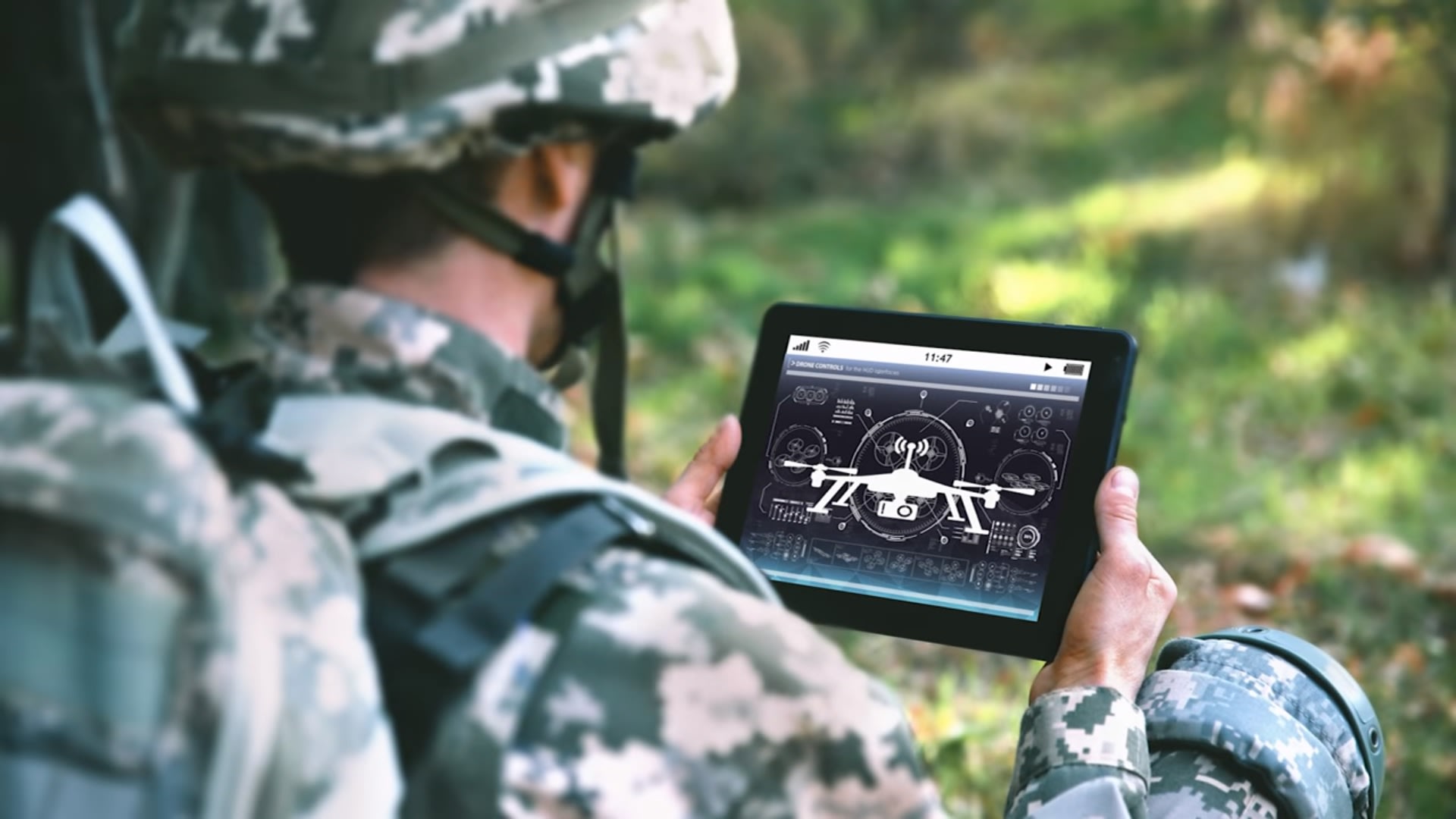
The US military has used drones in combat zones for over a decade to scout and support infantry. Now they're testing a way to give ground troops another edge: The capability to build UAVs themselves. What's more, the US Army is partnering with the Marine Corps on a test project that lets troops 3D-print particular drone parts from a tablet-based catalog, which could eventually lead to manufacturing UAVs customized to the mission.

The concept is promising, and so is the flexibility: The software catalog setup lets military units print out an unmanned aircraft system for specific missions. The Army Research Laboratory expects the turnaround time to create UAV parts to be anywhere from minutes to hours, rather than days or weeks.

23 December 2017

** Making India Great Again?

Sumit Ganguly, Rajan Menon

Prime Minister Narendra Modi is merely the champion of a larger movement that seeks to push India in a more nationalist direction.

NATIONALISM HAS become a formidable force in India, the world’s most populous democracy. Prime Minister Narendra Modi’s Bharatiya Janata Party (BJP, or Indian People’s Party) portrays India as a once-glorious Hindu civilization whose identity and power were eroded—first by successive Muslim invasions that culminated in the establishment of the Mughal Empire (1526–1857), and thereafter, until 1947, by British colonialism. For more than half a millennium, in the BJP’s telling, many Hindus were forcibly converted to, or duped into adopting, Islam and Christianity. English became the intelligentsia’s lingua franca. Civilizational self-confidence gave way to feelings of weakness and inferiority—or so goes the Hindu nationalists’ narrative.

India must stop ignoring the Andamans


'The Andaman and Nicobar Islands are an asset that any country aspiring to become a major power would give anything to own.'

'It is disappointing that India has not capitalised on this potential,' says Vice Admiral Premvir Das (retd).

In the last few days, the armed forces have carried out a tri-lateral joint exercise off the Andaman and Nicobar (A&N) Islands.

Such exercises, structured to 'defend' this part of India, are not new, having been carried out over several decades. What has changed, however, is the scope.

Operations like night slithering by commandos and participation of more sophisticated ships and aircraft are being pursued.

Why the Taliban Is Winning in Pakistan

Sabera Azizi

The conflict in Afghanistan demands a new approach. Giving Pakistan another opportunity to target the Taliban is a false hope.

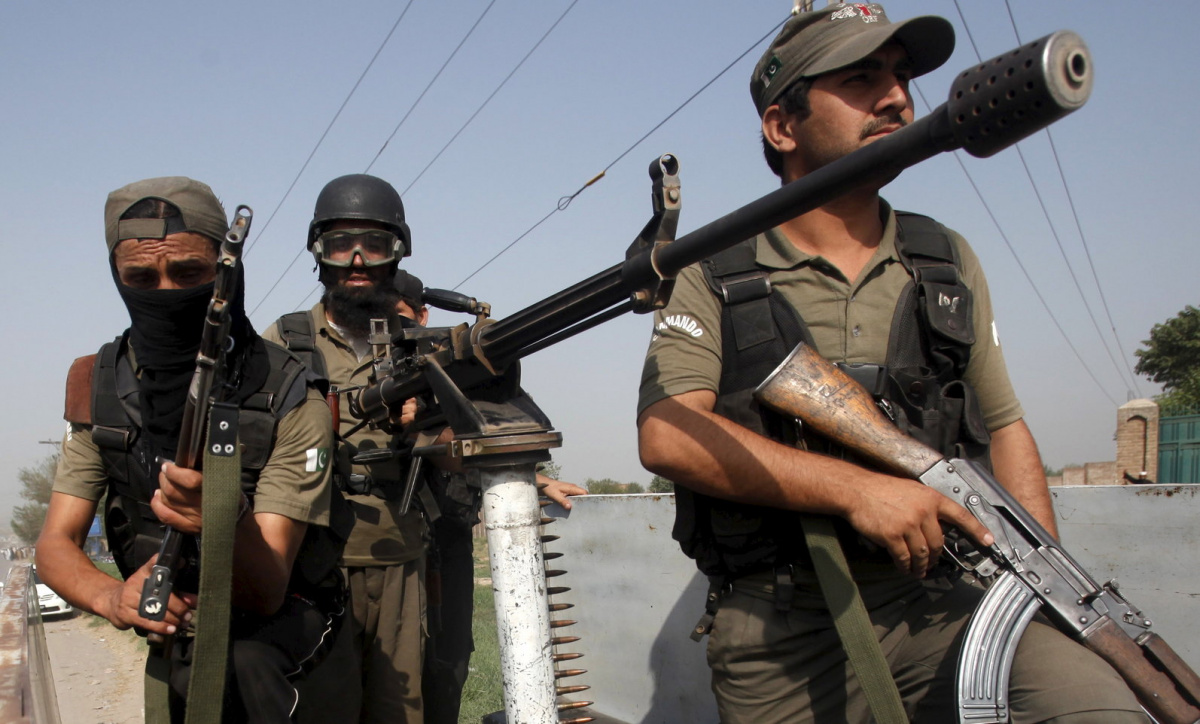
U.S. Defense Secretary James Mattis visited Pakistan in early December. The purpose of his trip was to give the Pakistani government a final opportunity to target the terrorist groups that are attacking Afghanistan and coalition forces, according to Voice of America. On October, Secretary Mattis told the House Armed Service Committee that the United States needed “to try one more time” to make its strategy work “by, with and through the Pakistanis.” If, in the end, its best efforts failed, then President Trump would be “prepared to take whatever steps are necessary,” he said. In response to the secretary’s remark, a Pakistani official, who spoke on the condition of anonymity, told Pakistan Today, an English-language Pakistani newspaper, that Pakistan has taken action against all terror groups inside Pakistan. However, the official’s statement is false. Gen. John Nicholson, head of U.S. and NATO forces in Afghanistan, has noted that the Taliban are still living comfortably in Pakistan. Pakistan hasn’t taken action against the Taliban.

China's Belt and Road Initiative Faces New Security Challenges in 2018

By Chuchu Zhang and Chaowei Xiao

Terrorism, political instability, and geopolitical rivalries threaten to complicate China’s BRI in 2018.

With more than 140 countries and 80 international organizations supporting and participating in the Belt and Road Initiative (BRI), the concept initiated by China is expected to enter a new stage in 2018. China’s Foreign Minister Wang Yi recently claimed at the opening ceremony of the Seminar on International Developments and China’s Diplomacy in 2017 that China is ready to work with each party to “strengthen new driving forces for and further upgrade Belt and Road cooperation.”

THE CHINESE DREAM AND BEIJING’S GRAND STRATEGY

By Tuan N. Pham

At the 19th National Congress of the Chinese Communist Party (CCP), President Xi Jinping opened the assembly by delivering a seminal report to its members. The three hour-long speechemphatically reaffirmed a strategic roadmap for national rejuvenation and officially heralded a new era in Chinese national development. Beijing now seems, more than ever, determined to move forward from Mao Zedong’s revolutionary legacy and Deng Xiaoping’s iconic dictum (“observe calmly, secure our position, cope with affairs calmly, hide our capacities and bide our time, be good at maintaining a low profile, and never claim leadership”). Beijing also appears poised to expand its global power and influence through the ambitious Belt and Road Initiative, expansive build-up and modernization of the People’s Liberation Army (PLA), assertive foreign policy, and forceful public diplomacy. Underpinning these strategic activities are various ancillary strategies – maritime, space, and cyberspace – all interlinked with the grand strategy of the Chinese Dream.

Putin’s ‘Mission Accomplished’ Moment in Syria

By Jacob L. Shapiro

The day was May 1, 2003. Spring was giving way to summer in San Diego, California, in whose waters sat the USS Abraham Lincoln en route to its home port in Washington state. The carrier had just returned from the Persian Gulf, where it had been deployed to support U.S. combat operations in Iraq. Less than two months after hostilities began, then-President George W. Bush would declare those operations over. It was political theater, plain and simple, and the Abraham was his stage. Behind the lectern from which he gave his speech hung a now-infamous banner that read, tersely, “Mission Accomplished.” Fifteen years later, U.S. troops are still in Iraq.

The Concept of Countering Violent Extremism

By Owen Frazer and Christian Nünlist

How has the concept of Countering Violent Extremism (CVE) developed in conjunction with other ‘soft’ approaches to terrorism, such as peace and development efforts? In this analysis, Owen Frazer and Christian Nünlist respond, before going on to explore 1) five reasons why those who work in the human rights, development and peacebuilding fields have concerns about CVE; and 2) the possibility of Switzerland creating its own national Countering Violent Extremism strategy.

The Concept of Countering Violent Extremism

HAMAS IS ARRESTING AND TORTURING JIHADIS TO PREVENT WAR WITH ISRAEL

BY JACK MOORE 

Palestinian militant group Hamas has arrested and tortured jihadis in the Gaza Strip, the blockaded territory it presides over, in a bid to prevent rocket fire into Israel and a new round of conflict.

President Donald Trump recognized Jerusalem as the capital of Israel on December 6, setting off protests among Palestinians in the West Bank and Gaza.

According to Israeli newspaper Haaretz, Hamas arrested jihadis who it believed were responsible for the rocket launches, and it is likely they had been tortured by Hamas security forces.

The US National Security Strategy: Implications for the Indo-Pacific

By Yuki Tatsumi

The Trump administration makes clear the Indo-Pacific is at the top of its strategic agenda.

On December 18, 2017, the Trump administration issued its National Security Strategy (NSS). Organized under four main principles — protect the homeland, promote American prosperity, preserve peace through strength, and advance American influence — the document provides a much-needed window into the administration’s vision of how it wants to shape U.S. engagement with the rest of the world. Referring to itself as “America First National Security Strategy,” the document is also the very first attempt to translate President Donald Trump’s campaign promise of “America First” into national strategic goals.

Trump Unveils His New National Security Strategy

Dave Majumdar

To retain America’s advantage over its rivals, the Trump administration believes that it should maintain an overmatch against competing powers. President Donald Trump’s new National Security Strategy (NSS) names Russia and China as revisionist powers that want to challenge the American-led liberal international world order.

In what is perhaps a recognition that the international system is actually a “liberal hegemony” as John Ikenberry wrote, the document couches itself in the language of the realist school of international relations. Nonetheless, the central theme of the document is to preserve the rules-based international order that the United States has built since the end of the Second World War. Indeed, the Trump administration frames the struggle as a “political contest” between repressive systems and free societies.

Decoding Trump's New National Security Strategy

Jacob Heilbrunn

What the document reveals most clearly is the mental scaffolding of the Trump administration, which is to seek American dominance.

In speaking at the Ronald Reagan building in Washington today, President Trump sought to delineate a new foreign-policy strategy for America. Trump alluded to his election victory, noting that “you spoke loud and you spoke clear. On November 8, you voted to make America great again. You embraced new leadership and new strategies and also a glorious new hope.” The most interesting part of the speech may be the fact that Trump delivered one at all, in contrast to his predecessors. If his administration uses the strategy as a true lodestar, then it would mark a break with a liberal internationalism based on the idea that economic and political cooperation, not confrontation, is the best way to protect American interests.

How the Pentagon’s cyber offensive against ISIS could shape the future for elite U.S. forces


By Dan Lamothe

The U.S. military has conducted cyber attacks against the Islamic State for more than a year, and its record of success when those attacks are coordinated with elite Special Operations troops is such that the Pentagon is likely carry out similar operations with greater frequency , according to current and former U.S. defense officials. 

The cyber offensive against ISIS, an acronym for the Islamic State, was a first and included the creation of

Beyond maximum pressure: A pathway to North Korean denuclearization

Jung H. Pak and Ryan Hass

President Donald Trump’s speech in Seoul on November 7 and his success in persuading nations to support the U.S. campaign of maximum pressure on North Korea provide a compelling framework for addressing the threat posed by Pyongyang’s nuclear and missile programs. This brief assesses North Korea’s strategic intentions, evaluates risks and benefits of potential U.S. policy responses, and lays out a framework for an executable, whole-of-government strategy, using the president’s recent Asia trip as a launching pad.

Five Takeaways From Trump’s National Security Strategy

BY PETER FEAVER
President Donald Trump unveils his National Security Strategy (NSS) today in a big set-piece speech at the Reagan Center. There is a lively debate about the utility of these documents among experts and I am squarely on the side of those who argue that they provide an important window into the thinking of an administration. As I explain below, such windows may be especially important for this administration and so this is a document worth studying. Such deeper reflection may change my assessment, but I have a more-positive-than-expected reaction, however, as reflected in five quick takeaways:

What Putin Really Wants Russia's strongman president has many Americans convinced of his manipulative genius. He's really just a gambler who won big.


I. The Hack The large, sunny room at Volgograd State University smelled like its contents: 45 college students, all but one of them male, hunched over keyboards, whispering and quietly clacking away among empty cans of Juicy energy drink. “It looks like they’re just picking at their screens, but the battle is intense,” Victor Minin said as we sat watching them.

5 Key Artificial Intelligence Predictions For 2018: How Machine Learning Will Change Everything

By Bernard Marr

During 2017 it was hard to escape predictions that artificial intelligence is about to change the world. In 2018, this is unlikely to change. However, an increased focus on repeatable and quantifiable results is likely to ground some of the “big picture” thinking in reality.

Don’t get me wrong – in 2018 AI and machine learning will still be making headlines, and there are likely to be more sensationalized claims about robots wanting to take our jobs or even destroy us. However, stories about real innovation and progress should start to receive more prominence as the promise of the smart, learning machines increasingly begins to bear fruit.

Ten Most Significant World Events in 2017

By James M. Lindsay

Last year a lot of people were asking if 2016 was the worst year ever. (It wasn’t.) I haven’t seen anyone making similar claims about 2017, but that doesn’t mean that this year didn’t produce its share of significant world events. It has. Below is my top ten, listed in descending order. You may want to read what follows closely. Several of these stories will continue into 2018.

How to combat fake news and disinformation

Darrell M. West

Journalism is in a state of considerable flux. New digital platforms have unleashed innovative journalistic practices that enable novel forms of communication and greater global reach than at any point in human history. But on the other hand, disinformation and hoaxes that are popularly referred to as “fake news” are accelerating and affecting the way individuals interpret daily developments. Driven by foreign actors, citizen journalism, and the proliferation of talk radio and cable news, many information systems have become more polarized and contentious, and there has been a precipitous decline in public trust in traditional journalism.

Army’s new cyber requirements will be based on battlefield needs

By: Mark Pomerleau 

The Army is changing the way it buys cyber solutions as a way to get new technologies – especially those based on battlefield needs - into soldiers’ hands faster.

“There’s been a fundamental shift inside the Army on the way we try to do acquisition,” Maj. Gen. John Morrison, commander of the Cyber Center of Excellence, said during an event hosted Dec. 13 by the Association of the U.S. Army in Arlington, Virginia.

In the past, requirements for new solutions were too prescriptive and technical, often outlining maximum and minimum standards solutions had to meet at the extreme ends of each spectrum.

U.S. blames North Korea for ‘WannaCry’ cyber attack


WASHINGTON (Reuters) - The Trump administration has publicly blamed North Korea for unleashing the so-called WannaCry cyber attack that crippled hospitals, banks and other companies across the globe earlier this year.

“The attack was widespread and cost billions, and North Korea is directly responsible,” Tom Bossert, homeland security adviser to President Donald Trump, wrote in a piece published on Monday night in the Wall Street Journal.

“North Korea has acted especially badly, largely unchecked, for more than a decade, and its malicious behavior is growing more egregious,” Bossert wrote. “WannaCry was indiscriminately reckless.”

You Can Be Easily Tracked — Even Without The Use Of GPS


Cyber security guru Bruce Schneier posted a December 15, 2017 article with the title above on his blog, www.schneier.com, about how you can be tracked without those tracking you — having to use of a global positioning system (GPS) device. “The trick in accurately tracking a person [without the use of a GPS tracking device], is finding out what kind of [daily] activity they are performing,” Mr. Schneier wrote — what is typically referred to as someone’s ‘pattern of life.’ “Whether they’re walking, driving a car, riding on a train or airplane, it’s pretty easy to figure out, when you know what you’re looking for.”

In a Second Korean War, U.S. Troops Will Fight Underground

by Kris Osborn


U.S. Army war planners and weapons developers have been increasing efforts to fast-track networking technologies for soldiers operating underground in tunnel complexes and in dense urban environments.

While the Army created entities such as its Rapid Equipping Force to address fast-emerging threats, the prospect of major ground war on the Korean peninsula has taken on increased urgency in recent months.

“We have been looking at Korean peninsula ops,” Col. John Lanier Ward, REF director, told Scout Warrior in an interview.

Building a Future: Integrated Human-Machine Military Organization

Mick Ryan

This essay is part of the #WarBots series, which asked a group of academics and national security professionals to provide their thoughts on the confluence of automation and unmanned technologies and their impact in the conduct of war. We hope this launches a debate that may one day shape policy.

"In the early twenty-first century the train of progress is again pulling out of the station—and this will probably be the last train ever to leave the station called Homo Sapiens. Those who miss this train will never get a second chance. In order to get a seat on it you need to understand twenty-first century technology, and in particular the powers of biotechnology and computer algorithms…those left behind will face extinction."

Looking Back to the Future: The Beginnings of Drones and Manned Aerial Warfare

Ulrike Franke

This essay is part of the #WarBots series, which asked a group of academics and national security professionals to provide their thoughts on the confluence of automation and unmanned technologies and their impact in the conduct of war. We hope this launches a debate that may one day shape policy.

On 8 December 1909, British Army Major Baden Fletcher Smyth Baden-Powell was invited to give a talk at the Royal United Services Institute (RUSI). Baden-Powell had been among the first soldiers to see the use of military aviation. He experimented with flying kites and built an aircraft with his sister Agnes, and he had just stepped down as President of the Royal Aeronautical Society, the oldest aeronautical society in the world. On that Wednesday afternoon in December 1909, he spoke about “How Airships are Likely to Affect War.”

Autonomous Weapons: Man’s Best Friend

Matthew Hipple

This essay is part of the #WarBots series, which asked a group of academics and national security professionals to provide their thoughts on the confluence of automation and unmanned technologies and their impact in the conduct of war. We hope this launches a debate that may one day shape policy.

“Cry Havoc, and let slip the dogs of war.”

As early as 1599, Shakespeare’s turn of phrase for Anthony in his play Julius Caesar tacitly acknowledged a 2000-year-old human acceptance of autonomous war machines. What is a militarily employed dog other than, as autonomous weapons are defined by DOD Directive 3000.09, “a weapon system that, once activated, can select and engage targets without further intervention by a human operator.” As modern-day ethicists agonize over the autonomy’s ascendance, they ignore 2,600 years of wartime employment of autonomous, self-replicating killing machines that are by popular opinion still our best friend.