28 January 2018

Is this the end of civilisation? We could take a different path


George Monbiot

It’s a good question, but it seems too narrow: “Is western civilisation on the brink of collapse?” the lead article in this week’s New Scientist asks. The answer is, probably. But why just western? Yes, certain western governments are engaged in a frenzy of self-destruction. In an age of phenomenal complexity and interlocking crises, the Trump administration has embarked on a mass de-skilling and simplification of the state. Donald Trump may have sacked his strategist, Steve Bannon, but Bannon’s professed intention, “the deconstruction of the administrative state”, remains the central – perhaps the only – policy.

Britain to set up intelligence unit to combat ‘fake news’ by foreign states

Joseph Fitsanakis

The British government has announced that it will form a new intelligence unit tasked with preventing the spread of so-called “fake news” by foreign states, including Russia. The decision was revealed earlier this week in London by a government spokesman, who said that the new unit will be named “National Security Communications Unit”. The spokesman added that the unit will be responsible for “combating disinformation by state actors and others”. When asked by reporters whether the effort was meant as a response to the phenomenon often described as “fake news”, the spokesman said that it was.

The new space race


LATER this month, if all has gone according to plan, a rocket called the Falcon Heavy will take off from Cape Canaveral, in Florida (see article). Its mission is to put a sports car in orbit around the sun. The Falcon Heavy is the latest product of SpaceX, a firm founded by Elon Musk, an American billionaire. The car is Mr Musk’s own, made by Tesla, another of his businesses. SpaceX has the explicit aim, besides making money, of enabling people to travel to and colonise Mars. Before then, the Falcon Heavy may earn its keep lifting satellites and carrying tourists on “slingshot” trips around the moon.

Beijing Goes Boldly into Anti-Satellite Weapons Frontier

LEVI MAXEY
Source Link

Bottom Line: China is aggressively pursuing capabilities such as anti-satellite (ASAT) weapons that could diminish the U.S. military’s reconnaissance, navigation and communications in case of war in the South China Sea or on the Korean Peninsula. But while China’s ASAT capabilities threaten U.S. assets in space, it’s still unclear how they fit into Chinese military doctrine, and how or in what instances they would be deployed. The U.S. also lacks a clear path for reining in the proliferation of these capabilities because of its own reliance on ballistic missile defense systems that are viewed similarly as potential ASAT weapons.

U.N. Peacekeepers Must ‘Not Fear to Use Force’ to Foil Attacks, Report Says


A lack of leadership and a reluctance to move aggressively against potential attackers are responsible for the worst spate of United Nations peacekeeping fatalities in the organization’s history, according to a report released on Monday. If adopted, the recommendations of the unusually blunt report could significantly increase the prospects for use of deadly force by United Nations peacekeepers. Roughly 110,000 blue-helmeted soldiers and police officers from a range of countries are deployed in the organization’s 15 peacekeeping missions around the world, entrusted with the responsibility of protecting civilians. “Overall, the United Nations and troop-and-police-contributing countries need to adapt to a new reality: the blue helmet and the United Nations flag no longer offer ‘natural’ protection,” stated the report, which was posted on the United Nations website.

Remember the Pueblo!

By Mitchell B. Lerner 

In December 1967, an American Navy vessel called the Pueblo departed Pearl Harbor, heading for Yokosuka, Japan. It was the last time the ship, a dilapidated former cargo carrier now operating as an American intelligence collector, would see the United States. In January, the Pueblo began its first mission, conducting electronic intelligence operations off the coast of North Korea. Then, on Jan. 23, 1968 — 50 years ago today — the ship came under attack by North Korean forces. The slow and poorly armed American ship was badly overmatched. The captain soon surrendered, with one dead and numerous wounded. North Korean forces quickly boarded the Pueblo and towed the ship and her 83 crewmen to Wonsan. The men spent a brutal year in North Korean prison camps where they were beaten, tortured and used as propaganda tools, before being released a few days before Christmas 1968. The ship is still in North Korea, serving as one of the country’s leading tourist attractions.

Norway worries about cyber threats during military exercises

By: Gerard O'Dwyer 

As Norway prepares to host one of its largest military exercises in decades, the country is working to protect its defense events from cyber threats, particularly those from Russia. The Norwegian Defense Forces’s (NDF) Cyber-Force Unit (NDF-CFU) has partnered with state telecom, Telenor Norway, to develop and deliver advanced cyber-defense solutions to deal with cyber-based threats. This includes attacks on critical IT systems and infrastructure that are used to manage and monitor specific events such as military exercises.

27 January 2018

Pakistan’s Burgeoning Relationship with China

By Muhammad Akbar Notezai

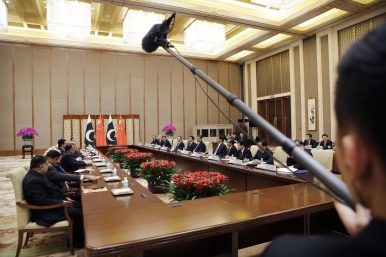
As a Pakistani journalist, China has always been of great interest to me. In recent years, I have had the opportunity to explore the country twice. Each time one visits China, it looks different and more developed compared to the last time. Many parts of the country are still changing rapidly. Pakistan’s most populous city, Lahore, is similar in that respect. In Lahore, in contrast to Pakistan’s other cities, there are roads, tunnels, buses, underpasses and other infrastructure, which look like they might have been designed in China’s capital, Beijing. It also seems that Pakistan wants to copy China at a broader level, following the investment – the largest in Pakistan’s history – in the multibillion dollar project, the China-Pakistan Economic Corridor (CPEC).

What a U.S.-China Trade War Would Look Like

By John Edwards

Sometime soon, US President Donald Trump will announce his plan to respond to what the administration calls China’s “economic aggression”. When he does, it is not only China that needs to be prepared to respond. Together accounting for well over a third of global output, the collateral damage of a serious trade fight between the two countries would be enormous, let alone the damage casued to the two nations directly.

North Korea: China's Unwelcome Mirror

By Bonnie Girard

There may be several reasons why Xi Jinping, and Chinese leaders before him, have been reluctant to “solve” the North Korea problem. Some have suggested that the Chinese Communist Party leadership does not see North Korea as a problem, and to some extent, this is true. Why would the Chinese Communist Party, which has prevailed against overwhelming odds not only to stay in power, but also to propel its country dramatically forward, see its sister political party in North Korea as anything but legitimate? More importantly, if the Kim dynasty and the Communist Party in North Korea are in any way illegitimate, then does this not bite at the heels of the perceived legitimacy of the Chinese Communist Party? Why would the Party do anything to undermine its own philosophical basis for power?

How Would a War Between the US and China End?

By Robert Farley

The question “How could war start between China and the United States?” has, quite reasonably, dominated much strategic analysis of East Asian politics. But wars that start have to end, sooner or later; Josh Rovner, associate professor in the School of International Service at American University, has repeatedly concentrated on the question “how does war between the United States and China end? In a recent article in the journal Diplomacy and Statecraft, Rovner notes that most analysts, and apparently most soldiers, expect that a war between China and the United States would end quickly. Theoretically, the collision of the two great reconnaissance-surveillance-strike complexes would quickly exhaust one side or the other of its most lethal weapons.

China Wants Confrontation in the South China Sea

Gordon G. Chang
Source Link

Last Wednesday, the USS Hopper, an Arleigh Burke–class missile destroyer, sailed within twelve nautical miles of Scarborough Shoal, a few rocks in the northern portion of the South China Sea. We would not have known about the sail-by if we were relying on the Pentagon. Beijing announced the event and then made threats. The Chinese, we have to conclude, are itching for a confrontation. Therefore, strategic Scarborough Shoal, a mere 124 nautical miles from the main Philippine island of Luzon and guarding Manila and Subic bays, could be the hinge on which America’s relations with China swings.

Turkey's Afrin Offensive and America's Future in Syria

By Aaron Stein

Last week, Turkey launched an offensive to take control of Afrin, a small and isolated enclave in northwestern Syria controlled by the Kurdish People’s Protection Units (YPG), the Syrian affiliate of the Kurdistan Workers’ Party, which has fought an insurgency in southeastern Turkey for just over three decades. The Turkish offensive has sparked conversation about U.S. strategy in Syria, and in particular whether Washington can balance its relationships with Turkey—a NATO ally—and the Syrian Kurds, who have been the United States’ most reliable partners in the fight against the Islamic State (ISIS) in Syria.

The ISIS defeat myth: No one talks about ISIS sympathizers and US military remaining in Syria

BY DANNY SJURSEN

Under President Obama’s watch, the Islamic State conquered a so-called caliphate the size of Ohio in Syria and Iraq. Luckily a new, “tough” president — Donald Trump — stepped in, loosed restrictions on his military, and, defeated the bad guys. At least that’s the popular story and the party line. Of course, the ground-level truth is much messier. If ISIS is so decisively and irreversibly defeated, how then to explain last week’s gruesome double-suicide bombing in Baghdad and expert warnings that up to 10,000 ISIS loyalists remain in Iraq and Syria?

Trump Should Abide by His Own National Security Strategy

BY DANIEL P. VAJDICH
The United States could restore its global influence by adhering to its commitments.

With any other president occupying the White House, the above would be a strange headline. It typically goes without saying that presidents should follow their own strategies. But President Donald Trump’s raises a few questions — and not because it is a poorly crafted template for how the United States should engage with the world. Quite the opposite. The new National Security Strategy, released last month, is a commendable document that recognizes the reality of how countries interact and provides a comprehensive framework for the advancement of U.S. interests around the globe.

Harnessing the Fourth Industrial Revolution for Life on Land


The stress on the earth’s natural systems caused by human activity has considerably worsened in the 25 years since the 1992 Rio Earth Summit in Brazil. As a result of the “great acceleration”1 in human economic activity since the mid-20th century, research from many earth system scientists’ suggests that life on land could be entering a period of unprecedented environmental systems change.

Serial Production of Russia's Deadliest Tank to Begin in 2020

By Franz-Stefan Gady

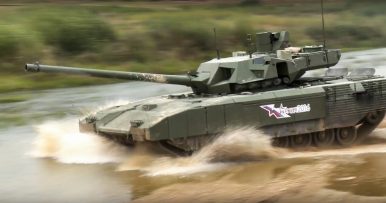
Russia will begin serial production of the third-generation T-14 Armata main battle tank (MBT) in 2020 with the first batch of T-14s purportedly to be deployed to the country’s Southern and Western military districts, a Russian defense industry source said in Moscow this week. “In accordance with the 2018-2027 State Armaments Program, the serial production of the T-14 tanks based on the Armata platform is planned to begin in 2020, hundreds of tanks will be made,” the source told TASS news agency.

The Glaring Flaws in the New Defense Strategy

By Harlan Ullman

Last week, retired Marine General now Secretary of Defense Jim Mattis released an 11-page summary of the nation’s latest national defense strategy. The strategy reflected the secretary’s philosophy and his experience as a brilliant practitioner of military art and a serious student of war in all its forms whose knowledge exceeds that of many scholars. The document is an extension of the last administration’s “four plus one” strategy.

Analysts: U.S. nuclear modernization plan under-invests in cybersecurity

by Sandra Erwin
Since a leaked draft of the Defense Department’s nuclear posture review was revealed by the Huffington Post, analysts and arms control experts have sounded alarms about language in the document that suggests the Trump administration would broaden the scenarios where it would be acceptable to use nuclear weapons. “For the first time in a long time there is an expansion of the circumstances under which a president would use nuclear weapons,” said Tom Countryman, chairman of the board of the Arms Control Association. One of those circumstances is a cyber attack.

This is how democracies die

by Steven Levitsky and Daniel Ziblatt

Blatant dictatorship – in the form of fascism, communism, or military rule – has disappeared across much of the world. Military coups and other violent seizures of power are rare. Most countries hold regular elections. Democracies still die, but by different means.  Since the end of the Cold War, most democratic breakdowns have been caused not by generals and soldiers but by elected governments themselves. Like Hugo Chávez in Venezuela, elected leaders have subverted democratic institutions in Georgia, Hungary, Nicaragua, Peru, the Philippines, Poland, Russia, Sri Lanka, Turkey and Ukraine. Democratic backsliding today begins at the ballot box. The electoral road to breakdown is dangerously deceptive. With a classic coup d’état, as in Pinochet’s Chile, the death of a democracy is immediate and evident to all. The presidential palace burns. The president is killed, imprisoned or shipped off into exile. The constitution is suspended or scrapped.

THE PENTAGON SHOULD ADJUST STANDARDS FOR CYBER SOLDIERS — AS IT HAS ALWAYS DONE

CRISPIN BURKE

But while the private sector can offer higher pay and benefits to entice qualified applicants, the U.S. government isn’t so fortunate. To make matters worse, the federal government — including both the intelligence and defense community — has difficulty retaining the cybersecurity talent it already has, as talented experts may leave government service after a few years for lucrative private-sector jobs. Indeed, the National Security Agency, racked by deep morale problems, is suffering 8 to 9 percent attrition ratesamong its hackers.

Can Mattis Succeed Where His Predecessors Have Failed?

BY CHRISTINE WORMUTH
Source Link

Secretary of Defense James Mattis personally rolled out the U.S. government’s new National Defense Strategy in a speech last week, signaling his intellectual and bureaucratic ownership of the document. This is a good thing, and as one might expect from the so-called warrior monk, the strategy is a lot more about sensible approaches to a very complicated world — including a very strong emphasis on diplomacy and alliances — than it is about President Donald Trump’s “America First” agenda.

Is Creativity Finally Dead?


Creativity has been on a downward spiral in many segments of society as a result of profound information overload. We can call up information on almost any topic with a few clicks of the keyboard. As a result, we’ve gained massive amounts of awareness into the way our world works and into things and people and places of which we would previously have never been exposed. And yet we’ve lost something, too: We’ve lost a sense of the powerful dangers of knowledge. We’ve lost the ability to create meaning and substance out of the power of not-knowing.

2018: Innovation — Trends and Opportunities


Technology is moving at an incredible pace. We live in an amazing era where things like autonomous cars, personalized medicine and quantum computing are becoming real as we speak; Artificial Intelligence, crypto-currencies, advanced automation, deep learning and concepts like Universal Basic Income are about to reshape our world — what an exciting era to live! he years to come will bring impressive technological breakthroughs with massive impact on our lives, markets and societies. In our connected world, with the unprecedented level of information, knowledge and ideas exchange, innovation is happening continuously, at scale and in several forms; it is driven by corporations, secret labs, universities, startups, research scientists or simply by thousands of creative individuals across the globe.

18 technology predictions for 2018

Azeem Azhar
Source Link

We are living in interesting times. Multiple technologies, improving exponentially, are converging. I have been chronicling this convergence for several years in my newsletter, Exponential View. As Bill Gates said, “Most people overestimate what they can do in one year and underestimate what they can do in ten years.” Likewise, most annual predictions overestimate what can occur in a year, and underestimate the power of the trend over time.  Here are 18 areas, excluding climate change risks, which I think will be interesting to watch in the new year and why:

Don’t Know What You’ve Got Till It’s Gone

By FRED KAPLAN

One year into Donald Trump’s presidency, U.S. foreign policy stands as wobbly and diminished as his critics had predicted. Our commitments are doubted (mainly because he has thrown doubt on whether he’d honor them). Our allies are seeking separate routes to security and fortune that bypass us and our interests. Our adversaries are probing the vacuums as areas for expansion. No one quite knows what we stand for, if anything. A Gallup poll released this weekshows America’s esteem around the globe at an all-time low, with the average rating plunging nearly 20 percentage points—in some of our most closely allied countries, more than 40 percentage points—since last year.

Why Cyberattacks Don’t Work as Weapons

By Myriam Dunn Cavelty

Cyberattacks must also be understood as a phenomenon of political violence and combated as such, says Myriam Dunn Cavelty. Digitalisation will fundamentally alter many aspects of our lives – in many cases for the better. However, our increasing dependence on computers and networks for data exchange and storage is creating new vulnerabilities for both individuals and society. The key word here is: cybersecurity. This encompasses more than just technical solutions: it involves not only security in cyberspace, but also security that is influenced by cyberspace.

Cyber Threats to Democratic Processes

By David Siman-Tov, Gabi Siboni and Gabrielle Arelle for Institute for National Security Studies (INSS)

In this article, David Siman-Tov et al highlight how elections are vulnerable to cyberattacks and other information operations, and how such weaknesses leave democratic nations open to the influence of foreign powers. Our authors conclude that the threat posed by such vulnerabilities is such that nations must recognize elections as a form of critical infrastructure. Further, states must protect each competent of electoral processes – including the media, public discourse, political parties and the voting system itself – if they are to preserve the health of their democracy.

6 reasons to be optimistic about the future of work

Saadia Zahidi

The path to a good life appears increasingly difficult to find and pursue for a growing number of people. A key factor driving these concerns is the extent to which opportunities for finding stable, meaningful work have increasingly become polarized, favouring those fortunate enough to be living in certain geographies and to be holding certain in-demand skills. We need a future in which a range of options open up for the many, not just for the few. How can we prepare everyone for the displacement – and the new opportunities – to come? Here are six findings from our new report, Towards a Reskilling Revolution: A Future of Jobs for All, on creating a future of jobs for all:

5 key trends for the future of healthcare

Albert Bourla
Source Link

A human embryo’s DNA is “edited” to take out a disease. Surgeons practice complicated procedures on models created by 3-D printers. A pre-programmed drone collects blood samples from residents of a rural village and travels back to the capital. These awe-inspiring scenarios have all recently unfolded in what is undoubtedly a golden era of innovation in healthcare. Rapid change and unprecedented opportunity are now the hallmarks of the biopharmaceutical industry. But the future of health won’t just be defined by the innovations we set out to create; it will be equally shaped by how we respond to — and anticipate — the challenges and consequences of each great advancement. The more we know, the more “known unknowns” are revealed. The boundaries of areas left for researchers to explore constantly expand, while possible applications of new technologies proliferate.

50 Years Ago, A US Military Jet Crashed In Greenland - With 4 Nuclear Bombs On Board

by Timothy J. Jorgensen

Fifty years ago, on Jan. 21, 1968, the Cold War grew significantly colder. It was on this day that an American B-52G Stratofortress bomber, carrying four nuclear bombs, crashed onto the sea ice of Wolstenholme Fjord in the northwest corner of Greenland, one of the coldest places on Earth.

The kill chain: inside the unit that tracks targets for US drone wars

Roy Wenzl in Wichita, Kansas

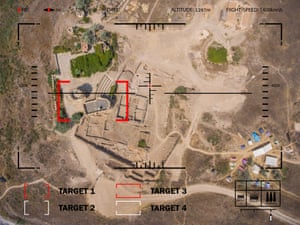
In a dimly lit room at McConnell air force base in south central Kansas, analysts from a national guard intelligence reconnaissance surveillance group watch live drone surveillance video coming from war zones in the Middle East. During combat, the analysts become part of a “kill chain” – analyzing live drone video, then communicating what they see – in instant-message chat with jet fighter pilots, operators of armed Predator and Reaper drones, and ground troops. They carry out drone warfare while sitting thousands of miles from battlefields. They don’t fly the drones and don’t fire the missiles. They video-stalk enemy combatants, and tell warfighters what they see. The work, they say, helps kill terrorists, including from Isis. the group does this work in the middle of America, at an air base surrounded by flat cow pastures and soybean fields. The 184th Intelligence Wing of the Kansas air national guard, started this work about 2002. Until last year, most people in Kansas knew nothing about their role in drone warfare.

WHEN DAUNTLESS ISN’T ENOUGH: THE MORAL AND STRATEGIC IMPERATIVE TO FIX AMERICA’S CLOSE COMBAT UNITS

ROBERT H. SCALES, SCOTT CUOMO, AND JEFF CUMMINGS

Nearly 80 years ago, the German blitzkrieg took Europe by storm. Often lost in discussions about the German military’s panzers and Luftwaffe is that the assault on France would have never succeeded had it not been for “the remarkable performance of the German infantry.” Yes, it was the world’s best infantry small units that set the conditions for the German blitzkrieg in Sedan, France, allowing Germany to capture almost all of Western Europe in a month’s time. When the German Army was stopped at the Meuse River in Sedan, these small units, led by carefully selected and trained sergeants, crossed the water obstacle via small boats and then rapidly destroyed dozens of “pillbox” positions that anchored the French defensive system. The speed in which the Wehrmacht’s close combat “storm-troopers” destroyed these positions enabled their armor forces to cross the Meuse and continue their attack to the English Channel faster than the French could respond.

26 January 2018

The GOAT, AO2018 and 20th Grand Slam

The GOAT, AO 2018 and 20th Grand Slam
                                                                                  -----   Maj Gen PK Mallick, VSM (Retd)

The final stages of AO 2018 has arrived. Cilic has reached the finals. The mouth watering contest between the nextgen champion Hyeon Chung, the Professor from South Korea and the GOAT, unarguably in my book, will be in Friday afternoon, being a holiday I cannot miss. The Swiss star is the out-right favourite to win the competition but world number 58 Chung stands in his way of a final showdown against Marin Cilic.

In the remaining semifinals the latest heart throb of South Korea, Hyeon Chung, Next Gen prodigy they’re calling mini-Novak, will be across the net. And in the most ironic of twists, it was Hyeon Chung who sent Djokovic on his way in the fourth round here, out-elasticking his elastic-limbed hero in a stupendous display of scrambling, hustling, counterpunching tennis earlier this week. Make no mistake, a star is emerging. Chung, 21 years old and has never been in the last four of a slam before. But good judges expect him to be in the top 10 before the year’s out.

After upsetting six-time Australian champion Open Novak Djokovic in straight sets became the first South Korean to advance to a grand slam quarter-final. But it wasn’t just the calibre of the opponent that won over a new legion of fans, it was the matter in which the game was won. The braces-wearing, bespectacled world is winning hearts with his boyish innocence, speed, athleticism and freakish retrieval skills. His unbelievable movement has even drawn comparisons with Djokovic, while his fearless ball-striking has delighted the spectators inRod Laver Arena. 

Chung, according to coach Neville Godwin, succeeded in “out-Djokovic-ing Novak Djokovic”. “There are definite similarities, he’s incredibly flexible, moves very well, does the splits most of the time ... but you could argue he [Chung] has got more firepower from the back, he can pull the trigger a bit more. I don’t want him running around too far back behind the court. I’d like to see him use his phenomenal speed to get to the net more.” Hyeon Chung had taken out fourth seed Alexander Zverev in the third round and then disposed of Novak Djokovic in such thrilling style. There were fears that Chung might suffer a dip after two such marquee wins, but he kept his focus in the quarters and disposed of the American Tennys Sandgren in straight sets. Chung has been punching above his weight all fortnight. 

The South Korean will need to try and get into his opponents head claim a shock win. “I think if he starts well and gets inside Federer’s head he will have a chance,” an expert says. “The danger for Federer is he thinks he has already won it. “Nadal is out, Djokovic is out, Murray is not even here. Maybe it’s all too easy for him - that’s the thing he has to be aware of.” These two have never actually played before, but Novak Djokovic has a winning record against Federer, and Chung beat Djokovic on Monday so that makes him the favourite today right? Right?

Even Federer has been impressed. "I'm very excited to play Chung," the Swiss said on Wednesday. "I thought he played an incredible match against Novak. To beat him here is one of the tough things to do in our sport. I know that Novak maybe wasn't at 110 per cent, but he was all right. To close it out, that was mighty impressive."I think it's an interesting match for me. I'll definitely have to look into how I need to play against him because he has some great qualities, especially defensively, like Novak has. "It's a good situation to be in. He can hit freely now. No expectations whatsoever.

The reigning champion is bidding for his 20th grand slam title this week, and is yet to drop a set all tournament. Chung's entertaining approach should at least make for an exciting match even if, as expected, Federer ultimately proves too strong. Though Chung has incredible speed Roger is no slouch either even at 36+ years. Where Chung will be most vulnerable is on his serve, it's not the strongest part of his game. He rarely went over 170 - 180 km/h, Federer will smell the opportunity there and as such, the South Korean is in for some potentially disastrous returns coming his way. Chung's second serve will be punished mercilessly. If he tries to up the ante on his second serve, chances that he will serve some double faults. It will be interesting to see if Roger's versatility can open up Chung's movement and possibly bring him forward with the short slice. Federer's second serve again is the best the game has ever seen. Federer can win even if he plays at 70%. One is not sure whether Chung can win playing 110%.

It looks hugely one-sided. Federer, a 19-time Grand Slam champion and veteran of 382 Slam showdowns over 20 years, up against an unseeded 21-year-old lining up for just his 17th match at a major. At 36 and 169 days, Federer is not only the oldest man in 41 years to reach the semi-finals in Melbourne, but also the only player in history to make the last four on 14 occasions. He’s the champion. He’s the GOAT. He’s been here before. He’s seen it all. Chung will have his work cut out proving he’s the new Djokovic in this one.

Chung is young, has lot of potential. But he has to travel miles before he can take on Roger in a grand slam semis. Best of luck to Chung and thanks for giving all the entertainment.

However, I am worried.

The reigning champion is bidding for his 20th grand slam title this week, and is yet to drop a set all tournament. Strangely enough though, he hasn't actually been playing that well. Sure, he's been cruising through his matches and winning easily, but there's been a bit more irritation than we're used to, and just a little less stardust. The main reason for this could be that Federer has not yet been properly tested. Maybe that's about to change. 

There are worrying signs. Against Berdych, Roger was 4 - 1 down, was serving for the set 5- 3. A set point went begging,Roger was defending for his life,a short backhand to the Czech was asking to be hit and Berdych hit it in the net. At 5 - 6 Roger served two double faults in the same game, was a set point down, got out of jail because of some wonderful shots including an exquisite backhand drop shotthat he can only make and some unforced errors from the Czech. In the third set also the Swiss superstar was broken. At 32 Berdych is not exactly a spring chicken. He was nursing an injury. It was their 10th meeting at Grand Slams, and an eighth win for the Swiss player. His career record against the Czech to 20-6.

In 2015 US Open Cilic had beaten Roger, then in his prime in semifinals in straight sets before winning the only grand slam has taken. Then it was predicted that he was the next best thing happening in tennis. He somehow has not been able to fulfill his promise. He has no apparent weakness, has a monstrous serve, powerful ground strokes, slides : everything. In 2017 Wimbledon finals he had an injury, but in the first set he had a break point, missed an easy backhand. This year he looks healthy, sharp, more determined. Only question mark may be he is too much a gentleman, and does he believe that he can beat GOAT in 2018 AO Finals.

If Roger reaches finals, which he will, he will be worried. Federer may be giving excellent interviews on the courtside with Jim Courier but he has to come out sharp in the finals. His recent tendencies to suddenly lose concentration , make easy mistakes and lose can hurt him dearly. Remember the year end ATP Masters semifinals against Goffin.

We all want Roger to win. GO ROGER GO for 20th grand slam, sixth AO. We will be cheering for you.-

Can China Solve the Rohingya Crisis?

By K. S. Venkatachalam

The Rohingya crisis is one of the worst humanitarian crises witnesses of our times. It is estimated, that over 800,000 Rohingya, mostly Muslims, have fled to Bangladesh, to escape the brutality unleashed on them by the Myanmar army. The army campaign has been described by the United Nations as a textbook example of ethnic cleansing. Satellite imagery shows near total destruction of 214 villages in Rakhine state since the army’s operation began against the community. There are chilling stories of elderly people, children, and women being burned alive when their houses were torched. Advocacy groups have documentary evidence of rapes, loot, and other inhuman treatment against the Rohingya. Under sustained international pressure, the army had ordered an inquiry into the alleged brutalities. As expected, the sham inquiry absolved the army from any human rights violations.