 U.S. President Donald Trump has a chance to pursue protectionist trade measures that could be his most significant trade restrictions yet. After an investigation launched in April 2017, the Commerce Department has found that steel and aluminum imports threaten to impair U.S. national security. To counter that threat, it has recommended a wide range of remedies, including a global tariff on steel imports of at least 24 percent and quotas restricting imports to just 63 percent of their 2017 volume. Trump and his administration now have until April 11 and 19 to decide what measures to take on steel and aluminum imports, respectively.
26 February 2018
Trump's Trade Challenges
U.S. President Donald Trump has a chance to pursue protectionist trade measures that could be his most significant trade restrictions yet. After an investigation launched in April 2017, the Commerce Department has found that steel and aluminum imports threaten to impair U.S. national security. To counter that threat, it has recommended a wide range of remedies, including a global tariff on steel imports of at least 24 percent and quotas restricting imports to just 63 percent of their 2017 volume. Trump and his administration now have until April 11 and 19 to decide what measures to take on steel and aluminum imports, respectively.U.S. Infrastructure: A Visual Anthology
 For years, U.S. politicians on both sides of the aisle have been striving to find ways to fix the country's crumbling infrastructure. The need to repair roads, bridges and water pipes has prompted various plans over the past several decades, and now, U.S. President Donald Trump’s administration has presented its own proposal. The White House's $1.5 trillion plan depends heavily on public-private partnerships. It also designates several billion dollars to go to grant projects, which will be evaluated in large part based on their ability to find funding and generate profit. There are a number of roadblocks on the way to implementing a new infrastructure plan of any sort, and in the meantime, the country will continue to operate under the threat of profit and job losses that comes from an outdated infrastructure.
SYNTHETIC READINESS: THE REMEDY FOR FUTURE JOINT READINESS
By Heath Niemi
It is time for the U.S. military to embrace a revolution in training: “synthetic readiness”. The emerging state of the art in virtual and augmented reality is the next great leap in training military forces. The recently released National Defense Strategy (NDS) emphasizes a return to prioritizing preparedness for war. It also calls for innovation, and a continued focus on finding greater efficiencies in how the U.S. military develops forces and trains for conflict. This marks a tremendous opportunity for investment in virtual and augmented reality training. Yet this requires a significant shift of the mind for the military. For all the military’s stated openness to innovation (a strong emphasis of the NDS), it remains relatively old-school when it comes to certifying units as “ready” for their missions. Unit readiness—especially for the Army—hinges on rotations to Combat Training Centers. This is both inefficient and unimaginative, and it needs to change. New technologies provide new ways to train units to operate at much higher, more sophisticated levels of coordination across the joint force.
These are the world’s top business schools in 2018, according to the Financial Times
Rob Smith
 The Financial Times (FT) has released its annual guide to the 100 best business schools for studying an MBA.
The FT Global MBA Ranking 2018 is compiled using responses from alumni and data taken from each school, and includes 20 different ranking criteria, such as average salary three years after graduation, average salary increase, and the course’s perceived value for money.
The report also highlights the percentage of students that had found a job or accepted a job offer within three months of graduation, and features a handful of gender-related criteria, including the number of female students and staff members on each course.
Chasing The Ghosts: Investigating The Attribution Of Transnational Cyber Attacks
By CAN KASAPOĞLU
 Cyber attacks fall under a misty and gray area which could be best depicted as ‘below the threshold of armed conflicts’, a hard-to-recognize hole within the margins of international law. Thus, cyber tools extraordinarily fit well with hybrid warfare and espionage purposes. Although the bulk of contemporary hostile cyber activities are related with state actors, these intrusions mostly take place in the form of proxy war which enables the states to keep being concealed in complex secrecy. In fact, high–end computer, network and telecommunications technologies help states to sustain the abovementioned ambiguity in their cyber operations.
Defending Digital Democracy Releases New Playbooks for States to Counter Election Cyberattacks and Information Operations
Cambridge, MA – Defending Digital Democracy (D3P), the bipartisan project at Harvard Kennedy School’s Belfer Center for Science and International Affairs, released three new playbooks today in its mission to help campaign and election officials defend themselves against cyberattacks and information operations aimed at undermining trust in the American election system.
The recommendations in the three playbooks are based on D3P’s extensive field research, observation of three recent elections, an in-depth survey, and multiple tabletop exercises conducted with bipartisan groups of election officials. Rather than simply highlight the weaknesses and vulnerabilities of the nation’s election systems, the D3P team strove to work directly with election officials to develop measures to strengthen their cyber defenses and incident response capabilities.
What The World's Top 10 Tech Firms Have In Common
Amir Mizroch
 The world's top ten tech companies --Microsoft, Apple, Amazon, Google, Facebook, Alibaba, Intel, Oracle, Samsung and Baidu--increasingly have something in common: they're doing mission-critical work in Israel that's core to their businesses back at HQ. Let's take a look at how this trend is playing out.
Earlier this year, Microsoft hired a 34-year-old cyber-security prodigy --a hacker essentially--as its new head of R&D in Israel. The young man, a veteran of the country’s elite Unit 8200 (Israel’s version of the NSA), will be responsible for future-proofing Microsoft’s defense of its crown jewels in the cloud. Microsoft is a cloud-first company now, everything is there: Azure, Cortana, Office, even Minecraft. In other words, Microsoft’s cloud has to be an absolutely critical part of the company’s core business going forward, and the Redmond-based company is entrusting its security to a 34-year-old Israeli.
Army Research Lab awards $25 million contract for Internet of Battlefield Things
By: Daniel Cebul
/arc-anglerfish-arc2-prod-mco.s3.amazonaws.com/public/JGAJRHYQPNHBZJTBREIT62QACQ.jpg)
Washington—The U.S. Army Research Lab (ARL) has awarded a $25 million contract to a consortium of university researchers known as the Alliance for Internet of Battlefield Things Research on Evolving Intelligent Goal-drive Networks (IoBT REIGN) to develop new predictive battlefield analytics and services.
As battlefields become more reliant on integrated technologies that partner cyber and physical elements, the speed at which those systems must communicate is necessary. To execute man-machine teaming envisioned by the Department of Defense’s Third Offset Strategy, researchers hope to develop an IoBT that “will connect soldiers with smart technology in armor, radios, weapons, and other objects, to give troops ‘extra sensory’ perception, offer situational understanding, endow fighters with prediction powers, provide better risk assessment, and develop shared intuitions,” according to a University of Illinois press release.
Why it’s harder for soldiers to tell if their radios are being jammed
By: Adam Stone
/arc-anglerfish-arc2-prod-mco.s3.amazonaws.com/public/IEKFJJJ6RJAXRLYUPJEMCFV6HI.jpg) U.S. Army Sgt. Samantha Dubuis, Senior SATCOM communication systems operator, 578th Signal Company, 302nd Signal Battalion, 21st Signal Brigade Fort Bragg, N.C., makes a radio call on the urban assault course during the Network Enterprise Technology Command (NETCOM) Best Warrior Competition at Fort Huachuca, Ariz., June 10, 2014. The popularity of the Internet of Things has made spectra more difficult to discern.
U.S. Army Sgt. Samantha Dubuis, Senior SATCOM communication systems operator, 578th Signal Company, 302nd Signal Battalion, 21st Signal Brigade Fort Bragg, N.C., makes a radio call on the urban assault course during the Network Enterprise Technology Command (NETCOM) Best Warrior Competition at Fort Huachuca, Ariz., June 10, 2014. The popularity of the Internet of Things has made spectra more difficult to discern.
The radio spectra are increasingly crowded and confused, and smart devices are making it worse. Already jammed full of telecom signals, the airwaves have become increasingly congested with the popularity of the Internet of Things.
Charting a Course - Write Better Paper
By Kevin Eyer
One of the most important and lasting things you will do as a commanding officer (CO) is to write quality evaluations (evals) and fitness reports (FitReps) for your chiefs and officers. These documents not only will have immediate and resounding effects in your chiefs’ mess and wardroom, they will echo for years in the lives of the recipients. More important, the future of the service is drawn by a commander’s hand as he or she decides what to put onto paper for each individual.
25 February 2018
Lessons For Modicare From Andhra Pradesh’s Aarogyasri Project
by Swati Kamal
 This is a multi-part series on the best practices followed by various states as the Modi government gets ready to launch its National Health Programme.
Undivided Andhra Pradesh’s Aarogyasri scheme was the first public health insurance scheme launched in the country.
In April 2007, the Y S Rajasekhara Reddy government launched the Rajiv Gandhi Aarogyasri Community Health Insurance scheme to enable those living below poverty line (BPL) to access quality medical care. The scheme sought to cover treatment costs of serious ailments such as cancer, kidney failure, heart diseases, neurological disorders, polytrauma and others, which entail prolonged hospitalisation and expensive surgical procedures.
India’s Choice in the Maldives
BRAHMA CHELLANEY
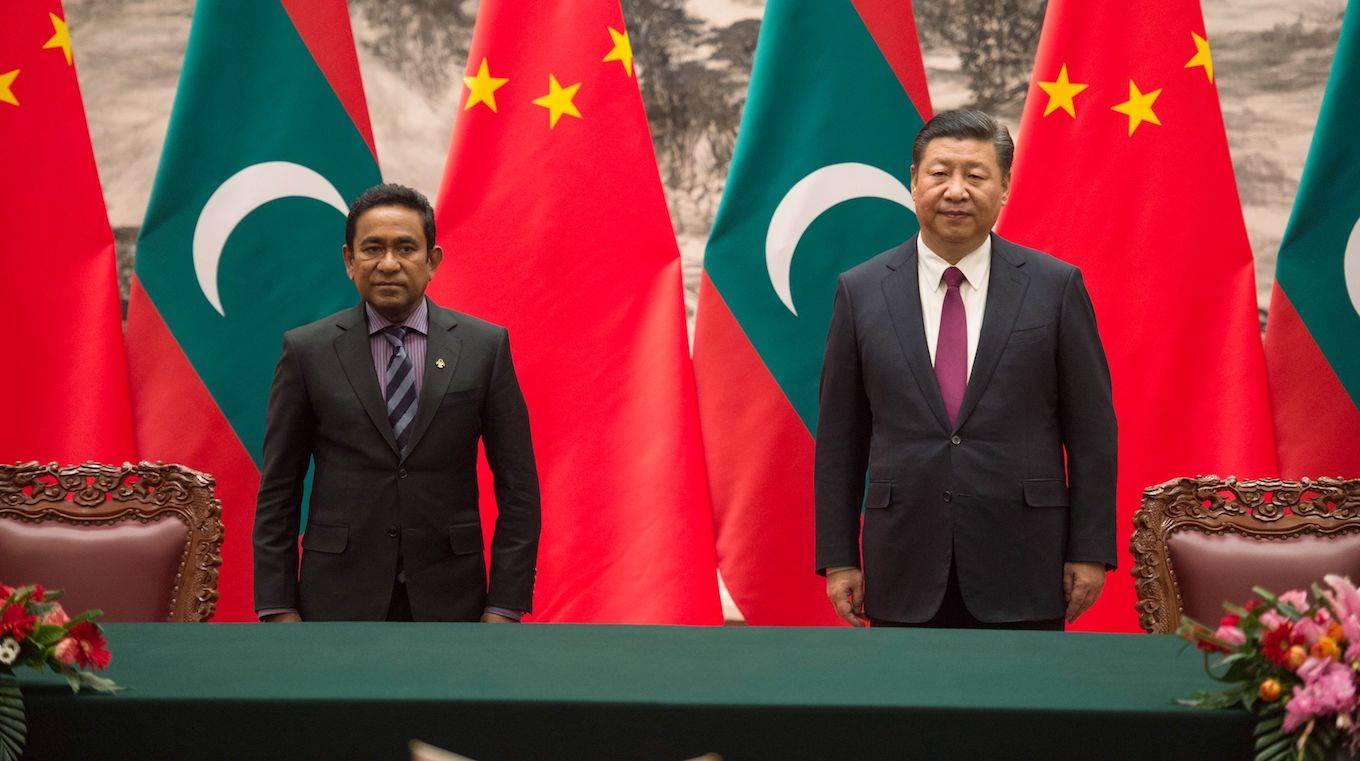 As the political situation in the Maldives deteriorates, peace and security in the Indian Ocean is increasingly in jeopardy. With China seeking to capitalize on its support for the authoritarian president, Abdulla Yameen, to expand its influence in the region, the crisis has become a defining moment for India.
NEW DELHI – The Maldives – that beautiful Indian Ocean country comprising more than 1,000 coral islands – is known the world over as a tranquil and luxurious travel destination. But the country is now being roiled by a political crisis so severe that international advisories are cautioning against travel there.
India and China's Dangerous Tug-of-War for the Top of the World
Bruno Maçães
If you were to draw the world’s economic center of gravity on a map, it would fall right on the border between Europe and Asia. But it is far from stationary. For 40 years, it has been following a long arc from the middle of the Atlantic, the sea world of yesterday, to the Himalayas, the land world of tomorrow. And if you thought the history of Western modernity was an extravaganza of technology and brute power, just wait for Asian modernity — technological on a vaster scale and directed by two fully modernized giants, India and China.
The Kabul Hotel Attack: Moving Beyond the Blame Game
By Nafay Choudhury
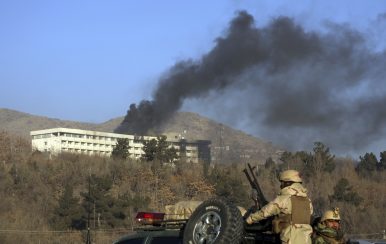 Structural conditions in Afghan society provide insurgents the opportunity to escape detection.
As I sat in my Kabul office on the evening of January 20, 2018, the familiar — and unwelcome — sounds of gunfire began to increase in the background. A few minutes later, the guard at my residence informed me that the Intercontinental Hotel, a towering figure within sight of my rooftop, was under attack. The sound of bullets rained overnight and into the morning, by which time a thick mass of black smoke had taken over the north side of the hotel. All I could do was watch and pray for those inside. Having visited the site on countless occasions, I can’t possibly imagine what went through the minds of the guests trapped on the top floor, some of whom jumped off the balcony to their demise. Some 17 hours later, 40 lives had been lost.
How Israel and Pakistan Can Avoid a Nuclear Showdown
Shimon Arad
 A back channel of communication between Israel and Pakistan could temper miscalculations or malicious attempts to artificially increase tensions between the two countries.
The advancement of Pakistan’s nuclear-missile capabilities and Israel’s growing military ties with India are increasing their respective military relevance for each other. In the absence of formal diplomatic relations and against the backdrop of a prevailing antagonistic public dialogue, the need for an effective and discreet channel of communication between Islamabad and Jerusalem to mitigate misunderstandings and misperceptions about each other’s intentions is growing.
US and China project 'sharp power' in the Indian Ocean
HIROYUKI AKITA
 TOKYO -- As the world's two largest economies compete to expand their spheres of influence, the U.S. and China are pushing separate development initiatives centered around the Indian Ocean.
China has its Belt and Road Initiative, proposed in 2013 by President Xi Jinping, which aims to build infrastructure spanning from Asia to Europe and incorporating overland and maritime elements. The country has already spent a fortune building land routes and ports.
Why China is keen to discuss CPEC with India
Jayadeva Ranade
 Faced with growing doubts about the much-touted economic benefits of China’s Belt and Road Initiative (BRI), accentuated by the recent cancellation of two projects by Pakistan and Nepal, its earliest supporters, the 19th Congress of the Chinese Communist Party (CCP) has incorporated the ambitious $1.4 trillion geo-economic BRI into the Party Constitution. Inextricably woven into Chinese President Xi Jinping’s agenda of making China a global power by 2050, the BRI is set to be included in the country’s constitution at the National People’s Congress — China’s version of a parliament — in March 2018. This will assure it of party and State backing.
The Chinese Century?
Hal Brands
 Regardless of how America responds to the Chinese challenge, its policy must be rooted in reality.
NO ONE can say we didn’t see it coming. Since the end of the Cold War, and even before, it has been obvious that a rapidly rising China could eventually menace America’s position and influence in East Asia—and, perhaps, globally as well. Since the Taiwan Strait Crisis in 1995–96, moreover, there have been accumulating signs that Beijing is not a status quo power, but rather one determined to reshape the East Asian order. For decades, then, there has been no shortage of warnings about the emerging China challenge.
Iran Among the Ruins Tehran’s Advantage in a Turbulent Middle East
By Vali Nasr
Over the last seven years, social upheavals and civil wars have torn apart the political order that had defined the Middle East ever since World War I. Once solid autocracies have fallen by the wayside, their state institutions battered and broken, and their national borders compromised. Syria and Yemen have descended into bloody civil wars worsened by foreign military interventions. A terrorist group, the Islamic State (also known as ISIS), seized vast areas of Iraq and Syria before being pushed back by an international coalition led by the United States.
The Propaganda Tools Used by Russians to Influence the 2016 Election
By ALICIA PARLAPIANO and JASMINE C. LEE
Thirteen Russian nationals have been charged with illegally trying to disrupt the American political process, according to an indictment filed by Robert S. Mueller III, the special counsel investigating Russia’s interference in the 2016 presidential election.
Here are the tools the Russians used:
Russian Bots Are Now Attacking the U.S. on Twitter With Disinformation 24 Hours-a-Day, 7 Days a Week
Sheera Frenkel and Daisuke Wakabayashi
New York Times
SAN FRANCISCO — One hour after news broke about the school shooting in Florida last week, Twitter accounts suspected of having links to Russia released hundreds of posts taking up the gun control debate.
The accounts addressed the news with the speed of a cable news network. Some adopted the hashtag #guncontrolnow. Others used #gunreformnow and #Parklandshooting. Earlier on Wednesday, before the mass shooting at Marjory Stoneman Douglas High School in Parkland, Fla., many of those accounts had been focused on the investigation by the special counsel Robert S. Mueller III into Russian meddling in the 2016 presidential election.
A New Beginning for European Defence
It is time to move past institutional integration and develop practical European security capabilities.
Europe is facing multiple security challenges. Russia aims to undermine the European security order and has shown its willingness to violate other countries’ sovereignty and increase its nuclear power. The Middle East and North Africa are on fire, homegrown terrorism threatens the streets of Europe, and cyber and information warfare are on the rise.
A real erosion and profound vulnerability of U.S. position and influence are inescapable conclusions of three successive U.S. Army War College studies.
By Nate Freier
With William “Trey” Braun, Albert Lord, Jr., Lieutenant Colonel Michael Hatfield, Lieutenant Colonel James Hayes, and Lieutenant Colonel Andrew Ulmer.
Hypercompetition and Reluctant American Great Power
In July 2017, the United States Army War College initiated the third in a series of year-long studies on key contemporary defense-relevant challenges. Each study benefits from some Department of Defense (DoD) sponsorship, as well as close working relationships with relevant defense and military stakeholders.
Is the World Actually Getting … Better?
By ISAAC CHOTINER
Our current moment feels ominous. But in his new book, Steven Pinker argues that the present is much better than the past.
On this week’s episode of my podcast, I Have to Ask, I spoke to Steven Pinker, a professor of psychology at Harvard and author of the new book Enlightenment Now: The Case for Reason, Science, Humanism, and Progress. It follows up on his controversial best-seller The Better Angles of Our Nature: Why Violence Has Declined, which offered a sweeping account of why Pinker believes the present is better than the past.
ISW Report - America's Global Competitions: The Gray Zone in Context
by Institute for the Study of War
The international community is grappling for its future, but the wrestling is more complicated than Carl von Clausewitz’s “pair of wrestlers.” The U.S. is part of three ongoing regional and global competitions. At stake: the future of the international order. The first competition involves revisionist powers — Russia, China, and Iran. This competition is below the threshold of war so far, but recent events in Syria show just how easily that threshold might be crossed. Revisionist powers seek to revise the current global order to their advantage, increasing their regional and global influence while decreasing that of the United States and its allies and partners. The second has already crossed the threshold of war.
The Nuclear Posture Review: Fiction and Fact
By Franklin C. Miller
Based on the spate of recent articles and op-eds criticizing the 2018 Defense Department’s
Nuclear Posture Review (NPR), many Americans have been led to believe the NPR:
Represents a dangerous departure from traditional U.S. nuclear deterrence policy;
Initiates a new nuclear arms race;
Proposes a plan to modernize U.S. forces which is unaffordable;
Creates a new class of “usable” nuclear weapons;
Threatens nuclear retaliation for cyber-attacks; and
Abandons arms control efforts.
Everyone Wants Innovation -- Why Is It So Persistently Hard To Find?
Victor Lipman
 Breakthrough innovation is the Holy Grail of business. Everyone wants it, yet it remains frustratingly elusive.
When I was in the corporate world, we had no shortage of methods to try to coax more innovation out of employees: incubators, innovation centers, brainstorming sessions... yet acutal creative innovation was inevitably challenging to find. It's hard to be "innovative on demand."
Which is why I was interested in a survey of CFOs I just happened across from last fall from Robert Half, examining barriers to workplace innovation.
Last Year’s Top 5 Worst Nuclear Nightmares (That Aren’t Going Away)
BY JOE CIRINCION
 Each of these threats has only gotten worse. Take one guess what (or who) I think remains the top nuclear threat to us...
The top five nuclear nightmares we faced in 2017 will continue to haunt us in 2018. In fact, each has gotten worse this year.
It is not that the past year has been devoid of good news, but the bad outweighed the good.
The overall number of nuclear weapons in the world continues to shrink, thanks to arms control treaties negotiated over the past few decades. The steady defeat of ISIS has reduced the risk of nuclear terrorism. Tensions seem to have eased between India and Pakistan, reducing the risk of war in South Asia.
Modern Information Warfare Requires a New Intelligence Discipline
By Robert Kozloski
The United States has been under attack from foreign entities for years, and the national security enterprise has failed to adapt its outdated practices to new threats, particularly those below the threshold of war. Since Russian interference in the U.S. Presidential Election was suspected, much has been made of the threat posed by information warfare. While the threat has been widely discussed, little has been done to prevent foreign influence from disrupting U.S. interests. This essay examines the concept of information warfare and proposes that a new intelligence discipline, public intelligence, is needed to counter rising threats to U.S. national interests.
The debate over what Cyber Command still needs
By: Mark Pomerleau
/arc-anglerfish-arc2-prod-mco.s3.amazonaws.com/public/ECBHFYRMWFCM5P52QSCB3TUHF4.jpg) This is the final part of a series exploring the future of Cyber Command. For previous installments, see part one and part two.
This is the final part of a series exploring the future of Cyber Command. For previous installments, see part one and part two.
As Cyber Command continues to mature, key government watchdogs want to ensure the organization does so in a responsible way.
As part of this effort, the House Armed Services Emerging Threats and Capabilities subcommittee, which oversees cyber, held a classified briefing with the Government Accountability Office in mid January to “discuss ongoing reviews and studies of cyberspace and cybersecurity capabilities of the Department of Defense,” a press release from the committee said.
Mueller Indictment Of Russian Operatives Details Playbook Of Information Warfare
TIM MAK
 Outside a Trump campaign rally in West Palm Beach, Fla., there was a cage holding a person dressed up like Hillary Clinton in a prison uniform. In the outrageous state of the 2016 campaign, it wasn't altogether shocking to see someone at a Trump event staging the visual stunt, after the "lock her up!" chants that punctuated Trump rallies.
But it's now known that this moment was set up by Russians.
Air Force wants to mitigate cyber vulnerabilities in avionics systems
By: Mark Pomerleau
/arc-anglerfish-arc2-prod-mco.s3.amazonaws.com/public/2CFHT4C56JAUPK3NWM3MQSZ4ZA.jpg) The Air Force wants to ensure the cockpits of its aircraft and the data its reading are not susceptible to cyber threats.
The Air Force wants to ensure the cockpits of its aircraft and the data its reading are not susceptible to cyber threats.
“If you’re in the cockpit, you have to be assured the track you’re going to shoot at is the track you want to shoot at,” said Vice Adm. Michael Gilday, commander of 10th Fleet/Fleet Cyber Command, said last year. “Same for a fleet commander; they need to ensure the guidance they are putting out to the force has not been tampered with.”
AI makes Mattis question ‘fundamental’ beliefs about war
By: Aaron Mehta
/arc-anglerfish-arc2-prod-mco.s3.amazonaws.com/public/Q2J533WOWZGN5AZST7GHP3GMIQ.jpg) WASHINGTON – Over the years, Secretary of Defense Jim Mattis has cultivated a reputation for deep thinking about the nature of warfare. And during that time, he has come to a few conclusions about what he calls the “fundamental” nature of combat.
WASHINGTON – Over the years, Secretary of Defense Jim Mattis has cultivated a reputation for deep thinking about the nature of warfare. And during that time, he has come to a few conclusions about what he calls the “fundamental” nature of combat.
“It’s equipment, technology, courage, competence, integration of capabilities, fear, cowardice — all these things mixed together into a very fundamentally unpredictable fundamental nature of war,” Mattis explained Feb. 17. “The fundamental nature of war is almost like H20, ok? You know what it is.”
Can the Army Get Ready for War with Russia and China and Fight Terror Too?
Dave Majumdar
 The United States Army will receive increased funding in the President’s fiscal year 2019 budget proposal as the service struggles to modernize while simultaneously fighting wars in current conflicts. The problem the Army must solve is how to deter Russia and China while dealing with today’s challenges.
“The Army supports the 2018 National Defense Strategy by providing a combat-credible war-fighting force, postured and capable of deterring global competitors, preventing conflict and shaping the global security environment,” Maj. Gen. Paul A. Chamberlain, Army budget director told reporters.
Mattis: Deploy-or-get-out rule is about fairness By: Aaron Mehta 2 days ago
/arc-anglerfish-arc2-prod-mco.s3.amazonaws.com/public/M6BB7JIHINHGXDXDMHAMFW4RPM.jpg) WASHINGTON ― New rules requiring members of the military to be able to deploy or get outwere put in place to ensure fairness in deployment rates, Defense Secretary Jim Mattis said.
WASHINGTON ― New rules requiring members of the military to be able to deploy or get outwere put in place to ensure fairness in deployment rates, Defense Secretary Jim Mattis said.
“You’re either deployable, or you need to find something else to do. I’m not going have some people deploying constantly and then other people, who seem to not pay that price, in the U.S. military,” Mattis told reporters Feb. 17 in his first comments on the issue since the new policy was formally introduced.
Subscribe to:
Posts (Atom)