18 March 2018

Cyberthreats: The Vexing New Front in Modern Warfare

By Carl M. Cannon

In this series of articles running from mid-March to July, RealClearPolitics and RealClearDefense take an in-depth look at the intersection of cybersecurity, technology, and warfare in the 21st century. On the morning of September 11, 2001, Leon Panetta was testifying to a House committee about the health of Earth’s oceans when he was handed a note informing him about the attack on the World Trade Center. The session ended abruptly as people instinctively scrambled for safety, not knowing that passengers on United Airlines flight 93 were taking brave actions that may have saved the U.S. Capitol from becoming a second Ground Zero.
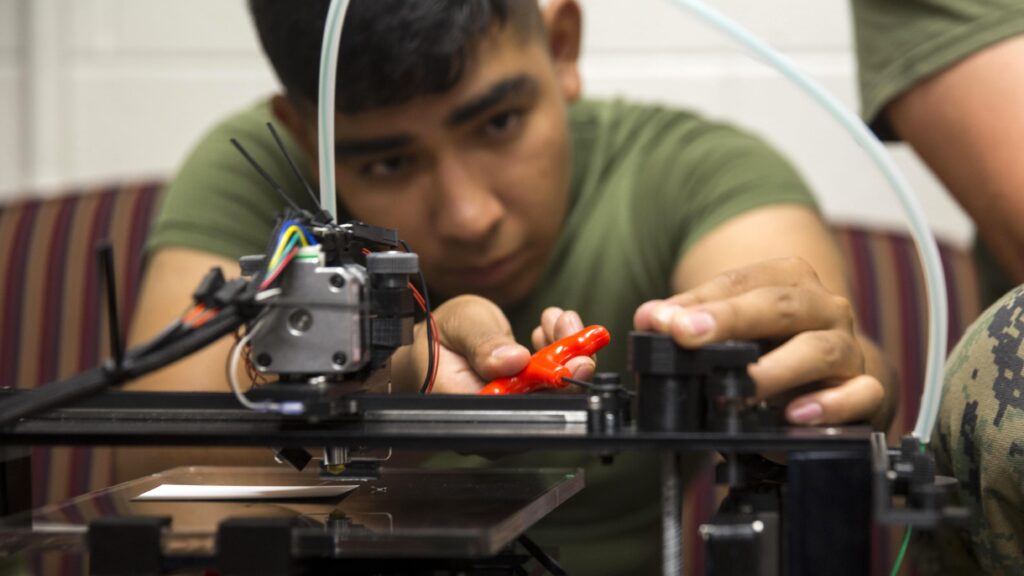
Marines’ Love Affair With 3D Printing: Small Is Cheap, & Beautiful

By SYDNEY J. FREEDBERG JR.

WASHINGTON: Why are the Marines in love with 3D printing? Like most romances, it starts with the small things, things too small for the conventional supply system to manage, like a two-cent plastic button that preempts a $11,000 repair. Big defense contractors, take notice. “There’s an intercom in most helicopters,” said Gen. Robert Neller, commandant of the Marine Corps. Ground-pounders like him tend to hit the buttons too hard and break them. But the Pentagon supply system doesn’t deal in replacing individual buttons. “You’ve got to buy the whole faceplate of the intercom,” Neller said. “It costs $11,000.”

The Army’s next question: should battlefield commanders have cyber capabilities?


The Department of Defense has complicated relationship when it comes to authorities and cyberspace operations.  Traditionally, the authority to conduct offensive and defensive remote cyber operations abroad has triggered an approval process that rests with the president and can be delegated to lower levels. However, despite the fact the military is maturing its cadre of cyber warriors within U.S. Cyber Command, Army leaders say tactical commanders want to control cyber capabilities on the battlefield given the nature of the trajectory of future wars.

The science of fake news

David M. J. Lazer, 

The rise of fake news highlights the erosion of long-standing institutional bulwarks against misinformation in the internet age. Concern over the problem is global. However, much remains unknown regarding the vulnerabilities of individuals, institutions, and society to manipulations by malicious actors. A new system of safeguards is needed. Below, we discuss extant social and computer science research regarding belief in fake news and the mechanisms by which it spreads. Fake news has a long history, but we focus on unanswered scientific questions raised by the proliferation of its most recent, politically oriented incarnation. Beyond selected references in the text, suggested further reading can be found in the supplementary materials.

Batteries, Bullets, & Drones: Commandant’s Wishlist For Infantry Task Force

By SYDNEY J. FREEDBERG JR.

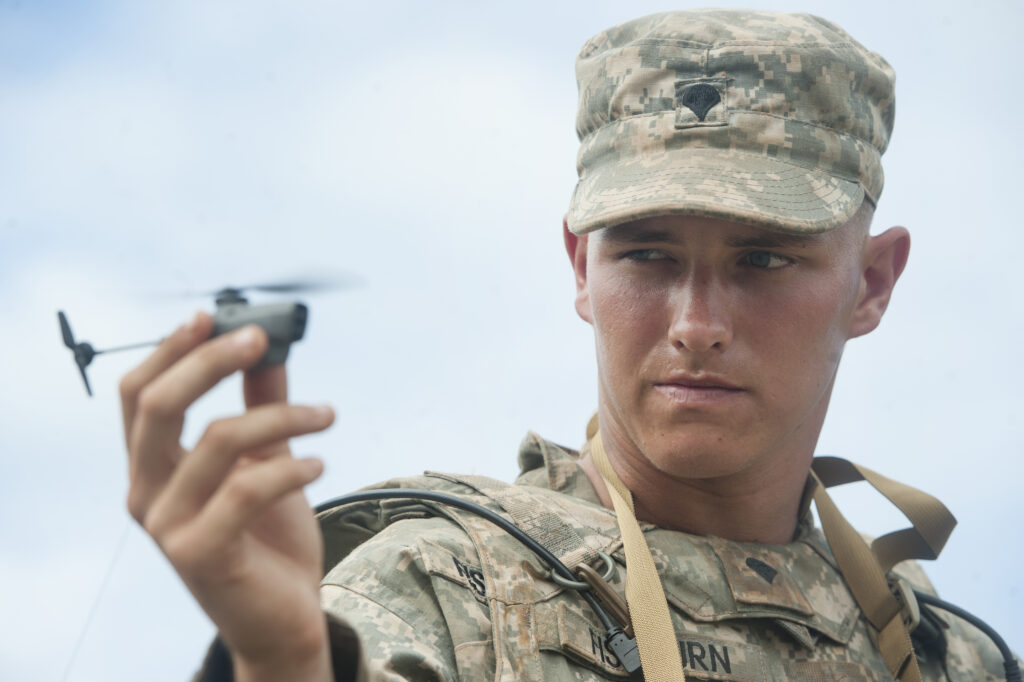
What's the one technology the Marine Corps Commandant wants more than any other for his riflemen? It wasn't an amphibious vehicle, more JLTVs, a new rifle or friggin' lasers. It is "a smart way to recharge batteries," Gen. Robert Neller told reporters. Neller had a long wishlist for the contractors assembled here for a National Defense Industrial Associationluncheon. “One of the top three,” he said, is MUX, a large scout/attack drone that can fly off an amphibious warship — i.e. not needing an aircraft carrier — to conduct Intelligence, Surveillance, & Reconnaissance (ISR), Electronic Warfare (EW), and precision strike. Some critics have worried about the size and cost of what will be, in Pentagon terms, a Group 4 or Group 5 Unmanned Aerial Vehicle, but Neller seemed willing to consider a big drone if that’s what it took to get long range: The V-22 Osprey tiltrotors taking Marine infantry ashore can fly 500 miles without refueling, he told reporters afterwards, and he wants MUX to match that.

17 March 2018

China Outpaces US in Arms Supply to Pakistan

Nukhbat Malik

From rifles to combat aircraft and warships, China has become the dominant supplier of weapons to Pakistan, Bangladesh and Myanmar, according to the latest report by the Stockholm International Peace Research Institute (SIPRI). Titled "Trends in International Arms Transfer, 2017" the report reflects on the major change in the geopolitical sphere of South Asia. Weapons sales to Pakistan by the United States have dropped by 76 percent in the past five years, according to the report. China has become the biggest supplier of arms to India's archrival neighbor, providing 35 percent of its arms to Pakistan from 2013 to 2017.

Why the Taliban Isn't Winning in Afghanistan


We must face facts,” remarked Senator John McCain in August 2017, “we are losing in Afghanistan and time is of the essence if we intend to turn the tide.” He is not the only one who has argued that the Taliban are on the march. “The Taliban are getting stronger, the government is on the retreat, they are losing ground to the Taliban day by day,” Abdul Jabbar Qahraman, a retired Afghan general who was the Afghan government’s military envoy to Helmand Province until 2016, told the New York Times over the summer. Media outlets have likewise proclaimed that “The Taliban do look a lot like they are winning” and that this is “The war America can’t win.”

Mattis arrives in Afghanistan, says some in Taliban may be willing to pursue peace


By Dan Lamothe

KABUL — Defense Secretary Jim Mattis visited Afghanistan on Tuesday to meet senior U.S. and Afghan officials and discuss both the military campaign and “peeling off” some members of the Taliban to pursue a peace deal with the Afghan government. The unannounced visit comes two weeks after Afghan President Ashraf Ghani made what many observers consider an unprecedented offer, inviting the Taliban to begin peace talks without preconditions to end the 16-year war. The Taliban said last month that it is open to reaching a political settlement and negotiating, but it has not responded to Ghani’s offer. 

The Future of U.S.-China Relations Begins at Home


Graham Allison

Kori Schake’s essay (and the book from which it is adapted) provides a serious, penetrating, and provocative invitation to debate the overriding geostrategic challenge of our time: what to do about the rise of China. Safe Passage is an outstanding example of the sort of work we champion at the Harvard Belfer Center’s Applied History Project. It illuminates current challenges by careful analysis of the historical record. And the case she examines in which the United States rose to rival and eventually surpass the British global hegemony is among the most instructive of the 16 cases in the Harvard Thucydides’ Trap case file for policymakers seeking to cope with the current U.S.-China competition.

Trump Condemns Chinese Factories. China Is Already Closing Some.

By KEITH BRADSHER and AILIN TANGMARCH 

Ms. Li works at a Chinese aluminum factory, the sort of hulking industrial installation that has helped set off a global trade fight. President Trump imposed steep new tariffs on steel and aluminum imports last week, amid complaints from American companies that the Chinese government props up too many wasteful factories. But here in the small Chinese town of Chengkouzhen, officials last year let the factory go idle. That cut off the steam that once heated the apartments where its workers live.

Fact: In 2017, the U.S. and China Traded $711 Billion Worth of Goods and Services

Riley Walters

It’s true that the U.S. and China continue to have problems with access to certain areas of the Chinese market and that intellectual-property theft is a problem. It’s also true that China’s state-led capitalism diverts both its own markets and international markets. We have to find ways to address these problems, but in the process, we cannot lose focus on the bigger picture. Here are five things you should know about trade between the U.S. and China:

US risks irrelevance in Syria with reconstruction taboos

Julian Pecquet 

After seven years of war, Syria’s reconstruction needs are truly daunting. More than half of the country’s hospitals and two out of three schools have been damaged or destroyed and more than a quarter of all homes are in need of repairs. The price tag to rebuild the country, according to United Nations Special Envoy for Syria Staffan de Mistura, is a hefty $250 billion. While these costs have mounted, Syria has seen its economy dwindle by an equivalent amount since the start of the conflict.

It’s time for the UK to take a stand on Russia – the world is watching

BY NIGEL HALL

Brexit aside, we are suddenly facing the biggest foreign policy crisis since the Falklands. Attempted murder in Salisbury constitutes a warlike act says Tom Tugendhat, respected chairman of the Commons foreign affairs committee. The Daily Telegraph quotes this in its leader headline: “Warlike act to which NATO must respond”, and political, public and media opinion broadly agree. So, how bad could this get? What must we do now? What should we be prepared to do if things get even worse? What is Putin likely to do next? How will he respond? What unintended consequences might follow?

I Knew the Cold War. This Is No Cold War.

Stephen M. Walt

A lot of smart people seem to think the United States and Russia are in a "new Cold War." You can find articles on the subject in Politico, the New Yorker, and the Nation, and a quick Google search will take you to an entire website devoted to the topic, yet the more balanced views of a couple of years ago are harder to find these days. Politicians in both countries are using increasingly harsh language to describe each other and people on both sides are convinced the other is engaged in various dark plots against them. There are even signs of a new arms race, with Russian President Vladimir Putin boasting about sophisticated new nuclear weaponry and the United States preparing to launch a costly program of nuclear modernization....

The End of the Concept of ‘the West’?

by Vessela Tcherneva

‘You, Europeans, come to this town to preach to us, to complain and accuse, and then expect us to protect you,’ an American colleague told me on a recent trip to Washington. His bitterness, nothing new in substance and form, however surprised me, as I had known him for almost twenty years, from the times of NATO’s expansion to Central Europe. He was quite unwaveringly optimistic back then, in the spirit of the time, and, to expand the term ‘transatlantic’, very ‘western’. The optimism of the early 2000s had been an ideal fit to the concept of the West as a concept of the future (‘Zukunftsbegriff’), in opposition to the fallen Soviet empire, the final victory of liberal democracy and, in short, the End of History. 

The harsh reality: Donald Trump does mean Europe harm

Natalie Nougayrède

The emerging crisis between the United States and Europe is multifaceted; its contours fast evolving; its outcome hard to predict. And if that were true on Monday, it is more so now, following the firing by Donald Trump of Rex Tillerson, his secretary of state, who had unequivocally expressed his horror about the nerve agent poisoning in the UK – and openly pledged the solidarity of his office with a European ally.  The American president, by contrast, long stayed silent, even after Theresa May announced that Russia was “highly likely” to be responsible for the attack. This merits sustained reflection. While several European governments were closing ranks with the UK, united in the face of an unprecedented assault involving the use of a military grade substance in a western country, the scenario many dreaded was becoming reality. 

COFFEE HOUSE Brexit Britain: confused and alone

Nick Cohen

Hello David, My name is Juliia Popova. I represent Russian state TV channel. Would appreciate it if Matt Singh or any other political analist [sic] could give us a short comment on the matter of the following. We will be happy to know why the British government tries to blame Russian government for the attempted murder of ex-Russian spy, why is it happening right now when even USA on behalf of White House press secretary Sarah Sanders says that so far there is no evidence to accuse Russia of that. The interview wouldn’t take much time, usually it is 5-10 min via Skype. We need it today,

Most of America’s Fruit Is Now Imported. Is That a Bad Thing?

By DAVID KARP

More than half of the fresh fruit and almost a third of the fresh vegetables Americans buy now come from other countries. CreditJens Mortensen for The New York Times; Styled by Mariana Vera It’s obvious to anyone who visits an American supermarket in winter — past displays brimming with Chilean grapes, Mexican berries and Vietnamese dragon fruit — that foreign farms supply much of our produce. Imports have increased steadily for decades, but the extent of the change may be surprising: More than half of the fresh fruit and almost a third of the fresh vegetables Americans buy now come from other countries.

North Korea May Engage in Cyberattacks Despite Nuke, Missile-Test Moratorium, States Report


North Korea may engage in offensive cyber operations despite agreeing to a moratorium on missile and nuclear tests during its historic talks with US and South Korean leaders, according to a Tuesday post on 38 North, a Johns Hopkins University website focused on analyzing North Korean affairs.Adam Meyers, a security and intelligence expert, said the North might carry out such cyberattacks to demonstrate its displeasure with continuing international sanctions against the country.

Putin Says Russia’s New Weapons Can’t Be Beat. With AI and Robotics, They Can.

BY AUGUST COLE, AMIR HUSAINFOUNDER

Instead of single interceptors rising to meet an enemy missile, think about swarms of sub-launched UAVs armed with explosives, sensors, and brains.Russia’s next generation of strategic weaponry may be a bit more distant and a bit less fearsome than Vladimir Putin recently claimed. But his March 1 speech about titanic ballistic missiles and nuclear-powered undersea drones should spur American defense and technology communities to move faster — indeed, uncomfortably so — to embrace similarly disruptive ideas such as artificial intelligence and robotics.

How AI is reshaping the logistics and transportation industry…


Major logistics providers have long relied on analytics and research teams to make sense of the data they generate from their operations. AI’s ability to streamline so many supply chain and logistics functions is already delivering a competitive advantage for early adopters by cutting shipping times and costs. A cross-industry study on AI adoption conducted in early 2017 by McKinsey found that early adopters with a proactive AI strategy in the transportation and logistics sector enjoyed profit margins greater than 5%. Meanwhile, respondents in the sector that had not adopted AI were in the red.

Could AI-Driven Info Warfare Be Democracy’s Achilles Heel?

DOUG WISE

Ripped out of the pages of science fiction novels, artificially intelligent, self-aware weapons systems could become a global existential threat, if harbingers of doom like Elon Musk are to be believed. What I’m more worried about is combining artificial intelligence with a weapon that is already hurting us, and our democracy: the weaponization of information. Our adversaries are already using sophisticated cyber tools and delivering these info-weapons into the heart of our social and political fabric by attacking our information systems, media outlets, social media and our political processes. By using these weapons against our greatest vulnerabilities, adversaries can trigger a digital rot within our social and political structures which can have as significant effect as full scale war.

The web is under threat. Join us and fight for it.


Today, March 12, is the World Wide Web’s 29th birthday. Here’s a message from our founder and web inventor Sir Tim Berners-Lee on what we need to ensure that everyone has access to a web worth having. Today, the World Wide Web turns 29. This year marks a milestone in the web’s history: for the first time, we will cross the tipping point when more than half of the world’s population will be online. When I share this exciting news with people, I tend to get one of two concerned reactions: 

Before I Go: A Stanford neurosurgeon’s parting wisdom about life and time

By Paul Kalanithi 
Source Link

In residency, there’s a saying: The days are long, but the years are short. In neurosurgical training, the day usually began a little before 6 a.m., and lasted until the operating was done, which depended, in part, on how quick you were in the OR.A resident’s surgical skill is judged by his technique and his speed. You can’t be sloppy and you can’t be slow. From your first wound closure onward, spend too much time being precise and the scrub tech will announce, “Looks like we’ve got a plastic surgeon on our hands!” Or say: “I get your strategy 

War by Other Means – Integrating Modern Technology

By Nick Brunetti-Lihach

Armed with only a radio and a nine-line, a well-trained Marine can wreak havoc on enemy forces. During Operation IRAQI FREEDOM, lethal air and artillery fires destroyed, suppressed, or neutralized targets of all shapes and sizes. In that place and time, lethal combined arms were an effective means to an end. The standard has now changed. The ability to shoot, move, and communicate can no longer be taken for granted. Today’s maneuver units do not have the tools to integrate lethal fires with non-lethal cyber (cyberspace) and EW (electronic warfare) fires at the tactical level in real time to win a fight with a near-peer or contest cyber and the electromagnetic spectrum. Today’s threats are no longer line-of-sight projectiles. Threats at the tactical edge may originate from anywhere in the world. In order to address the gaps in doctrine, organization, tactics and technology, the MAGTF must adapt and evolve.

The Cyber Party of God: How Hezbollah Could Transform Cyberterrorism

By: Ben Schaefer, Columnist
Source Link

Since 1982, Hezbollah, the Lebanese “Party of God” and Iran-backed Shiite terrorist organization, has antagonized its enemies through a potent mix of armed attacks and psychological warfare. Among these tactics, Hezbollah pioneered the use of cyber-operations as a tool of coercion over a decade ago and continues to use the Internet as a weapon today. Inspired and refined with the help of Iran, Hezbollah is shifting its coercive tactics from urban streets and battlefields to the routers of their Western adversaries.

Who Cares About Cybersecurity?

By Paul Rosenzweig

In the professional world of Lawfare (national security, homeland security, intelligence, privacy and civil liberties) nobody would doubt the salience of questions of cybersecurity. They seem to resonate across many dimesions and to pose some of the most vexing legal and policy questions. What to do, for example, about encryption is an issue that has generated far more heat than light and continues to divide analysts in ways that confound resolution.

Infographic Of The Day: Internet Giants: Who Owns Who On The Web


In the brick and mortar world, decades of consolidation has led certain conglomerates to wield massive amounts of control in the banking, consumer goods, alcohol, and auto sectors. And although the internet is incredibly vast in scale and much newer, it’s also heading in a similar direction. As a result, it’s not unusual to see behemoths like Facebook, Alphabet, and Amazon leveraging their size, networks, and market leading positions to buy up competitors while also making other strategic acquisitions. This ongoing consolidation has created a vast web of subsidiaries, providing each parent organization with additional insurance in maintaining their position at the top of the digital food chain.

New Cybersecurity Norms Develop?

JOSEPH S. NYE

In 2013, cybersecurity was named the biggest threat facing the US. But, as UN Secretary-General António Guterres argued last month, minimizing the risks will require a global effort to establish shared rules and norms. CAMBRIDGE – Last month, United Nations Secretary-General António Guterrescalled for global action to minimize the risk posed by electronic warfare to civilians. Guterres lamented that “there is no regulatory scheme for that type of warfare,” noting that “it is not clear how the Geneva Convention or international humanitarian law applies to it.”

Salyukov Confirms Corrections to Armed Forces’ Structure


By: Roger McDermott

Several statements and interviews from Russia’s military top brass, especially marking the fifth anniversary of the appointment of Sergei Shoigu as minister of defense in November 2012, note the effort to reintroduce a number of divisions to the order of battle (OOB). These structural-level changes appear to mark a departure from Anatoly Serdyukov’s (defense minister in 2007–2012) reforms to move the OOB to a brigade-based model. The reappearance of divisions in the Ground Forces has also been interpreted as a sign that the General Staff is preparing to conduct “large-scale” warfare against a conventional enemy. This interpretation seems to fit with the idea that the Russian military is preoccupied with confronting a threat from the North Atlantic Treaty Organization (NATO). However, some of the details around the move to reintroduce divisions to the OOB, as well as the locations of these formations, point to Moscow preparing for long-term conflict in Ukraine, replete with a range of escalation options (see EDM, March 6, 2018; TASS, December 22, 2017).

Top Gun For Grunts: Mattis May Revolutionize Infantry

By SYDNEY J. FREEDBERG JR.

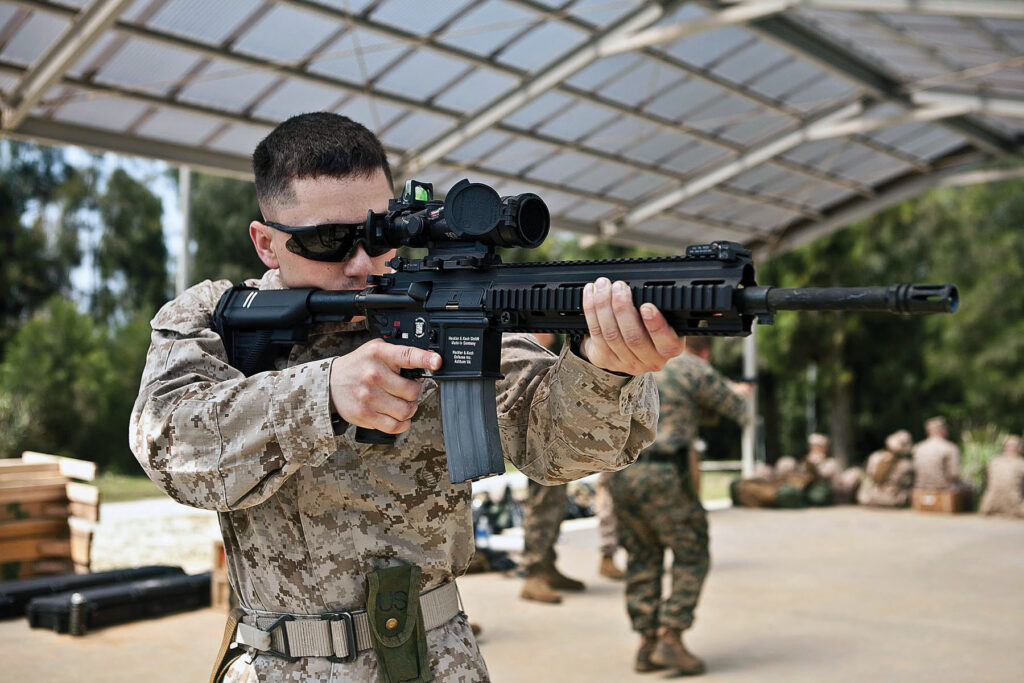
"To get a quantum increase in the quality of close combat forces, we can do it in the next two years, (and) the cost compared to the rest of the DoD budget is very small," said retired Maj. Gen. Robert Scales, who chairs the advisory board for Secretary Mattis's Close Combat Lethality Task Foce. Forget the old-school grunt. Imagine a future American infantrymantrained as intensively as a fighter pilot through hundreds of virtual and real-world drills, culminating in a “small unit Top Gun.” Imagine infantry going into battle with swarms of drones serving as scouts and fire support. Imagine Army and Marine infantry exempted from the Pentagon’s bureaucratic personnel policies so they can build teams of experienced soldiers in their late 20s and early 30s, much like Special Forces.

16 March 2018

The incorporation of Artificial Intelligence in Indian IT

Vivek Wadhwa
Source Link

Infosys Ltd says that Artificial Intelligence (AI) technologies “are already being broadly deployed, producing real results, and impacting business strategy” in at least 73% of companies across the globe. Along with other Indian IT companies, Infosys fancies itself a leader in AI. The reality, though, according to MIT Sloan Management Review and Boston Consulting Group, is that hardly one in 20 US companies has extensively incorporated AI into its offerings or processes. Businesses understand neither what AI is nor how to realize its amazing potential. The only significant player in the AI enterprise market is IBM Global Services, with IBM Watson technology, and its take-up has been slow due to these limitations.

The ancient wisdom the Dalai Lama hopes will enrich the world

Justin Rowlatt
Source Link

It isn't often you meet the leader of a world religion - rarer still that he tweaks your cheek. But that's what happened when I met the 14th Dalai Lama last month. You know when he has entered a room. First there is a hush and, almost immediately after that, a ripple of infectious laughter. Next, there he is, his face creased into a mischievous smile, his eyes twinkling behind his tinted spectacles. I met his holiness in Bodh Gaya, the northern Indian town where Buddha himself is said to have attained enlightenment. It is an auspicious place to meet the leader of Tibetan Buddhism, and it was also an auspicious day.

Al-Qaeda’s Resurrection


While the self-proclaimed Islamic State has dominated the headlines and preoccupied national security officials for the past four years, al-Qaeda has been quietly rebuilding. Its announcement last summer of another affiliate—this one dedicated to the liberation of Kashmir—coupled with the resurrection of its presence in Afghanistan and the solidification of its influence in Syria, Yemen, and Somalia, underscores the resiliency and continued vitality of the United States’ preeminent terrorist enemy.

SOUTH ASIA INTELLIGENCE REVIEW


Data and assessments from SAIR can be freely published in any form with credit to the South Asia Intelligence Review of the South Asia Terrorism Portal. Nagaland Governor P.B. Acharya on March 6, 2018, stated that the Naga ‘political issue’ would be resolved within six months. He further asserted that if Nagaland and the Northeast were to progress, then the Naga issue should be brought to a conclusion and the welfare of the Nagas should be on the agenda. On March 3, 2018, the Election Commission of India (ECI) declared the results of the Nagaland Assembly Elections held on February 27, 2018. The Naga People’s Front (NPF), leading constituent of the erstwhile ruling coalition,