23 April 2018

The {Cyber} Guns of August

Michael Senft

"History doesn't repeat itself but it often rhymes.”

-- Mark Twain

“Why did the lessons of Stuxnet, Wannacry, Heartbleed and Shamoon go unheeded?” asked the inquisitive student to the doleful professor, whose withered, prematurely-aged face bore witness to the shattering of a hyperconnected world. Today students ask the same questions about the Russo-Japanese War and the Spanish Civil War. Voluminous accounts detailed the terrible lethality of modern weaponry at the Siege of Port Arthur and the Battle of Mukden, which foretold the unimaginable bloodshed of the First World War. [1] Likewise, the Spanish Civil War was a harbinger of blitzkrieg warfare and the unspeakable carnage unleashed during the Second World War. [2,3,4] Despite insightful analysis and almost clairvoyant assessments, the lessons from both conflicts were largely ignored as they ran counter to prevailing views, established organizational structures and pre-ordained plans. Are we any different today?
Cybersecurity Tech Accord sets new privacy standards for tech companies

By James Sanders 

The new paper, signed by 34 tech companies, is akin to a 'digital Geneva Convention' to govern the rules of engagement in technology. Building a slide deck, pitch, or presentation? Here are the big takeaways:  Signatories to the accord will not, among other things, "help governments launch cyberattacks against innocent citizens and enterprises. The accord comes amidst a wave of new attempts by governments to compel tech companies to decrypt communications. On Tuesday, a group of 34 technology companies signed the "Cybersecurity Tech Accord," a document that declares that the signatories will protect all of their customers from threats and will not "help governments launch cyberattacks against innocent citizens and enterprises from anywhere."

Notes from the AI frontier: Applications and value of deep learning

By Michael Chui, James Manyika, Mehdi Miremadi, Nicolaus Henke, Rita Chung, Pieter Nel, and Sankalp Malhotra


An analysis of more than 400 use cases across 19 industries and nine business functions highlights the broad use and significant economic potential of advanced AI techniques. Artificial intelligence (AI) stands out as a transformational technology of our digital age—and its practical application throughout the economy is growing apace. For this briefing, Notes from the AI frontier: Insights from hundreds of use cases (PDF–446KB), we mapped both traditional analytics and newer “deep learning” techniques and the problems they can solve to more than 400 specific use cases in companies and organizations. Drawing on McKinsey Global Institute research and the applied experience with AI of McKinsey Analytics, we assess both the practical applications and the economic potential of advanced AI techniques across industries and business functions. Our findings highlight the substantial potential of applying deep learning techniques to use cases across the economy, but we also see some continuing limitations and obstacles—along with future opportunities as the technologies continue their advance. Ultimately, the value of AI is not to be found in the models themselves, but in companies’ abilities to harness them. 

Artificial Intelligence — The Revolution Hasn’t Happened Yet


Artificial Intelligence (AI) is the mantra of the current era. The phrase is intoned by technologists, academicians, journalists and venture capitalists alike. As with many phrases that cross over from technical academic fields into general circulation, there is significant misunderstanding accompanying the use of the phrase. But this is not the classical case of the public not understanding the scientists — here the scientists are often as befuddled as the public. The idea that our era is somehow seeing the emergence of an intelligence in silicon that rivals our own entertains all of us — enthralling us and frightening us in equal measure. And, unfortunately, it distracts us.

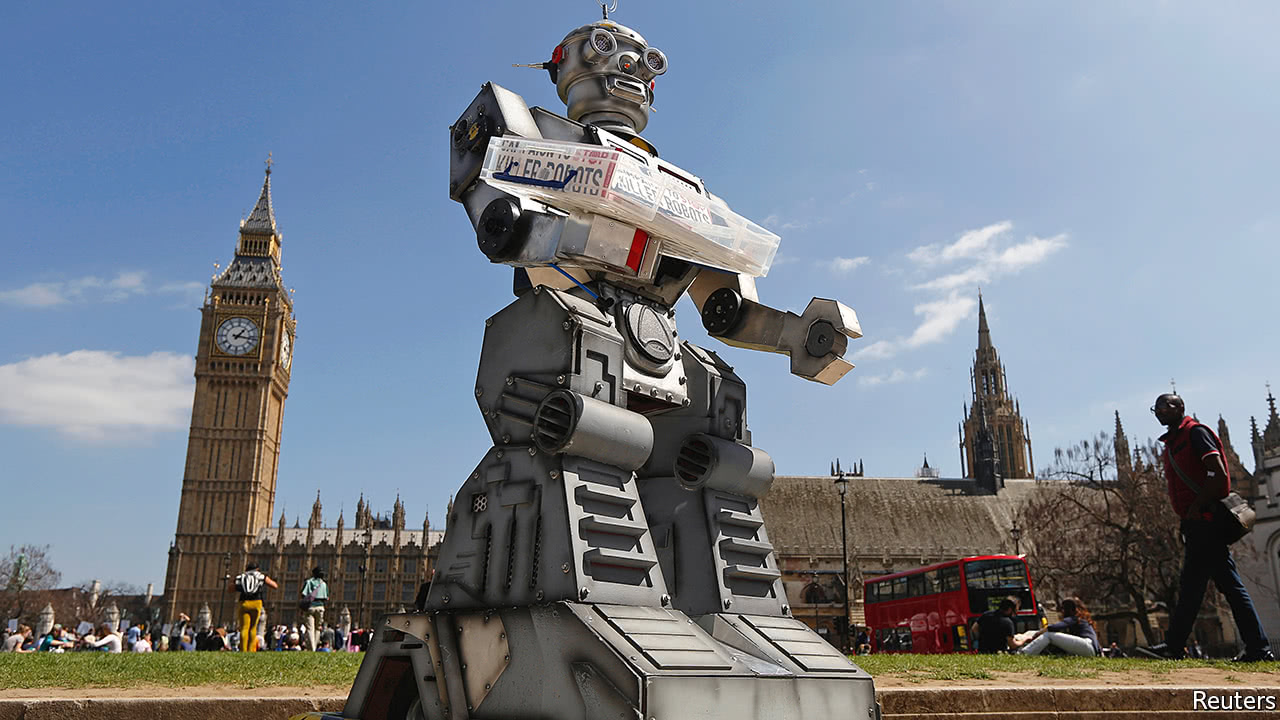
Autonomous weapons are a game-changer


MANY OF THE trends in warfare that this special report has identified, although worrying, are at least within human experience. Great-power competition may be making a comeback. The attempt of revisionist powers to achieve their ends by using hybrid warfare in the grey zone is taking new forms. But there is nothing new about big countries bending smaller neighbours to their will without invading them. The prospect of nascent technologies contributing to instability between nuclear-armed adversaries is not reassuring, but past arms-control agreements suggest possible ways of reducing the risk of escalation.

NIST publishes update to its cyber framework

By: Jessie Bur

The new version 1.1 of the Cybersecurity Framework, which was developed through public feedback collected in 2016 and 2017, includes updates to authentication and identity, self-assessing cyber risk, managing cybersecurity within the supply chain and vulnerability disclosure. “This update refines, clarifies and enhances version 1.0,” said Matt Barrett, program manager for the Cybersecurity Framework. “It is still flexible to meet an individual organization’s business or mission needs, and applies to a wide range of technology environments such as information technology, industrial control systems and the internet of things.”

Army Needs to Maintain Momentum on APS Technologies

By Daniel Gouré

A few years ago, the leadership of the U.S. Army, most notably then incoming Chief of Staff General Mark Milley, concluded that their service had lost overmatch vis-à-vis the Russian military. U.S. ground forces deployed in Europe had been reduced to a faint shadow of their former greatness. They lacked heavy armor, combat aviation, long-range fires, short-range air defense and electronic warfare. In addition, historically low rates of investment left the Army without the modernization portfolio needed to regain its erstwhile dominance in maneuver warfare. General Milley instituted a crash program to fill a number of critical capability gaps. Among the bold decisions the Army made was to initiate a rapid program to provide its ground combat vehicles with an active protection system (APS). APS employs a central computer or controller, sensors that provide 360-degree surveillance of the area around a vehicle and launchers for countermeasures.

Army Air & Missile Defense Faces The Future

By ROBBIN LAIRD and ED TIMPERLAKE

"If something kicks off, we're the first ones to see it," the sergeants told us. "We're the first ones to react. And you're on the line, they're coming after you." How busy is US Army Air Defense Artillery? “We have been at war for two decades in the ADA community, operating worldwide, and hardly anyone has noticed,” one general told us a few years ago in the Pacific — and that was before the US deployed the THAAD missile defense system to South Korea.

US Military Dominance Requires Better Command-and-Control Tools

BY TODD PROBERT

Commanders need an AI-infused infrastructure to keep tabs on friendly and hostile forces, suggest actions, and help carry out orders. To maintain its position as the world’s dominant military, the U.S. needs new command-and-control technologies that can fully connect and put to use the capabilities of every asset available, regardless of service or domain. These new tools will need to be quickly upgradeable – often on the fly – and resilient enough so commanders can trust the data as it comes in and goes out to individual platforms and units. Forward-thinking leaders are starting to get serious about this need. In a speech to the Air Force Association’s annual Air Warfare Symposium in Orlando, Florida in February, Air Force Chief of Staff Gen. David Goldfein said, “If we are going to fight and win in wars of cognition, we’ve got to ask a different series of questions before starting an acquisition program on any platform, any sensor or any weapon. Does it connect? Good. Does it share? Better. Does it learn? Perfect.”

22 April 2018

Demographic dividend, growth and jobs

Ejaz Ghani
The benefit of a demographic dividend depends on whether the bulge in working population can be trained, and enough jobs created India has one of the youngest populations in an aging world. By 2020, the median age in India will be just 28, compared to 37 in China and the US, 45 in Western Europe, and 49 in Japan. Demographics can change the pace and pattern of economic growth. While China’s spectacular growth has already benefited from a demographic dividend, India is yet to do so.

Demographic dividend

The Not-So-Missing Case of Indian Innovation and Entrepreneurship


By Hitendra Singh

Recently, an article published in Modern Diplomacy caught our attention. The author has cited Mr. Wozniak, co-founder of Apple, and found his famous statement on Indians lacking enterprise and innovation to be ‘music to his ears’. He has then gone on to paint Indians in broad strokes – ironic, for it is something he has accused Indians of doing – and labelled them as a nation lacking entrepreneurial and innovative spirit. While his reasoning certainly has an element of truth and an instant appeal, our response looks to add nuances to his argument and provide a more realistic and complete picture of enterprise and innovation in India.

The Latest on the Forgotten War in Afghanistan

Afghanistan: Changing Attitudes And Alliances

Peace talks with the Taliban are still on the agenda, as are similar negotiations with the Haqqani Network. There have always been peace talks going on between the government and some Taliban factions and over the last decade, the Taliban has lost the support of many Pushtun tribes because of this. But now factions within the Taliban senior leadership are considering a peace deal. Even Haqqani Network factions are interested. The reason for this growing interest in peace deals is the realization that the Taliban did not, as leaders had assured everyone, roll to victory after the foreign troops left in 2014. That was four years ago and the Afghan government and most Afghans put up a lot more resistance than the Taliban expected. Another problem was the drug gangs, who continue to thrive but produce a product that is hated by most Afghans and regularly denounced by tribal leaders and Moslem clergy for the way the drugs turn so many young Afghans in addicts and a disgrace to their families. Can’t blame this one on the Americans. It is also obvious who is getting rich from the drug trade. Afghans making a lot of money in the drug trade are not shy about showing it off.

The U.S. government is vulnerable to Chinese espionage or cyberattack because of its dependence on electronics and software made in China

David J. Lynch

The U.S. government is dangerously vulnerable to Chinese espionage or cyberattack because of its dependence on electronics and software made in China, a risk that threatens to grow as Beijing seeks global technological dominance, according to a study for a congressionally chartered advisory commission. Information technology products made by enterprises owned or influenced by China could be modified to work poorly, conduct espionage or otherwise interfere with government operations, said the report for the U.S.-China Economic and Security Review Commission, which is scheduled to be released Thursday. Much of the government’s annual $90 billion in spending on information technology is devoted to Chinese products, offering Chinese officials an opportunity to seed U.S. government offices with spyware and electronic back doors that could be exploited for cyberattacks, said Jennifer Bisceglie, chief executive of Interos Solutions, which conducted the study.

How China became a global power of espionage

Erica Pandey

As China’s influence spreads to every corner of the globe under President Xi Jinping, so do its spies. Why it matters: China has the money and the ambition to build a vast foreign intelligence network, including inside the United States. Meanwhile, American intelligence-gathering on China is falling short, Chris Johnson, a former senior China analyst for the CIA who’s now at the Center for Strategic and International Studies, tells Axios: “We have to at least live up to [China’s] expectations. And we aren’t doing that.”

The playbook

A Tariff-Free American Containment Strategy for China

James Roberts

To wage the hot peace of the twenty-first century against a newly expansionist Communist China, the United States must develop another tariff-free menu of options.The wise American policy architects of the Cold War who successfully walled-in the expansionist Communist Soviet Union behind its Iron Curtain didn’t need any tariffs in their tool kit. The only thing the USSR exported in any quantity was tyranny. Like their other products, it was an inferior good—dangerous and destabilizing.To maintain and promote a stable and prosperous postwar world, America contained and pushed back against Moscow by leading the West in building and maintaining a robust international institutional infrastructure for policy coordination and dispute resolution.

China’s Belt And Road Initiative: Ambition And Opportunity – Analysis

By Vincent Lofaso

For centuries, the Silk Road’s web of trading routes connected major civilizations in East Asia with the Middle East and the European continent. It facilitated not only commerce, but also the exchange of communication and thereby determined the development of the ancient world. In 2013, Chinese President Xi Jingping proposed to revive the Silk Road by developing a transportation network that would link China to the rest of the world. This flagship project called the Belt and Road Initiative (BRI) combines two main roadmaps. The first component is the Silk Road Economic Belt which is a land-based travel route that runs through six corridors and covers most of the nations in Asia and Europe.

ISIS Is Making A Comeback In Syria As Trump Pushes To Leave And Bring In Arab Forces

Joseph Trevithick

Despite the U.S.-led coalition making significant progress in curtailing the group’s activities, ISIS terrorists are making a comeback in certain parts of Syria, especially in areas under the control of the Syrian regime of Bashar Al Assad. The possibility of an ‘ISIS 2.0’ is a worrying development that comes as President Donald Trump and his administration are looking for ways to extricate U.S. forcesfrom the conflict and replace them with a potentially problematic predominantly Arab coalition consisting of troops from countries including Egypt, Saudi Arabia, and the United Arab Emirates.

Falling Into Old Habits at the 38th Parallel


After decades of lamenting the Korean Peninsula's division, South Koreans increasingly regard reunification as unnecessary and undesirable. he split between North and South Korea along the 38th parallel, though seemingly arbitrary, follows approximately the same border that divided the peninsula's northern and southern kingdoms in antiquity. he division reflects the reality of contemporary geopolitics, which suggests that if reunification does happen, it will more likely occur under Beijing's wing than under Washington's. 

Soros foundations to quit Hungary amid political hostility


George Soros’ Open Society Foundations will close their office in Budapest and move their eastern European operations to Berlin, Austria’s Die Presse newspaper reported on Thursday. activists of Egyutt (Together) opposition party removes a government billboard displaying George Soros in monochrome next to a message urning Hungarians to take part in a national consultation about what it calls a plan by the Hungarian-born financier to settle a million migrants in Europe per year, in Budapest, Hungary, October 5, 2017. Hungarian Prime Minister Viktor Orban has blamed Soros, a Hungarian-born U.S. financier, for a host of ills and pushed through legislation cracking down on non-governmental organizations called the “Stop Soros” laws which drew international criticism.

Inside the Competitive, Corrupt World of Russian Intelligence

LEVI MAXEY 

Bottom Line: The Kremlin employs an array of often overlapping and competitive security and intelligence services to create multiple sources of intelligence, encourage risk-taking and keep a wary eye on each other. This has enabled Russian President Vladimir Putin to consolidate power by playing agencies off of each other to avoid uninvited power grabs. But these redundancies can also create inefficiencies that Russia can’t afford as its economy continues to falter.

The world learns to ignore Trump

By BEN WHITE and MEGAN CASSELLA

Diplomats and investors are starting to dismiss Trump’s policy tweets and other quickly shifting statements. The whipsaw nature of President Donald Trump, in which obsessions come and go and positions change by the day, has flipped the old Wall Street maxim "buy on the rumor, sell on the news" on its head. Wall Street, corporate America and the diplomatic world are settling on a strategy to deal with President Donald Trump’s rapidly shifting statements on critical issues like trade deals and Russia sanctions: Just ignore him.

The Confused and the Confusing

NOAH ROTHMAN

Nikki Haley, America’s ambassador to the United Nations, is not confused. “With all due respect,” she said in a pithy and empowering statement to Fox News anchor Dana Perino, “I don’t get confused.” She issued this pointed assertion in response to National Economic Council chief Larry Kudlow, who accused Haley of getting “ahead of the curve” and suffering a “momentary confusion” when she announced on Sunday morning that the Trump administration planned more punitive sanctions on Moscow over its support for the murderous Assad regime in Syria. But Haley seems to have been on firm ground when she made those remarks.

Israeli intelligence: Objectives of Western strike in Syria not achieved

Ronen Bergman

The US-led attack on Syria’s chemical weapons facilities did not achieve most of its objectives and will not deter President Bashar Assad, according to Israeli intelligence assessments. “If President Trump had ordered the strike only to show that the US responded to Assad’s use of chemical weapons, then that goal has been achieved,” according to a senior defense establishment official. “But if there was another objective—such as paralyzing the ability to launch chemical weapons or deterring Assad from using it again—it’s doubtful any of these objectives have been met.”

How Social Media Built the Case for Trump’s Strike on Syria

by Colum Lynch and Elias Groll - Foreign Policy 

Social media has emerged as a key battleground in the U.S. and Russian media campaign to promote their sharply divergent accounts of chemical weapons in Syria. The intelligence assessments presented over the weekend by the United States and France to justify missiles strikes against Syria for its alleged use of chemical weapons in a Damascus suburb relied to an unusual degree on information gleaned from open source material and social media. Russia, meanwhile, is mustering an army of internet trolls to shift blame for the chemical weapons attack.The development reflects the evolution of social media as a key source of propaganda on Syria but also as a critical source of evidence in building a case for airstrikes…

The Future of the United States and Europe: An Irreplaceable Partnership


The partnership between the United States and Europe has been an anchor of the world’s economic, political and security order for more than seven decades. The U.S. relationship with the European Union is the deepest in the world – but we should not take it for granted. Transatlantic relations are at a critical point in their history, and it is necessary to reassess their trajectory, as well as the prospects for EU-U.S. cooperation. In a new publication, CSIS, in partnership with Chatham House, assesses the top policy priorities on both sides of the Atlantic, identifying areas of potential cooperation as well as growing divergences to be managed. United States cooperation with Europe is essential to meeting global challenges – this is a conclusion that every U.S. administration has reached in the past 70 years. Our recommendations seek to strengthen that relationship and promote that community of democratic values that upholds the international order.

How 3D Printing Could Help Replace Russian Rockets

BY MARCUS WEISGERBER

The Pentagon could field an alternative to the Russian-made RD-180 rocket engine faster, but the technology is unproven. As the Pentagon looks to develop a replacement for the Russian engine that blasts the Atlas V rocket into orbit, two U.S. companies have been working on a little-known project that could speed up the process. Dynetics, of Huntsville, Ala., and Aerojet Rocketdyne, of Sacramento, Calif., are already building a replacement engine that could power the Atlas V for military launches and future NASA manned space launches. Much of the engine has been built using a 3-D printing technique know as additive manufacturing. “Going to additive manufacturing is going to be one of the biggest cost and time savers on this engine,” said Steve Cook, director of corporate development at Dynetics. The team has built a key rocket engine part, know as the pre-burner, with a new manufacturing process for this type of part. What typically takes 15 months, Cook said, they did in 15 days. 

Eric Schmidt Didn’t Know That Google Was Working the Pentagon’s AI Project

BY PATRICK TUCKER

When more than 3,100 Google employees signed a letter in April saying that they did not want the company working on one of the Defense Department’s most important artificial intelligence initiatives, former Google leader Eric Schmidt was unaware that two the entities were even working together on that project at all. That was very much by design, the former head of Google’s parent company Alphabet said Tuesday. “I didn’t know that we [meaning Alphabet] were doing it until I read about it in the press,” Schmidt told Defense One, after a House Armed Services Committee hearing. Google is preparing a bid for a multi-billion dollar Pentagon cloud contract called the Joint Enterprise Defense Infrastructure, or JEDI, according to multiple sources. That could present a conflict of interest for Google and for the Defense Department, or at least create the appearance of one, since Schmidt occupies board positions with both organizations.

Everything That Zuckerberg Said Last Week About Facebook Working to Protect the Privacy of Its Users Was a Lie

Nancy Scola

Facebook asked conservative groups for help last week in heading off European-style privacy rules, just as CEO Mark Zuckerberg prepared to apologize to Congress for his company’s data scandal. The company’s outreach comes as the European Union is preparing to enforce strict new privacy rules that take effect in late May. Among other things, the EU’s rules allow regulators to impose fines as high as 4 percent of a company’s global revenues for serious violations. The emailed invitation to a sit-down to discuss the policy, obtained by POLITICO, also shows how Facebook is seeking an unlikely alliance with conservatives, who frequently accuse the the social network of bias against their views but oppose most forms of government regulation. The email did not disclose the recipients but came from Facebook’s liaison to conservative organizations.

How Obama’s drone playbook could influence future cyber operations

By: Mark Pomerleau

The head of U.S. Cyber Command said the government is currently working its way through how the military can exercise cyber capabilities outside areas where U.S. forces are engaged in active combat. The head of U.S. Cyber Command, Adm. Michael Rogers, indicated that Department of Defense leaders are discussing the possibility of U.S. military cyber operations in nations where the United States is not actively involved in a conflict. During testimony April 11 before the House Armed Services subcommittee on emerging threats and capabilities, Rogers explained he is comfortable with his authorities to use offensive cyber tactics in Iraq, Syria and Afghanistan.

Do We Need a Digital Geneva Convention?

by Tom Simonite

The Geneva Convention, signed by war-weary nations in August 1949, now binds 196 countries to protect civilians in war zones. Microsoft’s president, Brad Smith, argues that the U.S. and other countries now need to draw up a digital equivalent to protect civilians and companies caught in the crossfire of constant cyber war. In recent years, computing and security companies have uncovered or been the victims of malware and network attacks that appear linked with military or intelligence agencies. Smith told an audience at the world’s largest security conference Tuesday that international diplomacy is needed to mitigate the negative effects on private companies and citizens.

Tech Firms Sign ‘Digital Geneva Accord’ Not to Aid Governments in Cyberwar

By DAVID E. SANGER

“This has become a much bigger problem, and I think what we have learned in the past few years is that we need to work together in much bigger ways,” said Brad Smith, the president of Microsoft, who was largely behind the effort to create a “Cybersecurity Tech Accord.” More than 30 high-tech companies, led by Microsoft and Facebook, announced a set of principles on Tuesday that included a declaration that they would not help any government — including that of the United States — mount cyberattacks against “innocent civilians and enterprises from anywhere,” reflecting Silicon Valley’s effort to separate itself from government cyberwarfare.

Signing pledge to fight cyberattacks, 34 leading companies promise equal protection for customers worldwide


The Cyber security Tech Accord is a public commitment among 34 global companies to protect and empower civilians online and to improve the security, stability and resilience of cyberspace. Companies across every layer of internet communication vow to defend against misuse of their technology; promise to protect all customers regardless of nationality, geography or attack motivation. On Tuesday, 34 global technology and security companies signed a Cybersecurity Tech Accord, a watershed agreement among the largest-ever group of companies agreeing to defend all customers everywhere from malicious attacks by cybercriminal enterprises and nation-states. The 34 companies include ABB, Arm, Cisco, Facebook, HP, HPE, Microsoft, Nokia, Oracle, and Trend Micro, and together represent operators of technologies that power the world’s internet communication and information infrastructure.

Casino Hacked Through Its Internet-Connected Fish Tank Thermometer; Whether It Is This Technique/Method, Or, Compromising A Network Through A E-Cigarette Charger — The Vulnerabilities In The Internet-Of-Things Is Almost Endless


Wang Wei posted an April 15, 2018 article in the security and technology publication, TheHackerNews.com, with the title above. “Internet- connected technology, also known as the Internet-of-Things (IoT), is now part of daily life, with smart assistants like Siri and Alexa, to cars, watches, toasters, fridges, thermostats, lights, and the list goes on, and on,” Mr. Wei wrote. But, as I have written many times on this blog, the IoT, has also become — ‘The Internet of Threats (IoT).’ The more and more we become connected to the IoT, the more expansive our digital footprint becomes; thus, providing cyber thieves and other malcontents, with more ways to compromise our sensitive data. An unnamed casino recently found out the hard way, that anything connected to a wifi, or network — is susceptible to being hacked.

CAAI Blog For the first time, Russia is showcasing unmanned military systems at a military parade

Source Link

On April 18, 2018, Russian Defense Minister Sergei Shoigu announced that this year’s military parade in Moscow that commemorates the Soviet victory over Nazi Germany in WWII will feature new and advanced weaponry. Specifically, he noted that for the first time ever, “the Uran-9 combat multifunctional robotic system, the Uran-6 multipurpose mine-clearance robotic vehicle and Korsar short-range drones” will be showcased along other land and air weapons.

21 April 2018

China and Russia are 'aggressively pursuing' hypersonic weapons, and the US can't defend against them, top nuclear commander says

Amanda Macias 

America's top nuclear commander said the U.S. doesn't have defenses against hypersonic weapons. "Both Russia and China are aggressively pursuing hypersonic capabilities," said Gen. John Hyten, commander of U.S. Strategic Command. Earlier this month, Russia announced a slew of new nuclear weapons as well as hypersonic missiles. America's top nuclear commander described a grim scenario for U.S. forces facing off against a new breed of high-speed weapons that Russia and China are developing. "We don't have any defense that could deny the employment of such a weapon against us," Air Force Gen. John Hyten, commander of U.S. Strategic Command, told the Senate Armed Services Committee on Tuesday. This means that, as of now, the U.S. has to rely on deterrence against these so-called hypersonic weapons, he said.