30 April 2018

The futility of prohibiting bitcoin trade

Rahul Matthan
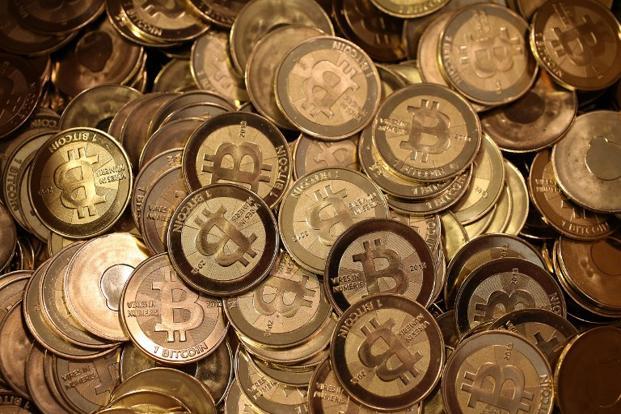
Now that the technology has been banned and we have driven all who use it underground, bitcoins will be purchased through cash or other untraceable commodities Even though every bitcoin transaction is recorded and open to inspection, no-one knows the person behind the address who made the trade. Recently, the Reserve Bank of India (RBI) prohibited, with immediate effect, all regulated entities from providing services to anyone who deals with or settles any virtual currencies, citing concerns about the risks that these virtual currencies pose in the context of consumer protection, market integrity and money laundering. The true reason behind it is not entirely clear.

Quantum radar to render stealth technologies ineffective


David Szondy

Stealth technology may not be very stealthy in the future thanks to a US$2.7-million project by the Canadian Department of National Defence to develop a new quantum radar system. The project, led by Jonathan Baugh at the University of Waterloo's Institute for Quantum Computing (IQC), uses the phenomenon of quantum entanglement to eliminate heavy background noise, thereby defeating stealth anti-radar technologies to detect incoming aircraft and missiles with much greater accuracy.

29 April 2018

Do Terrorist Groups Really Die? A Warning

by Antonia Ward

With the collapse of ISIS and loss of the majority of its territory in Syria and Iraq by the end of 2017, the world was relieved at the news of the “end” of the terrorist-cum-insurgent group. This response paralleled a different, but not altogether dissimilar, celebration following the death of Osama Bin Laden in 2011. By 2012, many stated that al-Qaeda's power and influence had declined due to the loss of its charismatic and skilled leader. However, as the case of al-Qaeda shows, while terrorist groups may suffer periods of decline they are extremely resilient and adaptable. It is dangerous for the West to underestimate them; most terrorist groups experience resurgence.

Why Colombo remains a challenge for New Delhi

By ANA PARARAJASINGHAM

Former Sri Lankan president Mahinda Rajapaksa’s resounding performance at the local-council elections in early February has prompted the observation that Rajapaksa is back in politics and poised to regain political power. This is a blow to the “unity” government that replaced the Rajapaksa regime in January 2015. The regime change that resulted in the formation of a “unity” government came about when former Rajapaksa loyalists joined the opposition right-leaning United National Party (UNP). The “unity” government suffered its first setback when a Rajapaksa-backed no-confidence motion was made against Prime Minister Ranil Wickramasinghe on April 4, and 16 members of the “unity” government voted for the motion.

Sounding The Alarm About A New Russian Cyber Threat

RACHEL MARTIN

In a rare joint statement, the U.S and U.K. last week warned that Russia is actively preparing for a future cyberwar against the West. Of particular concern, according to a joint technical alert issued by the U.S. Computer Emergency Response Team, is a Russian cyberattack on network infrastructure devices such as routers, switches and firewalls. Compromised routers, the alert says, help Russia "support espionage, extract intellectual property, maintain persistent access to victim networks, and potentially lay a foundation for future offensive operations."

Rivalry in Rejuvenation? Seeking New Paradigms for U.S.-China Strategic Competition

By Elsa B. Kania

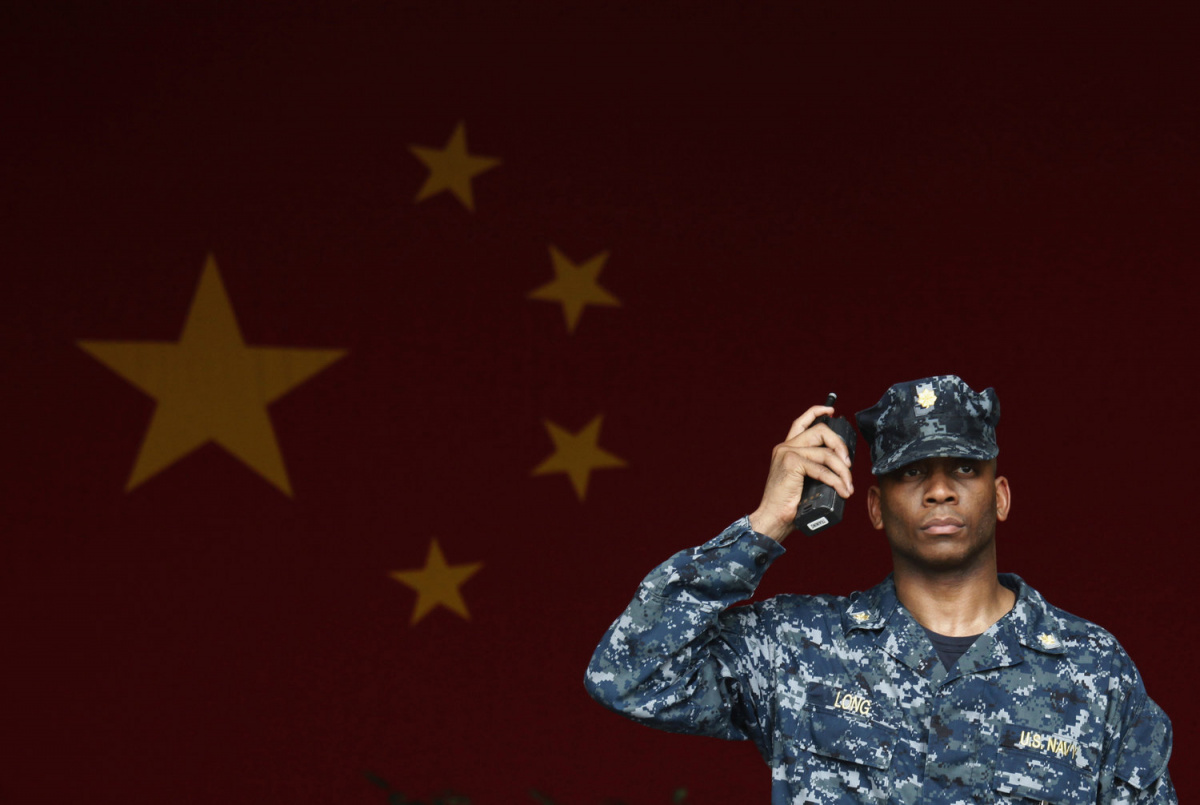
The U.S.-China relationship may shape the course of this century, and its future trajectory remains highly uncertain and contentious. Persistently, U.S. strategy has struggled to characterize and formulate a framework for America’s relationship with the People’s Republic of China (PRC). Today, as the U.S. and China dance on the precipice of a trade war, there is talk of a new Cold War in which the U.S. confronts a rival that is unique as not only a near-peer military competitor but also a rising economic and technological powerhouse. Increasingly, this competition is even extending into what has been characterized as “tech cold war” or an “artificial intelligence arms race.”[1,2] The status quo is seen as untenable by those who condemn the damages of years of “cyber-enabled economic warfare” and those who warn that our current course risks tumbling into Thucydides’ Trap.[3] Although high levels of cooperation and interdependence—particularly economic—between the U.S. and China could serve as a critical ballast for the relationship, such entanglement can just as readily constrain conflict as create frictions that render warfare more likely. Even as debates polarize, there is consensus that the stakes are high and the consequences of miscalculation would be historically deleterious.

FACTSHEET: CHINAS TERRITORIAL STRATAGEM - EXTENDING MILITARY RANGE & INFLUENCE THROUGH RECLAMATION & OCCUPATION OF THE SPRATLY WATERS, SOUTH CHINA SEA

S.A. Cavanagh

China’s Aggressive Move to Occupy the Spratly regional waters through Reclamation has proved an effective stratagem, for projection of political, economic and military power. The Hague has ruled China has no traditional claims to the disputed region and the Spratlys are “rocks not islands.” China continues to reclaim and militarize several strategic islands (reefs) and occupies them. The United States, French and British navies exercise freedom of navigation near the new islands, as China warns it will use military force to defend new territorial claims. China has tactically and strategically extended its military “range and influence” with navel bases, airstrips, radar, communications, missile installations and shelters. China has bet on reclamation and occupation and won.

China's Pursuit of Overseas Security


Research Questions 

How will China protect its citizens and their economic assets in distant countries? 
What sort of military capabilities or other arrangements might China pursue accordingly? 
What will China's approach to security abroad mean for the United States and its allies and partners? 

China's ascent as the world's second-largest economy has brought the country tremendous prosperity, but integration into the global economy has also exposed growing numbers of its citizens and their assets to potential harm. This report examines China's pursuit of security for its overseas interests. It surveys Chinese writings and Western reporting to describe the country's likely approach to protecting its economic and strategic interests abroad. The report concludes that China is likely to pursue a distinctive approach that features a far more limited military role than has been the case for the United States or imperial powers of previous centuries. Instead, China will likely rely on a blend of military, paramilitary, civilian contractors, and host-nation forces to carry out a more limited range of nonwar missions and tasks to safeguard international interests. This approach carries both opportunities and concerns for U.S. interests abroad. The PLA could prove a helpful partner to the United States in a variety of nonwar missions, such as humanitarian aid/disaster relief and counterpiracy operations. However, Chinese use of paramilitary forces and provision of arms to host-nation–provided forces could complicate the interests of the United States and its allies in some regions.

Taiwan Caught in the Middle of the U.S.-China Trade Tiff

By Riley Walters

Taiwanese business executives and government officials are deeply worried as the United States and China, its two largest trading partners, tee off in a tit-for-tat trade tiff. Taiwan finds itself caught in the middle. Taiwan is not unduly troubled by China’s industrial policies. Beijing’s policies, while illiberal, are predictable. The trade measures of the current U.S. administration, however, are both unpredictable and more likely to increase costs for Taiwanese investors in the short-term. One can disagree with its remedies, but the Trump administration is not wrong for trying to push back against an ever-aggressive Chinese industrial policy. Certainly, few countries in Asia would protest against America pushing back against the unfair practices that restrict investment and require technology transfer. Nor are other nations keen about Beijing’s threats to ban foreign companies from accessing Chinese markets. In fact, many of their companies face the same problems.

Does America Really Need to Fear China?

Lyle J. Goldstein

These days, the “China threat syndrome” is everywhere to behold in American political life. A chorus of cheers celebrates the upcoming trade war even though many key American producers, above all farmers, could be grievously damaged. Another group heralds the return of the TPP as the ultimate “aircraft carrier” that will supposedly finally sink China’s brash economic ascent. American universities are said to be under assault by legions of Chinese Communist infiltrators. Beijing is accused of trying to upstage and undermineWashington’s diplomacy on the Korean Peninsula. China’s Belt and Road Initiative, that seeks to knit Europe and Asia ever closer, is viewed as a menaceto the “rules based order” and American global hegemony. Beijing stands accused of promoting environmental disasters from Africa to Southeast Asia to the Arctic. What seems to gall American strategists, above all, is that China has dared to set up a string of reef bases in the South China Sea (athwart the most important artery of global trade!) and now appears to be producing warships“like sausages.”

How AI Could Destabilize Nuclear Deterrence

BY ELIAS GROLL
When Russian President Vladimir Putin announced last month that his country was developing an autonomous nuclear-powered torpedo, it marked a milestone in the marriage of nuclear weapons and artificial intelligence — that is, if the weapon does what he claims. The torpedo, armed with a nuclear warhead, would be launched from the Arctic Ocean and travel at high speeds for hundreds of miles until it reached its target — probably an American harbor — all the while maneuvering autonomously to evade underwater defenses and outrunning any adversaries.

Macron and Merkel Will Put on Their Best Poker Faces With Trump


Germany is looking for a negotiated solution to trade and sanction disputes with the United States. France is using Brexit and colder U.S.-German relations to try to become the main intermediary between the United States and the European Union. Paris is also trying to use the current global environment to make progress on its long-sought goal of deeper European political and strategic autonomy.

Former Head Of Intelligence For The Israeli Defense Force: ‘This Will Be Israel’s Most Dangerous May Since The 1967 War’


The title above is from Benjamin Kerstein’s April 24, 2018 article in the Jewish publication, Algemeiner. “When I look at the month of May, I say there wasn’t a month of May so dangerous Israeli has faced since before the 1967 [Arab-Israeli] War,” said Amos Yadlin, the former head of Intelligence for Israel’s Defense Force (IDF), in a recent interview with the Israeli daily publication – Yedioth Ahronoth. “In the last Independence Day ceremonies, I was reminded of the independence ceremonies of 1967,” General Yadlin said. 

VICENTE FOX: THE AMERICAN DREAM IS DEAD, AND DONALD TRUMP KILLED IT | OPINION

It has been more than a year since Donald Trump was elected, and since then he has tweeted more policies and complaints than any other political leader. He has put international relations at risk and ended the American dream for hundreds of thousands of Americans and non-Americans. Is there anything he hasn’t done? Recently, he went bonkers and in just 280 characters launched the worst threats he has ever addressed to our country. He has called Mexicans rapists, criminals, the worst of the worst. He has threatened to pull out of the North American Free Trade Agreement (NAFTA) and deport hundreds of thousands of young Dreamers. Why? Because he feels like it.

Germany's Incredibly Shrinking Role on the World Stage

By Matthias Gebauer

With a wayward president at the helm in the United States, the world has become a more dangerous place. In response, though, German Chancellor Angela Merkel is once again steering Germany to the foreign policy sidelines, clearing the way for French President Emmanuel Macron. Emmanuel Macron's En Marche party doesn't yet have a single seat in the European Parliament, but when the French president appeared in the body's plenary hall in Strasbourg last Tuesday, it already seemed as though he was in control. Macron shook hands with Federica Mogherini, the European Union's chief diplomat, and Jean-Claude Juncker, the enthusiastic European Commission president while a number of parliamentarians gave him a standing ovation. Others, meanwhile, hid behind signs castigating the French president for participating in the missile attacks in Syria. Macron stepped up to the lectern, where his speech, laid there by an aide, was already waiting.

Russian Social Media Influence Understanding Russian Propaganda in Eastern Europe

by Todd C. Helmus, Elizabeth Bodine-Baron, Andrew Radin, Madeline Magnuson, Joshua Mendelsohn, William Marcellino, Andriy Bega, Zev Winkelman


What are the critical ingredients to countering these campaigns? 

A RAND Corporation study examined Russian-language content on social media and the broader propaganda threat posed to the region of former Soviet states that include Estonia, Latvia, Lithuania, Ukraine, and, to a lesser extent, Moldova and Belarus. In addition to employing a state-funded multilingual television network, operating various Kremlin-supporting news websites, and working through several constellations of Russia-backed "civil society" organizations, Russia employs a sophisticated social media campaign that includes news tweets, nonattributed comments on web pages, troll and bot social media accounts, and fake hashtag and Twitter campaigns. Nowhere is this threat more tangible than in Ukraine, which has been an active propaganda battleground since the 2014 Ukrainian revolution. Other countries in the region look at Russia's actions and annexation of Crimea and recognize the need to pay careful attention to Russia's propaganda campaign.

The world’s biggest economies in 2018

Rob Smith

The United States has the largest economy in the world at $20.4 trillion, according to data from the International Monetary Fund (IMF), which shows the US economy increased from around $19.4 trillion last year. China follows, with $14 trillion, which is an increase of more than $2 trillion in comparison to 2017. Japan is in third place with an economy of $5.1 trillion, up from $4.87 trillion a year previously.

Could The US Win World War III Without Using Nuclear Weapons?

by Dan Plesch

As the US, Russia and China test each other’s patience and strategic focus, speculation about the chances of a world war has hit a new high. But many of the people seriously engaged in this weighty discussion often get it wrong.

As Space War Looms, Air Force's Biggest Weakness May Be How It Buys Satellites

Loren Thompson 

The Air Force's space community is in a near panic over recent advances that Russia and China have made in space. The problem isn't that Moscow and Beijing are matching the performance of U.S. military satellites -- it's that they are fielding systems for degrading or destroying ours. The threat is appearing in many forms. Cyber attacks on the ground control centers for satellite constellations. Jamming of downlink signals. Threatening maneuvers by spacecraft in the same orbital planes as U.S. satellites. Many of the details are secret, but signs of concern among U.S. military commanders are unmistakable. America's heavy dependence on space for communications, navigation, reconnaissance, weather forecasts and warning of attack has become a vulnerability.

The battlefield of information warfare has been leveled

BY GREG KEELEY

Warfare used to be somewhat predictable. Your enemy wore a different uniform, the bad guys tried to kill you with bullets and bombs, the food was awful and things went “boom” in the night. The new reality is strikingly different. Combat can now be waged without so much as a puff of smoke. As with kinetic conflict, there will be winners and losers. Information and cyber is perhaps the most acute issue for military and counter-terrorism planners and operators. According to the Council on Foreign Relations (CFR), the next likely crisis to confront the West may be the result of Russia or an Islamist terror group attacking critical infrastructure or military grids. The propagation of asymmetric warfare has been increasingly mitigated by the obtainability of, and the surge in information operations. The result could be vast pecuniary and societal damage to the U.S. and our allies.

Protect sensitive data with these five free encryption apps

By Mark Kaelin

Numerous high-profile events in 2017 and early 2018 have made it abundantly clear that all enterprises and government agencies are responsible and liable for the protection of personal data collected from customers and clients—no exceptions. New regulations, such as the GDPR, which goes into effect May 25, 2018, will back those expectations of protection with substantial penalties and fines for the noncompliance. To avoid potential fines, organizations need to demonstrate initiative by establishing measurable security protocols that protect collected personal data. One of most common methods for protecting stored data is encryption. The software required to encrypt files and hard drives is readily available and is often offered for free or at low cost. Therefore, the establishment of an encryption protocol for your enterprise does not have to incur a large outlay of resources. The five encryption applications listed in this article are all free to use and perform their function using the highest industry-standard encryption algorithms available.

Artificial Intelligence: Welcome to the Age of Disruptive Surprise

BRUCE E. PEASE

With the last few years of progress in artificial intelligence, it is hard to look forward without excitement…and apprehension. If you are paying attention at all, you are wondering what lies ahead. Will it be great? Will it be disastrous for many? Surely because we are inventing it, we have a good sense of what is being spawned? But no, this technology feels different. It almost feels like it is being discovered, rather than being invented. It will be big, it will impact our lives and our society. It will be disruptive…and we don’t know how.

CyberWar: The Neutron Bomb Of The Internet Age


CyberWar in its many forms presents an unprecedented threat to major companies, smaller companies, non-profits, and the military/intelligence entities. Companies can be ruined, elections rigged, wealth stolen, and wars lost. We have seen this, and so have our adversaries. America has trained many of their best cyber practitioners, as we did their nuclear scientists, and they have attacked with a vengeance that is unrelenting and growing in sophistication. In the early nuclear age, a so-called neutron bomb was developed. The weapon killed not by a large blast, but with a huge barrage of neutrons that would kill anyone in its path with contaminating radiation but leave buildings and other wealth intact; a lethal and deadly prospect. Today, cyberwar is the neutron bomb equivalent of the internet age – a weapon that can can destroy, rig, steal, confuse companies and countries while not destroying their physical assets.

U.S. Military Capabilities and Forces for a Dangerous World

by David Ochmanek, Peter A. Wilson, Brenna Allen, John Speed Meyers, Carter C. Price

Research Questions 

What capability areas merit highest priority for modernizing U.S. forces to meet emerging challenges? How much would it cost to develop and deploy capabilities and posture enhancements called for by the emerging security environment? This report evaluates the capabilities of current and programmed U.S. forces to meet the demands of conflicts that could arise involving any of five potential adversaries: China, Russia, North Korea, Iran, and Salafist-jihadi groups worldwide. The report finds that U.S. forces today are larger than necessary to fight a single major war, are failing to keep pace with the modernizing forces of great power adversaries, are poorly postured to meet key challenges in Europe and East Asia, and are insufficiently trained and ready to get the most operational utility from many of its active component units. The report recommends a host of enhancements to the capabilities and posture of U.S. forces and offers three alternative force planning constructs to help ensure that defense resources are, in the future, applied to the highest-priority needs.

Hypersonic Missiles: A New Proliferation Challenge

by Richard H. Speier

While the world bemoans the lack of inspired solutions for dealing with the North Korean missile threat, another danger looms under the public's radar: that of hypersonic missiles and their possible spread into international commerce. Hypersonic missiles travel at a speed of one mile per second or more—at least five times the speed of sound. They are able to evade and conceal their precise targets from defenses until just seconds before impact. This leaves targeted states with almost no time to respond. Additionally, such weapons are capable of destroying targets without any explosives, using their kinetic energy alone. Hypersonic missiles require a reconsideration of traditional second-strike calculations, as they have the potential to decapitate a nation's leadership before it has the opportunity to launch a counter attack.

Modern Political Warfare Current Practices and Possible Responses


What is political warfare? 
How is it (or an appropriate analogous term) applied today? 
How might the U.S. government, along with its allies and partners, most effectively respond to or engage in this type of conflict to achieve its ends and protect its interests? 

The United States today faces a number of actors who employ a wide range of political, informational, military, and economic measures to influence, coerce, intimidate, or undermine U.S. interests or those of friends and allies; many of these measures are often collectively referred to as "political warfare." This report analyzes political warfare as it is practiced today by both state and nonstate actors, and provides detailed recommendations regarding the most effective ways that the U.S. government, along with its allies and partners, can respond to or engage in this type of conflict to achieve U.S. ends and protect U.S. interests.

Understanding Deterrence

by Michael J. Mazarr


The challenge of deterrence — discouraging states from taking unwanted actions, especially military aggression — has again become a principal theme in U.S. defense policy. Because many potential adversaries are significantly more capable than they were a decade or more ago, moreover, the risks of actually fighting a major war are more significant than ever — making it even more imperative to deter conflict. Yet much of the emerging dialogue on deterrence remains characterized by unsupported assertions, claims that contradict the empirical record, and little reference to classic analyses. Meanwhile, changes in the international security environment have altered the context for deterrence, possibly challenging long-held assumptions and creating new requirements. 

28 April 2018

Will China’s aircraft carriers project naval power in the Indian Ocean?


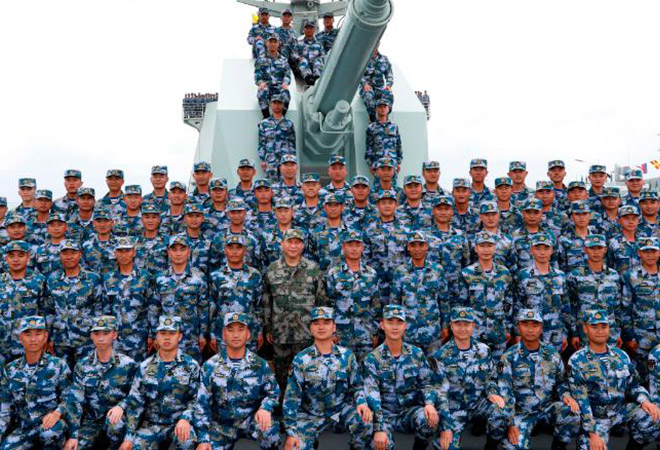
Last week, China resorted to an orchestrated show of force in the South China Sea. In a naval parade consisting of 48 naval vessels, 06 nuclear powered submarines, 76 aircraft, and aircraft carrier Liaoning, the PLAN sent a loud message to its opponents in the Western Pacific. Coming as it did just days after the USS Theodore Roosevelt displayed its prowess in the South China Sea, the PLAN exercise -- presided over by President Xi himself -- served a clear warning to the US Navy.

China Pulls Pakistan Further into its Economic Orbit

BENNETT SEFTEL 

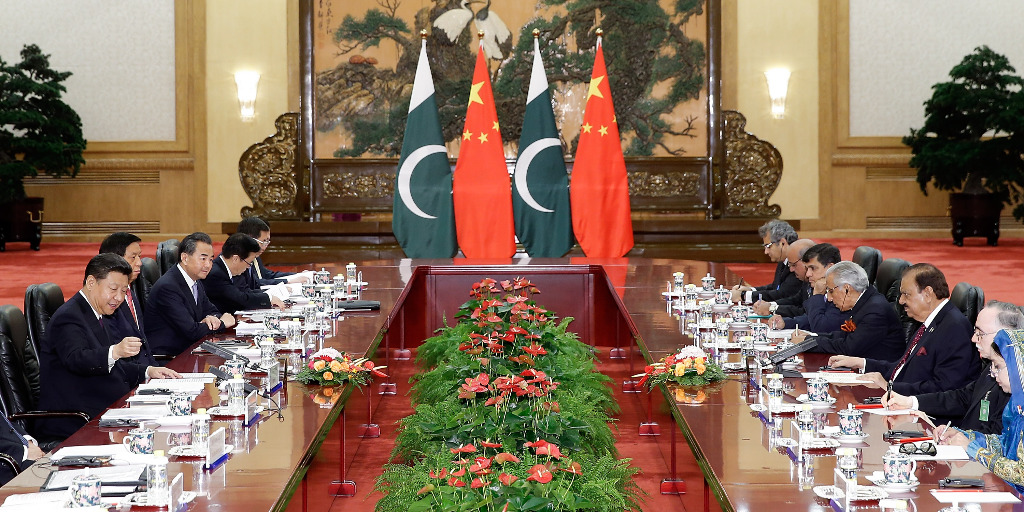
Bottom Line: China’s “One Belt, One Road” economic strategy, aimed at developing regional trades routes connecting East Asia, South Asia, Central Asia and Europe, has expanded into Pakistan where Chinese companies have launched numerous projects to build up Pakistan’s infrastructure and energy sector as part of the China-Pakistan Economic Corridor (CPEC). Through such cooperation, Pakistan has gravitated closer to China’s orbit, generating concerns over Pakistan’s increasing dependence on China and Beijing’s rising global power status.

North and South Korea Set Bold Goals: A Final Peace and No Nuclear Arms

By CHOE SANG-HUN,
Source Link


SEOUL, South Korea — The leaders of North and South Korea agreed on Friday to work to remove all nuclear weapons from the Korean Peninsula and, within the year, pursue talks with the United States to declare an official end to the Korean War, which ravaged the peninsula from 1950 to 1953. At a historic summit meeting, the first time a North Korean leader had ever set foot in the South, the leaders vowed to negotiate a treaty to replace a truce that has kept an uneasy peace on the divided Korean Peninsula for more than six decades, while ridding it of nuclear weapons. A peace treaty has been one of the incentives North Korea has demanded in return for dismantling its nuclear program.
“South and North Korea confirmed the common goal of realizing, through complete denuclearization, a nuclear-free Korean Peninsula,” read a statement signed by North Korea’s leader, Kim Jong-un, and the South’s president, Moon Jae-in, after their meeting at the border village of Panmunjom.

The Next Step for Chinese Economic Policy

MARTIN FELDSTEIN

Now that it has risen to the top of the global economy, China must adopt the necessary reforms to become fully compliant with the international rules that it accepted upon joining the World Trade Organization in 2001. Its current policy will only lead to a serious trade conflict with the US. I am a great admirer of China and its ability to adjust its economic policies to maintain rapid growth. But now that it has risen to the top of the global economy, it must adopt the necessary reforms to become fully compliant with the international rules that it accepted upon joining the World Trade Organization in 2001.

Good President/Bad Emperor?

KEYU JIN

The prospect that President Xi Jinping could remain in power indefinitely has caused much consternation outside China. But within China, and among many serious observers, the elimination of the constitutional term limit on presidential incumbents has attracted a more positive, or at least nuanced, response. In the West, government accountability is closely identified with democratic elections. In China, it is a function of how – and how well – the government responds to and protects the needs and interests of the people. China’s recent constitutional amendment eliminating the term limits for the president and vice president has left much of the West aghast. Critics fear the emergence of a new and unaccountable dictatorship, with President Xi Jinping becoming “Chairman Mao 2.0.” This response is more than a little inappropriate.

The Risks of One Belt, One Road for China’s Neighbors

By Shin Kawashima

In March 2018, the Center for Global Development, a U.S. think tank based in Washington, published a fascinating report. It claimed that China was posing a severe risk to the finances of a number of countries as a result of its aid activities and excessive lending. The report went on to list seven specific countries whose finances are at serious risk: Mongolia, Laos, Kyrgyzstan, Tajikistan, the Maldives, Djibouti, and Montenegro. When advanced countries give out loans or other forms of aid, they generally impose a cap. This prevents them from lending excessive amounts. China, however, is not a member of the Organization for Economic Cooperation and Development (OECD). Nor is it a member of the Development Assistance Committee, the division of the OECD that regulates aid policy. This can present problems for borrowers. If a country borrows to the point that its fiscal health is at risk, that is a serious problem. How will it repay the loans? It is not unreasonable to expect that it might have to use controlling interests in ports, mines or other infrastructure as collateral to facilitate the repayments.

Trouble in Paradise: A Chinese Occupation in Tahiti

By Anne-Marie Brady

TAHITI — China’s strategic and military interests in the South Pacific are expanding rapidly. They build on longstanding links and fill the vacuum left by receding U.S. and French power projection in the region, as well as Australia and New Zealand’s longstanding neglect of key relationships. China is now acknowledged by many Pacific leaders as the dominant power in the region. While Pacific leaders will continue to work with traditional partners, they will not back down on their expanding relations with China. China has offered to them what the United States and its allies cannot, massive sums of money for development projects that promise jobs and economic independence.

CPEC's Environmental Toll

By Shah Meer Baloch

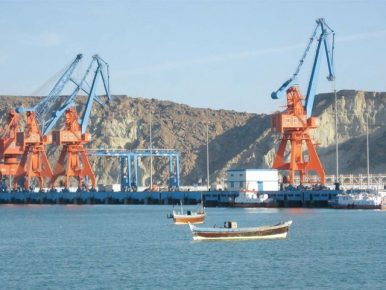
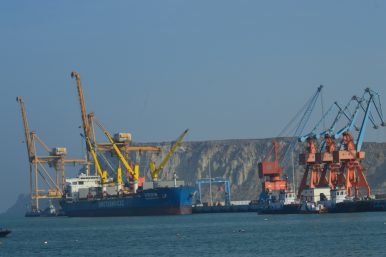
Pakistan’s virgin beaches are located in District Gwadar, which is the major coastal town of Balochistan, and also said to be the epicenter of the China-Pakistan Economic Corridor (CPEC). But the beaches are in danger of being badly affected by a newly planned 300MW coal power plant in Gwadar. Besides the beaches, there will be a significant impact on human lives and the environment. Pakistan is already on suffering from climate change. Will the environment and people remain safe as Pakistan carries out plans to invest billions of dollars in imported coal power plants through various projects under CPEC?