BY MORGAN CHALFANT
4 May 2018
Federal 'turf war' complicates cybersecurity efforts
What Happens When Your Bomb-Defusing Robot Becomes a Weapon
BY CAROLINE LESTERWRITER
Micah Xavier Johnson spent the last day of his life in a standoff, holed up in a Dallas community-college building. By that point, he had already shot 16 people. Negotiators were called in, but it was 2:30 in the morning and the police chief was tired. He’d lost two officers. Nine others were injured. Three of them would later die. In the early hours of July 7, 2016, the chief asked his swat team to come up with a plan that wouldn’t put anyone else in Johnson’s line of fire. Within 30 minutes, their Remotec Andros Mark 5A-1, a four-wheeled robot made by Northrop Grumman, was on the scene. The Mark 5A-1 had originally been purchased for help with bomb disposal. But that morning, the police attached a pound of C4 explosives to the robot’s extended arm, and sent it down the hallway where Johnson had barricaded himself. The bomb killed him instantly. The machine remained functional.DARPA wants to arm ethical hackers with AI
By: Brandon Knapp
The Defense Advanced Research Projects Agency (DARPA) wants to leverage human-artificial intelligence teaming to accelerate the military’s cyber vulnerability detection, according to agency documents. The task of securing the Pentagon’s diverse networks, which support nearly every function of the military’s operations, presents a nightmare for defense officials. The current time-intensive and costly process involves extensively trained hackers using specialized software suites to scour the networks in search of vulnerabilities that could potentially be exploited, but the scarcity of expert hackers makes detecting cyberthreats a challenge for the Defense Department.Comms down? Don’t give up.
By: Adam Stone
An artist concept of the distributed battle management system, an emerging solution to enable complex teamwork between manned and unmanned aviation even in comms-deprived environments. (BAE Systems). Adversaries are becoming ever more skilled at denying our communications links. That’s especially bad for pilots who need reliable comms for situational awareness. “Imagine you can’t talk to each other, but you still need to execute on a mission. It’s almost impossible,” said Jarrod Kallberg, distributed battle management technology development manager at BAE Systems. “A lot of times you have to scrub the mission because you are so reliant on the communication that you cannot proceed without that.”Cyber warfare may be less dangerous than we think
By Benjamin Jensen and David Banks
This February 2018 warning to the Senate from Director of National Intelligence Dan Coats included a message that “there should be no doubt” that Russia, emboldened by its 2016 cyberattacks and informational warfare campaign, will target the U.S. midterm elections this year. We agree. However, our research suggests that, although states like Russia will continue to engage in cyberattacks against the foundations of democracy (a serious threat indeed), states are less likely to engage in destructive “doomsday” attacks against each other in cyberspace. Using a series of war games and survey experiments, we found that cyber operations may in fact produce a moderating influence on international crises.
This February 2018 warning to the Senate from Director of National Intelligence Dan Coats included a message that “there should be no doubt” that Russia, emboldened by its 2016 cyberattacks and informational warfare campaign, will target the U.S. midterm elections this year. We agree. However, our research suggests that, although states like Russia will continue to engage in cyberattacks against the foundations of democracy (a serious threat indeed), states are less likely to engage in destructive “doomsday” attacks against each other in cyberspace. Using a series of war games and survey experiments, we found that cyber operations may in fact produce a moderating influence on international crises. Can the Navy protect this ship from hackers?
By: Amber Corrin
The Navy’s Expeditionary Fast Transport, or EFP, class of ships may be vulnerable to hackers and isn’t achieving key performance milestones, including some related to the cybersecurity of the ship’s systems, according to a new inspector general’s report. The aluminum catamaran-style ships, which are designed to quickly move troops and supplies, “lacks capability,” an April 2018 report from the Department of Defense Inspector General found. One of those capabilities is securing control systems aboard the vessels.Civilians and “By, With, and Through” Key Issues and Questions Related to Civilian Harm and Security Partnership
Working by, with, and through partners in military operations has become a preferred approach in U.S. security policy. Doing so without uniform controls governing conduct and the use of force can result in real consequences for civilians and compromise mission effectiveness. The real and perceived benefits of partnered operations can include limiting the extent of U.S. involvement and minimizing risk to U.S. personnel, tapping into the unique capacities of national and local forces, and burden sharing of costs, personnel, and assets.
The risks of partnered operations can arise from the diffusion of responsibilities and diversion of shared interests and objectives. They may result in civilian casualties, damage to civilian infrastructure, human rights abuses, erosion of U.S. or partner legitimacy, reduction of U.S. domestic support for operations, and long-term humanitarian, economic, governance, and security consequences for civilians.
3 May 2018
Testimony of Admiral Michael S. Rogers and Implications for India
By Maj Gen P K Mallick, VSM(Retd)
Admiral Michael S. Rogers is the Director of the National Security Agency (NSA), Commander of the U.S. Cyber Command (USCYBERCOM) and Chief of the Central Security Service (CSS) since April 3, 2014. He is going to be replaced by US Army’s Army Cyber Command Chief Lt. Gen. Paul Nakasone. On 27 February 2018 Admiral Michael Rogers testified before the Senate Committee on Armed Services. In his prepared speech the Admiral explained the various progress made by the USCYBERCOM. This was his last testimony to the Senate.
In the USA the top officials of the Government are madae to undergo hearings before taking over, during the tenure and while handing over the responsibilities. They are grilled by the Senators and often asked very searching and sometime uncomfortable questions. The top official has to answer on his own without any support from his staff.
China-India border dispute
America has been afflicted by an ideology that doesn’t work, says Joseph Stiglitz
Ajith Vijay Kumar
China Is Not Alone in Adding to the Indian Ocean Woes
Atul Bhardwaj
The navalists of the world are smiling. The maritime domain is back in the reckoning. A new era of great power competition at sea has arrived. Existing, emerging, erstwhile, and aspiring empires are engaged in ocean-romance in the Asia–Pacific theatre. American carrier battle groups are making frequent forays into the region and struggling to fulfil the promise of “pivot to Asia.” China recently held its biggest naval combat drill in the South China Sea. The rise of the Chinese navy is manna for the American navalists who are constantly in search of a raison d’être to justify their massive budget of roughly $145 billion.
RIP: Russia and India Had Big Plans to Build a Deadly Stealth Fighter. What Happened?
Why CPEC could be the end of China-Pakistan relationship
The China Pakistan Economic Corridor (CPEC) is best described by the Trumpian expression "covfefe": everyone has some idea of what it is, but no one is quite sure what it is. No surprise then that while some people in Pakistan are excited over what they think CPEC means, others are apprehensive. In December 2015, the governor of State Bank of Pakistan admitted that he had no idea about how much of the money that the Chinese were committing on CPEC was debt, how much was equity and how much was in kind. More than two years later, it now transpires that even the government of Pakistan is not clear about the composition of funding for CPEC projects. A couple of weeks ago, the federal cabinet was informed that “the amount of money, whether in the form of loan or grant, coming through CPEC is not known”. Clearly, if even the government of Pakistan is clueless about the structure and composition of CPEC funding, the sums they have worked out to sell CPEC as the greatest thing to happen to Pakistan are quite flaky.
State Urges Taliban yet Again to 'Run for Office'
By Bill Roggio
Just hours after the Taliban announced the launch of this year’s spring offensive, named the “Al Khandaq Jihadi operations,” the U.S. Department of State issued a statement urging the Taliban to lay down its arms, conduct negotiations, and join Afghanistan’s election process. State’s repetitive call for the Taliban to make peace demonstrates an unthinkable fundamental misunderstanding of the Taliban and its goals some 16 years after the U.S. first entered Afghanistan. The Taliban has no intention of joining a political process and as it has stated numerous times, its goals are the expulsion of U.S. and foreign forces, the overthrow of the Afghan government, the re-establishment of the of the Islamic Emirate of Afghanistan (the name of the Taliban’s government) and the imposition of its harsh brand of Sharia, or Islamic law. Yet, U.S. officials across three administrations have either failed to recognize those intentions or are low on options with their incessant push for the Taliban to negotiate.
The Quad Needs Wind in its Sails
'Chinese dominance reduces India's influence in South and Southeast Asia and erodes its status globally.' 'For a country striving to create a multipolar Asia, it would be a serious setback,' says Brigadier S K Chatterji (retd).
Xi Doubles Down on China’s Cyber Goals and Semiconductor Plans
By Jesse Heatley
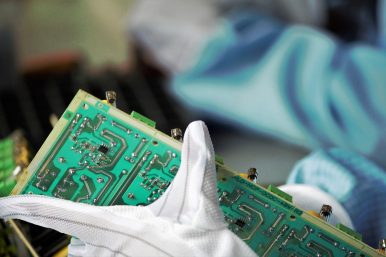
Days after the United States announced a seven-year restriction on American companies doing business with the Chinese telecom giant ZTE, Chinese President Xi Jinping responded in defiance by laying out a broad vision to build China as a cyber and technology superpower. At a recent national Chinese conference on cyberspace, Xi declared that China will press ahead with plans to dominate cyberspace and emerging internet technologies. As a trade war with the United States escalates through tit-for-tat announcements, the speech reflected China’s yearning to end its reliance on foreign technologies. China still lags behind in key technology sectors and Xi urged officials to “keenly seize this historic opportunity” to master new internet technologies in the face of foreign pressures and growing technology demands.The role of BRI in developing trade corridors
The improvement of trade corridors for Chinese and foreign companies is a key component of the Belt and Road Initiative (BRI). The improvement of trade corridors for Chinese and foreign companies is a key component of the Belt and Road Initiative (BRI) as the world’s second-largest economy seeks to make the transition from a low-value manufacturing economy to one driven by consumption and higher value-added manufacturing services. Six international economic cooperation corridors – The New Eurasia Land Bridge and routes between China-Mongolia-Russia, China-Central Asia-West Asia, China-Indochina, China-Pakistan and Bangladesh-China-India-Myanmar – are set to jump-start trade between China and its neighbours near and far.
China tries to enlist European allies in Trump's trade war
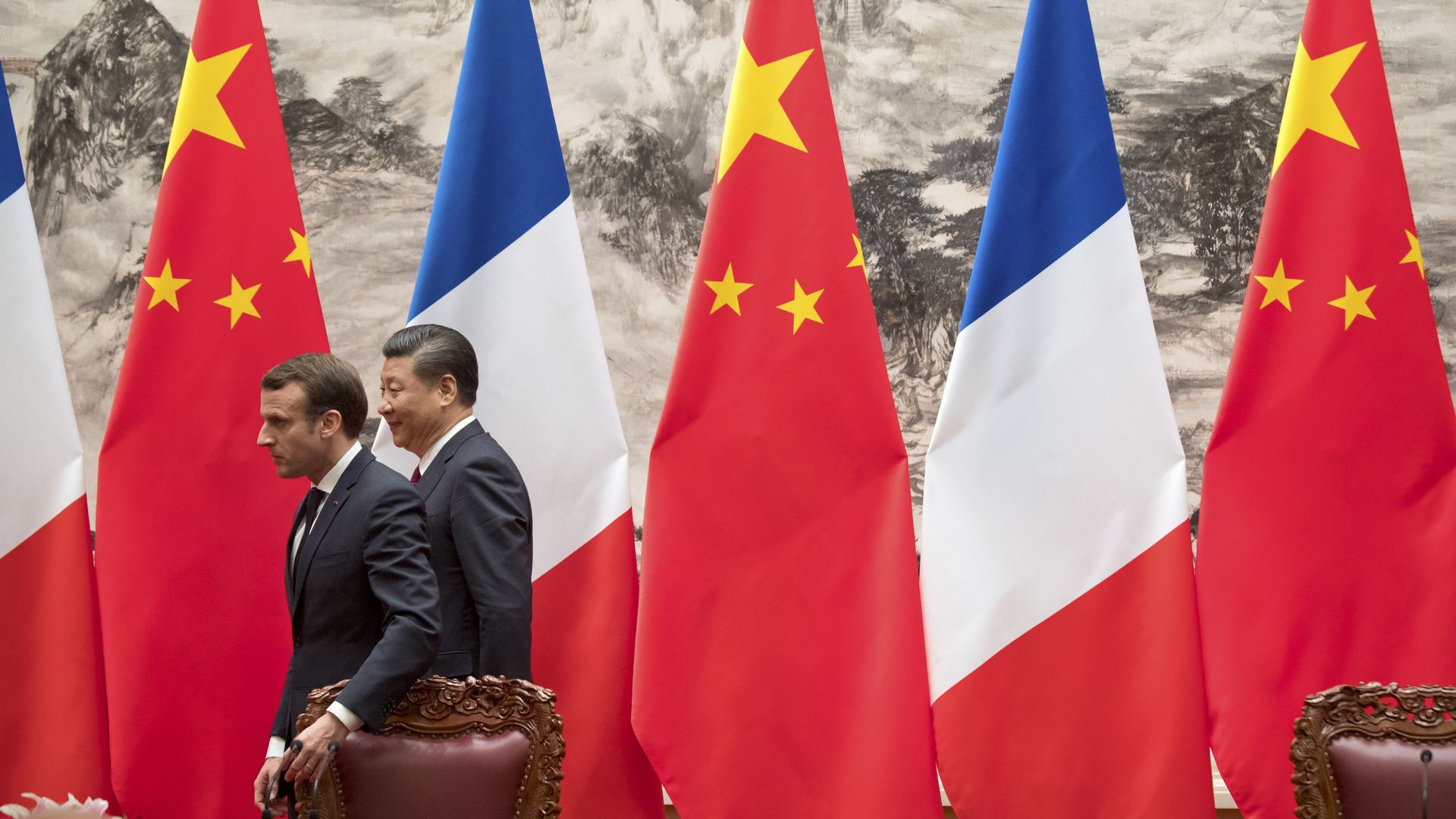
While Beijing is courting the European Union for support in a trade war, European officials are sounding the alarm on China's ambitions in their countries. Why it matters: If the U.S. starts closing off its market to the Chinese, Beijing needs the EU to remain neutral and stay open to business with China, but the Europeans are increasingly frustrated with China's behavior and wary of its ever-growing influence.China is going green. Here’s how
Sha Song
The factories and power plants that have driven its economic growth have also polluted its air, water and soil, to the point where environmental hazards could lead to a significant risk to China’s society and economy, if not corrected in a timely manner. In a bid to tackle these challenges, China’s government has declared a “war on pollution” and introduced a number of green initiatives.
The factories and power plants that have driven its economic growth have also polluted its air, water and soil, to the point where environmental hazards could lead to a significant risk to China’s society and economy, if not corrected in a timely manner. In a bid to tackle these challenges, China’s government has declared a “war on pollution” and introduced a number of green initiatives.China Has a Plan to Turn Old Planes into Stealth Fighters
How Long Can the ‘Chinese Miracle’ Last?
How the UAE’s Chinese-Made Drone Is Changing the War in Yemen
An airstrike that killed a senior Houthi leader shows that the Emirates is growing more assertive in its military operations.
Saleh al-Samad, the president of the Houthis’ Supreme Political Council, sits behind bulletproof glass at a rally in Sanaa, Yemen, on Aug. 20, 2016.On Monday evening, video began circulating online of a black-and-white drone feed monitoring a two-car convoy driving north along Road 45, east of Hodeidah, Yemen. In the video, the drone’s target — a blue Toyota Land Cruiser — turns onto a side street. Seconds later, it is struck by a Chinese-made Blue Arrow 7 missile.
Germany Is Pitching For A Seat On The UN Security Council - Here's Why
by Dennis R. Schmidt, Durham University
Can North Korea Really Give Up Its Nukes?
by Rodger Baker
North Korea’s Secret Weapon: A Huge Electromagnetic Storm
The diplomatic circuit is awash in optimism as the proposed summitbetween North Korean dictator Kim Jong Un and President Donald Trump draws near. Indeed, Trump is right to go to the table with the North Koreans and negotiate for full denuclearization. Still, given the long history of North Korea’s double-dealing, outright lying, and surreptitious construction of weapons of mass destruction, the likelihood of Kim actually surrendering his nuclear weapons is extremely low, no matter what he says publicly.COULD AN ‘INSANE’ RUSSIAN NUCLEAR TORPEDO CAUSE 300-FOOT TIDAL WAVES?
By James Rogers
Russia’s reported development of a formidable nuclear-powered torpedo or underwater drone is fueling concern about the potential devastation if the weapon were ever unleashed against U.S. cities. While there has been speculation that the purported ‘doomsday’ device could be fake, Russia has offered up some recent hints about the shadowy system. During an address to the country’s Federal Assembly on March 1, Russian President Vladimir Putin described the development of unmanned submersible vehicles that can move at great depths much faster than submarines. “It is really fantastic. They are quiet, highly maneuverable and have hardly any vulnerabilities for the enemy to exploit. There is simply nothing in the world capable of withstanding them,” he said.
It’s Not Really About the Nukes – Crisis Negotiation in North Korea
The United States may soon have a shot at talking directly to North Korea’s Kim Jong-un. Given this unique opportunity, what foreign policy tactics should US negotiators use in the effort to denuclearize the Korean peninsula? It may seem strange, but negotiators might consider taking a lesson from the FBI and the field of Crisis Negotiation to show us a better path to de-escalation. Over several decades and half a dozen administrations, many have weighed in on how to deal with North Korea’s aggression towards the region and its pursuit of nuclear technologies. Solutions from sanctions by the international community (which only really work when China is serious about them) to ways to game potential meetings with the Kim regime all have two things in common: they are tightly focused on North Korea’s nuclear program, and they are pretty solidly ineffective.Geo-Economics as Concept and Practice in International Relations: Surveying the State of the Art
By Sören Scholvin and Mikael Wigell for Finnish Institute of International Affairs (FIIA)
Sören Scholvin and Mikael Wigell contend that China’s Belt and Road Initiative, Western sanctions against Iran and Russia, and much more demonstrate a clear trend: states are increasingly practicing power politics by economic means and military means appear to matter less. While this shift is captured by ‘geo-economics’, our authors contend there is no clear definition of the term. To help address this gap, Scholvin and Wigell here provide their conception of what ‘geo-economics’ means as an analytical approach as well as a foreign policy practice.AI and Machine Learning in Cyber Security
Zen monks have been using a tool called a ‘koan’ for hundreds of years to assist them in reaching enlightenment. These koans are like riddles or stories that can only be solved by letting go of ones narrowing believes and stories about how things should be. Zen students sit in silent meditation and observe how the koan is working on them, slowly transforming their way of looking at the world and revealing a tiny piece of the path to nirvana, that place of no suffering.No laptops in the lecture hall
The typical classroom experience used in high school and college is fundamentally broken, but there’s a simple solution. In a recent NY Times op-ed, Susan Dynarski, a professor of education, public policy and economics at the University of Michigan, describes why she has forbidden students from using laptops in her lectures. There’s now plenty of data that shows that in a lecture setting, students with laptops don’t do as well or learn as much as students without one. The reasons make sense, and I applaud her standards and her guts.Where Countries Are Tinderboxes and Facebook Is a Match
By AMANDA TAUB and MAX FISHER
MEDAMAHANUWARA, Sri Lanka — Past the end of a remote mountain road, down a rutted dirt track, in a concrete house that lacked running water but bristled with smartphones, 13 members of an extended family were glued to Facebook. And they were furious. A family member, a truck driver, had died after a beating the month before. It was a traffic dispute that had turned violent, the authorities said. But on Facebook, rumors swirled that his assailants were part of a Muslim plot to wipe out the country’s Buddhist majority. “We don’t want to look at it because it’s so painful,” H.M. Lal, a cousin of the victim, said as family members nodded. “But in our hearts there is a desire for revenge that has built.”
Why we should bulldoze the business school
By Martin Parker
Visit the average university campus and it is likely that the newest and most ostentatious building will be occupied by the business school. The business school has the best building because it makes the biggest profits (or, euphemistically, “contribution” or “surplus”) – as you might expect, from a form of knowledge that teaches people how to make profits. Business schools have huge influence, yet they are also widely regarded to be intellectually fraudulent places, fostering a culture of short-termism and greed. (There is a whole genre of jokes about what MBA – Master of Business Administration – really stands for: “Mediocre But Arrogant”, “Management by Accident”, “More Bad Advice”, “Master Bullshit Artist” and so on.) Critics of business schools come in many shapes and sizes: employers complain that graduates lack practical skills, conservative voices scorn the arriviste MBA, Europeans moan about Americanisation, radicals wail about the concentration of power in the hands of the running dogs of capital. Since 2008, many commentators have also suggested that business schools were complicit in producing the crash.
What Makes a Good Grand Strategist?
2 May 2018
China and India are trying to write a new page of the world economy
Dr. Michael Ivanovitch
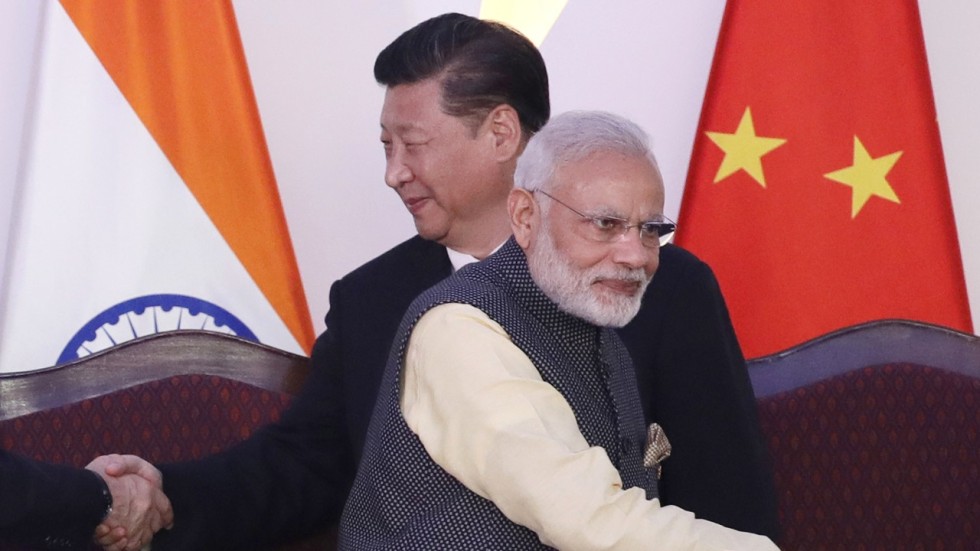
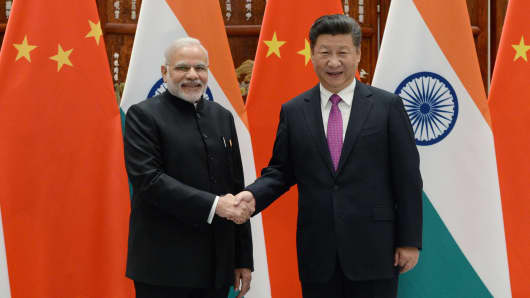
The Sino-Indian summit last week could be a new departure for neighbors who realize there is no alternative to constructive political, economic and security engagement. China and India are part of a Eurasian institution that can make that possible. Those two countries could soon become the key drivers of global demand and output. Trust is an economic variable sounded like an echo swirling around Wuhan's East Lake in China as President Xi Jinping was hosting last Friday and Saturday Indian Prime Minister Narendra Modi for an "informal," "heart-to-heart" summit.Defence planning- Old wine in new bottle?
Admiral Arun Prakash, former Chief of Naval Staff analyses the Government of India's decision to have a new Defence Planning Committee under the chairmanship of National Security Advisor. Modi Government has appointed NSA Ajit Doval to spearhead the Defence Planning Committee, to create a new roadmap for national security. In what has been declared, by the media, as a ‘major step’ towards reforming the process of higher defence planning, the government has created a new mechanism; designated the Defence Planning Committee (DPC) under the chairmanship of the National Security Advisor (NSA). This permanent committee has been tasked to undertake a strategic defence review, prepare a draft national security strategy, and formulate an international defence engagement strategy. Taken at face value, this step deserves a cautious welcome by the Services as well as the strategic community, even if only as a long overdue token of the government’s concern for national security.
Subscribe to:
Posts (Atom)