6 June 2018

Will AI help save lives on the battlefield?

By: Adam Stone  

After a while the buzzwords start to ring hollow. What’s “artificial intelligence,” in practical terms? An Orwellian nightmare that will control our every battlefield maneuver? Or a helpful tool to aid the war fighter? Let’s bring it down to Earth, make it tangible. AI can, for instance, scan a live video feed faster and more accurately than any human and then warn commanders of imminent danger. At least that’s the premise behind an ongoing project at the Air Force Research Laboratory at Wright-Patterson Air Force Base. “Video is captured with such velocity and volume [that] no individual or team of individuals can hope to analyze that data in a meaningful way,” said Scott Clouse, senior research engineer at the Decision Science Branch.

5 ways government will fight against botnets

By: Jessie Bur  

Both government and the private sector must take action to combat the threat of botnets — networks of computers infected with malicious software that allows a hacker to control their actions — according to a May 30, 2018, report to the presidentThe “Enhancing the Resilience of the Internet and Communications Ecosystem Against Botnets and Other Automated, Distributed Threats” report released by the Department of Homeland Security and Department of Commerce was mandated under a May 2017 executive order on cybersecurity. It draws from federal agency and private sector input. To begin the process, the report proposed 24 actions that align with five overarching goals, ranging from improving the cybersecurity of internet of things devices to promoting engagement between different industries impacted by the botnet problem.

5 June 2018

Electrifying mobility in India Future prospects for the electric and EV ecosystem

Sahil Ali and Rahul Tongia

By any measure, India’s electric vehicle (EV) aspirations are steep from where we stand today, but they have sparked remarkable interest and action in policy, industry and research arenas. A push to mandate all vehicles sold by 2030 to be electric seems to have tempered, but high EV penetration scenarios remain likely. While costs and consumer choice remain fundamental factors, there are three additional key issues for realising any growth: (1) manufacturing; (2) grid capabilities; (3) charging infrastructure. In this paper, we focus on points (2) and (3).

India, Ever the Reluctant U.S. Ally

By Allison Fedirka

The world continues to react to the death of the Iran nuclear deal – and only sometimes are the reactions in Washington’s favor. Last week, China, never one to shy away from the opportunity to look like a global leader, said it would try to salvage the deal. Poland broke with the rest of Europe, saying it would side with the U.S. rather than keep the deal with Iran alive. And now, India, a country with which the U.S. has improved relations over recent years, is trying to work around sanctions. It’s not altogether surprising. Though India and the U.S. share some strategic interests in the Indo-Pacific region – namely, keeping China in check – their differences are too many for New Delhi to constantly walk in lockstep with Washington.

The Great Afghan Paradox

By JAMES KITFIELD

By most metrics the war in Afghanistan is going badly. According to the most recent quarterly report by the Special Inspector General for Afghanistan Reconstruction (SIGAR), the troop strength of Afghan Security Forces is in “sharp decline” even as the Taliban are on the march throughout the countryside. The number of “security incidents” is similarly on the rise, to include a series of recent suicide bombings in Kabul, including one in late April attributed to Daesh (aka the Islamic State) that targeted and killed nine journalists and four police officers. Opium production skyrocketed by nearly 90 percent in 2017, and the Afghan government continues to rate near the bottom on Transparency International’s “Corruption Perception Index.” The publication Long War Journal, which tracks the conflict, recently estimated that the Taliban now “controls or contests” 58.5 percent of Afghanistan’s 407 districts, a high-water mark for the Islamist extremist group. 

Is It Imran Khan’s Turn Yet?

By Annam Lodhi

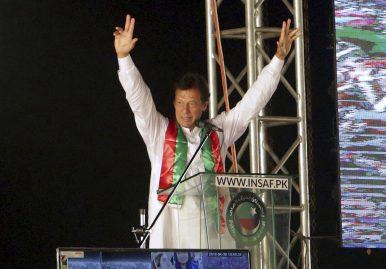
Imran Khan, the 65-year-old cricket star-turned-politician has been striving for a better, Naya (newer) Pakistan for the last 22 years. Layering his speeches with witty jokes, the leader of one of Pakistan’s strongest political parties has mastered the art of mesmerizing his crowd but has yet to translate that crowd into a majority of votes. Today, Imran Khan’s religious inclination is evident in all his activities, a contrast to his past playboy status. Verses from the Quran and teachings of the Prophet are used as anecdotes during his rallies. The twice-divorced Khan recently married Bushra Maneka, a spiritual leader who belongs to a well-to-do political family from southern Punjab. In contrast to both Khan’s previous wives, Maneka is a devoutly religious woman who wears a headscarf.

Great Power Competition in Iran as the US Exits the Arena

BY ALI SCOTTEN

US President Donald Trump’s decision to abandon the Iran nuclear deal, and thus re-impose broad sanctions against the Islamic Republic, sends a clear signal that Washington has reverted to a full containment policy against Tehran. But, lacking a clear overarching Middle East strategy, US policymakers do not appear to be weighing the merits of this pursuit in the context of the United States’ long-term rivalries with China and Russia. While Tehran’s contentious relations with its neighbors to the west are the subject of intense focus, inadequate attention is being paid to the geostrategic implications of transformations to Iran’s east. A new “Great Game” for political and economic dominance is being waged in Eurasia that will impact the lives of almost two-thirds of the world’s population, and could lead to a further weakening of Western influence over the international system. China and India are currently in the lead, with Russia following closely in the hopes of shaping any outcome to its advantage. The Europeans lag behind, and Trump’s Iran containment strategy risks further holding them back.

CHINESE ROBOTS SWARM THE SOUTH CHINA SEA: BEIJING IS WELL-SUITED TO EXPLOIT UNMANNED MACHINES

Robert Beckhusen

A video from late May 2018 shows a swarm of 56 small, unmanned boatsoperating in the South China Sea. While a rudimentary demonstration, it mirrors similar exercises performed by U.S. Navy boats practicing — semi-autonomously — to defend harbors and intercept incoming vessels. The Chinese robo-boats do not appear to be armed, but the company behind it — Yunzhou Tech Corporation — revealed an armed unmanned boat at a Beijing “Civil-Military Integration Expo” in July 2017. The show focused on cutting-edge technologies that China believes could provide an “asymmetric” advantage in a conflict with the United States. Meaning, cheaper technologies and tactics that allow a weaker adversary to exploit unanticipated weaknesses in a more powerful opponent.

Does China’s digital police state have echoes in the West?


THEY’RE watching you. When you walk to work, CCTV cameras film you and, increasingly, recognise your face. Drive out of town, and number-plate-reading cameras capture your journey. The smartphone in your pocket leaves a constant digital trail. Browse the web in the privacy of your home, and your actions are logged and analysed. The resulting data can be crunched to create a minute-by-minute record of your life.

U.S. Allies Hit Back as Trump Revokes Steel Tariff Reprieve

By Andrew Mayeda , Jenny Leonard , and Joe Deaux

America’s closest allies plan to slap billions of dollars in tit-for-tat tariffs on U.S. goods after the Trump administration announced it’s imposing steel and aluminum duties on them. The reaction was swift after Commerce Secretary Wilbur Ross announced the U.S. on Friday will levy new metals duties on imports from the European Union, Mexico and Canada on national security grounds, ending their temporary exemptions. The EU said it would take immediate steps to retaliate, while Mexico vowed to impose duties on everything from U.S. flat steel to cheese. Canada’s government announced it will impose tariffs on as much as C$16.6 billion ($12.8 billion) of U.S. steel, aluminum and other products from July 1.

The US Needs a Reality Check on China's Belt and Road

By Hunter Marston

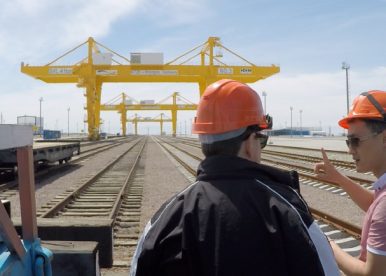
In Washington, heads are spinning trying to apprise China’s global Belt and Road Initiative (BRI). Totaling nearly $500 billion in projects and pledges to date, the BRI seeks to provide much-needed infrastructure financing to underdeveloped countries and rewrite the map of global commerce by linking international markets to Beijing. Washington policy wonks are busy penning op-eds in an attempt to make sense of Beijing’s sweeping ambitions. But until U.S. policymakers come to terms with the nature of the challenge posed by China’s BRI, they will not be able to mount a credible alternative.

Is Italy the new Greece?

Jeff Spross

Italy is on the verge of a major political and economic crisis. On March 4, an anti-establishment Italian coalition won power on promises to confront eurozone-imposed austerity, but now, that coalition is fracturing under pressure from eurozone defenders who wield key points of power. Italian stocks are falling. Markets are getting jittery. And the financial media is once again warning about possible "contagion" that could infect the global economy. Which begs the question: Is Italy going to be the next Greece? Not long ago, Greece was swept up in an eerily similar crisis that almost engulfed all of Europe — and unfortunately for the country across the Ionian Sea, the comparison does not bode well.

Let’s Talk about Food — and What Happens In a Crisis

BY ELISABETH BRAW

This week, Sweden presented a civil-defense brochure to be sent to the nation’s 4.8 million households. Called “If the Crisis or War Comes,” the 20-page brochure provides practical instructions, ranging from the signals that will sound in case of a national emergency, how to detect disinformation, how to get on without access to heating, fuel, the internet, medications, or public transport. It also explains to Swedes how to plan for food disruptions, and issues this sobering directive: every able-bodied resident will be expected to fend for him- or herself for seven days. Stockholm is blazing a trail that other governments should follow. To an extent that we don’t sufficiently discuss, the developed world is extremely dependent on long food supply chains that are vulnerable to disruptions. So let’s talk about food.

Threat Report 2018: Russia’s Military Doctrine of Deception and Deniability


Bottom Line: Moscow’s increasingly assertive military activity in Eastern Europe and the Middle East seeks to project the power of a resurgent Russia in relation to a retreating United States, while concealing its economic and political fragility at home. In doing so, the Kremlin walks a fine line between escalation with the West and the gradual growth of influence abroad. These realities have required the Kremlin to pursue unconventional and deniable means, sometimes complimented with a small overt military footprint to accomplish its political and military objectives.

Israel’s Nuclear Strategy: Enhancing Deterrence in the New Cold War

By Louis René Beres

“Oh ship of state, new waves push you out to sea….”

—Horace, Odes

By definition, as long as particular countries regard their nuclear status as an asset, every state that is a member of the so-called nuclear club is a direct beneficiary of the Cold War. This is because all core elements of any national nuclear strategy, whether actual or still-contemplated, were originally conceptualized, shaped, and even codified within the earlier bipolar struggles of post World War II international relations.[1] Nonetheless, as the world now enters into a more-or-less resurrected form of this initial struggle the strategic postures of each extant nuclear weapons state are being modified within the still-developing parameters of Cold War II.

The Growing Dangers of the New Nuclear-Arms Race

By Eric Schlosser

Less than a decade after President Barack Obama called for the abolition of nuclear weapons, the nine countries that possess them are engaged in a new nuclear-arms race. North Korea has most likely developed a hydrogen bomb, and its Hwasong-15 missiles may be large enough to transport not only a warhead but also decoys, chaff, and other countermeasures that would thwart America’s Ground-Based Midcourse Defense anti-ballistic-missile system. India recently commissioned its second ballistic-missile submarine, launched an Agni-5 ballistic missile that can strike targets throughout Pakistan and China, and tested nuclear-capable BrahMos and Nirbhay cruise missiles. Pakistan now has the world’s fastest-growing nuclear stockpile, including low-yield warheads on Hatf-9 missiles for use against Indian troops and armored vehicles. Israel is expanding the range of its Jericho III ballistic missiles and deploying cruise missiles with nuclear weapons on submarines. 

Italy’s debt bubble pop heard around the world

By DAVID P. GOLDMAN 

Former IMF economist Carlo Cottarelli speaks to the media after being asked by Italy's President Sergio Mattarella to form a new government, after efforts by two populist parties to form a coalition collapsed. This is not a drill. This is the real thing. The giant popping sound you hear is Italian government debt evaporating. The yield on Italian government two-year notes has risen by nearly 3 full percentage points this month, from around -0.35% at the beginning of May to about 2.5% this morning, in response to a populist rebellion by Italian voters. For Italy, that portends disaster: with government debt at 130% of Gross Domestic Product, the additional interest cost at higher yields amounts to 4% of GDP.

How Do You Define Terrorism?

Antonia Ward

Terrorism remains a contested term, with no set definition for the concept or broad agreement among academic experts on its usage. Bruce Hoffman of Georgetown University has defined terrorism as “violence – or equally important, the threat of violence – used and directed in pursuit of, or in service of, a political aim”. Similarly, Louise Richardson of Oxford University believes terrorism is “deliberately and violently targeting civilians for political purposes.” Under these definitions, if there is no political aim, it is simply a crime and, if there is no violence, it is not terrorism.

Is Russia Working on a 5th-Generation Nuclear Sub With Hypersonic Missiles?

By Franz-Stefan Gady

Russia is allegedly working on a new class of nuclear-powered fifth-generation submarines with the first boat expected to be delivered to the Russian Navy by 2027, a source in the Russian defense industry said on May 31. The new class of submarines, designated Husky, will likely be armed with a 3M22 Zircon (NATO reporting name: SS-N-33) anti-ship hypersonic cruise missiles purportedly capable of traveling up to speeds of Mach 6 at an estimated maximum range of 270 nautical miles (500 kilometers). “The Husky has been included in the state armament program for 2018-2027. There are plans to start the experimental design work on the construction of submarines of this class from 2023 and deliver the lead vessel by the end of 2027,” the source is quoted by Tass news agency as saying.

How to win a trade war

ALEX OVECHKIN

For decades, China has waged a trade war, targeting U.S. industries and stealing jobs from ordinary American workers, while multinationals, Wall Street banks and the Ivy Leaguers and engineers they employ have been co-opted, made rich and used as advocates of appeasement to both Republican and Democratic administrations. President Obama’s weakness on trade — along with the left’s assault on religious liberty and obsessions with guns, race and gender — put Donald Trump in the White House. Unfortunately, his administration appears clueless about how to win at negotiations with China, and the recent truce announced by Treasury Secretary Steven Mnuchin will not likely hold up. To win a trade war or any diplomatic skirmish — be it disarming North Korea, stifling Russian aggression or fixing unfair trade — the president needs to know the enemy, cultivate allies and implement a strategy that imposes more costs on malefactors than on Americans.

How spies can use your cellphone to find you – and eavesdrop on your calls and texts too

by Craig Timberg 

Surveillance systems that track the locations of cellphone users and spy on their calls, texts and data streams are being turned against Americans as they roam the country and the world, say security experts and U.S. officials. Federal officials acknowledged the privacy risk to Americans in a previously undisclosed letter from the Department of Homeland Security to Sen. Ron Wyden (D-Ore.) last week, saying they had received reports that “nefarious actors may have exploited” global cellular networks “to target the communications of American citizens.” The letter, dated May 22 and obtained by The Washington Post, described surveillance systems that tap into a global messaging system that allows cellular customers to move from network to network as they travel. The decades-old messaging system, called SS7, has little security, allowing intelligence agencies and some criminal gangs to spy on unwitting targets — based on nothing more than their cellphone numbers.

Is AI the answer to Army electronic warfare troubles?

By: Mark Pomerleau  

Much like how drones can inundate analysts with full motion video, the electromagnetic spectrum is overburdening electronic warfare officers. This is especially true for Army soldiers deployed in Europe. Those officers have to deal with cell phones, radio communications and other types of spectrum interference in an environment regularly contested by Russia, considered a peer adversary. Officials say officers are saturated with sensor information that they must turn into actionable intelligence. Now, the Army is looking to artificial intelligence and machine learning to lessen the load. Specifically, through the Rapid Capabilities Office, the service is trying to help those officers through a challenge to help classify signals.

Revolutionizing the Institutional Army | RealClearDefense

by Arnel David, Shawn Walsh

In the summer of 2017, the Army Future Studies Group (AFSG) was tasked to analyze the state of the Army’s current modernization enterprise. Studies show the Army is approximately $9 billion below historical funding levels for modernization and 80% of its current spending goes to programs conceived before 9/11. Past incremental changes to address organizational, process and regulatory issues are insufficient for the Army to maintain overmatch, limit surprise, or operate in multiple domains with a decisive edge over rising competitors. The Army required a radical change and that change is underwaythanks to the leadership of Lieutenant General Ed Cardon. These decisions represent a revolutionary change in the Army’s modernization enterprise and parallel efforts must anchor the change into a credible and transparent organizational culture.

How a Pentagon Contract Became an Identity Crisis for Google

By Scott Shane, Cade Metz and Daisuke Wakabayashi

WASHINGTON — Fei-Fei Li is among the brightest stars in the burgeoning field of artificial intelligence, somehow managing to hold down two demanding jobs simultaneously: head of Stanford University’s A.I. lab and chief scientist for A.I. at Google Cloud, one of the search giant’s most promising enterprises. Yet last September, when nervous company officials discussed how to speak publicly about Google’s first major A.I. contract with the Pentagon, Dr. Li strongly advised shunning those two potent letters. “Avoid at ALL COSTS any mention or implication of AI,” she wrote in an email to colleagues reviewed by The New York Times. “Weaponized AI is probably one of the most sensitized topics of AI — if not THE most. This is red meat to the media to find all ways to damage Google.”

Is AI the answer to Army electronic warfare troubles?


Much like how drones can inundate analysts with full motion video, the electromagnetic spectrum is overburdening electronic warfare officers. This is especially true for Army soldiers deployed in Europe. Those officers have to deal with cell phones, radio communications and other types of spectrum interference in an environment regularly contested by Russia, considered a peer adversary. Officials say officers are saturated with sensor information that they must turn into actionable intelligence. Now, the Army is looking to artificial intelligence and machine learning to lessen the load. Specifically, through the Rapid Capabilities Office, the service is trying to help those officers through a challenge to help classify signals.

After Failed Search for Jammer Drones, US Army Takes Unusual Step

BY AARON BOYD

The service is switching to a little-understood and lightly regulated contracting method to get them. The U.S. Army wants drone-mounted signal jammers now to dominate future electronic warfare and is switching to a little-understood and lightly regulated contracting method to get them. After more than a year trying to fill a standard contract for a drone-mounted system to jam enemy communications, the Army’s electronic warfare division is switching course and will use a fast-track system that isn’t bound by traditional contracting rules. Rather than continue its year-long, Federal Acquisition Regulation-based solicitation, the Army Electronic Warfare and Cyber division is handing its multi-function electronic warfare Air Large program over to the Consortium for Command, Control and Communications in Cyberspace, or C5. While the Army will still pick the winner of the Air Large contract, that company will be a member of the C5 consortium.

The Pentagon has a ‘major’ automated information systems problem

By: Brandon Knapp 

The Department of Defense needs to improve its policies for managing and overseeing what it classifies as major automated information systems (MAIS), according to a new report from the Government Accountability Office. The report found that the policies dictating the Defense Department’s 10 MAIS business programs do not meet industry standards for providing performance data. These standards ensure that projects are keeping to their initial cost estimates, schedules, and performance goals. An IT program is designated as a MAIS when its single year costs exceed $40 million, its total acquisition costs exceed $165 million, or its total life-cycle costs exceed $520 million.

4 June 2018

US extraterritorial sanctions: Begging for a waiver now is the worst possible option for India

Brahma Chellaney

By imposing extraterritorial or “secondary” sanctions, the US seeks to effectively extend its jurisdiction far beyond its borders. Armed with unmatched power from the role of the US dollar as the world’s reserve currency, America has the capacity and will to coerce allies and adversaries alike by threatening to lock them out of the US financial system. But make no mistake: Its extraterritorial sanctions violate international law, the UN Charter and WTO rules. India is directly in the crosshairs of the new US extraterritorial sanctions targeting Russia and Iran. India is already suffering the unintended consequences of President Donald Trump’s unilateral withdrawal from the Iran nuclear deal – a pullout that has spurred higher oil-import bills, the rupee’s weakening against the US dollar, and increased foreign exchange outflows. This is just the latest financial hit India has suffered since 2005 when New Delhi, under US persuasion, voted against Iran in the International Atomic Energy Agency’s governing board, prompting Tehran to cancel a long-term LNG deal favourable to India.

Why India Won’t Play Its ‘Tibet Card’

By: Sudha Ramachandran

On February 22, India’s Foreign Secretary Vijay Gokhale issued a directive calling on leaders and government officials to stay away from events planned by the Central Tibetan Administration (CTA)—the Tibetan government-in-exile—to mark the 60th anniversary of the Dalai Lama’s exile to India. In his note, Gokhale pointed out that the “proposed period” when the Tibetan events would happen was “a very sensitive time” for Sino-Indian relations (Indian Express, March 2). Either on its own volition or under instructions from the Indian government, the CTA subsequently canceled the interfaith meeting and shifted the public event to Dharamsala, the headquarters of the CTA (Phayul.com, March 16). The Indian government’s distancing from the Tibetan events is at odds with its proximity to the Dalai Lama and the CTA the past four years.

Japan’s Plans to Build a “Free and Open” Indian Ocean​

By David Brewster
While many eyes are on China’s port investments in the Indian Ocean, Japan has also been busy. The scale of its infrastructure investments in the region rivals, and sometimes exceeds, that of China. But Japan argues that its growing presence in the Indian Ocean is qualitatively different, focused on transparency, economic sustainability, and a rules-based order that should become part of regional norms. Australia must consider the role in can play in these projects. Compared with China’s Belt and Road Initiative (BRI), Japan’s investment activities in the Indian Ocean are barely promoted, and as a result its projects often fly under the radar. This obscures the fact that Japan has been very active in building infrastructure and “connectivity” across the region.

Optimizing America’s Interests in Afghanistan

Thomas P. Cavanna

President Trump’s August 2017 decision to increase U.S. military footprint in Afghanistan alleviated the prospect of an immediate meltdown of Kabul’s government and security forces. However, it risks luring Washington again into its recurrent temptation to apprehend this campaign as a mere question of capabilities and dedication, thereby perpetuating the appeal of military occupation and eluding much deeper problems. For this decision to yield strategic results, the U.S. must clearly signal it does not envision any permanent military presence in Afghanistan, initiate direct negotiations with the Taliban, and capitalize on its regional competitors’ interest in countering radical Islamism.

Turkey, Pakistan reach their largest-ever defense contract

By: Burak Ege Bekdil

ANKARA, Turkey — Turkey and Pakistan have agreed on the sale of a batch of 30 Turkish-made T129 ATAK multirole combat helicopters, Turkish officials have said. A government election manifesto revealed by Turkish President Recep Tayyip Erdogan said Turkey and Pakistan “just recently” agreed on the contract, which is the largest-ever Turkish-Pakistani defense contract.  The two countries have been negotiating a T129 deal since 2014. This is the first export contract for the helicopter. Turkish Aerospace Industries, or TAI, maker of the T129 under license from the Italian-British AgustaWestland, has so far delivered 35 T129s to the Turkish Army and the Gendarmerie force.

U.S. Attacks Taliban’s Source of Funds in Afghanistan

by Michael M. Phillips

KABUL, Afghanistan - The U.S. has retooled its aerial bombing campaign in Afghanistan to target the Taliban’s sources of money, not just its fighters. Since the strategic bombing campaign began in November, U.S. aircraft have conducted 113 strikes aimed at cutting off revenue the Taliban allegedly receive from opium poppies and roadside taxes, a major shift in war strategy intended to drive the insurgents to the negotiating table. The strategy is to “go after the Taliban in a way that they had never been pressured before,” said U.S. Air Force Brig. Gen. Lance Bunch. The air campaign is modeled on the successful fight waged in recent years against Islamic State in Syria and Iraq, where U.S. aircraft regularly attacked refineries, tanker trucks and other infrastructure that provided the militants millions of dollars in oil revenue. It even harks back to World War II, when Allied bombers went after German and Japanese industry.

Afghan Narcotics: 2000-2018: From Control and Elimination Efforts to a Drug Economy and Bombings Labs

By Anthony H. Cordesman

If the Afghan government is going to defeat the Taliban and other insurgent and extremist elements, it must win at both the military and civil levels. At present, it at best faces a military stalemate and the situation may well be worse at the civil level. Far too many elements of the Afghan government and economy remain the equivalent of a kleptocracy. Despite repeated promises of reform, the World Bank and Transparency International rate the Afghan government as one of the most corrupt and least effective in the world. Senior officials like President Ghani do continue to pursue reform with integrity, but the Afghan power structure is still filled with corrupt politicians, officials, and senior officers. Its political leadership is too divided to function effectively, and the central government in "Kabulstan" has limited or no real control over many power brokers, warlords, and local officials even in the areas nominally under government control while the Taliban controls much of the key areas for opium growing in the south.

INDOPACOM, it is: US Pacific Command gets renamed

By: Tara Copp 

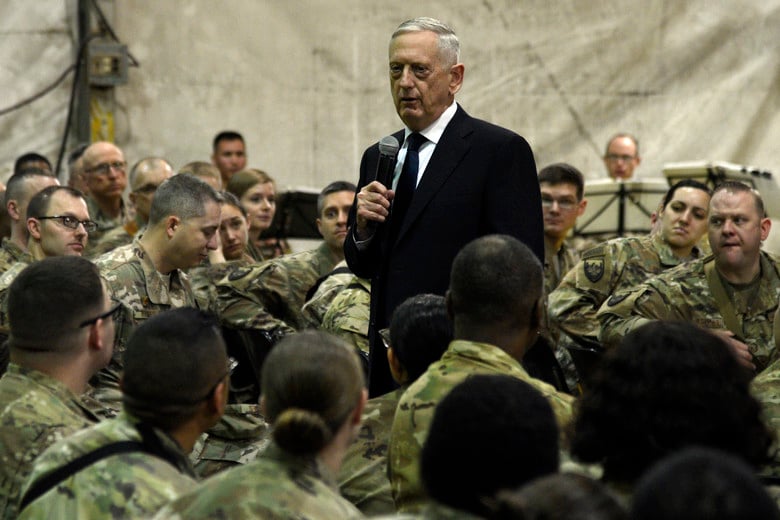
Defense Secretary Jim Mattis announced Wednesday that U.S. Pacific Command would now be called U.S. Indo-Pacific Command, in the latest move to counter Chinese economic and military pressure in the region. Mattis said he directed the name change in recognition that “all nations large and small are essential to the region, in order to sustain stability in ocean areas critical to global peace.” The withdrawn invite follows a directive by the Pentagon to remove Chinese cellphones, other devices from exchanges over espionage fears.