James Holmes
17 June 2018
Don't Just Rename the Pacific Command—Give It More Weapons
Forum: U.S. Drone Policy Not Transparent, Accessible
By Tahreem Alam
The 12 Critical Areas That Require Addressing: An Army General Officer’s (Retired) Perspective
There are 12 critical areas that must be addressed to ensure the Army is successful in the future. None of what appears here has to do with technology, but rather people, our most important asset. The 12 critical areas are as follows:
1. Leadership
2. Mission Command
3. Investigations
4. Awards
5. Counseling and Mentoring
6. Talent Management
7. Senior Leader Selection
8. Get Public Affairs Right
9. Get Multi-Generation Communication Right
10. Military Service and Veterans Heath, Morale, and Welfare:
11. Revise the Education System
12. Mandatory Service
My concern is derived from personal experience and from what I continue to hear from our service members. Most of what I say here, I have said before as a Major, Lieutenant Colonel, Colonel, and Brigadier General. It was not popular then and will not be popular now. I put people first and loyalty to unit second, and mission third.
16 June 2018
Around the halls: Brookings experts react to the Trump-Kim Jong-un summit in Singapore
Jung H. Pak, Jonathan D. Pollack, Evans J.R. Revere, Robert Einhorn, Ryan Hass, Richard Nephew, Katharine H.S. Moon, Jonathan Stromseth, Michael E. O’Hanlon, Tarun Chhabra, and Jeffrey A. Bader
Jung Pak, SK-Korea Foundation Chair in Korea Studies and Senior Fellow in the Center for East Asia Policy Studies: The Trump administration will probably tout this as a Nobel-worthy effort by President Trump, but the Singapore summit produced little more than frothy statements without substance, with little accountability for Kim Jong-un to cease and dismantle his nuclear weapons program. In the press conference after the summit, Trump could have reinforced the U.S. commitment to our alliances with South Korea and Japan, but instead made gratuitous comments complimenting Kim and touting his trustworthiness, as well as raising the possibility for more give-aways to Kim, such as a visit to the White House. He also criticized U.S.-South Korean military exercises and cast doubt about the future of U.S. troop presence in South Korea. The Trump-Kim meeting started a diplomatic process, but it will be difficult for working-level U.S. officials to build upon North Korean denuclearization on this very shaky and loose foundation. In effect, maximum pressure has morphed into maximum maneuvering space for Kim.
India, China in talks to form bloc against Opec
Sanjay Dutta
India and China, which together accounted for almost 17% of world oil consumption last year, are working on combining their shopping carts with a view to challenging Opec’s capability to play havoc with crude prices and seek better bargains from the cartel of oil exporting countries, especially its West Asian members. The two sides kicked off formal talks in Beijing on Monday for forming an oil buyers’ club + . The development is likely to weigh on Opec energy ministers, who are expected to discuss a plan to end the production cut deal later this month. The talks come within less than two months of oil minister Dharmendra Pradhan proposing an alliance between Indian and Chinese state-run oil companies for a greater say in the market.
Why a War Between China and India Is Not Unthinkable (And Would Be a Total Horror Show)
Kyle Mizokami
Myanmar: Army- Civil Relations and Insurgency: Myanmar: Army- Civil Relations and Insurgency
By Dr. S. Chandrasekharan’
On 29th May, in response to a question from the Irrawaddy’s Representative, the Permanent Secretary of the Defence Ministry, Brigadier General Aung Kyaw dropped a bomb shell that the Tatmadaw (the Army) is ready to obey if President U Win Myint orders a stop to the ongoing military operations in Kachin State in line with the law. The catch phrase is perhaps “in line with the law.” The Brig. General declared that the Kachins do not want to relinquish power they gained from bearing arms and that peace can be achieved only through the path of the National Cease fire Agreement. Thus he made it clear to all those including the civilian leadership that the Army’s operations against Kachins will continue until they sign the Government-sponsored cease fire agreement!
The US needs China as an innovation partner. Here's why
Among the many issues at play in the ongoing economic and trade tensions between the US and China are questions of technological capability and innovation. Two of the main complaints in the US Section 301 report were that American companies have been forced to transfer technology to China and been the subject of cyber espionage. The presentation of the issues in this report has been disputed, but behind it lies concern in the US that Chinese innovative and technological capability is catching up with that in the US, thanks partly to the support of state policies set out in the Made in China 2025 initiative. One important feature of the package of measures announced by the US last month is that it was designed to contain China’s technological development as much as to reduce the trade deficit, even though the latter has been the focus of President Donald Trump’s rhetoric.In 1969, Russia and China Fought a Brief Border War. It Could Have Started World War III
Robert Farley
China's J-10 Fighter Jet: Could it Take on the Air Force's Best in a Dogfight?
TNI Staff
RUSSIA-CHINA NAVAL COOPERATION IN AN ERA OF GREAT POWER COMPETITION
By David Scott
Introduction
On 30 May 2018, Admiral Harry Harris, the retiring chief of the newly renamed U.S. Indo-Pacific Pacific Command (IndoPacom), noted that “China remains our biggest long-term challenge” and “a resurgent and revanchist Russia, remains an existential threat to the U.S” – and that consequently “Great Power competition is back.” Such competition brings Russia and China together as political partners, and is echoed in their increasing naval cooperation. Such naval cooperation provides one another with tacit support in their respective areas of geopolitical interest.
Counter-terrorism strategy (CONTEST) 2018
This updated and strengthened CONTEST strategy reflects the findings of a fundamental review of all aspects of counter-terrorism, to ensure we have the best response to the heightened threat in coming years from all forms of terrorism. Our counter-terrorism strategy will continue to be organised within the tried and tested strategic framework of four ‘P’ work strands, each comprising a number of key objectives:
Jordan’s $2.5b Security Lifeline to the Future
NORMAN T. ROULE
While the media is dominated by events in North Korea, it would be wise to devote some space to the decision this week by Saudi Arabia, the United Arab Emirates, and Kuwait to provide Jordan with more than 2 billion dollars in aid over five years to sustain Amman during a time of unprecedented economic pressure. With an estimated 200,000 Jordanian protestors on the streets venting anger over falling living standards, Jordan is the third Middle East country to endure widespread unrest this year. Dissatisfaction has been rising for months, and protests have echoed the unrest that shook Tunisia and Iran earlier this year. In all three countries, protestors represented a spectrum of lower and middle class groups in demonstrations larger than anything seen in the early days of the Arab Spring. Likewise, protests were essentially leaderless, rudderless, and fueled by social media. The leaders of the affected countries responded by backing away from necessary reforms to restore order.
While the media is dominated by events in North Korea, it would be wise to devote some space to the decision this week by Saudi Arabia, the United Arab Emirates, and Kuwait to provide Jordan with more than 2 billion dollars in aid over five years to sustain Amman during a time of unprecedented economic pressure. With an estimated 200,000 Jordanian protestors on the streets venting anger over falling living standards, Jordan is the third Middle East country to endure widespread unrest this year. Dissatisfaction has been rising for months, and protests have echoed the unrest that shook Tunisia and Iran earlier this year. In all three countries, protestors represented a spectrum of lower and middle class groups in demonstrations larger than anything seen in the early days of the Arab Spring. Likewise, protests were essentially leaderless, rudderless, and fueled by social media. The leaders of the affected countries responded by backing away from necessary reforms to restore order.Never Call Kim Jong Un Crazy Again
BY STEPHEN M. WALT
The Singapore summit was long on theater and largely devoid of substance, save for a typical Trumpian giveaway. This time Donald Trump impulsively offered to suspend military exercises with South Korea (without notifying Seoul in advance) in exchange for a North Korean pledge to do … well, nothing. If the self-proclaimed master negotiator keeps making deals like this, there will be a Kim Jong Un Hilton in Honolulu before there’s a Trump Tower in Pyongyang.Think tank and intelligence agency partner for public reports on North Korea
By: Kelsey Atherton
Not since the Maginot Line has there been a static, fortified border as prominent as the DMZ. And unlike its gallic predecessor, the DMZ endures as intended, a mutually impenetrable void between two permanently mobilized armies, bounded on each side by the oceans that shape the Korean peninsula. There are ways around the border for diplomats and tourists, guided visits and formal state functions, but for the observer looking to peer into North Korea from beyond the reach of its security services, the best way to study the country is by watching it from above. Far, far above. Space, to be exact, which is one reason the Center for Strategic and International Studies (CSIS) is partnering with the National Geospatial-Intelligence Agency (NGA) to create unclassified reports on North Korea.HASC Chair Thornberry: Okay To ‘Suspend’ US-South Korea Wargames
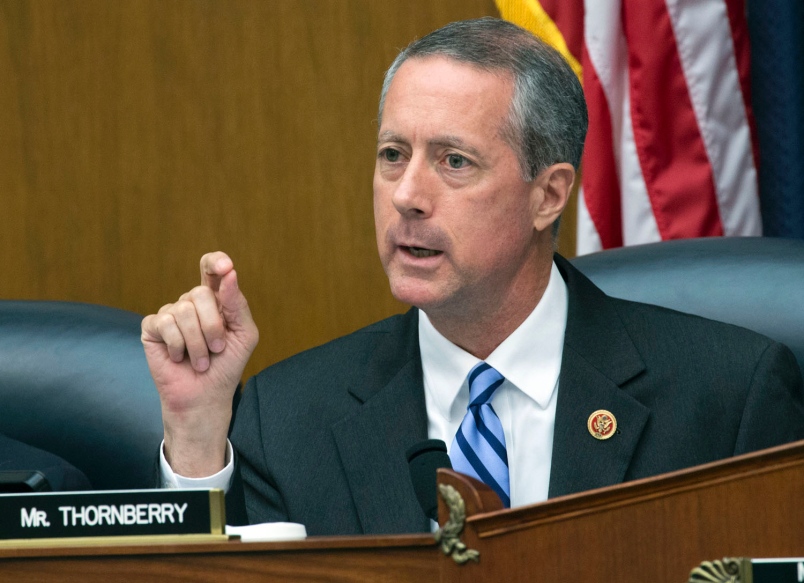
"This is an opportunity to hold their feet to the fire and see if North Korea is serious about this," Rep. Thornberry said. “If they’re not serious, then it’s pretty easy to say those joint exercises that were scheduled for August are now going to happen in September or October." CAPITOL HILL: It’s okay for President Trump to “suspend” upcoming military exercises in Korea as a concession to Pyongyang, the House Armed Services chairman said, since other forms of training will continue. Rep. Mac Thornberry was commenting on Trump’s pledge to stop unspecified “wargames” that were both “tremendously expensive” and “very provocative.” Other members of Congress have expressed concern, including prominent Republicans.
GAS GEOECONOMICS IN EUROPE
Meet the new data challenges. Same as the old data challenges.
By: Valerie Insinna
During a May 10 panel at the annual C4ISRNET conference, officials from the military and government delved into the barriers that keep the Department of Defense from being able to consolidate data to provide a single battlefield picture to troops and enable them to make decisions on the fly. Spoiler alert: They might sound familiar to those following the problem over the past several years. Here’s a look at what still needs to be solved: Moving from a platform-centric mindset The military loves its tanks, planes and ships, but equally important is the ability to push the data collected by those platforms to each other in real time, Capt. Clayton Michaels, the special assistant to the associate director for operations at the National Geospatial-Intelligence Agency, said.53% of execs pay a hacker's ransom. Are businesses losing the cybersecurity battle?
It's no secret that ransomware attacks have spread like wildfire through enterprises since 2016. However, this marks the first year that the majority of company executives—53%—reported paying a hacker's ransom following an attack, in attempts to unlock critical business files, according to a Tuesday report from Radware. This figure comes as 69% of executives said that their company faced a ransom attack in the past year—up from 14% in 2016, the report found. Some 66% of the 200 executives surveyed worldwide said they are not confident in their network security, and admit that their networks are penetrable by hackers.
The Industrialization Of Cybercrime. Lone-wolf Hackers Yield To Mature Businesses.
Predicting When Weapons Will Break is a Hot New Market. Microsoft Wants In.
As the Pentagon shops for technology that can predict when its weapons might break, Microsoft (MSFT) is shopping its artificial intelligence to defense decision makers in Washington. The firm’s touting its technology comes as companies large and small look to score deals in this emerging military market. “Using a lot of [this machine learning technology] really is about lowering your total cost of ownership for a particular asset,” said Jim Ford, director of cloud strategy and solutions for Microsoft Federal, while showing off the technology on Tuesday at a pop-up exhibit in Washington just blocks from the White House.
Comprehensive Deterrence Forum
Edited by Becca Wasser, Ben Connable, Anthony Atler, James Sladden
PDF file 0.4 MB
On October 30, 2015, the U.S. Army Special Operations Command (USASOC) facilitated a senior leader forum, hosted by the U.S. Special Operations Command (USSOCOM) and the U.S. Department of State (DoS), to explore the subject of comprehensive deterrence. Participants included representatives from across DoS and the U.S. Department of Defense. According to a 2015 draft joint USASOC and USSOCOM definition, comprehensive deterrence is the "prevention of adversary action through the existence of credible and proactive physical, cognitive and moral capabilities (loosely defined as willpower) that raise an adversary's perceived cost to an unacceptable level of risk relative to the perceived benefit." Part I of this report delivers the proceedings from the senior leader forum, reflecting a robust discussion of comprehensive deterrence and its application. To ensure a wide variety of perspectives and encourage free-flowing discussion, all remarks from the forum were not for attribution. As such, the conference summary seeks to draw out the main themes and observations from the discussion without attributing particular points to a specific participant.Maghreb: Dream of Unity, Reality of Divisions
Anouar Boukhars
U.S. Senator: Do not underestimate China’s determination to win in space
by Sandra Erwin
SASC NDAA Tasks Top Scientists To Suss Out Electronic Warfare Fixes
By COLIN CLARK
WASHINGTON: A little known group of top America scientists known as JASON will, if the Senate Armed Services Committee has its way, perform a major analysis of US and allied Electronic Warfare capabilities and recommend how the US can improve this crucial element of warfare. Why is the SASC doing this: “The committee recognizes that the United States has a significant comparative military disadvantage (emphasis added) against our peer competitors in aspects of the electronic warfare mission and in the conduct of joint electromagnetic spectrum operations.” Breaking D readers, of course, have long known about America’s weaknesses in EW and across the spectrum. JASON is one of those entities you’d have to make up if they didn’t already exist. It’s a self-selecting group of top scientists, heavily weighted toward Nobel Prize-winning physicists in the past, who provide independent advice to the US military. They mostly get together in the summer — presumably after classes end — and produce reports on a wide array of topics, most of them classified.Why cryptomining is the new ransomware, and businesses must prepare for it
By Teena Maddox
For years, ransomware has been the bane of the enterprise, with cyber criminals literally holding data hostage unless a ransom is paid. Some verticals in the enterprise can breathe a sigh of relief, however, because now there is less ransomware in play, but individuals and small businesses are the newest target as cryptomining becomes the hottest trend in cyber attacks. Craig Williams, director of outreach for Cisco Talos, addressed the trend at Cisco Live 2018, noting that "people are backing off from ransomware. It's a super high risk. A lot of people aren't paying." Cryptomining is rising up to take the place of ransomware, and if cyber crime could be considered trendy, crypto mining is Cardi B, Drake and Taylor Swift rolled into one.
Here’s why your printer is a tattletale
By Lexie
When you print, scan, or copy a document at home or in the office, it might look like any other document to your eyes. But, unbelievably, data on the page make it possible to track almost every document you’ve ever scanned, printed, or photocopied back to you.
Your printer logs everything All modern printers keep some form of log. Depending on the make and model, the logs can be highly intrusive and even go as far as indefinitely retaining full copies of all material. Printer logs can be a substantial and unexpected privacy risk, especially if they contain sensitive and personal information. This is a significant risk when disposing of or selling old printers, as people are rarely aware of how to wipe or destroy the hard drive safely. In shared printers, information logs will also include which computer connected to the printer and submitted the printing job. If the printer uses no authentication system, or if enough people share the same credentials (e.g., one password for the entire user base), it is possible to hide the identity of whoever is printing a document by using an operating system like TAILS, but not the contents of the document.
Lessons from Others for Future U.S. Army Operations in and Through the Information Environment
by Christopher Paul, Colin P. Clarke, Michael Schwille, Jakub P. Hlavka, Michael A. Brown, Steven S. Davenport, Isaac R. Porche III, Joel Harding
What information-related practices or capabilities have U.S. allies employed effectively, and which could the U.S. Army adopt? What information-related practices or capabilities have adversaries or potential adversaries used effectively, and which of these could the Army adopt? What are adversaries or potential adversaries doing in the information environment that the Army cannot consider doing because of ethical or legal constraints, and which of these should it be most prepared to counter? Harnessing the power of old and new technology, it is easier than ever for U.S. allies and adversaries to reach — and influence — vast and varied audiences to achieve their strategic goals. Modern conflicts are fought as much in the information environment as on the physical battlefield, and the line between these domains is dissolving. AUSA’s Carter Ham To Macgregor: Futures Command Will Work
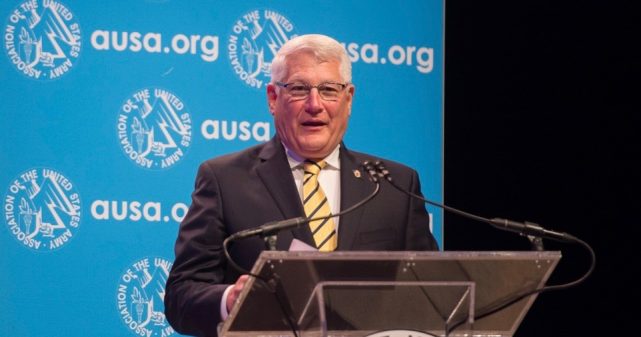
By CARTER HAM
Carter Ham, head of Association of the US Army
The battle for the soul of the Army is, once again, engaged. Doug Macgregor, best known to Army aficionados for his book Breaking The Phalanx and more recent studies on Joint maneuver warfare, called out the service in an op-ed we published Monday. The Army, he argued, would once again botch procurement of new weapons, as it did with the Future Combat System (FCS) and a whole raft of earlier modernization efforts. The effort to institutionalize Army modernization in Army Futures Command is bound to fail, Macgregor argued. Today, we publish a vigorous rebuttal of Macgregor’s views by the CEO of the Army’s doppleganger, the Association of the US Army. Retired Gen. Carter Ham offers this well written and pointed response, arguing that the top Army leaders know what the service has done wrong in the past and possess the will and intelligence to do it right this time.15 June 2018
Modi-Xi informal meeting: Equidistant from two super powers
By Ajit Ranade
Just over a month ago Prime Minister Modi went to Wuhan for an informal bilateral two-day meeting with President Xi Jinping. This was supposedly at the invitation of the Chinese President. In fact Xi said to Modi that in his five years, he had moved out of the capital to meet a foreign leader only twice, and on both occasions it was to meet with the Indian Prime Minister. Many sceptical analysts wondered what the tangible achievements of the Wuhan summit were, although they overlooked the announcement of joint projects in Afghanistan and the initiative to have direct dialogue between military leaders of the two countries. Coming after the Doklam standoff, the Wuhan visit is a distinct signal of not just thawing of relations, but of the intention for closer engagement. Later this month, PM Modi is expected to participate in the multilateral meeting of the Shanghai Cooperation Organisation in Qingdao. That would be his fifth visit to China since he became PM.
India's Struggle to Become a Global Power Player
Todd Royal
Chinese attacks on contractors ‘a phenomenon’ on the rise
By: Justin Lynch
Amid a double-barrel recognition of the rise of China’s military might by Congress and the U.S. Army, the Chinese attacks on American contractors appear set to continue. Along with it, U.S. secrets could slip away. On Friday, the Washington Post reported that the Chinese government compromised computers of a Navy contractor in early 2018, hacking “massive amounts of highly sensitive data related to undersea warfare.” By targeting a contractor who works for the Naval Undersea Warfare Center in Newport, R.I., the Chinese hackers stole secret details related to a supersonic anti-ship missile, according to the Post. When aggregated, the report said, the information could be considered classified. The contractor was not named.China’s Master Plan: A Global Military Threat
By Hal Brands
I wrote a column recently about how a longstanding assumption of America’s China policy — that economic integration between the two countries is an unalloyed good — has now been overtaken by events. But this isn’t the only area in which China’s rise is forcing a re-evaluation of old beliefs. Now, as the first in a series of columns on this phenomenon that Bloomberg Opinion will publish in the coming days, I’ll delve into another issue with enormous implications for U.S.-China relations and American interests: the rise of China as a more globally oriented military power. For years, most experts believed that China’s military challenge to the U.S. was regional in nature — that it was confined to the Western Pacific. After decades of tacitly free-riding on America’s global power-projection capabilities, however, Beijing now is seeking the capabilities that will allow it to project its own military power well outside its regional neighborhood.The World According to Trump and Xi
BRAHMA CHELLANEY
The world’s leading democracy, the United States, is looking increasingly like the world’s biggest and oldest surviving autocracy, China. By pursuing aggressively unilateral policies that flout broad global consensus, President Donald Trump effectively justifies his Chinese counterpart Xi Jinping’s longtime defiance of international law, exacerbating already serious risks to the rules-based world order. China is aggressively pursuing its territorial claims in the South China Sea – including by militarizing disputed areas and pushing its borders far out into international waters – despite an international arbitral ruling invalidating them. Moreover, the country has weaponized transborder river flows and used trade as an instrument of geo-economic coercion against countries that refuse to toe its line.
The world’s leading democracy, the United States, is looking increasingly like the world’s biggest and oldest surviving autocracy, China. By pursuing aggressively unilateral policies that flout broad global consensus, President Donald Trump effectively justifies his Chinese counterpart Xi Jinping’s longtime defiance of international law, exacerbating already serious risks to the rules-based world order. China is aggressively pursuing its territorial claims in the South China Sea – including by militarizing disputed areas and pushing its borders far out into international waters – despite an international arbitral ruling invalidating them. Moreover, the country has weaponized transborder river flows and used trade as an instrument of geo-economic coercion against countries that refuse to toe its line.Doklam exemplifies China’s broader recidivism in Himalayas
Brahma Chellaney

The first anniversary of the Doklam standoff calls for reflection on China’s strategy of territorial revisionism and India’s response. The Doklam Plateau, like the South China Sea, illustrates how China operates in the threshold between peace and war. Just as China has made creeping but transformative encroachments in the South China Sea without firing a single shot, it has incrementally but fundamentally changed the status quo in Doklam in its favour since ending the 73-day troop standoff with India.
Subscribe to:
Posts (Atom)