Jaim Coddington and Casey Lamar
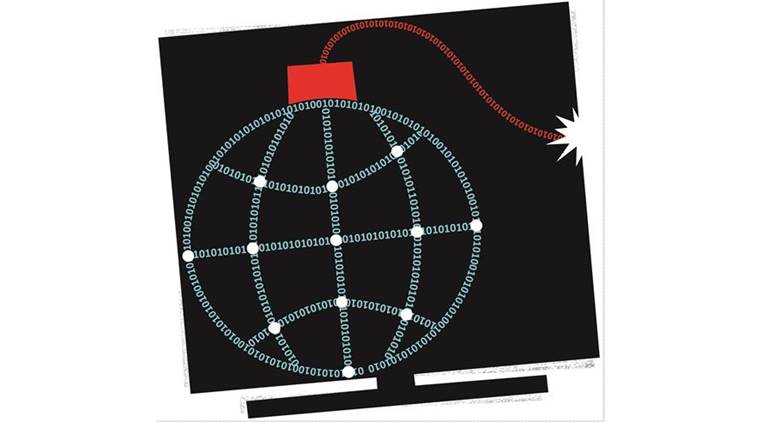
In the 20th century, the industrial revolution allowed states to leverage existing technology for brutally effective new tactics on the battlefield. Rapid innovations in rifled artillery, mechanized fighting vehicles, and chemical warfare caught commanders of the day woefully unprepared and led to horrific casualties and collateral damage. Today, actors like Russia and the Islamic State occupy this disturbing, pioneering role in the realm of information warfare (IW), leveraging the reach of global telecommunications to influence target audiences and support kinetic operations on the battlefield. Some observers contend that the West should co-opt these new methods to avoid falling further behind in the information domain. The combined threat of adversary information capability and the growing academic discussion around information warfare puts US doctrine at a crossroads between adopting the methods of its adversaries or establishing different methods to dominate the information domain. While much of the defense community’s planning, wargaming, and emerging doctrine focuses on counter-propaganda and targeting adversary IW capabilities, this reactive strategy may have neutral or negative results.
 Is the reliability of our nation’s electric power grid threatened by the market-driven retirement of nuclear power facilities? Despite the wealth of evidence to the contrary, the answer according to a new report by the Nuclear Energy Institute, is “yes.” NEI’s paper, “The Impact of Fuel Supply Security on Grid Resilience,” claims that one of the most significant risks to grid resiliency is an over-reliance on cheap natural gas as a fuel source, specifically in the Pennsylvania-New Jersey-Maryland (PJM) Mid-Atlantic area.


/69.30117068749993,29.76683827244043,4/421x337.png?access_token=pk.eyJ1IjoiZGFsdG9ud2IiLCJhIjoiOWdSSXFQSSJ9.HZyjh4g3TAAOAncwelv9Vw)









/arc-anglerfish-arc2-prod-mco.s3.amazonaws.com/public/3WDCEEOZJFHODMWH3X6B7D6WYQ.jpg)
/arc-anglerfish-arc2-prod-mco.s3.amazonaws.com/public/57CR652KNZDABMTTRFZJKYQ5H4.jpg)
/arc-anglerfish-arc2-prod-mco.s3.amazonaws.com/public/C4XBGAAY4RD3JKHW5FMGUKXWYQ.jpg)


